 Henan Otywell Electronic Technology Co., Ltd

Răspunsul scurt despre detectoarele de gaze în spațiu închis: patru gaze este minim, nu tavanul. LEL, O2, H2S și CO acoperă cele mai comune pericole. Cei patru le lipsește orice altceva - amoniacul, COV-uri, clor, CO2, și orice gaz pe listă de evaluare a site-ului dvs. care nu se întâmplă să fie unul dintre cele patru mari. Am învățat asta pe calea grea.
L-am învățat într-o instalație frigorifică în 2016. Intrare în spațiu închis pentru o inspecție a gropii compresorului. Verificare standard înainte de intrare cu un detector cu patru gaze. LEL zero. O2 normal. H2S zero. CO zero. Permis semnat. Intrare aprobată. Douăsprezece minute mai târziu, însoțitorul a observat că membrul echipajului din interior se mișca mai încet decât ar fi trebuit. L-a scos afară. Cele patru gaze nu s-au alarmat deoarece gazul care umplea acea groapă - amoniacul de la o scurgere lentă a supapei - nu era pe lista de senzori..
Ce măsoară de fapt patru gaze - și ce nu
Aproape fiecare detector de gaz în spațiu închis de pe piață este livrat în aceeași configurație implicită: gaz combustibil pe o sferă catalitică sau senzor infraroșu, oxigen pe o celulă electrochimică, hidrogen sulfurat pe o a doua celulă, monoxid de carbon pe o treime. Această combinație a devenit standard dintr-un motiv - acele patru pericole sunt prezente în spații suficient de închise, încât implicit să surprindă cazul obișnuit.. Dar când cazul comun nu se potrivește cu site-ul dvs, alegerea configurației corecte a detectorului înseamnă citirea evaluării pericolelor înainte de a citi catalogul.
Problema începe atunci când spațiul tău închis nu este cazul obișnuit. Un detector cu patru gaze care caută LEL, O2, Citirile H2S și CO sunt curate pe toate cele patru canale. Între timp, atmosfera în care intri este toxică dintr-un motiv complet diferit.
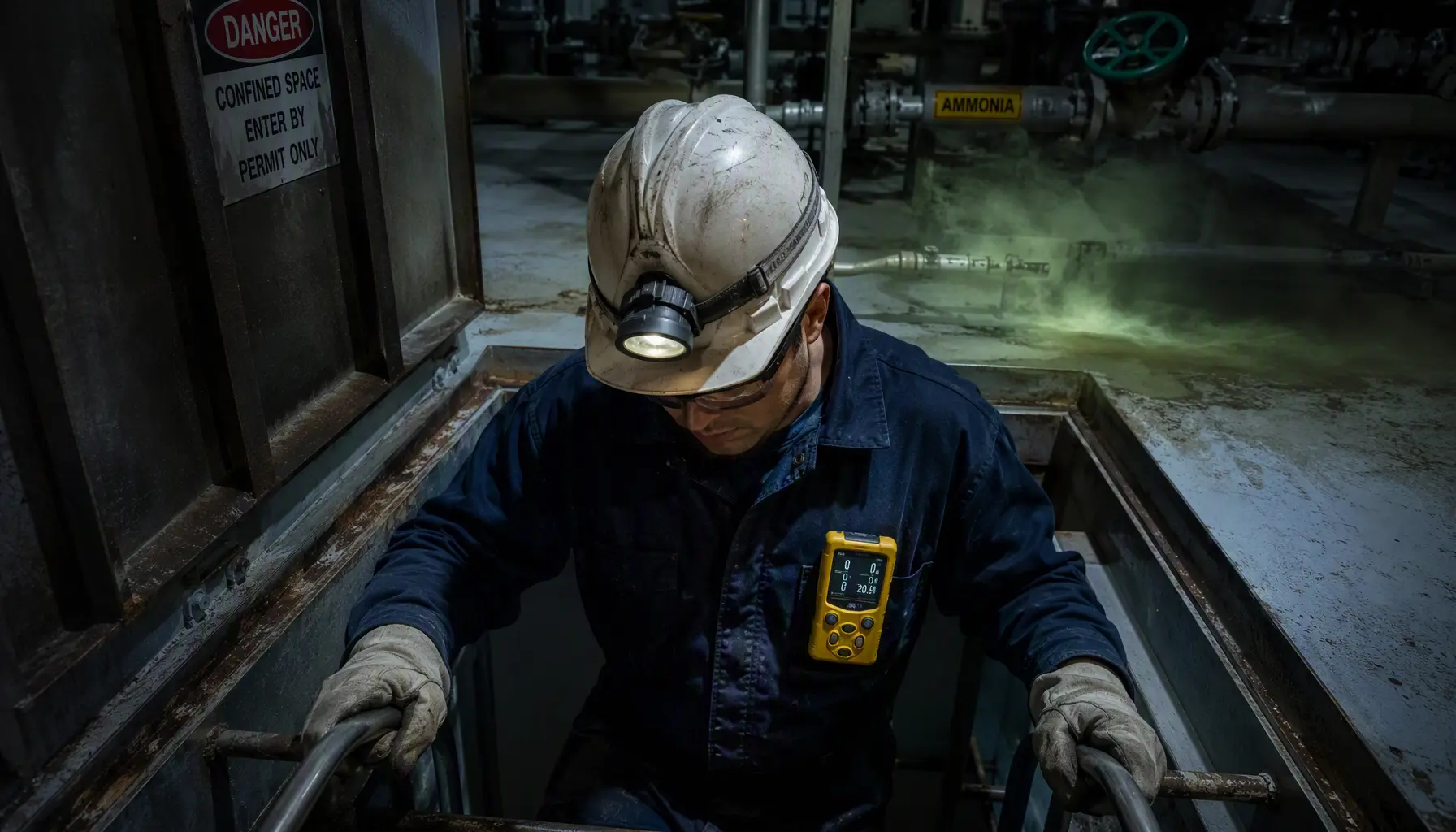
A făcut exact ceea ce a fost conceput pentru a face. Detectorul a căutat cele patru lucruri pe care i s-a spus să le caute și nu a găsit niciunul dintre ele. Gazul care era de fapt acolo nu a trecut niciodată pe listă. Afirmând că o defecțiune a detectorului ratează punctul - defecțiunea a fost în evaluarea pericolului înainte de intrare, nu instrumentul.
Gazele pe care detectorul tău cu patru gaze pentru spațiu închis nu le poate vedea
Dacă evaluarea pericolelor pe site-ul dvs. enumeră oricare dintre următoarele, un detector standard cu patru gaze nu poate fi verificat înainte de intrare. Trebuie să știți acest lucru înainte de a semna permisul. Nu după.
Un monitor standard cu patru gaze nu include în mod normal un canal Cl2. Unde este depozitat sau utilizat clorul, selectați a detector de gaz de clor dedicat în loc să se bazeze pe O2 standard, LEL, CO, și configurația H2S.
| Gaz | Sursă tipică în spațiu închis | De ce este periculos | Detectat de patru gaze standard? |
|---|---|---|---|
| Amoniac (NH₃) | Instalatie frigorifica, depozitarea îngrășămintelor, curatare chimica | Iritant la 50 ppm, letal deasupra 300 ppm. Mai greu sau mai ușor în funcție de temperatură | Nu |
| COV-uri (benzen, toluen, xilen, etc.) | Rezervoare de depozitare a produselor chimice, curatare cu solvent, dulapuri de vopsea, rezervoare de combustibil | Cancerigen la concentrații scăzute. Senzorul LEL poate prinde inflamabilitatea, dar la niveluri ppm mult peste pragul toxic | Nu (LEL prezintă risc de incendiu, nu toxicitate) |
| dioxid de carbon (CO₂) | Rezervoare de fermentare, berării, depozitare gheata uscata, silozuri de cereale, canalizări | Deplasează oxigenul. 5,000 ppm = cefalee. 40,000 ppm = imediat periculos. Senzorul O₂ îl prinde doar atunci când deplasarea este deja severă | Nu (O₂ scade cu întârziere) |
| Clor (Cl₂) | Tratarea apei, camere cu plante de piscină, depozitare chimică | Letal la 430 ppm. Mai greu decât aerul - bazine în punctele joase | Nu |
| Dioxid de azot (NU₂) | Evacuare diesel în spații slab ventilate, silozuri, parcare subterana | Edem pulmonar întârziat. Te simți bine ore întregi după expunere, atunci nu faci | Nu |
| Dioxid de sulf (SO₂) | Conducte de gaze arse centralei electrice, topirea, prelucrare chimică | Iritant respirator sever la concentrații scăzute. Mai greu decât aerul | Nu |
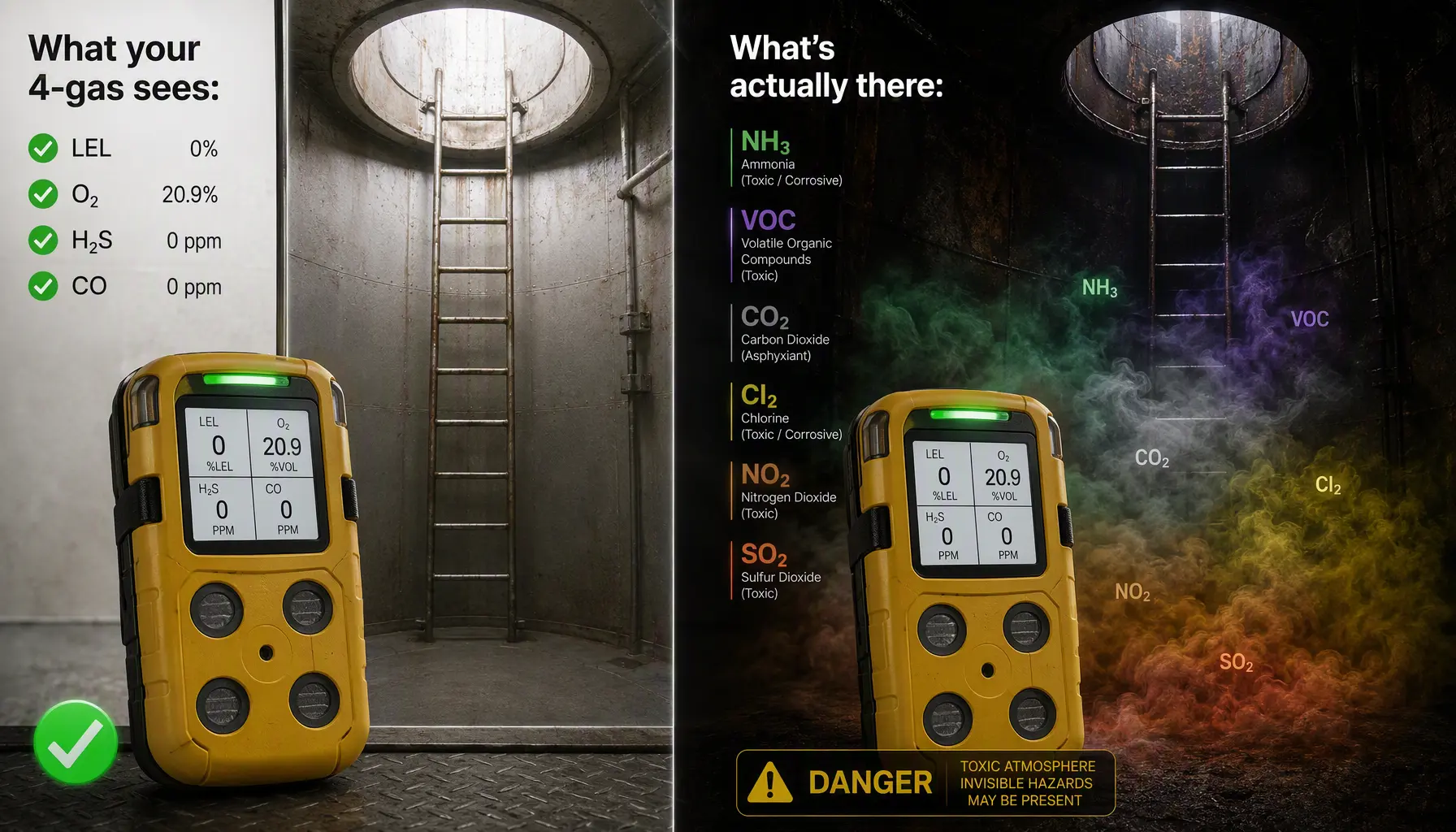
Cinci dintre aceste șase gaze sunt mai grele decât aerul în condiții tipice. Ei se stabilesc în punctele joase ale unui spațiu restrâns - exact acolo unde un muncitor intră primul. Un detector cu patru gaze purtat la înălțimea pieptului, prelevarea prin difuzie, nu va vedea pericolul acumulându-se la nivelul genunchiului până când lucrătorul nu stă deja în el. Până atunci nu măsori o potențială amenințare. Măsurați expunerea.
Unde acest decalaj devine periculos
Iată trei scenarii în care am văzut un patru gaz trecând un control înainte de intrare și ratând pericolul real. Fiecare s-a întâmplat pe un site în care documentele arătau bine până când nu au apărut.
Curățarea rezervorului în depozite chimice. Rezervorul a ținut toluen săptămâna trecută. A fost drenat, ventilat, iar cele patru gaze citesc curat. Ceea ce nu au arătat cele patru gaze a fost concentrația reziduală de COV agățată de pereții rezervorului și de rezervor - nu suficient pentru a activa alarma LEL, mai mult decât suficient pentru a depăși limita de expunere de opt ore în douăzeci de minute.
Intrarea în vas de fermentație a berării. CO₂ de la fermentare se depune în fundul vasului. Senzorul de O₂ de pe un gaz cu patru gaze captează în cele din urmă deplasarea. Problema este că până când oxigenul scade suficient de mult pentru a declanșa alarma, intratul a respirat deja CO₂ crescut de câteva minute. Efectele fiziologice încep cu mult înainte de a suna orice alarmă.
Inspecție puț umed canalizare. H₂S este pericolul evident, iar cele patru gaze îl acoperă. Clorul de la evacuarea industrială în conducta de canalizare, pe de altă parte, nu este evident, iar cele patru gaze nu-l acoperă. Verificarea înainte de intrare trece. Intrarea continuă. Clorul este acolo pentru că nimeni nu a întrebat dacă ar fi - și nimeni nu a întrebat pentru că citirea celor patru gaze părea curată.
La ce ajung acum
După acel incident cu amoniac am încetat să mai tratez cele patru gaze ca pe un instrument complet de pre-intrare. Este tratat acum ca o podea - nu un tavan - completat cu orice evaluarea pericolului pe amplasament spune că este prezent și pe care cei patru gaze nu îl pot vedea.
Pentru majoritatea lucrărilor în spațiu închis, aceasta înseamnă că trebuie să aveți un instrument de aspirație cu pompă care acoperă gazele suplimentare de pe evaluare. Nu există un detector de gaz separat pentru fiecare. Un singur instrument. The OT139 rulează simultan opt canale de gaz — LEL, O2, H2S, CO, plus patru senzori suplimentari configurabili pentru orice include lista de gaze a site-ului dvs: NH3, COV, CO2, Cl2, NO2, SO2, H2, si altele.
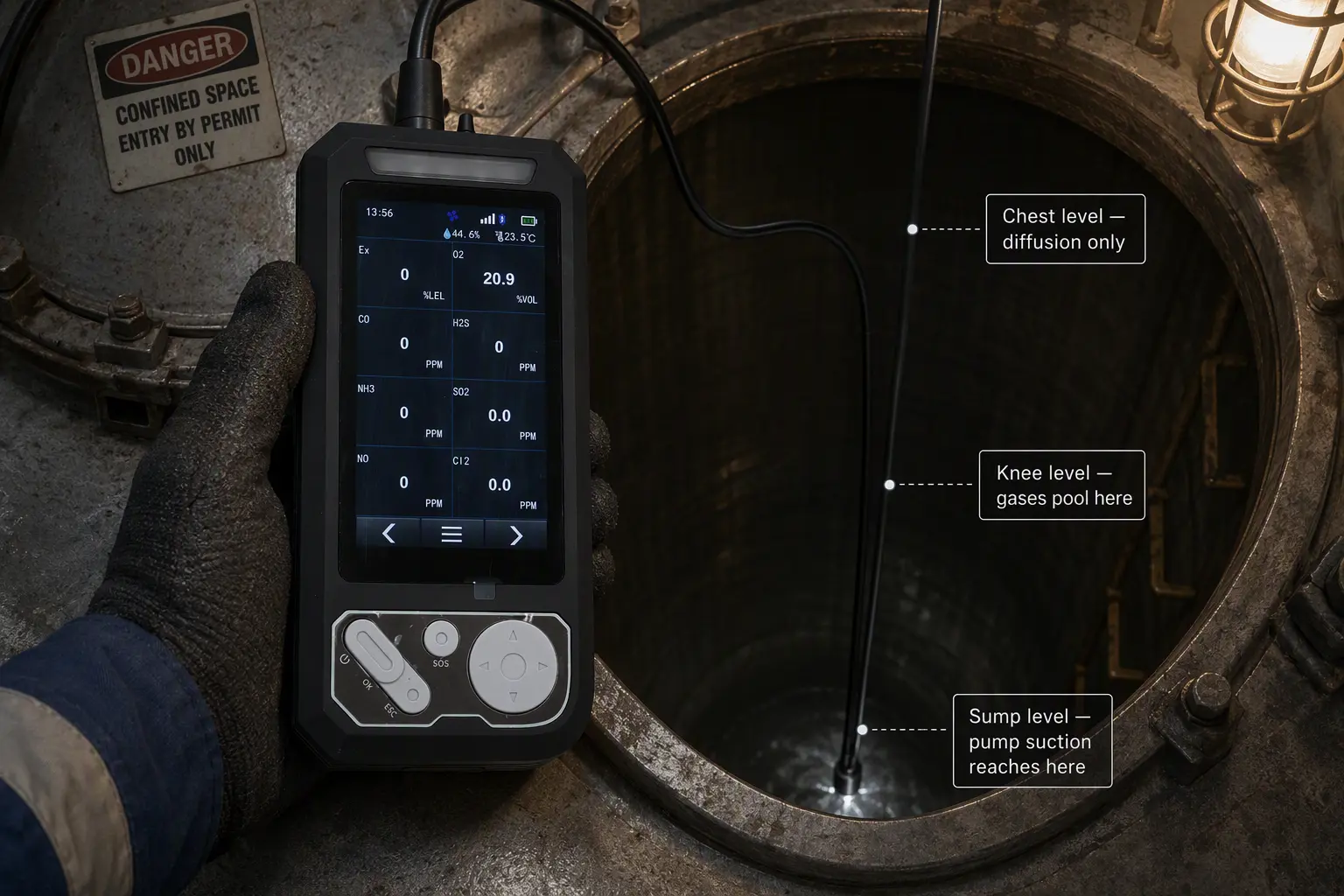
Iată chestia cu pompă, totuși — contează la fel de mult ca numărul senzorilor. Eșantionarea prin difuzie măsoară atmosfera la corpul detectorului. Înălțimea pieptului pe intrat. O instrument pompa-aspiratie cu un furtun de eșantionare vă permite să măsurați la nivelul genunchiului, la nivelul bazinului, în colţul îndepărtat al rezervorului, înainte de a intra. OT139 trage 600 mililitri pe minut printr-un furtun de până la douăzeci de metri lungime. Asta înseamnă că eșantionezi o navă de la canalul de evacuare fără a pune o cizmă în interiorul ei.
De ce contează plicul într-un spațiu restrâns
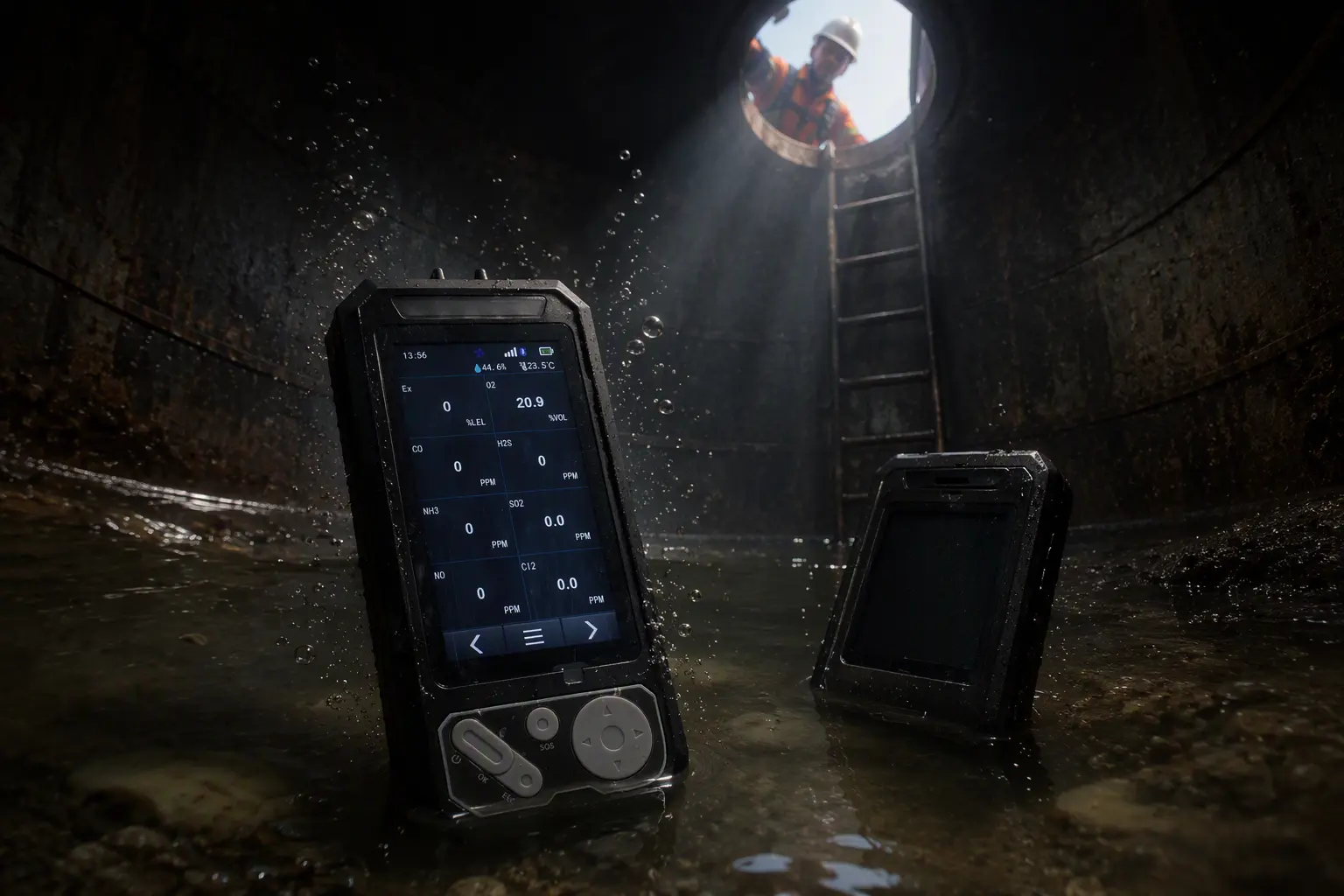
Obișnuiam să tratez ratingul IP ca pe un detaliu din fișa de specificații și nimic mai mult. Apoi am văzut cum un detector s-a defectat într-un rezervor care avea câțiva centimetri de apă în fund. A alunecat de pe o clemă de curea, a aterizat cu fața în jos în apă, si a murit. Participantul a petrecut încă patruzeci de minute în acel rezervor fără monitorizare a gazului, deoarece detectorul de rezervă era în vârful scării și nimeni de la suprafață nu a observat că alarma s-a oprit..
OT139 are IP68 - etanș la praf, protejat împotriva imersiei continue. Supraviețuiește fiind aruncat în apă. Într-un spațiu închis cu lichid acumulat, care nu mai este un detaliu de specificație și începe să fie diferența dintre un raport de aproape ratare și un raport de incident.
De asemenea, are o alarmă de cădere și un SOS cu un singur buton. Dacă persoana care îl poartă încetează să se miște - inconștient, prins în capcană, depășit — alarma se declanșează automat și alertează însoțitorul la suprafață. Cel mai periculos moment într-o intrare în spațiu închis nu este gazul. Este decalajul dintre ceva care merge prost și cineva din afară care observă. Acest interval se micșorează la secunde cu o alarmă de cădere activă.
| specificația OT139 | De ce contează în spațiul restrâns |
|---|---|
| 8 canale de gaze — LEL, O2, H2S, CO + 4 configurabil | Acoperă linia de bază de patru gaze plus pericolele specifice site-ului dvs |
| Pompa de aspirare, 600ml/min, 20m furtun | Probă atmosfera la fiecare nivel înainte de intrare. Nu doar la pieptul tău |
| IP68 | Supraviețuiește scufundarea în apă din bazin, comune în rezervoare, bazine și puțuri umede |
| Alarma de toamna + SOS cu un singur buton | Alertă automată dacă purtătorul se oprește din mișcare. Diferența dintre incident și răspuns se micșorează la câteva secunde |
| De exemplu, un IIB T4 Gb (gaz) + Ex ib IIIC T130°C Db (praf) | Certificat ATEX pentru Zone 1 și Zona 2, medii cu gaze și praf |
| 300,000 înregistrări de date | Pista de audit completă pentru fiecare intrare - citiri de gaz, alarme, evenimente — descărcabile |
Întrebări frecvente despre detectoarele de gaz în spațiu închis
Este un detector de gaz cu patru gaze în spațiu închis suficient pentru intrarea standard?
Dacă evaluarea pericolelor pe site-ul dvs. listează numai LEL, O2, H2S și CO ca pericole potențiale, da — un detector cu patru gaze îndeplinește cerințele. Întrebarea nu este dacă patru gaze sunt suficiente în general. Este dacă patru gaze sunt suficiente pentru spațiul tău limitat. Verificați mai întâi evaluarea pericolelor. Dacă listează NH3, COV-uri, CO2, Cl2 sau orice alt gaz, linia de bază cu patru gaze este insuficientă și trebuie completată.
De ce un detector de gaz în spațiu închis are nevoie de o pompă?
Un detector numai cu difuzie măsoară atmosfera de la corpul detectorului - oriunde este prins de intrat. Gazele mai grele decât aerul se acumulează în cel mai de jos punct al spațiului. Un senzor de difuzie la înălțimea pieptului nu va vedea un strat de CO2 sau H2S la nivelul genunchiului până când intratul nu stă în el.. Un detector de aspirație cu pompă cu un furtun de eșantionare vă permite să probeți partea de jos a spațiului, colțurile, bazinul — mai întâi din afara căminului, apoi continuu în timpul intrării.
Câte gaze ar trebui să măsoare un detector de gaze în spațiu închis?
Minimul este de patru — LEL, O2, H2S, CO. Numărul corect este, totuși, multe gaze pe care evaluarea pericolului din amplasamentul dvs. le identifică ca prezente în acel spațiu închis specific, plus oxigen şi combustibili. Dacă evaluarea enumeră șase gaze, un detector cu patru gaze este scurt la trei senzori. Purtați un instrument care se potrivește cu evaluarea, nu unul care se potrivește cu standardul industriei.
Ce se întâmplă dacă intru într-un spațiu închis cu un gaz pe care detectorul meu nu îl poate măsura?
Detectorul arată curat. Permisul arată bine. Pericolul este prezent și nedetectat. Aceasta nu este o defecțiune a detectorului - este o nepotrivire a detectorului. Cel mai frecvent rezultat este persoana care se confruntă cu simptome - durere de cap, ameţeală, iritație respiratorie - înainte ca cineva de la suprafață să-și dea seama că ceva nu este în regulă. Dacă gazul acționează rapid, precum H2S de concentrație mare sau clor, fereastra dintre simptome și incapacitate se poate micșora la mai puțin de un minut.
Contează evaluarea IP pentru un detector de gaz în spațiu închis??
Mai mult decât ai putea crede. Spațiile închise au deseori apă acumulată, condensare, nămol sau lichid rămas în partea de jos. Un detector cu IP65 sau IP66 este protejat împotriva jeturilor de apă, dar nu a imersiei. Aruncă-l în apă stătătoare - comun în rezervoare, bazine și puțuri umede — și eșuează. IP68 înseamnă că unitatea este evaluată pentru imersie continuă și supraviețuiește acestei căderi. Într-un spațiu restrâns cu lichid în partea de jos, IP68 nu este un lux.
Concluzia
Un detector de gaz în spațiu închis cu patru gaze acoperă cele mai comune patru pericole. Nu le acoperă pe cele care sunt specifice site-ului dvs, iar acestea sunt cele mai probabil să fie ratate în timpul unui control grăbit înainte de intrare. Dacă evaluarea dvs. de pericol include ceva dincolo de LEL, O2, H2S și CO, detectarea gazelor în spațiu închis este incompletă până când adăugați senzori pentru gazele care sunt de fapt pe listă.
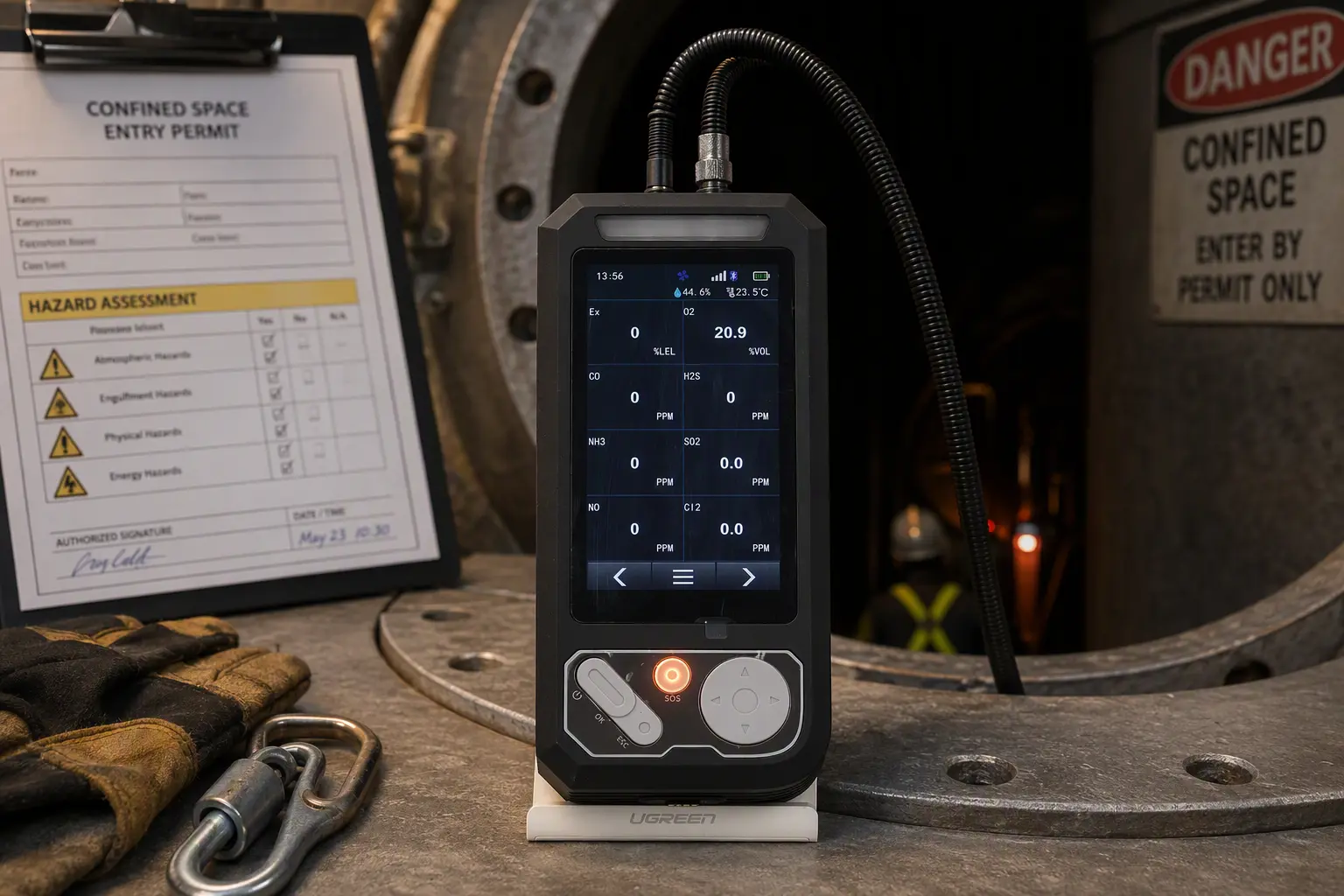
OT139 transportă opt canale cu o pompă care prelevează probe la douăzeci de metri în fața celui care intra. Este construit pentru intrarea pe care o trece cele patru gaze dar nu ar trebui să o aibă. Dacă executați intrări în spațiu limitat și doriți o a doua verificare pentru a verifica dacă configurația curentă a detectorului se potrivește cu evaluarea dvs. de pericol, trimite-ne evaluarea. Vă vom spune ce este acoperit și ce nu.

WeChat
Scanați codul QR cu WeChat