 Henan Otywell Electronic Technology Co., Ltd

Patru tehnologii de detectare — electrochimic, ardere catalitică, infraroşu, și PID — acoperă aproape fiecare gaz pe care o instalație va trebui să detecteze vreodată. Potriviți senzorul la gaz: gaze toxice → electrochimic, inflamabile → catalitic sau infrarosu, COV-uri → PID, CO2 → infraroşu. Citiți corect unitățile: %LEL este scara de explozie, ppm este scala de sănătate, VOL% este oxigen și concentrații mari. Și amintiți-vă de cele două selecții care eșuează cel mai des: un senzor catalitic într-o atmosferă fără oxigen, și orice senzor care nu este niciodată calibrat.
Răspunsul scurt despre senzorii detectorului de gaz: sunt nasuri electronice care transformă moleculele de gaz invizibile în semnale electrice, iar cele patru tehnologii de detectare de mai sus gestionează aproape toate gazele pe care instalația dumneavoastră le va arunca vreodată. Majoritatea cumpărătorilor trebuie doar să potrivească senzorul cu gazul în procesul lor. Nu am ajuns la asta dintr-un manual.
Am ajuns la asta așa cum o facem cei mai mulți dintre noi în această meserie — prin deschiderea capetelor detectoare care au eșuat, și întrebând de ce.
Ce face de fapt un senzor cu detector de gaz
Fiecare detector, portabil sau fix, trăiește sau moare de o componentă: senzorul. Se așează în fluxul de aer, reacţionează la un anumit gaz sau familie de gaze, și produce o ieșire electrică proporțională cu concentrația. Treceți un prag prestabilit, iar instrumentul țipă — alarma sonora, far intermitent, transmite direct într-un sistem de oprire.
Două moduri de a aduce aer la acel senzor. Difuzie permite gazului să intre în mod natural prin deschiderile din carcasă — standardul pentru monitoarele personale prinse de o curea. Pompat instrumentele aspiră aer cu o mică pompă internă, care este modul în care eșantionați un spațiu închis înainte ca cineva să intre, sau trageți dintr-o conductă la cincizeci de metri distanță.
Iată partea care mușcă de obicei oamenii: niciun senzor nu detectează „totul.” Alegeți tehnologia greșită și nu măsurați gazul pe care credeți că îl măsurați. Cele mai multe defecțiuni ale detectoarelor la care am fost chemat să mă uit nu au fost defecțiuni ale echipamentelor. Au fost eșecuri de selecție — instrumentul potrivit, cu celula greșită înăuntru.
Cei patru senzori cu detectoare de gaz care contează
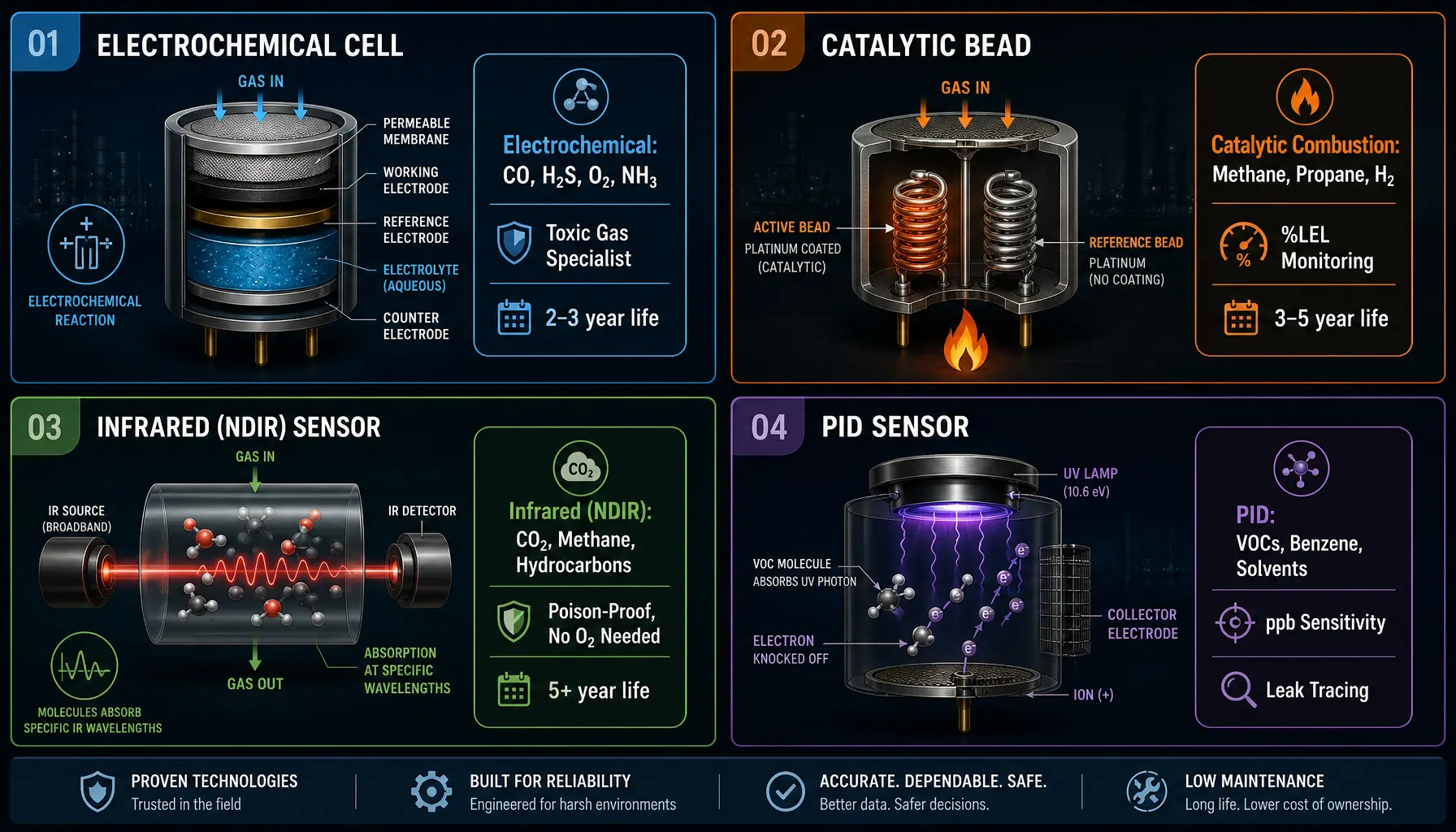
Electrochimic — specialistul în gaze toxice
Clorul este de obicei măsurat cu un senzor electrochimic, dar gama, sensibilitate încrucișată, și metoda de calibrare trebuie să se potrivească aplicației. Vezi noastre Ghid de alegere a detectorului de clor gazos pentru considerente de selecție și plasare specifice Cl2.
O celulă electrochimică deține electrozi într-un electrolit lichid, etanșat în spatele unei membrane permeabile. Gazul țintă difuzează și reacționează la electrodul de detectare, generând un curent mic. Curentul urmărește concentrația aproape liniar — motiv pentru care aceste celule sunt standardul pentru monoxidul de carbon, hidrogen sulfurat, oxigen, si amoniac.
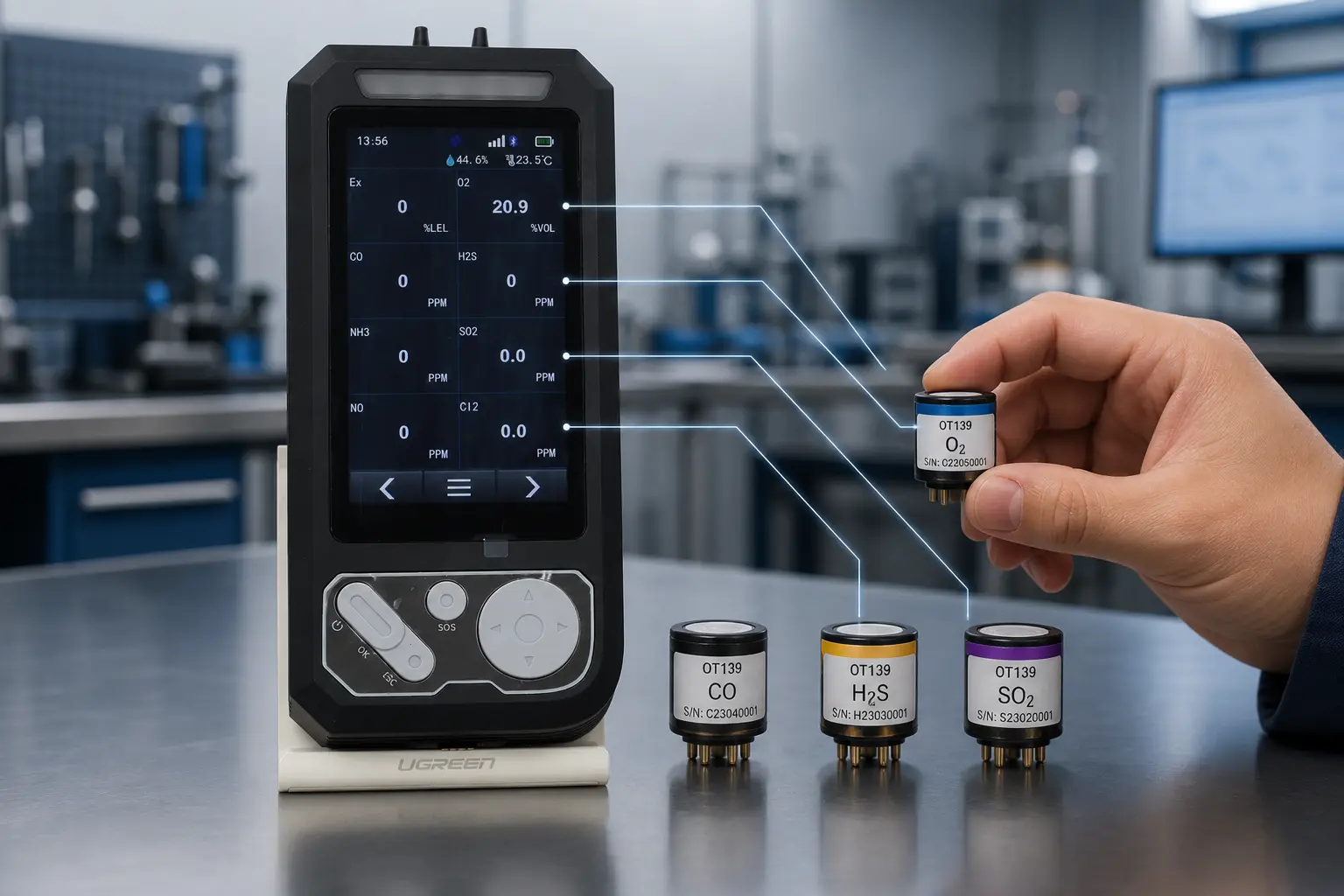
Am văzut de ce contează asta în cel mai rău cadru posibil: o stație de ridicare a apelor uzate în care hidrogenul sulfurat se construia de zile întregi. H2S este unul dintre acele gaze care ucide oameni în câteva secunde la concentrația potrivită — OSHA urmărește aceste decese, și aproape întotdeauna pot fi prevenite. Celulele electrochimice de pe sistemul fix l-au prins la ppm scăzut, cu mult înainte de a atinge intervalul letal. Curentul a rămas proporțional, alarma a sunat, echipajul nu a intrat niciodată.
Precizia vine cu un ceas. Electrolitul este consumat pe măsură ce funcționează, astfel încât durata de viață utilă a unei celule este de obicei 2–3 ani în serviciu, și plutește în căldură extremă sau în aer foarte uscat. Bugetul pentru înlocuire, așa cum bugetul pentru filtre. Nimeni nu face buget pentru filtre.
Combustie catalitică — Ieftin, Rapid, și Otrăvibil
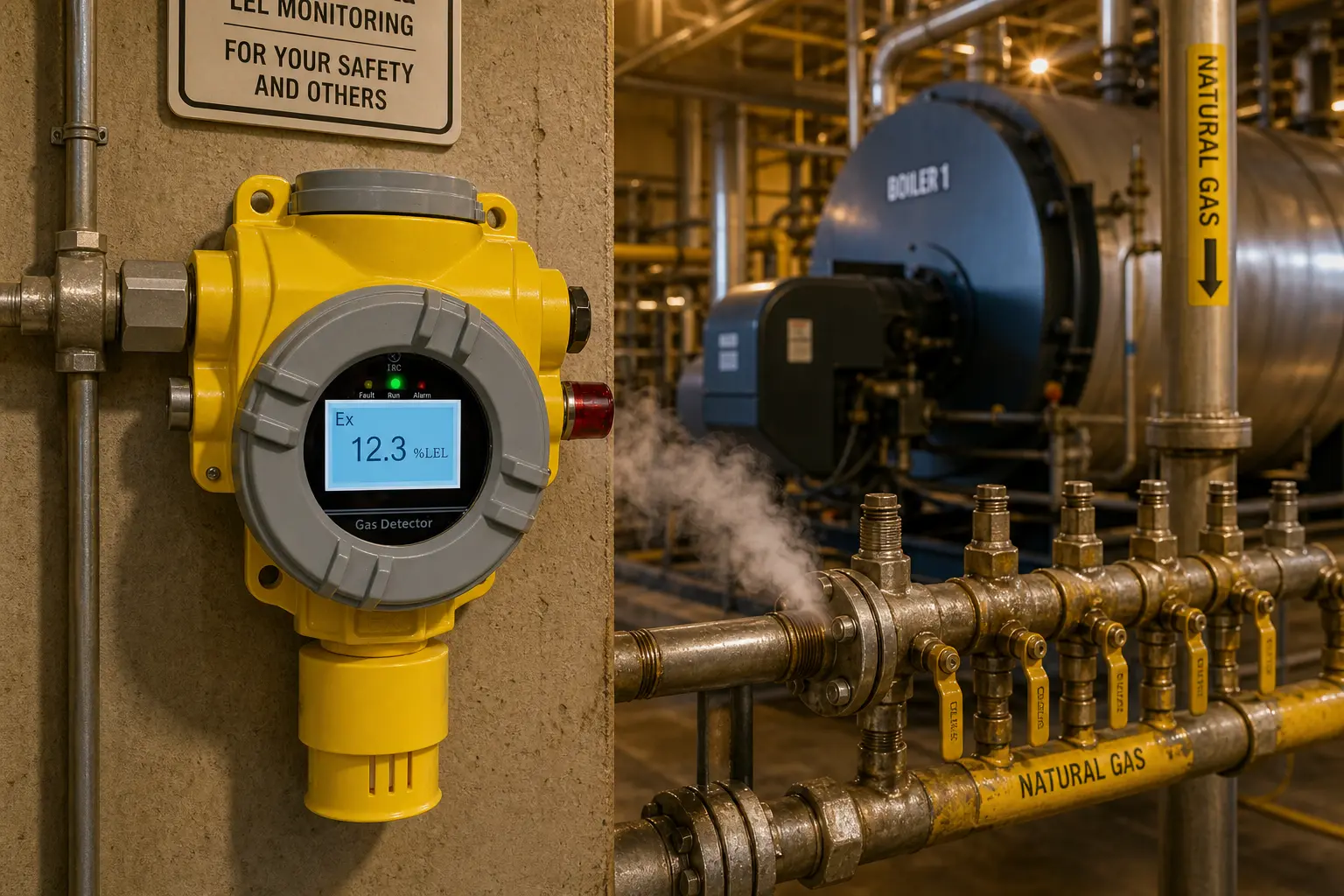
Un senzor catalitic are două bobine de platină: unul acoperit cu catalizator, o singură referință. Gazul inflamabil se oxidează pe talonul acoperit, căldura modifică rezistența bobinei, iar diferența dintre cele două margele este semnalul de gaz. Este calul de lucru al monitorizării %LEL pentru metan, propan, hidrogen — răspuns rapid, cost scăzut, 3–5 ani de viata.
Captura: are nevoie de oxigen pentru a arde, si poate fi permanent otravit. Vapori de silicon, compuși ai sulfului, chiar și anumiți vapori de solvenți ucid catalizatorul în câteva zile. Am văzut o mărgele nou-nouță murind într-o săptămână într-o fabrică unde au pulverizat eliberare de mucegai cu silicon lângă capul detectorului. — citirea s-a redus frumos la aer curat, iar senzorul în sine nu și-a revenit niciodată. Otrăvirea este ucigașul tăcut al senzorului catalitic, și nu apare la un test de expunere.
Infraroşu (NDIR) — Cel care supraviețuiește
Un senzor cu infraroșu strălucește un fascicul de lumină prin proba de gaz și măsoară cât de mult dintr-o anumită lungime de undă este absorbită — metan și CO2 absorbiți infraroșul așa cum un burete absoarbe apă. Mai mult gaz, mai multa absorbtie, citire mai mare.
Fără catalizator pentru a otravi. Nu este necesar oxigen. Funcționează fericit în rezervoare acoperite cu azot și atmosfere inerte unde un senzor catalitic ar fi inutil — care este exact unde îl găsești pe nave și în petrol & gaz: calele de marfă, rezervoare de depozitare acoperite, linii de biogaz. Durata de viață rulează 5+ ani.
Există un punct orb: hidrogen. H2 este o moleculă cu doi atomi care nu absoarbe infraroșu, așa că NDIR pur și simplu nu îl poate vedea. Dacă pericolul tău este hidrogenul, cumpărați catalitic sau electrochimic.
PID — Leak Sniffer pentru COV
Un detector de fotoionizare lovește moleculele de gaz cu o lampă ultravioletă, lovind electronii liberi și creând un curent ionic măsurabil. Este uimitor de sensibil — părți pe miliard — si reactioneaza instantaneu, ceea ce îl face instrumentul standard pentru urmărirea scurgerilor de COV și lucrul cu substanțe periculoase.
Într-o rafinărie, PID-ul este diferența dintre a găsi o flanșă cu scurgeri într-o oră și a o căuta timp de o săptămână. Nu vă poate spune care VOC a găsit, deşi — raportează conținutul ionizabil total, iar citirile au nevoie de factori de corecție specifici compusului. Și gaze cu energie de ionizare mare — metan, CO2 — sunt invizibile pentru ea.
| Senzor | Gazele pe care le detectează | Puncte forte | Atenție la | Viața tipică | Setare tipică |
|---|---|---|---|---|---|
| Electrochimic | CO, H2S, O2, NH3, NU2 | Acurate, putere redusă, selectiv | Se deplasează în căldură uscată | 2–3 ani | Multi-gaz portabil, canalizare, minerit |
| catalitic | Metan, propan, H2 | Ieftin, rapid, robust | Are nevoie de O2; siliconul/sulful îl otrăvește | 3–5 ani | Camerele cazanelor, centrale de gaz, datoria LEL |
| Infraroşu (NDIR) | CO2, metan, hidrocarburi | Rezistent la otravă, nu O2 necesare | Nu-l pot vedea pe H2; cost mai mare | 5+ ani | Nave, rezervoare acoperite, biogaz |
| PID | COV-uri (benzen, solvenți…) | sensibilitatea ppb, instant | Nu pot identifica gazul; factori de corecție | 3–5 ani (lampă) | Urmărirea scurgerilor de rafinărie, materii periculoase |
LEL, PPM, și VOL% — Citirea numerelor
Senzorul este doar jumătate din poveste. The unitate raportează în vă spune ce înseamnă de fapt lectura, iar amestecarea lor a ars mai mult de un manager de siguranță.
VOL% este simplu: procentul de gaz în volum în aer — cum monitorizezi oxigenul. PPM (părți pe milion) este scala de sănătate: 10,000 ppm este 1% după volum, iar limitele de expunere la gaze toxice se situează la ppm cu o singură cifră sau cu două cifre. %LEL este scara de explozie.
Limita inferioară de explozie este cea mai mică concentrație la care un gaz se aprinde în aer. LEL al metanului este 5% VOL — asta e 50,000 ppm. Deci o citire de detector 50% LEL înseamnă că aerul reține 2.5% metan — iar dacă faci aritmetica, asta e 25,000 ppm dintr-un gaz pe care nu trebuie să-l lăsați în apropierea unei surse de aprindere. De aceea sunt setate alarme inflamabile 10–25% LEL: multe avertismente în timp ce atmosfera este încă departe de a fi periculoasă.
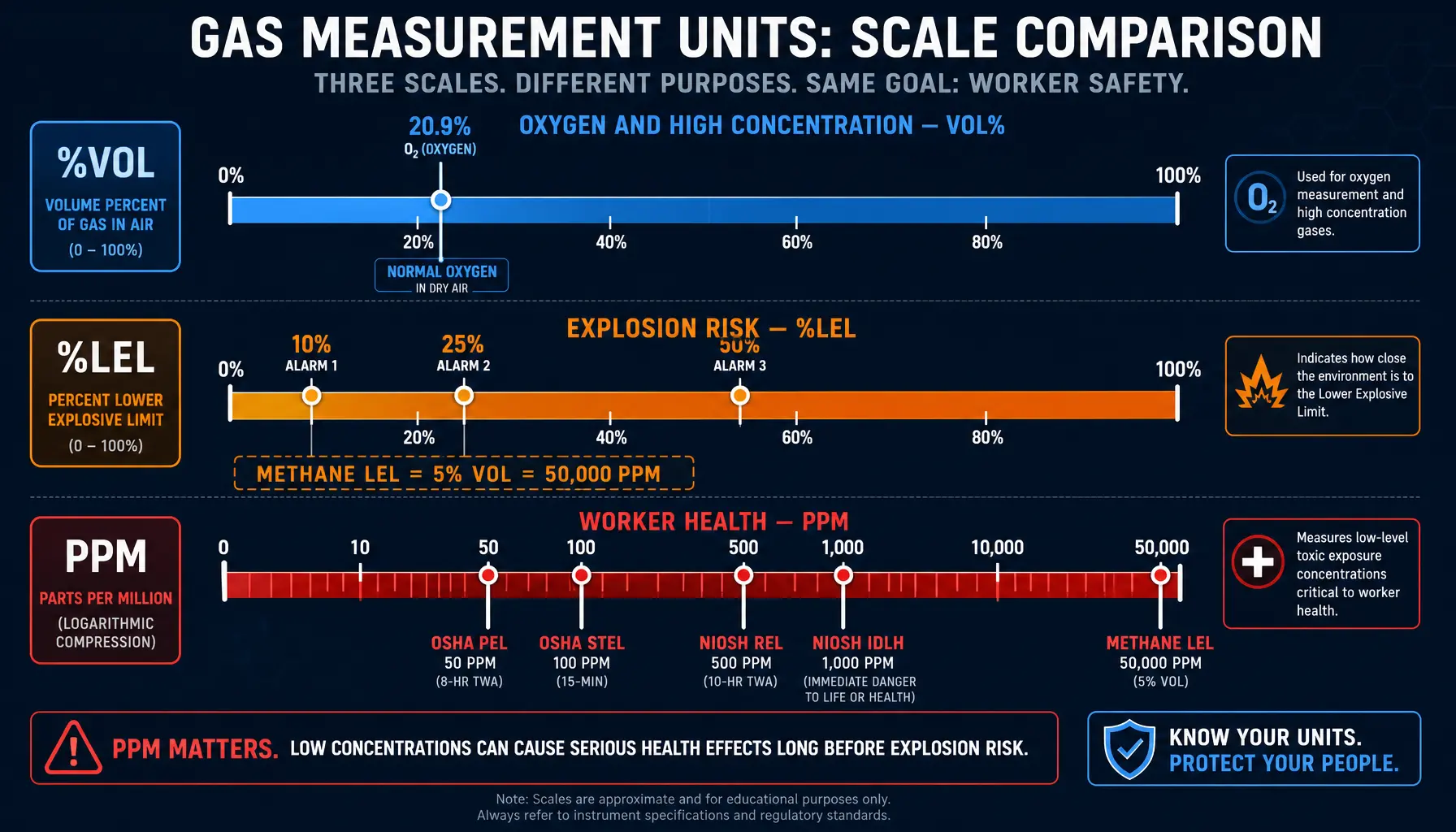
Regula de bază: riscul inflamabil se citește în %LEL, sănătatea lucrătorului în ppm. VOL% este pentru oxigen și lucru cu concentrație mare — și pentru a verifica ceea ce înseamnă de fapt citirea %LEL. OSHA și NIOSH publică limitele de expunere asupra cărora sunt evaluate citirile ppm, și evaluările zonei IECEx/ATEX guvernează unde poate fi utilizat fiecare instrument.
Alegerea senzorului de detector de gaz potrivit
Patru întrebări decid, în ordine:
- Care gaz? Toxic (CO, H2S, NH3) → electrochimic. Inflamabil (metan, propan, H2) → catalitic sau infrarosu. COV-uri → PID. CO2 → infraroşu.
- Mediul este lipsit de oxigen sau predispus la otrăvire? Apoi infraroșu, și numai în infraroșu. Un senzor catalitic într-o atmosferă inertă arată zero în timp ce rezervorul se umple cu gaz.
- Fix sau portabil? Muncitori în mișcare, spații restrânse → unități portabile cu mai multe gaze (de obicei O2 + CO + H2S + LEL într-o singură cutie). Acoperire continuă a zonei → detectoare fixe conectate la un controler.
- Care este planul tău de întreținere? Fiecare senzor derivă. Bump-test zilnic, calibrați conform programului producătorului, și înlocuiți senzorii la sfârșitul duratei de viață — o celulă electrochimică veche de 3 ani este o răspundere, nu un senzor.
Și patru greșeli care continuă să apară, în nicio ordine anume:
- Senzori catalitici în atmosfere inerte. Rezervor acoperit cu azot, cap catalitic instalat oricum — senzorul arată zero în timp ce pericolul crește. Este cel mai scump zero pentru care veți plăti vreodată.
- PID folosit ca monitor de explozie. Un PID prinde frumos urme de COV; nu este un dispozitiv de protecție împotriva exploziilor. O treabă diferită, scară diferită.
- Instrumente clasificate pe zonă ignorate. O evaluare ATEX/IECEx nu este o documentație — acesta decide dacă instrumentul însuși poate aprinde atmosfera pe care o monitorizează.
- Bugetul de calibrare zero. Cei mai buni senzori de bani pot cumpăra drifturi. Necalibrat, este un decor foarte scump.
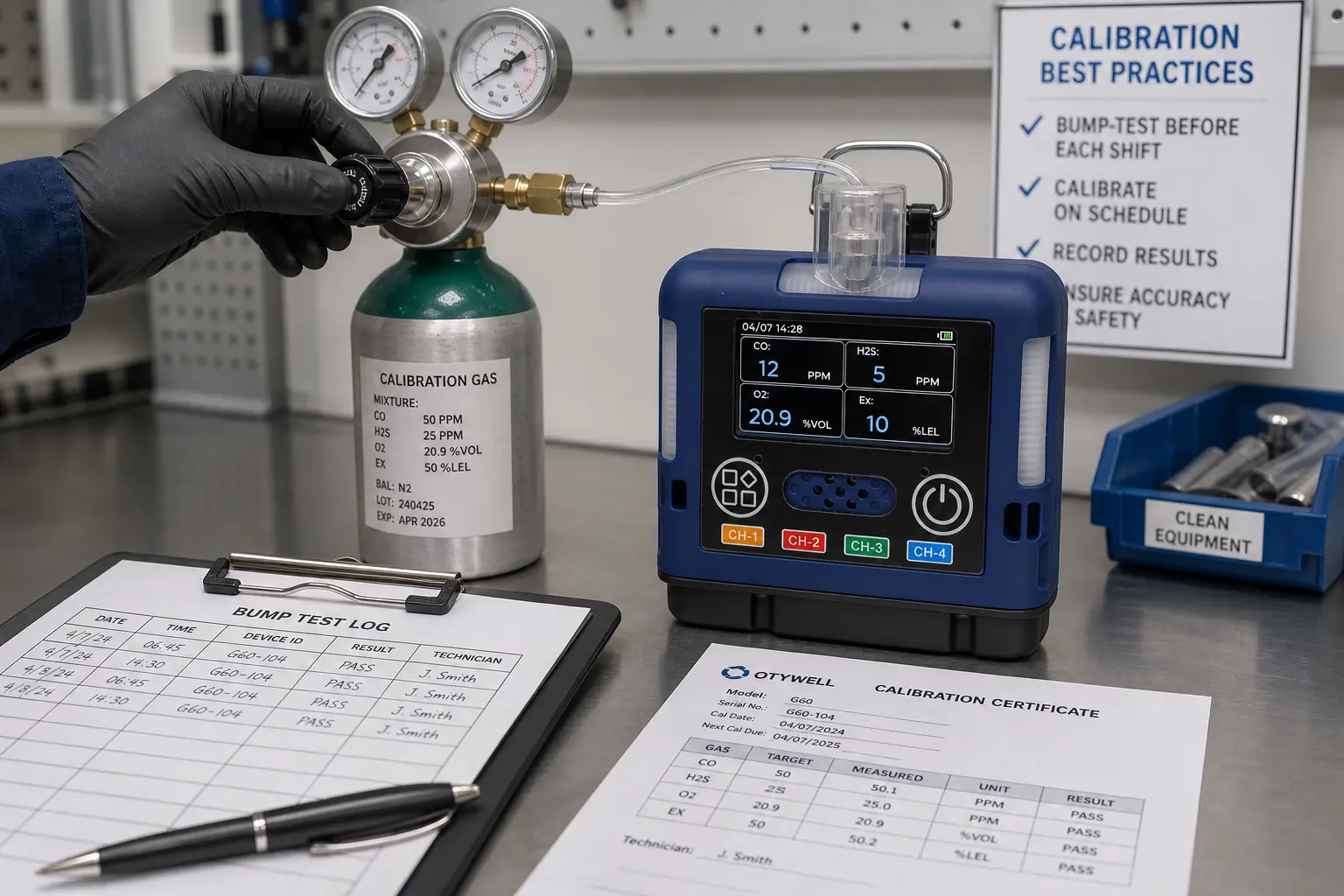
Încă un lucru: dacă procesul dumneavoastră are mai multe clase de pericol — gaz combustibil plus gaz toxic plus deficit de oxigen — nu încercați să faceți un singur senzor să facă totul. Pentru asta sunt instrumentele cu mai multe gaze, și acesta este motivul pentru care construim gamele portabile și fixe ale Otywell în jurul tehnologiilor de detectare combinate, mai degrabă decât a unei singure celule magice.
Întrebări frecvente despre senzorii detectorului de gaz
Cât durează senzorii detectorului de gaz?
Senzorii electrochimici durează de obicei 2–3 ani, senzori de ardere catalitică 3–5 ani, și senzori cu infraroșu 5 ani sau mai mult. Durata de viață depinde de expunerea la gaz, temperatură, umiditate, si intretinere. Când calibrarea nu mai poate aduce un senzor în rază, înlocuiți-l.
Un senzor detector de gaz poate detecta toate gazele??
Nu. Fiecare tehnologie de detectare răspunde unui anumit gaz sau familie de gaze — asta e fizica, nu o limitare a produsului. Detectoarele cu mai multe gaze combină mai mulți senzori într-un singur instrument, de obicei O2, CO, H2S, și un canal de gaz combustibil.
Care este diferența dintre LEL și PPM?
LEL este o scară procentuală pentru riscul de explozie; PPM este o scară de concentrare absolută a riscului pentru sănătate. Un gaz poate fi letal în concentrații ppm în timp ce se citește aproape de zero pe o scară LEL. Utilizați %LEL pentru a preveni incendiile, ppm pentru a proteja lucrătorii.
De ce eșuează senzorii catalitici în medii fără oxigen?
Arderea catalitică are nevoie de oxigen pentru a susține reacția de oxidare pe talon. Într-o atmosferă inertă sau acoperită cu azot, reacția nu poate avea loc, deci senzorul nu poate răspunde. Folosește infraroșu acolo.
Senzorii detectorilor de gaz au nevoie de calibrare regulată?
Da. Senzorii se deplasează în timp, iar un senzor care se deplasează în tăcere este mai rău decât niciun senzor — dă falsă încredere. Testați-l înainte de fiecare schimb și urmați programul de calibrare al producătorului.
Concluzia
Potriviți senzorul la gaz, iar mediul la senzor. Electrochimicul tratează substanțele toxice. Catalizatorul acoperă substanțele inflamabile — dar numai acolo unde este prezent oxigen. Infraroșul este ceea ce supraviețuiește otrăvirii și atmosferelor inerte. PID prinde urme de COV.
Obțineți acele asocieri corecte și detectorul dvs. este un sistem de avertizare timpurie care se amortizează singur la prima alarmă reală. Găsiți-le greșit și aveți un decor scump pe perete — unul care citește zero în timp ce pericolul crește, și nimeni nu știe până nu este prea târziu.
Construim sistemele de detectare a gazelor Otywell exact în jurul acestei logici: tehnologia de detectare potrivită pentru condițiile reale ale fiecărui site, de la portabile cu un singur gaz la sisteme fixe multi-punct pentru marine, ulei & gaz, chimic, stocare de energie, și medii miniere. Dacă nu sunteți sigur de ce senzor are nevoie aplicația dvs, spune-ne trei lucruri — gazul țintă, mediul înconjurător, și intervalul de concentrație — și vă vom spune ce să specificați, cu raționamentul.

WeChat
Scanați codul QR cu WeChat