 Henan Otywell Electronic Technology Co., Ltd

A phosphine gas detector for a worker near a fumigated store has a different job from an instrument measuring the gas concentration inside the treated grain. Both measure PH3. They should not be specified from the same number on a range chart.
Short answer: For personnel safety, start with a PH3 detector whose low-end performance is documented around the concentration at which your site needs to act. Decide whether workers need a portable alarm, whether a room or boundary needs continuous fixed coverage, and whether a pump is required to sample from a distance. High-range fumigation measurement is a separate requirement.
Where Phosphine Monitoring Is Needed
Phosphine, also called hydrogen phosphide, is used as a fumigant in stored-product operations and as a gas in some industrial processes. In grain work, metal phosphide products release PH3; a leak can expose a person outside the intended treatment space. The OSHA grain-fumigant bulletin identifies phosphine among the chemical hazards associated with grain fumigation.
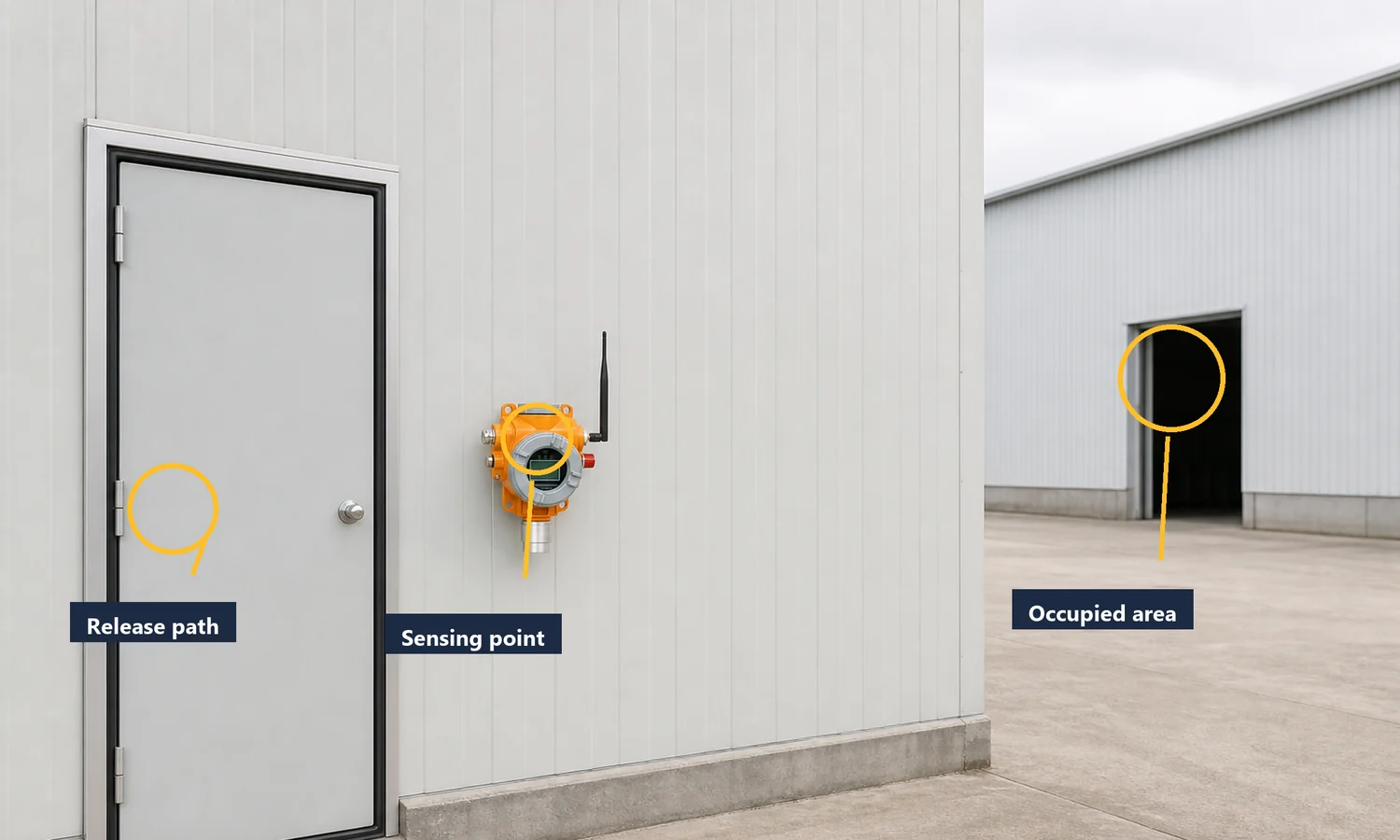
The practical monitoring points are not limited to the treatment enclosure. Doors, seals, adjoining rooms, service corridors, aeration discharge areas and the routes used by applicators may also need attention. The precise locations depend on the enclosure, ventilation and work pattern, not merely on the label “grain warehouse.”
| Work situation | Question to answer | Likely measurement approach |
|---|---|---|
| Fumigated store or silo perimeter | Is PH3 escaping where people approach the enclosure? | Low-range portable survey or planned fixed points |
| Adjoining occupied space | Can a release reach staff between routine rounds? | Continuous fixed detection with an alarm route |
| Aeration or handover | What is the concentration at the location being checked? | Appropriate low-range instrument and sampling method |
| Inside the treated commodity space | Is the fumigant concentration adequate for the process? | Separate high-range process measurement |
| Industrial gas cabinet or connection | Could a release reach a cabinet opening or nearby worker? | Application-specific fixed detection and maintenance checks |
Phosphine can have a garlic- or fish-like odor, but smell is not a dependable measurement method. The NIOSH Pocket Guide identifies it as a colorless gas and records its occupational limits and emergency characteristics. A detector is selected for a measurable decision, not to confirm what someone thinks they can smell.
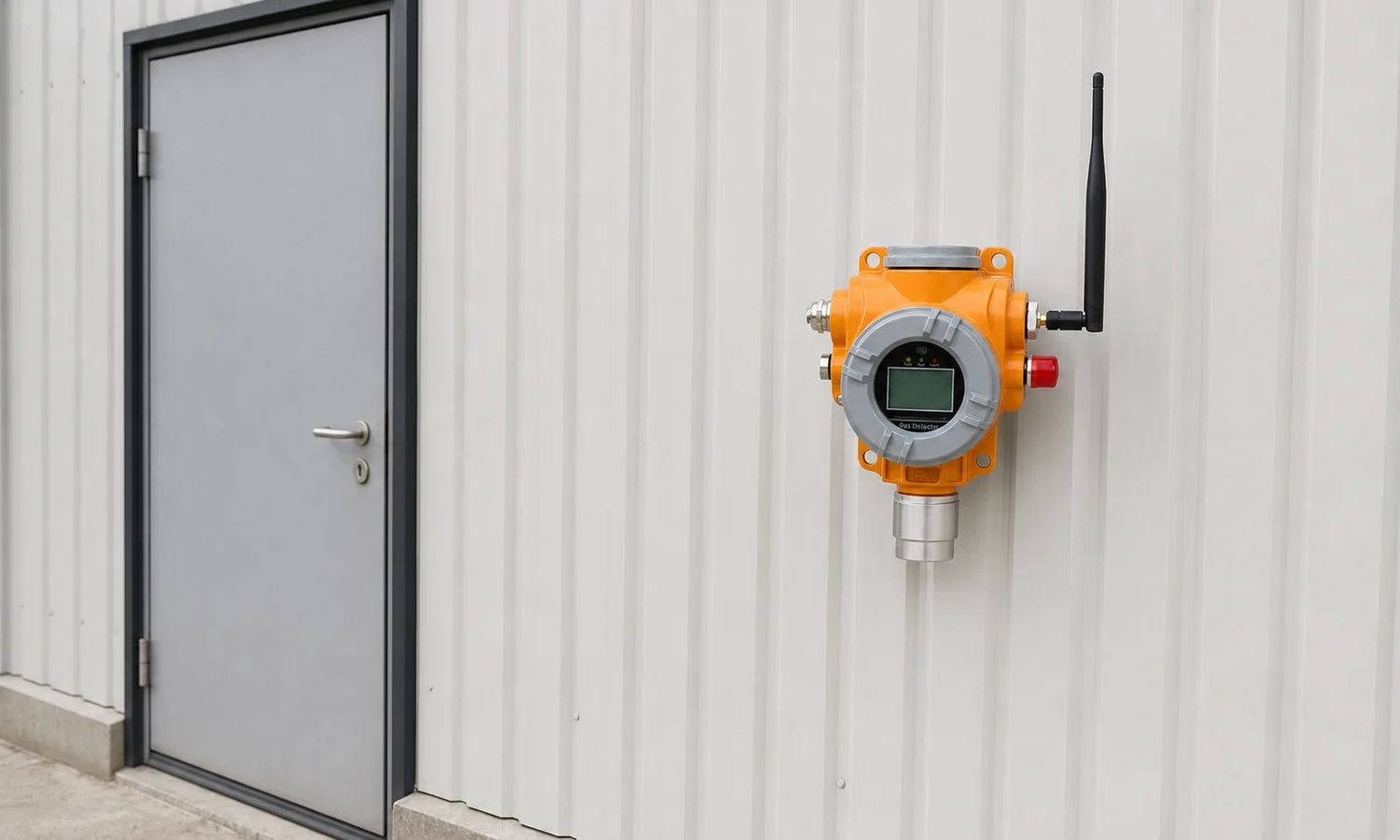
First Separate Worker Safety from Fumigation Concentration
Low-range safety monitoring asks whether phosphine has reached a level that calls for a workplace response. High-range fumigation monitoring asks whether the treatment space has the concentration required by the process. This is the most important distinction in a PH3 purchase request.
The OSHA phosphine data page lists an 8-hour permissible exposure limit of 0.3 ppm. It also reports the NIOSH recommended 10-hour time-weighted average of 0.3 ppm and 15-minute short-term limit of 1 ppm. These are exposure metrics, not ready-made settings for every detector. A reading of 0.3 ppm at one instant is not itself an 8-hour time-weighted average.
| Specification item | Personnel safety instrument | Fumigation process instrument |
|---|---|---|
| Primary question | Is PH3 reaching a person or occupied area? | What concentration exists in the treatment space? |
| Most useful part of range | Low ppm and the site’s action region | Process concentration and treatment trend |
| Typical output | Personal alarm or fixed system alert | Process reading and treatment record |
| Evidence to request | Low-end accuracy, response, alarms, calibration | High-range capability, sampling arrangement, method |
Range is not a substitute for performance. A display step of 0.1 ppm tells you how the number is shown; it does not prove that the reading is accurate to 0.1 ppm. Ask for the accuracy statement and test conditions near the intended alarm point. If the instrument may see concentrations above its range, ask what it displays during over-range and how that event is recorded.
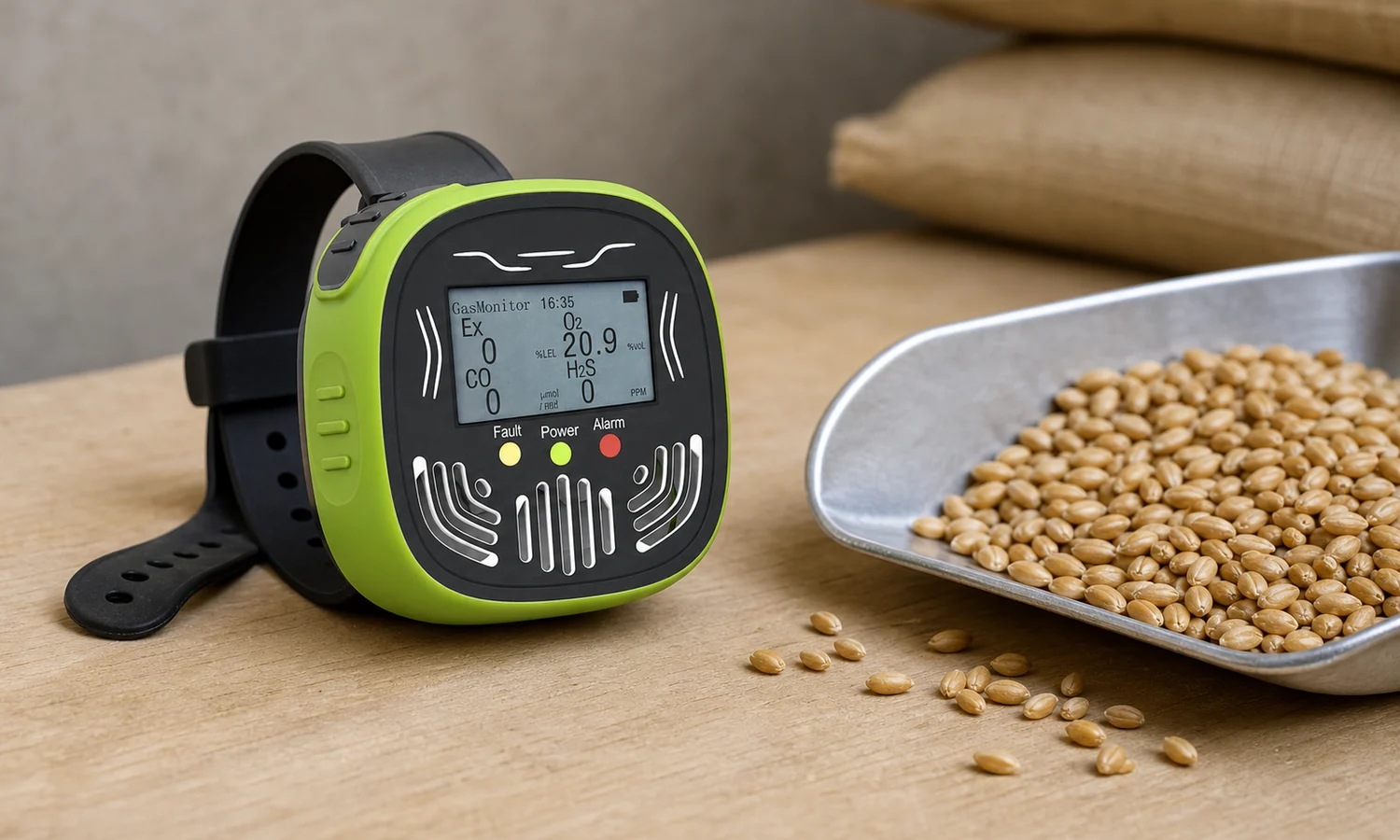
Choose the Detection Format Around the Task
Portable diffusion detector
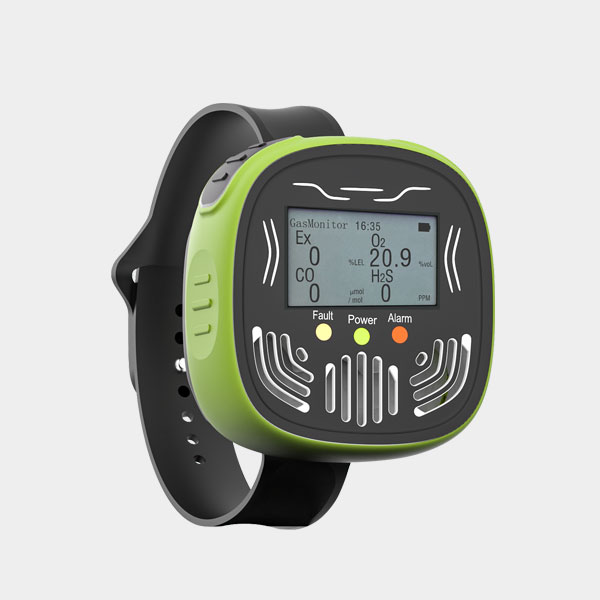
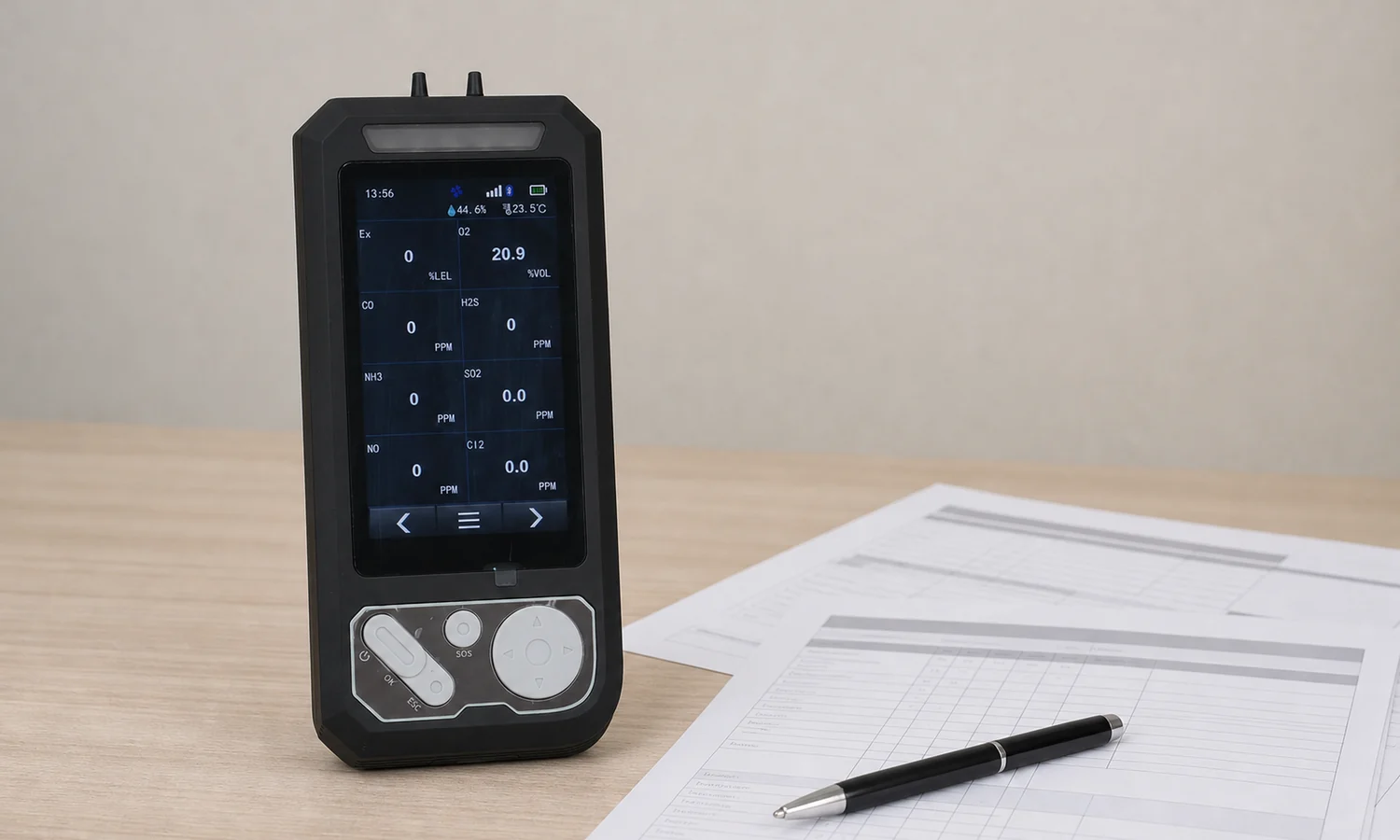
A diffusion detector measures the air that reaches its sensor. It can give a worker a direct alarm while moving along a perimeter or between storage areas. The wearable position matters: a unit hidden under clothing or blocked by equipment may not sample the air as intended. Check audible, visual and vibration alarms, battery duration, event records and how the selected PH3 sensor is identified on the order.
Portable pump-suction detector
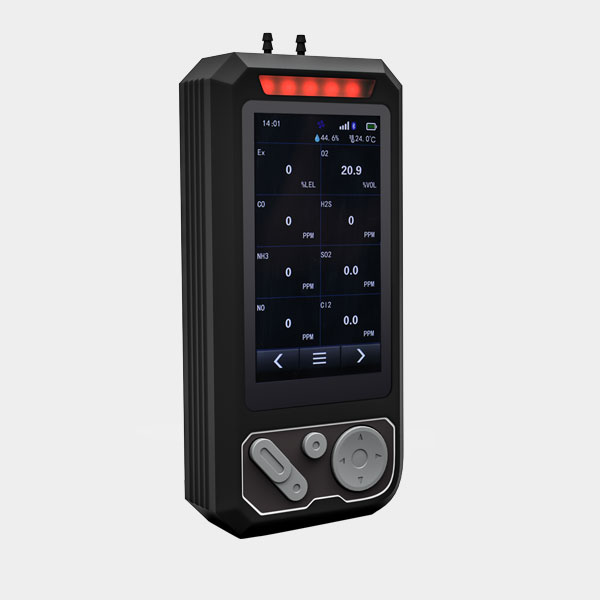
With a pump, the operator can draw air from a remote point through a probe or sample line. This is useful when the inlet must be checked before approaching an opening or when a reading is needed beyond arm’s reach. A remote reading is delayed by line volume, flow and sensor response. Confirm the tubing material, line length, filter and flow-fault indication for the actual assembly. Do not take the displayed value as an instantaneous measurement at the far end of the tube.
Fixed detector
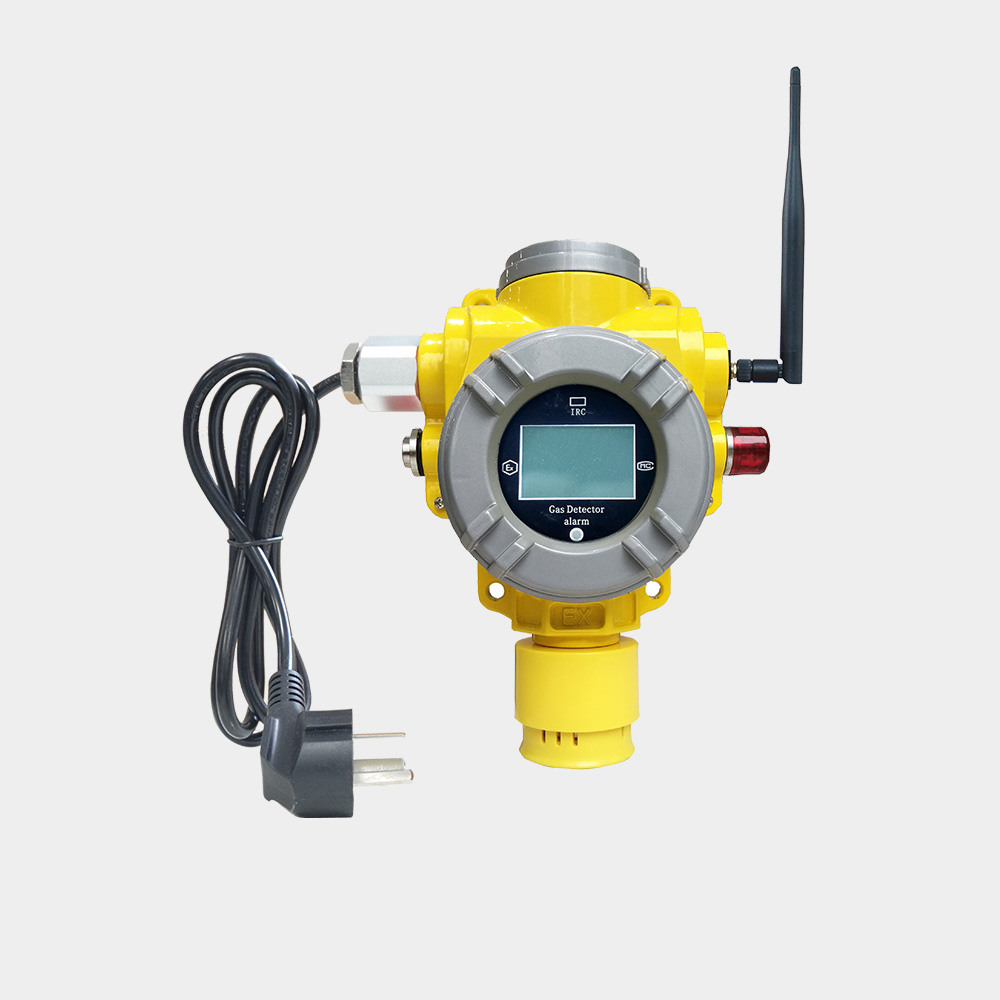
A fixed detector watches a selected location continuously, including when no worker carries a portable instrument through the area. It may send a concentration signal to a controller or remote monitoring unit. Specify what happens on alarm, fault, power loss and communication loss. For an adjoining room or regularly occupied route, the value of fixed detection lies as much in its alert path as in the sensor head.
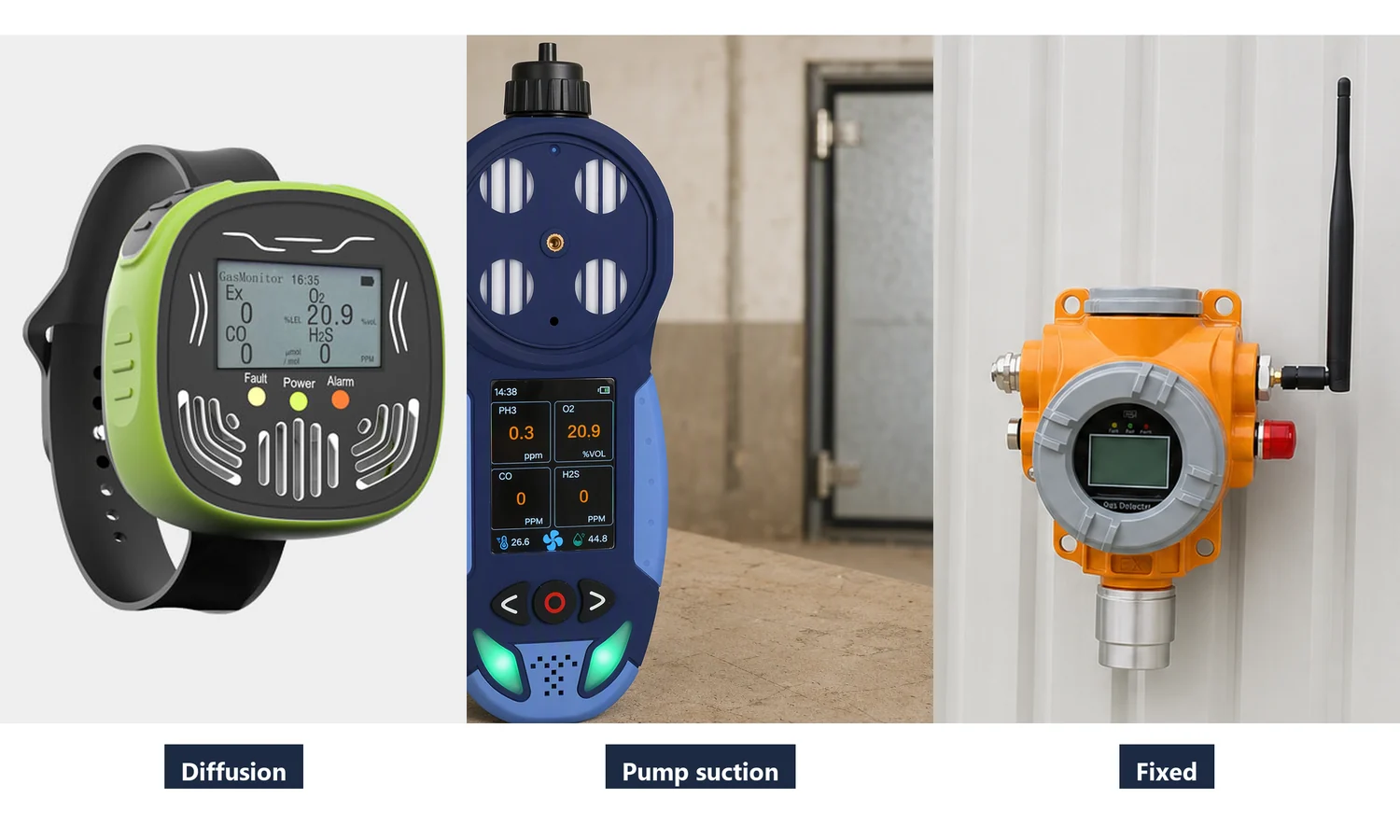
Otywell PH3 Detection Options
These product pages list phosphine in their configurable gas tables. The required PH3 sensor, range, sampling method and outputs should appear on the quotation; the model name alone does not establish the supplied configuration.
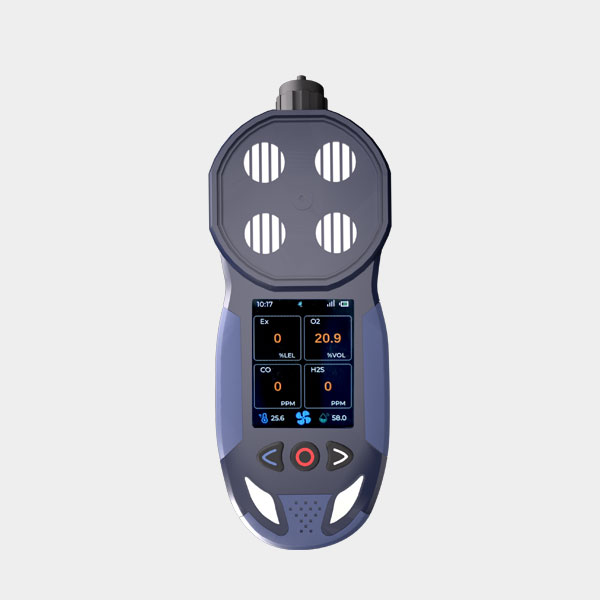
Check the Low End, Not Just the Full Scale
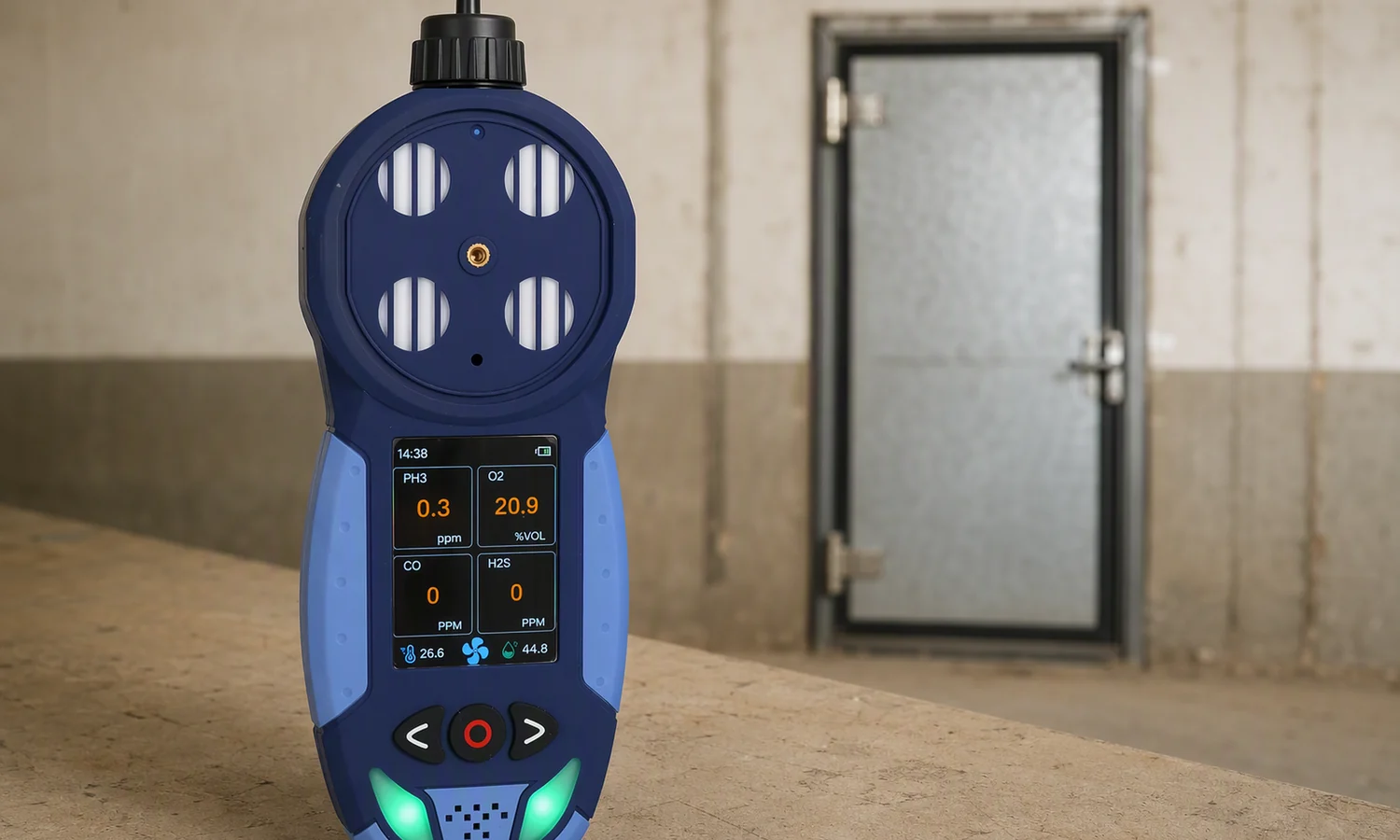
When comparing a phosphine detector, request a specification for the exact PH3 configuration. A generic multi-gas datasheet may describe the enclosure and alarm functions without establishing how the PH3 channel performs.
- Range and resolution: Identify the lowest reading the instrument displays, the full-scale value and the over-range behavior. Keep the worker-safety and process-range requirements separate.
- Accuracy near the action level: Read whether the stated error is a percentage of reading, a percentage of full scale or another form. A wide full-scale tolerance can matter at low ppm.
- Response time: Ask whether the published response is for the bare instrument or includes the proposed pump, line and filter.
- Interferences: Identify the selected sensor and any cross-sensitivity relevant to gases present at the site. Do not assume a general “toxic gas” channel distinguishes PH3 from every other gas.
- Alarm behavior: Specify low and high alarms, latching or non-latching operation, sound and light visibility, fault signals and how the user acknowledges an alarm.
- Calibration support: Confirm the calibration method, suitable gas, accessories, service interval and recordkeeping before purchasing.
A supplier’s quoted PH3 range must be checked alongside the sensor’s low-end accuracy and its expected service conditions. “0–20 ppm” and “0.1 ppm resolution” describe a scale and a display increment. Neither tells a buyer how the unit behaves after months in a dusty storage facility or with a long sample tube attached.
Place Monitoring Where a Release Could Reach People
Draw the fumigation boundary and walk the routes people actually use. Mark enclosure joints, doors, loading points, adjoining rooms, low or poorly ventilated spaces, exhaust outlets and normal operator positions. Then note the direction of air movement in the operating conditions that matter. One detector beside a silo does not automatically cover the control room or a passage on the other side.
For fixed monitoring, choose each point to answer a specific release question. A sensor at an occupied-room entrance may serve a different purpose from a sensor beside a suspected leak path. Document where the alarm is heard or received. If a wireless unit sends readings to another device, confirm communication coverage and what the system does when the link fails.
For portable surveys, record the sampled location rather than only the instrument reading. A single result at a doorway cannot describe an entire store. If using a pump, wait for the line to clear and the reading to stabilize according to the instrument and sampling setup. That detail is particularly important when moving from one test point to the next.
Maintenance Questions That Affect the Reading
Dust, moisture, blocked inlets, depleted batteries and sensor age can affect a detector long before an obvious hardware failure appears. Build the checking routine around the selected instrument and the fumigation schedule. Verify that the alarm can be seen and heard under actual work conditions, and keep records tied to the detector’s identity.
A bump test checks whether the detector responds and its alarms activate when challenged with gas; calibration adjusts or confirms measurement against a known concentration. They are different checks. Our bump test vs calibration guide explains the distinction in more detail. For PH3, ask the supplier for the approved test gas and procedure for the specific sensor rather than assuming that a four-gas test kit is suitable.
What to Put in a PH3 Detector RFQ
A useful request for quotation starts with the measurement job, not just a model number. Give the supplier enough information to propose the right sensor and accessory set.
- Application: worker safety, fixed boundary alarm, remote check or process measurement
- Gas: phosphine (PH3), with any other channels required
- Requested range, low-end accuracy and display resolution
- Portable diffusion, portable pump or fixed monitoring format
- Sample point, tubing length and filter needs for pumped work
- Alarm actions, outputs, logging and fault indication
- Temperature, humidity, dust and power conditions
- Calibration accessories, service support and records required
If the same project also needs to document gas concentration inside a fumigation enclosure, put that on a separate line of the RFQ. It prevents a low-range personnel detector from being mistaken for a high-range treatment monitor.
Frequently Asked Questions
Can a standard four-gas detector detect phosphine?
Only if the supplied unit includes a phosphine-capable sensor. A common four-gas combination does not establish PH3 detection. Confirm the channel list, range and calibration procedure on the actual order.
Is 0–20 ppm enough for a phosphine detector?
It may suit a low-range workplace task if performance near the required action level is documented. It does not establish suitability for measuring the higher concentration inside an active fumigation process.
When is a fixed PH3 detector preferable to a portable unit?
Fixed detection is useful where a selected area needs continuous monitoring and a remote alarm path. A portable unit follows a worker or supports checks at multiple points. Some operations need both functions.
Does a pump make a PH3 reading instantaneous?
No. The sample must travel through the probe and tubing, then reach the sensor. Line length, flow and blockage can change the time between a release and a displayed reading.
Make the Measurement Job Explicit
The strongest phosphine detector specification begins with one question: where must a PH3 reading change a decision? For worker safety, the low end of the scale, the alarm route and the real sampling location matter most. If the project also measures fumigation concentration, specify that as a second instrument or separately verified measurement function.

WeChat
Scan the QR Code with wechat