 Henan Otywell Electronic Technology Co., Ltd

Ozone Gas Detector Selection for Water Treatment and Industrial Sites
An ozone gas detector should be selected for a defined measurement job. Monitoring a worker beside an ozone generator is different from measuring process gas inside a pipe, even though both readings may be labelled O3.
Start with the measurement objective. Decide whether the instrument will warn people about an ambient leak, provide continuous room coverage, check an area during maintenance or measure process concentration. Then specify the range, resolution, fixed or portable format, sampling method, alarm outputs and maintenance arrangement.
Ozone is used as an oxidizing and disinfection agent in water treatment, food processing, pharmaceutical production and other industrial processes. It is also a respiratory hazard. The NIOSH Pocket Guide for ozone lists a recommended exposure limit of 0.1 ppm as a ceiling and an immediately dangerous to life or health value of 5 ppm. The same page describes ozone as a nonflammable but powerful oxidizer.
Those values show why low-concentration performance matters, but they do not define every alarm setting. The detector still has to match the applicable workplace limit, the release scenario and the action attached to each alarm.
Where Industrial Ozone Exposure Can Occur
Ozone is often generated where it is used rather than stored in a conventional gas cylinder. A leak can develop at the generator, contactor, destruct unit, pipe connection, seal or off-gas route. The release pattern depends on the equipment pressure, ventilation and surrounding surfaces because ozone reacts readily with many materials.
| Work area | Possible ozone source | Primary monitoring question |
|---|---|---|
| Water or wastewater treatment | Ozone generator, injector, contactor, off-gas line and destruct unit | Which enclosed rooms and access routes need continuous leak warning? |
| Food and beverage processing | Sanitation equipment, wash systems and ozonated-water equipment | Can residual ozone reach workers after a treatment cycle or during maintenance? |
| Pharmaceutical or clean area | Room decontamination equipment and connected distribution lines | Does the instrument need to verify clearance, monitor workers or both? |
| Laboratory | Bench generators, experimental apparatus and exhaust systems | Will a local portable check be enough, or is unattended generation possible? |
| Semiconductor and electronics work | Process generation, cabinets, pipework and abatement equipment | Which gas streams require process analysis, and which occupied spaces require safety monitoring? |
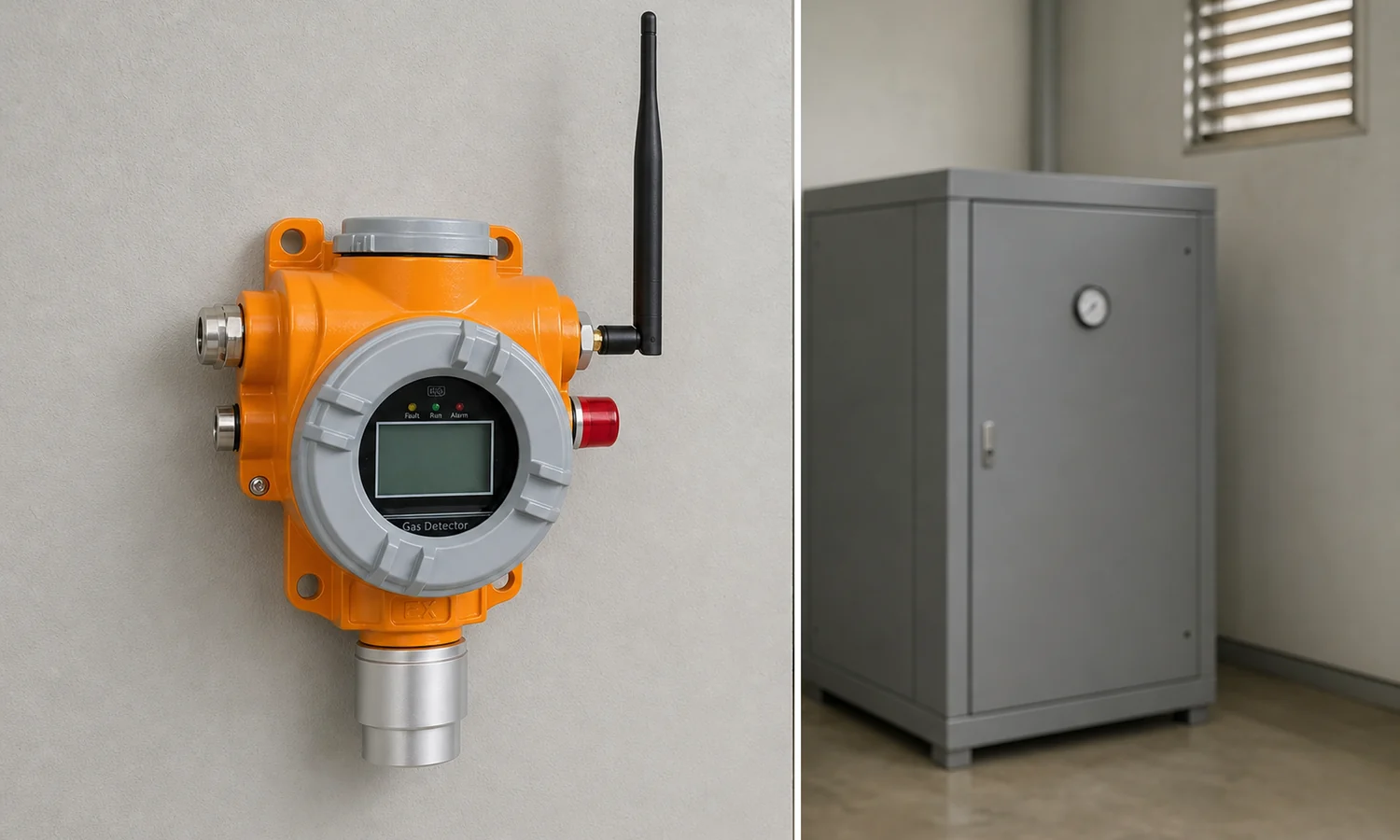
| Ozone equipment room | Generator cabinet, fittings, seals and cooling or feed-gas equipment | Where can a release travel before it reaches an operator or exit? |
The room name is not a detector specification. Two water-treatment plants may use different generator capacities, ventilation layouts and off-gas arrangements. Begin with an equipment drawing and a walk-through of the space. Mark the ozone-producing equipment, probable leak points, normal operator positions, entrances and exhaust path.
Separate Safety Monitoring from Process Measurement
A workplace ozone detector and a process ozone analyzer may measure the same molecule, but they answer different questions. An ambient safety instrument looks for ozone in the air around people and equipment. A process analyzer may measure a controlled stream inside a pipe, contact chamber or ozone generator. Its sample conditioning, range and outputs may be designed around process control rather than an occupied-space alarm.
| Measurement job | Typical decision | Selection priority |
|---|---|---|
| Worker exposure monitoring | Warn the person carrying the instrument | Low-concentration resolution, wearable format, audible/visual/vibration alarms and records |
| Fixed room leak alarm | Warn occupants and send a signal to another system | Continuous operation, detector location, relays or communication, remote alarm and fault handling |
| Maintenance inspection | Check a cabinet, fitting, room or remote point before and during work | Portable format, diffusion or pump sampling, probe and tubing arrangement |
| Process concentration measurement | Control or verify an ozone-generating process | Process range, sample conditioning, pressure, flow, materials and analyzer output |
Do not select one instrument only because its full-scale range includes the expected value. The low end of the scale must still be useful for the decision. A wide-range process analyzer may not provide the resolution, alarm behavior or enclosure expected from a workplace safety monitor. Conversely, a low-range personal detector may over-range quickly if it is connected to a concentrated process stream.
Choose Fixed, Portable or Pump-Suction Monitoring
Fixed ozone gas detector
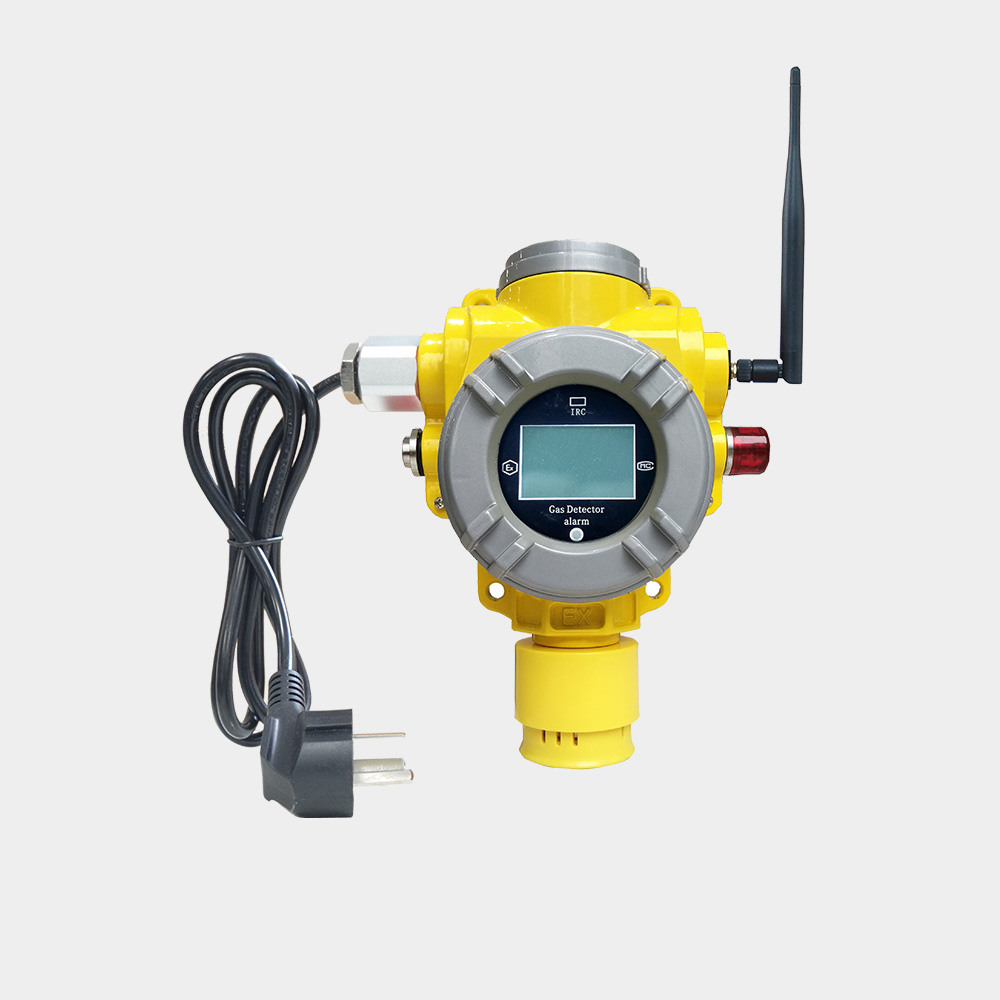
A fixed detector provides continuous coverage at one planned location. It suits generator rooms, enclosed process spaces and other areas where ozone may be produced while no one is carrying a portable monitor. The complete system may include local indication, a controller, remote beacons, relays, 4–20 mA, RS485 or a wireless link. Only the functions supplied with the ordered model should appear in the final specification.
Portable diffusion detector
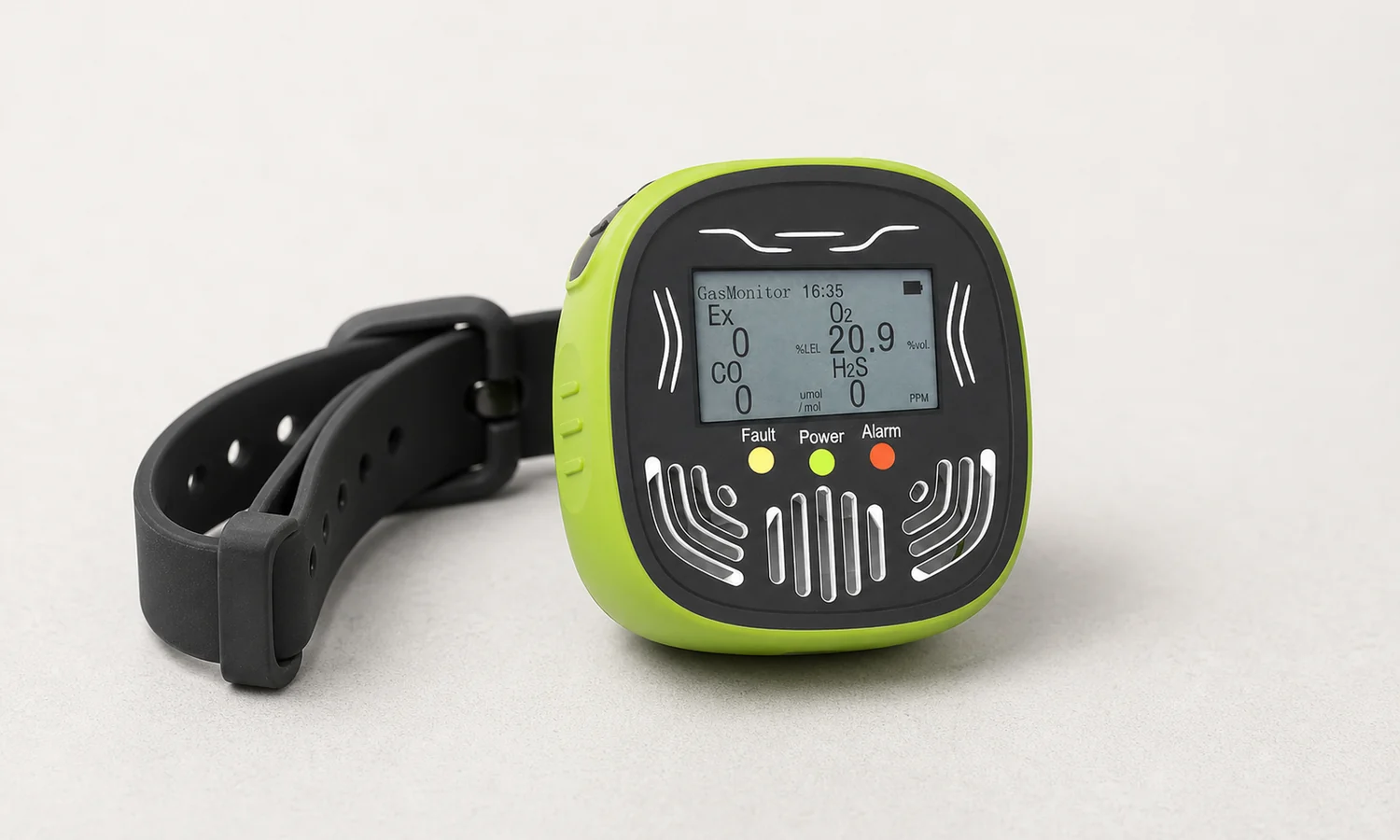
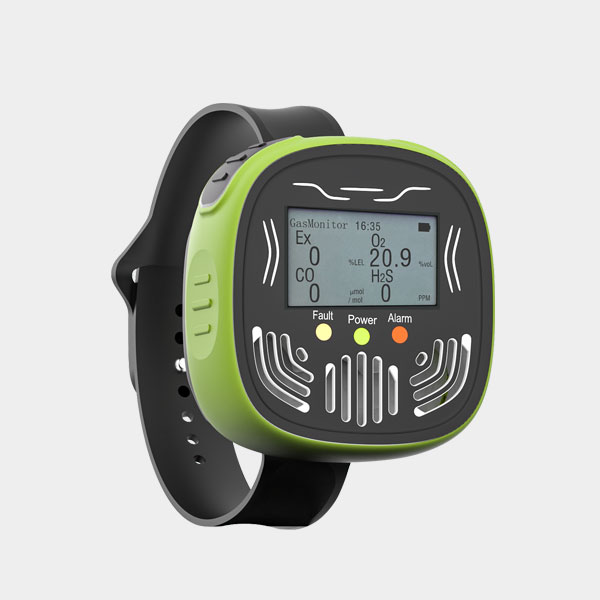
A diffusion instrument measures the atmosphere that reaches the sensor naturally. It can be carried for personal warning, routine rounds and work that moves between several areas. Check the wearing position, alarm audibility, battery arrangement, data storage and whether the selected ozone sensor is available in the requested model.
Portable pump-suction detector
A pumped detector draws a sample through an inlet, probe or tube. It can check a cabinet, duct opening or other remote point before the operator approaches. The pump adds practical questions: sample flow, line length, blockage indication, tubing material, filters and the time needed for gas to reach the sensor.
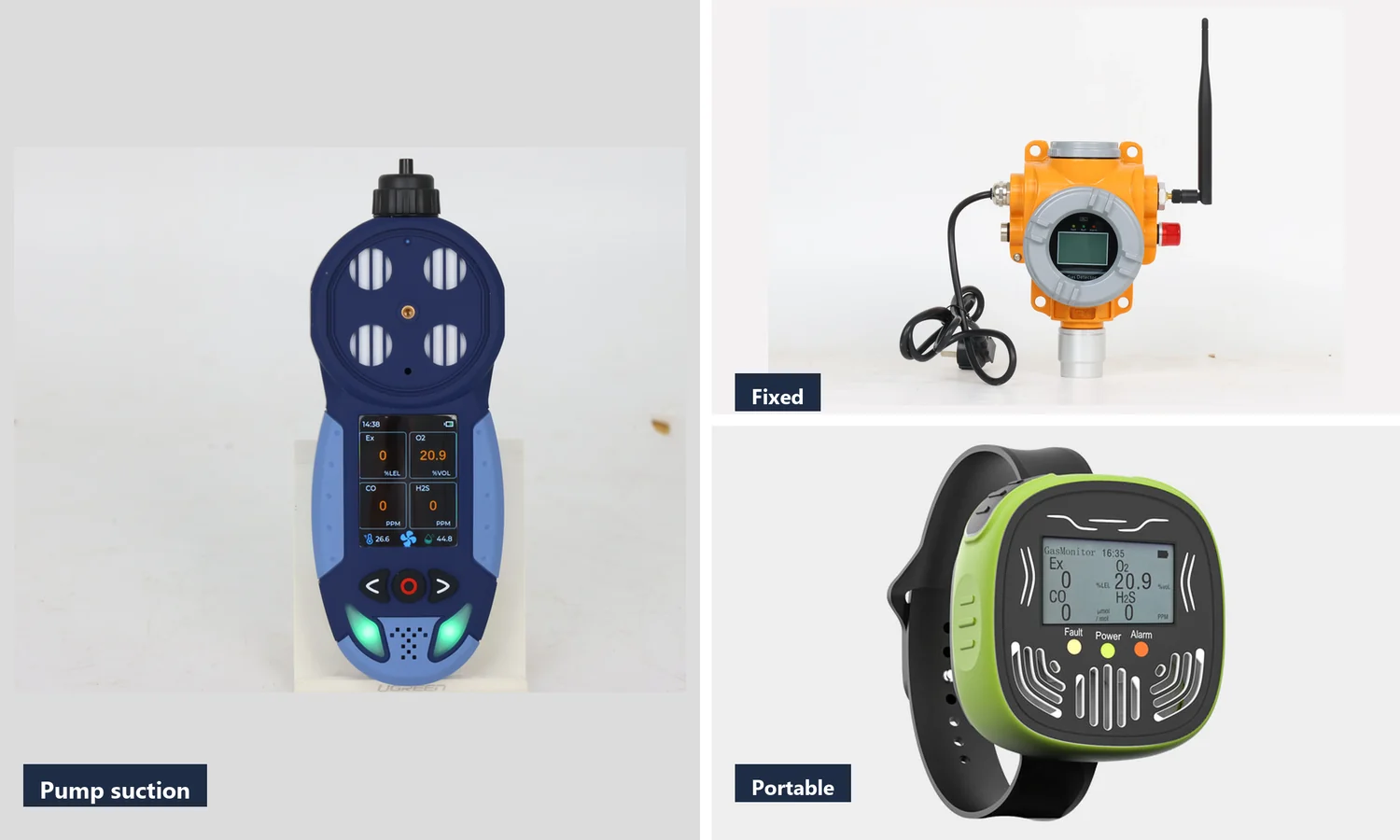
| Format | Good fit | RFQ questions |
|---|---|---|
| Fixed | Continuous coverage of a defined room or equipment area | Which output, controller, power supply, remote alarm and fault signals are required? |
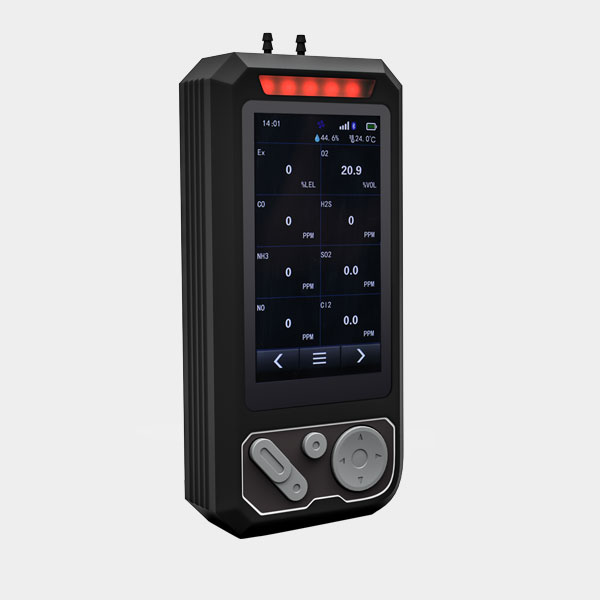
| Portable diffusion | Personal warning and direct area checks | Which ozone range, alarms, logging and operating time are included? |
| Portable pump suction | Remote checks and sample lines | What line material, maximum length, delay, flow and filter arrangement are specified? |
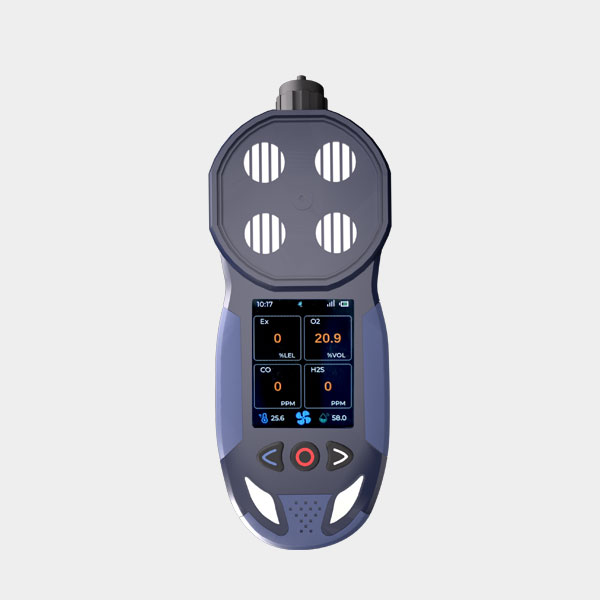
Otywell Ozone Monitoring Options
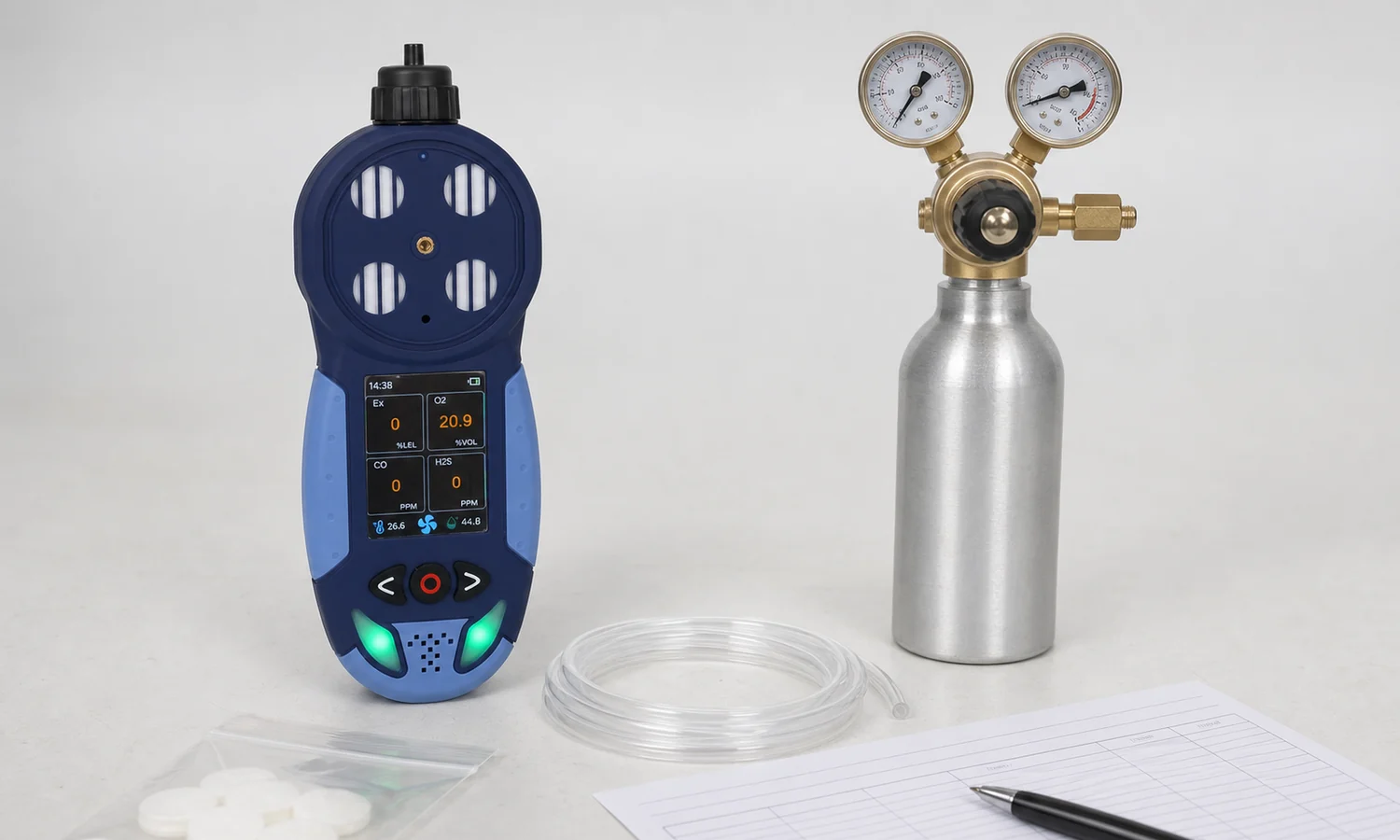
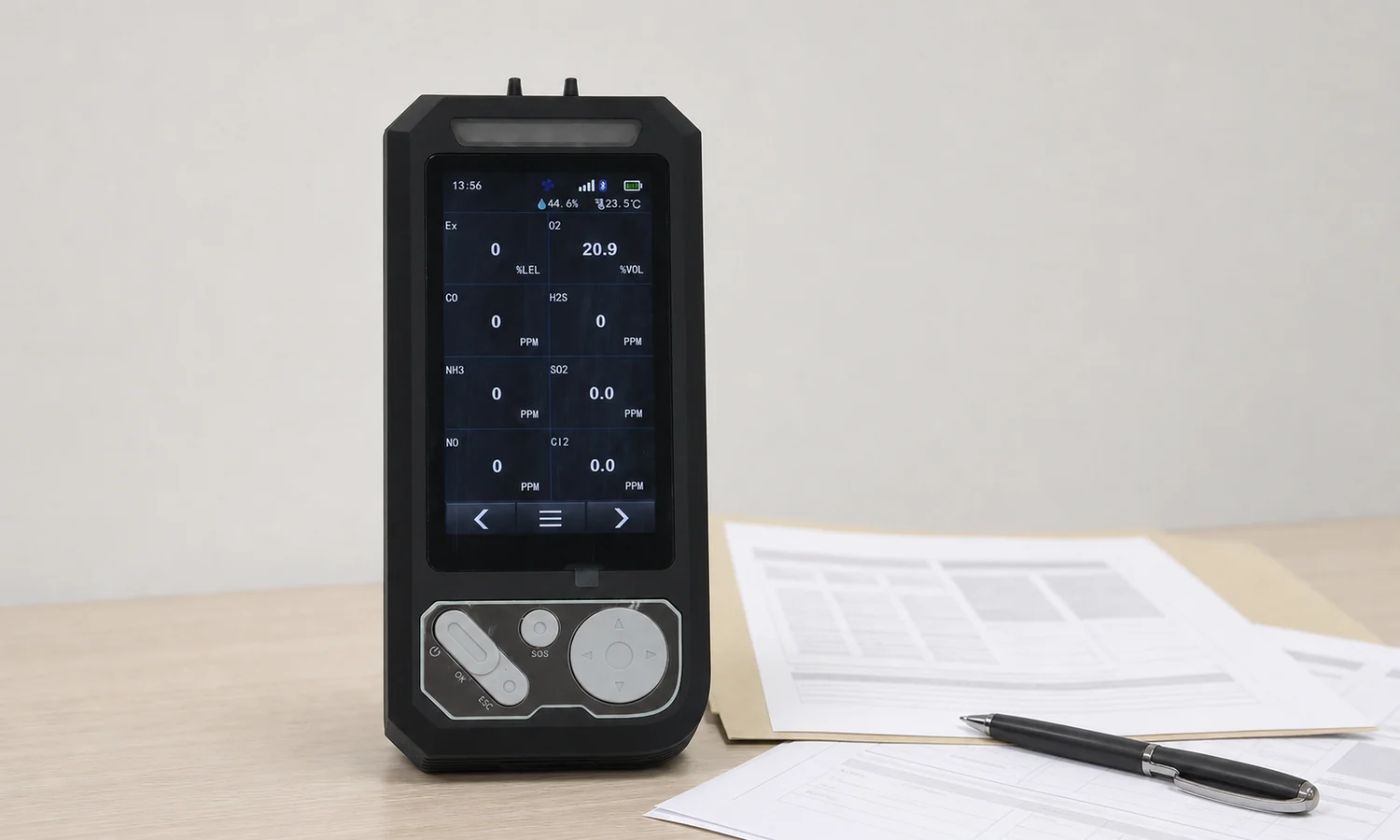
These products support different monitoring formats. Ozone must be included in the ordered sensor configuration, with the required range and resolution stated in the quotation.
Seven Specifications to Check Before Ordering
1. Measurement range
The range should cover the concentrations that matter without sacrificing useful detail around the alarm region. For low-level workplace monitoring, compare the instrument resolution and stated accuracy near the intended setpoints. For leak tracing or process work, check how the sensor behaves at higher concentrations and what the display does during an over-range event.
2. Resolution and accuracy statement
Resolution is the smallest displayed increment; it is not the same as accuracy. Ask whether accuracy is stated as a percentage of full scale, a percentage of reading or a combination of percentage and fixed value. A detector displaying 0.01 ppm increments is not automatically accurate to 0.01 ppm.
3. Sensor and possible interferents
Portable and fixed safety detectors commonly use an electrochemical ozone sensor. The supplier should identify relevant cross-sensitivities and environmental limits for the selected sensor. Chlorine, nitrogen dioxide, sulfur dioxide and other oxidizing or reducing gases may affect some sensor chemistries. The response must be checked against the actual sensor data rather than inferred from the general term “electrochemical.”
4. Sampling method and materials
Ozone is reactive. A long or unsuitable sample line can reduce the amount of gas that reaches the sensor and extend the response time. For a pumped system, specify the approved tubing, length, internal diameter, filter and flow. Keep the line as short as the measurement task allows and verify the complete path during commissioning.
5. Response and recovery
Catalogue response time usually describes the instrument under stated test conditions. A remote line, filter, low flow or contaminated inlet adds delay. Recovery matters after an alarm as well: a sensor that clears slowly can keep a work area in alarm after the source has been isolated. Compare both response and recovery behavior for the proposed configuration.
6. Alarm and system outputs
Portable instruments may provide audible, visual and vibration alarms. Fixed detectors may also need relays, 4–20 mA, RS485 or wireless transmission. State how faults, over-range readings, power loss and communication loss will appear. If a signal starts ventilation or stops an ozone generator, include that logic in commissioning tests.
7. Environment, power and records
Review temperature, humidity, condensation, washdown, dust, electromagnetic conditions and enclosure requirements. For portable units, check operating time and charging arrangements. For fixed systems, specify power supply and any backup. Data logging should capture the information the site will use, such as time, peak reading, alarm event, detector identity and calibration record.
Place Detectors Around Sources, Airflow and People
NIOSH lists ozone with a relative gas density of 1.66 compared with air. That property matters, but it is not a universal instruction to install every sensor near the floor. Ozone may leave a pressurized fitting as a jet, rise or fall with a moving air stream, react with nearby surfaces and be removed by local exhaust before it settles.
Plan each fixed point from the release scenario:
- Mark generators, injectors, contactors, destruct units, cabinets, seals and pipe connections.
- Identify doors, operator stations, maintenance positions and normal approach routes.
- Review supply air, extraction, fans, partitions and equipment heat.
- Choose positions where a release will reach the sensor before it reaches a critical occupied location.
- Keep the detector accessible for inspection, testing and sensor replacement.
A detector directly in a strong clean-air supply may see a diluted sample. One inside an exhaust duct may identify extracted ozone but provide poor warning at the operator position. A detector mounted next to a normal process outlet may alarm during expected operation. Draw the proposed sensing points on the ventilation and equipment layout, then verify them under realistic operating conditions.
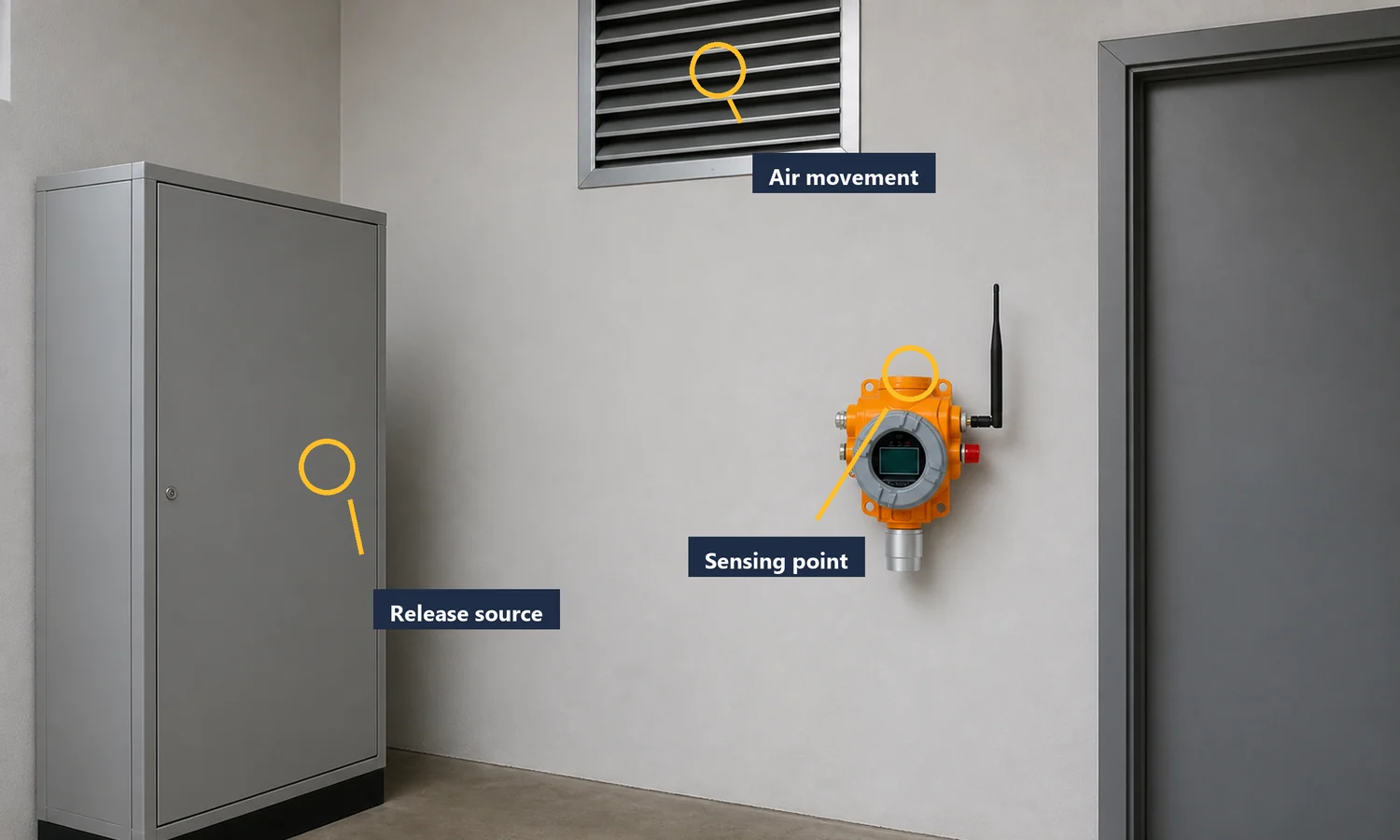
The OSHA ozone chemical data page lists physical properties and the agency’s monitoring method. That occupational sampling method is useful evidence for exposure assessment, but a fixed alarm still needs its own installation and functional test.
Set Alarm Levels for a Defined Response
Exposure limits, short-duration warning levels, process targets and emergency values are not interchangeable. NIOSH lists a 0.1 ppm ceiling recommendation, while its ozone IDLH value is 5 ppm. Those numbers serve different purposes and should not be copied into every detector without deciding what each alarm is meant to trigger.
For every alarm level, record:
- The concentration, units and any time-weighted function
- The source of the chosen value and the jurisdiction or site rule it follows
- Which local and remote indications activate
- What operators do when the alarm occurs
- Whether ventilation, shutdown or isolation equipment changes state
- How the response will be tested and recorded
Alarm logic also needs a fault state. A broken sensor, blocked inlet, failed pump or lost communication is not the same as a clean reading. The controller and operator display should make the distinction visible.
Calibration, Bump Testing and Maintenance
Ozone presents a practical calibration issue because it is reactive and is commonly generated for the test rather than supplied like a stable conventional calibration-gas mixture. Follow the instrument procedure for the ozone source, delivery path, flow and exposure time. Tubing and adapters used for another gas should not be assumed suitable.
A functional check confirms that ozone reaches the sensor and that the instrument responds and activates its alarms. Calibration evaluates or adjusts the reading against the specified reference. The two tasks are related but not identical. Our guide to bump testing and calibration explains the difference and the records expected from each procedure.
Before a test, inspect the sensor opening, filter, pump, sample line, battery or power supply, display and alarm devices. Zero the detector only with the medium specified by the manufacturer. If a reading is unstable, slow or fails the acceptance criteria, check the test arrangement before repeating adjustments.
Maintenance records should identify the detector, ozone sensor and range; reference source; test date; operator; as-found reading; result; adjustment; and any repair or sensor replacement. For a fixed system, record the response of the controller, beacon, relay and connected equipment as well as the detector reading.
Ozone Gas Detector RFQ Checklist
A detailed request for quotation makes sensor and instrument differences visible before an order is placed. Include these items:
- Application and measurement objective
- Workplace air, remote sample or process gas
- Normal and maximum expected concentration
- Required full-scale range and resolution
- Fixed, portable diffusion or pump-suction format
- Sensor technology and known interfering gases
- Sample-line material, length and flow
- Required response and recovery performance
- Low, high and time-weighted alarm functions
- Audible, visual and vibration indication
- Relays, 4–20 mA, RS485 or wireless interface
- Controller and remote beacon compatibility
- Temperature, humidity and enclosure conditions
- Power supply, battery and backup requirements
- Data logging and event-record fields
- Calibration method and maintenance accessories
- Required certification and destination market
- Quantity, installation areas and documentation
Ask the supplier to repeat the ozone range, resolution, sampling method, alarm functions and outputs for every quoted line item. A product-family name alone may cover several sensor configurations.
Frequently Asked Questions
How does an ozone gas detector work?
Industrial safety detectors commonly use an electrochemical sensor that produces an electrical response when ozone reaches the sensing element. The instrument converts that response into a concentration reading and alarm indication. The exact range, resolution, cross-sensitivity and calibration method depend on the installed sensor.
Can one detector cover worker safety and process control?
Only when its range, resolution, sample conditioning, alarm behavior and outputs satisfy both duties. A low-range ambient detector and a process analyzer often have different sample and performance requirements, so they should not be treated as interchangeable by default.
Should I choose a fixed or portable ozone detector?
Choose a fixed detector for continuous coverage of a defined area. Use a portable detector for personal warning, rounds, maintenance and remote checks. A facility may use both when continuous room coverage and mobile work are required.
Where should an ozone detector be installed?
Place it according to the release source, ventilation, barriers, equipment layout and worker position. Ozone is denser than air, but density alone does not predict where a pressurized or ventilated release will travel.
Can a multi-gas detector include an ozone sensor?
Some configurable multi-gas instruments list ozone as an available gas channel. Confirm the exact sensor, range, number of simultaneous channels and possible cross-sensitivities in the quotation. A standard four-gas configuration does not automatically include ozone.
How often should an ozone detector be calibrated?
Use the schedule and acceptance criteria supplied for the specific detector and ozone sensor. Test history, operating conditions, exposure, storage and a failed functional check may justify additional service. Record the reference source and complete delivery path used for each test.
Can smell confirm that an ozone area is clear?
No. Odor perception varies and does not provide a concentration measurement. Use the specified instrument and clearance procedure. The EPA also notes that ozone can cause respiratory effects and that indoor concentrations depend on output, room size, materials and ventilation. Its discussion of ozone-generating devices in occupied spaces explains these factors.
Write the Measurement Job Before Comparing Models
An ozone gas detector specification should begin with the sample and the decision the reading will support. Define the source, concentration range, required resolution, monitoring format, sample path, detector location, alarm response and outputs. Then ask suppliers to quote the exact ozone sensor configuration against those requirements. That makes portable, fixed and process instruments easier to compare and gives the commissioning team a clear list to verify.

WeChat
Scan the QR Code with wechat