 Henan Otywell Electronic Technology Co., Ltd

The first question in a hydrogen fluoride gas detector enquiry is not which sensor has the smallest display increment. It is what equipment the job calls for. A person moving between work points needs a different arrangement from a technician checking an awkward opening or a room that must remain monitored after the shift leaves. The detector, its accessories and the way an alarm reaches people all belong in the decision.
Quick equipment choice: Start with a portable diffusion detector for checks made beside the wearer; consider a pump-suction portable instrument when the sample must be drawn from a defined remote point; consider a fixed detector when a location needs continuing warning. Then ask the supplier to confirm the fitted HF channel, the exact range, accessories and complete alarm arrangement. An HF option in a gas table is not the same as an HF-equipped unit in the box.
Which HF Detector Format Fits the Work?
Picture an industrial acid-handling area with a transfer connection, a service enclosure and a room used intermittently. Buying one detector format for all three jobs may look simple on a quotation, but the equipment answers different questions. The operator at the connection wants an alarm that travels with them. The service technician may need to hold a probe at the enclosure before approaching it. The intermittently occupied room needs a warning route that works when nobody is looking at the instrument.
| Work to be done | Equipment format to review | What must be included in the proposal |
|---|---|---|
| Worker moves around a defined task area | Portable diffusion detector | Fitted HF channel and range, wearable arrangement, audible/visual/vibration alarm details and charging or power arrangements |
| Reading is needed at a recess, opening or hard-to-reach point | Portable pump-suction detector | Fitted HF channel, approved probe and sampling assembly, flow or blockage indication and complete-path check |
| One location needs continuous warning | Fixed detector and receiving equipment | Installed HF point, mounting, power, communication route, alarm recipient and fault indication |
The choice is about where and when a reading is needed, not a claim that one format is inherently better. A fixed detector measures at its installed position. A carried instrument moves with its user but cannot watch an unattended room. If both duties exist, quote them as two duties rather than forcing one device to stand in for the other.
Portable Diffusion Detectors: When the Worker Carries the Alarm
A diffusion detector takes in air at the body of the instrument. That makes it straightforward to carry during rounds, transfer work and checks at accessible positions. It also makes the wearing position part of the equipment specification: a unit clipped beneath a jacket or placed inside a bag will not sample the same air as an unobstructed unit at the intended position.
For an HF enquiry, compare the practical details a worker will meet every day. Can the display be read with the protective equipment used on site? Can the available alarm modes be noticed over local noise? Is the detector carried securely without blocking its inlet? What are the power and charging arrangements for the planned shift? Ask for a demonstration at the working position instead of judging the instrument only on a desk.
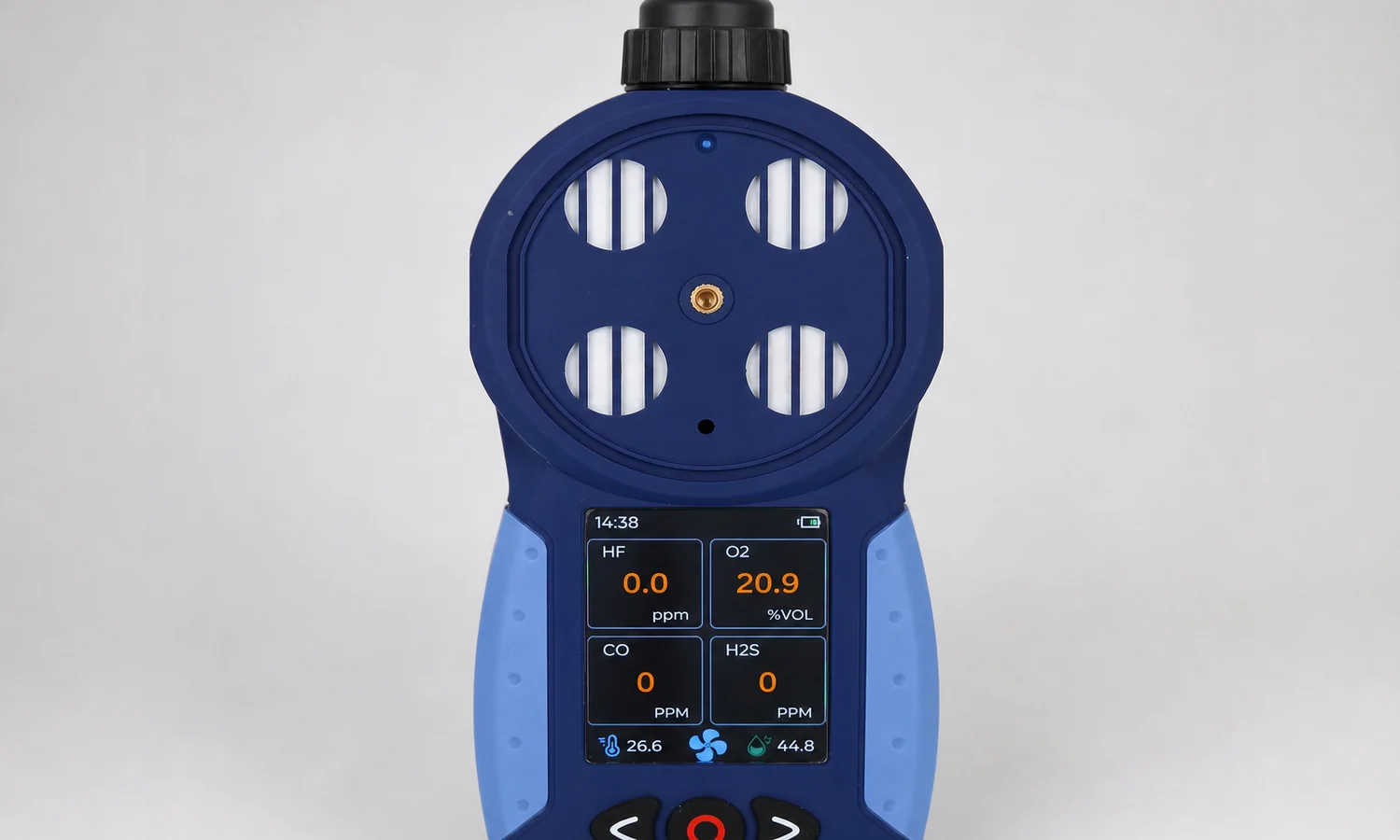
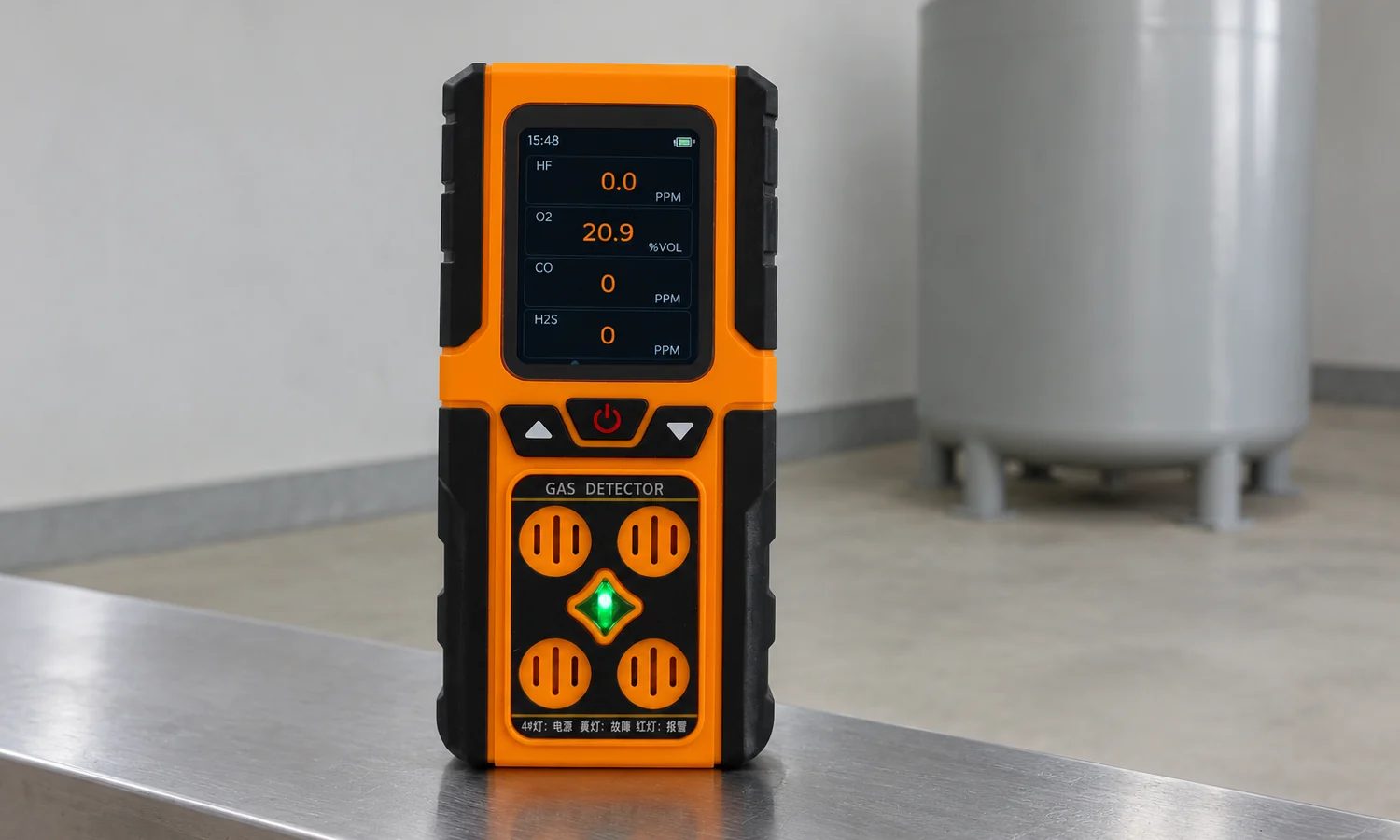
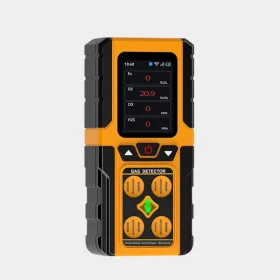
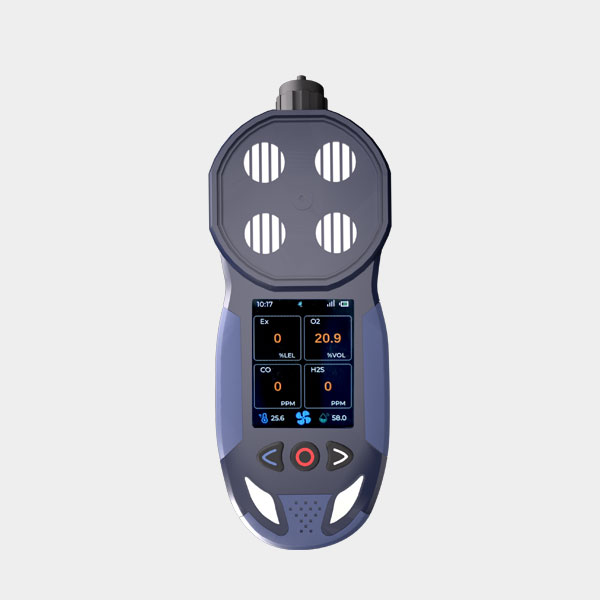
G40S is a portable natural-diffusion detector with sound, light and vibration alarms. OT135S is available in natural-diffusion and built-in pump-suction versions, giving buyers a choice between direct and remote sampling. Both can be configured for hydrogen fluoride; specify the HF channel and range on the order rather than assuming either is included by default.
Portable Pump-Suction Detectors: When the Sample Point Is Away from the Instrument
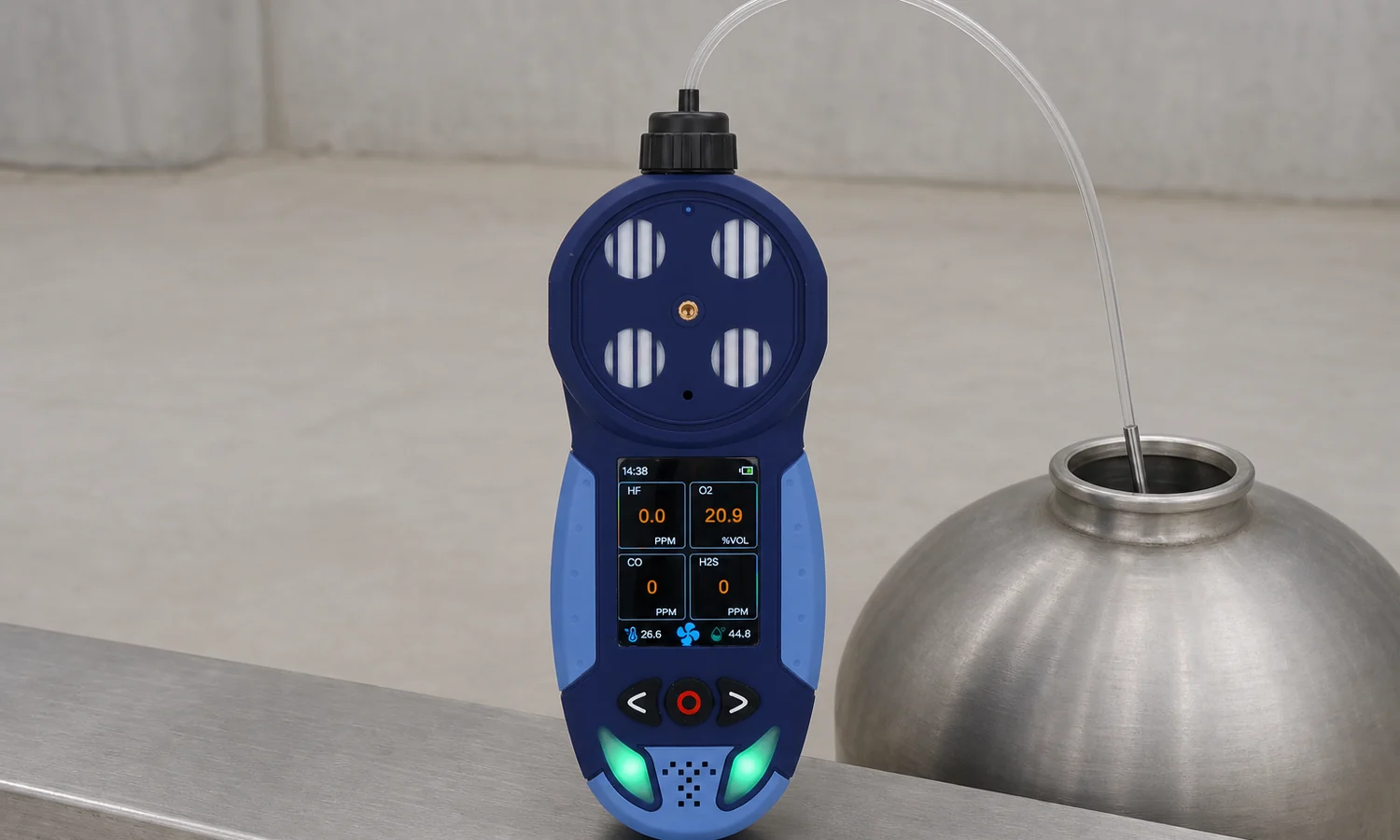
A pumped unit is useful when the operator should remain at one position while a probe reaches another. It is not simply a diffusion detector with a hose attached. The proposal should identify the probe, tubing, joints and any filter, along with their limits and the method for checking the assembled path. For HF, this detail matters: the ILO/WHO hydrogen fluoride safety card notes high water solubility and incompatibility with some common materials. Those facts justify asking for the supplier’s specified sampling assembly rather than buying an unverified generic line.
At the quote stage, ask where the probe tip will be placed, how long the line needs to be, and whether the supplier has an HF-specific recommendation for its materials and moisture handling. At handover, a check at the instrument alone should not be recorded as proof that the entire probe-and-line arrangement behaves as intended. The point of a pumped instrument is the remote point being sampled.
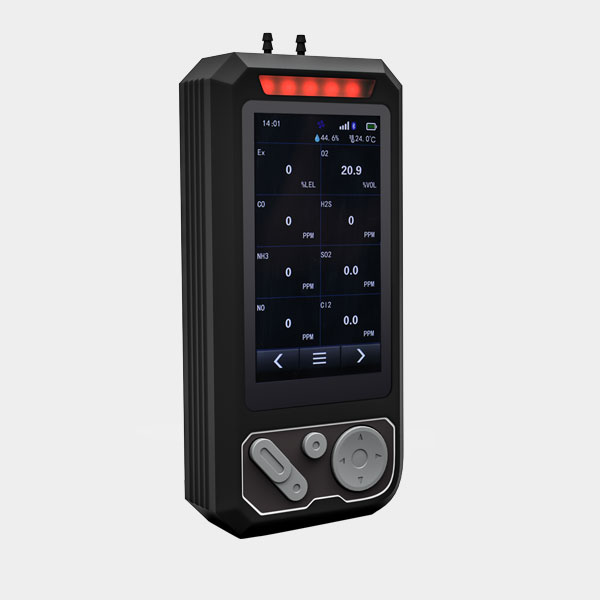
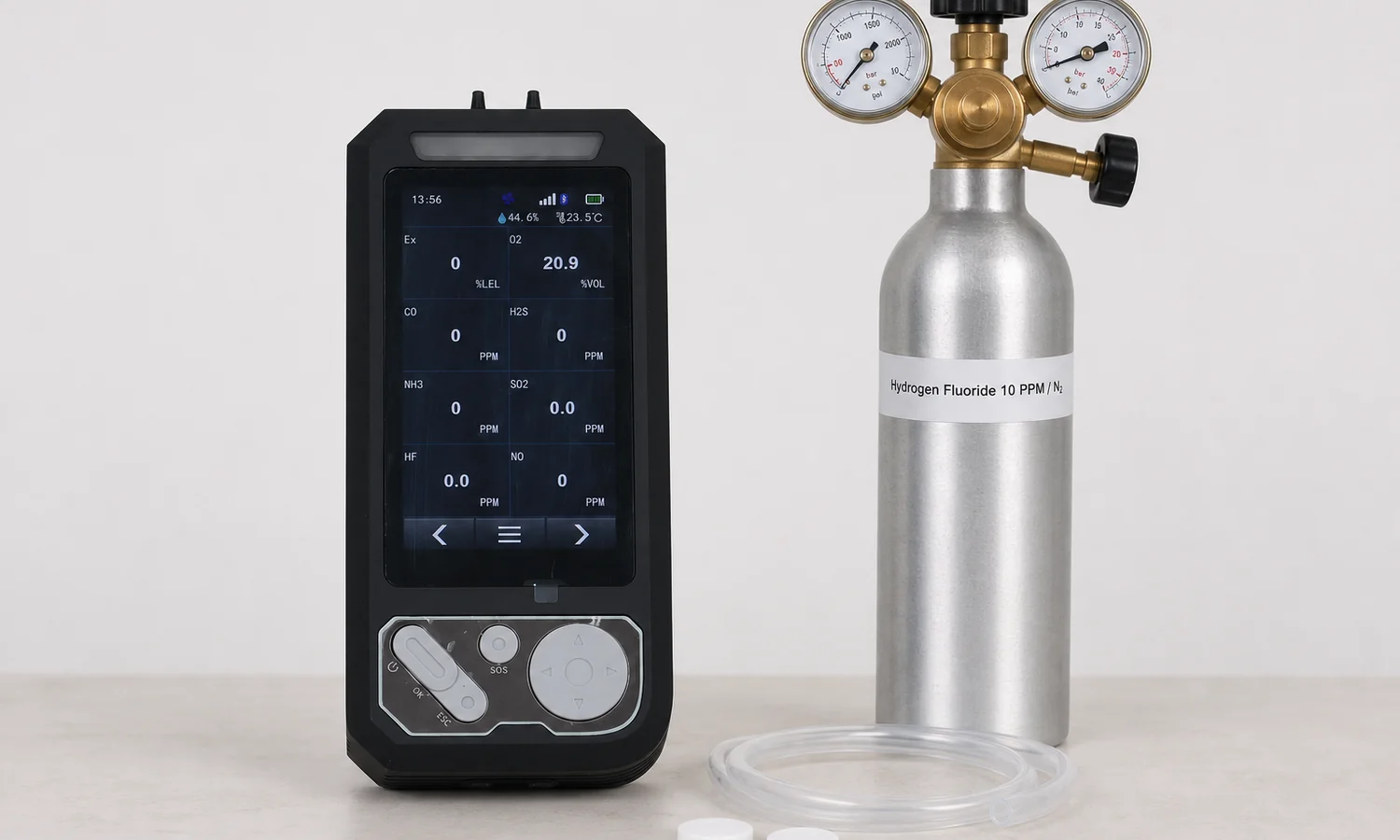
OT135S offers a built-in pump-suction version for drawing air from a remote point. OT139 uses pump-suction sampling and supports configurable gas channels when the job calls for more than one gas measurement. For either device, specify the required HF configuration, channel count and sampling components in the quotation.
Fixed HF Detectors: Specify the Installed Warning System
For a room or process point that needs continuing warning, the fixed detector is only the beginning of the equipment list. The buyer also needs to know how the reading reaches the monitoring position, where the alert appears, and what happens if power or communication is lost. A detector mounted in a room does little for an operator elsewhere unless the alarm route is designed and checked.
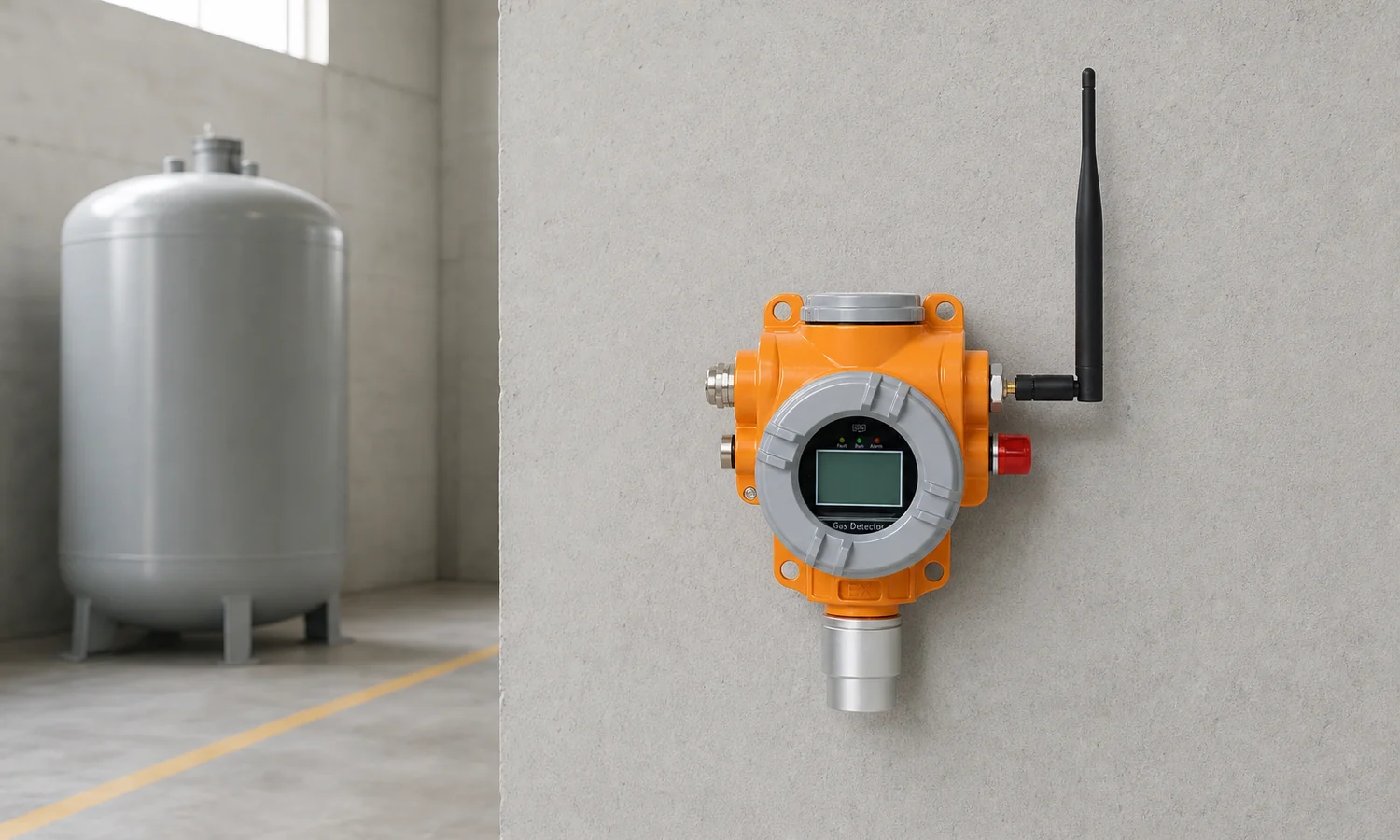
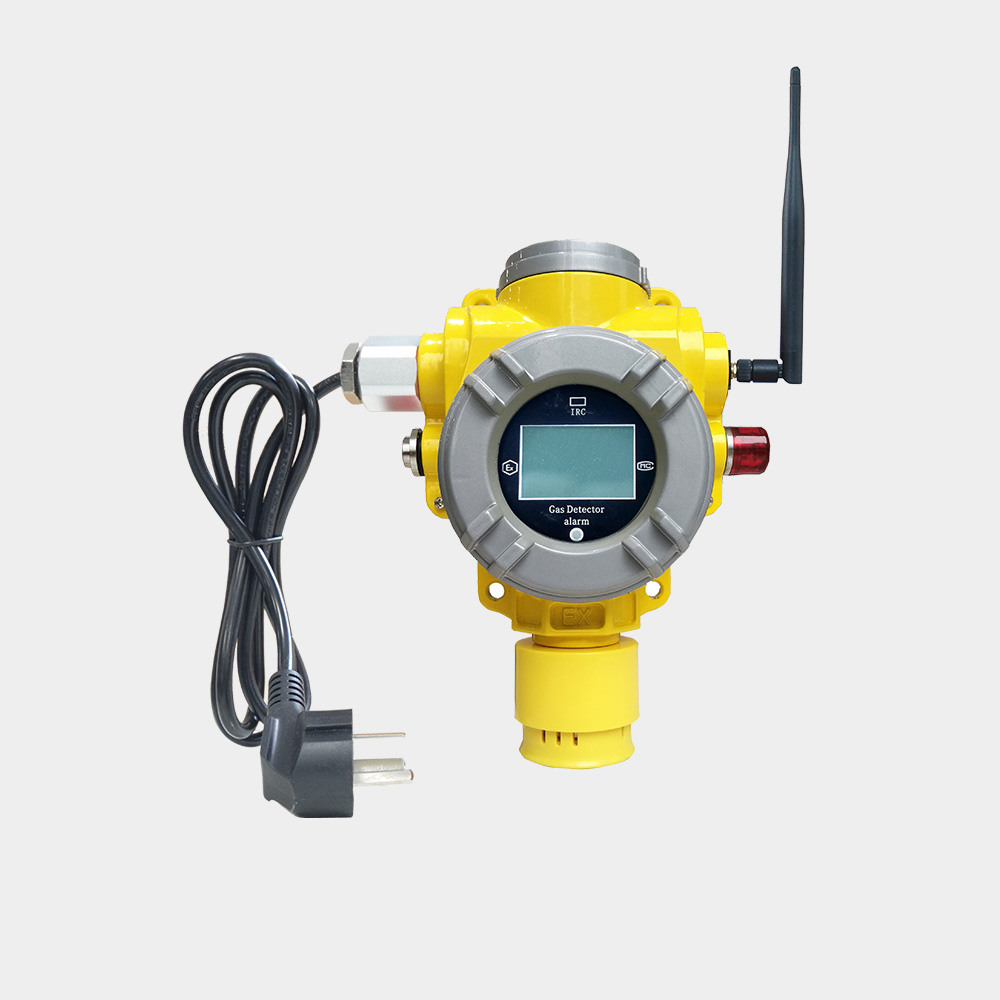
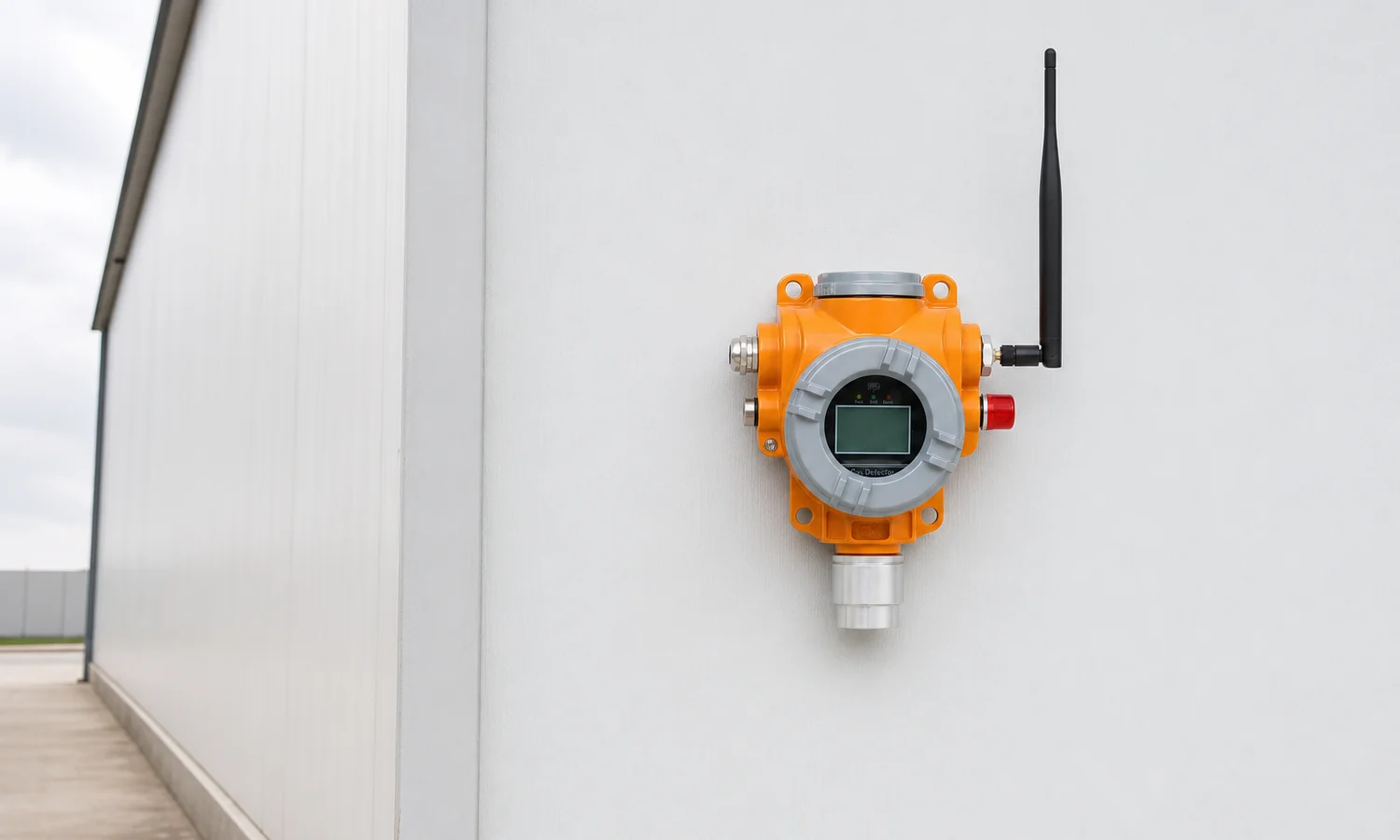
TCB2-W is a fixed natural-diffusion detector that sends concentration data to a monitoring unit using 433 wireless communication. Hydrogen fluoride is an available gas configuration. Confirm whether the quotation includes the HF channel, monitoring unit and mounting accessories, and specify the required communication and fault behavior for the installation.
Choose the mounting position from the release point, room layout, airflow and service access. Do not put a detector at a convenient wall position and assume it covers every opening. A location drawing is more useful than a generic instruction to mount “high” or “low.” It lets the buyer and supplier discuss what the installed inlet is intended to represent.
Otywell Equipment Formats to Compare
These four devices cover portable diffusion, portable pump-suction and fixed wireless monitoring. Hydrogen fluoride is an available configuration for each, but the pictured units do not establish what will ship. Confirm the fitted HF channel, selected range and accessories on the purchase order.
Compare Complete Equipment Packages, Not Bare-Unit Prices
Two quotations may use the same phrase, “HF gas detector,” and still describe very different deliveries. One may be a wearable unit with a configured HF channel. Another may name only the base model while leaving out a probe, receiver or service items. Normalize the quotes against the work before comparing totals.
| Line item | Question for the supplier | Why it affects the purchase |
|---|---|---|
| Detector and HF channel | Which model, sampling format, fitted gas channel and selected ppm range will ship? | A gas table describes options, not the configuration in the carton. |
| Portable accessories | What wearable hardware, charger, probe, tubing or filters are supplied and which are optional? | The job may be impossible with a bare unit alone. |
| Fixed-system parts | Are mounting hardware, power arrangements, monitoring unit and required alarm outputs included? | The price of the head may not be the price of a working warning system. |
| Testing and upkeep | Which approved test materials, accessories, consumables and service instructions apply to this HF configuration? | Acceptance and ongoing checks require the correct kit and procedure. |
| Documents | Will the shipment identify the actual range, alarm settings, device ID and configuration? | The site needs to verify that the delivered equipment matches the order. |
Three Equipment Decisions in Practice
1. A transfer operator moves between nearby points
Begin with a portable diffusion format because the operator moves with the work. Confirm the HF channel, the worn position and the alarm modes in the actual noise and protective-equipment conditions. A fixed point may supplement this arrangement, but it does not follow the person around the task.
2. A technician checks an enclosure before working beside it
Review a pump-suction portable format if the intended sample point cannot be reached safely with the instrument body. Quote the instrument and its proposed probe assembly together. Ask how the supplier will verify the complete path at the line length planned for the job; a generic probe from another gas application is not enough evidence.
3. A room needs an alert while staff are elsewhere
Review a fixed detector with a named monitoring destination. The order should show the detector position, receiver, power and communication arrangement, and the intended response to a fault. If personnel also enter and move around the room, consider separately whether they need portable equipment for that task.
What to Check When the Equipment Arrives
Start with the purchase order: model, fitted HF channel, range and supplied parts must match what arrived. Then check the applicable operating instructions, start-up behavior, alarms and any fault indications. A pumped package should be checked with the approved assembled sampling path; a fixed package should be checked through to the intended receiver. Record what was actually challenged, not merely that the display turned on.
A functional challenge is not the same as calibration adjustment. Our bump test versus calibration guide explains that distinction. For the purchased HF configuration, obtain the manufacturer’s procedure and specified accessories before setting the site routine. Keep the delivered configuration and test record together so the next operator does not have to guess what was bought.
Send a Quote Request That Names the Equipment
A useful request can be short, but it should be concrete: “We need HF warning for a moving transfer operator, a remote check at an enclosure, and a fixed point in an intermittently occupied room. Please quote suitable equipment separately for each task. State the fitted HF channel and range, included sampling or receiving accessories, alarm route, testing items and any excluded components.” That gives the supplier enough context to propose three complete packages rather than three vague model numbers.
Choose the Format, Then Confirm the Configuration
Compare the portable diffusion, pump-suction and fixed options against the job each one must perform. Ask for an itemized HF-equipped proposal with the accessories, warning route and service items needed to put that equipment to work.
Frequently Asked Questions
Should I buy a portable or fixed hydrogen fluoride gas detector?
Choose by duty. A portable detector accompanies a worker or task; a fixed detector watches a specified location and needs an alarm destination. Some sites require both functions.
When is a pump-suction HF detector preferable to a diffusion model?
Review a pumped model when the required sample point is away from where the instrument body can be placed. Include the specified probe and line in the quote and verify the assembled path.
Is every detector of these models ready for HF use?
No. HF is an available configuration, not a feature to assume on every unit. The quote and delivery documents should identify the fitted HF channel and selected range.
Can one fixed detector monitor several rooms?
A natural-diffusion fixed detector reads air at its own installed inlet. Separate rooms or release points need a coverage plan; do not assume one mounting point represents all of them.
Is the monitoring unit included with a fixed wireless detector?
Do not assume it is. Ask the supplier to list the detector, receiving unit, power and mounting parts separately, along with the intended alarm and fault indications.
What accessories belong in a pumped detector quotation?
Request the proposed probe, tubing, joints, any filters or moisture-management parts, their limits and the approved method for checking the complete sampling assembly.
What should be checked before accepting HF detection equipment?
Match the delivered model, HF channel, range and accessories to the order. Then use the manufacturer’s procedure to check the relevant inlet or sampling path and confirm that alarms reach their intended recipient.

WeChat
Scan the QR Code with wechat