 Henan Otywell Electronic Technology Co., Ltd

A technician opens a sterilizer after a cycle. Someone else checks a cylinder connection. Later, the room is empty, but the gas system remains part of the operation. All three situations may prompt a request for an ethylene oxide gas detector. They do not call for the same equipment package.
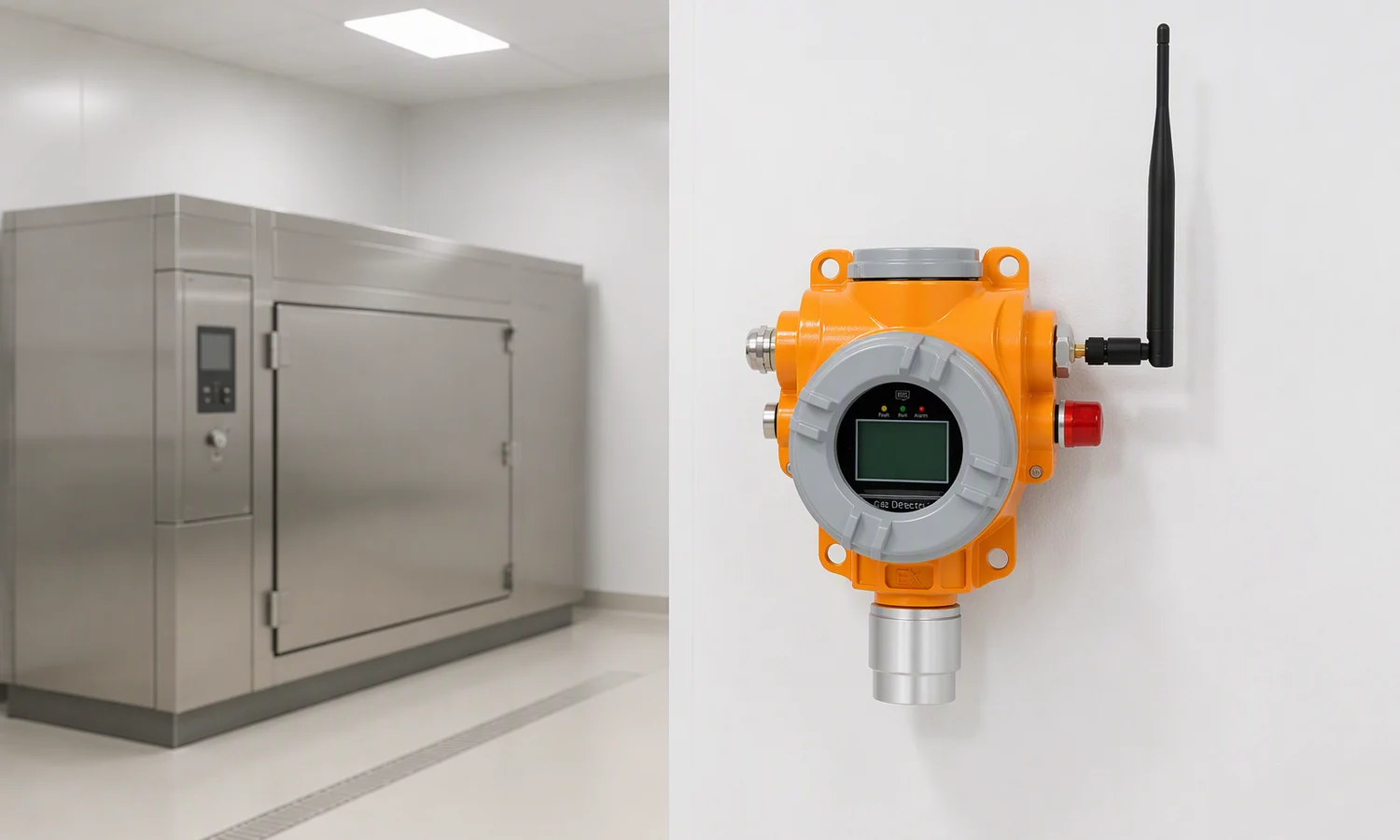
Start with the job the reading must do. Does someone need an immediate warning at a fixed point? Does the instrument need to travel with a worker? Or does the employer need a measurement of exposure over a defined period? Settling that question before comparing detector models prevents a common purchasing mistake: ordering an instrument that displays EtO without establishing whether it can perform the intended measurement.
Equipment-first answer: Use a fixed detector and a defined alarm route for continuous warning at a selected location; a portable detector for work that moves; and a pump-suction arrangement when the sample must be taken at a point away from the instrument. Employee exposure monitoring over a shift or 15-minute period is a separate measurement task. For each purchase, identify the fitted EtO channel, the required performance near the decision level, the included accessories and who receives the alarm.
One Request, Three Different Measurement Jobs
“We need EtO monitoring in the sterilization area” sounds like a complete brief, but it leaves out the decision the equipment must support. A wall-mounted alarm may warn about a release in one room while an operator is elsewhere. A wearable unit follows the operator but stops covering the room when it leaves. A time-based personal sample is designed to measure an employee’s exposure over a specified period; it is not simply a snapshot from a fixed alarm.
| Question the buyer needs answered | Equipment or method to specify | Limit to keep in view |
|---|---|---|
| Has the air at this selected point reached a warning condition? | Fixed EtO detector with a local or remote alarm destination | It measures at its installed inlet, not throughout every adjacent room. |
| What happens while a worker changes cylinders or moves between tasks? | Portable EtO-configured detector; pump and probe if the intended point is remote | Its inlet position and available alarms must suit the actual task. |
| What was an employee’s exposure over a shift or a short task? | A representative personal exposure-monitoring method for the relevant period | An instantaneous area reading does not establish that time-based result. |
The distinction is not a technicality. The OSHA ethylene oxide standard calls for employee exposure determinations from representative breathing-zone samples for eight-hour and 15-minute periods. An alarm can complement that work, but its presence alone does not turn a fixed-point reading into a personal exposure result.
Map the Equipment to the Sterilization Workflow
A useful site sketch does not start with dots for detectors. It starts with what staff actually do: connect or change the gas supply, run the sterilizer, unload it, clean or maintain associated equipment, and leave the room between tasks. Mark where a person stands and where an EtO release could first reach room air. Then identify which of those places needs a continuing warning and which needs a task-based check.
At a cylinder connection, a technician may need to bring a portable instrument to several fittings. When a connection is recessed or the technician should remain back from the point being checked, a pumped instrument can put the probe tip at that point. At a sterilizer door, the equipment choice depends on the actual opening and unloading routine, ventilation arrangement and worker position. In an equipment or mechanical room that is not continuously occupied, a fixed detector needs an alarm path to people outside that room.
Do not treat an EtO detector as a substitute for a ventilation-failure alarm. One responds to gas at its inlet; the other reports the status of a control system. The NIOSH sterilizer guidance distinguishes equipment-function monitoring from environmental EtO monitoring. When planning the handover, record which signal means “gas present” and which means “ventilation or equipment fault.”
Portable Detectors: Choose How the Instrument Reaches the Task
Natural diffusion for a moving worker
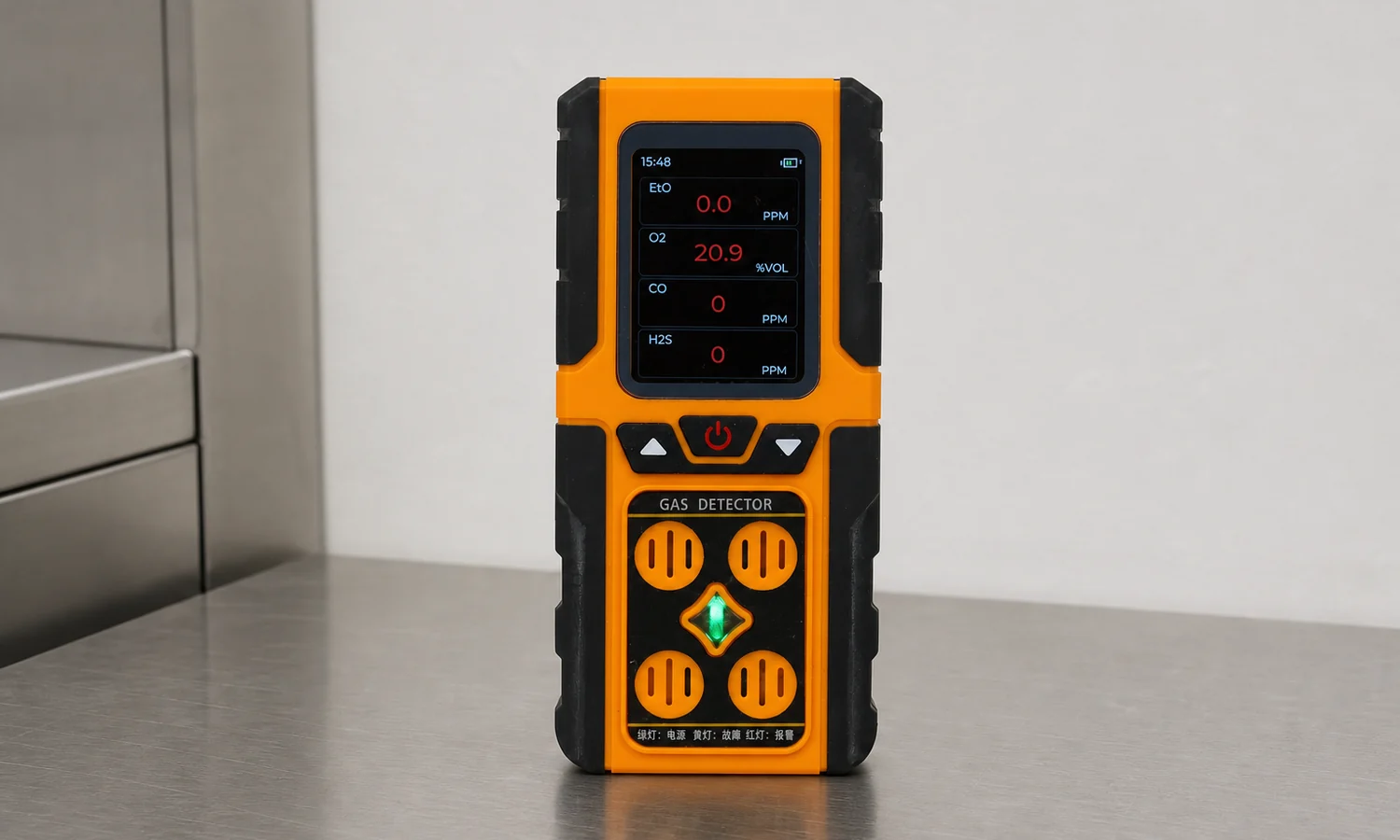
With natural diffusion, room air reaches the instrument’s own inlet. A portable unit can therefore accompany a worker during rounds or connection work without a sampling tube. The wearing position is part of the purchase decision: a detector inside a pocket or beneath protective clothing does not sample the same air as an unobstructed inlet. Before ordering, check how the unit will be carried, whether its display is usable during the task, and whether its sound, light and vibration alarms can be noticed at that work position.
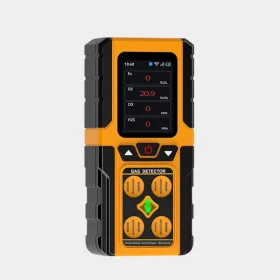
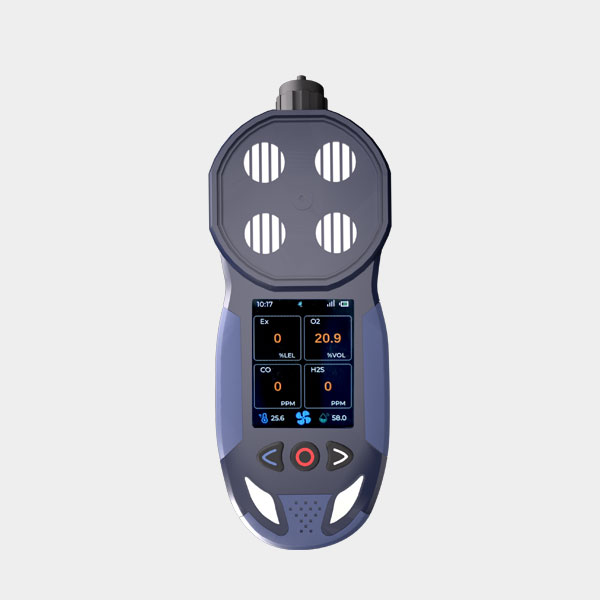
G40S offers portable natural-diffusion monitoring with sound, light and vibration alarms. OT135S is available in a natural-diffusion version. Both list oxirane as a configurable gas, so the order must still specify the actual EtO channel and range. A general model name is not enough to establish the delivered configuration.
Pump suction for a defined remote point
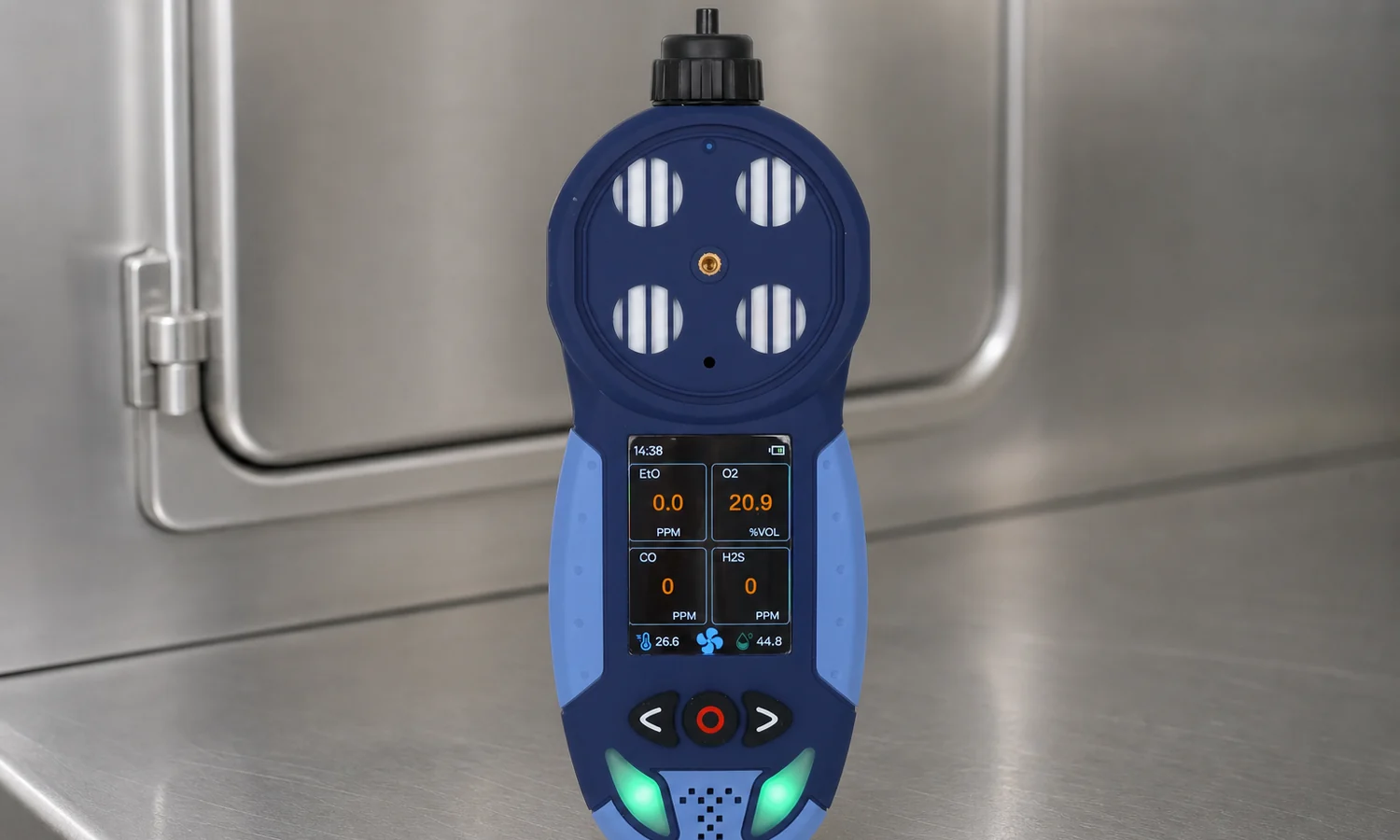
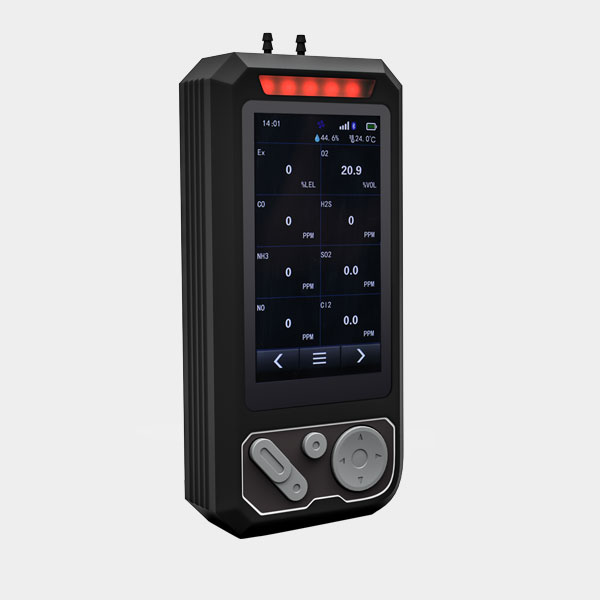
OT135S also offers built-in pump suction. OT139 is a pump-suction portable device with configurable gas channels. These formats deserve consideration when the sample needs to come from an opening, enclosure or connection away from the instrument body. The probe tip then becomes the intended sampling point; the probe, tubing, any filter, flow indication and response of the assembled path all matter to the purchase.
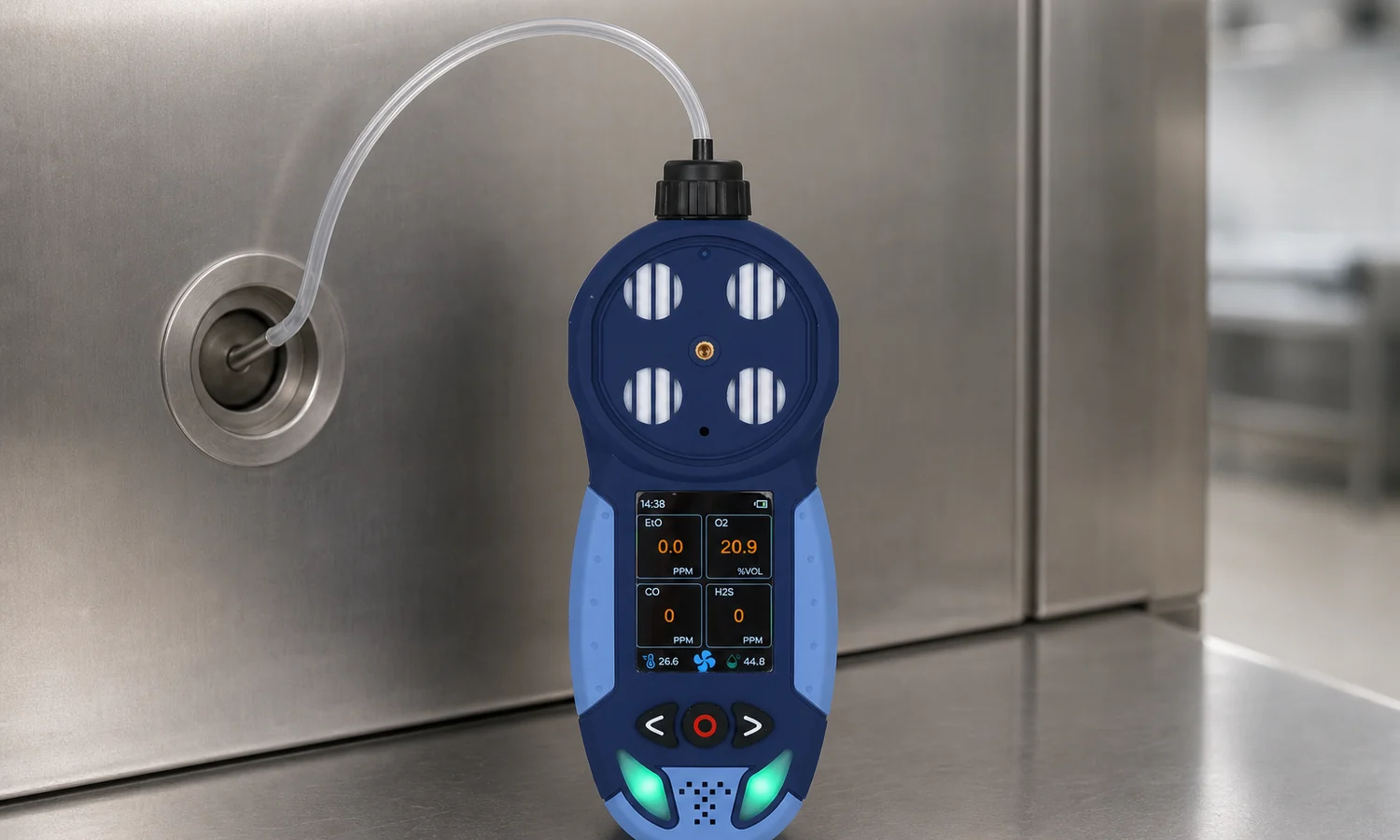
Ask the supplier to quote the sampling components needed for the actual reach. A pump capacity figure on its own does not tell you how quickly an EtO change at the probe tip will be displayed after traveling through a particular line. The supplier should explain how the proposed assembly will be checked and maintained, rather than leaving the buyer to choose an arbitrary hose.
Fixed Detection: Buy an Alarm Route, Not Just a Head
A fixed EtO point should have a named purpose on the site drawing. The drawing should show the selected inlet, the sterilizer or gas-handling equipment nearby, room airflow, the position of staff and service access. It should also show where an alert will appear. Mounting a head at a convenient cable or wireless location does not prove that an EtO release at the intended work point will reach it promptly.
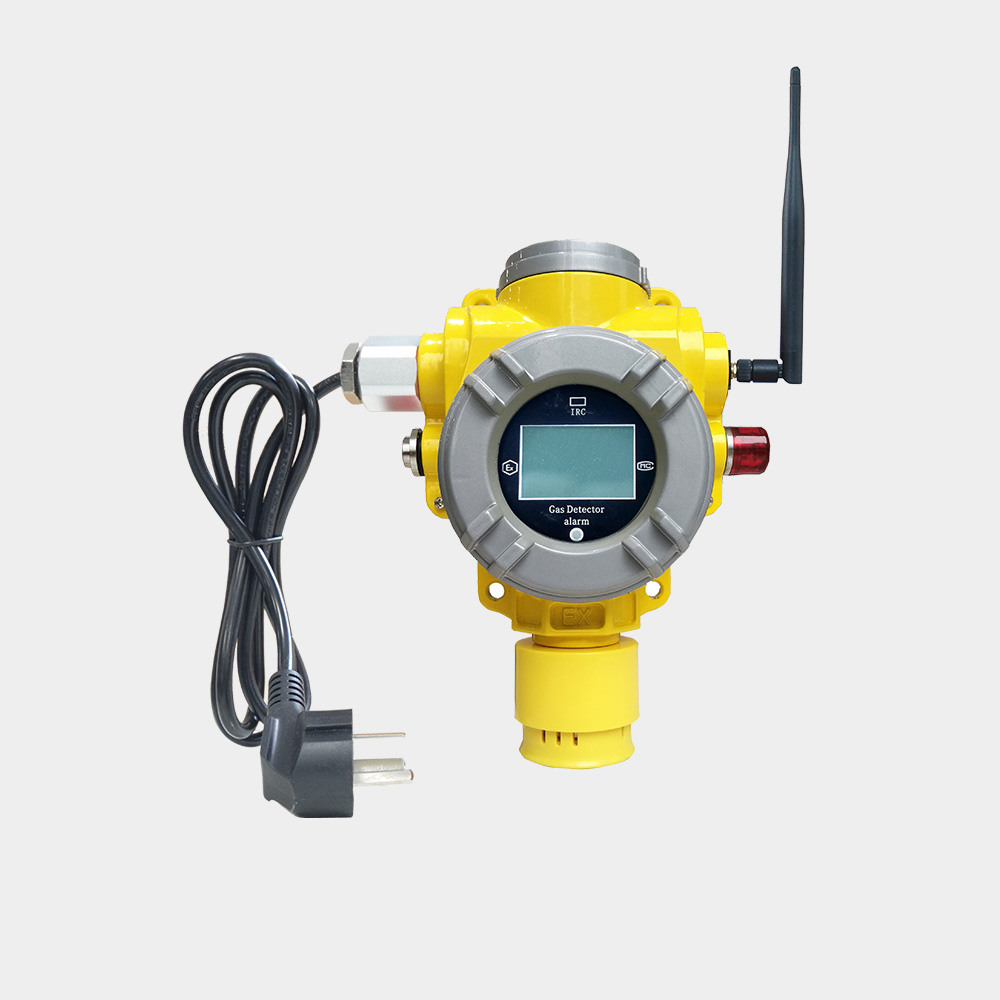
TCB2-W is a fixed natural-diffusion detector that sends concentration data to a monitoring unit through 433 wireless communication. For an EtO enquiry, specify the selected oxirane configuration and ask whether the receiving unit, power arrangements, mounting parts and required warning outputs are included. Wireless transmission changes how the signal travels; it does not remove the need to check a lost-signal condition or decide who responds to the alarm.
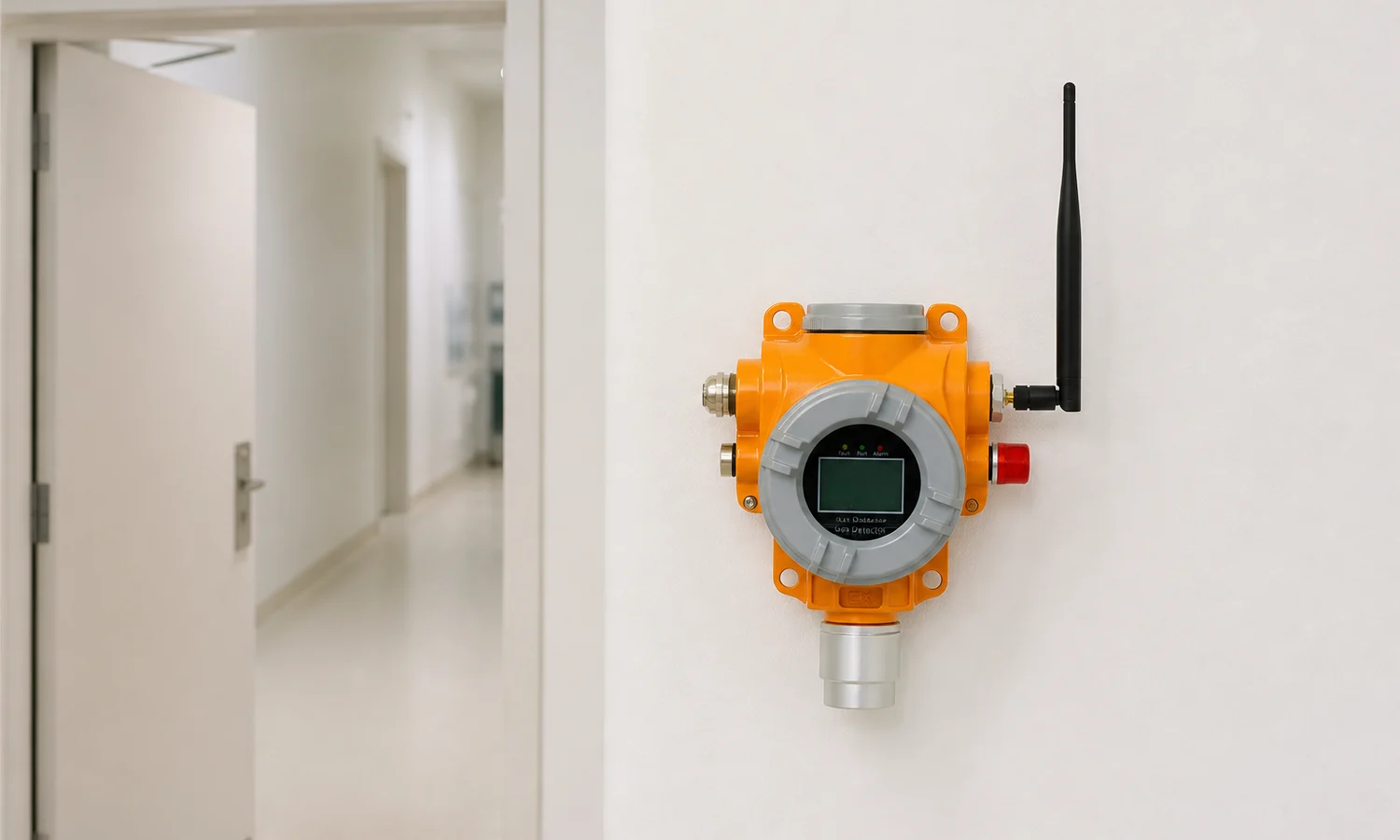
A fixed point and a wearable detector can serve the same site without being duplicates. One watches a defined area when nobody is present; the other accompanies a person as work moves. The specification should say which duty each unit covers.
Otywell Equipment Formats to Compare
Oxirane—the chemical name also used for ethylene oxide—is listed among the available gas configurations for the devices below. Confirm the fitted EtO channel, selected range and any required accessories before treating a quoted unit as ready for this application.
Why the Listed Range Is Not the Whole Specification
Otywell’s configurable gas tables include a 0–100 ppm oxirane option. That gives a buyer a starting point for an enquiry, not proof that every configured unit is suitable for every EtO measurement job. The NIOSH Pocket Guide confirms that oxirane is another name for ethylene oxide. It does not certify the performance of a particular instrument.
The low end deserves close attention. OSHA’s EtO standard identifies an action level of 0.5 ppm as an eight-hour average, a permissible exposure limit of 1 ppm as an eight-hour average and an excursion limit of 5 ppm over 15 minutes. Those are different measurements over different periods, not three default instantaneous alarm settings. A display that can show 0.1 ppm steps, for example, has not thereby demonstrated the accuracy or method required for an exposure determination at 0.5 or 1 ppm.
For the unit being quoted, request performance information at the concentrations that matter to the intended task: selected range, stated accuracy, resolution, response conditions and any relevant interference information. If the job is only an emergency area alarm, say so. If it includes employee exposure measurement, ask separately what validated sampling method will be used. Do not let a single catalogue range stand in for both.
Make Competing Quotes Comparable
The cheapest line in a quote may omit the parts that turn a detector into usable equipment. Send the same task description to each supplier and compare the complete package rather than four bare model names.
| Item to put in writing | What the quote should answer | What an omission could hide |
|---|---|---|
| Actual gas configuration | Which model ships with an installed EtO/oxirane channel, range and units? | A selectable gas in a list is not necessarily fitted. |
| Measurement performance | What accuracy and response information applies near the intended decision level? | Full-scale range and display increments alone do not establish useful low-end performance. |
| Portable package | What are the worn arrangement, battery or charging items and, if needed, probe, tubing and filters? | A pumped check may require accessories not included with the instrument. |
| Fixed package | Which monitoring unit, power and mounting parts, alarm outputs and fault indications are supplied? | A detector head may be quoted without its receiving and warning equipment. |
| Handover and upkeep | Which approved response-check method, accessories, instructions and service items apply? | The site may receive hardware without what it needs to verify or maintain it. |
Check the Delivered Equipment Against the Job
When the shipment arrives, compare its model, fitted channel and range with the purchase order. For a portable unit, check the intended wearing position and alarm modes. For a pumped unit, check the proposed probe and line as an assembly, not just the instrument display. For a fixed system, confirm that the right detector is identified at the receiver and that the intended alarm and fault indications reach the people who will act on them.
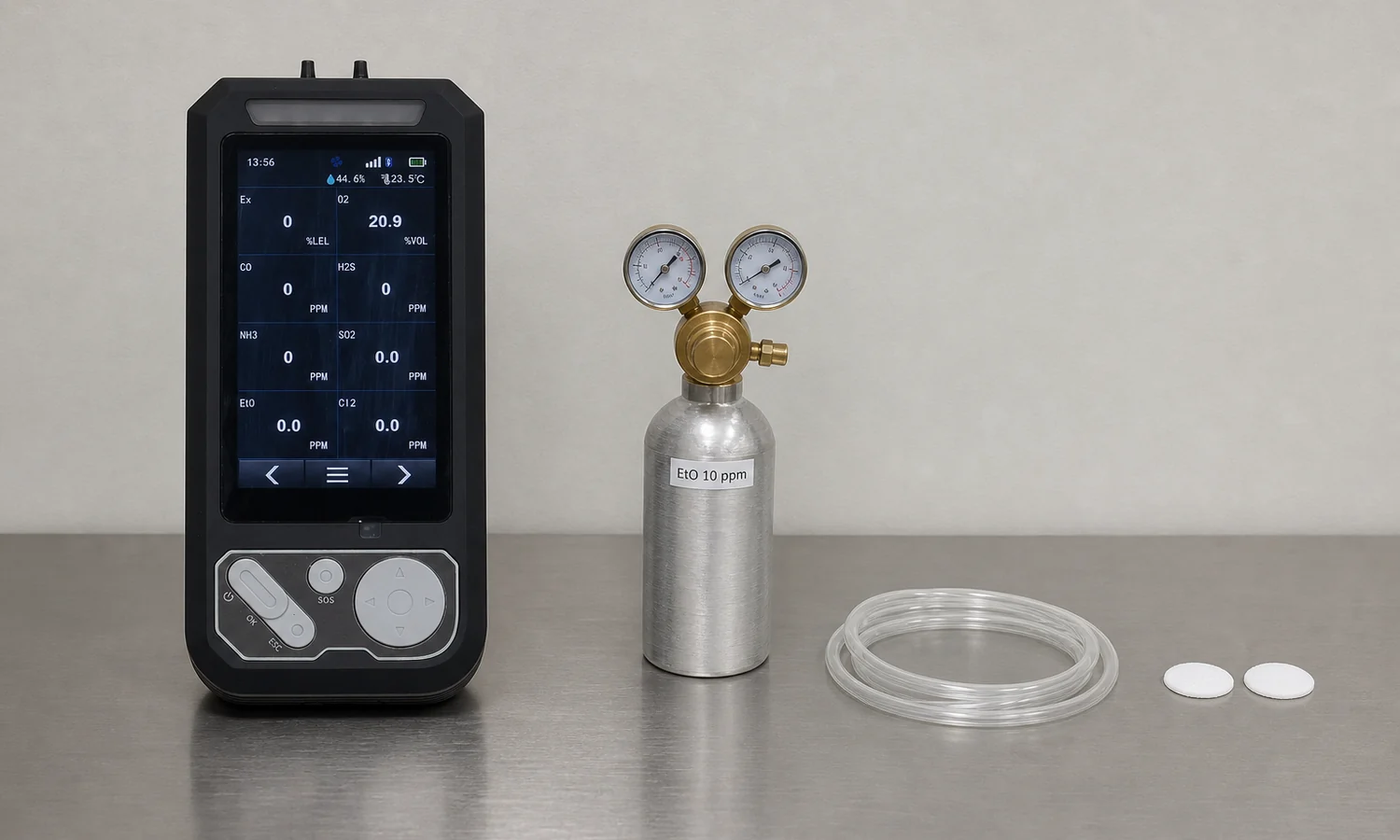
Record what was challenged, the device ID and the applicable procedure. A functional challenge and an adjustment of measurement accuracy are different activities; the bump test versus calibration guide explains the distinction. For EtO equipment, use the test method and accessories specified for the delivered configuration rather than carrying over a procedure from a different gas channel.
A Useful EtO Equipment Enquiry
“We use ethylene oxide in a sterilization area. Please quote equipment separately for (1) a worker moving between the sterilizer and gas supply, (2) remote checks at selected connections, and (3) continuous warning for the defined room. For each option, state the fitted EtO/oxirane channel, selected range, performance near our intended decision levels, supplied sampling or receiving accessories, alarm destination, fault indication and approved verification method. Identify any parts not included.”
That enquiry is more useful than asking for the “best EtO detector.” It tells the supplier where each reading must come from and what the buyer needs to receive. If the facility also needs an exposure study, place that on a separate line with its required sampling period and method.
Choose the Equipment Package Around the Work
Compare portable, pump-suction and fixed EtO detection as three distinct duties. An itemized quote should show the installed gas channel, complete sampling or alarm route, receiving equipment and ongoing verification needs.
Frequently Asked Questions
Are ethylene oxide, EtO and oxirane the same gas?
Yes. Oxirane is a chemical synonym for ethylene oxide, commonly abbreviated EtO. State both names and the C2H4O formula in an enquiry if the supplier’s gas list uses oxirane.
Can a fixed EtO alarm replace employee exposure monitoring?
No. A fixed detector reports air at its installed point. A representative employee exposure measurement has a defined breathing-zone location and time period.
Should a sterilization area use a portable or fixed detector?
Match the instrument to the duty. A portable unit travels with a worker or task; a fixed unit watches a selected point and needs an alarm destination. Both may be useful at the same facility.
When does an EtO check need a pump-suction detector?
Review pump suction when the intended sample point is away from where the detector body can be held. Quote the probe and line with the instrument and check the assembled path.
Does a 0–100 ppm oxirane option prove the detector is suitable at 0.5 ppm?
No. The range shows what a configuration may display. Ask for accuracy, resolution and method information at the concentration relevant to the specific task.
Is the monitoring unit automatically included with a fixed wireless detector?
Do not assume so. Ask for an itemized quote that names the receiver, power and mounting parts, alarm outputs and fault indications.
What should be checked before accepting EtO detection equipment?
Match the delivered model, fitted channel, range and accessories to the order. Then check the relevant sampling path, alarm recipient and fault indication using the procedure for that configuration.

WeChat
Scan the QR Code with wechat