 Henan Otywell Electronic Technology Co., Ltd

A workshop requests a formaldehyde detector for a transfer station. The supplier offers a portable monitor, a pumped instrument and a fixed alarm head. All three can be relevant, but they cannot answer the same question from the same location. Before comparing prices, identify the job that must be monitored and the decision the reading will support.
Start here: Specify the airborne target as formaldehyde (HCHO, also called methanal), then separate three tasks: checking a worker’s changing position, warning at a fixed point, and measuring exposure over a defined period. For each task, document the sampling point, expected concentration band, alarm recipient and verification method. A catalogue entry for “methanal” identifies an available gas option, not the sensor installed in the quoted unit.
Which Decision Does the Reading Need to Support?
Imagine a formaldehyde-containing solution being transferred from a container to process equipment. The operator opens a connection, works near the line, then leaves. A maintenance technician later checks the enclosure. A fixed alarm at the transfer point, a portable detector on the operator and a sample taken to assess a shift can each produce a valid record. None is a substitute for the other two.
| Decision | Where the sample is taken | Suitable starting format | Question still open |
|---|---|---|---|
| Warn someone when a monitored point rises | At a fixed inlet near the chosen transfer or process point | Fixed HCHO channel with a defined alarm route | Who receives the alarm, and what happens on sensor or communications fault? |
| Check a moving task or a point out of reach | At the wearer’s detector inlet or the end of a sampling probe | Diffusion portable or pumped HCHO instrument | Does the inlet actually reach the air of interest during the task? |
| Determine employee exposure over a period | Representative breathing-zone sampling for the relevant duration | Exposure-monitoring method selected for that purpose | Will the method meet the required accuracy at the concentrations of interest? |
The distinction matters because an area detector may miss a person’s movement between workstations, while a detector clipped to a worker cannot keep watching an unattended transfer point. A direct-reading instrument can help investigate where and when a change occurs. An exposure determination also needs a defensible sampling strategy and time basis.
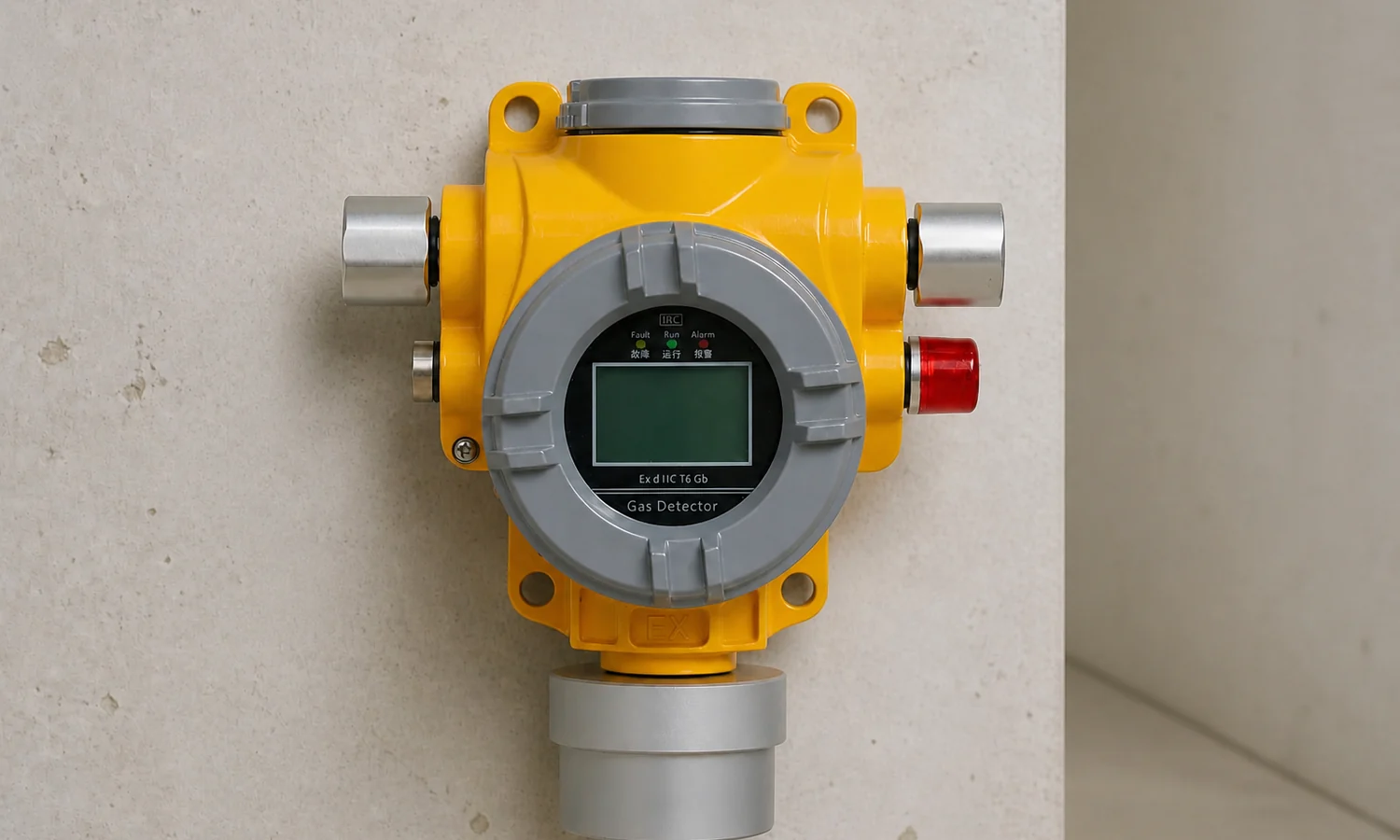
Choose the HCHO Channel Before the Detector Housing
Formaldehyde is also labeled HCHO, CH2O or methanal. The ILO/WHO formaldehyde safety card identifies methanal as a synonym. Formalin is a formaldehyde-containing solution; the detector measures formaldehyde reaching its air inlet, not the concentration of liquid in a container. Include both the chemical name and the actual workplace material in the request for quotation.
A “TVOC” display is a different specification. It does not, by itself, establish an HCHO concentration. If the purchase is for formaldehyde, the quote should name the installed formaldehyde sensor or channel, its measurement principle, ppm range, resolution, stated accuracy and known interference conditions. Ask for performance information at the low end of the range, not only at full scale.
That last request is especially important when comparing broad ranges. Otywell product gas tables list methanal at 0–20 ppm and show other optional ranges. Those are family-level choices. They do not establish the performance of a particular HCHO configuration near a site decision point. A display with fine increments is not proof of matching accuracy; resolution and measurement uncertainty are different properties.
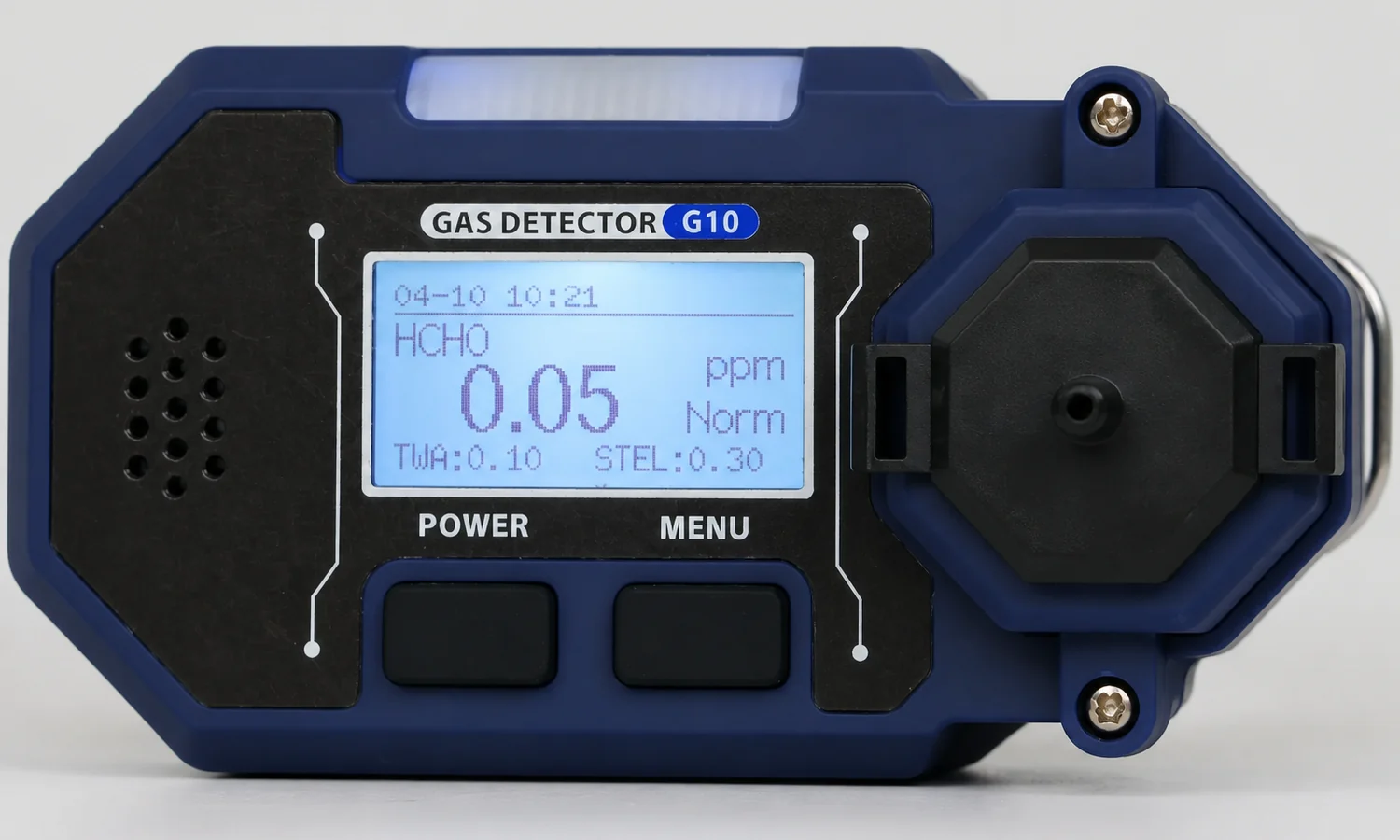
Use the Right Location, Not the Nearest Convenient Wall
Diffusion portable: confirm how it is worn
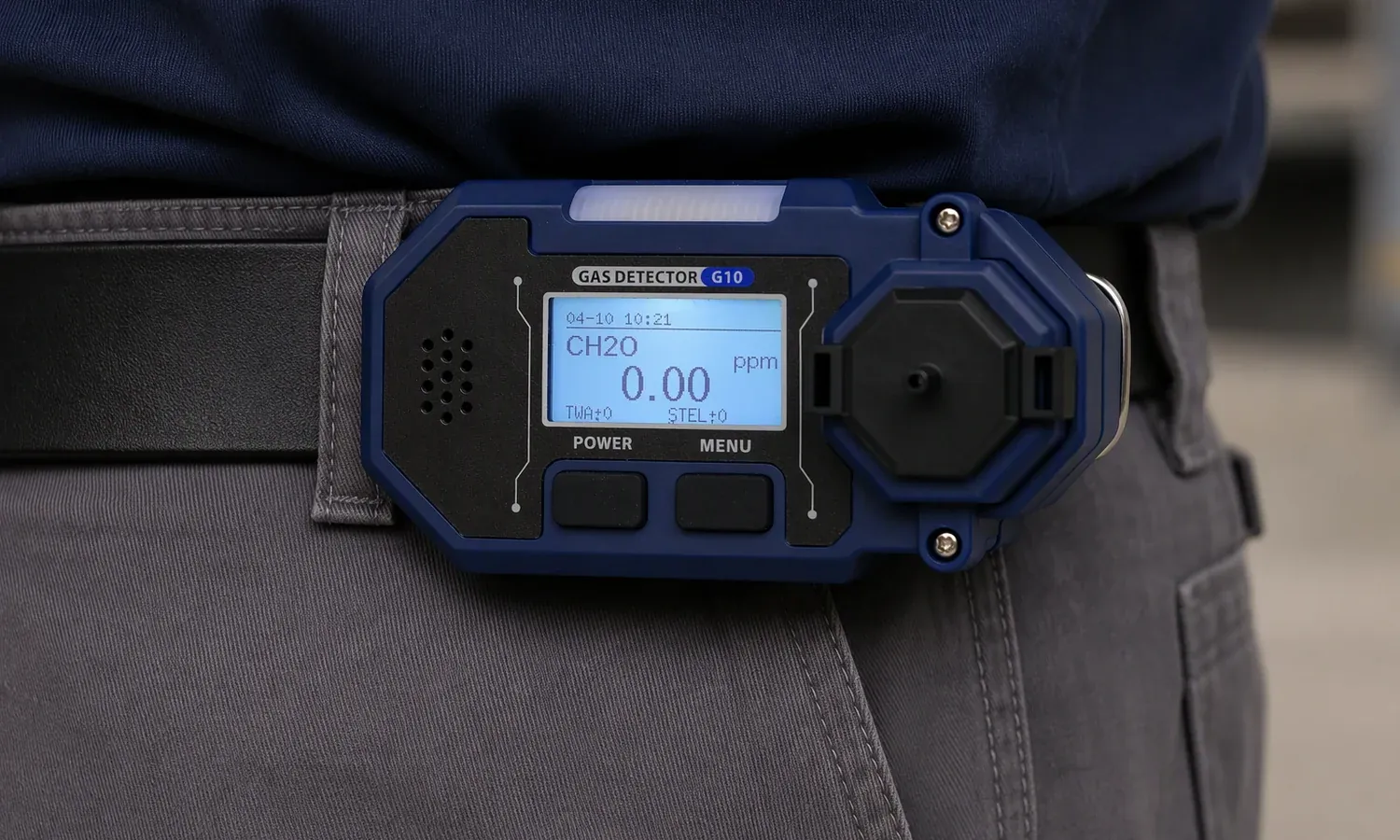
A single-gas diffusion detector samples air that reaches its inlet. For a person who opens containers or walks between process points, note the worn position before selecting the device. A monitor tucked into a pocket or covered by clothing may not sample the air the worker is breathing. Check whether its audible, visual and vibration alarms will be noticed amid the actual noise and protective clothing of the job.
Pumped portable: define the whole sample path
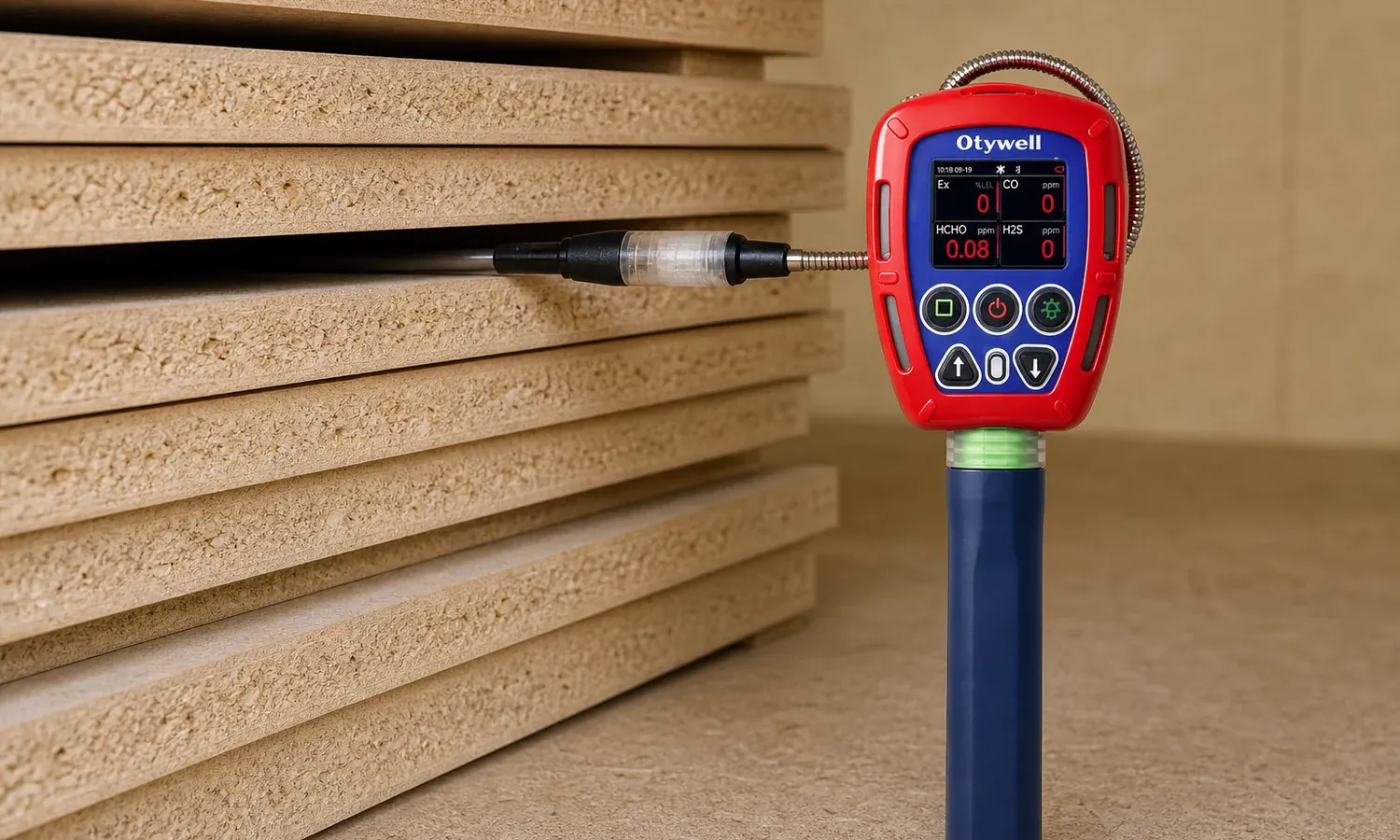
At an enclosure or other hard-to-reach point, a probe can move the inlet to the location of interest. Record the probe position, tubing material and length, filter arrangement, flow checks and the time allowed for a new reading to reach the sensor. A pump’s flow rating alone does not tell you how the complete HCHO setup behaves with a particular line. Ask the supplier to confirm the proposed accessories and test the assembled path, not just the detector body.
Fixed point: design the alarm route with the sensor position
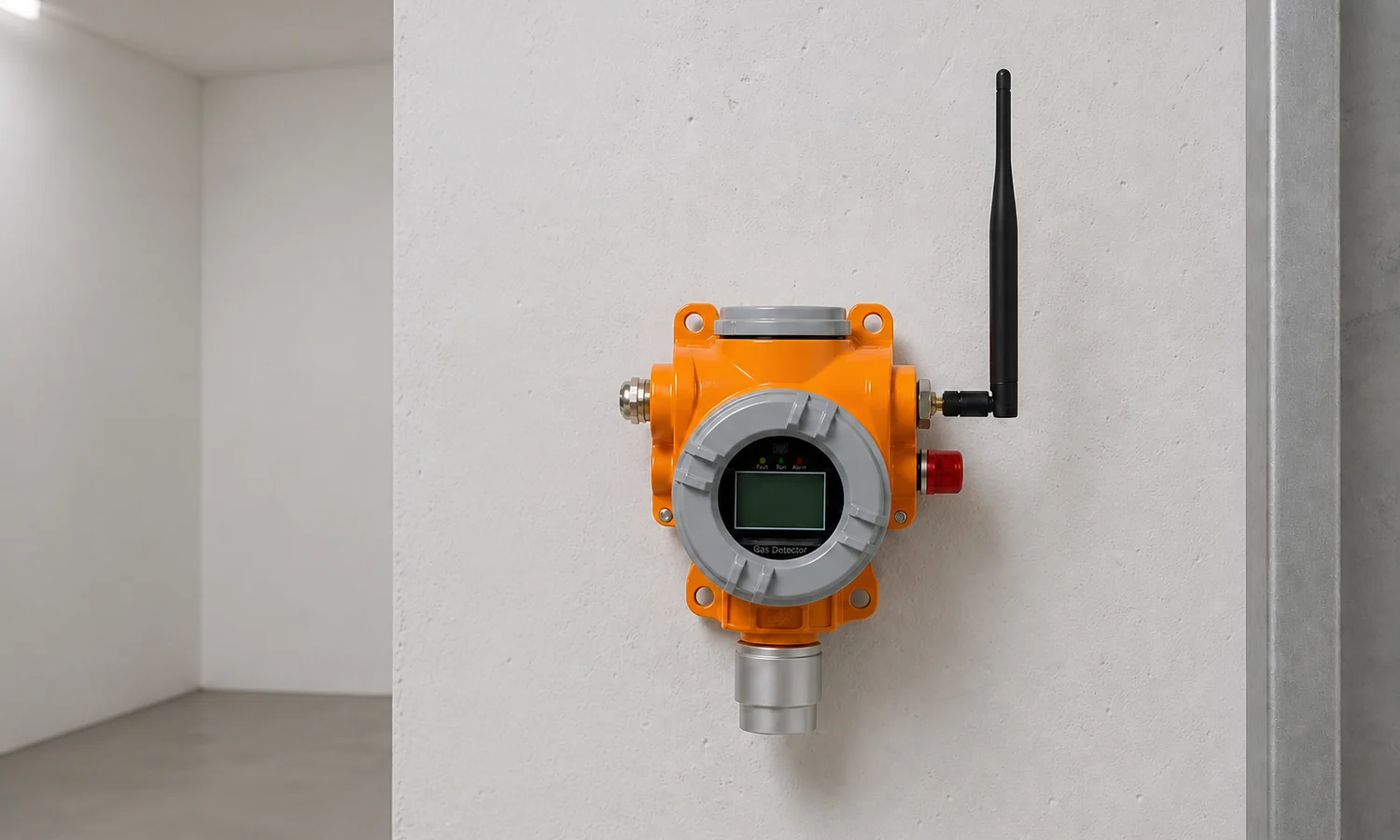
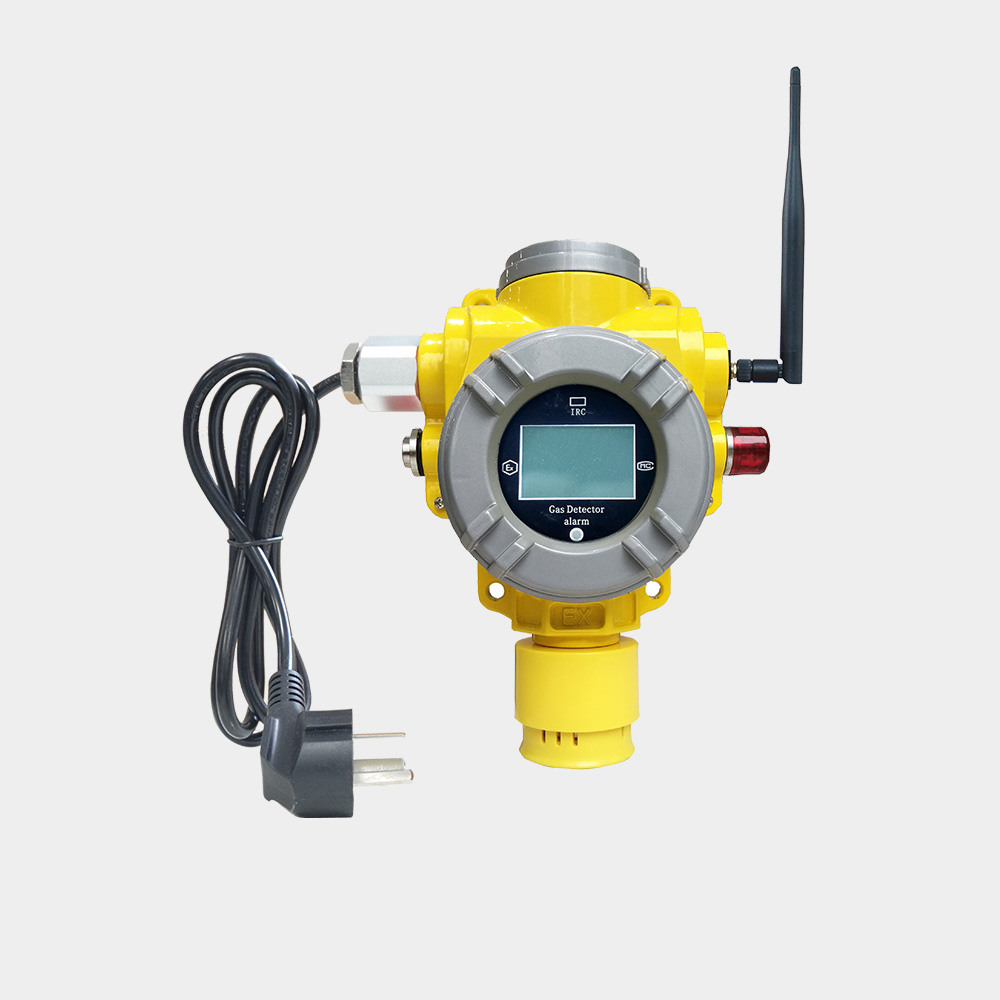
For a fixed detector, map the process opening, normal worker position, ventilation flow and maintenance access before choosing a mounting point. A ceiling or wall location selected solely because power is nearby may answer the wrong air-sampling question. Then trace the signal beyond the detector: receiving unit, audible or visible notification, event record, loss-of-signal indication and the person who responds. Wireless transmission can simplify wiring, but it does not remove the need to define coverage and fault handling.
Do Not Turn Exposure Limits Into Default Alarm Settings
In US workplaces covered by OSHA’s formaldehyde standard, 29 CFR 1910.1048, the action level is 0.5 ppm as an eight-hour time-weighted average. The permissible exposure limit is 0.75 ppm as an eight-hour average; the short-term exposure limit is 2 ppm over 15 minutes. These figures have different purposes and averaging periods. An instantaneous fixed-point alarm at 0.75 ppm would not, merely by matching a number, constitute an eight-hour exposure assessment.
The standard’s exposure-monitoring provisions call for measurements representative of employees’ full-shift or short-term exposure, as appropriate. For laboratory analysis, NIOSH Method 2016 describes collecting formaldehyde on a treated cartridge followed by HPLC analysis. That is a different workflow from glancing at a live gas-alarm display. Choose the measurement method to fit the decision, then choose alarm settings separately for the site’s warning and response plan.
Otywell Formats Worth Comparing
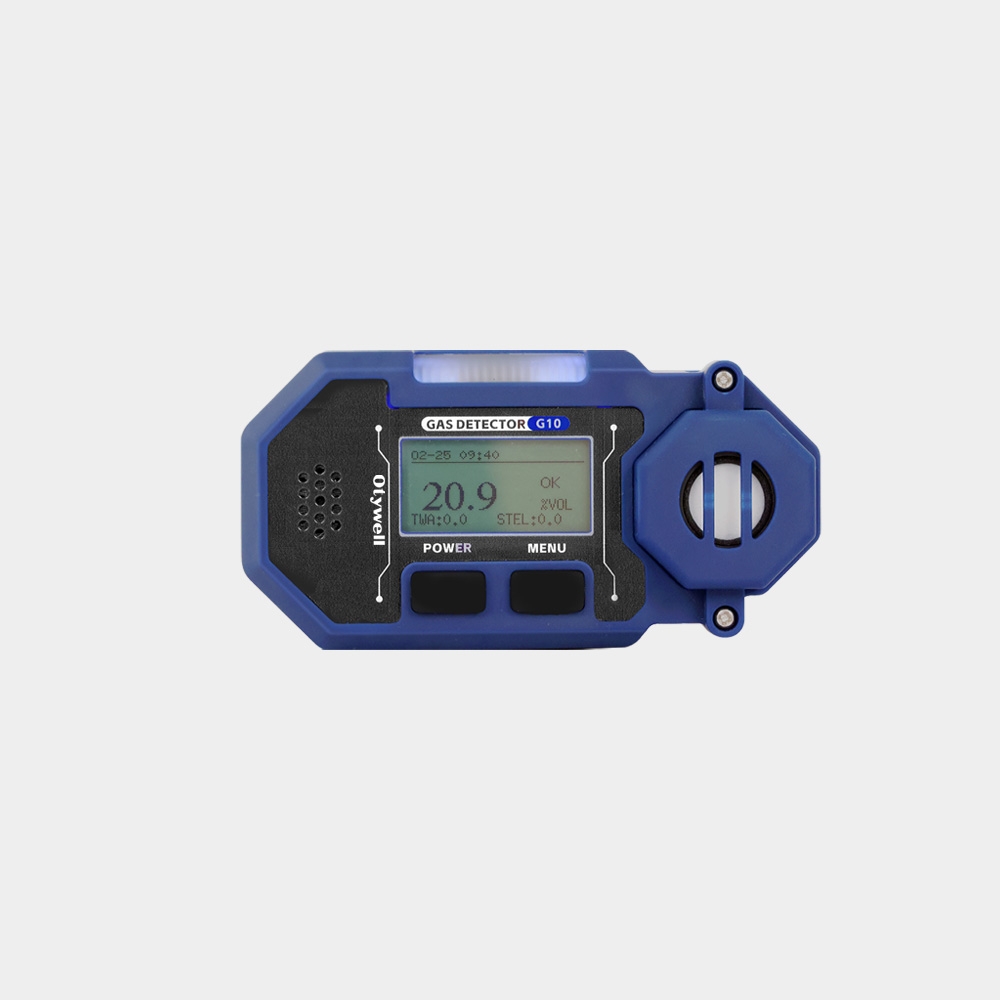
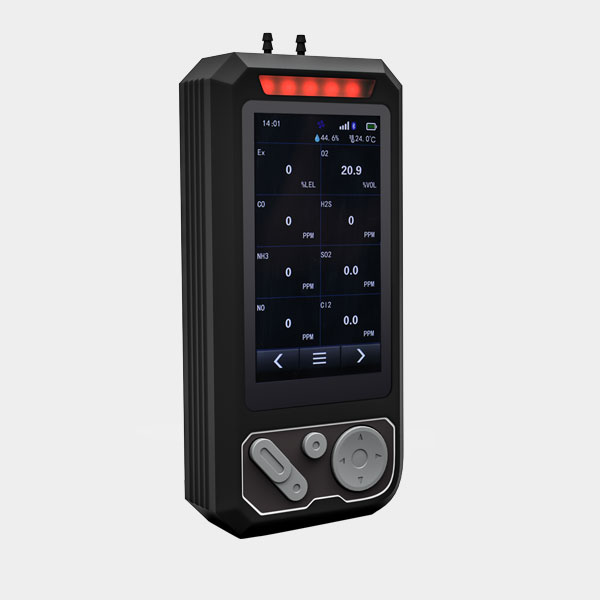
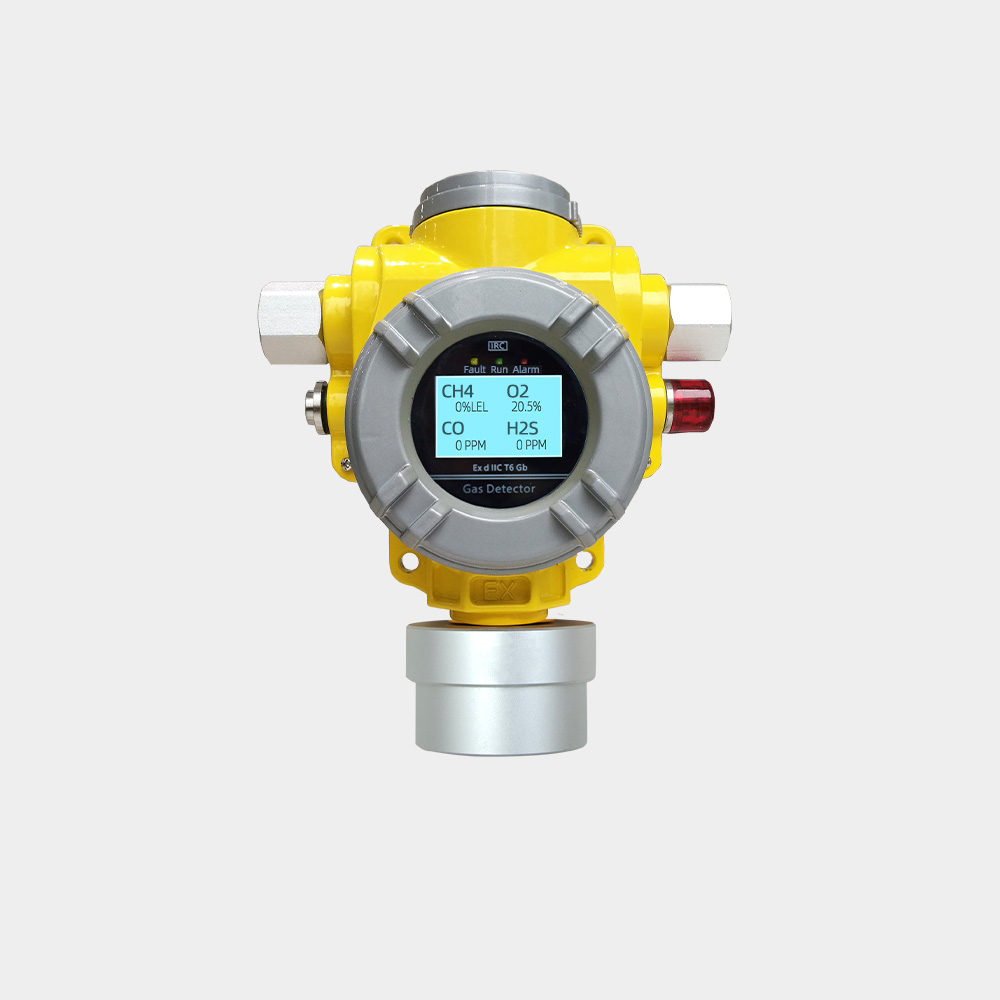
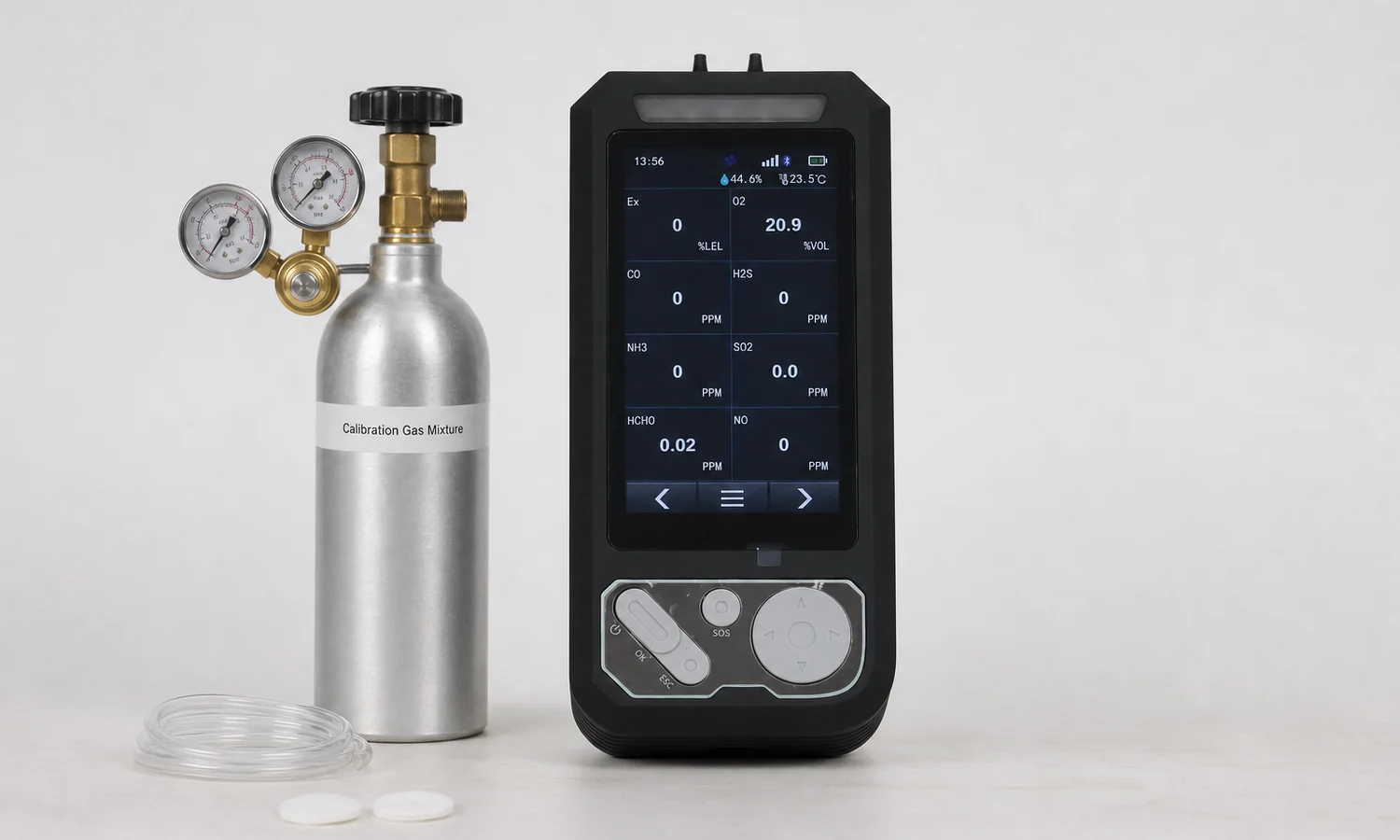
The following Otywell product pages list methanal or CH2O among gas options. The descriptions below state the published product format only. Confirm the HCHO channel and exact ordered range for each candidate; do not assume every stock unit contains that sensor.
What a Comparable Quote Must Show
Send the same application brief to every proposed configuration. A useful reply should identify the item that will actually be shipped, not merely a product family with a long list of detectable gases. For a transfer station, the brief could read:
Example enquiry: “We handle a formaldehyde-containing solution at an indoor transfer point. Please propose an airborne HCHO detector for the operator’s task and, separately, a fixed warning point. State the sensor fitted to each unit, ordered ppm range, resolution and accuracy at relevant low concentrations. Show where each unit samples, how the fixed alarm reaches the receiving station, and which test accessories and procedures are supplied. Tell us which other process chemicals may affect the HCHO reading.”
Keep the operator’s portable requirement and the fixed-point requirement as separate line items. Otherwise a multi-gas product page can appear to meet the enquiry even though the quotation does not specify the formaldehyde channel, the receiving equipment or the sample arrangement. If an exposure study is also required, define its time period and analytical method as a third work item rather than an implied feature of the alarm hardware.
| Quotation field | Acceptable detail to request | Why it changes the comparison |
|---|---|---|
| Installed HCHO channel | Sensor or channel name, selected range and units on the exact model | Separates an orderable option from the unit being purchased |
| Low-concentration performance | Resolution, accuracy and interference information for the selected configuration | A broad range and small display increment do not establish useful low-end measurement |
| Sampling assembly | Worn position or fixed inlet; probe, tubing, filters and flow checks where applicable | Defines the air that will actually reach the sensor |
| Alarm chain | Local alerts, controller or monitoring unit, fault indication and event records | Shows whether a reading can reach the person expected to act |
| Service package | HCHO-specific test method, required accessories, replacement parts and access plan | Exposes recurring work and missing items before installation |
Check the Measurement Path After Installation
Receiving the right model is the beginning of acceptance, not the end. Compare the unit’s label and configuration screen with the purchase order: target gas, range, alarm logic and output. At a fixed point, check that the monitoring unit identifies the correct detector and displays a fault when the signal is interrupted. At a pumped point, check the probe, line and filter as an assembly. Record the result with the instrument ID, date and method.
Use the manufacturer’s formaldehyde-channel procedure for response checks and calibration. A test used for another sensor is not automatically valid for HCHO. Our bump test versus calibration guide explains why a function check and an accuracy adjustment answer different questions. The HCHO sensor, sample accessories and receiving alarm path each need a place in the maintenance record.
Revisit the arrangement when the process changes. A different solution, transfer method, enclosure, ventilation pattern or worker position can make the original sampling point less useful even when the detector itself is functioning. Update the application brief and compare the new task against the installed configuration rather than relying on the old purchase description.
Make the Specification Match the Job
The best formaldehyde gas detector for a site is the one specified for its actual measurement task. Put the HCHO channel, sampling location, low-end performance, alarm destination and test arrangement in writing. Then compare the portable, pumped or fixed formats against that same brief.

WeChat
Scan the QR Code with wechat