 Henan Otywell Electronic Technology Co., Limitado

Un detector de gas tolueno sólo es útil cuando su medición coincide con el trabajo. Un tubo puede responder una pregunta única en un momento dado. A portable alarm follows a worker. A fixed detector watches a selected location between inspections. Choose that duty first, then specify the toluene channel, reading unit, sampling method and alarm path.
For paint mixing, printing and solvent transfer, start with the task and where vapor could reach people or equipment. Use a spot measurement for a defined check, portable monitoring for moving work, and fixed monitoring for a point that needs continuous indication. A ppm reading, a %LEL reading and a work-shift exposure average are different measurements. In mixed-solvent areas, request the offered instrument’s response and interference information before describing its display as a toluene concentration.
Decide what the reading must tell you
Toluene is a liquid at ordinary workplace temperatures; the instrument measures toluene vapor in the surrounding air. Methylbenzene is another name for toluene, not a second gas to add to an order. El NIOSH Pocket Guide entry for toluene identifies the substance by CAS 108-88-3 and lists its vapor properties and flammable limits. These details help identify the target, but they do not select the sensor, range or alarm arrangement for a particular job.
The first question for a buyer is whether the instrument is meant to indicate vapor concentration near a worker, warn of a developing flammable atmosphere, or do both through separately specified measurements. An instrument reporting parts per million (ppm) and one reporting percent of the lower explosive limit (%Lel) do not answer the same question. Do not ask a supplier for a generic “toluene alarm” and leave the unit to be decided after installation.
| Question at the work point | Reading or record to specify | What the reading does not establish by itself |
|---|---|---|
| What vapor concentration is present where a person works? | A suitable toluene-capable ppm configuration and a sampling position that represents the task | Whether a flammable atmosphere is developing elsewhere |
| Could a combustible vapor release develop? | A combustible-vapor configuration expressed in %LEL, with a defined alarm path | A low-level toluene exposure concentration |
| What was a worker’s exposure over a shift? | An exposure-assessment method and time-based record appropriate to that question | An answer from a single instantaneous detector reading |
As an illustration of why the terms must stay separate, the U.S. OSHA toluene exposure-limits page distinguishes enforceable limits from other recommendations and notes that concentration and duration both affect exposure. It also identifies different requirements under state plans. None of those published limits is a universal factory setting for a gas detector. Record the applicable jurisdiction and the site’s monitoring purpose before setting an alarm.
Is a spot check enough, or must the point be watched continuously?
Search results for “toluene gas detector” include detector tubes as well as electronic alarms. They are not interchangeable purchases. A color-change tube gives a reading for an individual sampling exercise, within the tube’s stated range and procedure. It may answer a specific question at a solvent container, but it does not keep measuring once the check is over. If the requirement is to warn people whenever a release develops during a shift, specify a continuously operating device and its alarm route instead.
A portable diffusion detector takes its sample from the air around the instrument. Worn or carried with the operator, it can follow changing work positions. A pumped portable detector draws air from a probe tip to the instrument; the tip, rather than the operator’s hand, defines the sample location. A fixed detector is assigned to a selected location and can keep reporting there while workers move elsewhere. It does not automatically cover every bench, container or aisle in the room.
| Method | Use it to answer | Location that is actually measured | Limit to remember |
|---|---|---|---|
| Detector tube or other spot test | What is present at a specified point during this check? | The point sampled during the test | No ongoing indication or alarm after the test |
| Portable diffusion alarm | What reaches a worker as the task moves? | Air at the instrument’s inlet | Does not watch an unattended area after the worker leaves |
| Pumped portable instrument | What is present at a probe location? | Air drawn from the probe tip | Tube, filtrar, flow and sample travel time need checking |
| detector fijo | What happens at a defined monitoring point over time? | Its installed sensing or sampling point | Point selection and signal routing determine its usefulness |
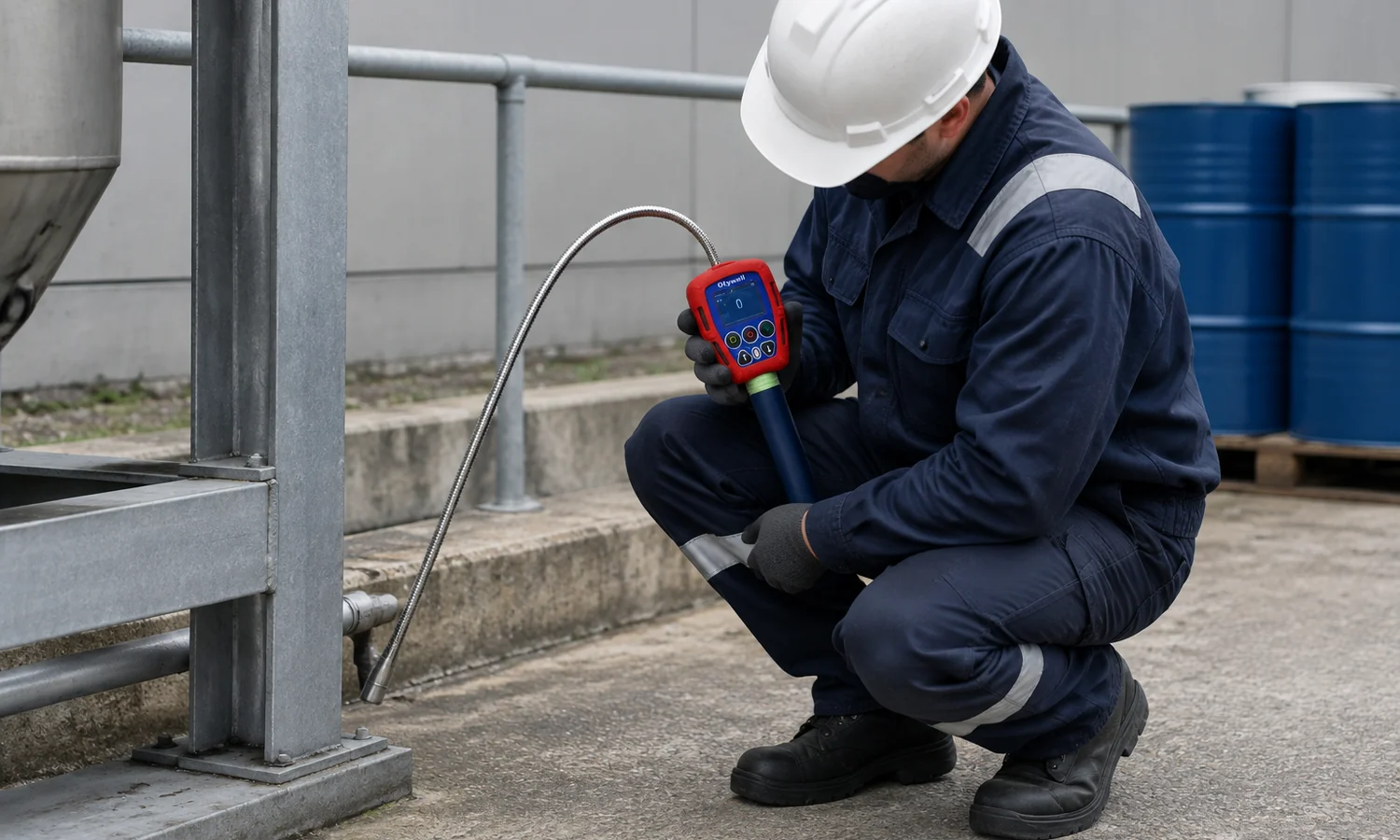
Choose around the solvent-handling task
Industry names alone are poor location instructions. A printing plant may have an enclosed solvent store, an ink-change station and a wash-up position. The person, liquid and airflow are different at each. Before discussing a model, sketch the sequence of work and mark where the operator stands while the container is open.
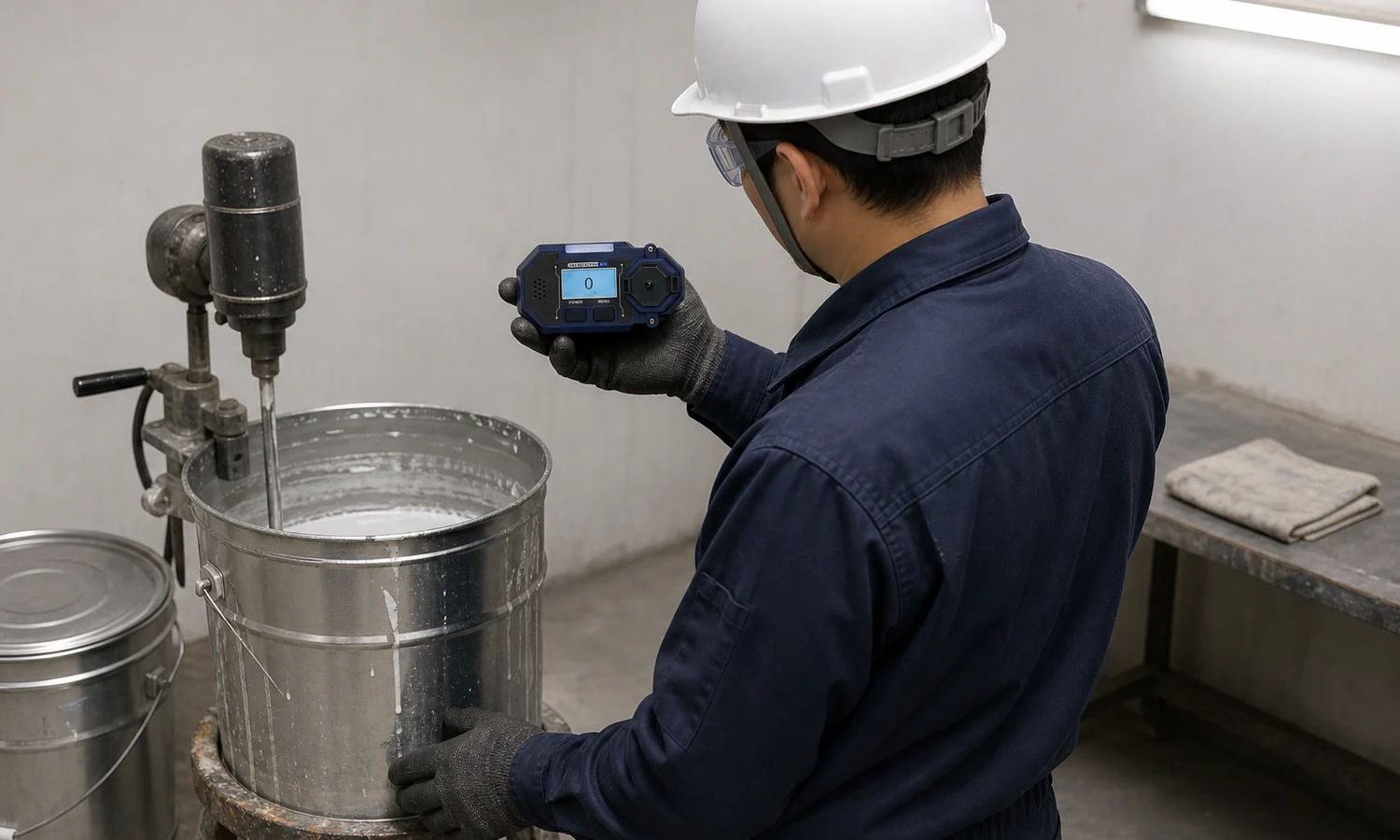
Paint mixing and open-container charging
At a paint-mixing station, an operator may unseal a container, add solvent, measure material and then move to a different side of the vessel. A detector fixed to a convenient wall will only report the air at that wall. For a person who moves with the job, start by considering a portable configuration carried in the worker’s breathing area. If mixing repeatedly takes place at one defined station and an unattended warning is required, add a fixed-point discussion: where is the open-container release, where is local exhaust pulling the air, y donde se recibirá la alarma?
The solvent formulation matters. If the mix also contains xylene or other vapors, ask how the proposed channel responds to those substances. A total-VOC response or a product-family gas list should not be presented as a selective toluene result without the relevant configuration and interference data.
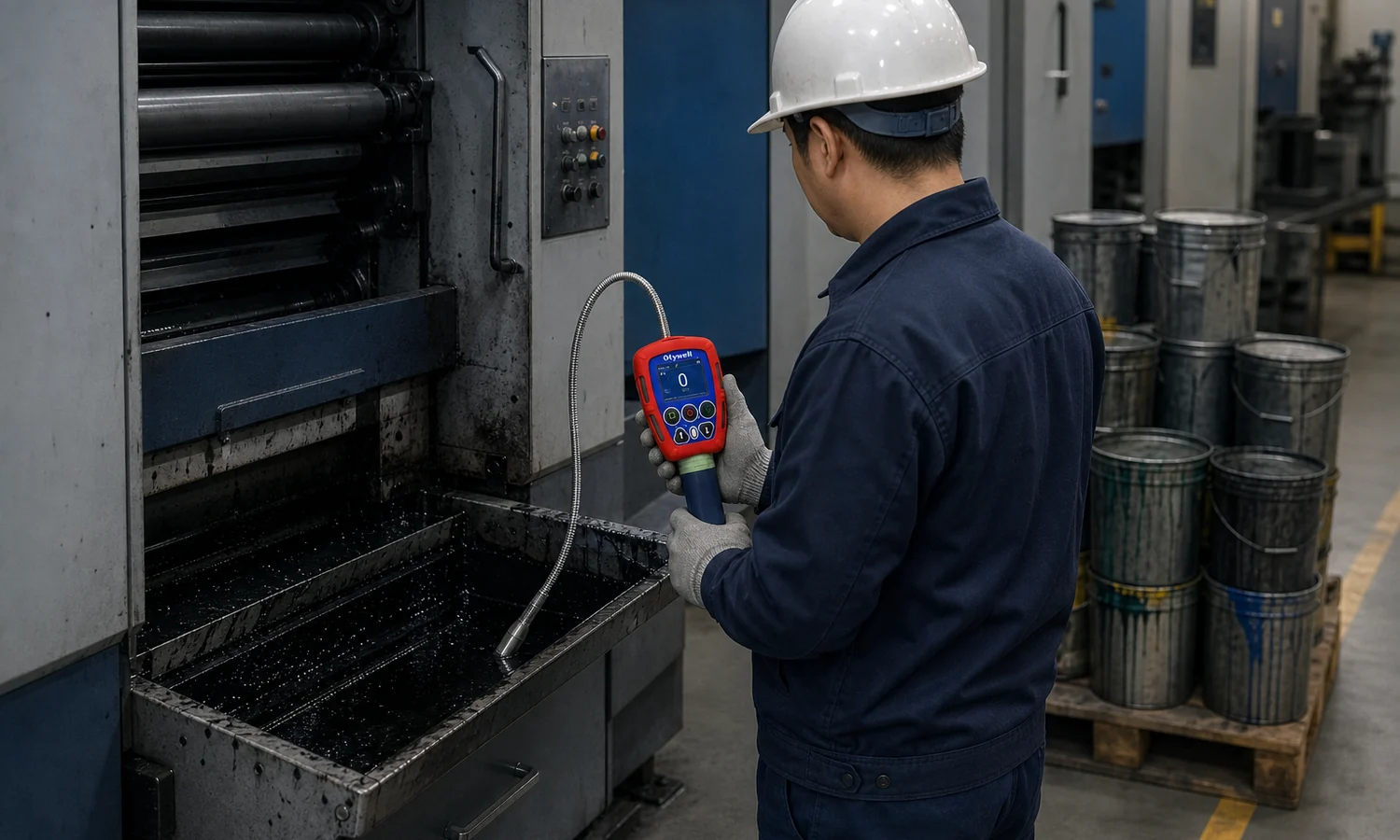
Printing, ink changeover and press cleaning
An ink change is short, repeated work rather than a steady release from one pipe. The operator may move between an ink container, feed point and cleaning area. Record these as separate task positions. A portable monitor can travel through the sequence; a fixed point can watch a repeatedly used location when continuous reporting is the requirement. If the press has several workstations, one instrument beside the most accessible door is not a monitoring plan for all of them.
Ask whether readings are needed during the brief open-container step, throughout the shift, or when nobody is working at the press. That answer is more useful than the generic statement that the detector is “suitable for printing.”
Solvent transfer and dispensing connections
At a transfer station, list the drum or tank opening, bomba, hose connection, valve and filling point. A fixed detector can be considered for a repeat-use position that must remain under watch between rounds. An operator connecting hoses has a moving task and may also need a portable check. Where a fitting is behind equipment or below the operator’s position, a pumped probe can sample that point without making the instrument body the measurement location.
For a pumped setup, include the proposed tube and probe in the enquiry. The sample needs to reach the sensor; a blocked inlet, inappropriate tubing or a long route can change the assembled system’s response. The instrument’s sensor specification alone does not describe that whole path.
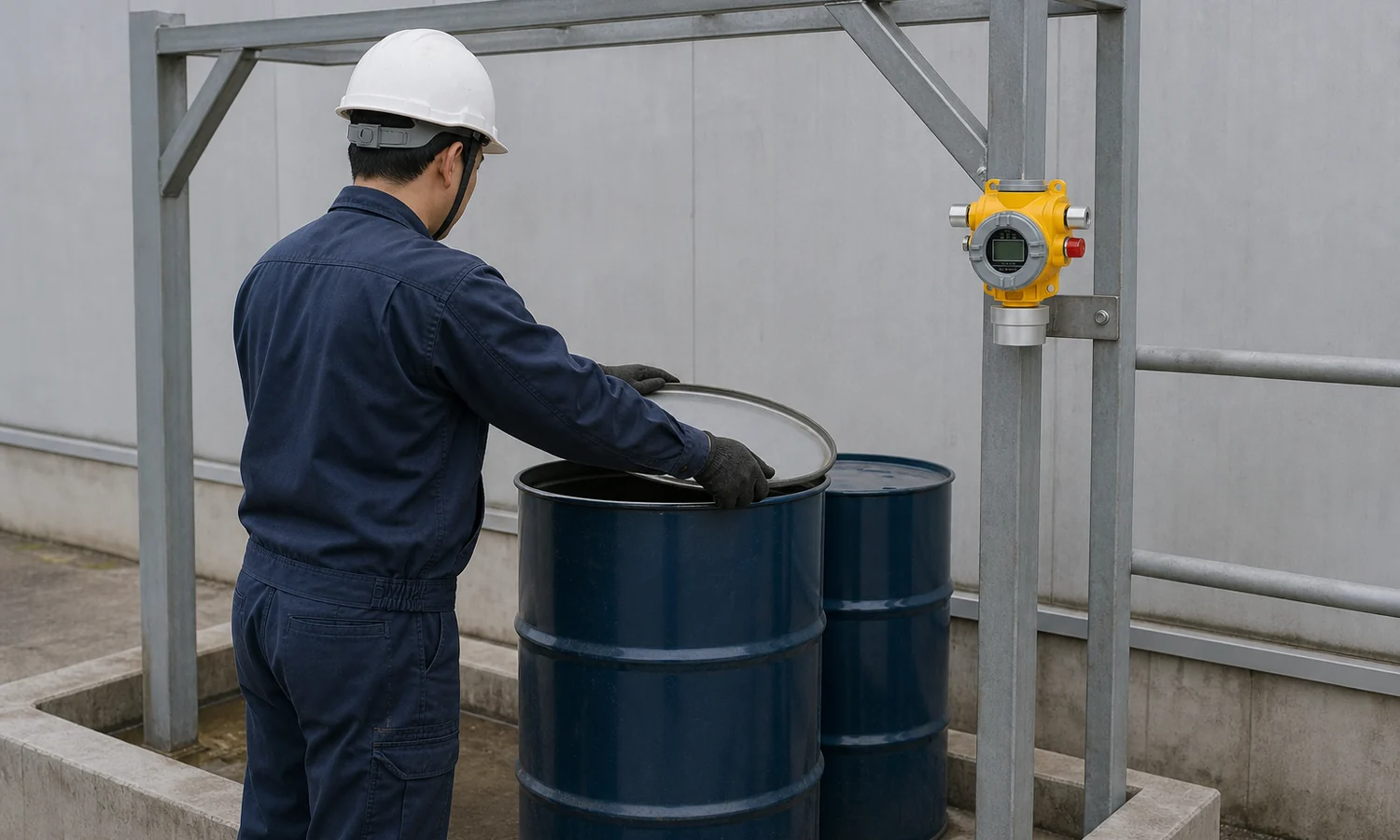
Adhesive use and solvent storage
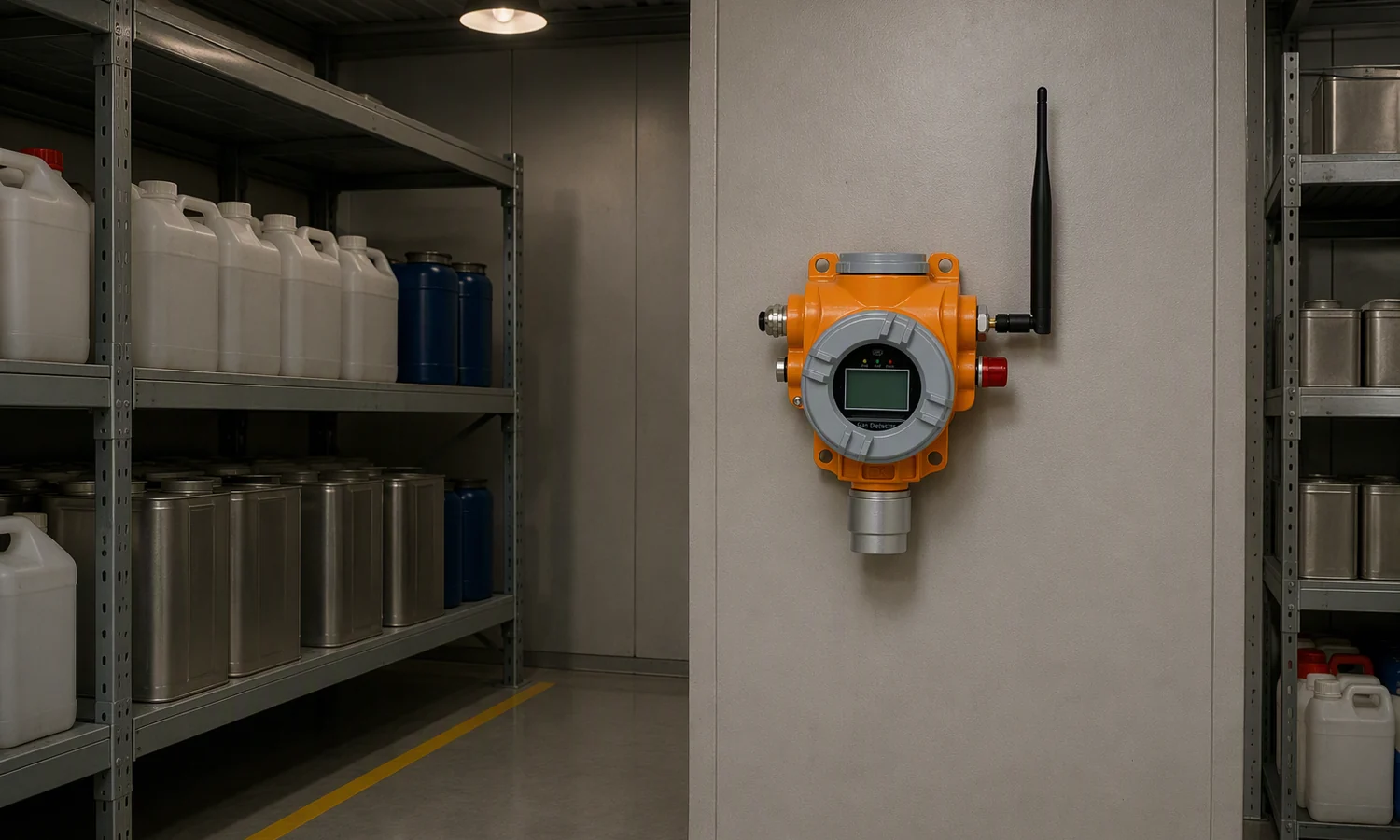
An adhesive application bench and a closed-container store should not share a detector location simply because both appear on one floor plan. At the bench, ask where people work during application and cleanup. In storage, ask which handling or transfer activity could release vapor and whether the area must be watched when unoccupied. Ventilation openings, doors and shelving can alter where a sample will be representative. Record each monitoring point against its own task.
| Work point | First monitoring question | Format to examine | Detail to send with the enquiry |
|---|---|---|---|
| Open paint vessel | What reaches the operator during charging? | Portátil; possibly a fixed point for a repeat-use station | Worker positions, local exhaust and solvent mixture |
| Ink-change station | Is the concern the brief task or the unattended area? | Portable for the moving task; fixed for ongoing point indication | Task sequence and locations of open containers |
| Transfer connection | Does a defined connection need continuous warning or a local check? | Fijado, portable or pumped according to the duty | Connection positions and probe access |
| Adhesive bench and store | Are these one monitoring point or two different jobs? | Specify each separately | Occupied positions, doors and ventilation route |
Five specifications that should appear on the order
1. The exact target and configured channel
Write tolueno (methylbenzene), CAS 108-88-3 where that is the intended target. A model family may list many detectable gases; the supplied unit measures the channels actually fitted and configured. Ask the supplier to name the sensor, measurement unit and calibration basis offered for toluene. Where a page groups “xylene/methylbenzene” in one table row, request clarification rather than assuming those two vapors can be reported separately.
2. Rango, resolution and alarm purpose
State the expected concentration range and whether the result must be in ppm or %LEL. A low-end working range, an upper-range release warning and an exposure-assessment record are different requirements. Specify who must receive the indication and what information the receiving system needs. Do not choose an alarm threshold by copying a limit from another jurisdiction or a generic combustible-gas setting.
3. Other vapors that may be present
Supply the process formulation or at least the other known solvents. In paint, ink and adhesive work, a broad VOC response can rise even when the amount of toluene alone has not been established. Ask for the offered channel’s interference or response information, its calibration gas, and the limitations of any correction method. If the task is to identify individual components of a mixture, say so explicitly rather than accepting a total-VOC display as a component analysis.
4. How the sample reaches the sensing element
Identify whether the specified version is diffusion, a portable pump with probe, or a fixed sampling arrangement. For a pump, include probe material, tube length, filters and access for flow checks in the equipment discussion. The instrument body and sample inlet are different locations; describe both on the layout. Ask for the expected response of the assembled configuration, not a sensor-only time quoted without the sample line.
5. Fuerza, output and maintenance access
For a fixed detector, write down the available power, required signal path, receiving equipment and location of the alarm recipient. For a wireless point, confirm that the selected version and receiving unit are compatible and that the intended installation can communicate with them. For any device, ensure that the inlet and test connection remain reachable after installation. Put the supplied test and calibration instructions on the purchase-document list.
Otywell equipment formats for a toluene monitoring enquiry
The four models below cover different installation and sampling functions. Their product pages list toluene or methylbenzene among configurable gases, but a list of possible gases is not a promise that every shipped unit contains a toluene channel. Confirmar el sensor, rango, unit and calibration arrangement for the specific order.
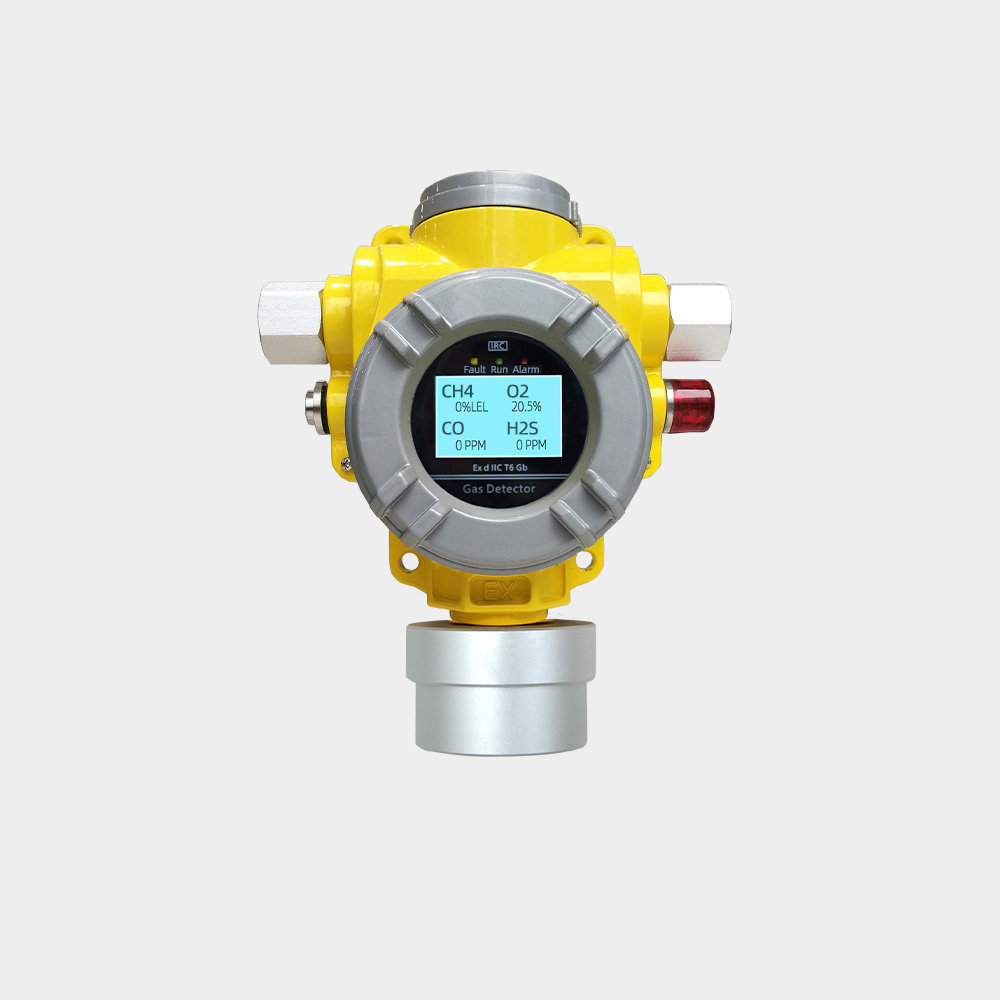
TCB2-F
Fixed gas concentration and leakage detection with natural-diffusion or pump-suction sampling; 4–20 mA and RS485 are listed output options.
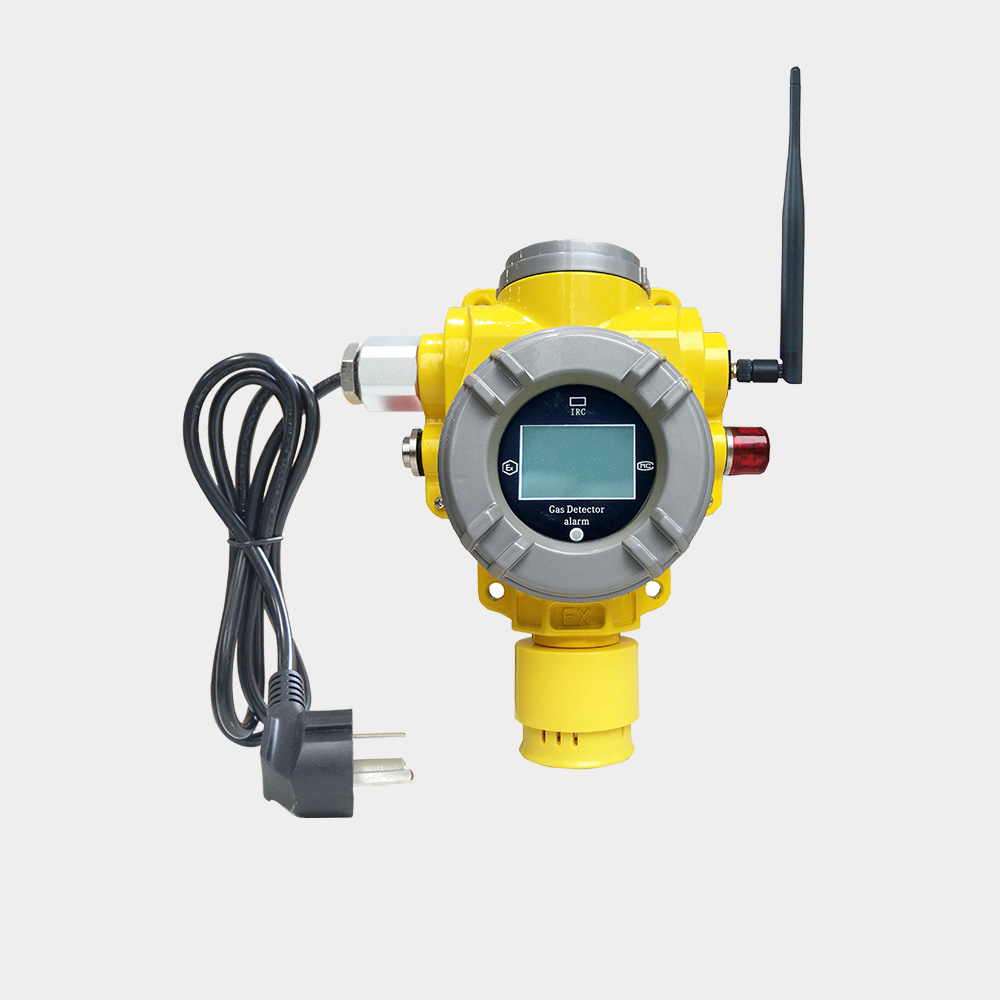
TCB2-W
Fixed natural-diffusion detector described as sending gas-concentration signals to a monitoring unit by 433 wireless transmission.
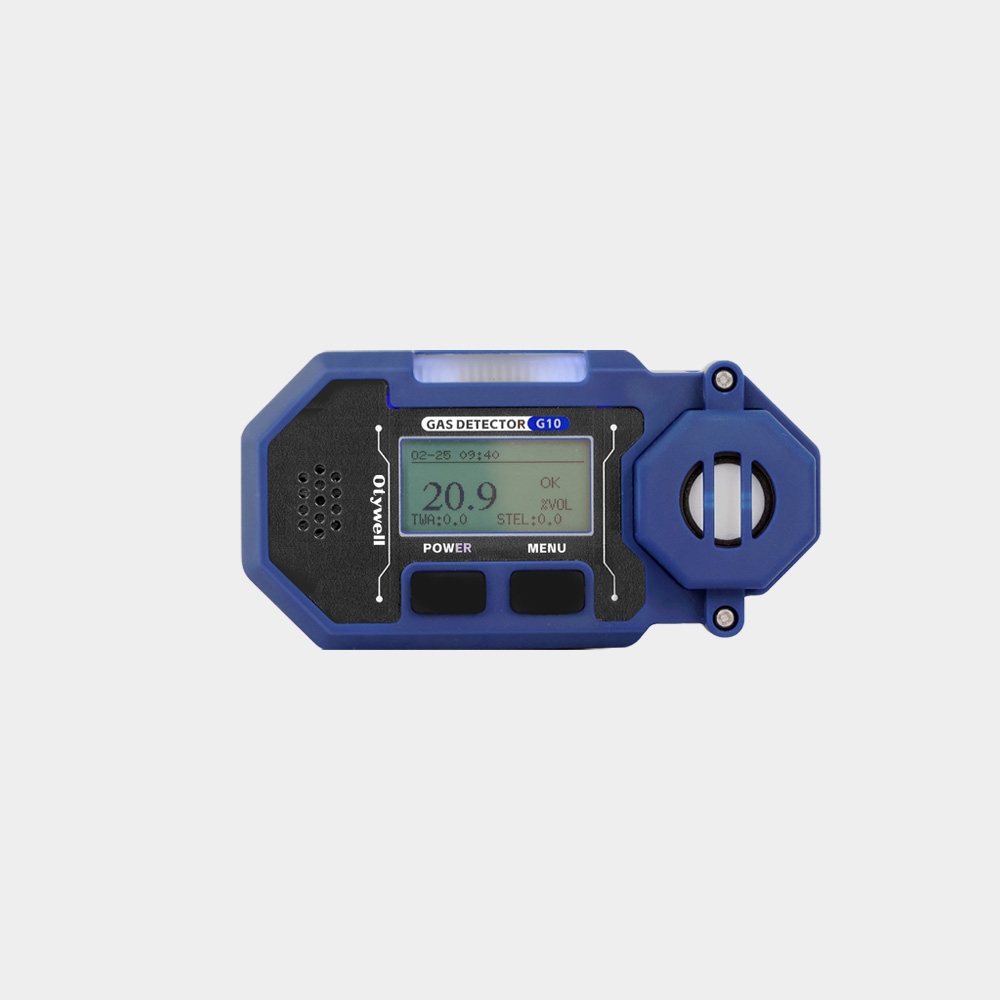
G10
Portable single-gas instrument using natural diffusion, with audible, visual and vibration alarms described on its product page.
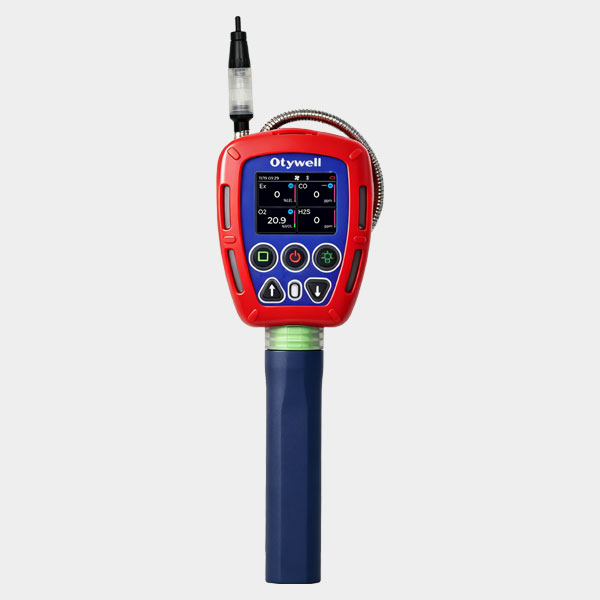
G90
Portable range with diffusion-probe, pump-suction-probe and pump-suction multi-gas modes described for different configurations.
Place the sample where it can answer the question
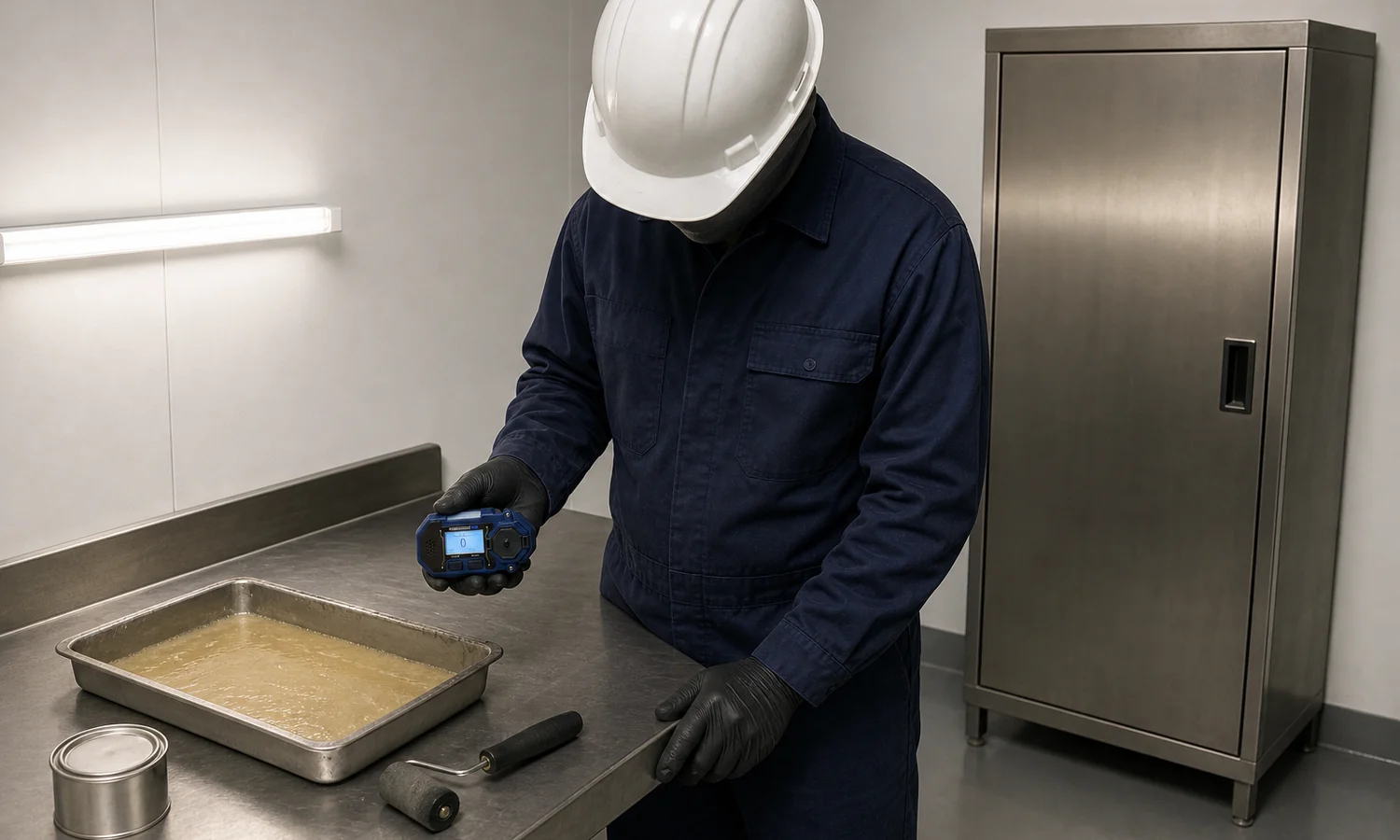
A useful layout marks more than the room name. Plot the open container or possible release point, the worker’s position during the task, the direction of local exhaust and makeup air, puertas, obstrucciones, and the place where a detector can be reached for testing. Then explain why each proposed inlet represents the job it is supposed to monitor. A point chosen because power is nearby may be easy to install yet poorly placed for the question.
At a mixing station, ask whether the worker stands at the charging side or moves around the vessel. At a printing press, mark the ink-change and wash-up positions separately. At a transfer connection, consider both the fixed connection and the route taken by the operator. A storage-area point may be needed when no operator is there; a carried instrument cannot provide that unattended watch.
Neither the gas name nor vapor density alone supplies a universal mounting height. Release direction, ventilación, equipment geometry and occupied locations matter. If a sampling line is used, the inlet is at the probe tip. Record the line route, flow check and service access, then examine how long a sample takes to reach the instrument. Revisit the point schedule when a vessel, extraction hood or workflow changes.
Make the quotation about the work point
A useful enquiry is a short point schedule, not just “price for toluene detector.” Send one row for each job or monitoring location. Where a single area has both a fixed release-warning duty and a moving worker-check duty, keep them as separate rows. That makes a supplier’s answer easier to compare and exposes gaps before equipment is ordered.
- Substance and mixture. State toluene/methylbenzene and list other solvents or gases that may be present.
- Task and position. Name the paint, ink, transfer, adhesive or storage operation and mark the proposed inlet or worker position.
- Monitoring duty. Specify spot check, carried alarm, pumped inspection or fixed continuous indication.
- Medición. Give the required unit, working range and purpose of any alarm or time-based record.
- Sampling hardware. Describe diffusion or the proposed probe, tubo, filter and pump arrangement.
- Signal destination. Para un punto fijo, identify the receiving device and who must see an alarm or fault.
- Site conditions. Include temperature, humedad, cleaning exposure, power and any applicable installation-area requirements.
- Service package. Request the exact sensor configuration, calibration information, test method and replacement or service instructions for the offered unit.
A functional check and a calibration answer different questions. The Otywell guide to bump testing versus calibration explains that distinction. For this enquiry, ask how the chosen toluene configuration will be checked, what test materials it needs and where personnel can access the inlet after installation.
Send a point schedule, not just a gas name
Include a sketch or list of the solvent source, posición de trabajador, required unit and range, sampling method and alarm recipient for each point. State whether the task calls for a one-time sample or an instrument that remains on duty. The answer should identify the specific toluene configuration being offered, not merely a model family that lists many possible gases.
Preguntas frecuentes
Can a standard four-gas detector measure toluene?
Do not assume so from the number of channels. Check the installed sensors and the gases named in the specific configuration. A common four-gas combination does not establish that toluene vapor is one of its measured channels.
Is a VOC reading the same as a toluene concentration?
No necesariamente. A broad VOC reading can respond to more than one solvent. In a mixture, ask for the proposed instrument’s response, interference and calibration information before treating its display as a measurement of toluene alone.
When is a detector tube enough?
A tube can suit a defined spot-check question when its target, range and procedure fit the sample. It does not provide continuous indication or an alarm after that sampling exercise ends.
Should I request ppm or %LEL monitoring?
Specify ppm when the question concerns vapor concentration at a worker or work point. Specify a suitable %LEL arrangement when the question concerns a developing flammable atmosphere. If both questions matter, describe both duties rather than assuming one display answers them.
When is fixed monitoring preferable to portable monitoring?
Consider a fixed point when a defined location needs ongoing indication between visits. Portable monitoring follows the worker or inspection route. A project may need both because they watch different places at different times.
Can one detector distinguish toluene from xylene in a solvent mixture?
That cannot be inferred from a gas list that names both substances. Ask for the exact sensor configuration and its selectivity or cross-response data. If individual-component identification is essential, make that requirement explicit in the enquiry.
What should I send when asking for a configured toluene detector?
Send the solvent mixture, work task, proposed sampling position, monitoring duty, required unit and range, alarm destination, site conditions and testing requirements. Ask the supplier to identify the sensor, calibration arrangement and accessories included in the quoted configuration.

Veloz
Escanee el código QR con WeChat