 เหอหนาน Otywell เทคโนโลยีอิเล็กทรอนิกส์ จำกัด, บจ

A vinyl chloride gas detector is useful only when its reading matches the decision you need to make. A PVC plant may need a low-range reading near a worker, a fixed alarm at a transfer point, a warning about a flammable atmosphere, or a documented exposure measurement. Those jobs require different units, sampling positions and records.
Vinyl chloride monomer (VCM, also called chloroethene; CAS 75-01-4) is the feedstock used to make PVC. Start by identifying where the monomer is present and what could reach the detector inlet. Then specify the required concentration range, พื้นฐานเวลา, sensor response and alarm route. The same model name on two quotations does not establish that the fitted sensor or measurement duty is the same.
Where vinyl chloride monitoring belongs
Follow the monomer through the process
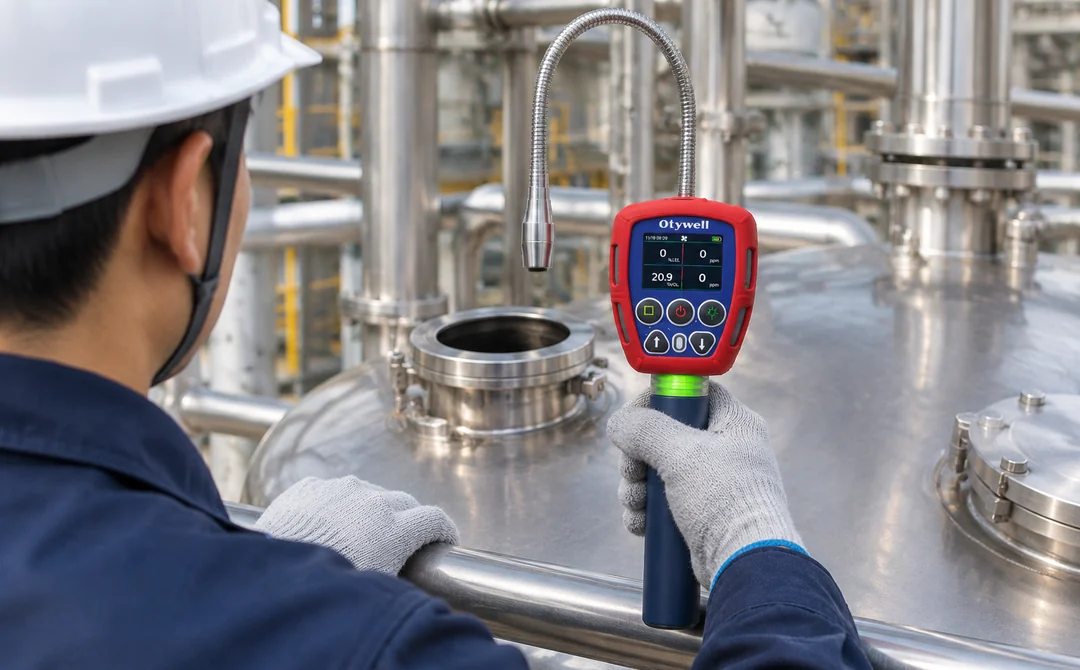
VCM production, พื้นที่จัดเก็บ, transfer and PVC polymerization involve different potential release points. A site walk-through should trace the actual material path: vessel connections, วาล์ว, transfer hoses, sampling stations, loading points and areas opened for maintenance. Note whether workers occupy a point continuously, visit it briefly or may be absent when a release begins. Those answers determine where a personal inlet, a portable probe or a fixed detector would have to sample.
Do not place a fixed sensor by a sketch alone. A release can be diluted, trapped or carried away by ventilation before it reaches the proposed inlet. Record the source, การไหลของอากาศ, สิ่งที่แนบมา, worker route and access for calibration. Where a line samples remotely, the pickup location and the tubing between it and the sensor are part of the measurement.
Keep the scope tied to the material and operation
The US OSHA vinyl chloride standard covers specified manufacture, reaction, บรรจุภัณฑ์, พื้นที่จัดเก็บ, handling and use of vinyl chloride or PVC; it expressly excludes handling or use of fabricated PVC products. A finished pipe in a warehouse is therefore a different starting point from a VCM transfer line. If a process reheats, reworks or contaminates a material, identify the chemicals actually released rather than assuming that every odor near PVC is vinyl chloride.
ก่อนทำการสั่งซื้อ, ask for the current safety data sheet and a simple process description. If VCM is absent from the materials and no credible VCM release route has been identified, a VCM channel may answer the wrong question. If it is present, note both the normal operating condition and the tasks that temporarily open the system.
Start with the monitoring question, not the sensor name
Low-range VCM readings in ppm
Parts per million describes the concentration reaching the instrument inlet at the time it is measured. For a displayed number to be used as VCM ppm, the supplied sensor or method needs a documented response to VCM in the range of interest. Ask for its detection limit, ปณิธาน, ความแม่นยำ, เวลาตอบสนอง, calibration basis and behavior in the expected mixture. A wide full-scale range alone says little about how well the low end can be read.
Under OSHA’s US vinyl chloride standard, ระดับการกระทำคือ 0.5 ppm averaged over an eight-hour workday. ขีดจำกัดการสัมผัสที่อนุญาตคือ 1 ppm averaged over any eight-hour period, with a further limit of 5 ppm averaged over a period not exceeding 15 นาที. Each number has a time basis. A live display at one inlet is not automatically the worker’s eight-hour result, and these limits are not preselected alarm settings for every instrument.
Flammable-atmosphere warning in %LEL
A combustible-gas channel answers how far an atmosphere has moved toward its lower explosive limit, usually displayed as %LEL. That duty is different from detecting low ppm VCM. The NIOSH Pocket Guide for vinyl chloride records both occupational and flammability information, but the units are not interchangeable. A %LEL alarm cannot establish that a low-level exposure requirement has been met.
For a proposed combustible sensor, ask how it responds to VCM and any other flammable material present, which calibration gas is used and whether the required operating conditions are satisfied. A general-purpose LEL channel calibrated for another gas should not be assumed to read VCM accurately without a documented basis.
Time-based exposure measurement
An exposure measurement answers what a worker encountered over a defined period. It requires an appropriate sampling position, duration, analytical or validated monitoring method and a record that retains the averaging time. OSHA also specifies accuracy requirements for vinyl chloride monitoring at different concentration bands. That requirement cannot be checked by looking only at the name or display range of a handheld device.
| คำถาม | Result to request | Usual format | What the result does not establish |
|---|---|---|---|
| Is VCM reaching this work point now? | Documented VCM ppm reading at a stated inlet | Portable or fixed low-range channel | Exposure throughout a shift |
| Is a combustible atmosphere developing? | Suitable %LEL indication and alarm path | Fixed or portable combustible channel | Low-level VCM ppm compliance |
| What was present during this check? | Spot reading within a tube’s stated range | Detector tube and its matching pump | Continuous warning between checks |
| What did this worker encounter over time? | Representative, time-labelled exposure result | Personal sampling and analysis or validated method | A real-time alarm at an unattended point |
Match the detector format to the release pattern
Portable diffusion and pumped checks
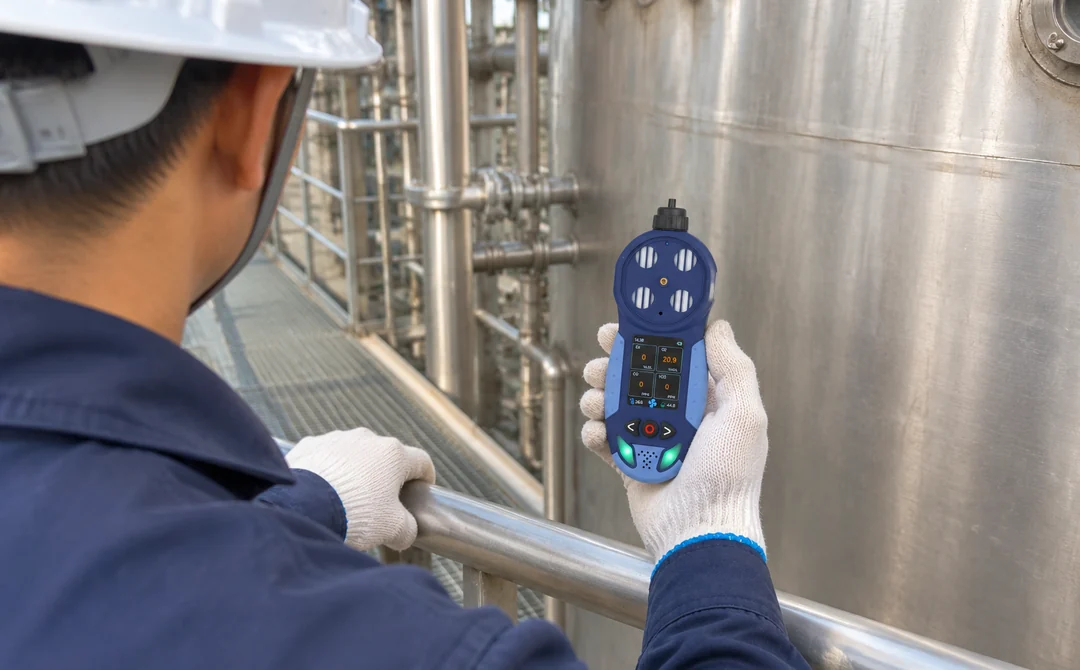
A carried diffusion instrument samples the air that reaches its inlet as the wearer moves. It can provide a local warning during changing tasks, subject to the fitted VCM configuration and its alarm behavior. Wearing position matters: a detector clipped under protective clothing or against a blocked inlet may not see the same air as an unobstructed instrument.
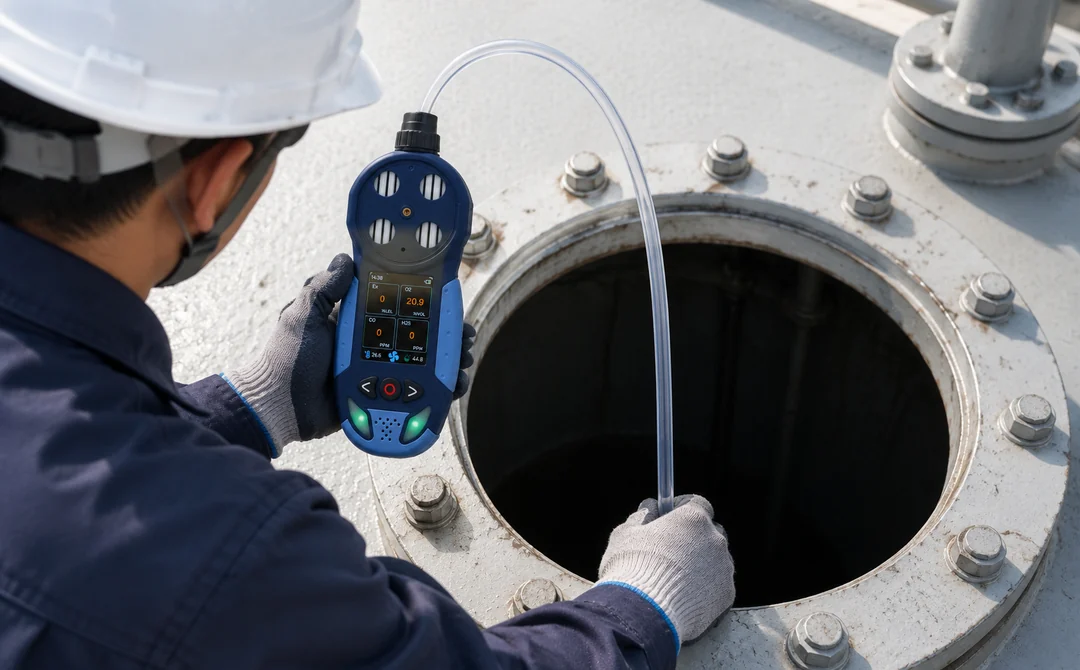
A pump and probe allow a check at a valve, opening or other point while the operator remains at a different position. Specify the probe-tip location, tubing length and material, กรอง, pump-flow indication and wait time for the entire path. A response time quoted for the bare sensor does not include the time required to bring a sample through a long line. For a remote or enclosed point, document which atmosphere the probe actually reaches.
Fixed points and the alarm chain
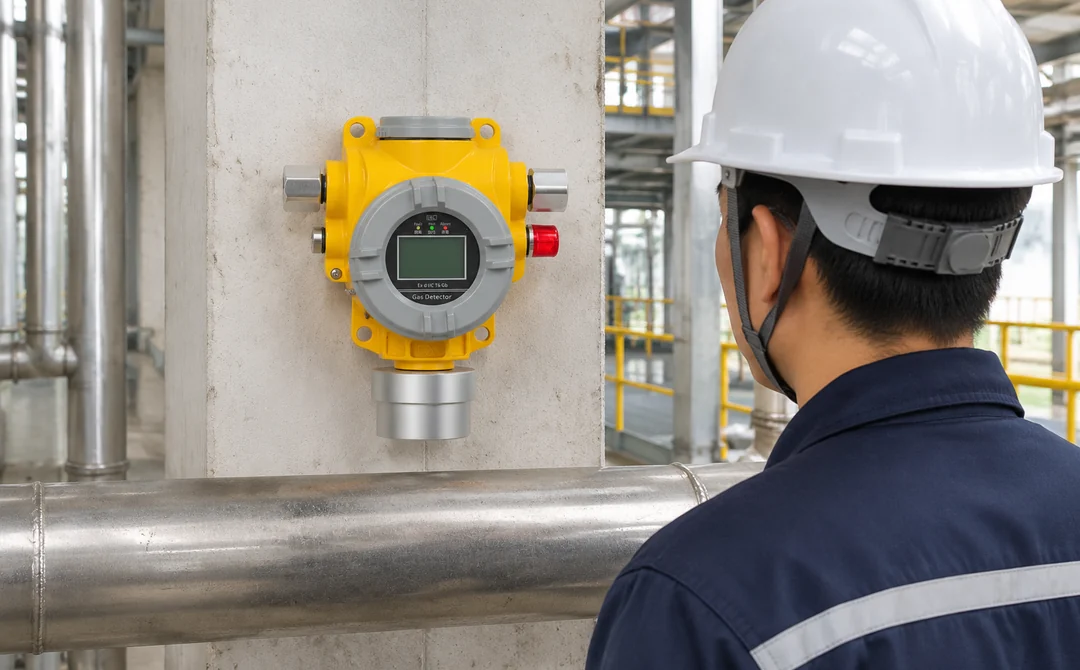
A fixed detector watches a selected inlet between rounds. It suits a transfer connection, enclosure or other identified release point where a signal must reach a controller or operator without a person holding the instrument. Design the point around the release route and airflow, then check whether the detector can be accessed for testing. Specify what happens on high gas, sensor fault, low flow where relevant and lost communication.
A fixed reading near a reactor does not represent every worker’s personal exposure. ในทางกลับกัน, a personal monitor will not protect an empty area while it is elsewhere. Where both duties exist, write them as separate lines on the specification instead of forcing one channel to stand for two different sampling locations.
Detector tubes and laboratory samples
A colorimetric tube provides a spot result for its own gas, พิสัย, pump and sampling procedure. Tube ranges vary markedly. A tube intended for a high percentage range cannot resolve a decision near a low ppm exposure level simply because both packages say “vinyl chloride.” Consult the tube instructions for strokes, sampling time, อุณหภูมิ, humidity and interfering substances.
ที่ OSHA Technical Manual on direct-reading instruments notes that detector tubes are calibrated for their matching pump and that interference and calibration conditions matter. When a specific exposure or emission result needs confirmation, choose the applicable sampling and analytical method for that purpose. Preserve the sample location and time alongside the reported number.
รูปแบบอุปกรณ์ของ Otywell ที่จะหารือ
Otywell offers fixed and portable detector formats with sensor customization. These product pages show instrument forms, not an already verified VCM measurement package. The quotation should identify the actual vinyl chloride sensor, พิสัย, calibration procedure, sampling arrangement and documents for the supplied version.
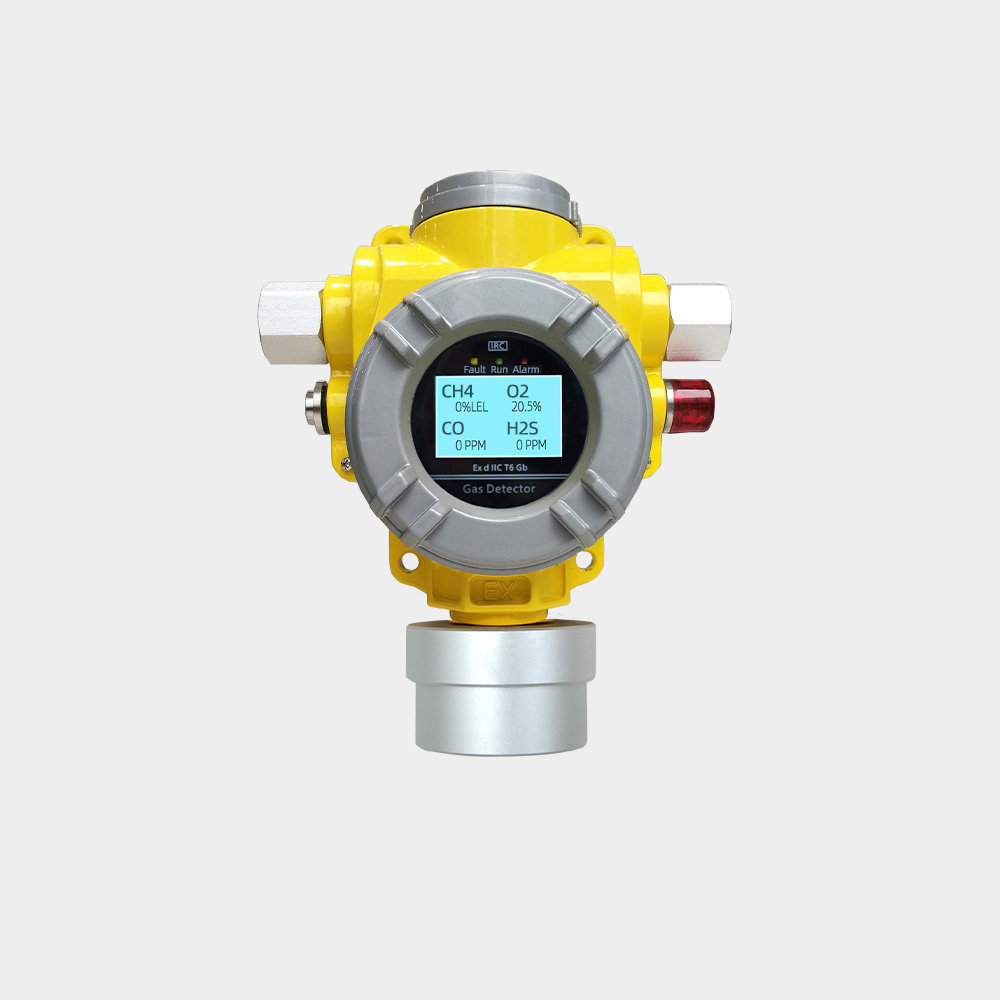
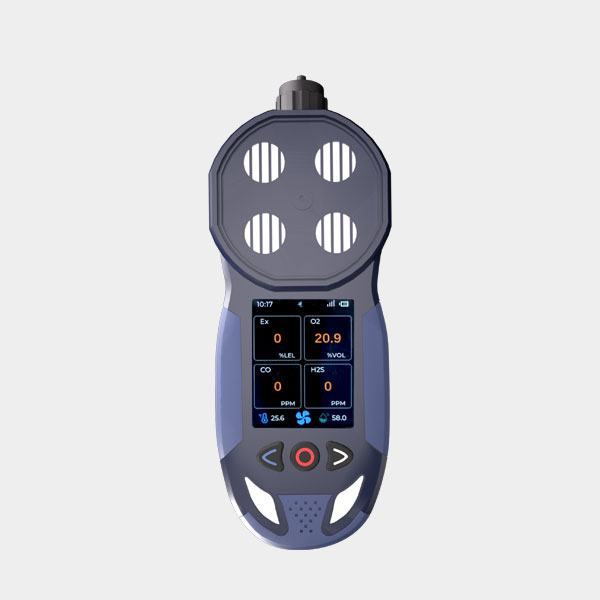
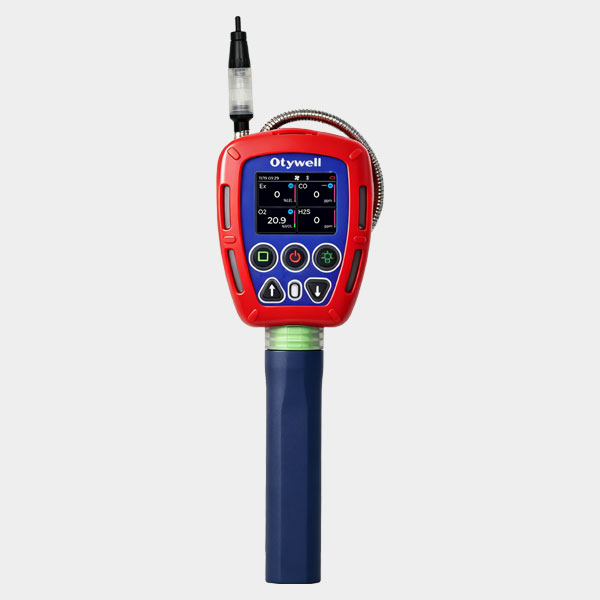
Specify a VCM-capable configuration
The useful quotation begins with the work, not a catalogue photograph. Identify whether the requested result is VCM ppm, combustible %LEL or both as distinct duties. Include the lowest concentration that must be resolved, the highest credible concentration at the inlet, and the response time that the operation needs. State whether the instrument will sample by diffusion, through a probe, or at a fixed inlet.
Ask the supplier to name the fitted sensor or analytical method and give the evidence for using it with vinyl chloride. Request the VCM response range, detection limit, ปณิธาน, ความแม่นยำ, calibration gas and procedure, cross-sensitivity data, environmental limits and behavior after a high reading. A broadly responsive VOC sensor may help locate a change in organic vapors, but a mixed response cannot be labelled as VCM concentration without a method that supports that interpretation. Similarly, a calibration correction for a known gas cannot identify an unknown mixture.
Include likely companion chemicals from the process, cleaning work and adjacent lines. An interference table is more useful than a general claim of “high selectivity.” If a surrogate calibration gas is proposed, ask for the conversion method and its limits under the expected atmosphere. สำหรับหน่วยสูบน้ำ, the delivered hose and filter must be included in the test plan. For a fixed unit, specify power, signal, alarm and fault routing. ที่ Otywell industrial gas detection planning guide provides a fuller checklist for measurement points and controller inputs.
| RFQ item | Tell the supplier | Request in the reply |
|---|---|---|
| Target and duty | VCM ppm, combustible %LEL, exposure sampling, or separate combinations | Named method and fitted channel for each duty |
| Decision range | Lowest useful concentration, highest credible concentration and time basis | พิสัย, detection limit, accuracy and response data |
| Atmosphere | ก๊าซอื่นๆ, อุณหภูมิ, humidity and possible high-concentration events | การรบกวน, environmental and recovery information |
| การสุ่มตัวอย่าง | Wearing position, probe length or fixed inlet | Complete accessories, flow checks and end-to-end delay |
| เส้นทางสัญญาณเตือน | ผู้รับ, ที่ตั้ง, outputs and required fault signals | Connection details and functional-test procedure |
| เอกสาร | Destination market and site approval requirements | Manual, calibration records and certificates for the supplied version |
Commission and verify the monitoring plan
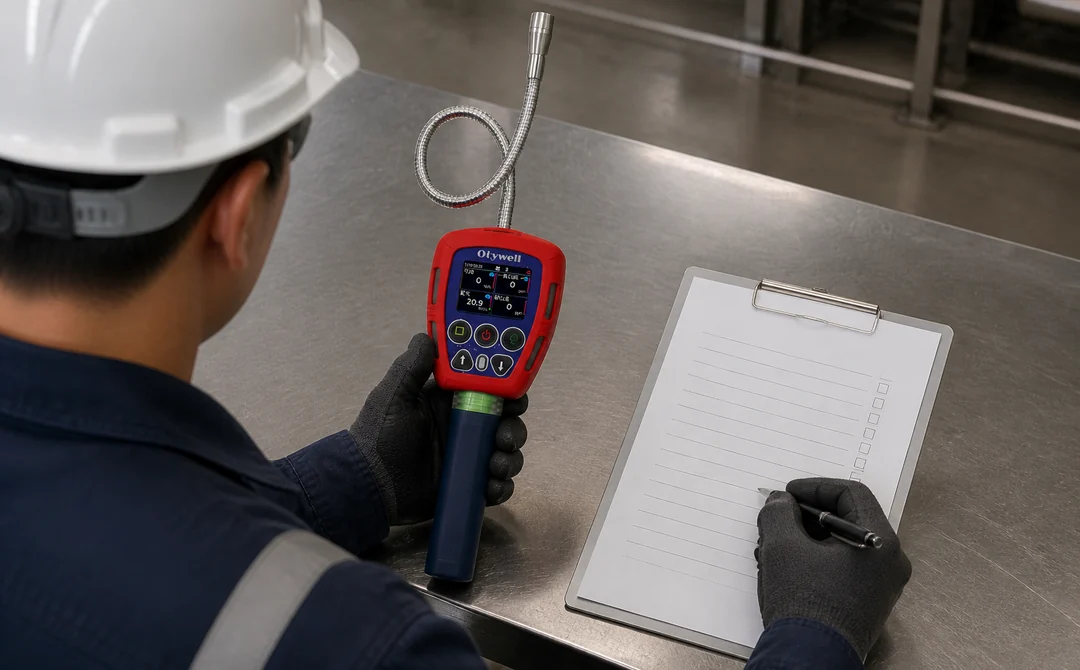
Compare the delivered sensor, พิสัย, units and accessories with the approved configuration schedule. Mark each fixed inlet on a drawing and each portable wearing or probe position in the work instruction. Check what the instrument reports when a sensor fails, a pumped line blocks or a communication link drops. A normal zero display must remain distinguishable from a fault.
Follow the supplied instructions for zero, calibration and functional checks. สำหรับระบบสูบน้ำ, test from the probe tip through the hose and filter to the indication. สำหรับจุดคงที่, exercise the route from the inlet through the detector output to the person or system expected to receive the alarm. Keep records of the applied test gas, observed response, settings and corrective action. ที่ Otywell bump-test and calibration guide explains the difference between a response check and an adjustment of the reading.
Keep three numbers distinct in the handover file: the legal exposure limit with its jurisdiction and averaging period, the instrument’s verified measurement capability, and the site’s chosen alarm setting with its response action. A cited limit does not configure a device by itself. If the proposed setting falls below the useful capability of the fitted sensor, the measurement method must be reconsidered before commissioning.
Request a vinyl chloride configuration
Send Otywell the VCM or PVC process, relevant safety data sheets, monitoring points, worker tasks, desired ppm or %LEL result, concentration and time requirements, companion gases, รูปแบบการสุ่มตัวอย่าง, alarm destinations and documents required in your market. Ask for the fitted vinyl chloride sensor and complete configuration in the quotation.
คำถามที่พบบ่อย
Can a VOC detector identify vinyl chloride?
A broad VOC response can show that organic vapor has reached an inlet. In a mixed atmosphere it does not identify how much of that reading is VCM. Ask for a method validated for vinyl chloride at the required concentration and for evidence about the other vapors present.
Do I need ppm or %LEL for vinyl chloride?
Use a documented VCM ppm method when the decision concerns low-level monomer in air. Use a suitable %LEL channel for a flammable-atmosphere warning. If both decisions matter, specify their sensors, calibration and alarm routes separately.
Can a fixed detector replace personal exposure sampling?
A fixed detector measures air at its selected inlet. Personal exposure monitoring follows the worker’s relevant breathing zone over a defined period. The results may inform each other, but a fixed-point reading alone does not establish an individual’s eight-hour exposure.
When is a portable VCM detector useful?
It can follow a moving worker or sample a chosen point with a probe, provided the ordered configuration measures VCM in the needed range. Record the inlet position, sample-path delay and action to take when an alarm occurs.
Can a detector tube provide a continuous alarm?
เลขที่. A detector tube produces a spot result using its specified pump and procedure. Check that its range covers the decision concentration. An electronic fixed or carried detector serves the separate job of warning between spot checks.
What interference and calibration details should I request?
Ask for the exact sensor’s cross-sensitivity table, the likely chemicals at your site, the calibration gas, any conversion method and the test interval specified for the delivered instrument. Confirm the procedure with the full sampling path attached.
How should alarm thresholds be selected?
Start with the monitoring duty, the applicable limit or site requirement, the response action and the demonstrated sensor performance. A time-averaged exposure limit cannot simply be copied into an instantaneous alarm field. Document who approves and responds to each setting.

Wechat
สแกนรหัส QR ด้วย weChat