 Henan Otywell Electronic Technology Co., Ltd

Um detector de gás cloro tem uma função: alertar as pessoas antes que uma liberação não detectada se torne uma exposição maior ou um problema de resposta a emergências. Escolhendo um, no entanto, é preciso mais do que encontrar um instrumento com “Cl2” em sua lista de sensores.
O detector deve se adequar ao cenário de liberação. Um monitor fixo próximo a um sistema de alimentação de cloro resolve um problema diferente de um monitor portátil usado durante as trocas de cilindros. Alcance do sensor, tempo de resposta, método de amostra, condições ambientais, saídas de alarme, e o acesso para manutenção afetam se o sistema funciona conforme planejado.
Este guia explica como comparar detectores de cloro fixos e portáteis, onde colocá-los, como abordar as configurações de alarme, e o que verificar antes da compra. Foi escrito para instalações de tratamento de água, áreas de armazenamento de produtos químicos, plantas industriais, e outros locais de trabalho que manuseiam cloro.
Nota de segurança: A seleção do detector e os valores de alarme devem seguir os regulamentos aplicáveis, avaliação de perigo do local, plano de emergência, e instruções do fabricante. Os valores de exposição neste artigo são pontos de referência, pontos de ajuste de alarme não universais.
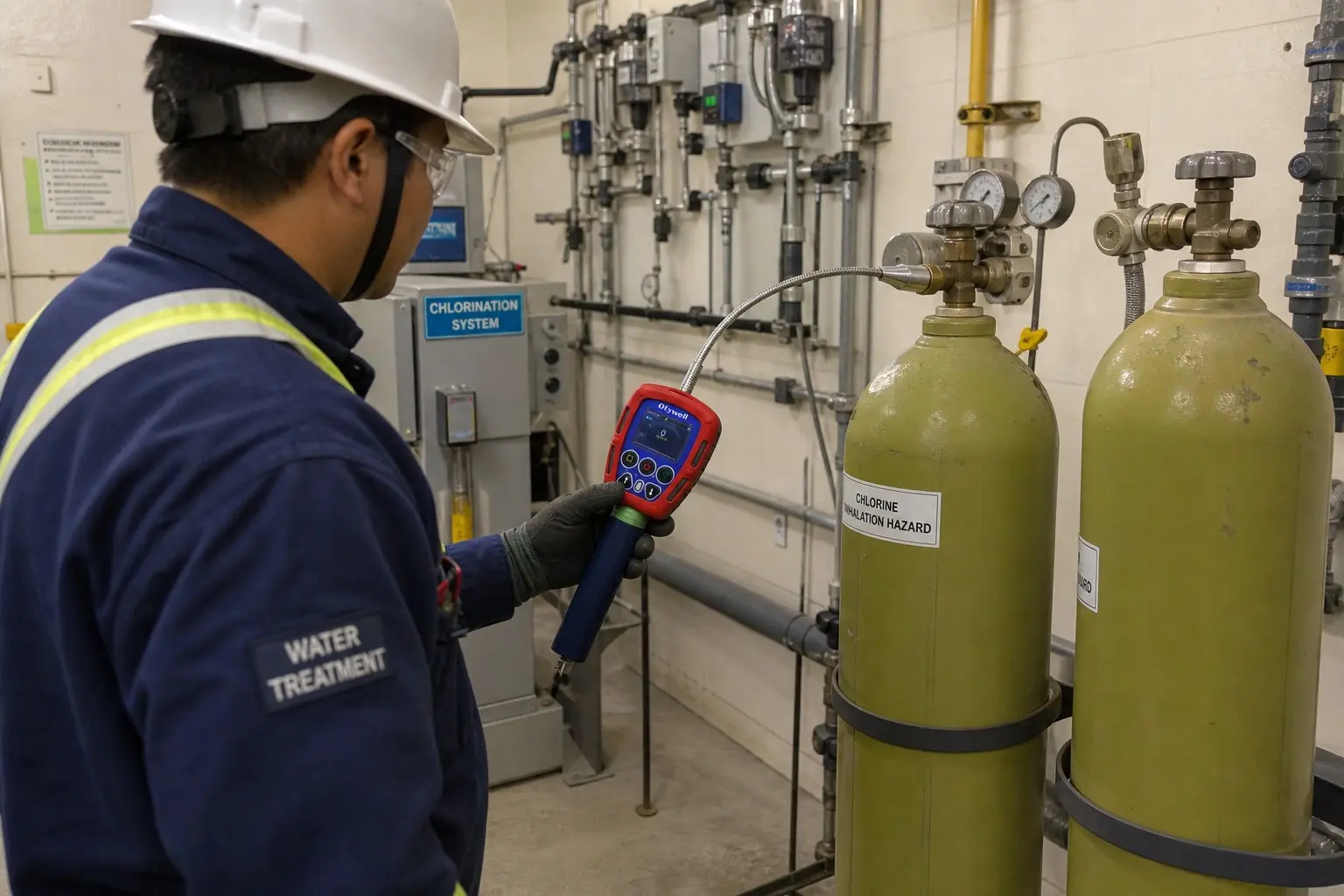
O que um detector de gás cloro mede?
Um detector de gás cloro mede o cloro molecular transportado pelo ar, escrito como Cl2. A maioria dos instrumentos industriais exibe a concentração em partes por milhão, ou ppm. Quando a concentração medida atinge um limite configurado, o detector pode ativar alarmes sonoros e visuais. Os sistemas fixos também podem operar relés, enviar um sinal para um painel de controle, ou iniciar uma sequência de ventilação ou desligamento específica do local.
O cloro é um gás amarelo esverdeado com forte, odor irritante. Não queima, mas é um oxidante forte. Pode causar lesões nos olhos e no sistema respiratório, e o cheiro nunca deve ser usado como principal método de alerta. A percepção do odor varia, os trabalhadores podem estar distraídos ou usar proteção respiratória, e a concentração pode já exigir ação no momento em que alguém a reconhece.
A entrada do NIOSH Pocket Guide para cloro lista um limite máximo de exposição recomendado pelo NIOSH de 0.5 ppm acima 15 minutos, um limite máximo de exposição permitido pela OSHA de 1 ppm, e um valor imediatamente perigoso para a vida ou a saúde de 10 ppm. Esses valores têm diferentes significados legais e técnicos. Um profissional de segurança deve determinar quais requisitos se aplicam ao local e como eles se traduzem em alarmes e ações.
Onde a detecção de cloro é comumente usada
- Instalações de tratamento de água potável e águas residuais
- Salas de cloração e desinfecção
- Cilindro de cloro, tambor, e áreas de armazenamento de contêineres
- Operações de celulose e papel
- Instalações de processamento e distribuição de produtos químicos
- Instalações de piscinas que utilizam equipamentos de tratamento à base de cloro
- Trabalhos de manutenção perto da tubulação de cloro, válvulas, injetores, e equipamento de alimentação
O nome do gás é importante. Cloro e dióxido de cloro são produtos químicos diferentes. Não se deve presumir que um detector configurado e calibrado para Cl2 mede ClO2 corretamente.
Detector de gás cloro portátil ou fixo?
Um detector fixo de gás cloro monitora continuamente uma área definida. Um detector portátil de gás cloro se move com um trabalhador ou é usado para verificar uma área antes da entrada. Muitas instalações de manuseio de cloro precisam de ambos porque o monitoramento da área e as práticas de trabalho pessoal cobrem diferentes partes do risco.
| Pergunta | Detector fixo | Detector portátil |
|---|---|---|
| Objetivo principal | Monitoramento contínuo de uma sala, ponto de processo, ou área de armazenamento | Proteção pessoal, verificações de vazamento, pesquisas, e trabalho temporário |
| Poder | Normalmente conectado a um sistema de alimentação ou controle permanente | Bateria recarregável ou substituível |
| Comunicação de alarme | Alarme local mais relés, saída analógica, ou comunicação digital dependendo do modelo | Audível, visual, e alarmes vibratórios no instrumento |
| Cobertura | Apenas a área representada pela sua localização e condições de fluxo de ar | A zona de respiração do trabalhador ou o ponto que está sendo amostrado |
| Limitação típica | Um sensor mal colocado pode perder ou detectar uma liberação tardiamente | Deve ser levado, cobrado, testado, e usado corretamente |
Uma unidade fixa não deve ser tratada como prova de que todos os trabalhadores estão protegidos em todo o edifício. Portas, partições, padrões de ventilação, equipamento, e a direção de liberação podem atrasar o movimento do gás. Da mesma maneira, um monitor pessoal não fornece um alarme de sala sem vigilância depois que o trabalhador sai.
Para uma comparação mais ampla de cobertura, poder, alarmes, e manutenção, leia nosso guia para detectores de gás fixos vs portáteis.
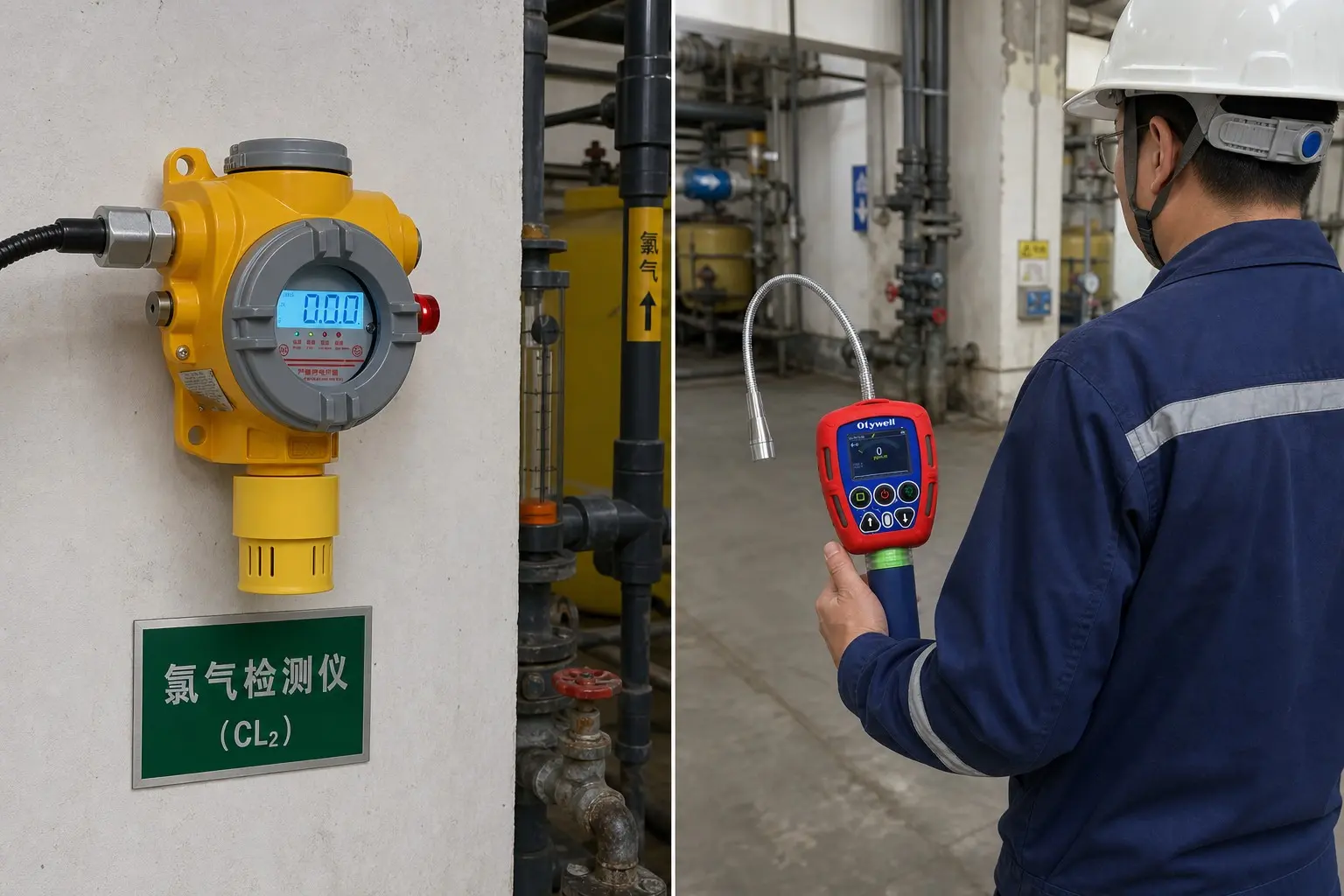
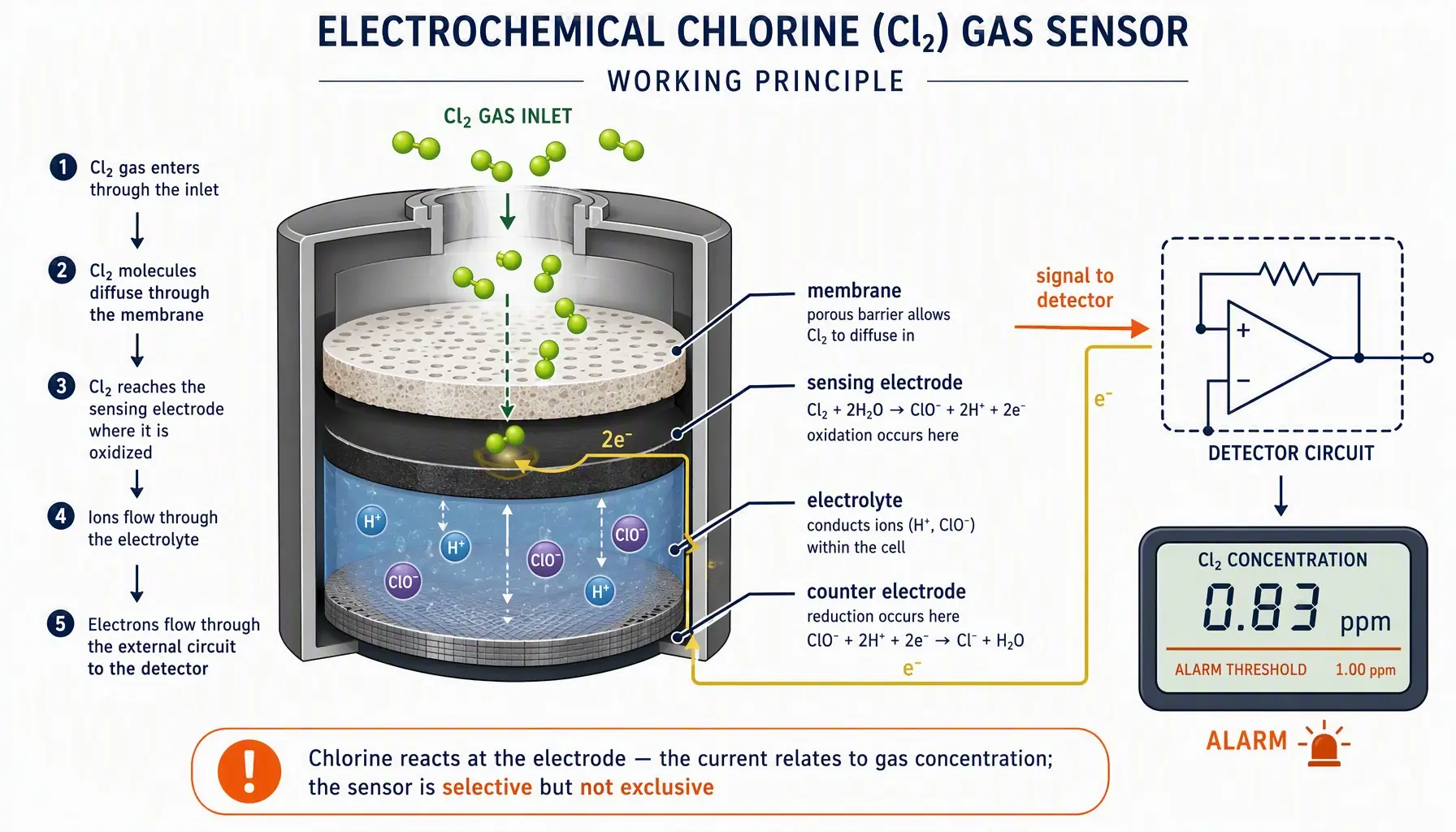
Como funciona um detector de gás cloro?
Muitos instrumentos portáteis e fixos de Cl2 usam um sensor eletroquímico. O cloro entra no sensor através de uma membrana e participa de uma reação química nos eletrodos. Essa reação produz um sinal elétrico relacionado à concentração do gás. A eletrônica do detector converte o sinal em uma leitura de ppm e compara-a com os limites de alarme configurados.
O sensor é específico para gás, mas não é perfeitamente seletivo. Outros gases podem criar uma resposta positiva ou negativa. Temperatura, umidade, pressão, idade do sensor, contaminação, e as condições de armazenamento também podem influenciar o desempenho. A tabela de sensibilidade cruzada e os limites operacionais do fabricante devem, portanto, ser revisados antes de um modelo ser aprovado.
Nossa explicação de tipos de sensores de detector de gás e princípios de funcionamento cobre eletroquímico, esfera catalítica, infravermelho, e tecnologias de fotoionização com mais detalhes.
Difusão e amostragem bombeada
Um detector de difusão depende do gás que chega ao sensor naturalmente. É simples e adequado para monitoramento pessoal quando o instrumento é usado corretamente. Um detector bombeado extrai uma amostra através de uma sonda ou tubo, o que é útil para verificar um ponto remoto antes de se aproximar dele.
O cloro é reativo, então uma linha de amostra pode afetar o resultado. Tubo longo, material inadequado, umidade, sujeira, filtros, e o fluxo lento pode atrasar ou reduzir o gás que atinge o sensor. Não presuma que uma configuração de tubulação que funcione para metano ou oxigênio também funcionará para cloro. Use a tubulação, filtro, taxa de fluxo, comprimento máximo, e tempo de amostragem aprovado pelo fabricante do detector.
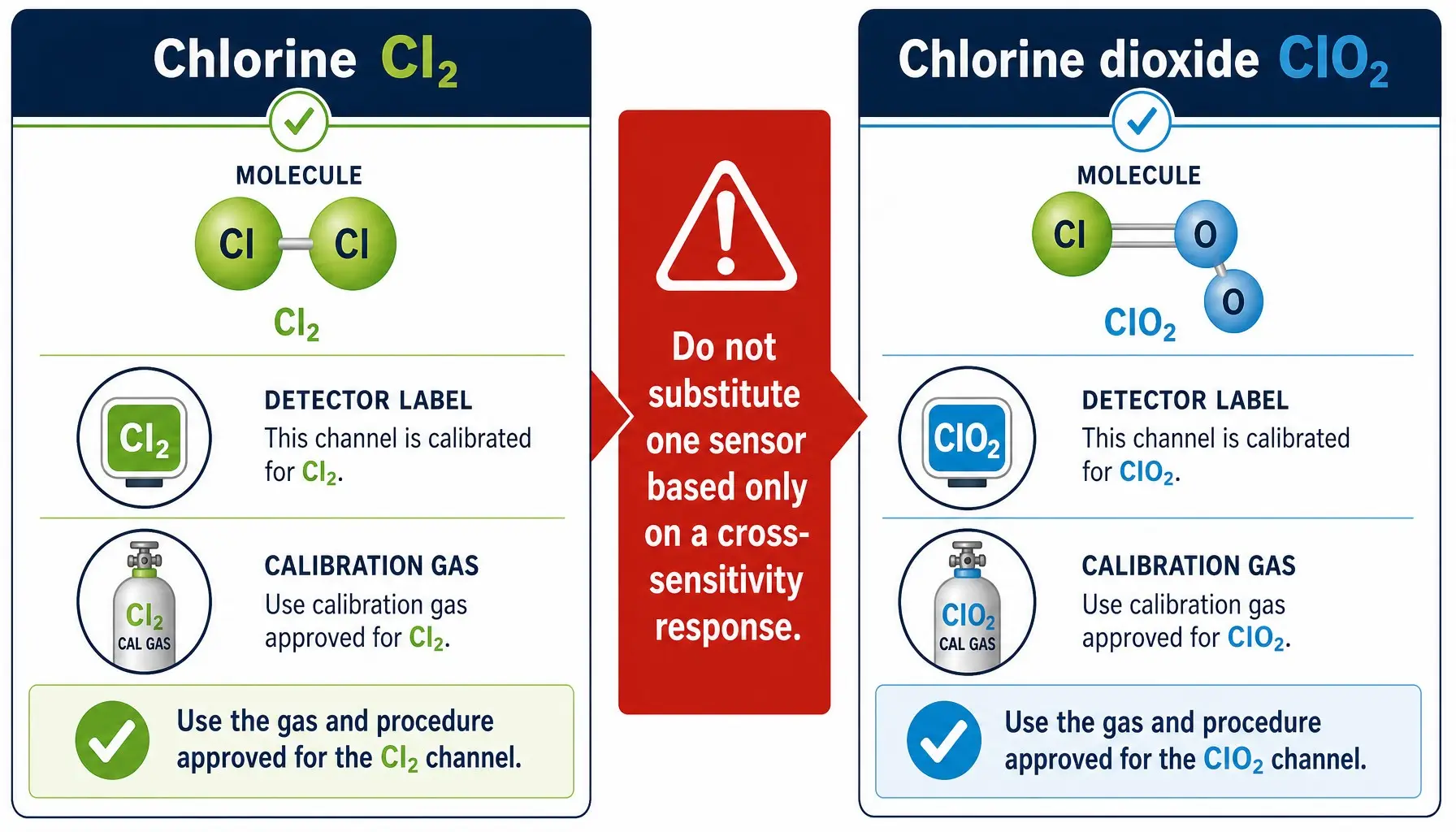
Cloro e dióxido de cloro não são intercambiáveis
Cloro é Cl2. O dióxido de cloro é ClO2. Ambos são utilizados na desinfecção e podem estar presentes em aplicações de tratamento de água, mas eles exigem consideração separada ao selecionar sensores, intervalos, gás de teste, e valores de alarme.
Um sensor eletroquímico pode responder a mais de um gás oxidante, no entanto, essa resposta não torna as leituras intercambiáveis. A sensibilidade cruzada pode causar uma leitura sem fornecer a precisão necessária para o gás alvo. Se ambos os produtos químicos puderem estar presentes, forneça ao fornecedor do detector a lista completa de gases e a faixa de concentração esperada. A configuração final deve identificar qual sensor mede qual gás.
| Item de seleção | Cloro | Dióxido de cloro |
|---|---|---|
| Fórmula química | Cl2 | ClO2 |
| Etiqueta do detector | Deve indicar Cl2 | Deve indicar ClO2 |
| Gás de calibração | Use o gás e o procedimento aprovado para o canal Cl2 | Use o gás e o procedimento aprovado para o canal de ClO2 |
| Regra de compra segura | Não substitua um sensor com base apenas em uma resposta de sensibilidade cruzada. | |
Como escolher a faixa de medição correta
Uma faixa útil cobre a região de alarme esperada do local, deixando ao mesmo tempo capacidade suficiente para liberações confiáveis. Uma gama muito ampla pode parecer mais segura em uma folha de especificações, mas pode vir com resolução mais grosseira. Um sensor de alcance estreito pode fornecer melhores detalhes de baixo nível, mas acima do alcance mais cedo durante uma liberação grande. Comparar intervalo, resolução, declaração de precisão, tempo de resposta, e comportamento fora da faixa juntos.
Comece com um cenário de lançamento escrito em vez de um filtro de catálogo. Identifique a fonte de cloro, fundo normal, tamanho esperado do vazamento, ventilação, distância até o sensor, nível de aviso necessário, e maior concentração que o detector pode encontrar. Em seguida, peça ao fornecedor para confirmar se o sensor é adequado para toda a gama.
Especificações que valem a pena comparar
- Faixa de medição e resolução: Verifique se os incrementos de exibição e alarme suportam os níveis de ação aprovados.
- Tempo de resposta e recuperação: Revise as condições de teste declaradas, não apenas o número do título.
- Ambiente operacional: Confirme a temperatura, umidade, pressão, proteção de entrada, e requisitos de certificação de áreas perigosas.
- Saídas de alarme: Para sistemas fixos, liste os relés necessários, sinal analógico, protocolo, buzina, baliza, e compatibilidade do controlador.
- Dados e registros: Decida se os logs de eventos, registros de calibração, atribuição de usuário, ou gerenciamento de frota são necessários.
- Facilidade de manutenção: Verifique as orientações de vida útil do sensor, método de substituição, equipamento de calibração, disponibilidade de gás local, e suporte técnico.
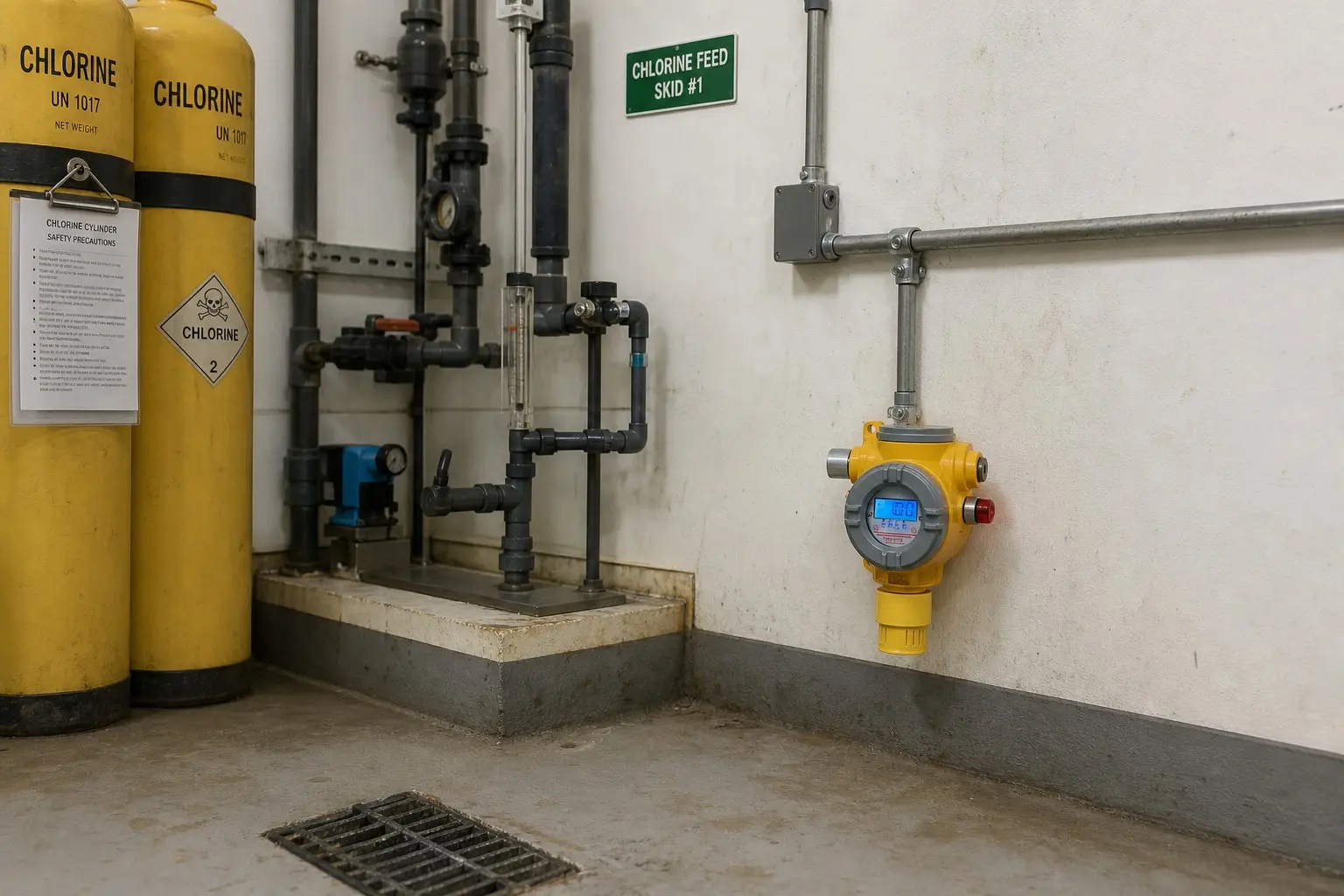
Onde um detector de gás cloro deve ser instalado?
O cloro tem uma densidade relativa de gás de cerca de 2.47 comparado com o ar, e a ficha informativa sobre cloro do CDC observa que ele pode se acumular em áreas mais baixas. Isso suporta a avaliação de posições de sensores de baixo nível, mas a densidade por si só não determina a localização final.
Uma liberação tem impulso e pode ser quente ou fria. Fãs, portas, fornecer ar, escapamentos, paredes, poços, drenos, e equipamentos de processo mudam a rota que seguem. Montar cada sensor próximo ao chão sem estudar a sala pode deixar importantes pontos de liberação descobertos.
Avaliação de posicionamento para uma sala de tratamento de água ou cloro
- Localize pontos de liberação confiáveis. Incluir cilindros, recipientes, válvulas, variedades, conexões flexíveis, reguladores, sistemas de alimentação, e pontos de transferência.
- Mapear o fluxo de ar normal. Verifique os locais de abastecimento e exaustão, estados operacionais do ventilador, condições de portas fechadas, e mudanças sazonais.
- Inspecione os pontos baixos. Revise os poços, trincheiras, drenos, reservatórios, e espaços fechados onde o cloro pode se acumular.
- Proteja rotas ocupadas. Considere entradas, posições do operador, e caminhos usados para se aproximar ou sair da área.
- Mantenha o sensor em boas condições. Os técnicos devem ser capazes de inspecionar, teste de resposta, calibrar, e substitua-o com segurança.
- Teste o design. O comissionamento deve confirmar que o gás de teste liberado pode atingir o sensor e ativar os alarmes e saídas pretendidos.
Instalações externas precisam de outra revisão. O vento pode diluir e redirecionar o gás, enquanto chove, luz solar, condensação, pó, e temperaturas extremas podem afetar o equipamento. A proteção contra intempéries deve proteger o sensor sem bloquear a entrada de gás.
O Guia de referência rápida de gás cloro EPA fornece informações adicionais para planejamento e resposta a emergências. Use-o com o conhecimento do processo da instalação e os requisitos de código aplicáveis, em vez de usá-lo como um modelo de montagem.
Em que ppm um detector de cloro deve alarmar?
Não existe uma configuração de alarme única que se adapte a todos os sistemas de detecção de gás cloro. Os regulamentos diferem de acordo com o país e o local de trabalho. Um limite máximo não é o mesmo que uma média de oito horas, e um valor de exposição ocupacional não é automaticamente um ponto de desligamento de emergência.
A configuração deve conectar cada limite a uma ação definida. Um alarme baixo pode desencadear evacuação e notificação de acordo com o plano de um local. Outra instalação pode usar vários estágios de sistema fixo para alerta local, controle de ventilação, isolamento de processo, e resposta de emergência. A sequência correta depende da avaliação de risco aprovada e do projeto de controle.
Antes de aprovar as configurações do alarme de cloro
- Identificar os limites legais e normas internas aplicáveis.
- Confirme se cada limite é instantâneo, teto, DEFINIR, ou TWA.
- Verifique o alcance do sensor, resolução, incerteza, e tempo de resposta.
- Defina a ação necessária em cada estágio de alarme.
- Confirme quem pode alterar as configurações e como as alterações são registradas.
- Trompas de teste, faróis, relés, notificações, ventilação, e lógica de desligamento.
Para uma explicação detalhada dos tipos de limite, veja nosso guia para detector de gás baixo, alto, DEFINIR, e configurações de alarme TWA.
Teste de resposta, calibração, e manutenção
A tela do detector pode ligar normalmente mesmo quando o caminho do gás está bloqueado, a resposta do sensor desviou, ou uma saída de alarme falhou. O teste funcional é, portanto, parte do sistema de detecção, não é uma tarefa opcional após a instalação.
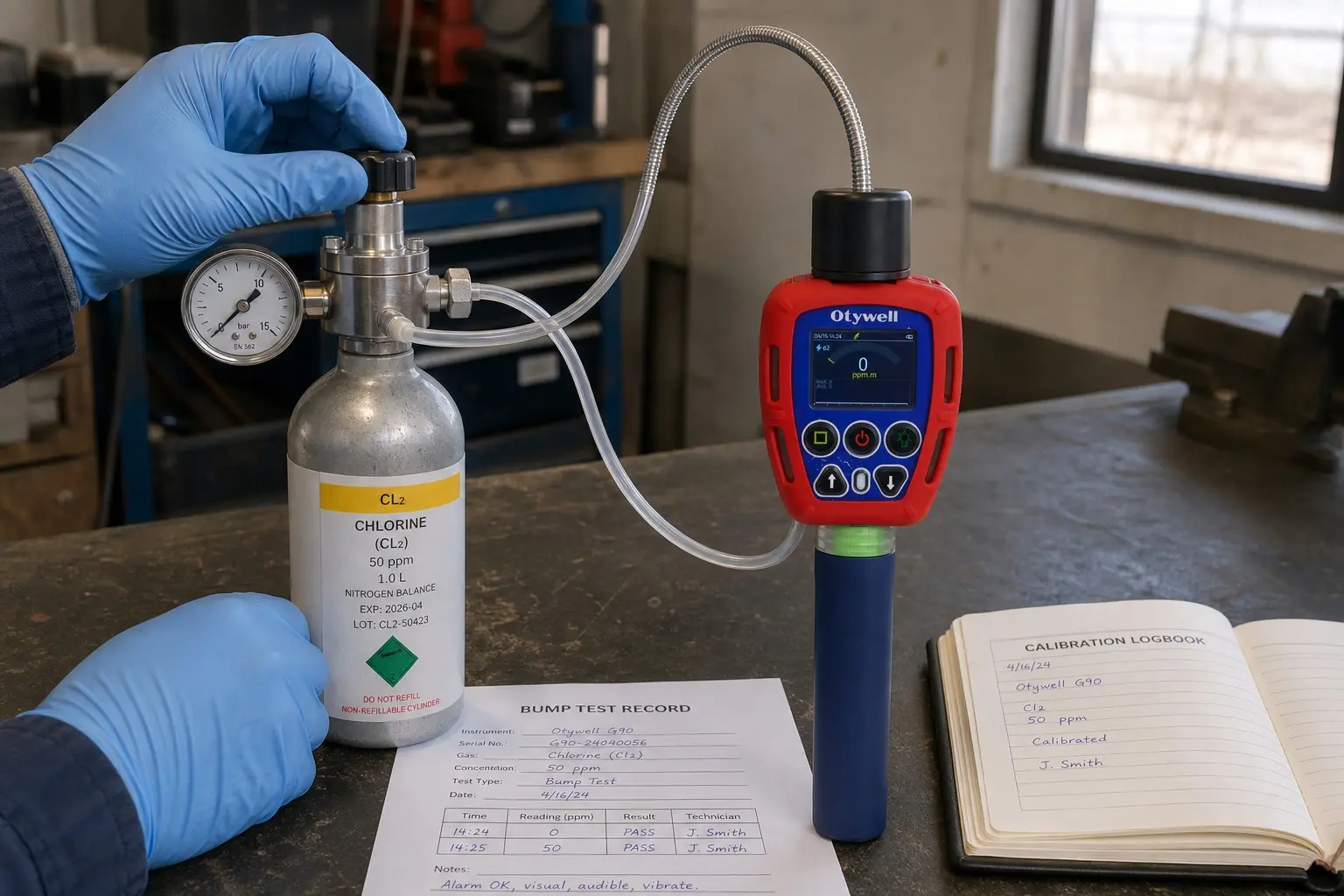
Um teste geral expõe o detector ao gás de teste e confirma que o gás chega ao sensor e que os alarmes respondem. A calibração expõe o sensor a uma concentração conhecida e ajusta a leitura quando o procedimento exige. As duas verificações respondem a perguntas diferentes.
A reatividade do cloro torna importante a configuração do fornecimento de gás. Use o regulador, tubulação, taxa de fluxo, adaptadores, e tempo de exposição especificado pelo instrumento ou fornecedor do gás de calibração. Gás expirado, um regulador contaminado, tubulação inadequada, ou uma conexão com vazamento pode produzir um resultado com falha ou enganoso.
Defina o cronograma de teste e calibração de acordo com as instruções do fabricante, política do site, condições de operação, e requisitos regulamentares. Verificações extras podem ser necessárias após um teste com falha, ultrapassagem do sensor, exposição a uma alta concentração, armazenamento prolongado, impacto, contaminação, reparar, ou uma mudança nas condições ambientais.
Nosso teste de resposta vs guia de calibração explica o propósito, procedimento, registros, e erros comuns para cada verificação.
Erros comuns de seleção de detectores de cloro
Comprando um monitor padrão de quatro gases
Uma configuração padrão de quatro gases geralmente mede oxigênio, gás combustível, monóxido de carbono, e sulfeto de hidrogênio. Normalmente não detecta cloro. Escolha um instrumento com canal Cl2 dedicado e confirme o código do gás no detector, sensor, documentação, e registro de calibração.
Escolhendo apenas por faixa
A gama mais ampla não é automaticamente a melhor escolha. Resolução de baixo nível, tempo de resposta, precisão, limites ambientais, e o comportamento do alarme pode ser mais importante para o ponto de alerta pretendido.
Ignorando a sensibilidade cruzada
Gases oxidantes e outros produtos químicos no processo podem afetar a leitura. Revise o inventário químico completo com o fornecedor, incluindo produtos químicos de limpeza e gases que podem aparecer apenas durante a manutenção ou uma perturbação do processo.
Colocação do sensor apenas pela densidade do gás
O cloro pode assentar em níveis baixos, mas o fluxo de ar e a localização de liberação ainda controlam a rapidez com que ele atinge um sensor. Use um estudo de posicionamento e verifique a cobertura durante o comissionamento.
Esquecendo a rota de manutenção
Um sensor montado onde não pode ser alcançado com segurança tem menos probabilidade de receber testes e serviços adequados. Planejar acesso, isolamento, conexão de gás de teste, e manutenção de registros antes da instalação.
Lista de verificação de compra de detector de gás cloro
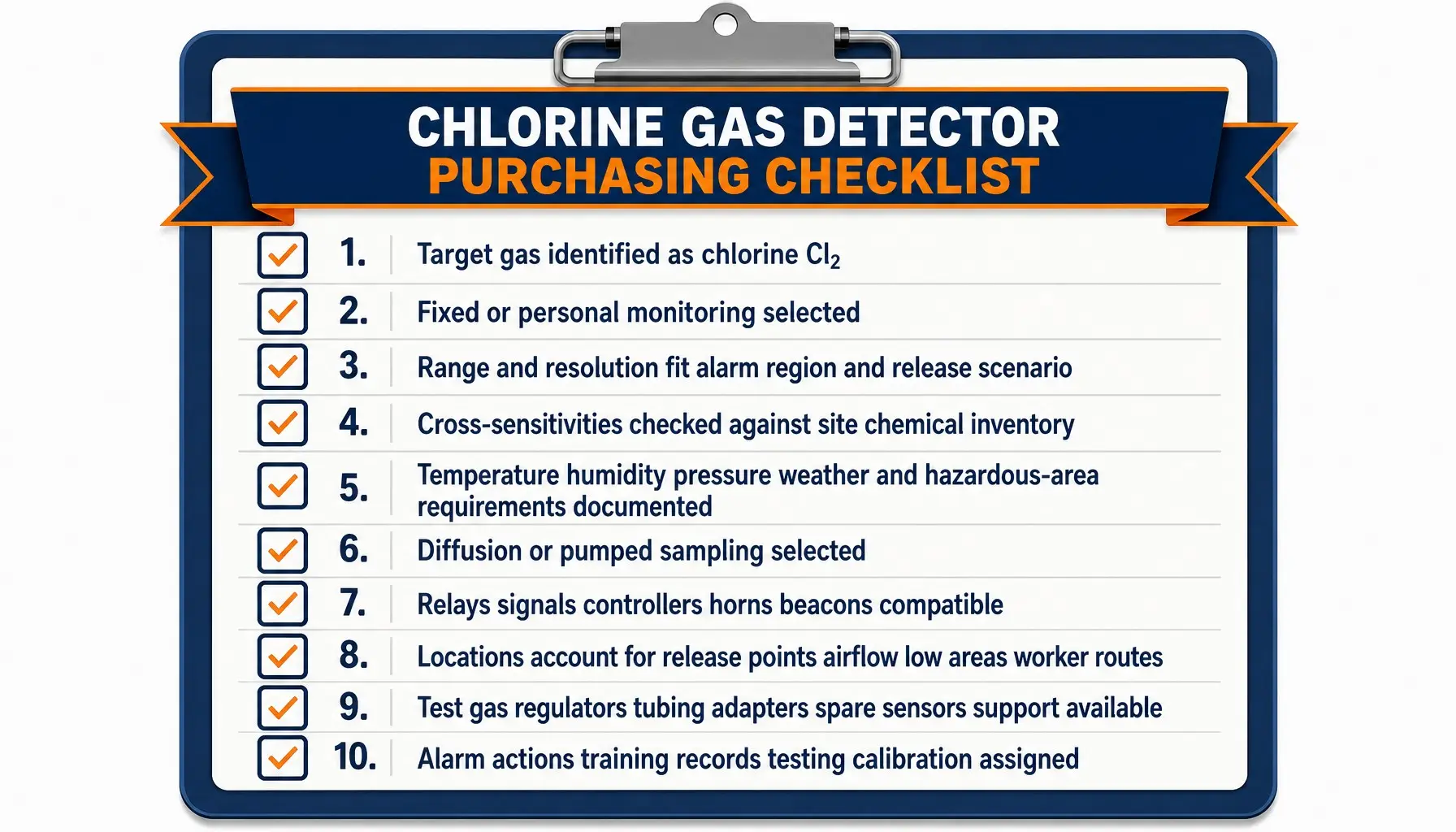
- O gás alvo é claramente identificado como cloro, Cl2.
- Monitoramento fixo, monitoramento pessoal, ou ambos foram selecionados com base no trabalho.
- A faixa de medição e a resolução se ajustam à região de alarme aprovada e ao cenário de liberação.
- As sensibilidades cruzadas foram verificadas em relação ao inventário químico do local.
- Temperatura, umidade, pressão, clima, e os requisitos para áreas perigosas são documentados.
- A amostragem por difusão ou bombeada foi selecionada para a tarefa real.
- Relés de sistema fixo, sinais, controladores, chifres, e beacons são compatíveis.
- As localizações dos detectores são responsáveis pelos pontos de liberação, fluxo de ar, áreas baixas, e rotas de trabalhadores.
- Gás de teste, reguladores, tubulação, adaptadores, sensores sobressalentes, e suporte de serviço estão disponíveis.
- Ações de alarme, treinamento, registros, inspeção, teste de resposta, e calibração são atribuídos.
Perguntas frequentes
Um monitor de quatro gases pode detectar cloro?
Não em sua configuração padrão. Um monitor típico de quatro gases mede o oxigênio, gás combustível, monóxido de carbono, e sulfeto de hidrogênio. O cloro requer um canal de sensor de Cl2 compatível. Alguns instrumentos multigás configuráveis podem aceitar um sensor de cloro, mas o modelo exato e o sensor instalado devem ser verificados.
O gás cloro é mais pesado que o ar?
Sim. O cloro tem uma densidade relativa de gás de cerca de 2.47 em comparação com o ar e pode acumular-se em áreas baixas. O posicionamento do detector ainda deve levar em conta a fonte de liberação, fluxo de ar, ventilação, barreiras, drenos, e disposição da sala.
Onde um detector portátil de cloro deve ser usado?
Para monitoramento pessoal, siga as instruções do fabricante e o procedimento do local de trabalho para posicionar o detector na zona de respiração. Mantenha a entrada do sensor aberta ao ar. Roupas, capas de chuva, ferramentas, ou equipamento não deve bloqueá-lo.
Com que frequência um detector de cloro deve ser calibrado?
Siga as instruções do fabricante do detector, política do site, condições de operação, e regulamentos aplicáveis. A frequência do calendário é apenas parte da decisão. Um teste de resposta com falha, evento acima da faixa, impacto, reparar, contaminação, ou armazenamento prolongado pode exigir uma verificação ou calibração adicional.
Um detector de cloro pode medir o dióxido de cloro?
Não assuma que pode. Cl2 e ClO2 são gases alvo diferentes. Mesmo que um sensor mostre sensibilidade cruzada, essa resposta pode não fornecer uma leitura precisa de dióxido de cloro. Use o sensor e o procedimento de calibração especificados para o gás alvo.
Qual detector é adequado para monitoramento portátil de cloro?
Um detector adequado deve ter um sensor de Cl2 instalado, um intervalo apropriado, equipamento de teste compatível, e as certificações exigidas pelo site. O Alarme de detecção de gás portátil Otywell G90 está disponível em versões de gás configuráveis, incluindo uma opção de cloro. Confirme o gás, faixa, requisitos de alarme, e condições de aplicação antes de encomendar.
Decisão final de seleção
Comece com o cenário de lançamento e a resposta necessária. Decida qual área ou pessoa precisa de proteção, que faixa de concentração importa, como o gás chegará ao sensor, e o que deve acontecer quando ocorre um alarme. Só então compare as especificações do detector.
Um detector de cloro é uma camada em um sistema de segurança maior. Ventilação, controles de processo, inspeção, manutenção, planejamento de emergência, proteção respiratória, e o treinamento dos trabalhadores ainda precisam de procedimentos próprios. O detector dá o aviso. A planta do local determina o que esse aviso realiza.

WeChat
Digitalize o código QR com WeChat