 Henan Otywell Electronic Technology Co., Ltd

A configuração do alarme do detector de gás é um ponto de decisão. Diz ao instrumento quando avisar o usuário, mas o número por si só não explica o que o trabalhador deve fazer a seguir. Essa resposta deve vir do procedimento de segurança do local.
Os alarmes baixo e alto geralmente respondem à leitura atual do gás. Os alarmes STEL e TWA usam médias de exposição calculadas durante períodos definidos. Os alarmes de oxigênio funcionam de maneira diferente novamente porque tanto uma concentração decrescente quanto uma concentração crescente podem ser perigosas.
Os padrões de fábrica são referências úteis, configurações de segurança não universais. Os valores aprovados para um monitor portátil devem refletir os gases, unidades, limites de exposição aplicáveis, capacidade do detector, regras do local de trabalho, e plano de resposta. Copiar os números de outro site pode criar avisos tardios, alarmes desnecessários, ou registros de exposição inconsistentes.
Importante: Os valores mostrados neste guia são exemplos publicados pelo fabricante. Eles não substituem uma avaliação de perigos no local de trabalho ou aprovação por um profissional de segurança qualificado.
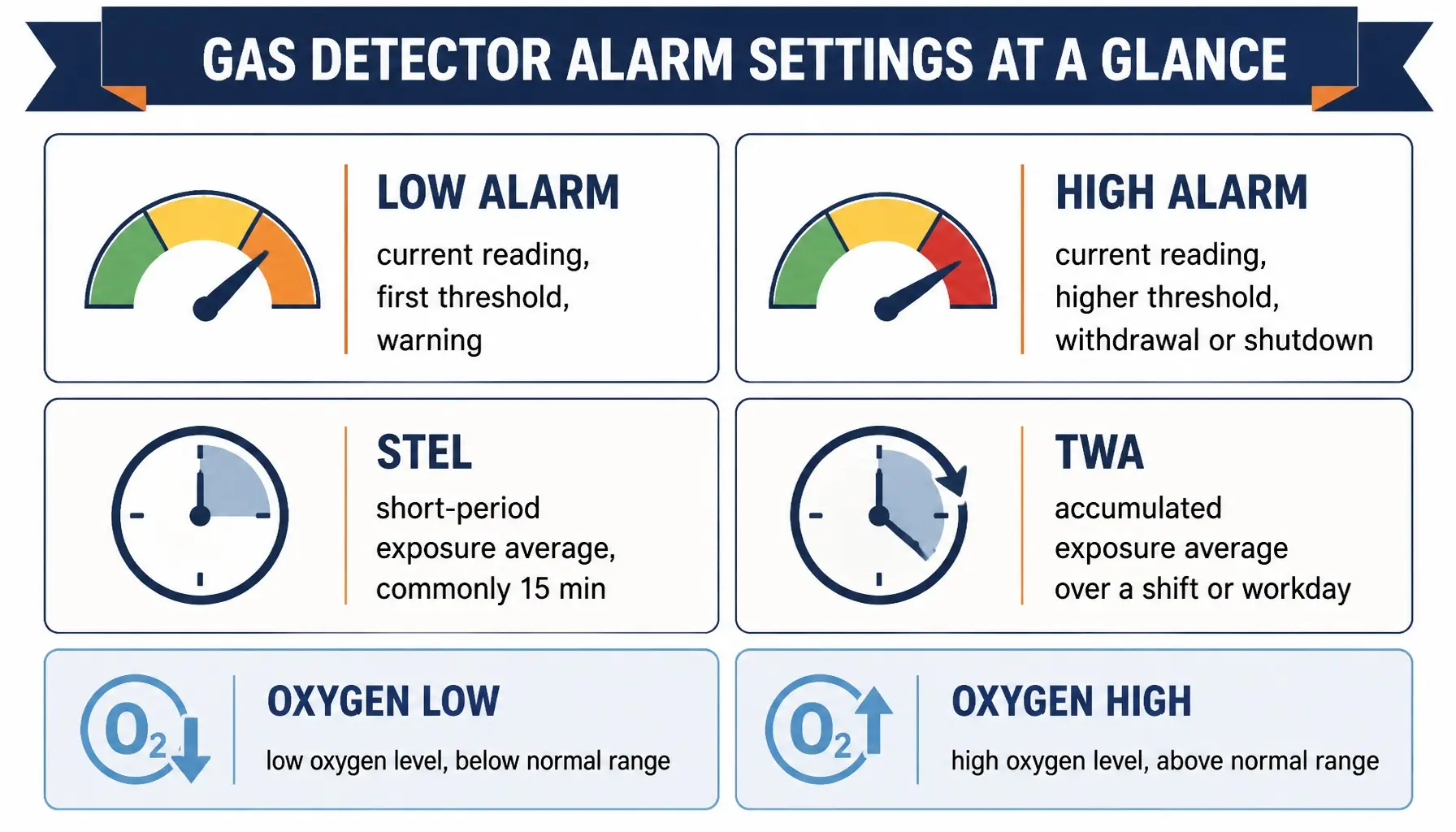
Visão geral das configurações de alarme do detector de gás
| Tipo de alarme | Base de medição | O que diz ao usuário | Aplicação típica |
|---|---|---|---|
| Baixo | Leitura atual | O primeiro limite de concentração configurado foi atingido. | Aviso de gás tóxico ou gás combustível |
| Alto | Leitura atual | Um limite de concentração mais alto foi alcançado. | Cancelamento, isolamento, ou resposta de desligamento |
| DEFINIR | Média de exposição de curto período | A exposição média durante o curto período configurado atingiu seu limite. | Gestão da exposição a gases tóxicos |
| TWA | Média de exposição mais longa | A exposição média acumulada atingiu o limite configurado. | Exposição do trabalhador durante um turno ou dia de trabalho definido |
| Oxigênio baixo | Leitura atual de oxigênio | O oxigênio caiu abaixo do nível configurado. | Deficiência de oxigênio |
| Oxigênio alto | Leitura atual de oxigênio | O oxigênio subiu acima do nível configurado. | Enriquecimento de oxigênio e aumento do risco de incêndio |
Um monitor portátil padrão de quatro gases geralmente combina oxigênio, gás combustível, monóxido de carbono, e canais de sulfeto de hidrogênio. Nosso guia para o que um monitor de quatro gases mede explica o propósito e as limitações dessa configuração.
O que é um alarme de gás baixo?
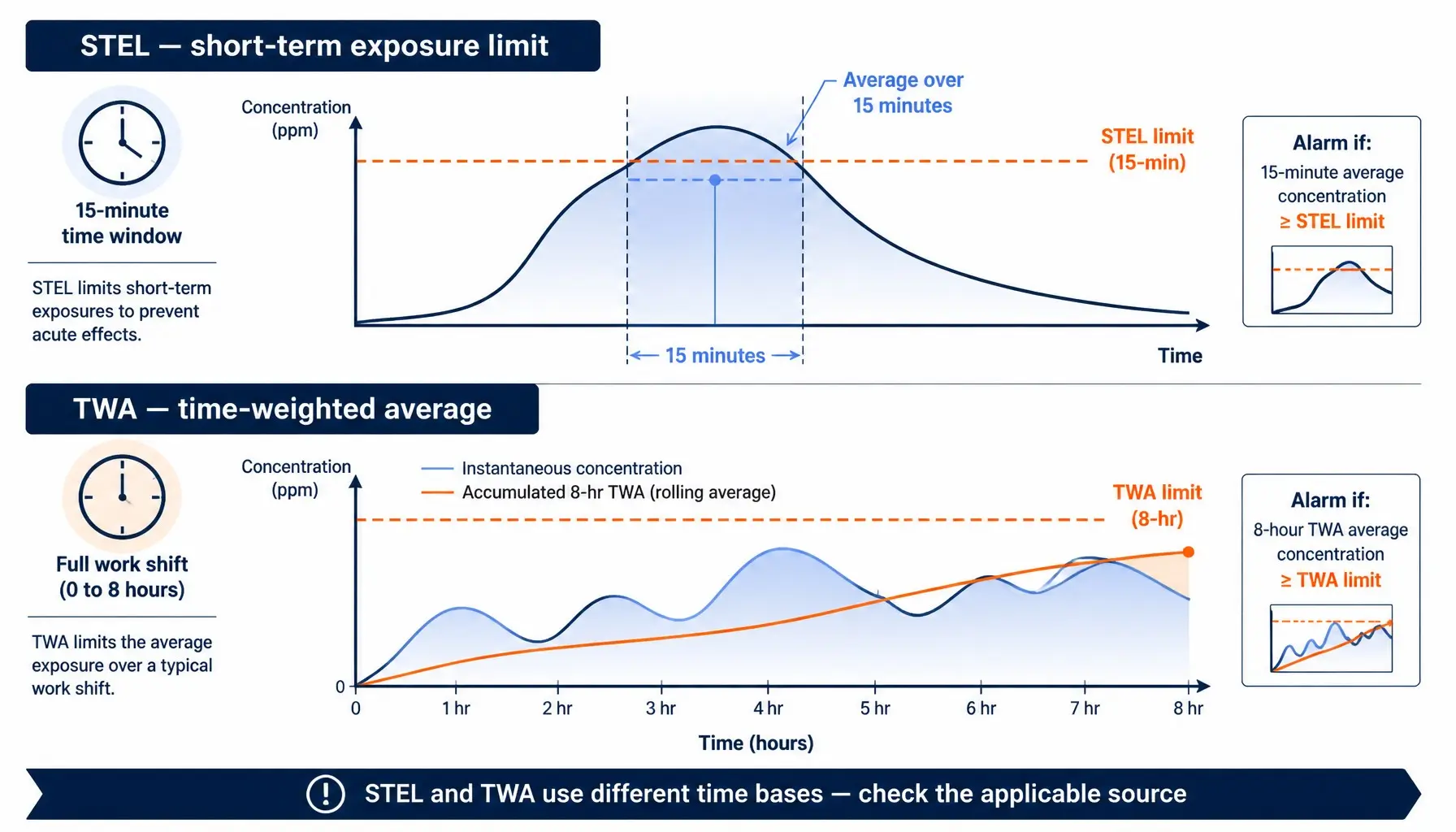
O alarme baixo é geralmente o primeiro limite instantâneo para um canal de gás tóxico ou combustível. Quando o valor exibido atingir o ponto de ajuste, o detector inicia sua sequência de alarme baixo.
“Baixo” não significa que a exposição continuada seja segura. Identifica apenas o primeiro ponto de ação configurado. O procedimento escrito pode exigir que o trabalhador interrompa a tarefa, sair da área, notificar um supervisor, aumentar a ventilação, ou inicie outro controle. Se ninguém souber a resposta necessária, o ponto de ajuste é apenas um número em um menu.
Uma configuração baixa que emite alarmes repetidamente deve ser investigada. Aumentá-lo para parar o ruído pode esconder uma liberação real, má ventilação, um gás interferente, ou um problema no detector. Revise nosso guia de solução de problemas de alarme falso de detector de gás antes de alterar uma configuração aprovada.
O que é um alarme de gás alto?
O alarme alto é um segundo limite instantâneo definido acima do alarme baixo para o mesmo canal de gás ascendente. Normalmente sinaliza uma condição mais séria e pode usar um padrão de alarme mais rápido ou mais urgente. A resposta poderia incluir a retirada imediata, isolamento de processo, desligar, ou notificação de emergência.
Muitos instrumentos travam alarmes altos. O alarme permanece ativo até que o gás caia abaixo do limite relevante e um usuário autorizado conclua o procedimento de reinicialização. Pressionar um botão de confirmação pode silenciar parte do aviso sem limpar o evento. Reconhecimento, silêncio, e reset são funções diferentes e devem ser abordadas no treinamento.
Canais de oxigênio requerem atenção especial. Em um monitor típico, o alarme de oxigênio baixo responde quando a leitura cai, enquanto o alarme de oxigênio alto responde quando aumenta. Os termos “baixo” e “alto” descrever a concentração de oxigênio, não a gravidade do perigo.
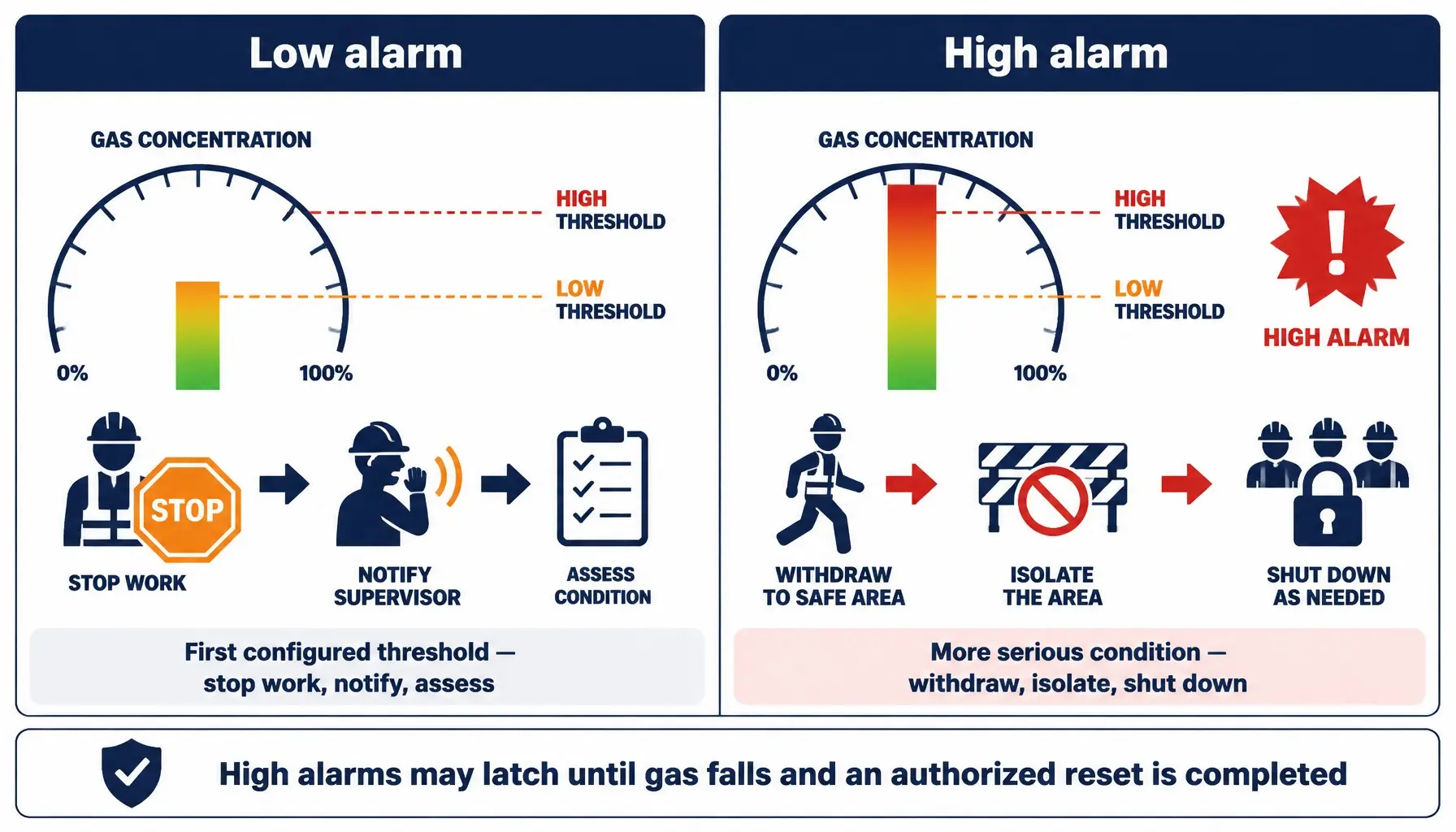
O que é um alarme STEL?
STEL significa limite de exposição de curto prazo. Um detector calcula uma leitura média durante um curto período especificado e a compara com o valor STEL configurado. Os alarmes STEL são normalmente usados para gases tóxicos, não para canais de oxigênio ou gás combustível.
A janela de tempo é tão importante quanto a concentração. O Guia de Bolso do NIOSH explica que um NIOSH STEL é geralmente uma média ponderada no tempo de 15 minutos, a menos que uma entrada de produto químico indique o contrário. O mesmo recurso também explica que as definições de exposição diferem entre NIOSH e OSHA. Veja o oficial Introdução ao Guia de Bolso NIOSH antes de atribuir uma base de tempo.
Um alarme STEL pode permanecer após o trabalhador alcançar ar limpo porque o instrumento ainda está calculando a média da exposição anterior. Uma leitura de corrente mais baixa não apaga os minutos anteriores. Limpar o histórico de exposição ou reiniciar o detector pode quebrar o recorde que conecta o monitor ao trabalhador.
O que é um alarme TWA?
TWA significa média ponderada no tempo. Representa a exposição acumulada durante um período definido mais longo, geralmente um turno de trabalho ou dia de trabalho. O detector combina concentração e tempo, portanto, a exposição moderada durante várias horas pode eventualmente acionar um alarme TWA, mesmo que a leitura atual nunca atinja o ponto de ajuste do alarme alto.
O período médio não é universal. Os limites de exposição recomendados pelo NIOSH podem usar um dia de trabalho de até 10 horas, enquanto os limites de exposição permitidos pela OSHA geralmente usam um turno de trabalho de 8 horas. O produto químico aplicável, jurisdição, programa empregador, e o horário do trabalhador precisam ser verificados.
Atribua monitores pessoais de forma consistente quando o TWA for usado. A passagem de um detector entre vários trabalhadores dificulta a ligação do valor de exposição acumulada a uma pessoa. Software de atracação e frota pode preservar registros, mas somente se a atribuição do detector e as configurações do relógio forem controladas.
Configuração de alarme, limite de exposição, faixa, e valor de calibração
Vários números aparecem em um programa detector, e eles respondem a perguntas diferentes. Misturá-los é uma das maneiras mais fáceis de criar uma configuração ruim.
| Prazo | Significado | Pergunta de exemplo |
|---|---|---|
| Ponto de ajuste do alarme | O valor configurado que inicia um alarme. | Quando o trabalhador deve ser avisado? |
| Limite de exposição | Um regulamento, consultivo, ou critério de exposição da empresa. | Que base de exposição se aplica a este trabalhador e ao gás? |
| Alcance do sensor | As concentrações que o sensor foi projetado para medir ou exibir. | O sensor pode medir em torno do ponto de ajuste pretendido?? |
| Concentração de calibração | A concentração certificada do gás de referência usada para verificar ou ajustar o detector. | Qual valor de gás conhecido é usado para verificar a precisão? |
| Valor acima da faixa | Uma concentração acima da capacidade de medição ou exibição. | O sensor foi exposto além de sua faixa utilizável? |
UM 25 componente de gás de calibração ppm não requer automaticamente um 25 alarme ppm. O valor de calibração é escolhido para verificar ou ajustar a resposta do sensor. O valor do alarme é escolhido no programa de risco e exposição. Nosso teste de resposta e guia de calibração aborda como o gás de teste certificado é usado para verificações funcionais e de precisão.
Exemplo H2S, CO, O2, e configurações de alarme LEL
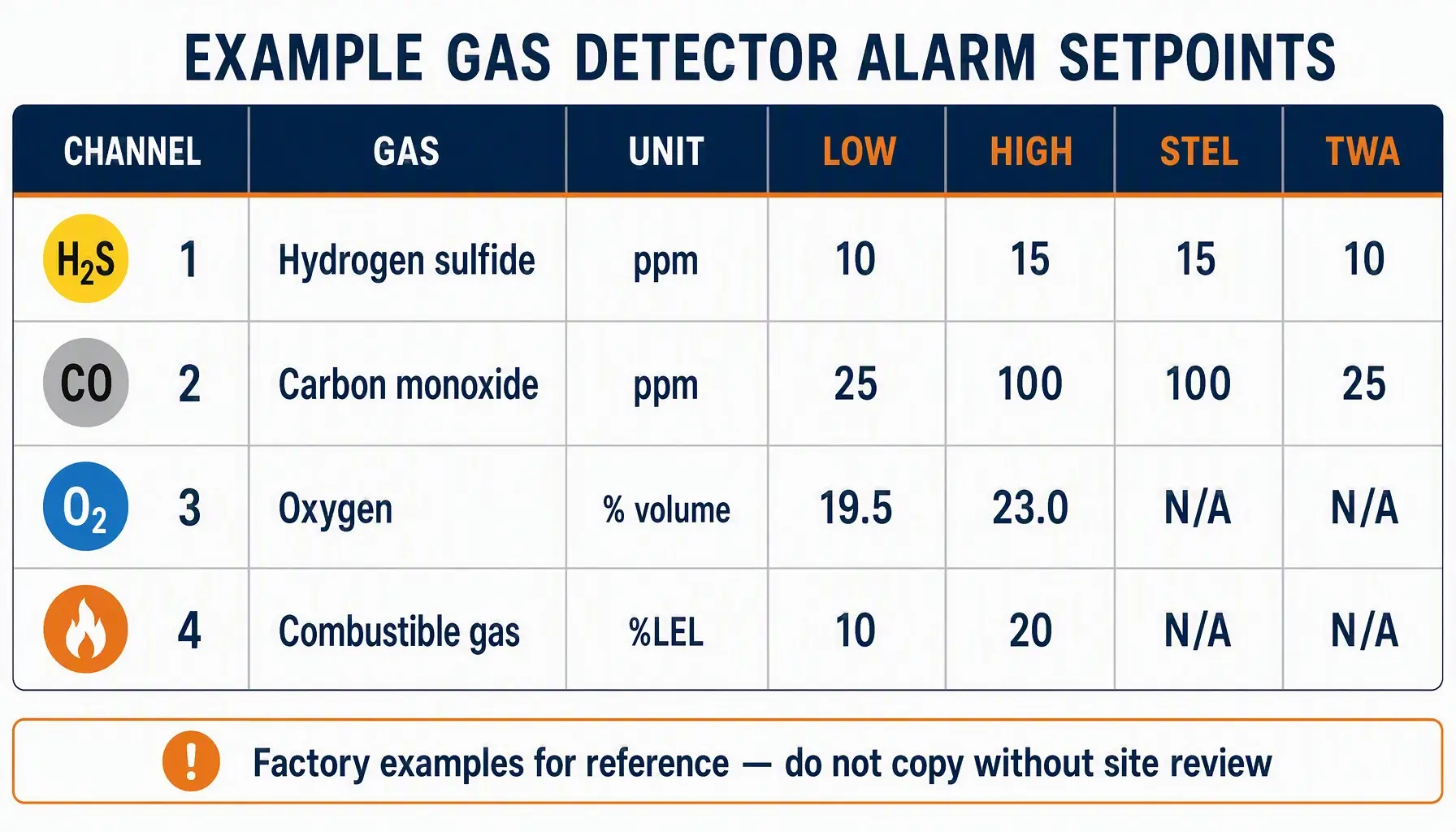
Os valores a seguir são exemplos de fábrica publicados para uma configuração de monitor portátil MSA. Eles mostram um padrão comum, mas eles não devem ser copiados para outro instrumento ou site sem revisão. Opções de sensores, configurações de país, regulamentos, e as políticas da empresa podem alterar os valores.
| Canal | Unidade | Exemplo baixo | Exemplo alto | Exemplo STEL | Exemplo de TWA |
|---|---|---|---|---|---|
| Sulfeto de hidrogênio | ppm | 10 | 15 | 15 | 10 |
| Monóxido de carbono | ppm | 25 | 100 | 100 | 25 |
| Oxigênio | % volume | 19.5 | 23.0 | N / D | N / D |
| Gás combustível | %LEL | 10 | 20 | N / D | N / D |
A tabela de origem informa aos usuários para verificarem o monitor ou certificado de calibração porque os requisitos nacionais e corporativos variam. Consulte a documentação atual do ponto de ajuste de fábrica do MSA ALTAIR 4XR para o contexto completo do fabricante.
As leituras de gás combustível requerem a unidade correta, sensor, gás de calibração, e suposições de gás alvo. Dez por cento LEL não é o mesmo que 10 porcentagem de gás por volume. A diferença está coberta em nosso guia de seleção de detector de gás combustível.
Como escolher os pontos de ajuste do alarme do detector de gás
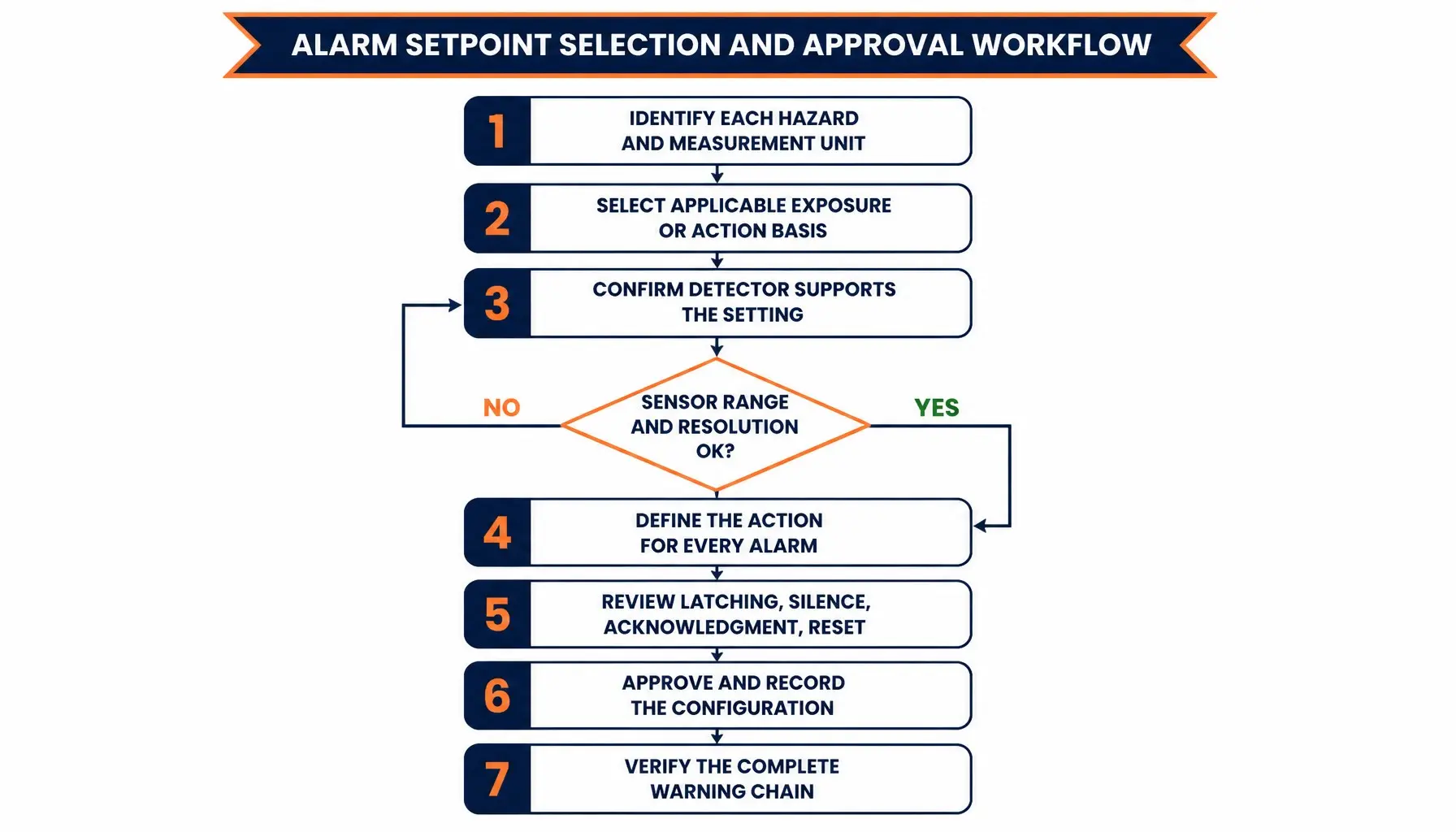
1. Identifique cada perigo e unidade de medição
Liste o gás alvo, concentração esperada, padrão de lançamento, duração da tarefa, possível deslocamento de oxigênio, e gases interferentes conhecidos. Indique se a unidade necessária é ppm, mg/m3, volume percentual, ou porcentagem LEL. Não presuma que uma etiqueta de quatro canais cobre todos os vapores no local.
2. Selecione a exposição ou base de ação aplicável
Identifique a fonte por trás de cada ponto de ajuste proposto. Pode ser um limite de exposição permitido pela OSHA, Limite de exposição recomendado pelo NIOSH, regulamentação local, limite de higiene ocupacional corporativa, nível de ação do processo, ou critério de resposta a emergências. O padrão de contaminantes atmosféricos da OSHA lista limites de exposição federais aplicáveis para substâncias cobertas, mas a decisão de configuração do alarme ainda precisa levar em conta o detector e a resposta do local de trabalho.
3. Confirme se o detector pode suportar a configuração
Verifique o alcance do sensor instalado, resolução, precisão, tempo de resposta, limites ambientais, e sensibilidades cruzadas. Confirme se esse canal suporta cálculos STEL e TWA. Um limite dentro da faixa de exibição ainda pode ser inadequado se o sensor não tiver a resolução ou resposta necessária para a aplicação.
4. Defina a ação para cada alarme
| Alarme | Exemplo de resposta para definir no procedimento do site |
|---|---|
| Baixo | Pare de trabalhar, mova-se conforme as instruções, notifique a pessoa responsável, e avaliar a fonte. |
| Alto | Retirar, isolar, desligar, ou inicie a ação de emergência especificada para a tarefa. |
| DEFINIR | Acabar com a exposição adicional, preservar o registro do trabalhador, e siga a resposta de higiene ocupacional. |
| TWA | Remover o trabalhador de exposição adicional e revisar o histórico completo de exposição. |
| Falha ou excesso de faixa | Deixe a área perigosa conforme necessário e retire o detector de serviço. |
5. Revise o travamento, silêncio, reconhecimento, e redefinir
Documente o que acontece depois que o gás cai abaixo do ponto de ajuste. Indique quais alarmes travam, que pode silenciá-los ou reconhecê-los, e o que deve acontecer antes da redefinição. Incluir som local, vibração, mensagens na tela, relés, alertas sem fio, e displays da sala de controle.
6. Aprovar e registrar a configuração
Mantenha o ID do detector, configuração do sensor, unidades, configurações baixas e altas, Valores STEL e TWA, períodos médios, documentos de origem, aprovador, data efetiva, e motivo da revisão. Use proteção por senha ou modelos de frota quando disponíveis, mas mantenha um registro aprovado legível fora do instrumento.
7. Verifique a cadeia de aviso completa
Após a configuração, execute o teste exigido pelo fabricante com gás adequado. Verifique a resposta do sensor e todas as saídas de aviso nas quais o programa depende. Um detector com alarmes de exposição configuráveis, como o Detector multigás Otywell OT139, ainda precisa dos canais de gás corretos, configurações, procedimento de teste, e treinamento de usuários para sua aplicação.
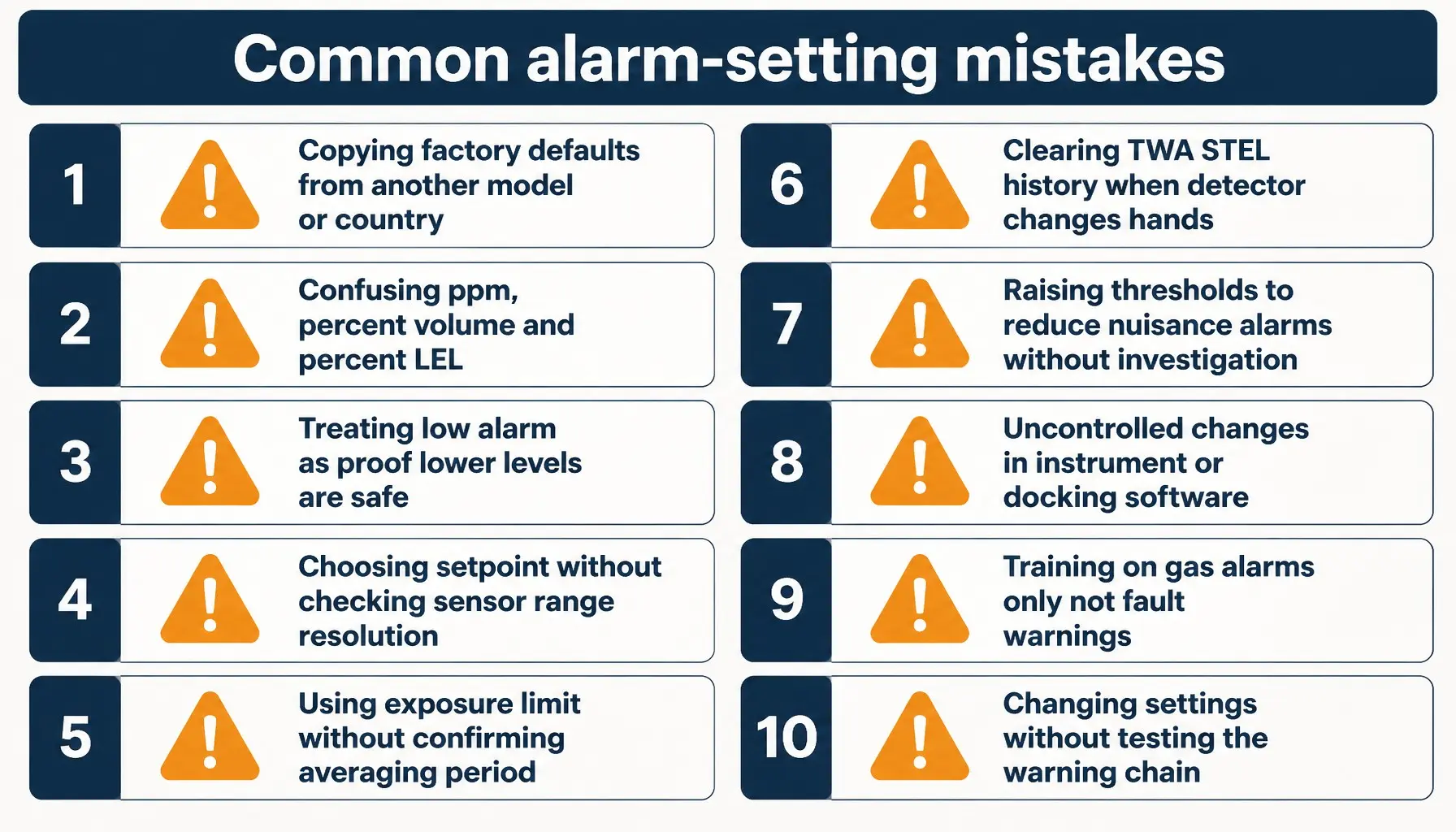
Erros comuns na configuração de alarmes
- Copiando padrões de fábrica de outro modelo, país, ou configuração do sensor
- Confuso ppm, volume percentual, e porcentagem LEL
- Tratar o alarme baixo como prova de que concentrações mais baixas são seguras
- Escolher um ponto de ajuste sem verificar o alcance do sensor, resolução, e tempo de resposta
- Utilizar um limite de exposição sem confirmar o seu período médio
- Limpar o histórico de TWA ou STEL quando um detector muda de mãos
- Aumentar os limites para reduzir alarmes incômodos sem investigar a causa
- Permitir alterações não controladas no instrumento ou no software de acoplamento
- Treinar trabalhadores sobre alarmes de gás, mas não sobre bomba, sensor, bateria, e avisos de ultrapassagem
- Alterar configurações sem testar a cadeia de aviso completa posteriormente
Quando as configurações de alarme devem ser revisadas?
Revise a configuração aprovada quando:
- Um novo produto químico, processo, ou tarefa de espaço confinado é introduzida.
- O modelo do detector, tipo de sensor, faixa, ou alterações de firmware.
- Um limite de exposição ou regra da empresa é revisado.
- Alarmes repetidos, quase acidentes, ou um incidente mostram que a resposta não é clara.
- Ventilação, duração do trabalho, equipamento de proteção, ou mudanças nas disposições de emergência.
- O detector se muda para outra jurisdição, site do cliente, ou grupo de trabalhadores.
- O software da frota ou um modelo de configuração é atualizado.
Uma revisão periódica deve comparar o registro aprovado com os instrumentos em serviço. Deve também verificar o treinamento, registros de eventos, atribuições de detector, e as ações tomadas após alarmes.
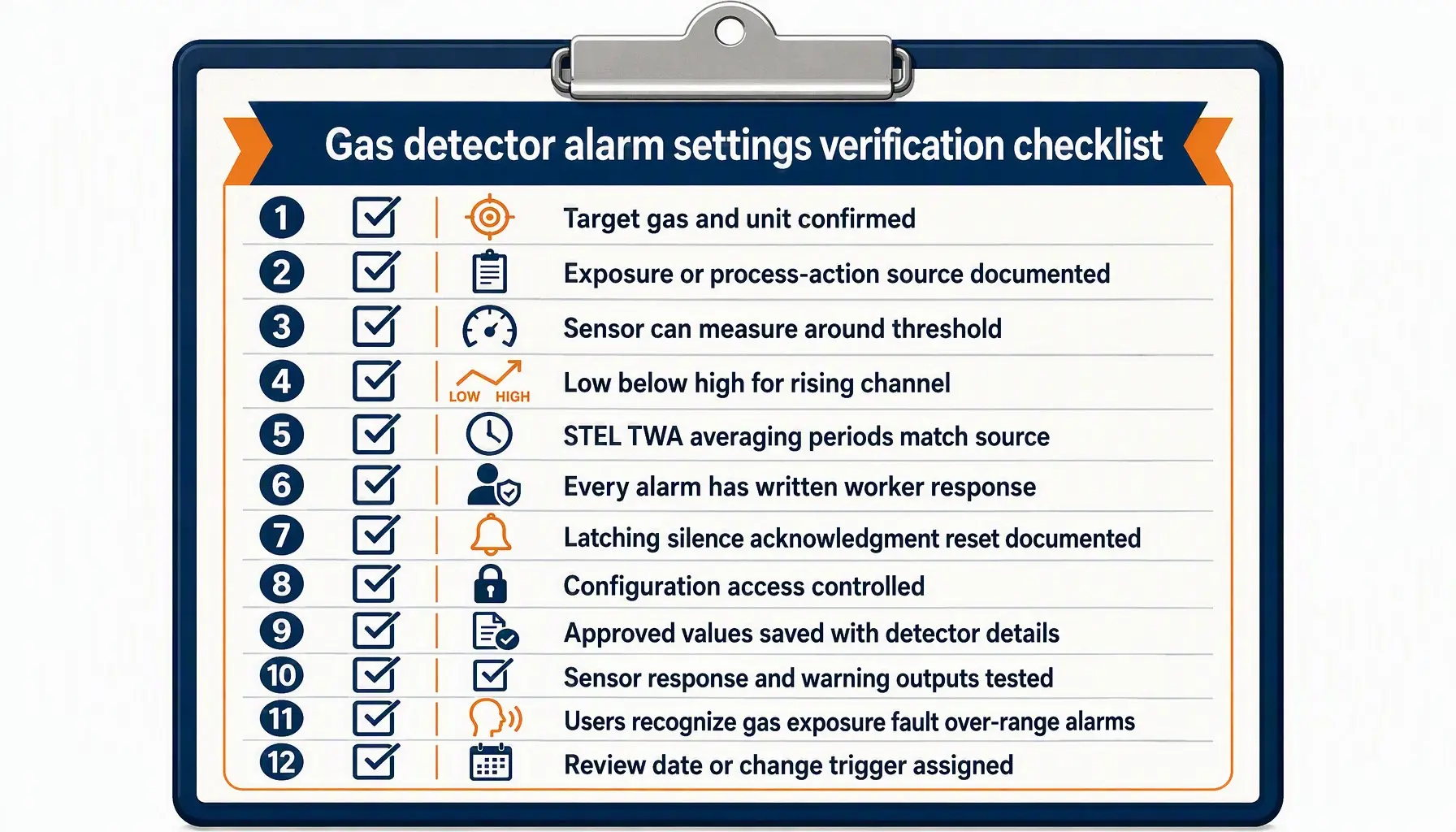
Lista de verificação de configuração de alarme de detector de gás
- ☐ O gás alvo e a unidade de medição são confirmados.
- ☐ A exposição ou fonte de ação do processo está documentada.
- ☐ O sensor instalado pode medir em torno do limite pretendido.
- ☐ A configuração baixa está abaixo da configuração alta para um canal de gás ascendente.
- ☐ Os períodos médios de STEL e TWA correspondem à fonte aprovada.
- ☐ Cada alarme tem uma resposta escrita do trabalhador.
- ☐ Travamento, silêncio, reconhecimento, e o comportamento de redefinição são documentados.
- ☐ O acesso às alterações de configuração é controlado.
- ☐ Os valores aprovados são salvos com os detalhes do detector e do sensor.
- ☐ A resposta do sensor e as saídas de advertência são testadas após a configuração.
- ☐ Os usuários podem reconhecer gás, exposição, falta, e alarmes acima da faixa.
- ☐ Uma data de revisão ou gatilho de mudança foi atribuído.
Perguntas frequentes
Qual é a diferença entre alarmes de gás baixo e alto?
Ambos normalmente respondem à leitura atual. Baixo é o primeiro limite configurado. Alto é um segundo, limite mais alto vinculado a uma resposta mais urgente. O procedimento do site define a ação necessária em cada nível.
Qual é a diferença entre STEL e TWA?
STEL usa uma média de curto período, comumente 15 minutos quando a fonte aplicável define dessa forma. TWA usa uma média mais longa, muitas vezes uma jornada de trabalho de 8 ou 10 horas, dependendo da autoridade. Nenhum dos dois é igual à leitura instantânea atual.
Os alarmes do detector de gás devem ser iguais aos limites de exposição da OSHA?
Não automaticamente. Os limites da OSHA podem fornecer parte da base, mas a configuração também depende do gás, período de tempo, jurisdição, capacidade do sensor, método de trabalho, limites internos, e resposta necessária. A razão para o valor selecionado deve ser documentada.
Como deve ser definido o alarme de oxigênio?
Use o procedimento de local de trabalho aprovado, regras aplicáveis, e instruções do fabricante. Exemplos publicados de monitores portáteis geralmente usam uma configuração baixa em torno 19.5 porcentagem de oxigênio e uma configuração alta em torno 23.0 ou 23.5 por cento, mas esses valores ainda precisam de aprovação do site.
Por que o gás combustível é comumente exibido em porcentagem LEL?
A porcentagem LEL mostra como a resposta medida se relaciona com o limite explosivo inferior do gás usado para a escala do detector ou suposições de calibração. Destina-se ao risco de incêndio e explosão, não exposição tóxica de baixo nível. A correção do gás alvo e as limitações do sensor ainda se aplicam.
Por que um alarme TWA permanece após ir para o ar fresco?
O alarme reflete a exposição média acumulada, portanto, uma leitura atual limpa não apaga a exposição anterior. Siga o procedimento do local para resposta do trabalhador, manutenção de registros, reconhecimento, e redefinir.
Os trabalhadores podem alterar as configurações de alarme do detector de gás portátil?
Somente quando autorizados pelo procedimento de controle de alterações do site. Mudanças não controladas podem tornar os detectores inconsistentes e desconectar o alarme da resposta aprovada do trabalhador.
As configurações de alarme devem ser verificadas durante um teste geral?
Um teste de resposta deve confirmar a resposta do sensor e as saídas de advertência exigidas pelo procedimento do fabricante. Isso não prova que os pontos de ajuste aprovados sejam adequados para o perigo ou que a concentração exibida seja precisa. Essas questões exigem revisão de configuração e, para precisão, uma verificação de calibração.
Regra final para configuração de alarme
Cada alarme precisa de quatro detalhes documentados: um gás e uma unidade, uma fonte de ponto de ajuste, um detector que pode medi-lo, e uma ação que o usuário entende. Se faltar um, a configuração está incompleta.
Revise os valores de fábrica em vez de copiá-los. Confirme as bases de tempo STEL e TWA, testar a cadeia de aviso após alterações, e manter o registro aprovado.

WeChat
Digitalize o código QR com WeChat