 Henan Otywell Electronic Technology Co., Ltd

Un rilevatore di gas di ammoniaca ha un compito ristretto: trovare NH3 abbastanza presto affinché le persone e i sistemi di controllo possano rispondere. Sceglierne uno diventa complicato quando la stessa struttura necessita di avvisi di esposizione a basso livello, rilevamento perdite in sala macchine, e protezione contro un rilascio di grandi dimensioni. Una gamma di sensori raramente gestisce bene tutti e tre i lavori.
L'installazione conta tanto quanto lo strumento. Un buon rilevatore in una sacca di aria morta potrebbe rispondere in ritardo. Una gamma scelta male può nascondere una piccola perdita o saturare durante un'emergenza. Celle frigorifere, aree di lavaggio, piante fertilizzanti, e gli allevamenti pongono requisiti molto diversi a un sensore di ammoniaca.
Questa guida esamina tali decisioni nell'ordine in cui dovrebbero essere prese: definire il pericolo, scegli la copertura fissa o portatile, abbinare il sensore e la portata all'attività, decidere dove appartiene il rilevatore, quindi costruire attorno ad esso una routine di test e manutenzione.
Nota sulla sicurezza: Questo articolo costituisce una guida generale alla selezione. Posizionamento del rilevatore di ammoniaca, livelli di allarme, azioni di ventilazione, e le risposte alle emergenze devono seguire il codice applicabile, istruzioni del rilevatore, analisi dei rischi del processo, e programma di sicurezza del sito.
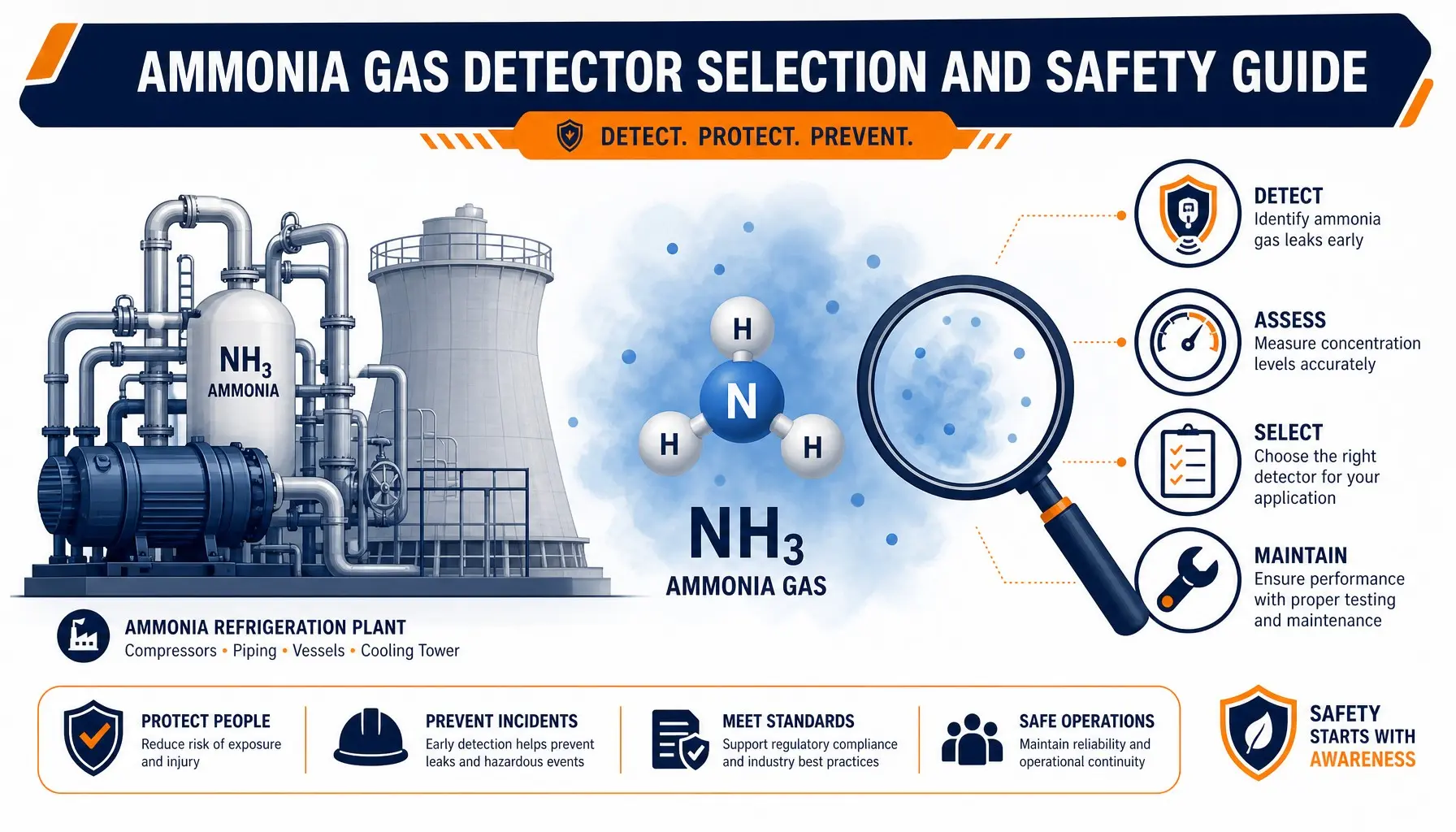
Cosa misura un rilevatore di gas di ammoniaca
Un rilevatore di ammoniaca misura la concentrazione di NH3 nell'aria e riporta il risultato, solitamente in parti per milione. Uno strumento portatile avvisa chi lo trasporta. Un rilevatore fisso monitora continuamente una posizione e può trasmettere il segnale a un controller, faro, sistema di ventilazione, o sistema di controllo dell'impianto.
Nessuno dei due tipi impedisce un rilascio. Il rilevatore fornisce informazioni e avvia un'azione di allarme o di controllo. Il resto dipende dal corretto posizionamento, uscite lavorative, personale addestrato, e una procedura di risposta scritta.
L'ammoniaca è incolore e ha un forte odore, ma l'olfatto non è un metodo di monitoraggio. La sensibilità agli odori varia, e l’esposizione continuata può ridurre la capacità di una persona di notarlo. IL Voce della Guida tascabile NIOSH per l'ammoniaca ne elenca le proprietà fisiche, limiti di esposizione, sintomi, e un valore immediatamente pericoloso per la vita o la salute 300 ppm.
Quello 300 Il valore ppm non è un'impostazione universale per l'allarme alto. IDLH, limiti di esposizione professionale, punti di allarme del rilevatore, e le soglie di arresto di emergenza rispondono a domande diverse. Trattarli come intercambiabili crea un programma di rilevamento del gas debole.
Dove viene utilizzato il rilevamento dell'ammoniaca
L'ammoniaca appare in diversi settori, ma il motivo del monitoraggio cambia da un sito all'altro.
- Gli impianti di refrigerazione industriale monitorano le sale compressori, stazioni di valvole, vasi, pattini della pompa, e aree occupate vicino ad apparecchiature refrigerate.
- Le operazioni di fertilizzazione monitorano i punti di trasferimento, aree di stoccaggio, stazioni di carico, e apparecchiature di processo.
- Gli impianti chimici utilizzano il rilevamento fisso attorno ai punti di rilascio noti e strumenti portatili durante la manutenzione.
- Gli impianti di trattamento delle acque reflue possono monitorare ambienti o processi in cui viene immagazzinata l'ammoniaca, aggiunto, o generato.
- Le strutture per l'allevamento di bestiame e pollame possono utilizzare un sistema di monitoraggio portatile o ad area per valutare l'esposizione dei lavoratori e le prestazioni di ventilazione.
- I laboratori e gli impianti di trattamento dell'acqua potrebbero aver bisogno di un rilevamento a basso raggio vicino alle bombole di ammoniaca, conservazione della soluzione, o sistemi di dosaggio.
L'eTool per la refrigerazione dell'ammoniaca dell'OSHA copre i comuni luoghi di refrigerazione e i rischi di processo. Si tratta di una guida piuttosto che di un nuovo regolamento, quindi una struttura deve ancora identificare le regole e le pratiche ingegneristiche riconosciute che si applicano al suo sistema.
Rilevatore di ammoniaca fisso o portatile?
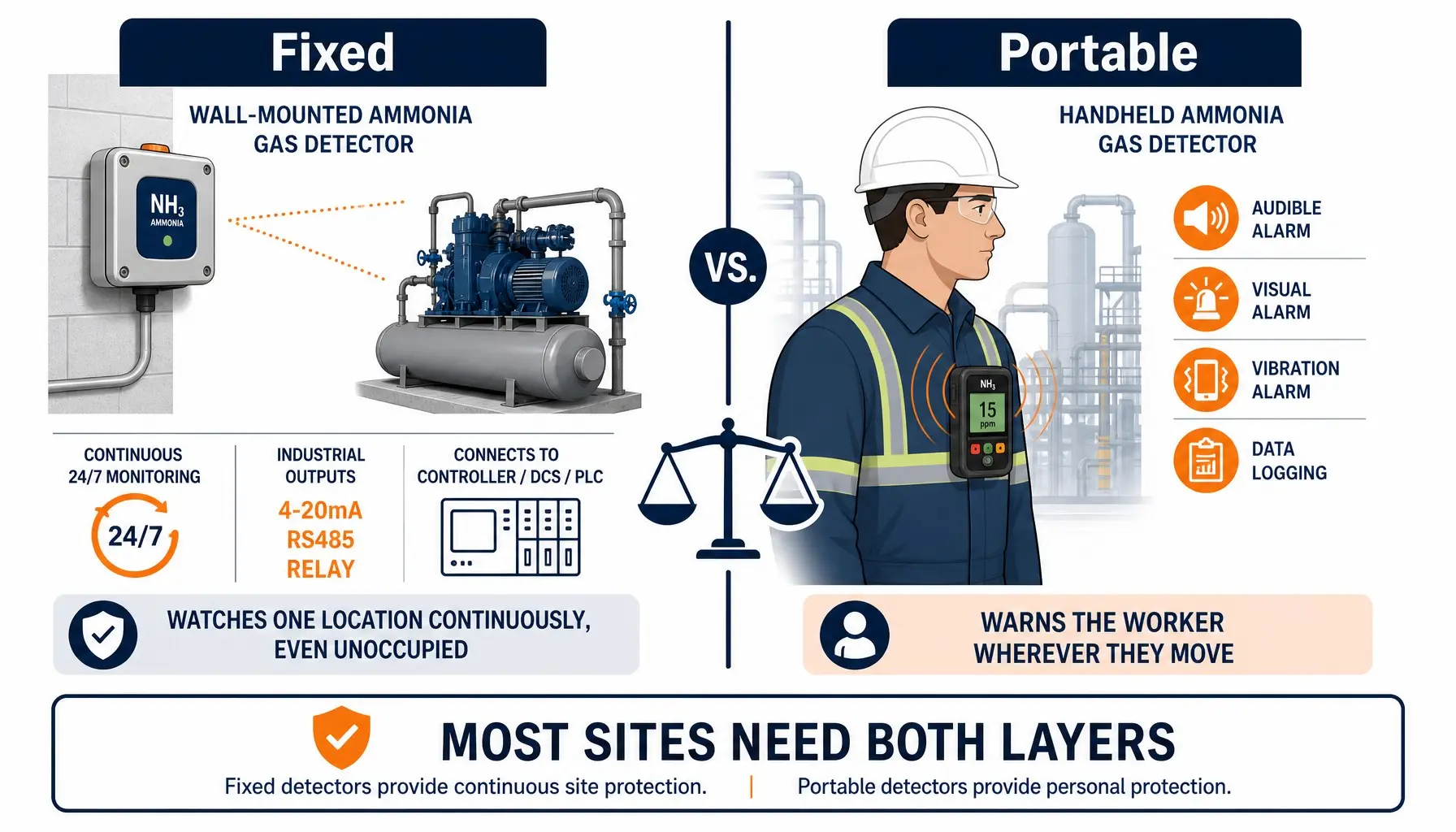
Iniziare dalla posizione del pericolo. Una guarnizione del compressore, gruppo valvole, collegamento del cilindro, o la sala macchine rimane in un unico posto, quindi il rilevamento fisso può guardarlo continuamente. Un meccanico, tecnico della refrigerazione, o la squadra di emergenza si sposta nel sito, quindi quella persona ha bisogno di una copertura portatile.
| Domanda | Rivelatore fisso di ammoniaca | Rilevatore di ammoniaca portatile |
|---|---|---|
| Cosa protegge? | Una stanza definita, processo, o punto di perdita | Il lavoratore e il luogo oggetto del controllo |
| Quando effettua il monitoraggio? | Continuamente, compresi i periodi non occupati | Durante il trasporto o l'utilizzo per un'ispezione |
| Come campiona? | Diffusione nel punto installato, o un sistema campionato | Diffusione vicino alla zona di respirazione, o una pompa interna e una sonda |
| Uscite tipiche | 4-20 mA, RS485, relè, collegamento al controller o al PLC | Udibile, allarmi visivi e a vibrazione, registrazione dei dati |
| Limitazione principale | Misura solo il gas che raggiunge il punto di campionamento | Impossibile monitorare quando non è presente nessuno strumento o operatore |
Molte strutture necessitano di entrambi i livelli. I rilevatori fissi coprono i punti di rilascio noti e i periodi incustoditi. Le unità portatili coprono il movimento dei lavoratori, manutenzione, interruzione della linea, e indagini sulle perdite. Il più ampio Guida al rilevatore di gas fisso e portatile spiega come dividere tali compiti.
Un monitor standard a quattro gas normalmente copre l'ossigeno, gas combustibile, monossido di carbonio, e idrogeno solforato. Non rileva automaticamente l'ammoniaca. Prima di emettere un'unità multigas per il lavoro NH3, verificare l'elenco dei sensori installati e l'etichetta riportata sullo strumento. Otywell Rilevatore di gas portatile G90, Per esempio, può essere configurato per l'ammoniaca, ma la configurazione ordinata del sensore determina ciò che effettivamente misura l'unità.
Scegliere il sensore prima della custodia
L'alloggiamento del rilevatore, schermo, valutazione di ingresso, e i risultati della comunicazione contano, ma il sensore determina se lo strumento può misurare la concentrazione prevista nelle condizioni previste.
Sensori elettrochimici di ammoniaca
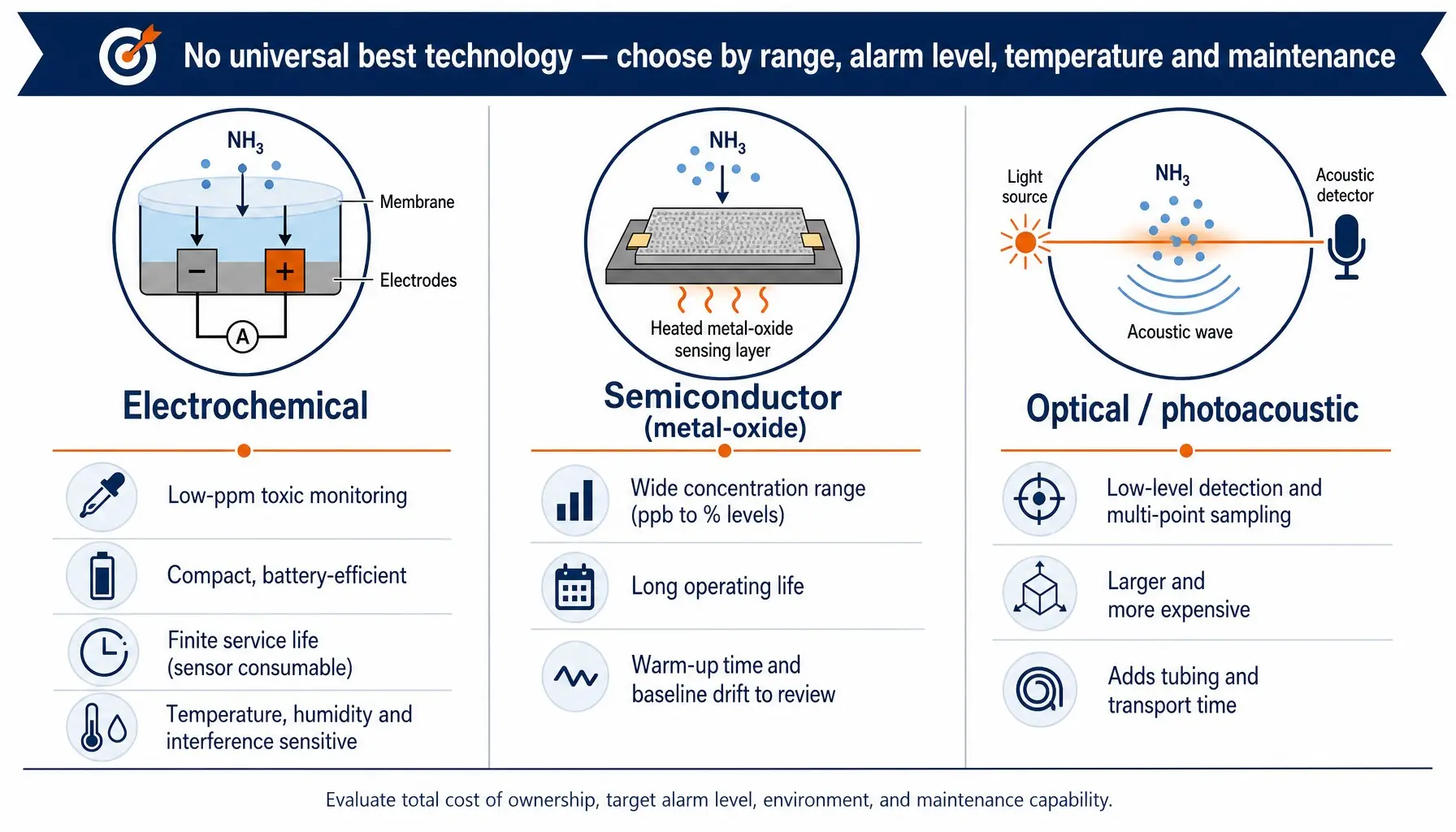
Le celle elettrochimiche sono comuni nei rilevatori portatili di NH3 e in molti trasmettitori fissi. Il gas si diffonde attraverso una membrana e reagisce a un elettrodo, producendo una corrente correlata alla concentrazione. Sono adatti al monitoraggio dei gas tossici a basso numero di ppm e possono essere compatti ed efficienti a batteria.
Hanno anche dei limiti. Temperatura, umidità, età del sensore, esposizione prolungata, e i gas interferenti possono modificare la loro risposta. La durata è limitata, e un rilevatore potrebbe ancora accendersi dopo che il sensore è diventato lento o instabile.
Sensori a semiconduttore
I sensori a semiconduttore di ossido di metallo possono coprire intervalli di concentrazione più ampi e spesso hanno una lunga durata operativa. Possono essere utili negli allarmi di perdite fissi in cui un'ampia copertura è più importante della misurazione di basso livello altamente selettiva. Tempo di riscaldamento, risposta all'umidità, movimento della linea di base, e la sensibilità incrociata necessitano di un attento esame.
Sistemi ottici e fotoacustici
Alcuni impianti di refrigerazione utilizzano monitor ottici dell'ammoniaca, compresi i sistemi fotoacustici a infrarossi. Questi possono supportare il rilevamento di basso livello e il campionamento multipunto, a seconda del modello. Sono generalmente più grandi e più costosi di un trasmettitore elettrochimico di base, e i sistemi campionati aggiungono tubi, filtri, pompe, e tempo di trasporto al piano di manutenzione.
Non esiste una migliore tecnologia universale. La risposta giusta dipende dall'intervallo richiesto, livello di allarme target, tempo di risposta, temperatura, gas interferenti, e risorse per la manutenzione. La nostra guida a tipi di sensori del rilevatore di gas fornisce maggiori dettagli sulla risposta del sensore e sulle modalità di guasto comuni.
Come scegliere il range di rilevamento dell'ammoniaca
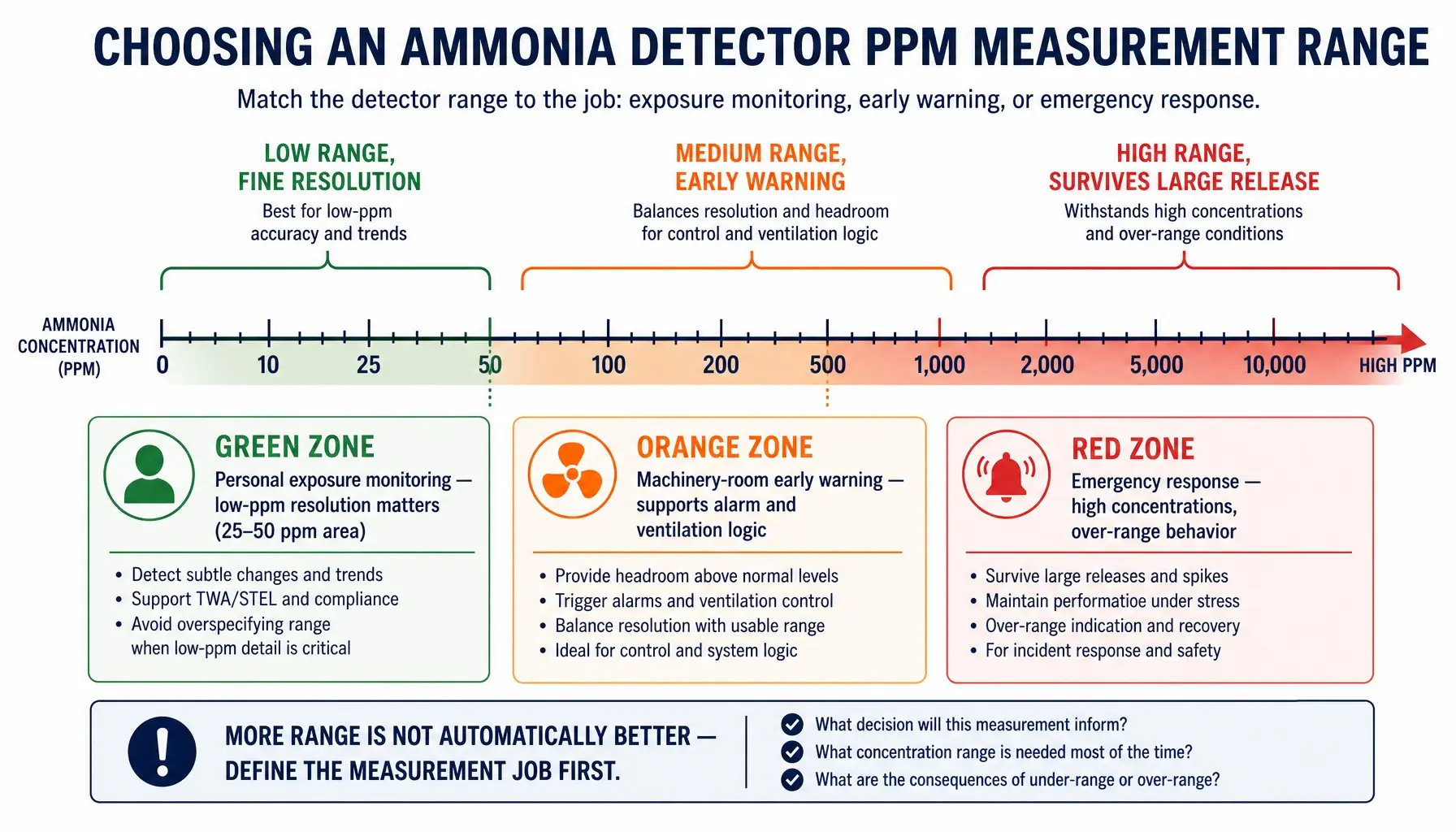
Una maggiore portata non è automaticamente migliore. Un sensore ad alta portata può sopravvivere e visualizzare un rilascio ampio, ma potrebbe avere una risoluzione più grossolana attorno a un allarme di bassa esposizione professionale. Un sensore di portata bassa può fornire un utile avviso precoce ma andare oltre la portata durante una perdita importante.
Definire il lavoro di misurazione prima di scegliere un numero:
- Elenca il livello di allarme o di azione più basso che il rilevatore deve supportare.
- Stimare le concentrazioni attese durante il normale lavoro, piccole perdite, manutenzione, e pubblicazioni credibili.
- Controllare l'accuratezza e la risoluzione vicino al punto decisionale più basso.
- Controllare il comportamento fuori range del sensore e la procedura di ripristino.
- Decidere se una gamma può coprire l'attività o se il sito necessita di strumenti separati per la gamma bassa e quella alta.
| Compito di monitoraggio | Considerazione sulla portata | Cosa verificare |
|---|---|---|
| Monitoraggio dell'esposizione personale | Di solito è importante una risoluzione a basso numero di ppm | Precisione, Funzioni STEL/TWA, risoluzione degli allarmi e registrazione dei dati |
| Avviso tempestivo alla sala macchine | L'intervallo deve supportare la logica di allarme e ventilazione approvata | Tempo di risposta, comportamento del relè, prestazioni a bassa temperatura |
| Indagine sulle perdite | Uno strumento pompato potrebbe necessitare di un intervallo utilizzabile più ampio | Materiale della sonda, lunghezza del tubo, recupero dopo un'elevata esposizione |
| Risposta all'emergenza | Concentrazioni elevate possono superare quelle rilevate da un sensore di gas tossico di routine | Indicazione di fuori campo, procedura di approvazione e risposta dello strumento |
Un intervallo citato senza precisione, risoluzione, tempo di risposta, e i limiti ambientali sono incompleti. Richiedi le specifiche complete del sensore e assicurati che si applichino all'ammoniaca, non a un'altra opzione gas installata nello stesso alloggiamento del rilevatore.
Dove installare un rilevatore di gas di ammoniaca
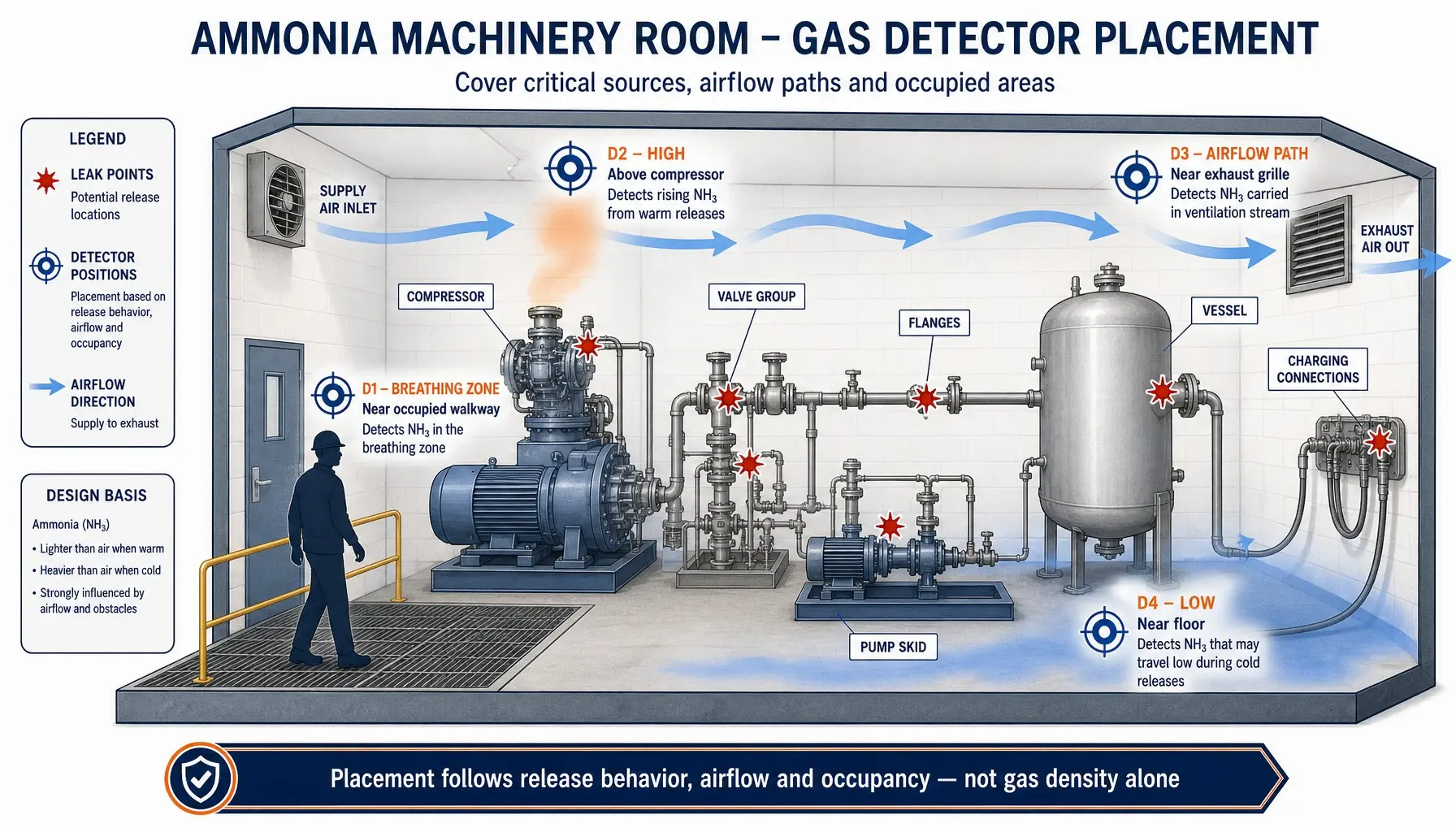
Il vapore di ammoniaca ha una densità di gas relativa inferiore a quella dell'aria in condizioni di riferimento standard. Questo fatto è utile, ma non regola da solo l'altezza del rilevatore. Un rilascio di ammoniaca fredda può viaggiare con aria refrigerata o aerosol liquido prima di riscaldarsi e salire. Tifosi, porte, evaporatori, ostacoli, geometria della stanza, e le differenze di pressione possono spostare il pennacchio lontano dalla posizione prevista solo dalla densità del gas.
Un sondaggio sul posizionamento dovrebbe prendere in considerazione:
- probabili punti di perdita, compresi i compressori, sigilli, valvole, flange, vasi, pattini della pompa, collegamenti di ricarica, e collettori di cilindri;
- la temperatura e lo stato fisico di un possibile rilascio;
- flusso d'aria di ventilazione normale e di emergenza;
- percorsi occupati, ingressi, stazioni di controllo, e aree di lavoro di manutenzione;
- sacche d'aria morta, partizioni, soffitti alti, alloggiamenti per apparecchiature, e scarico locale;
- accesso per la calibrazione, ispezione, e sostituzione del sensore;
- spruzzo d'acqua, condensazione, prodotti chimici di lavaggio, polvere, vibrazione, e danni meccanici.
Le installazioni potrebbero richiedere rilevatori vicino a probabili punti di rilascio, a livelli respiratori occupati, o nei percorsi di ventilazione. La sistemazione finale dovrebbe derivare dal codice applicabile e da una revisione della progettazione specifica del sito. Un rilevatore montato in un punto in cui è facile da cablare ma difficile da esporre alla perdita rappresenta un compromesso inadeguato.
I sistemi di prelievo dei campioni necessitano di un altro controllo: tempo di trasporto. Il tubo lungo ritarda la lettura, e l'ammoniaca può interagire con tubi non idonei o contaminati. Seguire il limite del produttore per il materiale dei tubi, lunghezza, fluire, filtri, e sequenziamento dei punti campione.
Imposta gli allarmi dal piano di risposta
Un punto di allarme dovrebbe collegare una concentrazione misurata a un'azione definita. Tale azione potrebbe essere una notifica al lavoratore, evacuazione, ventilazione, isolamento del processo, o risposta all'emergenza. Se a un allarme non è assegnata una risposta, il suo numero ha poco valore operativo.
NIOSH elenca un limite di esposizione raccomandato di 25 ppm come media ponderata nel tempo e 35 ppm come limite di esposizione a breve termine. Il limite di esposizione consentito dall'OSHA mostrato nella stessa voce NIOSH è 50 ppm come media ponderata nel tempo su otto ore. Questi limiti pubblicati hanno diversi significati legali e consultivi. Non devono essere copiati direttamente in ogni rilevatore fisso o monitor portatile.
Quando si approvano le impostazioni dell'allarme ammoniaca, documento:
- il regolamento disciplinante, codice, standard, o criterio aziendale;
- se il valore è istantaneo, IMPOSTATO, TWA, o un altro calcolo;
- l’azione richiesta in ogni fase di allarme;
- chi può riconoscere, silenzio, reset, o cambiare la sveglia;
- come funzionano i relè di ventilazione e di arresto;
- cosa succede dopo una lettura fuori range o un guasto del sensore.
La differenza tra un limite di esposizione, portata del sensore, valore di calibrazione, e il punto di allarme è coperto nel Guida alle impostazioni degli allarmi del rilevatore di gas.
Condizioni ambientali che causano problemi
Bassa temperatura
Le celle frigorifere possono rallentare la risposta del sensore e ridurre la potenza. Si può formare condensa quando un rilevatore portatile si sposta tra un congelatore e uno caldo, zona umida. Controllare le specifiche complete della temperatura operativa, non solo il rating della custodia, e consentire allo strumento di stabilizzarsi come indicato dal produttore.
Umidità e lavaggio
I rapidi cambiamenti di umidità possono spostare le letture in alcuni sensori. Anche l'acqua su una membrana o un filtro può bloccare la diffusione del gas. Una classificazione IP descrive la protezione dell'involucro in base a test definiti; ciò non significa che il percorso di rilevamento misurerà correttamente mentre è allagato o ricoperto di residui di pulizia.
Sensibilità incrociata
Un sensore di ammoniaca può rispondere ad altre sostanze chimiche presenti nel sito. L'elenco e l'ampiezza della risposta variano in base al modello di sensore. Confrontare la tabella di sensibilità incrociata del produttore con i refrigeranti, prodotti chimici per la pulizia, gas di scarico, e trattare i prodotti chimici utilizzati nelle vicinanze.
Esposizione fuori range
Un grande rilascio può saturare una cella elettrochimica a basso raggio. Il display potrebbe mostrare un simbolo di superamento del range anziché la concentrazione effettiva, e il recupero può richiedere tempo. Rimuovere lo strumento dal servizio dopo una grave esposizione e seguire l'ispezione specificata, test, e la procedura di calibrazione prima di utilizzarlo nuovamente.
Test di impatto e calibrazione
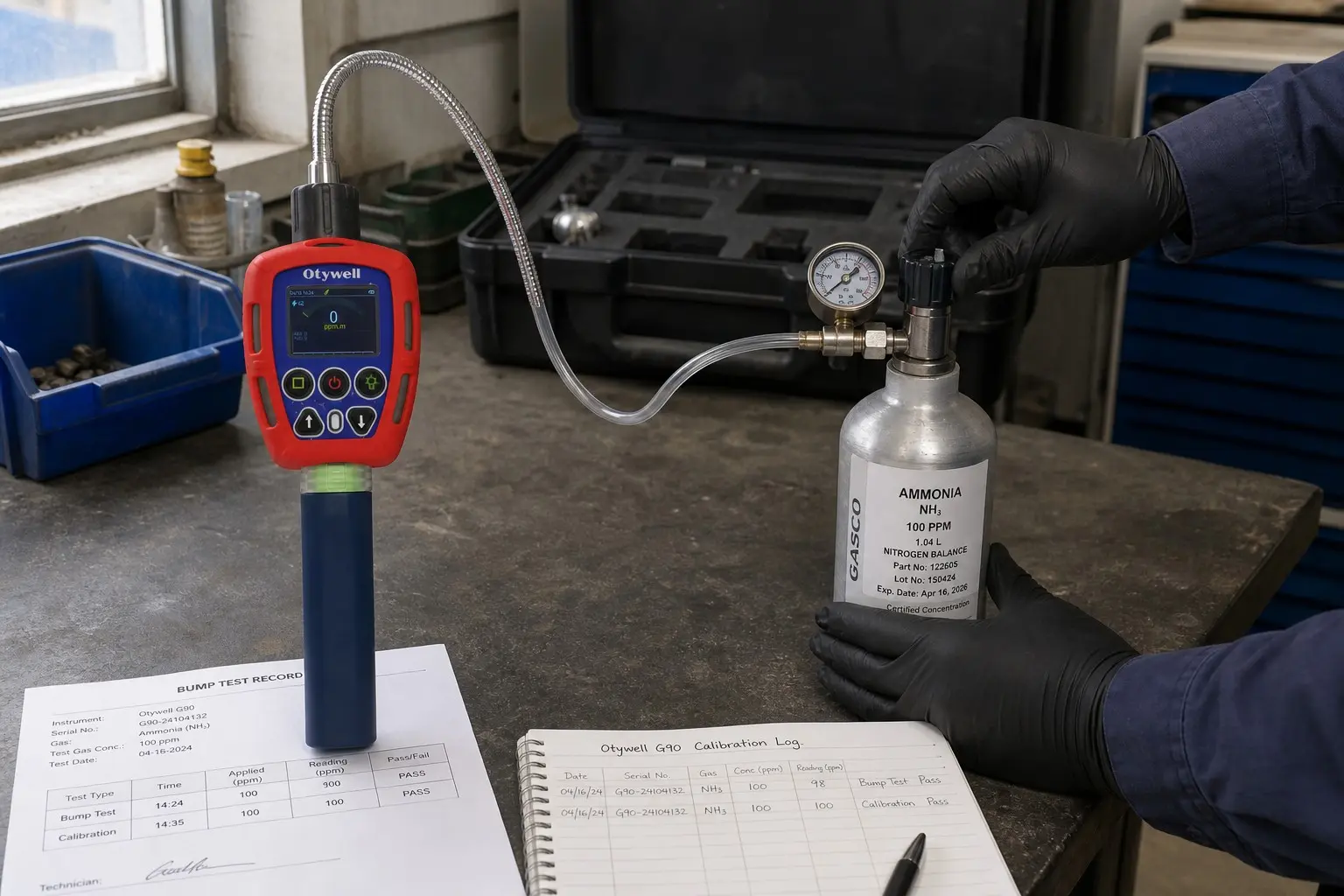
Un bump test espone il sensore al gas di prova dell'ammoniaca e conferma che la lettura cambia e gli allarmi funzionano. Un controllo di calibrazione confronta il valore visualizzato con una concentrazione certificata senza regolare lo strumento. Una calibrazione completa regola la risposta al gas di riferimento.
Utilizzare apparecchiature di test compatibili con l'ammoniaca. Il gas reattivo può perdersi in tubazioni sporche o non idonee, collegamenti allentati, o la configurazione errata del regolatore. Concentrazione del cilindro, gas di equilibrio, fluire, tempo di esposizione, materiale del tubo, tappo di calibrazione, e le condizioni ambientali devono corrispondere alle istruzioni del rilevatore.
La frequenza del test dovrebbe seguire il produttore, programma del sito, requisiti applicabili, e storia operativa. Ulteriori test sono sensati dopo un bump test fallito, sostituzione del sensore, impatto fisico, ingresso di acqua, lunga conservazione, esposizione fuori range, o una lettura insolita. La differenza pratica tra le procedure è spiegata nel bump test e guida alla calibrazione.
Errori comuni nel rilevamento dell'ammoniaca
Affidarsi all'olfatto
L'odore può avvisare qualcuno di un rilascio, ma non fornisce una concentrazione, media dell'esposizione, evento registrato, o uscita relè. Inoltre, non dimostra che sia sicuro entrare in un'area.
Installazione di ogni rilevatore ad un'altezza
La sola densità del gas non può spiegare i rilasci di freddo, movimento dell'aria, disposizione delle apparecchiature, o lo scopo del rilevatore. Il posizionamento dovrebbe seguire il comportamento di rilascio previsto e i requisiti di progettazione applicabili.
Ordinare la più ampia gamma disponibile
Un ampio range può rivelare la risoluzione necessaria per un allarme tempestivo. Confrontare le prestazioni alla concentrazione di allarme prevista, non solo a grandezza naturale.
Supponendo che un monitor multigas includa NH3
Il numero di canali non identifica i gas installati. Confermare la configurazione del sensore nell'ordine, etichetta dello strumento, schermata di avvio, e il piano del gas di prova.
Ignorando il sistema connesso
Un trasmettitore fisso può leggere correttamente mentre un relè rotto, canale del controller disabilitato, faro fallito, oppure un dimensionamento PLC errato impedisce la reazione. Testare il funzionamento dell'intero percorso, non solo la testa di rilevamento.
Utilizzando un intervallo di manutenzione generico
L'età del sensore è solo uno dei fattori. Temperatura, umidità, storia dell'esposizione, contaminazione, risultati dei test, e le condizioni di conservazione influiscono tutte sul programma di manutenzione.
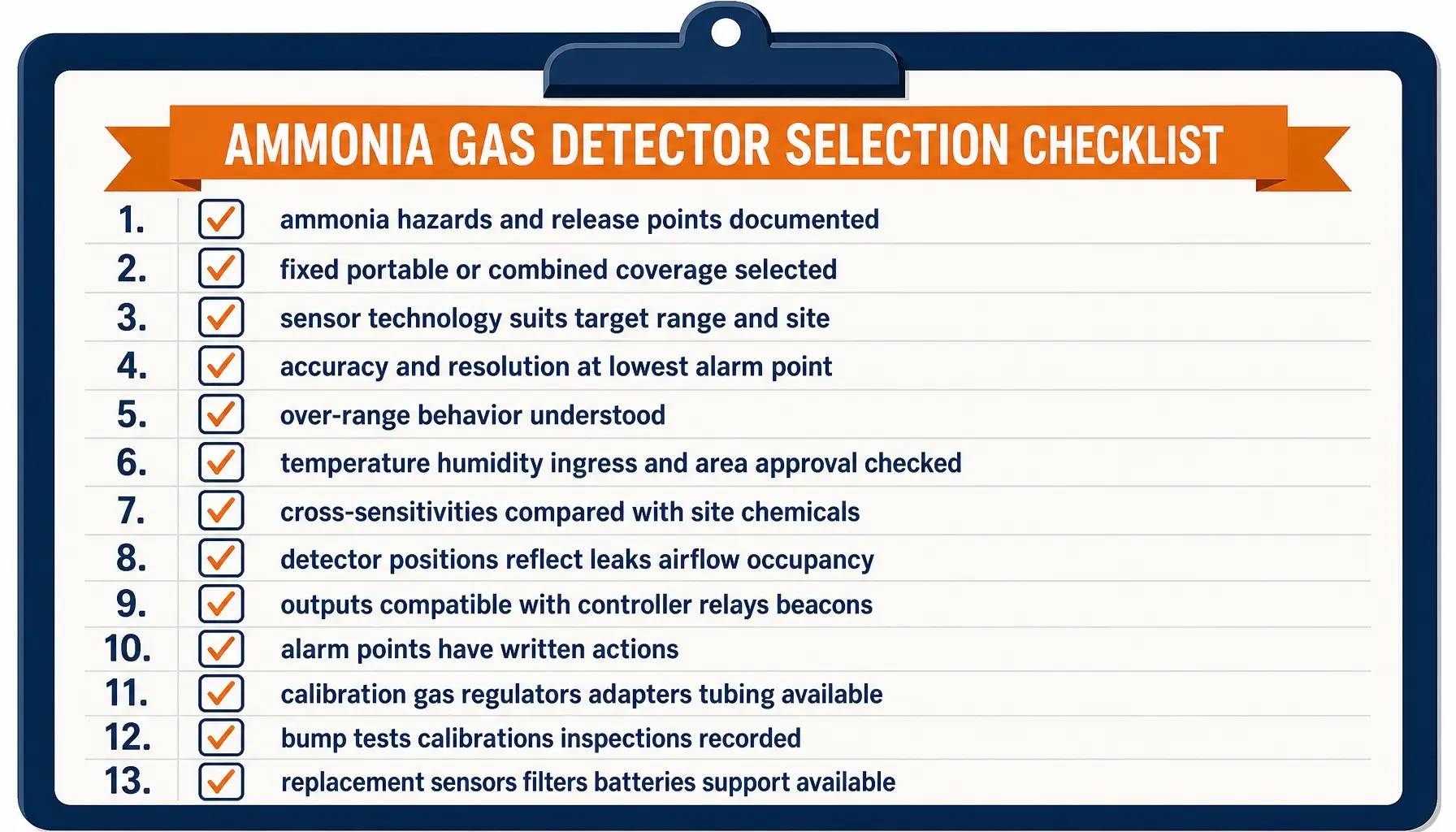
Elenco di controllo per la selezione del rilevatore di gas di ammoniaca
- ☐ I pericoli dell'ammoniaca e i punti di rilascio credibili sono documentati.
- ☐ Risolto, portatile, o è stata selezionata la copertura combinata.
- ☐ La tecnologia dei sensori è adatta alla portata target e alle condizioni del sito.
- ☐ Precisione e risoluzione sono adeguate al punto di allarme più basso.
- ☐ Comportamento fuori range e istruzioni di recupero comprese.
- ☐ Temperatura di esercizio, umidità, protezione dall'ingresso, e l'approvazione dell'area sono state controllate.
- ☐ Le sensibilità incrociate sono state confrontate con le sostanze chimiche utilizzate in loco.
- ☐ Le posizioni dei rilevatori riflettono le fonti di perdita, flusso d'aria, occupazione, e accesso per manutenzione.
- ☐ Le uscite sono compatibili con il controller, PLC, relè, fari, e sistema di ventilazione.
- ☐ I punti di allarme hanno azioni scritte e procedure di ripristino autorizzate.
- ☐ Gas di calibrazione, regolatori, adattatori, e sono disponibili tubi compatibili.
- ☐ Test di funzionalità, calibrazioni, ispezioni, e verranno registrati i test del sistema di allarme.
- ☐ Sensori sostitutivi, filtri, batterie, e il supporto tecnico sono disponibili.
Gli Stati Uniti. EPA manuale di prevenzione e risposta agli incidenti per gli operatori della refrigerazione ad ammoniaca è un riferimento utile quando il programma del rilevatore fa parte di un piano più ampio di prevenzione del rilascio e di risposta alle emergenze.
Domande frequenti
Che tipo di rilevatore rileva l'ammoniaca?
I sensori elettrochimici sono comuni per il monitoraggio portatile e fisso dell'ammoniaca a basso numero di ppm. Vengono utilizzate anche tecnologie dei semiconduttori e ottiche. Scegli per intervallo, livello di allarme, temperatura, gas interferenti, tempo di risposta, ed esigenze di manutenzione.
Dove dovrebbe essere installato un rilevatore di ammoniaca?
Installalo dove è probabile che l'ammoniaca proveniente da una perdita credibile raggiunga il sensore e dove la misurazione supporti una risposta definita. Probabili punti di perdita, temperatura di rilascio, flusso d'aria, disposizione della stanza, aree occupate, percorsi di ventilazione, e l'accesso per la manutenzione influiscono tutti sulla posizione finale.
L'ammoniaca sale o scende??
Il vapore caldo di ammoniaca è più leggero dell'aria in condizioni standard, ma un rilascio freddo può viaggiare con aria fredda o aerosol prima del riscaldamento. Il posizionamento del rilevatore dovrebbe modellare il modello di rilascio e ventilazione effettivo piuttosto che fare affidamento solo sulla densità del gas.
Un monitor a quattro gas può rilevare l'ammoniaca??
Solo se contiene un sensore di ammoniaca. La configurazione comune a quattro gas è l'ossigeno, gas combustibile, monossido di carbonio, e idrogeno solforato. Controllare i canali installati anziché dare per scontato che un'etichetta multigas includa NH3.
Con quale frequenza deve essere calibrato un rilevatore di ammoniaca?
Utilizzare l'intervallo indicato dal produttore del rilevatore, il programma scritto del sito, requisiti applicabili, e la cronologia dei test dello strumento. Calibrare prima dopo un controllo fallito, sostituzione del sensore, esposizione fuori range, riparazione, lunga conservazione, o sospetto danno.
Quale ppm dovrebbe attivare un allarme ammoniaca?
Non esiste un valore unico per ogni rilevatore e struttura. I punti di allarme dipendono dallo scopo del canale, criteri di esposizione applicabili, codici, rischi di processo, logica di ventilazione o di spegnimento, e le azioni che i lavoratori devono intraprendere. Una persona qualificata dovrebbe approvarli e documentarli.
Una regola pratica per l'acquisto
Non iniziare con la gamma del catalogo. Inizia con la decisione che la lettura deve supportare. Un monitor dell'esposizione personale, un rilevatore di allarme per la sala macchine, e uno strumento di risposta alle emergenze può rilevare l'ammoniaca, ma non risolvono lo stesso problema.
Annotare l'allarme target, ambiente previsto, punti di rilascio, output richiesti, e metodo di prova prima di richiedere un preventivo. Questa breve specifica rende più semplice confrontare i sensori in termini utili e più difficile acquistare un rilevatore che sembra adatto sulla carta ma non può svolgere il lavoro previsto.
Hai bisogno di aiuto per abbinare un rilevatore di ammoniaca alla tua gamma, temperatura, metodo di campionamento, e requisiti di output?
Discuti la tua applicazione di rilevamento NH3 con Otywell.

WeChat
Scansiona il codice QR con WeChat