 Henan Otywell Electronic Technology Co., Ltd

Hydrogen Cyanide Gas Detectors Across Industrial Worksites
A hydrogen cyanide gas detector may be needed at a plating bath, a cyanide-handling point in a mine, a fumigation job or a chemical process. Those settings share a target gas, not an equipment layout. A useful purchase request identifies the task that could put HCN in workplace air, the people or locations to be monitored, and where an alarm must be received.
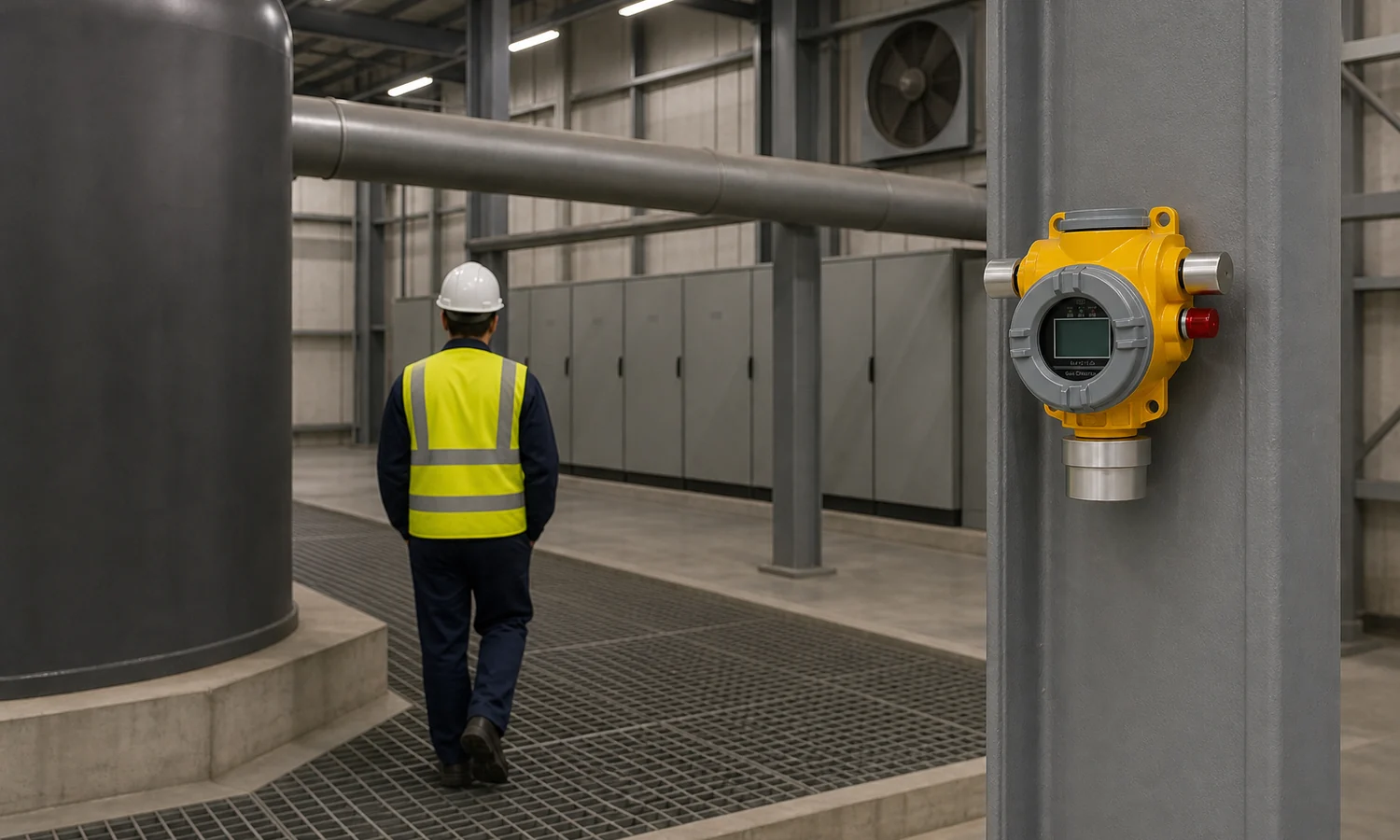
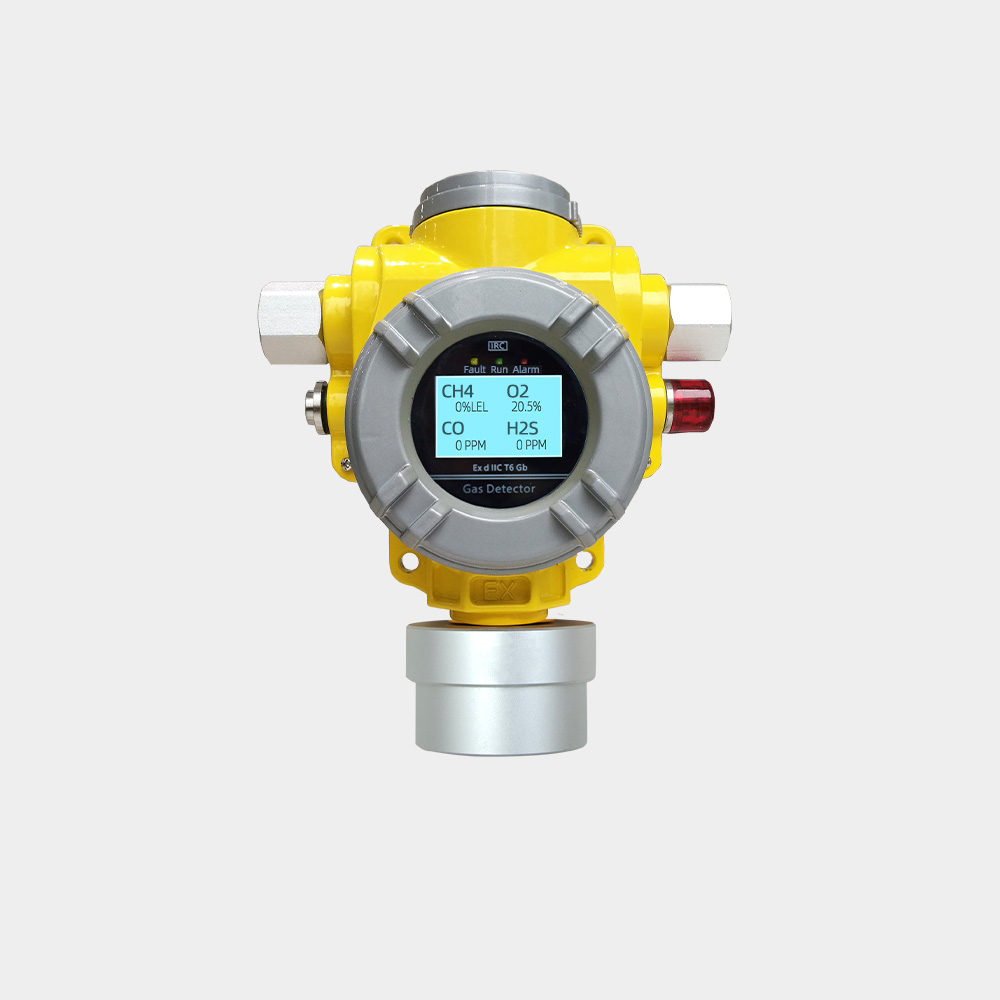
Equipment answer: Use the exposure task to choose the format. Assess a fixed HCN-configured point where a defined location needs continuing observation; specify a portable HCN channel where the measurement must follow a worker. For a remote check, verify the pump, probe and line as one sampling path. In every case, order the actual HCN channel, range and alarm route rather than assuming they come with a model name.
The NIOSH overview of hydrogen cyanide identifies fumigation, electroplating, mining and chemical synthesis among relevant work. The examples below use these industries to show how the monitoring question changes. They do not imply that each site needs the same number of devices or the same detector positions.
Start With the Gas Channel, Not the Housing
Hydrogen cyanide is HCN. It is not hydrogen sulfide (H2S), and a detector set up for one gas cannot be assumed to measure the other. Even when a product family lists HCN among its available gases, the individual device must be ordered with that channel. The product name, number of channels and enclosure style do not prove what is installed inside.
That distinction is particularly important in a mixed-gas order. A buyer may ask for a four-gas instrument and receive a familiar set of channels that does not include HCN. Put “hydrogen cyanide (HCN), ppm” on the channel schedule. Ask the supplier to list every other required gas separately, with the selected range and the display designation. The HCN entry should also appear on the configuration and acceptance documents.
HCN exposure is a distinct occupational hazard, including possible absorption through skin. The NIOSH Pocket Guide for hydrogen cyanide identifies the substance, exposure routes and occupational reference values. Those reference values describe exposure criteria; they are not a universal set of detector alarm points for every site.
Four Work Settings, Four Different Starting Questions
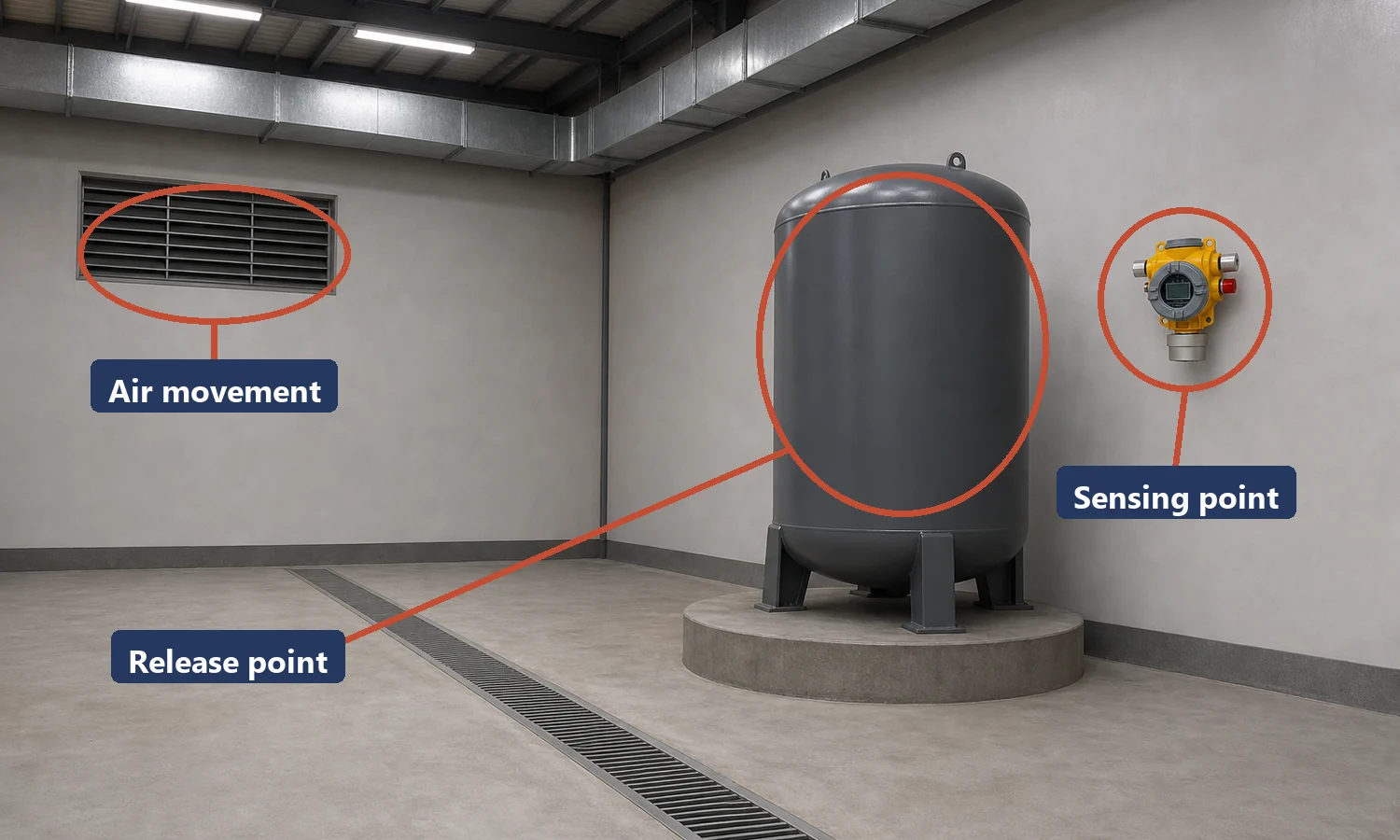
Begin with a process sketch and the ordinary work route, not a detector count. Ask where HCN could enter the air, where people stand or move, whether an area remains occupied, and how the air is moved by ventilation or the process. A fixed point, a worn monitor and a remote sampling setup answer different questions. The following matrix is a planning aid, not a placement drawing.
Match the Monitoring Job to the Setting
| Setting and task to examine | Equipment question | What the supplier needs to know |
|---|---|---|
| Electroplating: bath operation, chemical movement and workers travelling along the line | Which defined location needs continuous monitoring, and which worker needs a carried HCN channel? | Bath and exhaust locations, operator route, proposed alarm receiver |
| Mining or cyanide processing: storage, handling or a process point with personnel moving between areas | Is the requirement a fixed point, a personal monitor, or both for different tasks? | Process sketch, work route, occupied positions and alarm destination |
| Fumigation: changing work positions and a defined treatment area | Where is continuous area information required, and where must the measurement travel with a person? | Work sequence, boundary and sampling position; confirm equipment and procedure for the specific operation |
| Chemical manufacture or synthesis: a vessel, transfer connection or maintenance opening | Can an inlet be placed at the intended point, or is a verified remote sample path needed? | Release task, access, ventilation and proposed probe or fixed-point arrangement |
This comparison is about tasks, not a claim that one format is inherently better. A fixed detector cannot follow a worker around the site. A personal monitor cannot keep watching an unattended point after the worker leaves. A remote sampling arrangement must move the air to the instrument; a probe on a quotation is not enough unless the complete assembly is specified.
Electroplating: Trace One Job From Bath to Worker Route
Take a cyanide plating line as a detailed example. The first question is not how many detectors fit in the room. It is which work activity calls for HCN information at a fixed location, and which activity takes a worker away from that location. Mark the bath, chemical-handling position, operator position, maintenance access and local exhaust on one drawing. Then trace an ordinary shift: work at the bath, movement to another station and any checks near an enclosure.
A proposed fixed point should identify the bath or transfer position it is intended to cover and the air expected to reach its inlet. NIOSH’s electroplating ventilation survey discusses local exhaust at cyanide plating baths, including a concern about inadvertent acid addition. This makes the bath and ventilation arrangement relevant to the monitoring discussion; it does not establish a standard detector height or a universal number of points.
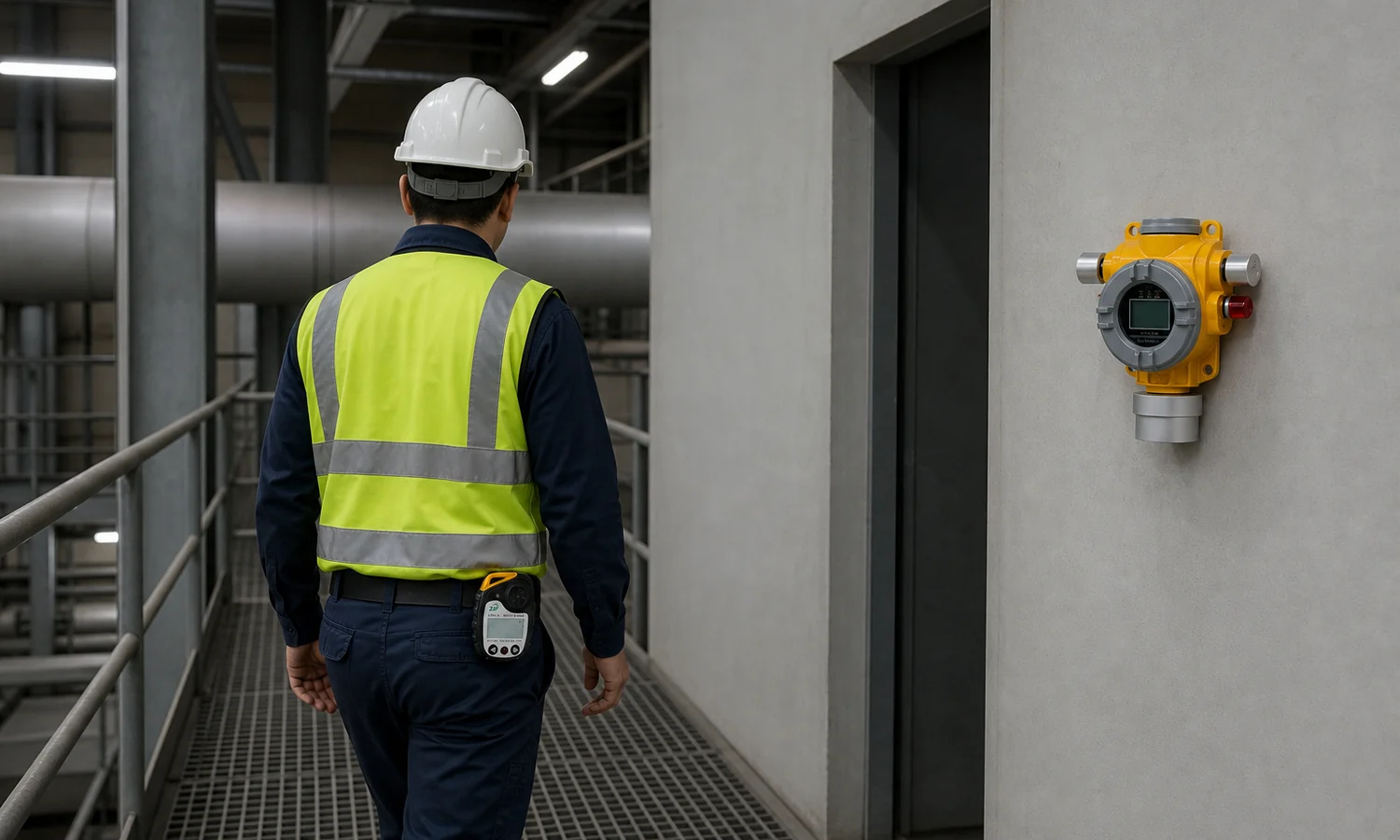
The worker route raises a separate decision. If the intended measurement must accompany the operator or maintenance person beyond that fixed position, specify a portable instrument with an installed HCN channel. Do not count the fixed point as coverage for every place the worker visits, and do not count a worn monitor as continuous observation of the bath after the worker leaves.
Mining, Fumigation and Chemical Processing: Change the Questions
A mine handling cyanide may need to examine storage, mixing or processing tasks and the movement of people between them. A fumigation operation has a different sequence: the treatment area, boundary and workers’ positions can change over the job. In chemical manufacturing, a vessel or transfer connection may be the defined process point, while maintenance may bring a person to a different opening. These are reasons to map the task, not claims that the same equipment package suits all three.
For each setting, write down the specific point to observe, whether people move away from it, and who will respond to an alarm. That short exercise leads to a defensible fixed-versus-portable comparison. It also reveals when a remote sample is being requested without a specified probe, line, filter or flow check.
Complete the Fixed Alarm Path
Then trace the entire alarm route. Does the detector indicate locally? Is its signal wired or transmitted to a controller? What happens on loss of signal or power? Where will the warning be seen or heard during occupied and unoccupied periods? The detector and receiving equipment should be discussed as one purchase, even if they appear as separate line items.
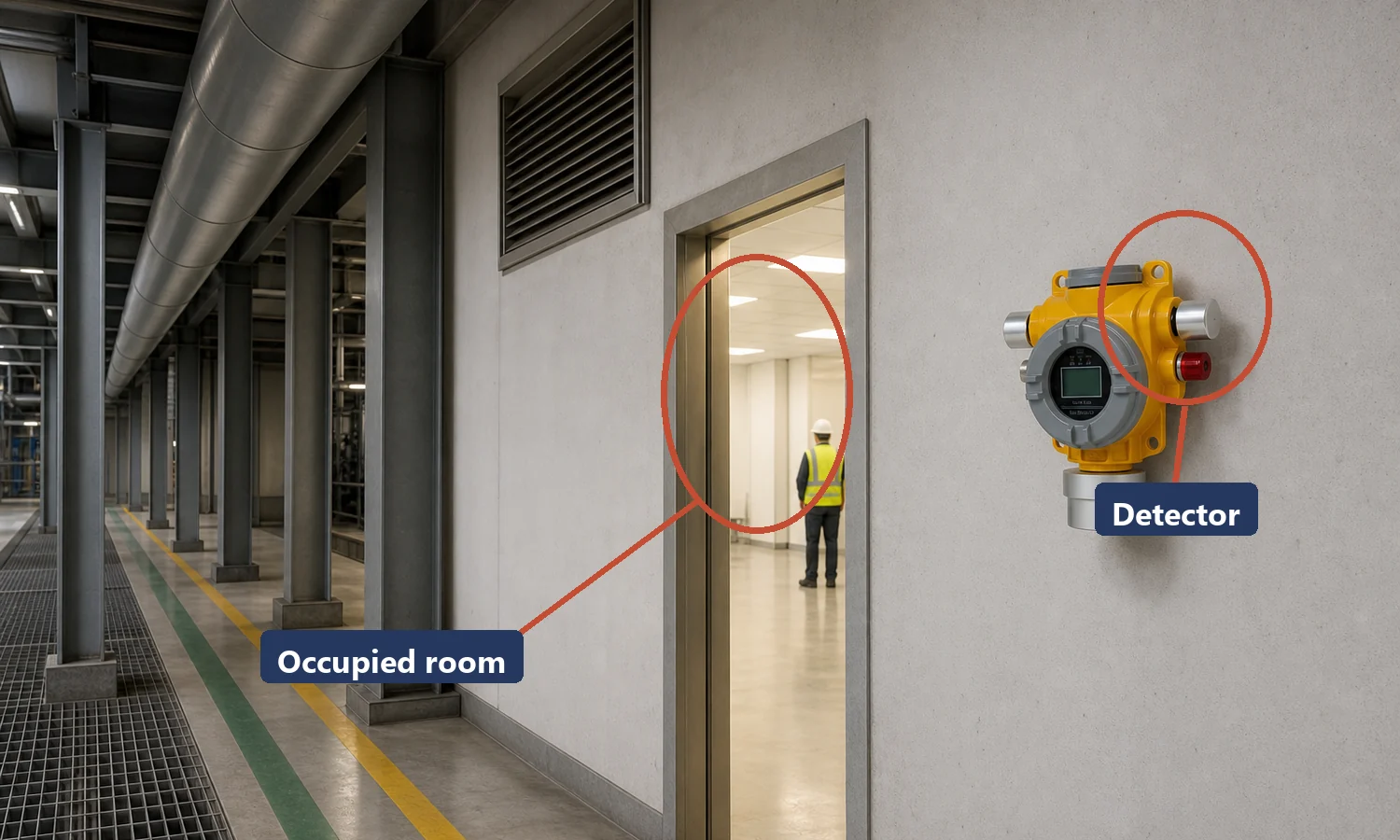
For the instrument itself, request the selected HCN range, output option, power requirement, mounting arrangement and any required sampling accessories in writing. A gas-range table is a list of available configurations, not proof that a delivered device contains the HCN channel.
Otywell Equipment Formats for an HCN Configuration
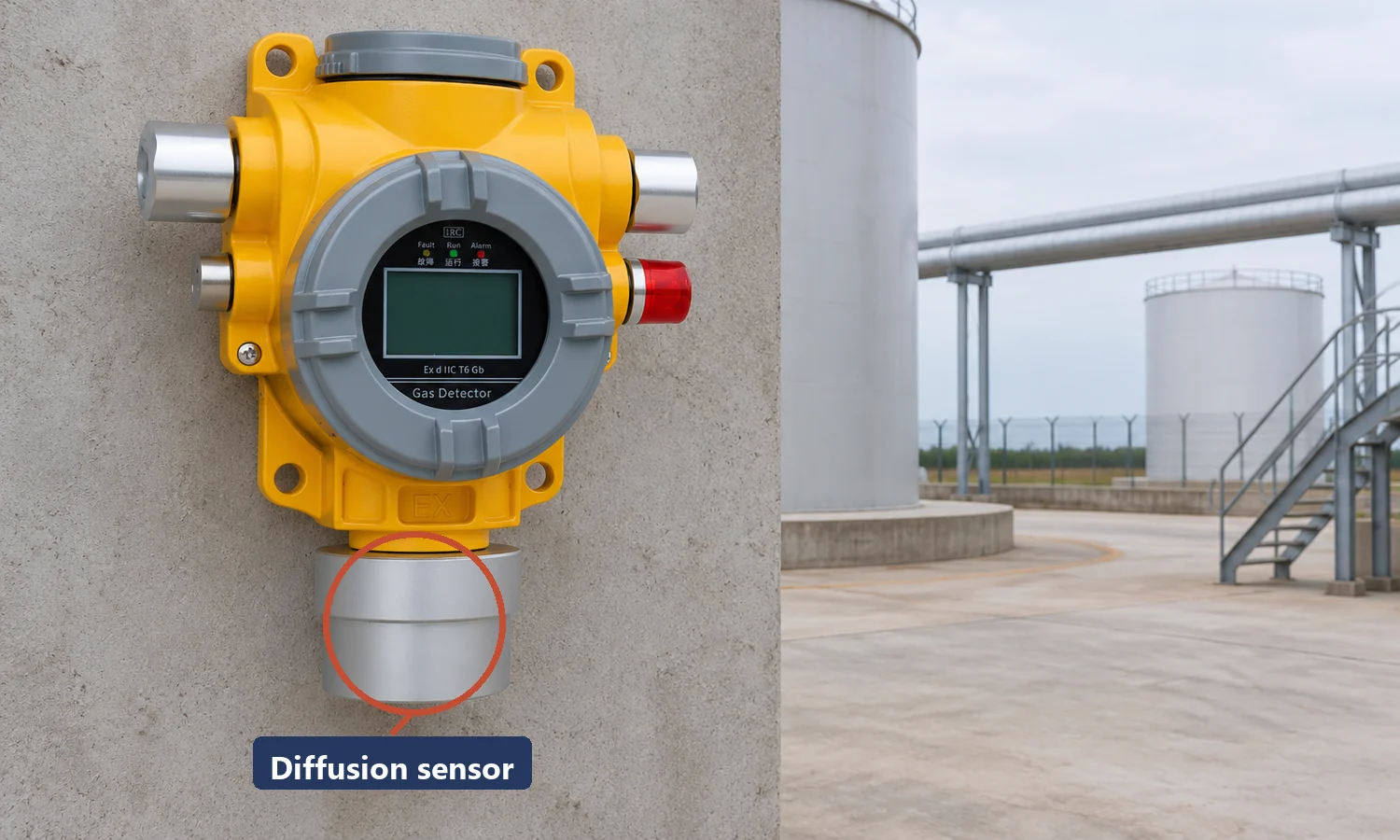
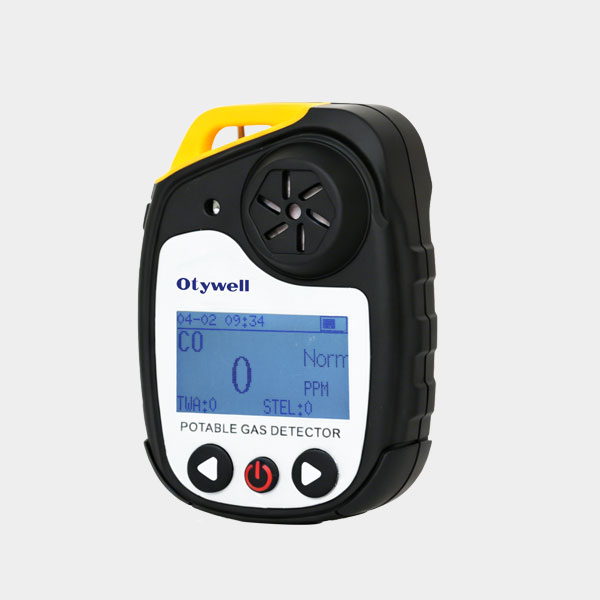
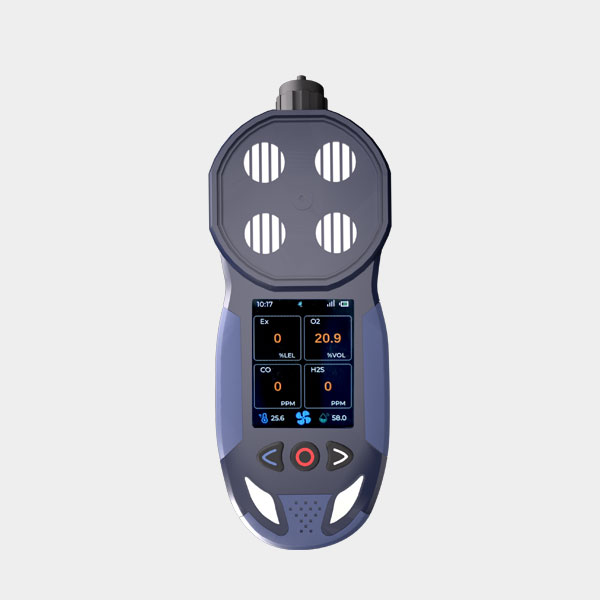
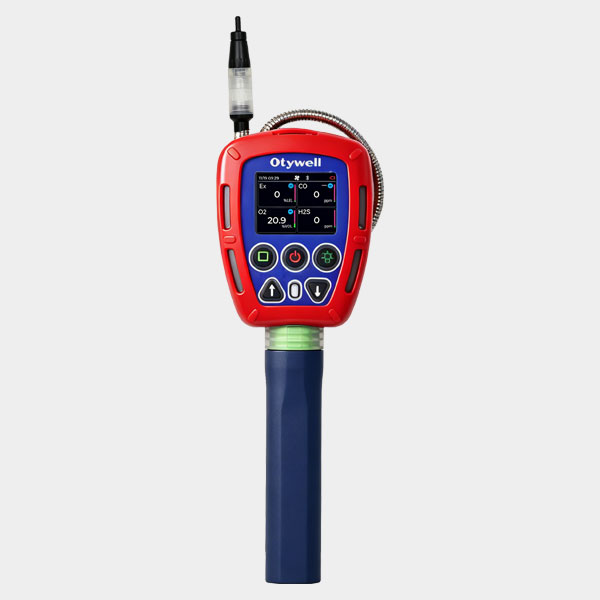
Otywell detectors can be customized with a sensor for the target gas. The practical distinction here is the instrument’s job: fixed monitoring, a worn diffusion monitor, or portable pump sampling. Specify an HCN sensor in the order for each model below; a product photograph or a general gas list does not establish that a delivered unit already contains one. Confirm the selected range, channel combination, sampling accessories and output in the quotation.
Worker-Carried and Remote Sampling Are Different Tasks
Whether the person is moving along a plating line, through a processing area or around a chemical plant, a portable request must say who carries the unit, where the inlet is worn, how its alarm will be noticed and whether other gas channels are required. Do not substitute a standard four-gas set without checking the installed channel list.
For a diffusion unit, the inlet has to be exposed to the air intended for measurement. A check at a vessel opening, covered bath or recess is different: the probe tip may need to reach the sample position while the worker remains elsewhere. Specify the proposed probe, line length and any filter, then confirm the flow indication and response of the assembled path. Air drawn from a probe tip does not appear instantly on the display. Ask for instructions covering the exact configuration supplied.
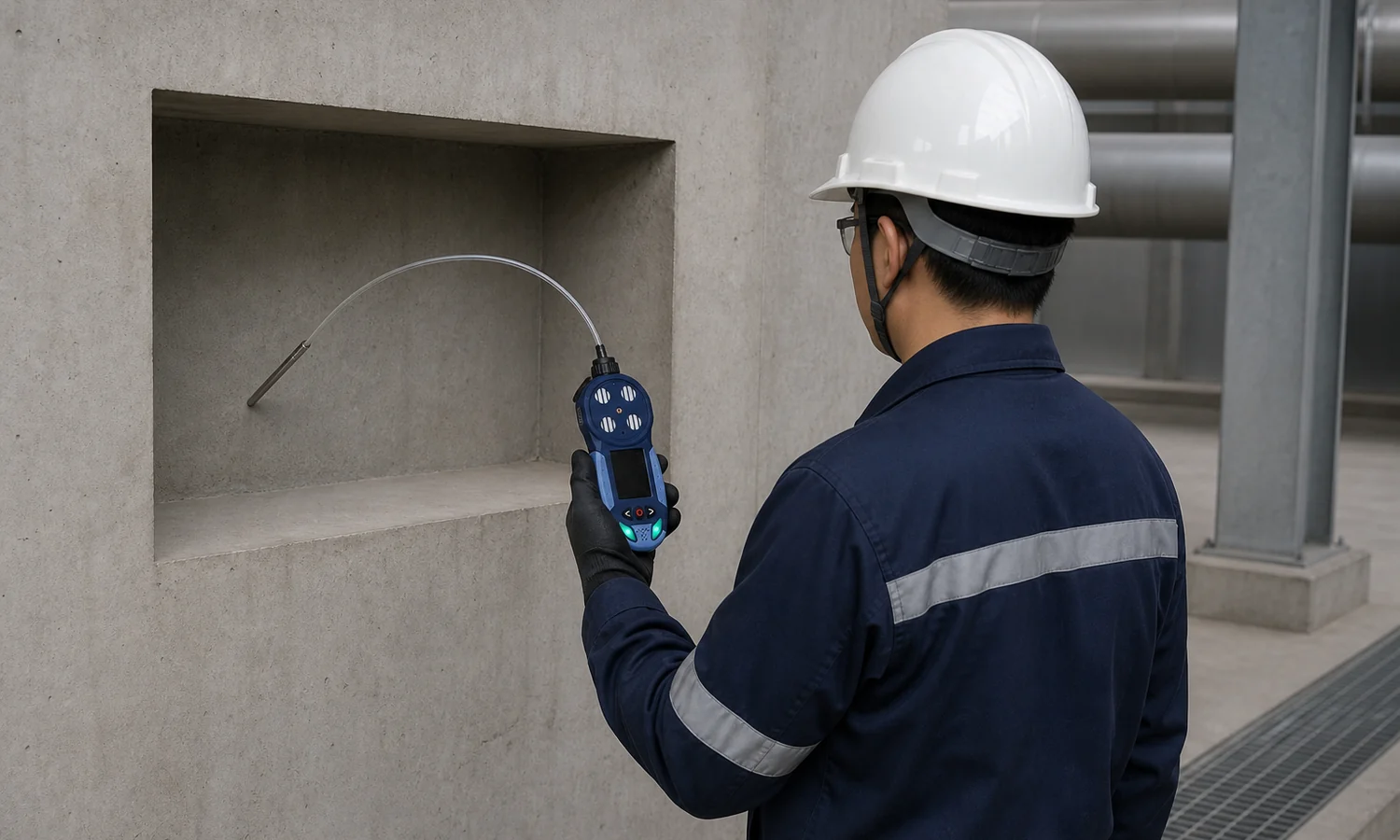
Where the site needs both fixed and portable detection, keep their purposes distinct in the equipment schedule. This avoids counting a carried monitor as permanent coverage of a point, or treating a fixed alarm as protection for a worker away from that point.
Review the System, Not Only the Detector
A fixed-point proposal needs more than a sensor location. Ask what happens to the warning when the area is unoccupied, whether a fault reaches the same people as an alarm, and how the receiving device is powered and checked. A portable proposal needs its own wearing, charging and checking arrangements. These questions apply across industries, but their answers belong to the individual worksite.
Range, Alarms and Maintenance: Read the Details Together
Quote comparisons can be misleading when one line lists a detector and another lists a complete operating package. Ask each supplier to state the installed gas channel and range, resolution, local and remote alarm capabilities, power or battery arrangement, accessories, calibration requirements and replacement items. If the fixed system sends data to another device, document the receiving hardware and the fault behaviour as well.
Do not copy a number from an exposure-limit table into every detector as an alarm setting. Occupational limits, short-term limits and instantaneous alarms describe different things. For an HCN installation, the selected channel, operating procedure and alarm logic must be evaluated together.
A practical acceptance check: Match the instrument label and configuration record to the ordered HCN range; verify the displayed channel, alarm route and fault indication; and confirm the supplier’s specified test and calibration materials for the delivered assembly.
Send a Purchase Request That Can Be Quoted Accurately
- Name the target substance as hydrogen cyanide (HCN) and list other required gases separately.
- Describe each task: fixed point, worker-carried monitoring or remote sampling.
- Give the process location, proposed measurement position and number of points or users.
- State whether the fixed signal must reach a controller, building system or occupied workstation.
- Request the installed HCN channel, selected range, alarm functions and configuration record.
- Include the probe, line, filters, power supply or receiver that the proposed solution needs.
- Ask for operating, checking and calibration information for the actual equipment package.
The list gives a supplier enough information to distinguish a detector housing from an operable monitoring arrangement. It also makes competing quotations easier to compare: omissions become visible before installation rather than during commissioning.
Specify Your HCN Monitoring Task
For an Otywell equipment enquiry, send the target gas, number of monitoring points, fixed or portable duty, sampling distance if any, and required alarm destination. Request a quotation that names the installed HCN configuration and the accessories included.
FAQ: Hydrogen Cyanide Gas Detector Selection
Does a four-gas detector automatically measure HCN?
No. Four-gas describes a channel count, not the gases fitted. Require hydrogen cyanide (HCN) to appear on the ordered channel schedule and the delivered configuration record.
Can an H2S detector be used for hydrogen cyanide?
Do not assume so. H2S and HCN are different target gases. Ask for an installed HCN channel with a specified HCN range.
When is fixed HCN monitoring useful?
It fits a defined location that needs continuing observation. The purchase must include the detector position and the path by which an alarm or fault reaches the people who act on it.
When should a portable detector be considered instead?
Consider portable equipment when the measurement must accompany a worker or a moving inspection task. Verify HCN configuration and how the worker will carry and notice the instrument.
What changes when a probe and sampling line are used?
The probe, tubing, filters and flow condition become part of the measurement path. Specify and check the complete assembly rather than treating the detector alone as the whole system.
Is the range shown in a product table the range on every shipped unit?
No. A table may describe available configurations. The quotation and acceptance record should identify the range selected for the individual HCN unit.
Can an occupational exposure value be copied directly into an alarm setting?
No. An exposure value and a detector’s immediate alarm serve different purposes. The site must determine the alarm logic for its monitoring task and document the chosen setting.

WeChat
Scan the QR Code with wechat