 Henan Ottywell Electronic Technology Co., Ltd

Un détecteur de fuite de propane pour une installation commerciale de GPL doit être sélectionné en fonction de l'approvisionnement réel en gaz et du travail qu'il doit effectuer.. Finding a leaking connection during maintenance, monitoring an equipment room and providing an input to a shutdown system each require a different purchasing specification.
The first question for a supplier is straightforward: what documented performance does the proposed configuration have for propane? A general statement that an instrument detects combustible gases leaves the target gas, calibration basis and operating limitations unresolved.
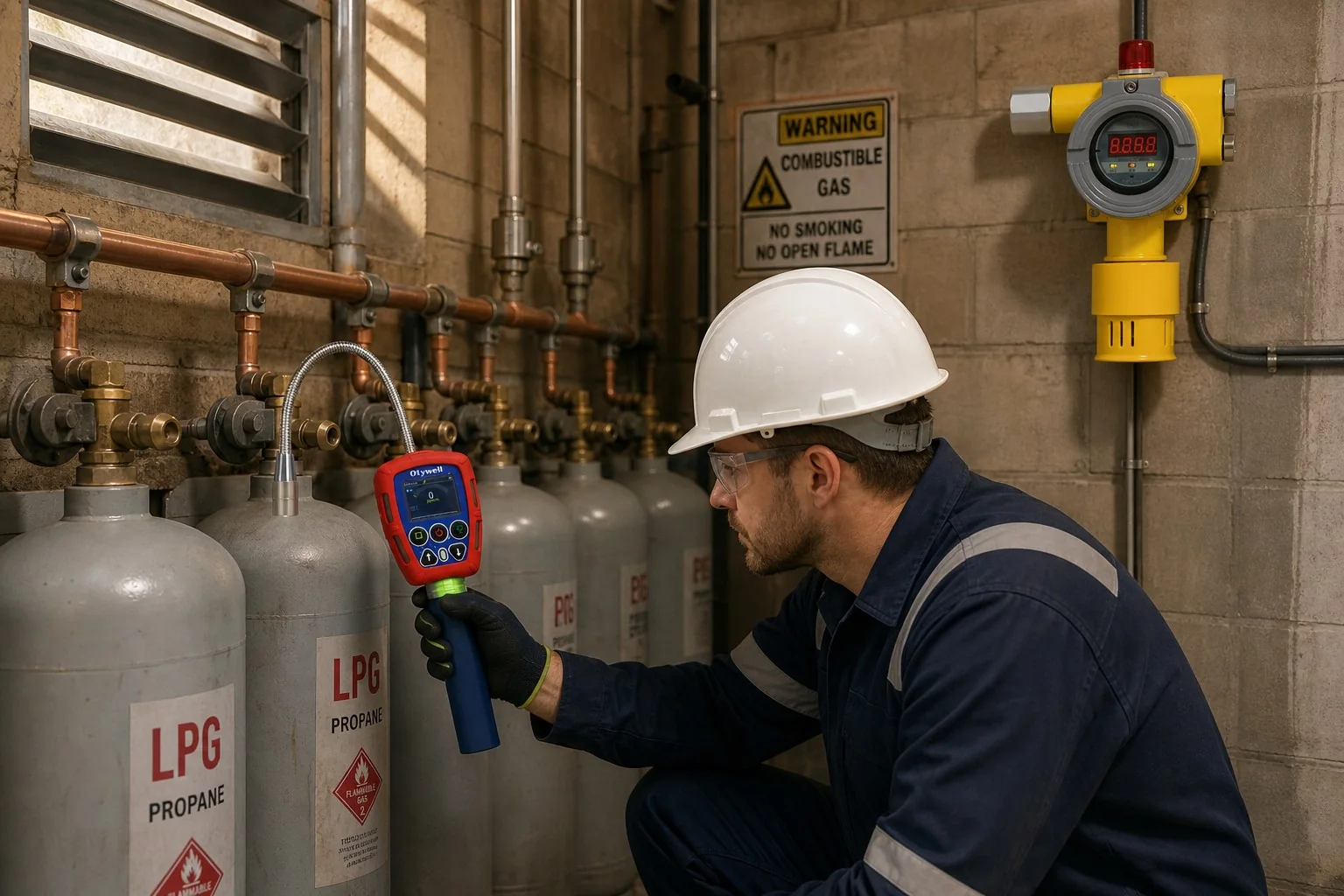
Confirm What Is in the LPG Supply
Propane, C3H8, is a specific chemical. Le GPL est une description de fourniture qui peut faire référence au propane, du butane ou un mélange. Obtenez la fiche de données de sécurité et les spécifications du produit actuelles du fournisseur de gaz au lieu de supposer que chaque installation GPL utilise la même composition..
Envoyez ces documents avec la demande de renseignements sur le détecteur. Si l'offre peut changer, décrire la variation attendue et demander comment elle affecte le capteur proposé, calibrage et interprétation de la lecture affichée. Un devis doit indiquer clairement si les performances sont spécifiées pour le propane seul ou pour le mélange indiqué..
L'entrée du NIOSH Pocket Guide pour le propane identifie le propane comme un gaz inflammable avec une densité relative de gaz de 1.55 par rapport à l'air. Le propane pur est inodore; les réserves de carburant contiennent souvent un odorant ajouté. Smell is therefore unsuitable as a measurement of concentration or confirmation that an area is safe.
For this guide, the purchasing context is a commercial fuel-gas installation. Refrigeration service involving R290 has its own equipment and work requirements; the chemical name alone does not make the same instrument suitable for every task.
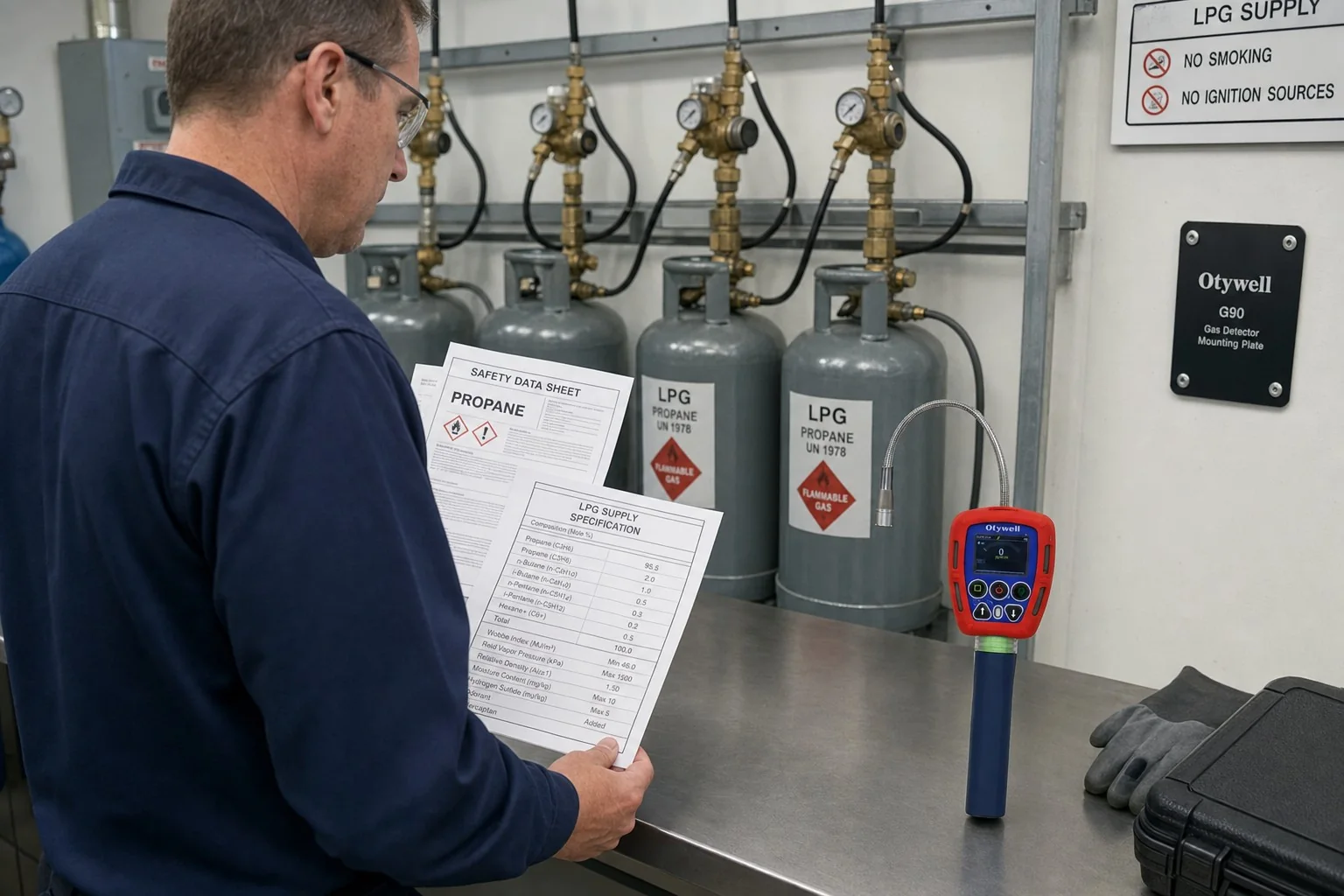
Match the Detector to the Commercial LPG Task
Describe where the reading will be taken and what decision follows it. This helps separate a maintenance tool from the permanent monitoring equipment a facility may need.
| Commercial task | Equipment role to evaluate | Information to include in the enquiry |
|---|---|---|
| Inspect accessible connections during planned maintenance | Portable leak-finding instrument with documented propane response | Connection access, probe arrangement, required indication or measurement, and area classification |
| Monitor an equipment room while the installation operates | Fixed gas detection designed for the room | Gas supply, layout, ventilation, operating schedule and alarm destination |
| Monitor a defined part of an LPG supply facility | Site-specific fixed or portable arrangement | Release scenarios, weather exposure, sampling locations and responsible operators |
| Connect detection to ventilation or shutdown functions | Detector, controller and interfaces reviewed as a system | Required actions, output compatibility, fault handling and acceptance tests |
A portable instrument carried away at the end of an inspection does not provide ongoing monitoring of that location. Equally, a fixed detector’s reading describes conditions at its sensing point, not every connection in the installation. Put both requirements on the project specification if both are needed.
For background on equipment types and units, refer to our guide de sélection des détecteurs de gaz combustibles. The remaining checks here focus on the propane configuration and the commercial installation.
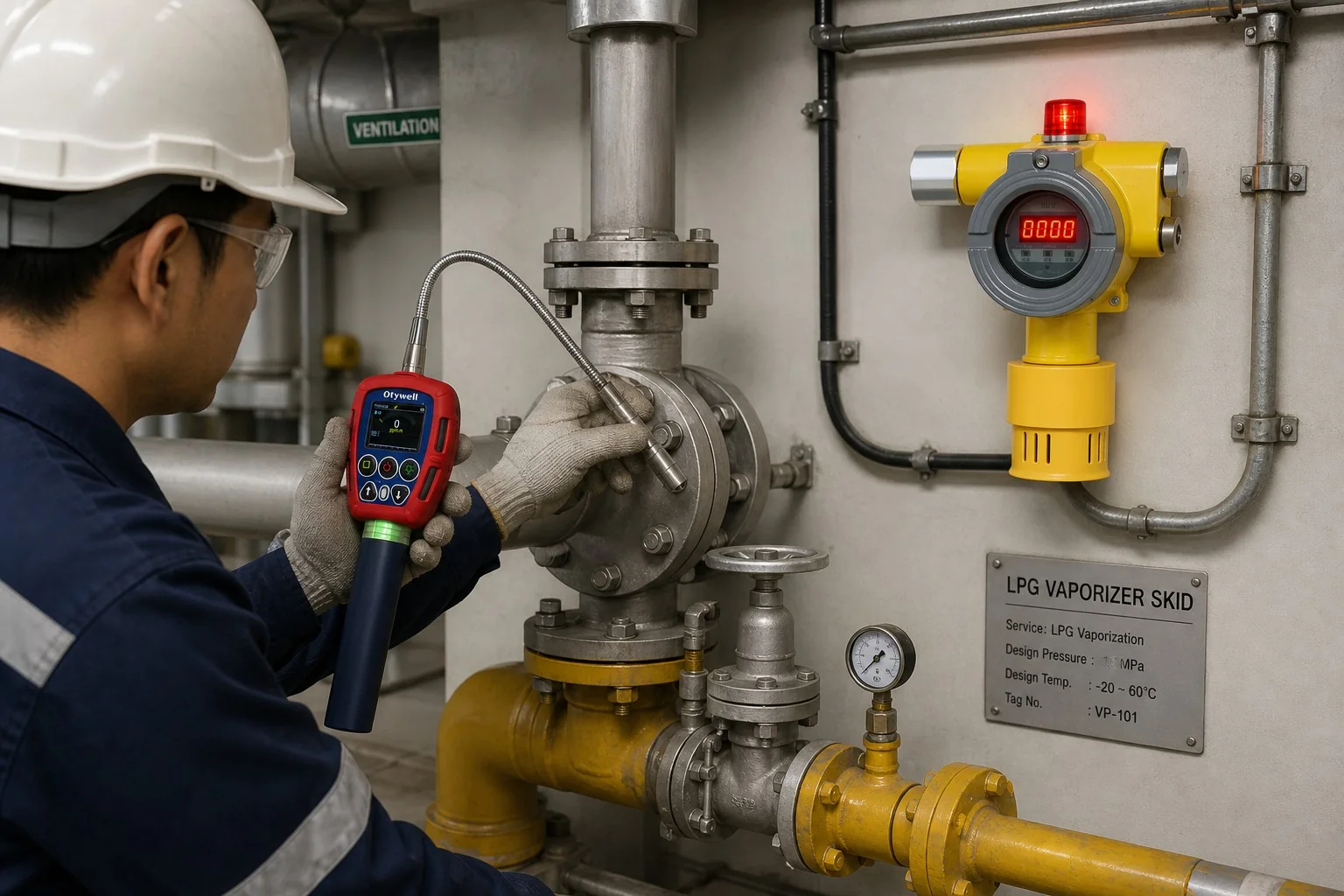
Verify Propane Response Before Trusting the Reading
A response to propane and an accurate propane concentration reading are different claims. Ask the supplier to identify what the quoted instrument actually provides: a relative leak indication, a propane-scaled reading, or a reading interpreted through a manufacturer-approved procedure.
Ask Which Gas the Display Represents
Record the target gas, measurement units, range and calibration gas together. If a detector is calibrated with methane, request the manufacturer’s instructions for its use with propane. Do not apply a correction factor from another detector, sensor family or internet table.
For an instrument with selectable gases, ask whether the selection changes the measurement calculation, the alarm configuration or only the label shown to the operator. The answer should be in the model documentation or supplied in writing.
Keep the Sensor Configuration Identifiable
Ask for the sensor part number or configuration code on the quotation. A shared product-family table may include options that are absent from the unit being offered. This matters especially when the same enclosure is sold for different combustible gases or measurement tasks.
Request propane-specific performance information, including accuracy where a quantitative reading is required, response conditions and relevant interference limits. For a sampled system, include the proposed probe, tubing and filters in that review. The acceptance criterion should describe the complete assembly the buyer will receive.
A useful supplier response names the configuration and refers to supporting documents. “Suitable for LPG” is an opening statement; the procurement record still needs the gas composition and operating conditions to which that statement applies.
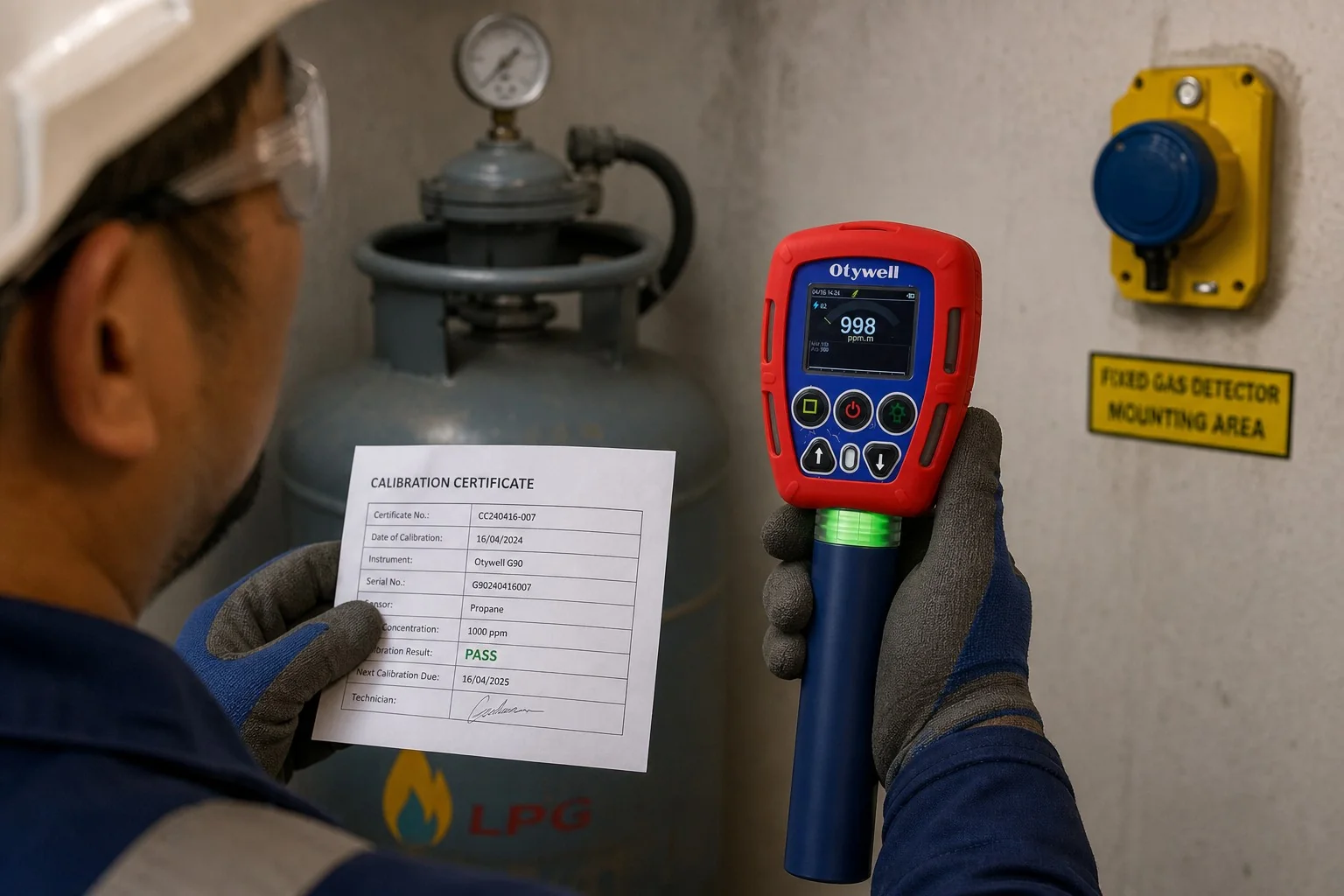
Discuss a Gas Detection Configuration with Otywell
These product families are starting points for a configuration enquiry. Propane-specific suitability, range and calibration details have not been confirmed here; obtain written confirmation before selecting either for an LPG installation.
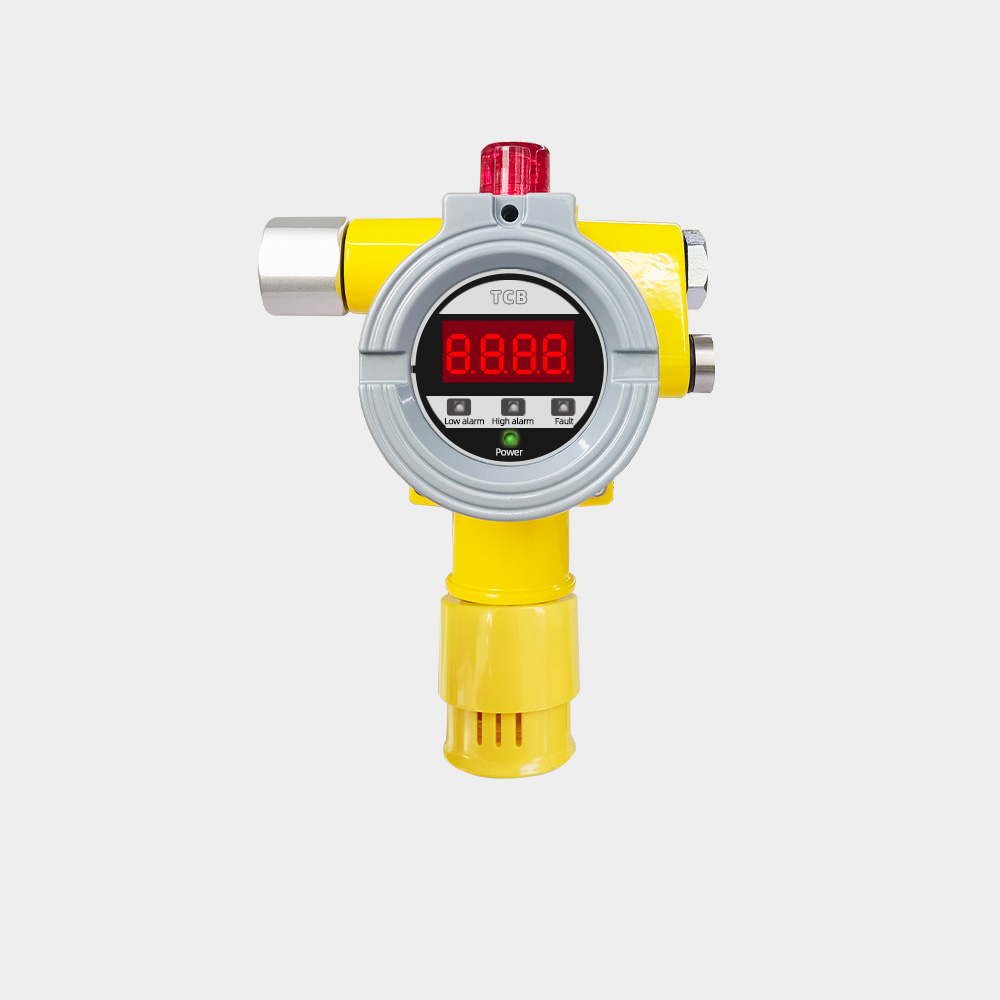
TCB3 Fixed Gas Detector
The product page lists liquefied-gas stations among its applications. Ask which configuration, if any, meets your propane monitoring and system requirements.
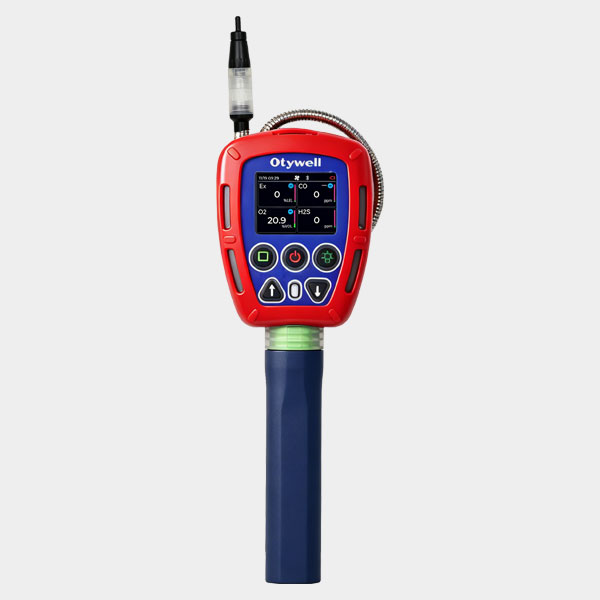
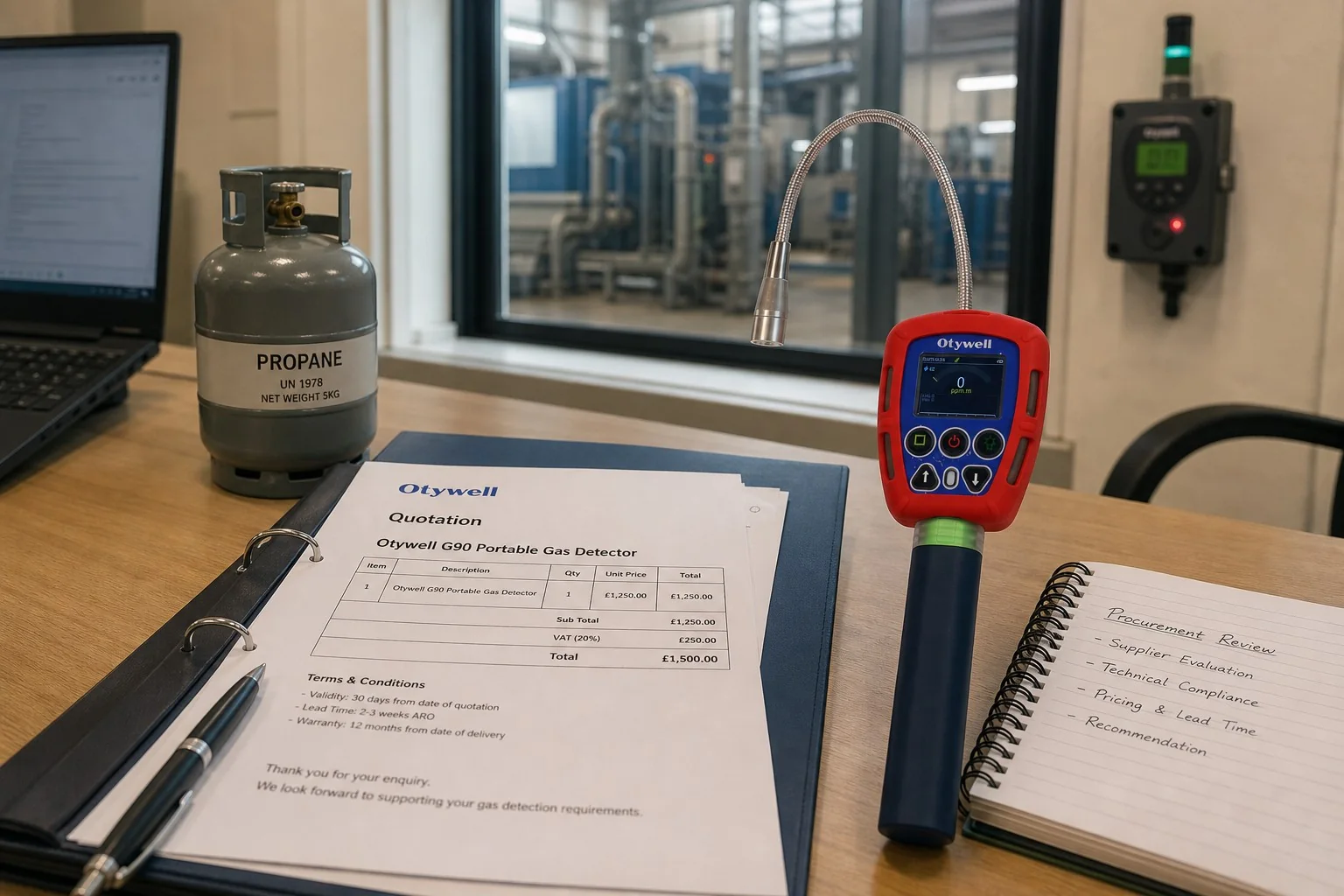
Détecteur de gaz portatif G90
Ask whether a combustible-gas probe configuration is available with documented propane performance. The family’s methane-specific modes do not establish propane suitability.
Plan Fixed Detection Around the Actual Room
Propane’s density makes low areas relevant to a placement review, but density alone cannot specify a detector layout. A qualified designer should consider likely release points, ventilation, obstructions and the conditions under which gas could reach the sensor.
The UK HSE’s guidance on industrial flammable gas detectors discusses selection, positioning and maintenance as parts of one installation. It is useful engineering background, with a defined scope; the requirements of the project’s country and site must be checked separately.
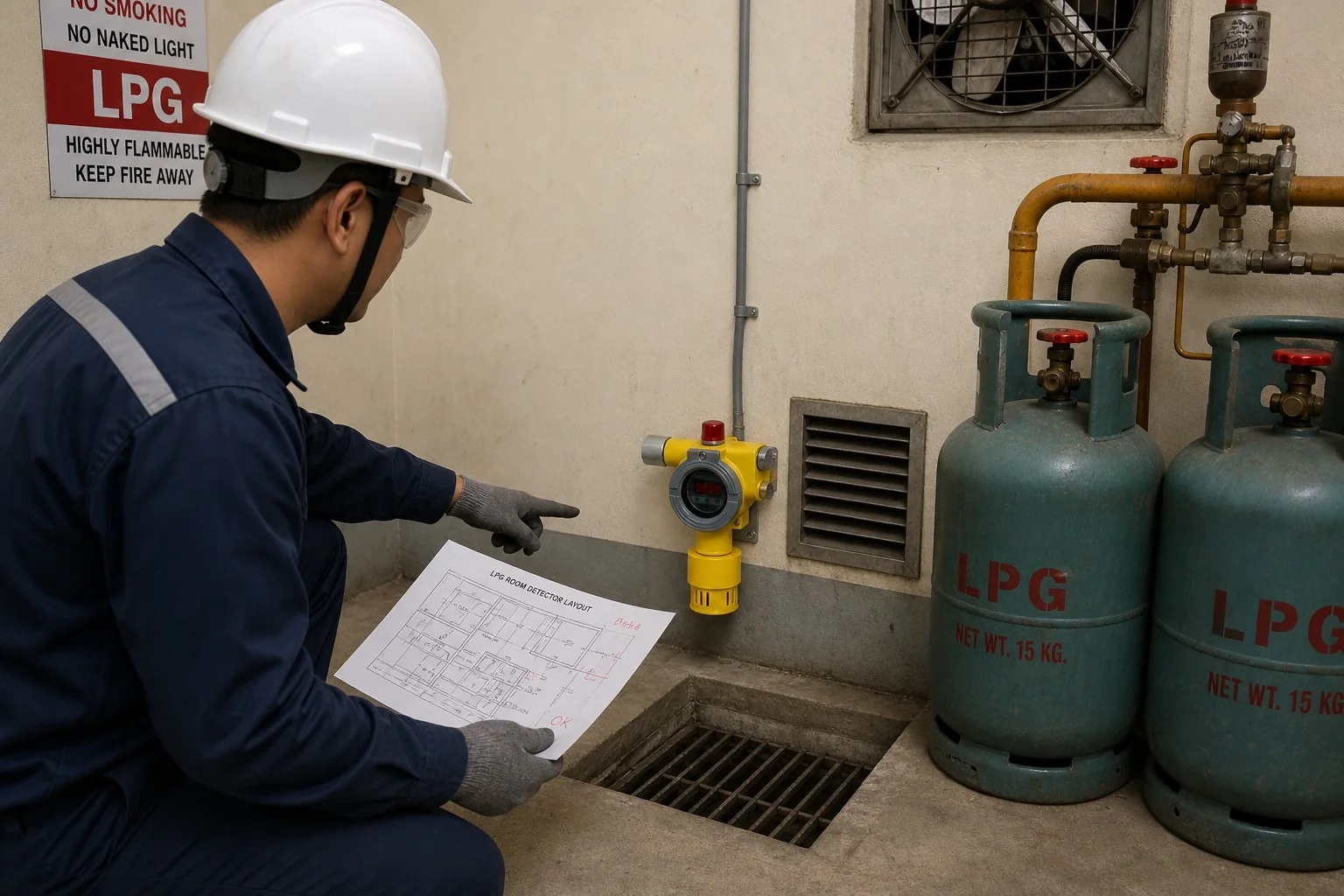
For the design enquiry, provide a marked-up plan showing supply equipment, accessible connections, portes, air inlets and exhausts. Note pits, trenches and other spaces that could affect the assessment. Describe changes in normal operation, such as ventilation that runs only when equipment is active.
Ask the designer to record the reason for each proposed sensing position and how it can be inspected and serviced. Avoid treating a generic mounting-height diagram as an approved layout for a different room.
Specify What Happens After an Alarm
List the intended alarm destinations and actions in the project brief. A local sounder, a control-room indication and a shutdown request have different interfaces and responsibilities. Ask who will define the logic, supply the controller, make the connections and verify the completed installation.
Include fault and power-loss behavior in that discussion. If a detector is out of service, the operating team needs an agreed procedure. These are system requirements to resolve with the designer and site operator, rather than assumptions to leave until installation day.
Ask for Calibration and Commissioning Evidence
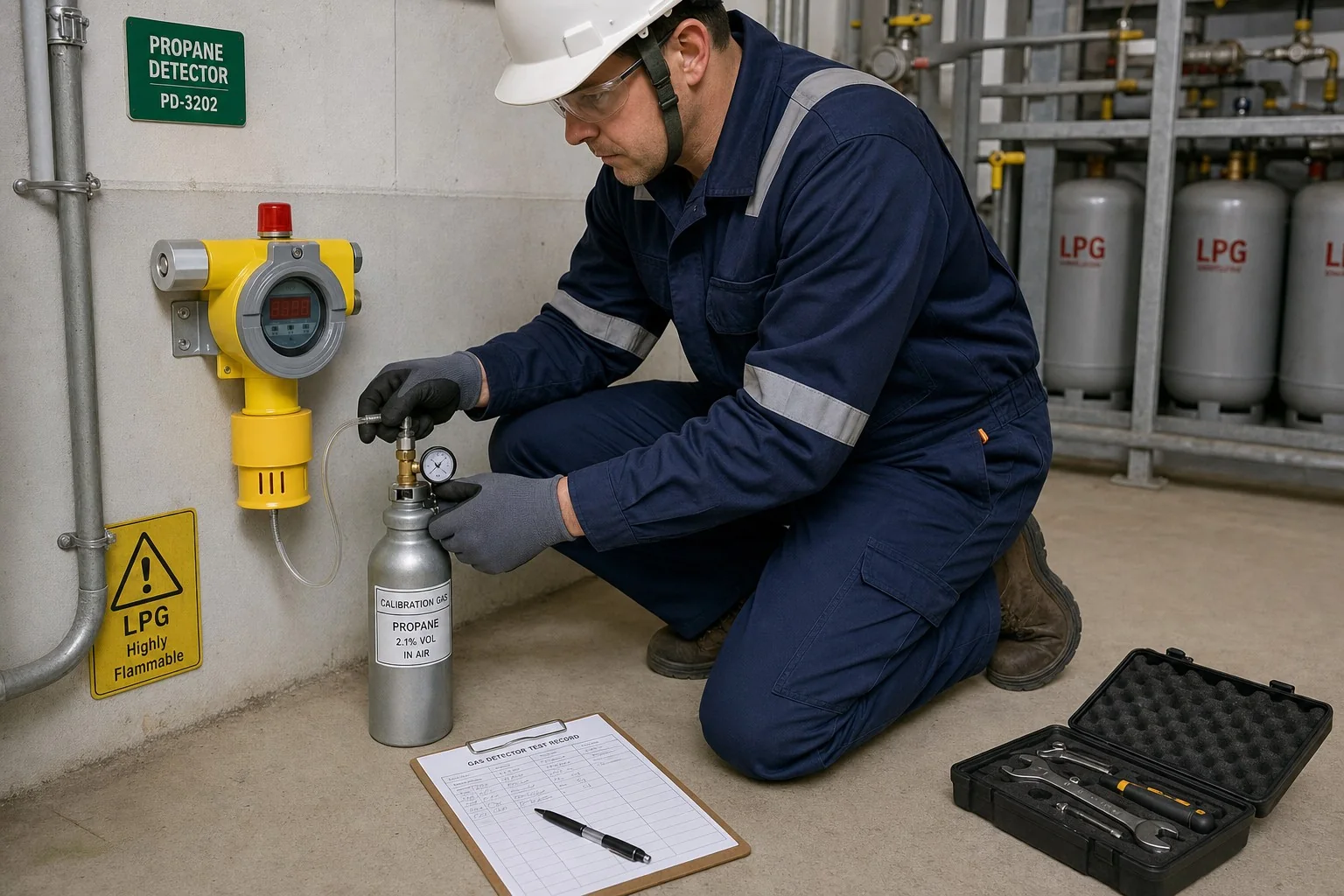
Request the manufacturer’s test and calibration procedure for the specified propane configuration. The document should identify the required test gas, delivery accessories, conditions and pass criteria. An electronic self-check cannot establish that the complete gas path responds as intended.
Keep a response check and a quantitative calibration separate in the maintenance plan. Ask what each check verifies, when it is required and what the operator must do after a failed result. We explain the terminology in our bump test and calibration comparison.
Test equipment should be specified as part of the purchase. Include compatible gas, régulateurs, caps and any other required accessories. Use the documented procedure; deliberately releasing fuel from a cylinder or appliance is not an acceptable substitute for a controlled instrument test.
For a fixed installation, request an agreed commissioning record. It should identify the installed detector and sensor, configuration, équipement d'essai, results, and the alarm or output functions actually checked. Record unresolved items and the person responsible for closing them before handover.
The site should also receive the operating instructions, service contacts and maintenance schedule. Ask how replacement sensors or configuration changes will be documented so that a later repair does not leave the gas setting uncertain.
Build a Configuration-Specific Enquiry
Send competing suppliers the same brief. It becomes much easier to compare quotations when each supplier responds to the same gas composition, location and system duties.
- Gas supply: attach the current LPG safety data sheet and relevant composition specification.
- Tâche: identify leak inspection, continuous monitoring or the defined system function.
- Performance: state required units, measurement range and acceptance criteria, where established.
- Environnement: include the country, classification des zones, temperature and exposure conditions.
- Installation: supply the layout or sampling arrangement, power and required interfaces.
- Handover: request configuration records, certificates, test accessories, commissioning and service details.
We need gas detection for [commercial LPG task] dans [pays]. The attached specification describes the gas supply and installation. Please confirm the proposed model and sensor configuration, documented propane response, base d'étalonnage, applicable approvals, included accessories and any requirements that your quotation does not cover.
Ask for exceptions to be listed explicitly. If the supplier offers an alternative sensor or sampling method, have the responsible designer or operator review the change against the original requirement. Keep that decision with the final purchase specification.
Questions Buyers Ask
Can a Methane Detector Detect Propane?
Some combustible-gas sensors respond to both, but the methane label alone does not establish propane measurement performance. Confirm the specific sensor and the manufacturer’s calibration or correction procedure. A methane-selective instrument must not be assumed to cover propane.
Is LPG Always Propane?
Non. LPG can describe propane, du butane ou un mélange. Use the gas supplier’s specification to identify the supply and ask the detector manufacturer to confirm suitability for it.
Does a Carbon Monoxide Alarm Detect Propane?
A CO-only alarm is intended to detect carbon monoxide. It should not be treated as a propane leak detector. A combined device needs a separately specified combustible-gas function and documented coverage for the application.
Which Documents Should Accompany a Propane Detector Quote?
Request the exact configuration, propane performance information, calibration instructions, relevant certificates and accessory list. Pour les systèmes fixes, also agree the layout, interfaces et étendue de la mise en service. Ces documents aident l'acheteur à évaluer l'installation proposée avant de s'y engager.
Examinez ensemble le gaz et la configuration
Lorsque vous contactez Otywell, envoyez d'abord les détails de la fourniture de GPL et la description de travail. Demandez une proposition de configuration écrite qui traite de la réponse au propane et des exigences d'installation.. Examinez cette proposition avec les personnes responsables de l'exploitation et de la maintenance avant d'approuver la commande..

Wechat
Scannez le code QR avec WeChat