 Henan Ottywell Electronic Technology Co., Ltd

Choose a phosphine gas detector by the job the reading must do. A monitor worn by a worker needs useful low-ppm performance and an alarm the wearer will notice. A meter used to sample a fumigated enclosure needs a verified range and complete sampling path. A fixed detector near a gas cabinet needs an alarm route that reaches the people and systems meant to act. The same PH3 label on three instruments does not make them interchangeable.
What does a phosphine gas detector need to do?
Four monitoring jobs that need different readings
Phosphine is used in grain fumigation and semiconductor manufacturing, among other applications. A worker moving around a storage facility, an operator drawing a sample from a closed space, and a gas cabinet that must be watched between rounds have different measurement points. Start with the point that matters, then select the instrument. “Portable” alone is too broad: a clipped diffusion monitor reads the air reaching its inlet, while a pumped instrument reads the air drawn from its probe tip after the sample has traveled through the line.
| Job | Point de mesure | Suitable format to evaluate | Record or response required |
|---|---|---|---|
| Warn a moving worker | Air near the worn inlet | Personal PH3 monitor with a verified low-ppm range | Local alarm, test status and exposure record if required |
| Check fumigation conditions | Defined point inside or at the boundary of an enclosure | Pumped instrument and validated sample line | Concentration at that point and time; method for handling high readings |
| Verify a defined release or clearance step | Each point required by the site procedure | Method whose lower range, sampling time and coverage fit the decision | Documented point, temps, result and equipment condition |
| Watch a gas cabinet or room | Fixed inlet selected from the release and ventilation layout | Fixed detector linked to local and remote alarms | Alarme, fault and system response between inspection rounds |
A one-time reading cannot describe changing conditions between samples. Inversement, a fixed detector at one inlet does not measure every worker’s breathing-zone exposure. Write the purpose of each measurement on the equipment schedule so that a later reading is interpreted in its proper place.
PH3, ppm and exposure-limit context
For the United States, the NIOSH Pocket Guide for phosphine lists a recommended exposure limit of 0.3 ppm comme moyenne pondérée dans le temps (VME), un 1 ppm short-term value, and an OSHA permissible exposure limit of 0.3 ppm VME. It also lists an immediately dangerous to life or health (IDLH) concentration of 50 ppm. The NIOSH short-term value uses a 15-minute period. IL ENTEND, a short-term exposure value, an IDLH value and an instrument’s immediate alarm setpoint answer different questions; none should be copied into every detector as a default alarm setting.
Phosphine is also flammable. NIOSH lists its lower explosive limit as 1.79% en volume. A low-ppm toxic-gas reading and a percent-of-LEL reading therefore serve different decisions. Specify the actual PH3 response of any proposed combustible-gas channel before relying on it. Odor is no check: le NIOSH emergency response card states that phosphine’s odor threshold does not provide sufficient warning of dangerous concentrations.
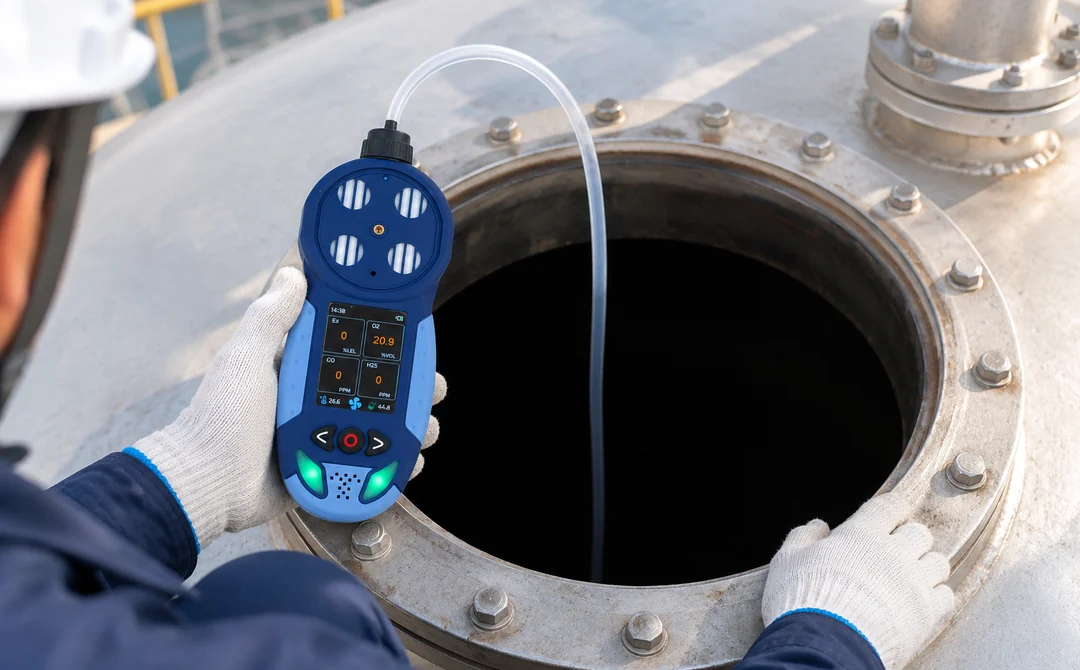
Match the measuring range to the decision
Low-end capability for worker monitoring
A detector that displays a four-digit maximum concentration may still tell a buyer little about its performance where a low-ppm decision is made. Request the PH3 sensor’s useful lower reading, résolution, accuracy basis, response time and adjustable alarm range. A display increment is not an accuracy claim. Par exemple, a screen that shows two decimal places has not thereby proved that it can make reliable decisions at those two decimal places.
Ask whether the sensor’s stated accuracy is a percentage of the reading or of full scale. On a wide full-scale range, those expressions can mean very different uncertainty near the bottom. Include expected humidity, temperature and other gases in the specification request. If the decision is near the lower end of a proposed sensor’s range, obtain evidence at that concentration rather than accepting only a high-concentration calibration point.
High-concentration fumigation readings are a separate task
Monitoring conditions during fumigation is a different measurement from warning workers of low-level leakage or documenting a release step. The measuring range must include the concentration expected at the sampling point, while the lower end must still support any later low-concentration decision. If those needs cannot both be met with the same verified channel, specify separate instruments, sensors or methods. A high-range meter should not be used for a low-ppm release decision solely because its display eventually returns to zero.
At the other extreme, a low-range personal sensor can be exposed above its range if it is used on a concentrated fumigation sample. Ask how that channel indicates over-range, whether it needs recovery time, and what check is required before it returns to service. Keep the process measurement and the personnel alarm on separate lines of the test plan, even when the same team performs both tasks.
What happens after an over-range event?
The useful question is not only “How high does it read?” but “What does it do when the sample exceeds that limit?” Request the manual’s instructions for saturation, récupération, zero checks and recalibration. An over-range indication or sensor fault must stay visible to the operator. The next low reading is not evidence of a restored instrument until the specified function checks have passed.
| Décision | Low-end evidence | Upper-range evidence | Sampling and recovery evidence |
|---|---|---|---|
| Personal alarm | PH3 response where the proposed alarm is set | Over-range behavior at credible releases | Wear position, alarm test and sensor recovery instructions |
| Fumigation process check | Range if a later low reading matters | Capacity at the actual process sample point | Probe location, line response, purge and high-exposure recovery |
| Release or clearance check | Reliable reading at the decision concentration | Evidence the sensor is not still saturated | Defined points, fois, method and functional check |
| Fixed leak alarm | Response at the approved alarm level | Fault and over-range indication | Inlet position, test access and signal-path test |
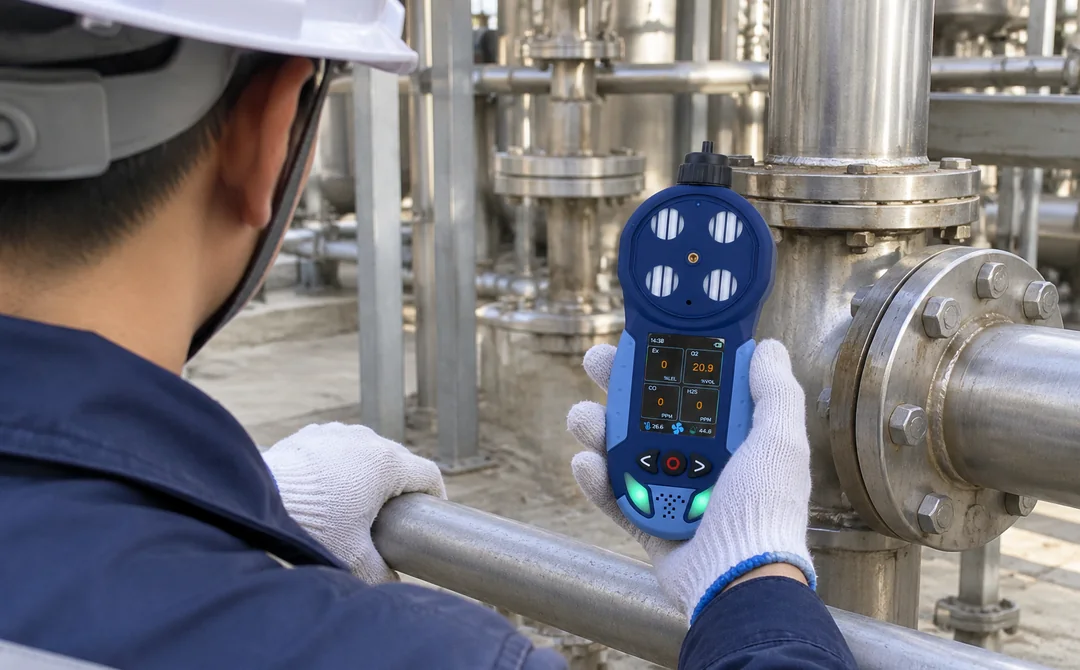
Choisissez la diffusion, pumped sampling or a detector tube
Wearable diffusion monitors
A diffusion monitor follows the wearer. It is useful for a continuing warning as tasks and locations change, provided the selected PH3 channel has the required low-range performance. The inlet must remain unobstructed and in the intended wearing position. A clipped unit left on a shelf measures air at the shelf, not at the worker. De même, a personal alarm does not establish the concentration inside a sealed grain store or beyond a closed cabinet.
Before each use, check the instrument’s status and follow its instructions for a functional test. Confirm that its audible, visual and vibration indications can be noticed under the conditions in which it is worn. If the work requires an exposure record, specify the interval, time stamp, alarm history and retrieval method in the order. A peak reading alone is not the same as a time-weighted exposure result.
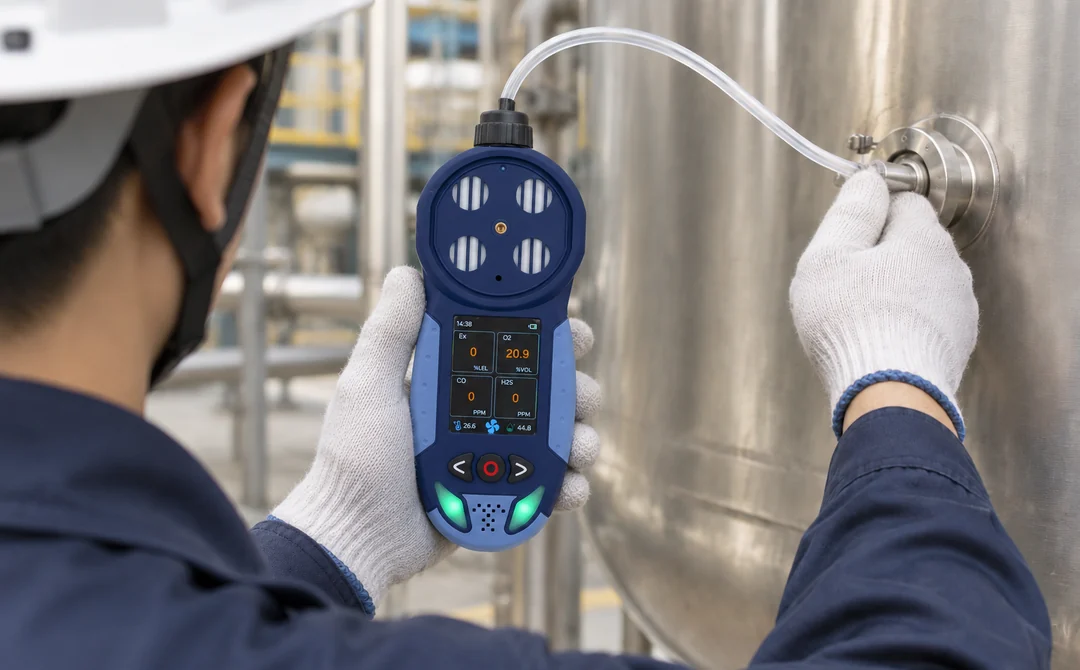
Pumped monitors and remote points
A pump allows the instrument to sample at a probe tip while the operator remains at another location. That creates a sample path to validate. Préciser la sonde, hose material and length, raccords, filter and any moisture control for PH3. Check the pump’s flow indication and blocked-line behavior. The response time at the display includes travel through the line as well as the sensor’s response, so the first number shown after moving the probe may still belong to the previous point.
For a silo or fumigated enclosure, list each sampling location and how long the system must purge and settle before a result is recorded. The procedure should also state what happens if a line is blocked, a connection leaks or a high concentration takes the sensor over range. A built-in pump by itself does not establish that the complete instrument and tubing are suitable for every fumigation or release measurement.
Colorimetric tubes
A detector tube can answer a defined spot-test question if its range, pompe, stroke count, sampling time and interference limits fit that question. It produces a result for the sampled point and period; it cannot warn a worker as conditions change between tests. A tube selected for low concentrations may have a different procedure from a tube intended for a process concentration. Read the instructions for that exact tube and pump before adding it to a field kit.
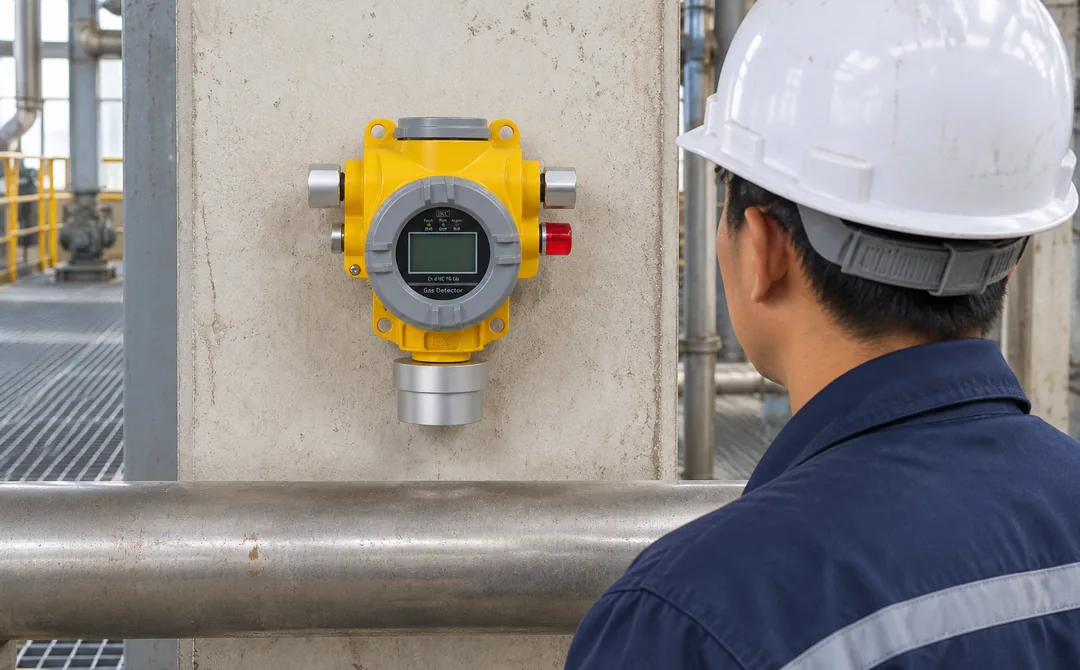
Design fixed PH3 monitoring around the release point
Locate the sensing point
In a semiconductor facility, the concern may be a gas cabinet, connection or enclosure; in a storage operation, it may be an equipment area or boundary used during fumigation. Mark credible release points, enclosure openings, exhaust paths, occupied positions and test access on the layout. Then select where an inlet or sample point can detect the release early enough for the planned response.
NIOSH gives phosphine a relative gas density above air, but density alone does not select a universal mounting height. Flow from a pressurized leak, température, barriers and local ventilation can govern where the plume reaches the inlet. A detector installed where it is easiest to wire may miss the route the gas actually takes. Review the proposed position against the facility’s ventilation and operating modes, including maintenance conditions.
Make alarms actionable
Trace the signal from the sensor to the local display, sound or light, contrôleur, remote recipient and any intended equipment response. Specify what each alarm level means in the operating procedure. Fault states deserve their own route: loss of power, a failed sensor, disconnected cable or blocked sampled line must not silently resemble clean air. Pour un système fixe, the commissioning check should confirm both a gas response at the inlet and the expected response at the far end of the alarm chain.
Keep the inlet reachable for testing. Record who acknowledges an alarm, who investigates the source and who restores the system after a test or repair. If the cabinet exhaust or process equipment changes later, recheck whether the original inlet still covers the intended release route.
Verify the PH3 sensor and service plan before ordering
Ask for the exact gas configuration
Put “phosphine, PH3, CAS 7803-51-2” in the quotation request and ask the supplier to identify the proposed sensor, range and sampling arrangement. Request the minimum useful reading, résolution, précision, response and recovery information, operating limits and cross-sensitivity data for likely accompanying gases. A general toxic-gas category or an editable gas name on a display is not evidence that the fitted sensor measures PH3 as required.
Pour une unité pompée, request evidence for the complete probe and tubing arrangement. Pour un détecteur fixe, document the outputs, alarm and fault states, power requirements and connection to the plant control system. Confirm any hazardous-area approvals against the exact ordered version and destination market. An enclosure IP rating describes ingress protection; it is not a substitute for an explosion-protection approval.
Test fonctionnel, calibration and service evidence
Ask how the supplied PH3 channel is function-tested and calibrated: specified gas, concentration, régulateur, couler, adaptateur, interval and record. If the vendor proposes a substitute test gas, request the method and documented conversion for that exact sensor. Check how long the calibration gas will be available, where the procedure is performed and who supplies a replacement sensor. A maintenance interval from another make or sensor family is not a specification for this one.
A bump test shows that gas reaches the sensor and the alarm responds; calibration adjusts or verifies the measurement against a known standard. The two tasks should appear separately in the service schedule. Also define a response to failed tests, unexpected zero readings, over-range exposure and sensor faults before the instruments are handed to operators.
Confirm what the data can prove
Live concentration, valeur maximale, alarm log and time-weighted result are different records. A workplace exposure assessment may require a specified sampling and analytical method rather than a handheld snapshot. The NIOSH Pocket Guide identifies measurement methods for phosphine, including NIOSH 6002 and OSHA methods. If an exposure decision depends on a defined time basis, specify that method and its sample duration in the monitoring plan; do not infer a shift average from a few spot readings.
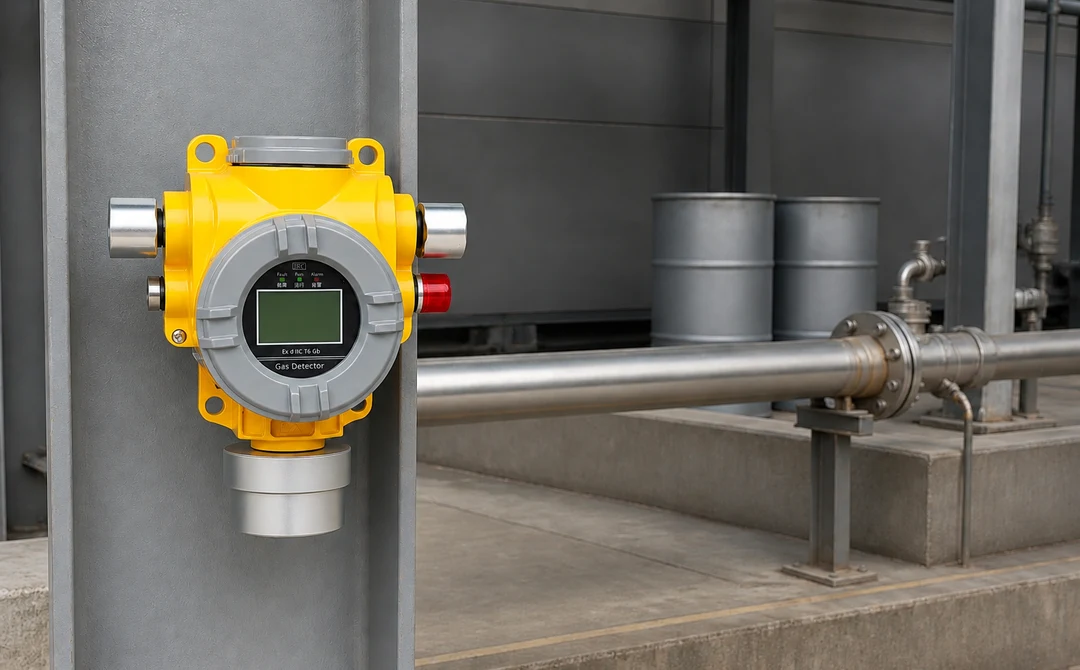
Otywell configuration paths to discuss
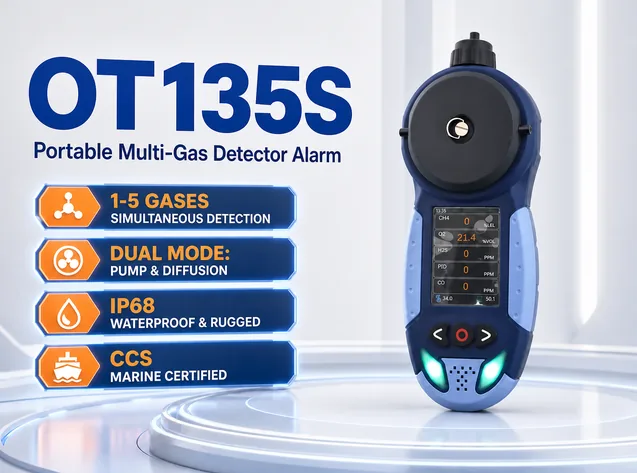
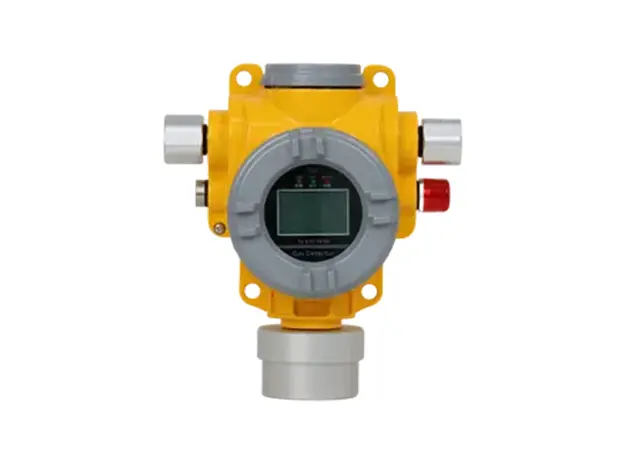
Otywell describes configurable portable and fixed detector platforms. The cited product pages do not publish a confirmed PH3 sensor and measuring range for these two models. A proposal for phosphine should identify the fitted sensor, verified range, calibration method and documents for the delivered version.
Build a clear purchase specification
Give the supplier a brief that starts with the work: personal warning, fumigation sampling, release check or fixed leak alarm. Then list the actual measurement points, expected low and high concentrations, sample-line length, température, humidité, accompanying gases and required records. State where each warning must appear and whether a controller or other equipment must receive a signal. This lets the proposed sensor be checked against a specific decision instead of a broad request for a “phosphine detector.”
| Champ de demande de devis | Informations à fournir | Evidence to receive |
|---|---|---|
| Gas and task | PH3; personal, processus, release or fixed monitoring | Named sensor or method for the proposed instrument |
| Decision range | Lowest important concentration and highest credible sample | Useful range, low-end performance and over-range response |
| Échantillonnage | Wearing point, probe tip or fixed inlet; tubing details | Accessoires compatibles, flow and total sample delay |
| Itinéraire d'alarme | Local users, remote recipients and required action | Setpoint capability, alarm/fault outputs and test procedure |
| Site and maintenance | Environnement, destination market and service capability | Instructions d'étalonnage, gas supply and exact-version approvals |
Use the Otywell product range to identify the equipment format, then send the application details for a PH3 configuration review. The response should name what the offered version will measure and how its performance will be checked.
Send the measurement task with the inquiry
Include the site type, PH3 points de libération, expected concentrations, required low reading, personal or fixed duty, sample distance, ventilation conditions, alarm destinations and destination market. Ask for the proposed sensor, calibration plan and documents for the exact supplied configuration.
Phosphine gas detector FAQs
What is the difference between a personal PH3 monitor and a fumigation meter?
A personal monitor warns about air at the worker’s inlet as the worker moves. A fumigation meter may be used to sample a defined point in or around an enclosure and may need a different upper range and sample line. Specify each instrument against the decision it must support.
Can one detector cover low-ppm worker alarms and high fumigation concentrations?
Only if the supplied sensor or measurement method has verified performance at both ends and a documented response to over-range exposure. If the high sample can saturate the low-range sensor, use separate configurations or methods.
Can a detector tube replace a continuous phosphine alarm?
Non. A tube provides a result at a defined point and sampling time. It does not alert a worker or control room to a change between tests. Check its range and pump procedure for the spot-test task.
Does a pump make a PH3 monitor suitable for silo sampling?
A pump only moves the sample. Suitability also depends on the probe and tubing, longueur de ligne, couler, response delay, likely concentration, over-range behavior and the sampling procedure for each point.
Where should a fixed detector sample near a phosphine gas cabinet?
Start with credible release points, the cabinet enclosure and exhaust path, nearby occupied positions and access for tests. Select the inlet against the actual airflow and operating modes. Gas density alone does not determine its position.
Are 0.3 ppm et 1 ppm universal alarm settings?
Non. Le cité 0.3 ppm values are time-weighted occupational exposure limits, while the NIOSH 1 ppm value has a short-term time basis. An immediate alarm setting needs an approved action and a detector with verified performance at that setting.
What proof should a supplier provide for a customized PH3 configuration?
Request the named sensor, useful range, lower-end response, interference information, accessoires d'échantillonnage, alarm and fault behavior, calibration procedure and any approvals for the exact supplied version.

Wechat
Scannez le code QR avec WeChat