 Henan Ottywell Electronic Technology Co., Ltd

An acrylonitrile gas detector has to answer a specific question. Is vapor escaping at a transfer connection while nobody is nearby? Is an operator moving between vessels? Or is a maintenance crew checking a line before opening it? Those jobs call for different monitoring arrangements, even when the target gas is the same.
Start with the duty, not the model. Use fixed monitoring for a defined point that needs continuing coverage, a portable detector for moving personnel, and a suitable pumped arrangement when the sampling inlet must reach a particular point. Then specify the acrylonitrile channel, usable ppm range, alarms and complete sampling path.
Where does acrylonitrile monitoring matter?
Acrylonitrile, also called AN or C3H3N, is handled as a liquid that can release vapor. It is used as a monomer or intermediate in the manufacture of acrylic fibers, plastics, resins and nitrile rubber. That does not mean every finished plastic or rubber article presents the same airborne-vapor problem. The useful starting point is the operation: where is monomer stored, transferred, sampled or exposed to the air?
Monomer storage and transfer
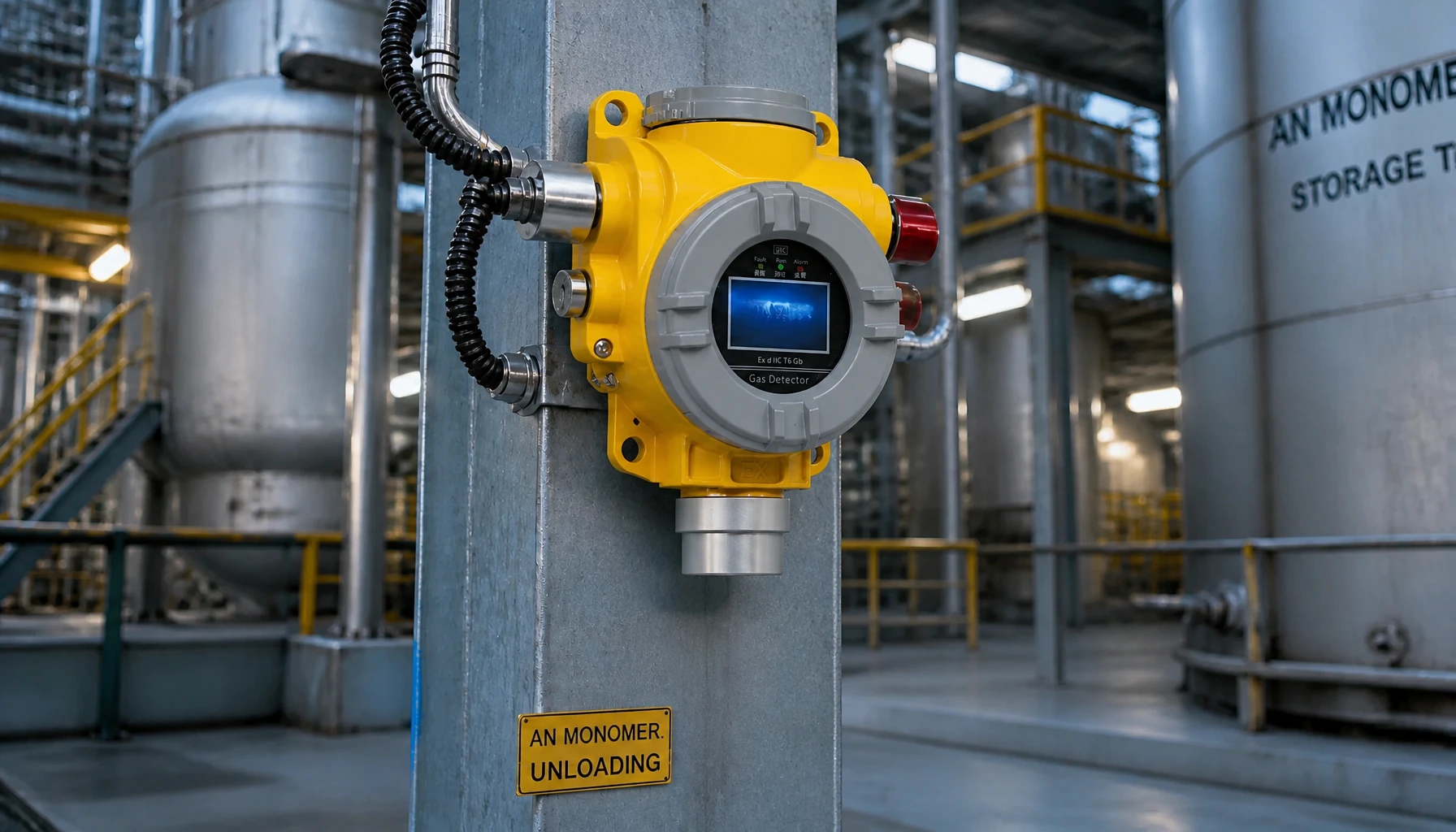
At a tank farm or receiving bay, sketch the route from tank outlet to pump, hose, valve and process line. A routine connection may be made and broken at one location; a seal or flange may remain in service between operator visits. Identify who would receive an alarm if the area were unoccupied. A detector by the doorway is not automatically a detector for the loading connection across the bay.
Polymerization and intermediate handling
In a resin or fiber operation, exposure opportunities may change with the job. A closed transfer line has different conditions from taking a sample, opening a filter housing or preparing a vessel for maintenance. Record the normal operating position and the temporary work position separately. One permanent detector may address a repeated point; it cannot follow a technician around an entire unit.
Laboratory and small-batch work
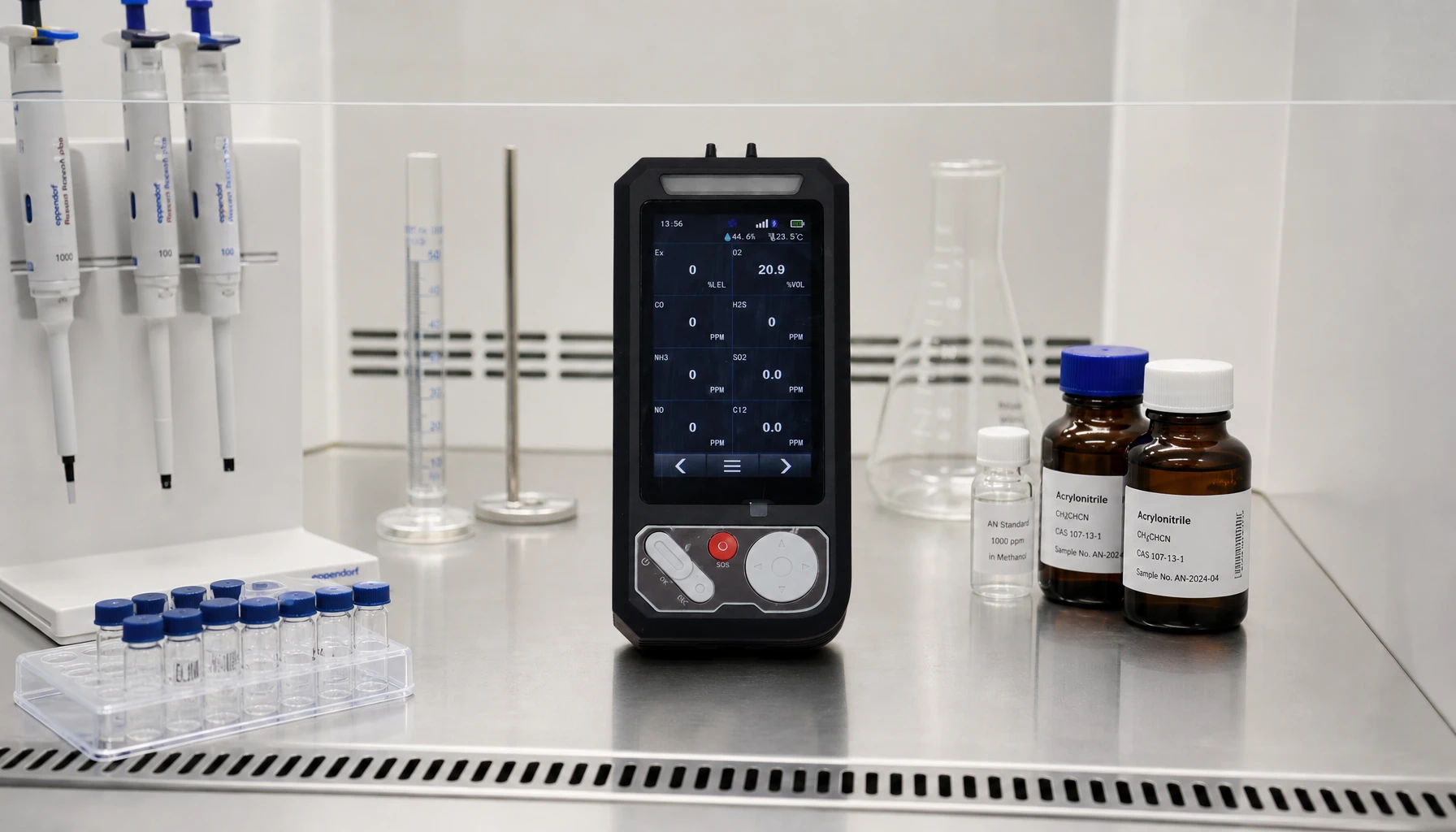
Small containers, bench transfers and waste handling create short, localized tasks rather than one continuous production-area duty. Ask where the person stands, whether the work is inside local extraction, and what point needs to be checked before an opening is approached. A portable instrument may be useful here, but only if the ordered instrument actually has an acrylonitrile-specific configuration and appropriate sampling accessories.
In U.S. workplaces, the acrylonitrile-specific OSHA rule has defined scope and exemptions, including certain finished polymers. Its occupational exposure provisions should not be applied indiscriminately to every downstream product simply because acrylonitrile was used to manufacture it.
What must an acrylonitrile gas detector measure?
For workplace vapor monitoring, start by specifying acrylonitrile in ppm. The NIOSH Pocket Guide entry for acrylonitrile lists an OSHA permissible exposure limit of 2 ppm as an eight-hour time-weighted average and a 10 ppm limit averaged over 15 minutes. It also lists a NIOSH recommended 1 ppm TWA. These are different measures; a live display, a short-duration value and a full-shift average must not be treated as interchangeable numbers.
The same source lists a 3% limite inférieure d'explosivité. That describes a separate flammability concern. A %LEL instrument intended to warn about a combustible atmosphere is not, by that fact alone, a ppm acrylonitrile exposure monitor. Inversement, selecting a low-ppm toxic-gas channel does not establish that a site has addressed every flammability-monitoring need. Write both duties down if both are in scope.
Pay particular attention near the low end of the range. A published 0–100 ppm option may look sufficient until you compare its resolution with the measurement question. Par exemple, the TCB2-F product table lists a 0–100 ppm acrylonitrile option with 1 résolution ppm. That listing alone should not be turned into a claim that the offered configuration can accurately distinguish every concentration close to a 1 ppm decision point. Request the exact assembled-unit specification before assigning it that job.
Nor is a direct-reading alarm automatically a substitute for occupational exposure sampling. Under the U.S. acrylonitrile rule, exposure determinations rely on air samples representative of employee exposure over the required period. A point detector can serve a valuable warning role while answering a different measurement question.
Fixé, personal or pumped: which arrangement fits?
| Work question | Arrangement to examine | What it can cover | Que vérifier |
|---|---|---|---|
| Could a defined connection leak between visits? | Détecteur fixe | Continuing indication at a selected point | Placement, pouvoir, alarm recipient, output and service access |
| Does a worker move among several tasks? | Personal diffusion detector | Air at the worn instrument as the person moves | AN channel, position de port, local alarm and operating time |
| Must a valve, vessel opening or remote point be checked? | Portable or fixed pump-suction configuration | Air drawn from a defined inlet | Probe, tubes, filtre, couler, transport delay and response |
| Is an occasional reading needed at one point? | Suitable detector tube or other spot method | A reading at the time of sampling | Gamme, interferences, pump and test procedure; no continuous alarm |
Fixed detection watches the point, not the whole plant
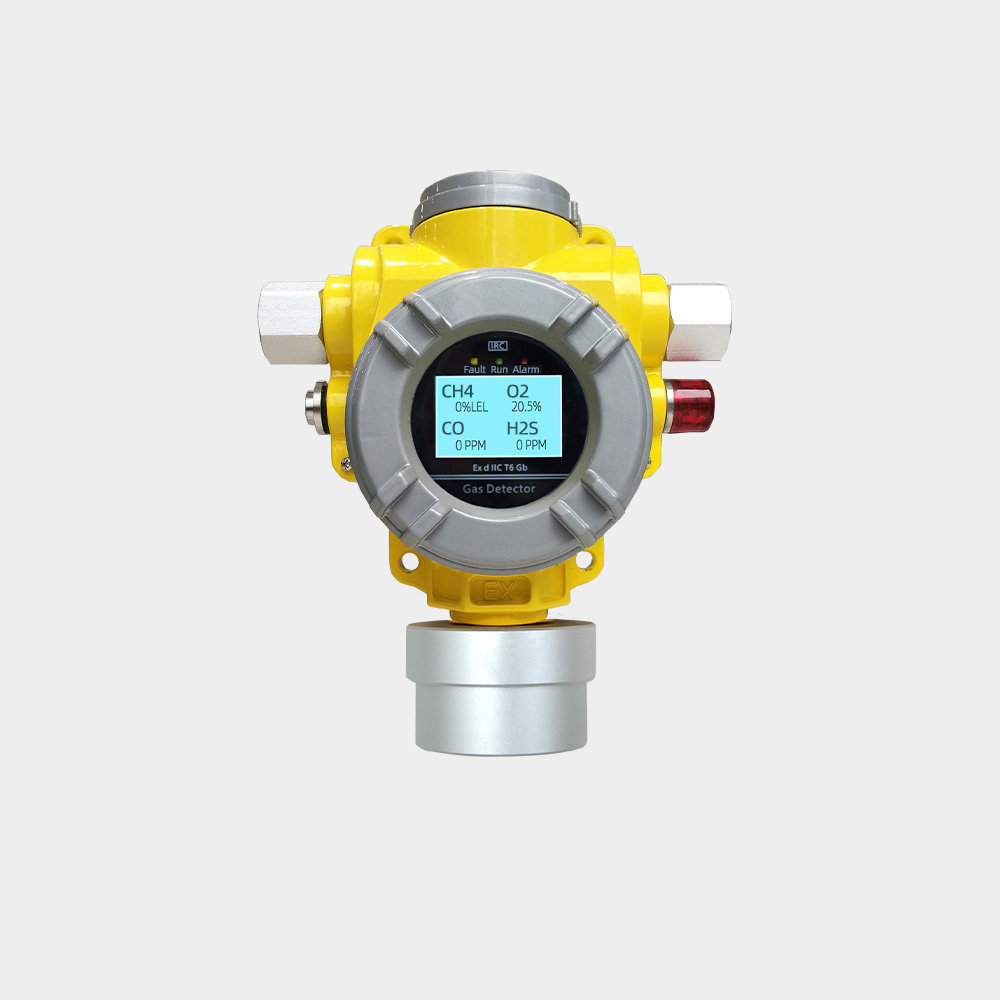
Fixed equipment makes sense where the potential release point stays in one place and a warning must remain available when staff move away. It needs more than a sensor head: decide who receives the alarm, whether a local beacon or control-room indication is needed, how the signal will travel, and how the inlet will be reached for inspection. A fixed detector installed for easy wiring but away from the plausible vapor path may provide little information about the connection of interest.
Portable diffusion follows the person
A diffusion unit samples at its own inlet. It can accompany an operator through a sequence of connections or inspections, but it does not continue to watch a pump skid after the operator leaves. Do not assume a standard four-gas set includes acrylonitrile. The sales configuration must identify the actual AN channel; if other gases are required, specify those as separate channels rather than assuming the housing measures them all.

Pump suction moves the inlet to the question
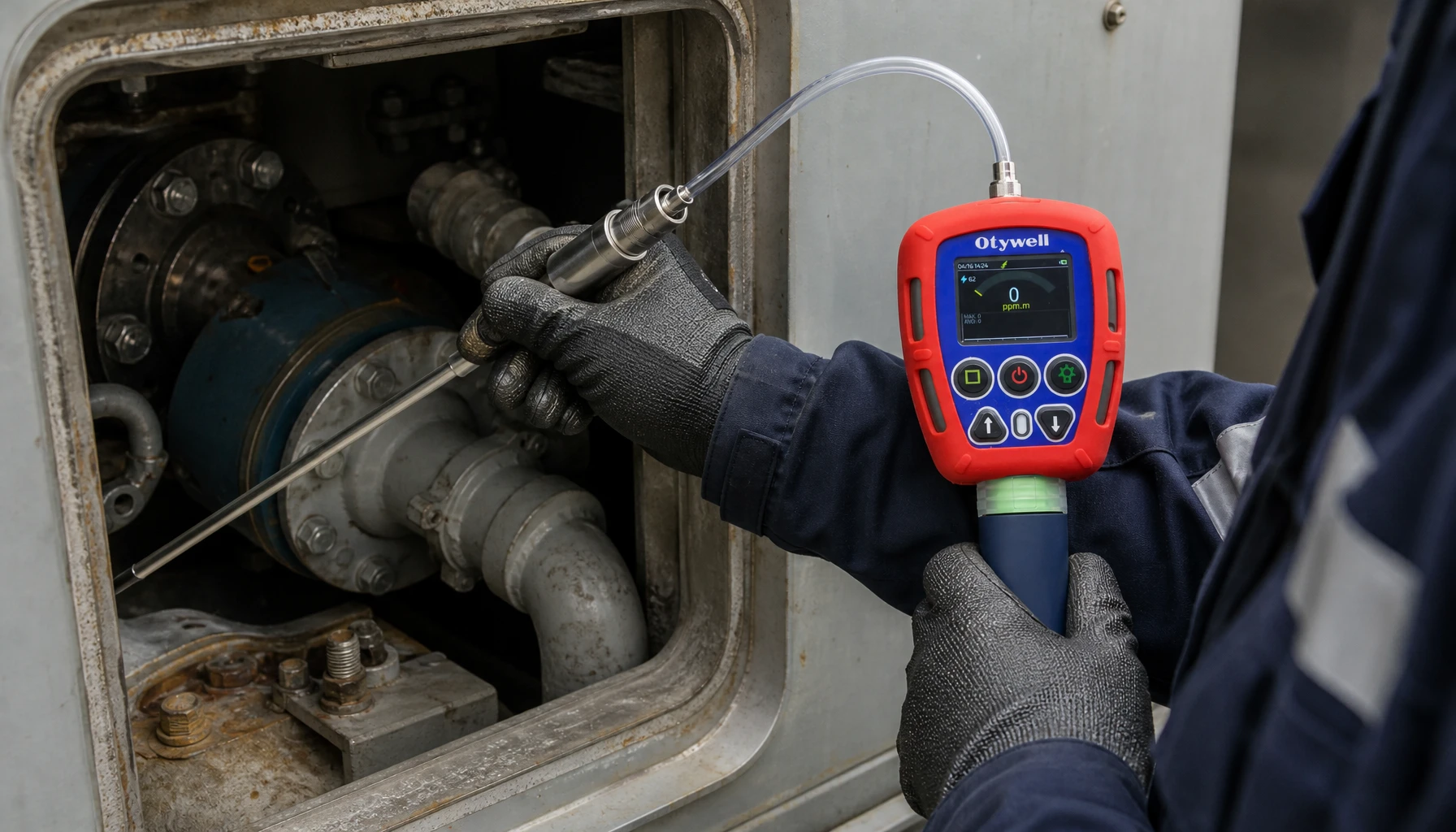
A pumped instrument is useful when the sample must be collected from a fitting, enclosure or opening at a distance from the user. The tip of the probe, not the display in the operator’s hand, is the measurement point. A longer tube and a filter change the assembled sampling path. Specify the exact parts and confirm how long the sample takes to reach a stable reading. A blocked inlet or loss of flow can defeat the purpose of an otherwise functioning detector.
Colorimetric tubes appear frequently in searches for this gas. They can support a defined spot check, provided their range and instructions fit the task. They are not a continuous electronic alarm. Choosing between these methods is not about which one has the more impressive catalogue range; it is about whether the team needs a one-time measurement, an ongoing point warning, a personal warning, or several of these together.
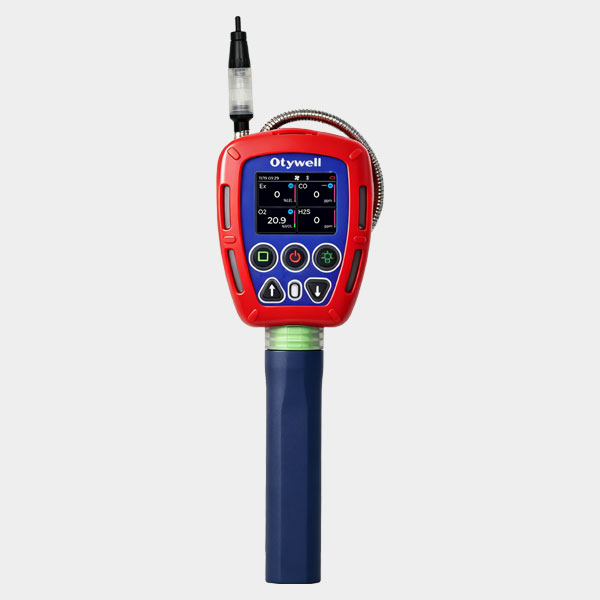
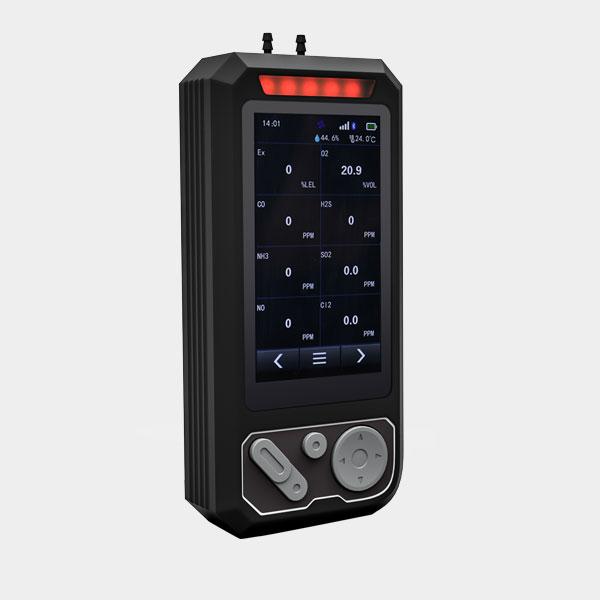
Otywell equipment formats for an AN enquiry
These product families list acrylonitrile among configurable gases. The cards distinguish hardware roles; they do not imply that the same AN channel, range or sampling arrangement is standard in every version. Confirm the proposed configuration in the quotation.

Three situations that change the equipment choice
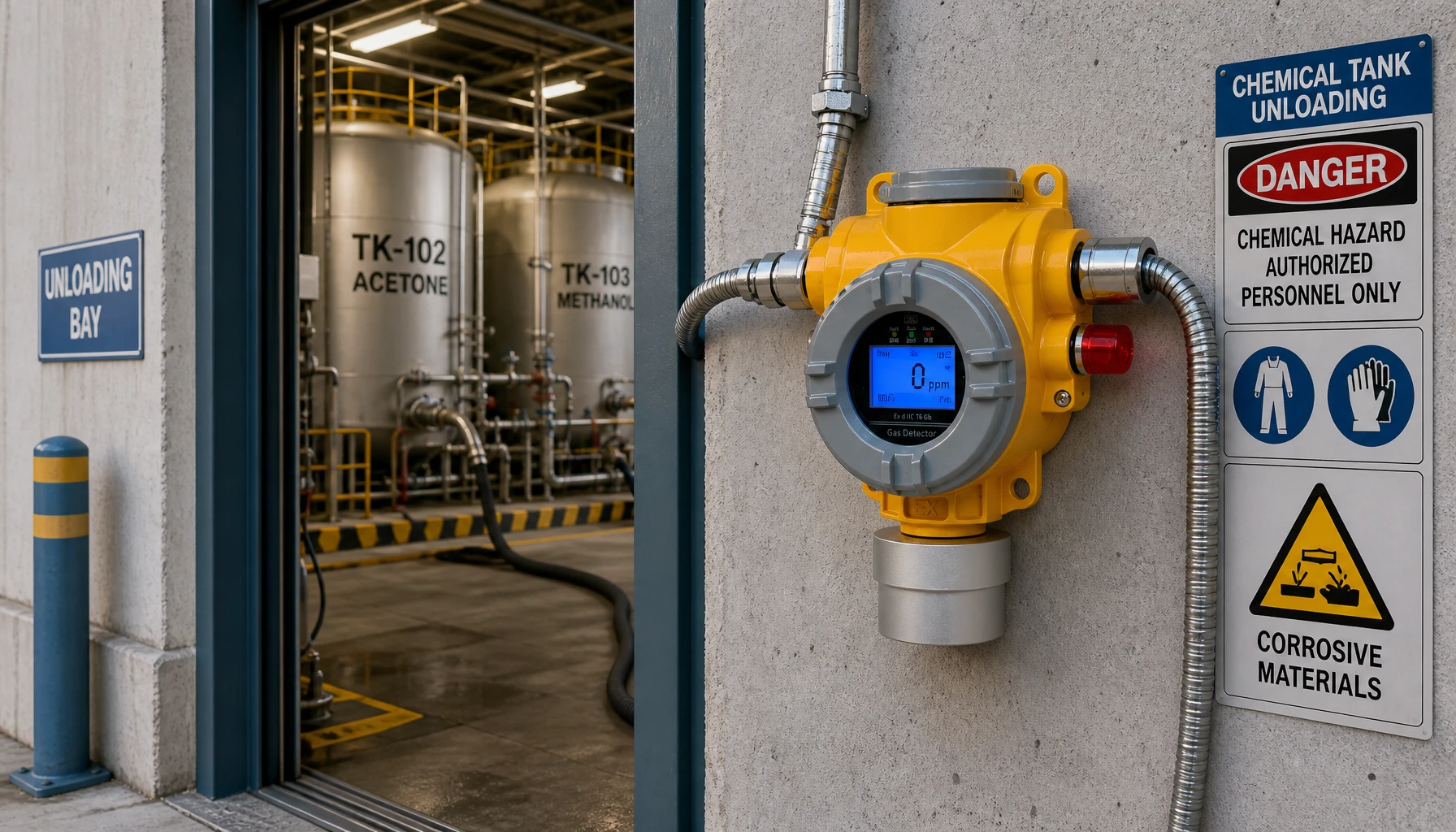
1. Tank unloading: the connection stays, the operator leaves
Picture a receiving hose connected to a monomer line. The likely release points include the coupling, pump seal and nearby valves. The operator attends the transfer but may leave the bay when the operation ends. Here the first question is not how many portable detectors to buy. It is whether the connection area needs an alarm while nobody is standing beside it. If so, examine a fixed point whose inlet can actually encounter a release from that assembly. Trace airflow across the bay, identify obstacles and decide where the warning appears. A portable unit can still accompany the person making and breaking the connection; it serves a different interval and position.
2. Polymer unit sampling: the person changes position
An operator may collect a process sample, then walk to another vessel and later inspect a drain point. A detector fixed beside the first sampling station cannot report the air at every later position. A portable AN configuration follows the wearer, provided its inlet remains unobstructed and the worker can perceive its alarm. If a fixed alarm is also installed near a repeated release point, state the purpose of each unit. Do not describe the two devices as interchangeable simply because they share a target-gas label.
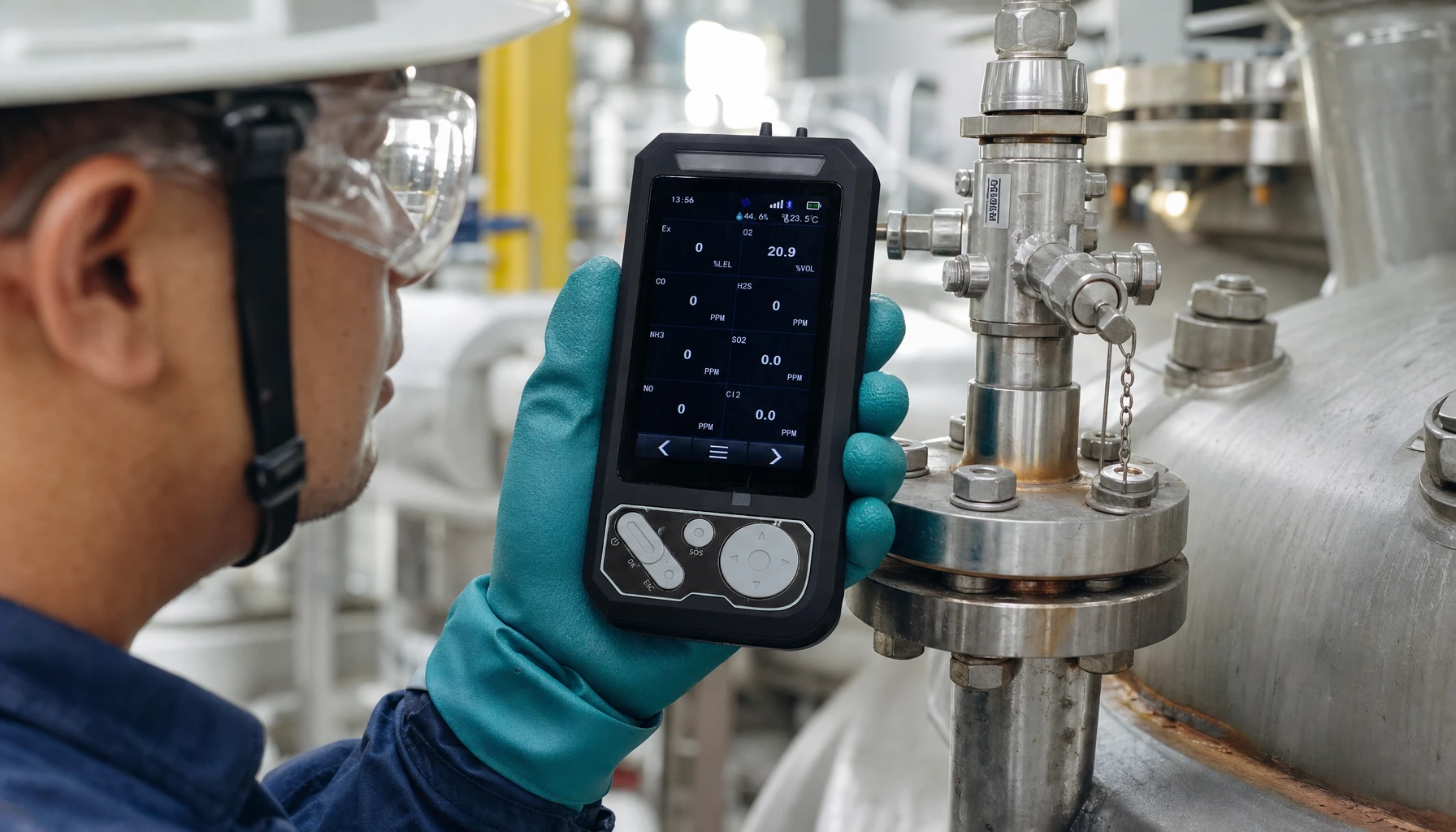
3. Planned maintenance: the opening is the measurement point
Before approaching a valve pocket or opening equipment that has contained AN, the team may need a reading at a point that is not conveniently reached by the detector body. A suitable pumped setup lets the inlet reach that point. Record the probe length and route, the filter fitted, and the wait after moving the probe. If the site changes the tube length or swaps a filter, confirm that the procedure still reflects the assembled sampling path. A quick glance at a clean display immediately after moving the probe may tell more about air already in the tubing than about the new point.
What to put in an acrylonitrile detector enquiry
A useful request for quotation can be short, but it should make the monitoring job reproducible. Separate each fixed location from each portable user group; otherwise a supplier may quote the same instrument configuration for different tasks.
| Field | Write down | Pourquoi c'est important |
|---|---|---|
| Target and other gases | Acrylonitrile (AN/C3H3N) and any additional channels | A family-wide gas list is not the fitted-channel list. |
| Monitoring purpose | Continuous point warning, wearer alarm, remote check or spot measurement | Each requires a different position and operating method. |
| Range and performance | Required ppm interval, résolution, accuracy and response for the offered assembly | The lowest useful concentration must be within a documented capability. |
| Sampling path | Diffusion or pump; sonde, tube, filtre, flow and acceptable delay | The inlet location and assembled path determine what is sampled. |
| Alarm and data | Who is warned, required local indication, records and any remote signal | A screen reading is not automatically an alarm delivered to the right person. |
| Installation conditions | Pouvoir, ambient conditions, classification and required approvals | Protection contre la pénétration, hazardous-area rating and regional approvals are different claims. |
| Service plan | Compatible test gas, calibration method, replacement parts and support | Operating cost and verification belong in the purchase decision. |
Ask for the actual acrylonitrile configuration documentation, not only the enclosure brochure. Record the installed sensor or measurement method, any cross-sensitivity information, and the settings delivered with the unit. If an alarm threshold is proposed, identify its purpose and the applicable requirement. An eight-hour exposure limit is not a universal instantaneous alarm setpoint.
Check the delivered system, not just the display
On arrival, compare the instrument label and channel list with the order. Check the inlet, alarmes, power and any connection to a receiver. For a pumped version, check the flow and the complete probe-and-tube arrangement that will be used on site. For a fixed version, verify that an alarm or fault is seen where the team expects it, not merely at the detector head.
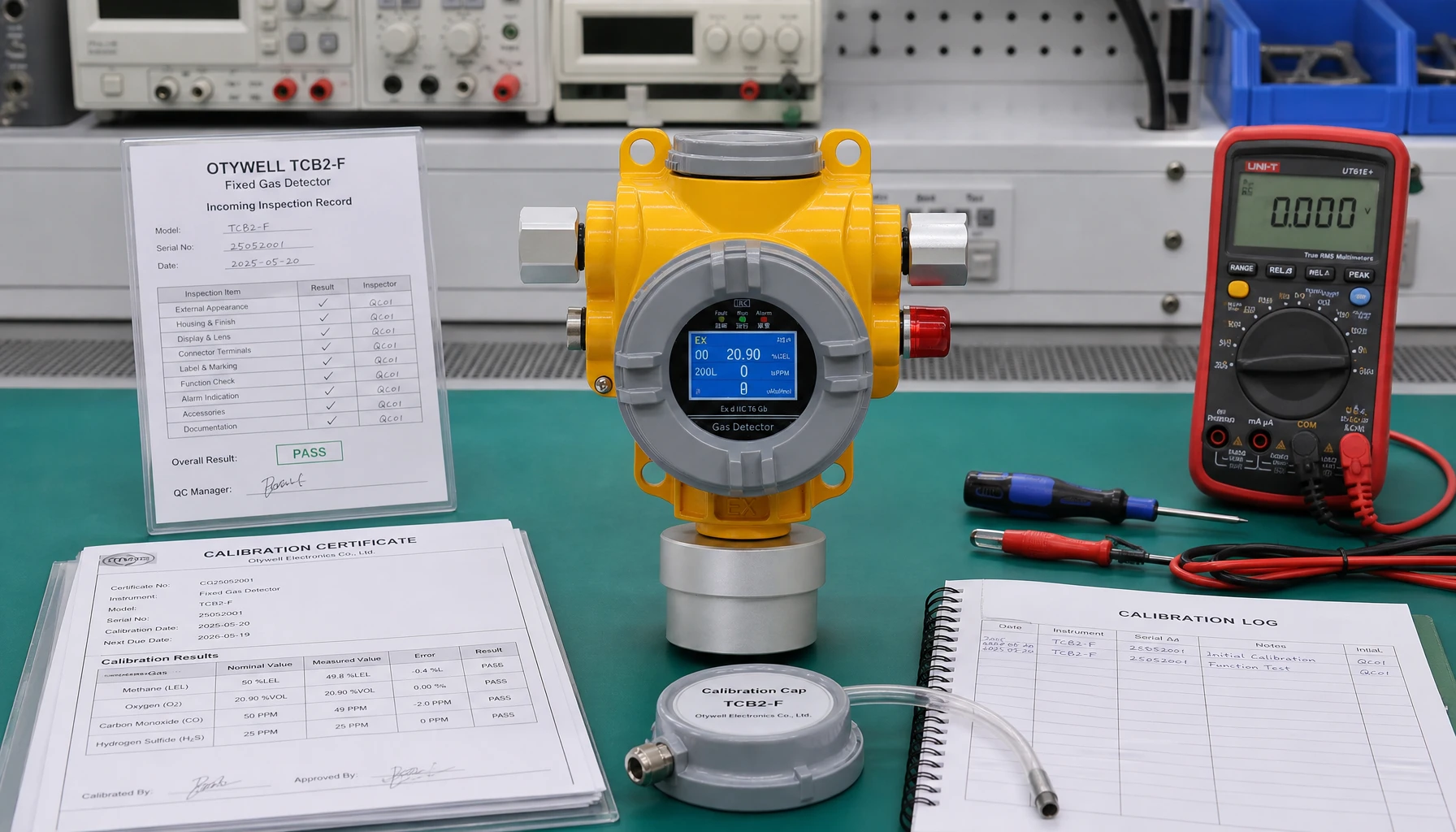
Functional testing and calibration answer different questions. A response test checks whether gas reaches the detector and whether it warns the user; calibration checks or adjusts the reading against a known reference. Notre bump-test and calibration guide explains that distinction. For the AN configuration, use only the test gas, accessories and procedure specified for the supplied instrument. Keep a record of channel, gamme, accessoires, test result and any change to the sampling setup.
Make the quotation specific
Send the work area, release point, poste de travailleur, monitoring duty, AN ppm range, other gases, preferred fixed or portable format, diffusion or pumped sampling, alarm destination and required signal. Ask the supplier to identify the exact offered AN configuration and its performance documentation. That is a more useful comparison than choosing between housings by a headline gas count.
Questions fréquemment posées
What is an acrylonitrile gas detector used for?
It is configured to indicate acrylonitrile vapor at its sampling inlet. Depending on the equipment, the job may be a fixed-area warning, a personal alarm or a reading taken at a defined remote point.
Do I need a fixed or portable acrylonitrile detector?
Use the monitoring position to decide. A fixed detector can watch a selected point between visits. A portable detector follows a worker whose tasks move around the plant. A project may require both roles.
When is pump-suction sampling useful?
Consider it when the inlet must be placed at a connection, valve pocket or opening away from the instrument body. Confirm the probe, tubes, filtre, flow and waiting time for the complete proposed setup.
Can a combustible-gas reading replace ppm acrylonitrile monitoring?
Non. A %LEL reading addresses a flammability question. It does not by itself establish a low-ppm acrylonitrile measurement for a toxic-vapor monitoring task.
Is a detector tube the same as a continuous gas alarm?
Non. A detector tube gives a reading from its prescribed sampling procedure. It does not keep watching a point or issue an electronic alarm after that sample has been taken.
Which specifications matter most for a C3H3N configuration?
Confirm the target channel, usable ppm range and low-end performance first. Then check response, interferences, méthode d'échantillonnage, alarmes, environmental limits and the exact approvals required for the installation.
How should calibration and routine checks be planned?
Use the instructions for the supplied AN version and its sampling accessories. Record the approved test gas and procedure, verify the alarm and signal path, and keep results tied to the instrument and configuration actually in service.

Wechat
Scannez le code QR avec WeChat