 Henan Otywell Electronic Technology Co., Limitado

A chlorine dioxide gas detector for workplace air is not the same instrument as a meter that measures chlorine dioxide in treated water. At a water-treatment plant, the air-monitoring question may concern a generator cabinet, a chemical feed area, an operator’s route or a maintenance opening. Each calls for a different sampling position and a clear path for the alarm.
Start here: Identify where ClO2 could be present in air, then decide whether the reading must remain at a defined point, travel with a worker or come from a remote sample tip. Order an instrument configured with a ClO2 sensor, the selected measuring range, the required sampling accessories and an alarm route that reaches the people who will respond. Do not substitute a Cl2 channel or a water-quality analyzer.
Specify ClO2 in Air Before Comparing Instruments
El dióxido de cloro es ClO2.; chlorine gas is Cl2. The similar names cause a practical ordering error when a request says only “chlorine detector.” A sensor’s response to another oxidizing gas is not proof that it is configured, calibrated or suitable for measuring ClO2. Write the gas name and formula on the channel schedule and ask for the selected ClO2 range and test procedure in the quotation.
The distinction matters where more than one oxidant is used. An order should name each required gas channel separately, along with its range and checking procedure. A water-quality instrument has another job again: it measures the treatment stream or sample, not the air a worker may encounter near equipment.
The NIOSH Pocket Guide entry for chlorine dioxide is useful for checking the gas identity and occupational reference values. Those values are not an automatic set of detector alarm points. They also indicate why a buyer should check whether the proposed sensor range and resolution fit the monitoring task rather than choosing the largest available range by default.
Where the Measurement Is Needed
ClO2 is used in more than one industry, but a list of industries does not tell a buyer what to install. Start with a process sketch: where is it generated or used, where can air reach people, when is the space occupied, and who receives an alarm? The answer may produce more than one monitoring job.
| Work setting | Task to examine | Equipment question |
|---|---|---|
| Tratamiento de agua | Generator and associated feed equipment; routine operator visits and maintenance access | Does a defined point need continuing monitoring? Does the person also need a carried unit on the route? |
| Pulp and paper processing | Bleaching-process equipment and the positions from which operators inspect or service it | Which locations are fixed monitoring points, and which are occasional work positions? |
| Other industrial use | Local preparation, transfer or use of ClO2 in an identified process | Is direct diffusion sampling possible, or must air be drawn from a remote point? |
These rows do not prescribe detector locations. A gas inlet needs to sample the air relevant to its task, which depends on the process, recinto, ventilation and worker position. “One detector per room” and a single mounting height are poor substitutes for that description.
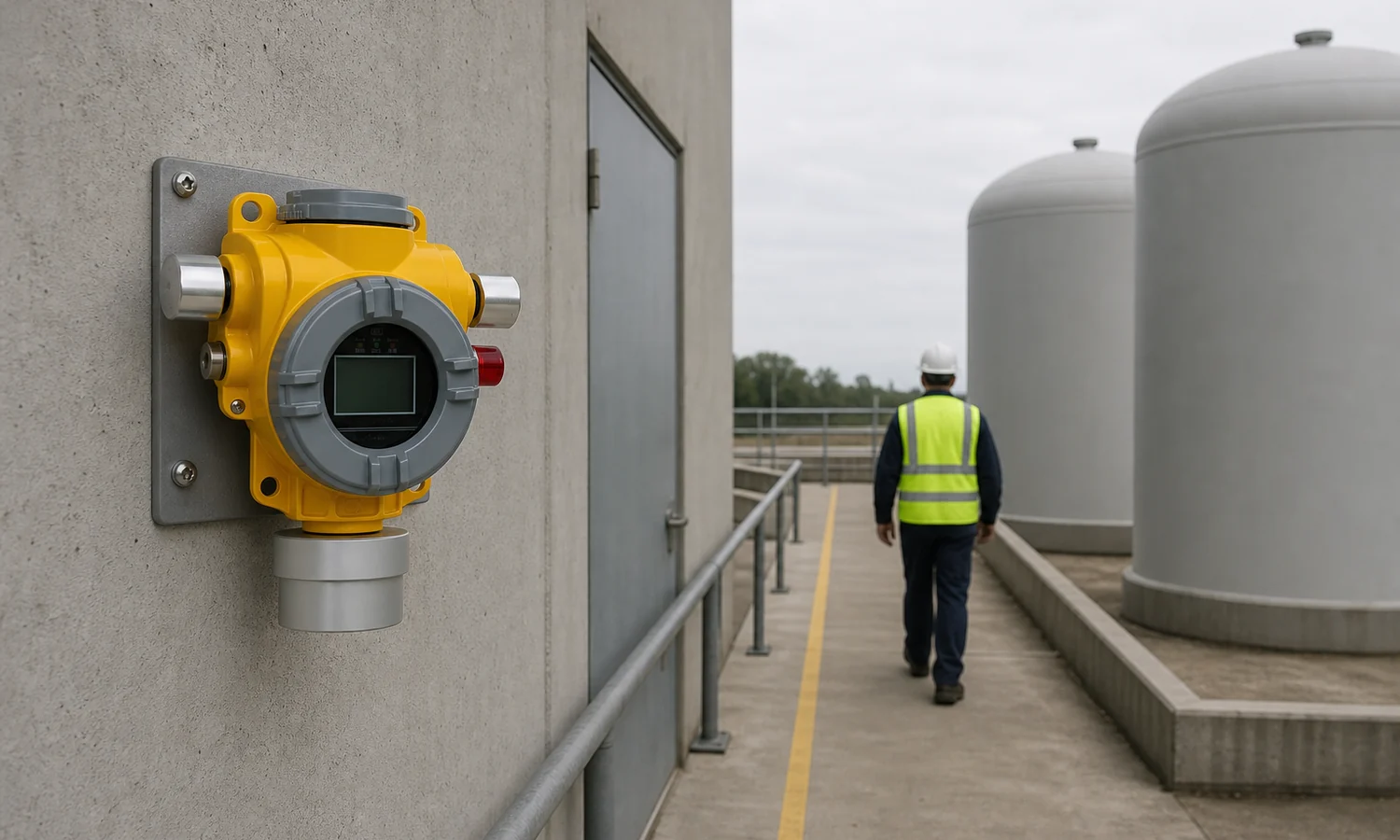
Water Treatment: Start at the Generator, Then Follow the Operator
Consider a plant that generates ClO2 on site for treatment. El EPA sanitary-survey guide describes chlorine-dioxide generator arrangements and the chemicals involved in drinking-water applications. Its process drawings help identify equipment, but they are not detector-placement drawings.
On the plant’s own drawing, mark the generator, associated connections and cabinet or room openings. Add the operator’s normal position, access door and ventilation path. Now ask two separate questions. First, is there a defined location that must be watched while the operator is elsewhere? Second, does a person move beyond that location during inspection or maintenance? If both answers are yes, a fixed detector and a portable instrument serve different purposes. Buying one in place of the other leaves one task unanswered.
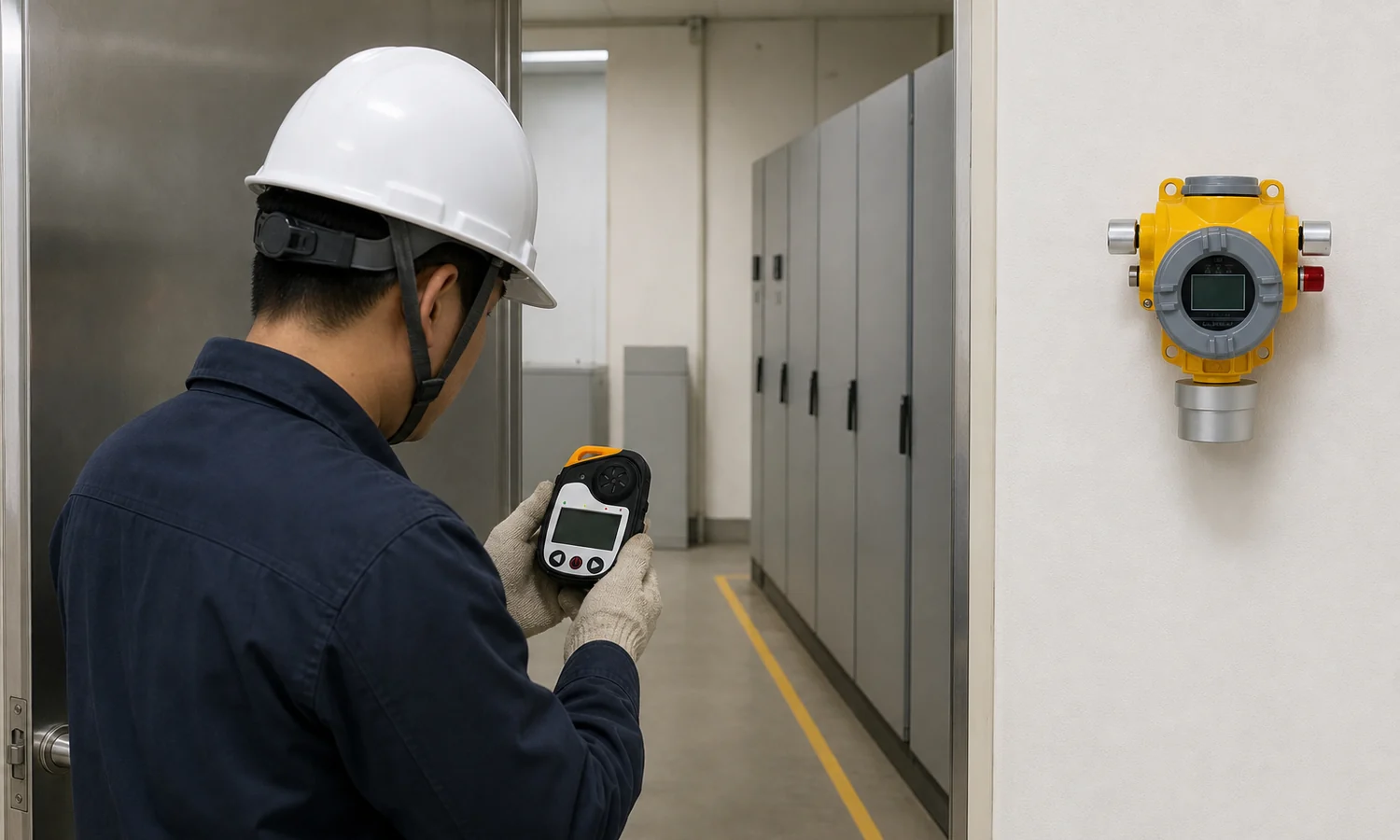
For a proposed fixed point, the supplier needs to know what air is expected to reach the detector inlet during the relevant operation. The alarm has to travel beyond the instrument: is it heard locally, sent to a controller, or displayed at an occupied station? Record what happens on a fault or lost signal as well as on a high reading. Do not assume that an output terminal alone completes the warning chain; the receiving equipment and its location are part of the purchase.
During a maintenance check, the sampling point may be inside or near an opening while the worker stands outside it. That is a pump-and-probe task only if the proposed instrument and accessories are configured for it. State the probe position, line and filter arrangement, then ask how flow and response through the assembled path will be checked. A pump specification by itself does not describe the performance of an unlisted length of tubing.
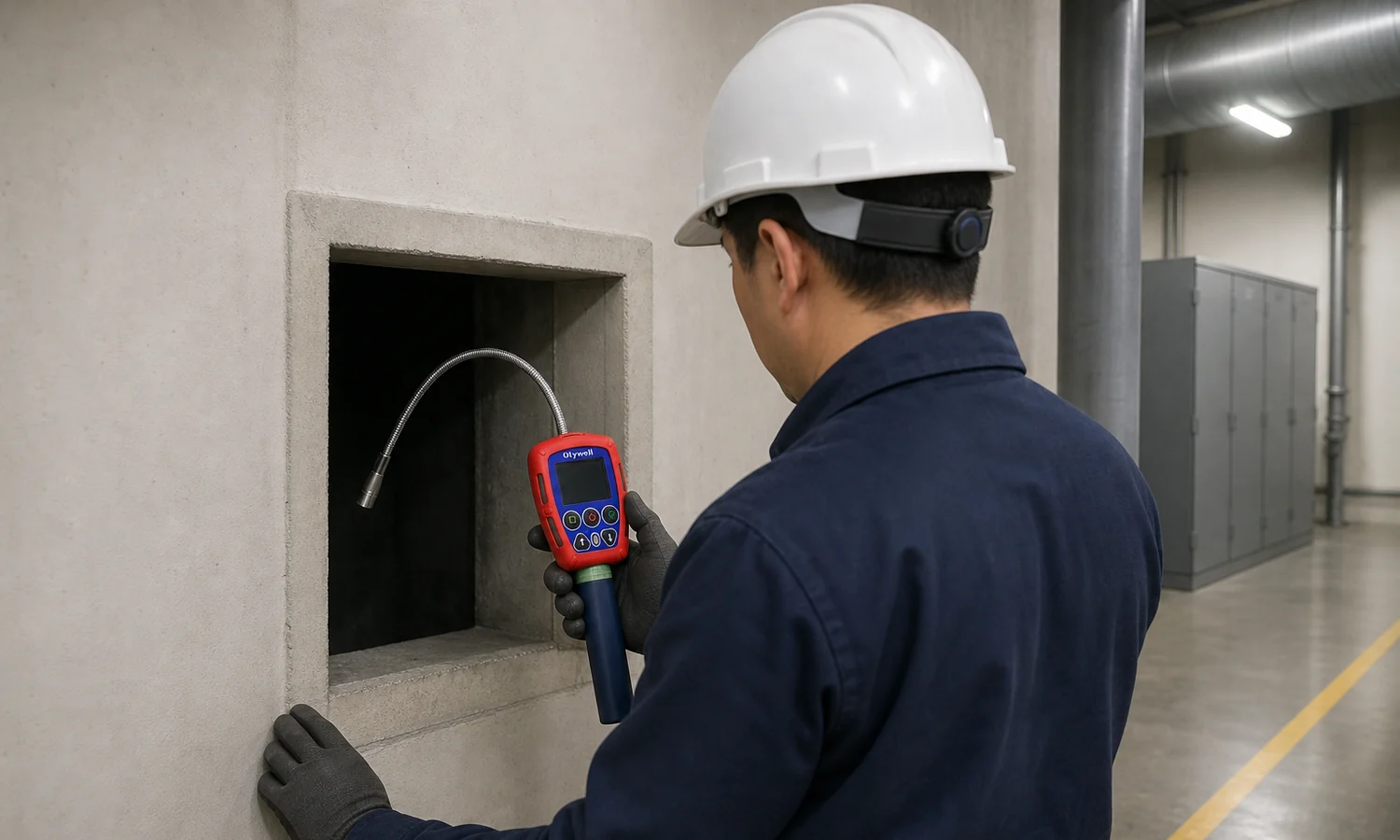
Pulp Processing: Do Not Copy the Generator-Room Layout
The pulp and paper setting has a different operating sequence from a drinking-water generator room. The process equipment, inspection positions and maintenance access may be spread across an area rather than centered on one cabinet. Map the work positions before choosing the number of fixed points. Then decide whether a worker moving among them also needs a portable ClO2-configured instrument. A fixed alarm at one location does not report what a worker encounters elsewhere.
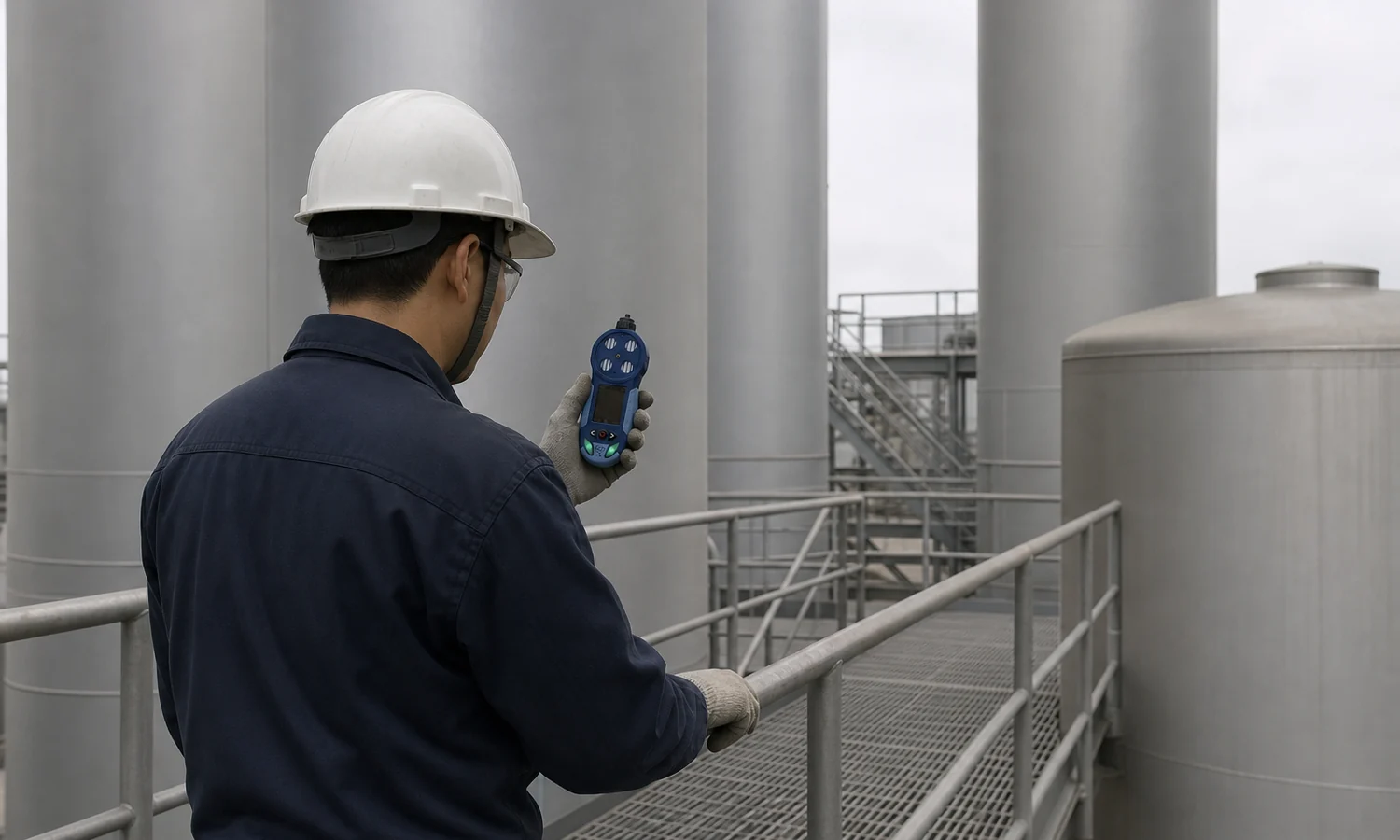
The detector format also follows the sampling task. Diffusion sampling measures air at the instrument inlet. Remote sampling moves air from a probe tip through a line; it is relevant only when that tip represents the location the buyer wants measured. Neither arrangement should be selected from a photograph without a stated work task and sensor configuration.
Fijado, Portable Diffusion or Portable Pump?
| Format | What it answers | What to put in the order |
|---|---|---|
| detector fijo | What is happening at a chosen, continuously watched point? | ClO2 sensor and range; inlet position; fuerza, producción, receiver, local warning and fault path |
| Portable diffusion | What air reaches the inlet carried by this worker? | ClO2 configuration; wearing position; alarm modes; power and checking arrangement |
| Portable pump suction | What air reaches a selected remote sample tip? | ClO2 configuration; pump version, sonda, line, filter if required and flow check |
Some sites need two formats for separate jobs. That is not an argument to buy every detector type. It is a way to avoid describing a moving worker as though a fixed sensor follows them, or treating a hand-held unit as a permanent area alarm after its user has left.
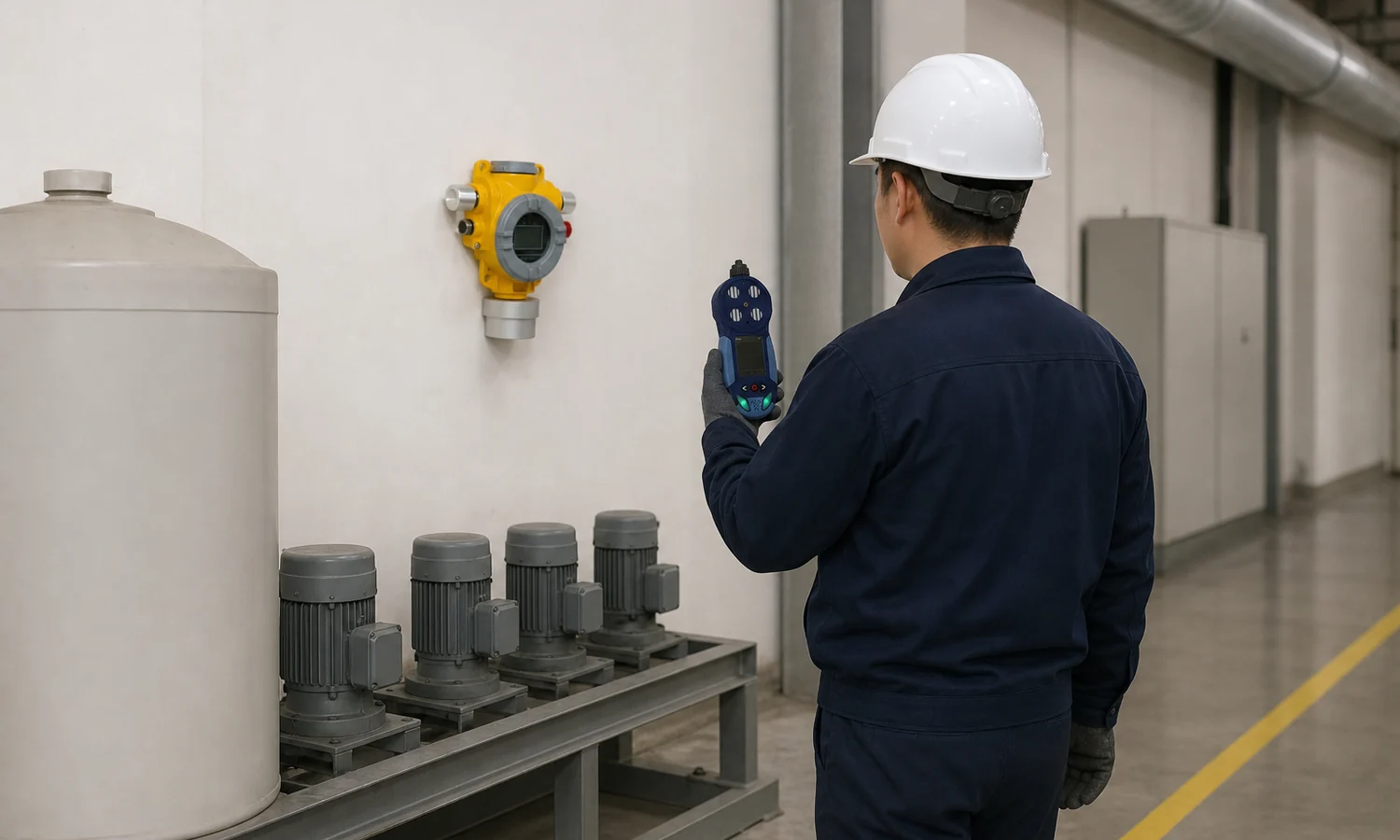
Otywell Configurable Equipment Formats
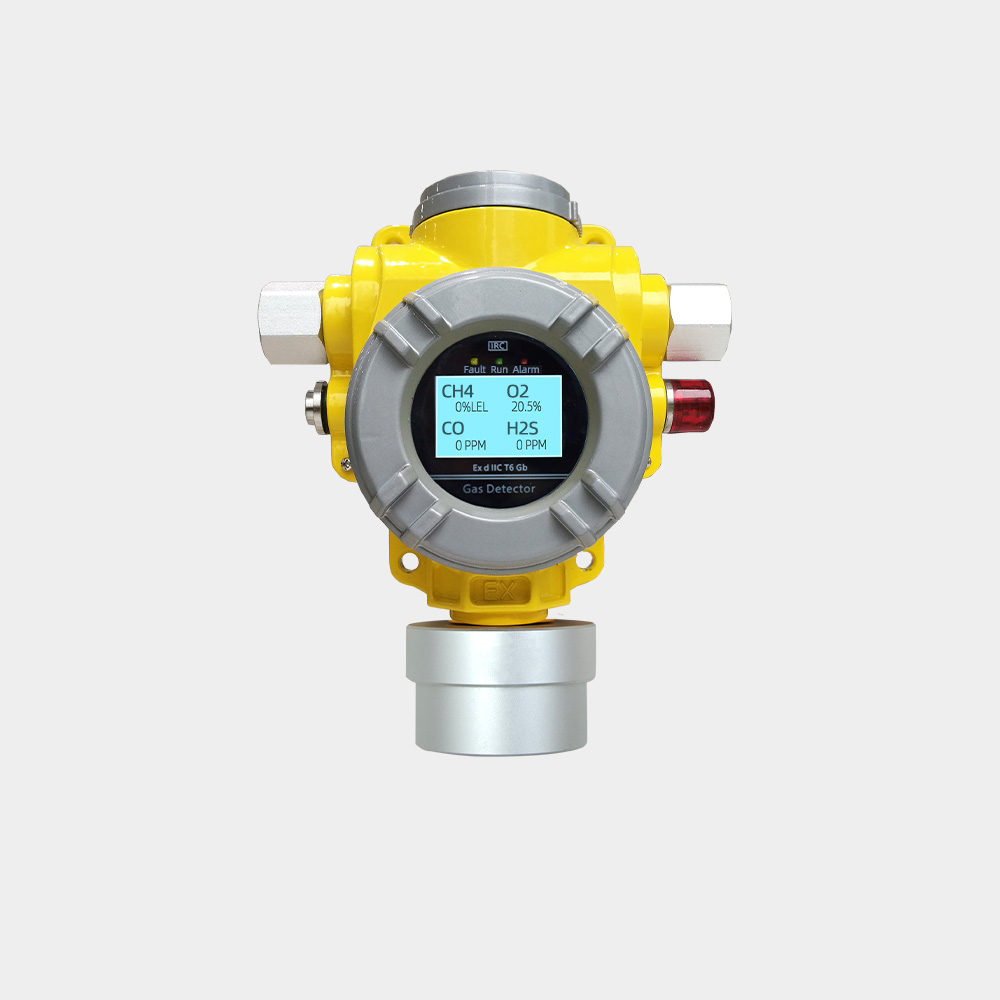
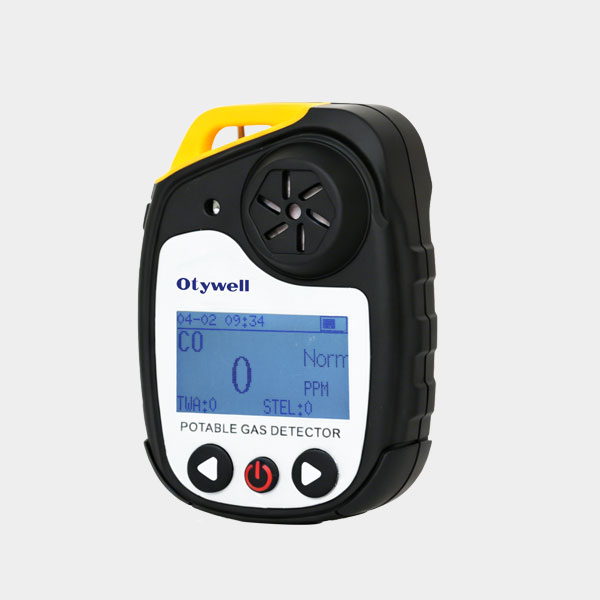
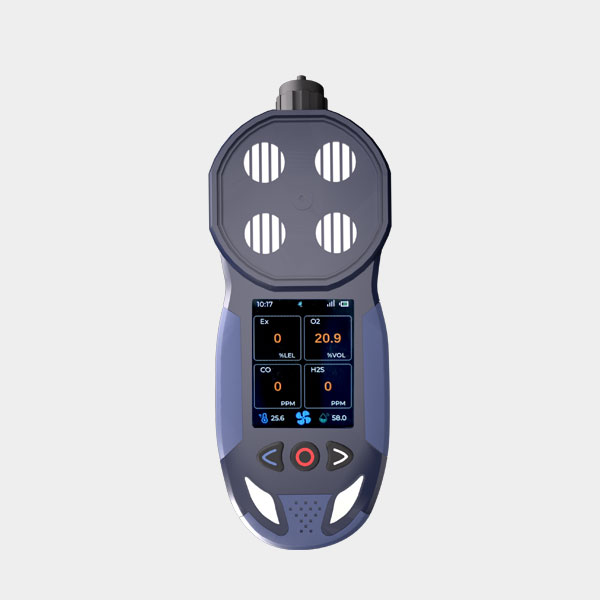
Otywell equipment can be configured with a sensor for the target gas. The four formats below are selected for their different functions, not because every unit shown is already fitted with a ClO2 sensor. Order the ClO2 channel and confirm its chosen range, channel combination, sampling method and accessories for the delivered configuration. Product photographs do not establish those details.
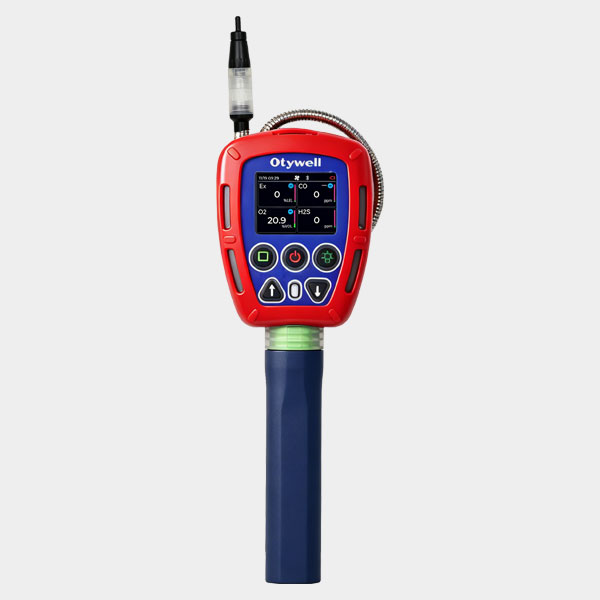
Rango, Alarm and Acceptance Questions
A gas table can list several optional ranges for the same detector family. The choice has to fit the work to be measured. The ClO2 channel’s measuring range, resolución, stated response and test arrangement should appear in the quotation, not just in a catalogue. Compare them against the intended low-concentration warning task as well as any foreseeable operating condition. Avoid treating a very wide range as automatically better.
A low or high alarm number in a generic brochure may refer to a different gas. Ask for the selected ClO2 settings and what each warning does at this site. Check whether the display identifies ClO2, whether the fixed signal reaches the intended receiver and how a sensor or communication fault is shown. For a portable pump unit, confirm that a flow problem is visible to the user. These are questions for the proposed configuration, not claims that every model includes every feature.
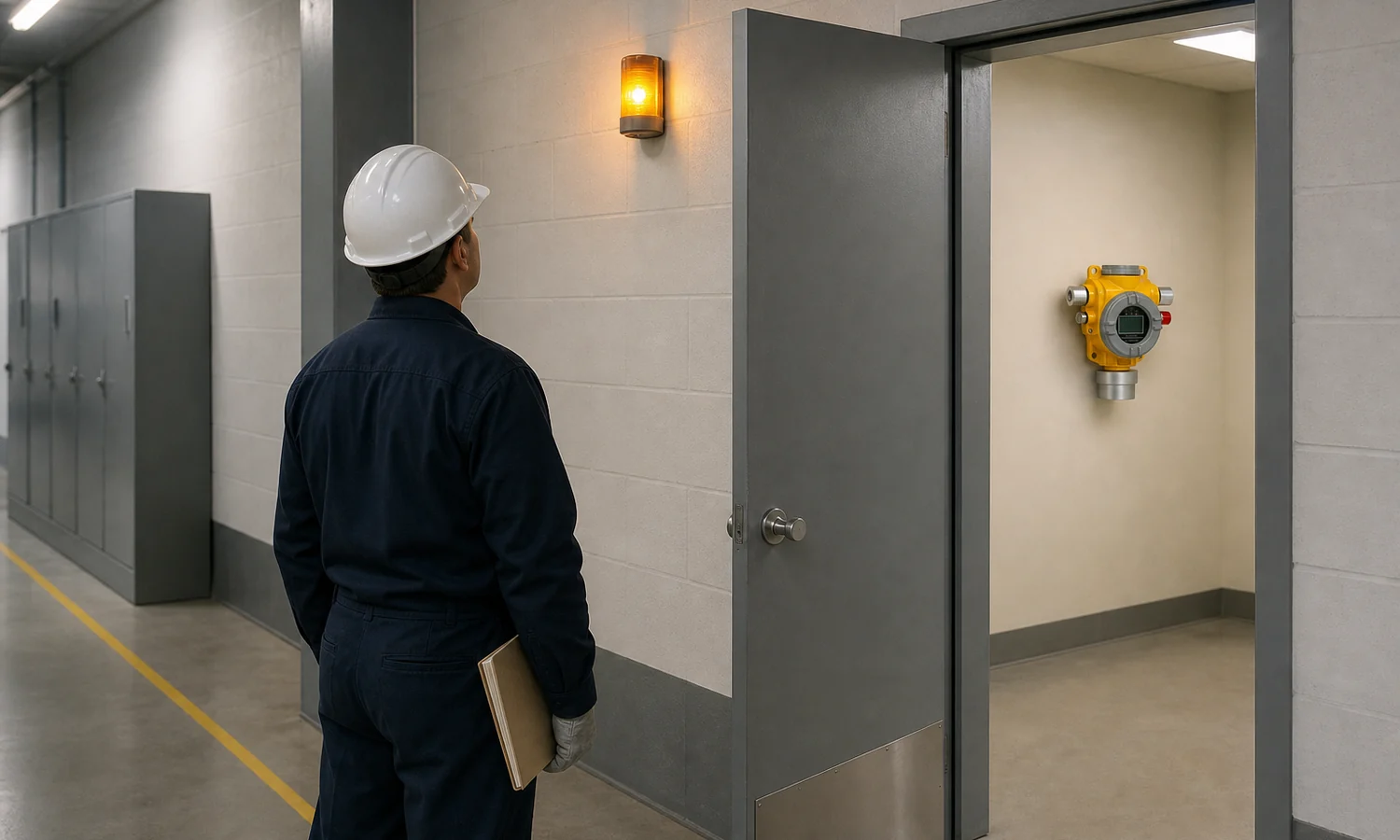
Calibration and checking deserve the same specificity. Request the manufacturer’s procedure and compatible materials for the fitted ClO2 channel. If a probe, tubing or filter is part of the operating arrangement, include it in the checking plan. A document that names the instrument but omits the fitted sensor or sampling accessories is not a complete record of the delivered monitoring setup.
Quotation test: Can the supplier identify the ClO2 sensor, selected range, sample inlet, alarm output and receiving device for each proposed point? If one item is missing, the line item is not yet specific enough to compare with another offer.
Send the Supplier a Useful Task Description
- State “chlorine dioxide (ClO2) in workplace air,” and list any Cl2 requirement separately.
- Provide the process sketch: generator or use point, recinto, work position, access and ventilation.
- Identify which points need continuous observation and which workers move beyond them.
- For remote sampling, give the proposed sample position, line route and accessories to be quoted.
- Name the alarm destination and ask how a fault or lost signal will be indicated.
- Request the fitted sensor, rango, configuration record, operating instructions and channel-specific checking materials.
This information lets a supplier quote an operating arrangement rather than a detector housing alone. It also separates the air-monitoring task from water-process measurements that may use the same chemical name but require different instruments.
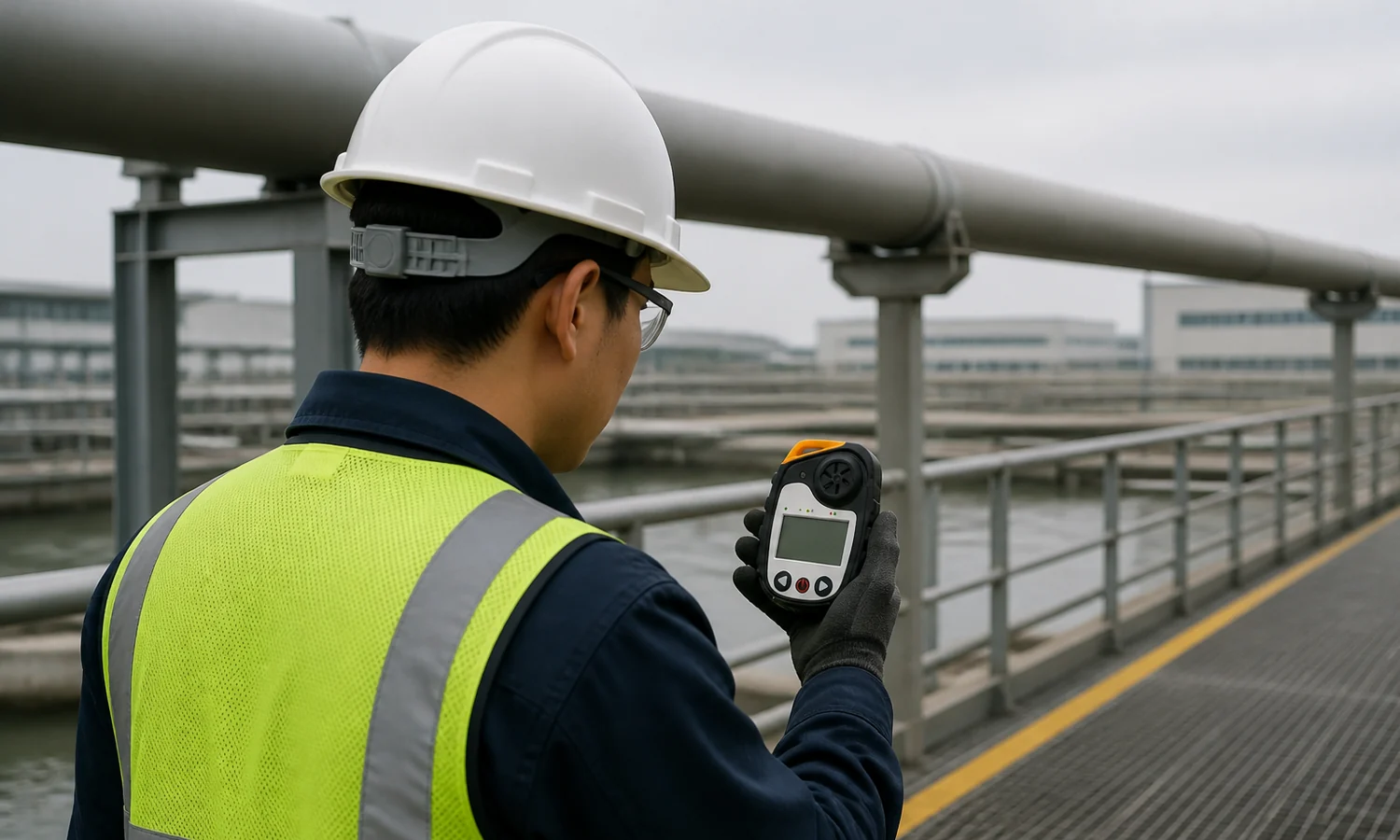
Compare Configurations Against the Actual Task
When requesting an Otywell ClO2 configuration, send the number of fixed points, worker-carried duties, any remote sampling distance and the required alarm destination. Ask for the fitted gas channel and the complete accessories list on the quotation.
Preguntas frecuentes: Chlorine Dioxide Gas Detector Selection
Will a chlorine gas detector also measure chlorine dioxide?
Do not assume so. Cl2 y ClO2 son gases objetivo diferentes. Specify separate channels and the manufacturer’s configuration and checking procedure for each gas required.
Can a water-quality ClO2 meter monitor workplace air?
Not by name alone. A water-quality meter measures a liquid sample or treatment stream. The equipment request here is for ClO2 in air at a defined inlet or sample tip.
Where should a fixed detector go near a generator?
Start with the generator arrangement, connections, recinto, air movement and worker positions. The proposed inlet must correspond to the point the buyer intends to monitor; a generic mounting height is not enough.
When does a worker need a portable ClO2 detector?
Consider a carried instrument when the measurement must move with a person beyond a fixed monitoring point. Specify the fitted ClO2 channel and the position in which the inlet will be worn.
What should be checked for pump sampling?
Quote the probe, tubería, any filter and the instrument’s pump configuration as one path. Confirm how adequate flow and response through that path are checked.
Is a larger ClO2 range always preferable?
No. Compare the selected range and resolution against the concentration task. A family table showing optional ranges does not identify the range installed in the ordered unit.
Do four-gas monitors include ClO2 by default?
The number of channels does not establish their identities. Request a channel schedule that explicitly lists ClO2 and every other gas needed for the job.

Veloz
Escanee el código QR con WeChat