 Henan Otywell Electronic Technology Co., Ltd

Wählen Sie einen drahtlosen Gasdetektor, indem Sie zunächst die Gasmessung überprüfen, dann die Stromversorgung, Funkverbindung und Alarmanbindung. A detector that measures the right gas but cannot reliably report its status at the intended location is not a complete monitoring solution.
For an existing plant, the buying question is often practical: can another monitoring point be added without a difficult cable run? Wireless equipment may help, but the quotation needs to cover more than the transmitter. Gateways, Leistung, Inbetriebnahme, maintenance access and fault handling all belong in the decision.
This guide covers industrial fixed monitoring and site upgrades, not household Wi-Fi alarms. It is a purchasing checklist, not a detector-placement design or a substitute for the site’s risk assessment.
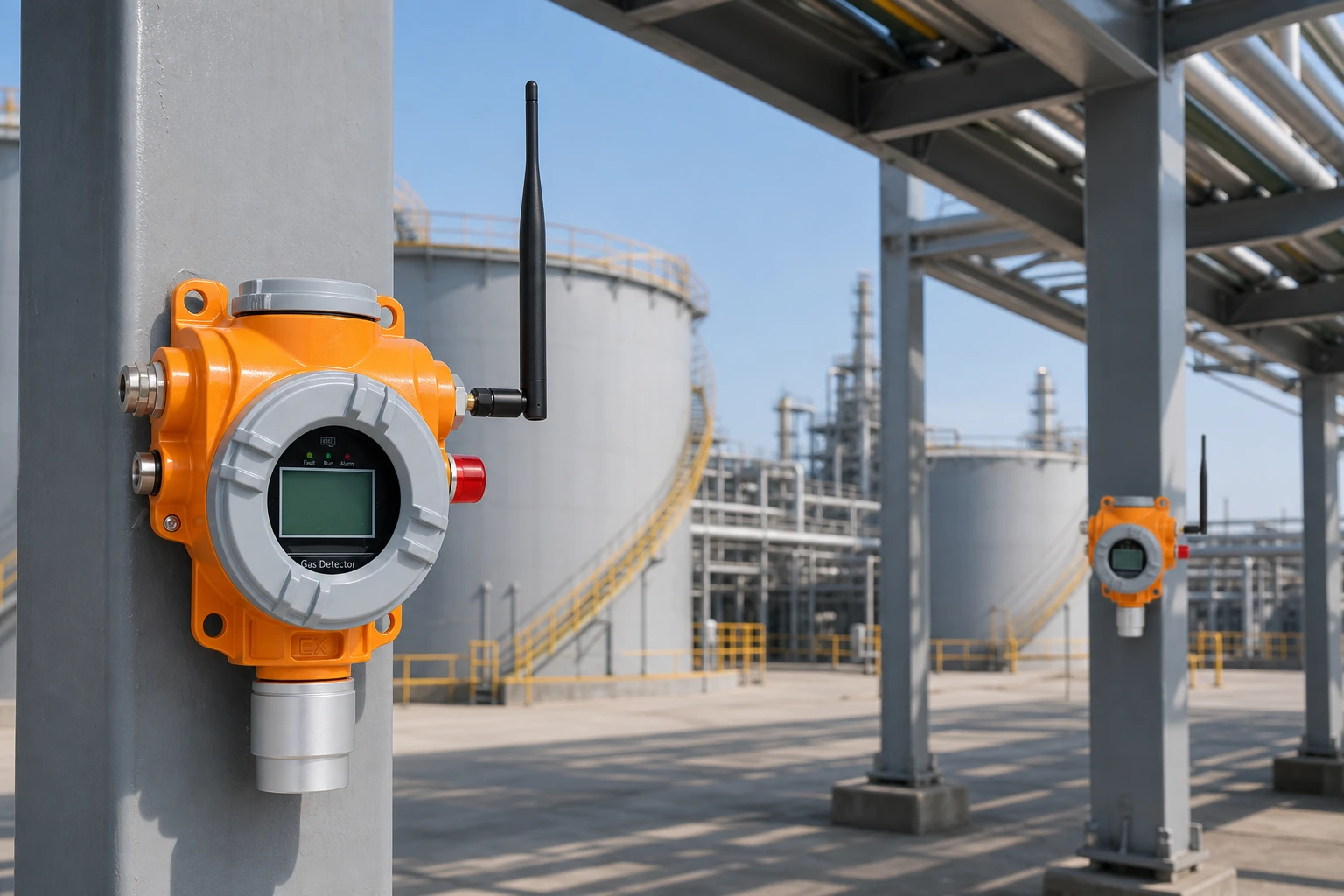
What Does Wireless Mean in a Gas Detection System?
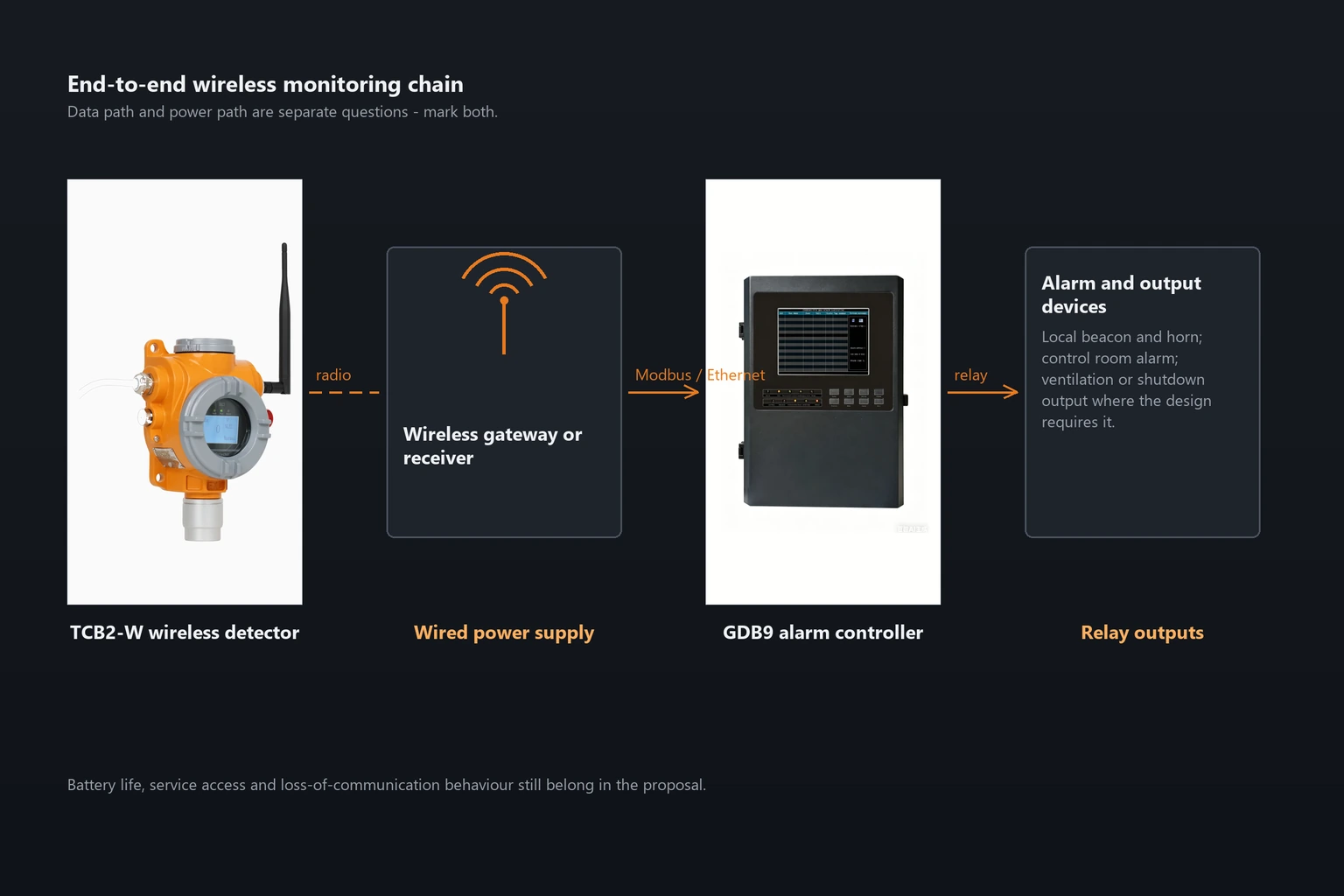
Ask the supplier to draw both the data connections and the power connections. They are not necessarily the same route. A transmitter may send readings by radio while receiving power through a cable. A battery-powered detector may report to a gateway that still requires a wired supply.
Separate three questions in the proposal: how readings reach the receiver, how alarms reach the people or equipment that must respond, and how technicians access the device for maintenance. A service connection does not, allein, establish the operating alarm path.
Request an end-to-end diagram. It should identify the detector, receiver or gateway, controller, alarm devices and every required power source. Mark optional components separately from those needed for the proposed system to work.
Match the System to Your Industrial Site
Start with the gas sources and work activities, not the building name. Two laboratories can require different sensors. Two wastewater areas can have different exposure and installation conditions. The following table identifies questions to resolve before requesting a model recommendation.
| Work area | Monitoring question | Wireless planning question |
|---|---|---|
| Boiler room | Which fuel and combustion-related hazards does the assessment identify? | Can the proposed radio route work around the installed equipment, and where will the alarm be received? |
| Laboratory | Which cylinders, gases and processes need monitoring in each room? | How will partitioned rooms connect, and who receives alarms outside working hours? |
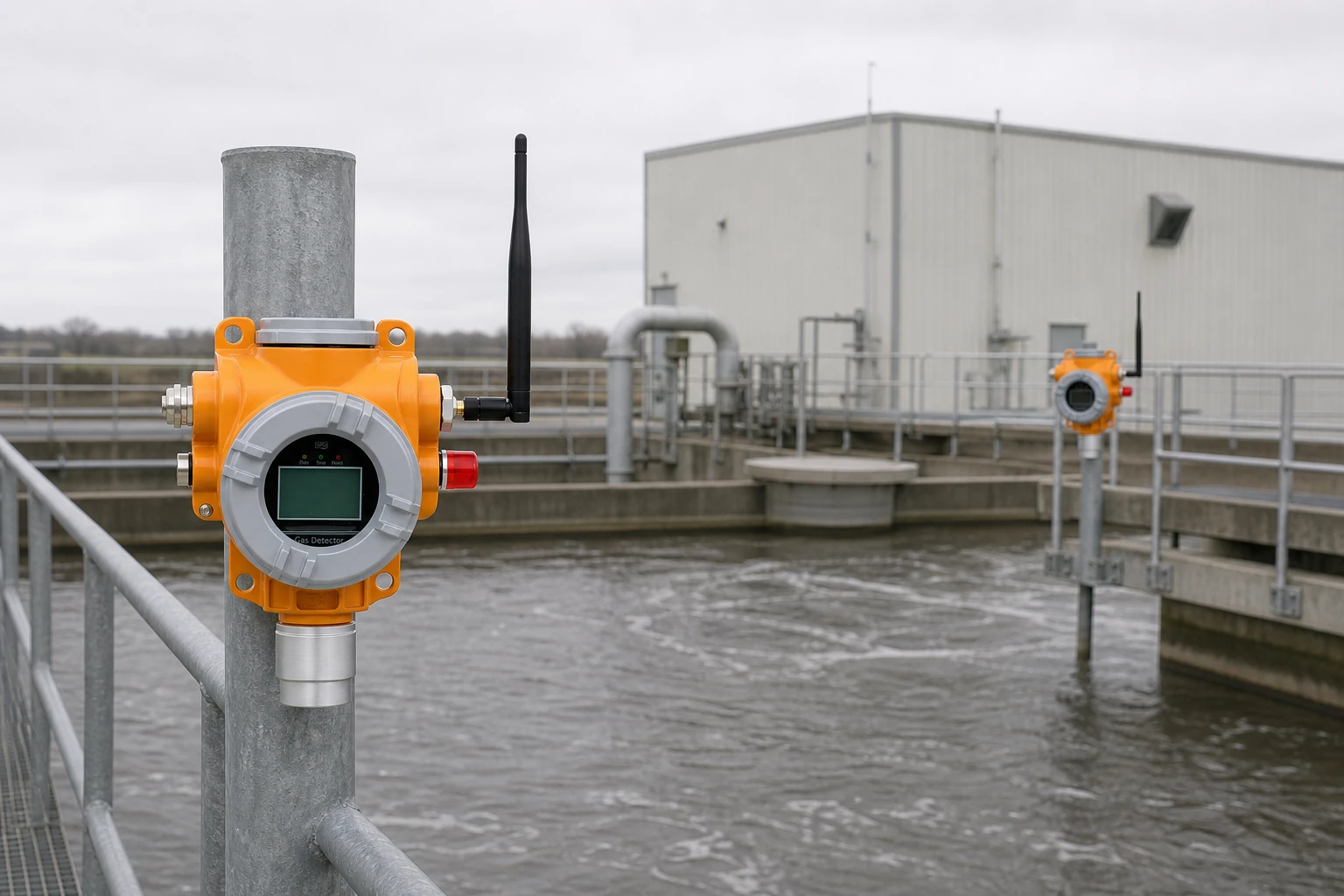
| Wastewater treatment plant | Which locations require assessment for H2S, combustible gas or oxygen deficiency? | What are the moisture, Korrosion, enclosure and communication requirements at each point? |
| Chemical plant | Which substances, sensor limitations and hazardous-area requirements apply? | Can the proposed equipment and network integrate with the approved site architecture? |
| Underground utility corridor | Which services or potential gas-entry sources create the monitoring need? | How will bends, compartments and the route to the control room be surveyed? |
| Nitrogen generator room | Does the assessment call for oxygen-deficiency monitoring? | How will the detector, local indication and receiving system be powered and maintained? |
For wastewater tasks, do not use odor as evidence that an area is safe. Der NIOSH hydrogen sulfide entry warns that smell rapidly becomes unreliable during continuing exposure. A monitoring proposal needs a measurement task, not a promise to detect a noticeable smell.
In a nitrogen generator room, specify what the instrument actually measures. An oxygen monitor measures oxygen; it should not be described as a direct nitrogen leak locator. Keep that distinction in the equipment list and operator instructions.
For an underground corridor, do not transfer a quoted open-area transmission distance into the design. Ask for evidence from the intended route. Gas detection coverage and radio coverage are separate questions, and both need to be addressed.
Seven Checks Before You Specify a Wireless Gas Detector
1. Confirm the Gas, Range and Sensor Configuration
Put the target gas and required measurement range on the enquiry. Ask the supplier to identify the sensor configuration, relevant interference limitations and operating conditions. A list of gases available across a product family does not mean one ordered unit measures all of them.
Specify the unit alongside the range. Toxic-gas concentration in ppm, oxygen concentration in percent by volume and combustible-gas readings in percent LEL are not interchangeable specifications. The display, transmitted value and controller label should agree.
2. Identify Every Power Requirement
For a battery-powered wireless gas detector, ask what conditions support the quoted battery life. The selected sensor, reporting settings, operating environment and alarm use should be addressed in the manufacturer’s estimate, rather than hidden behind a single headline number.
Also ask how low-battery status is reported, who replaces the battery and what procedure applies at the installed location. For externally powered equipment, include the supply and its failure behavior in the system design.
3. Survey the Actual Communication Route
Provide a layout showing the proposed points, major structures and receiving equipment. Ask the supplier to define the survey method and acceptance criteria before installation. Record any required repeaters or antenna arrangements in the quotation.
4. Check Protocol and Gateway Compatibility
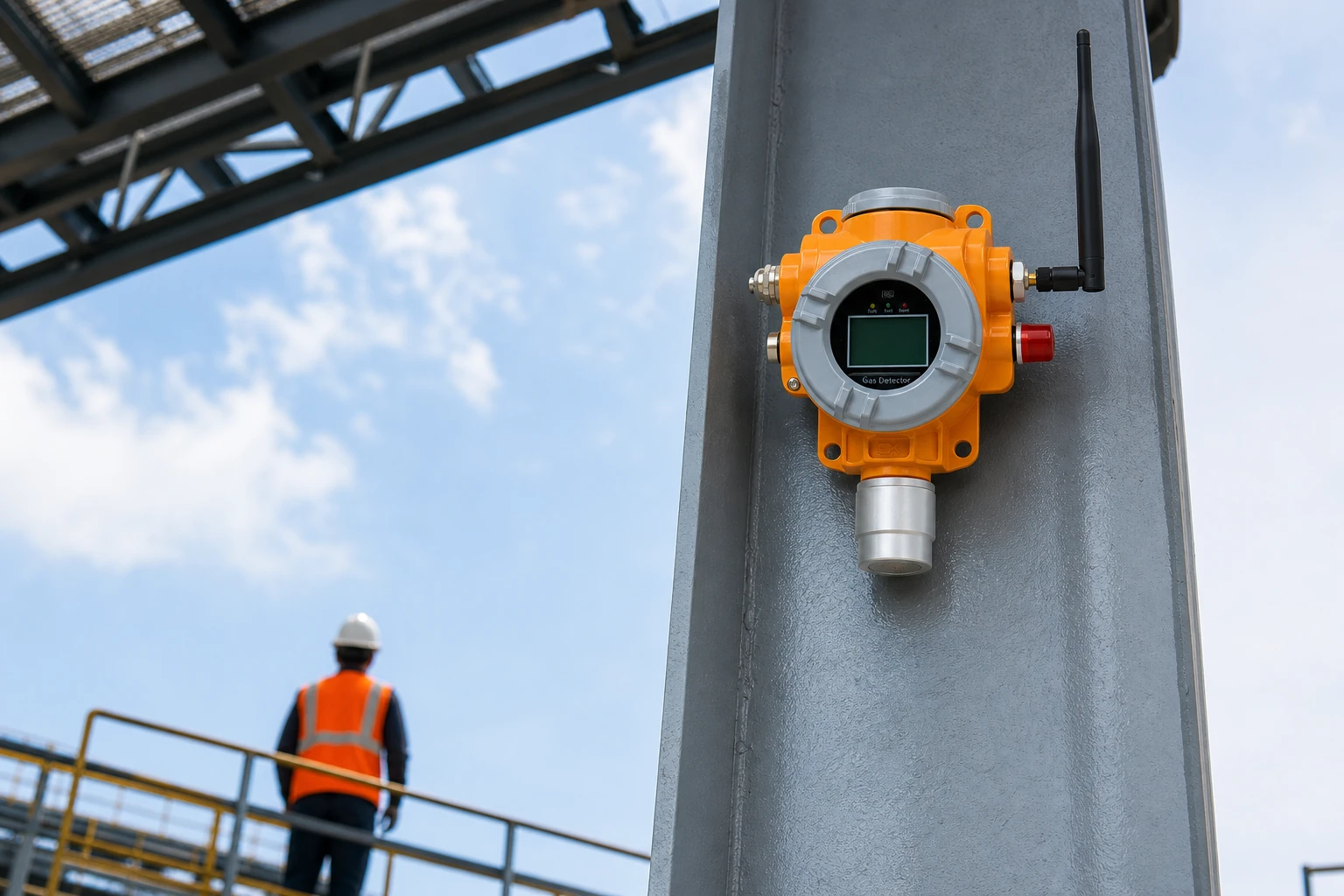
“Wireless” is not a compatibility specification. Request the exact communication option and matching receiver or gateway. Where an existing controller is involved, obtain written confirmation of the supported connection and data mapping.
Check more than the gas value. Identify how the receiving system handles measurement units, device identity, Alarm, Sensorfehler, communication faults and maintenance status. If these are separate signals or registers, they should appear in the integration documents.
5. Review Alarms and Loss-of-Communication Behavior
Ask what happens if a reading is no longer being updated. Does the receiving system identify stale data? How is a lost connection indicated, and what does the local detector continue to do? These are acceptance-test questions, not assumptions to leave until commissioning.
Keep notification and protective action separate. An email or phone message is not evidence of an approved shutdown function. Any required interlock needs review of the complete equipment chain, its documented capabilities and the site’s response requirements.
6. Verify Environmental and Certification Documents
Match the exact ordered version to the installation conditions. Request the applicable environmental ratings and, where required, hazardous-area certificates with their scope and conditions. Do not treat an enclosure’s water-resistance rating as explosion-protection approval.
A certification logo on a family brochure is not enough to settle the choice. Check the model, Sensor, accessories and regional applicability against the project specification.
7. Plan Maintenance Access Before Installation
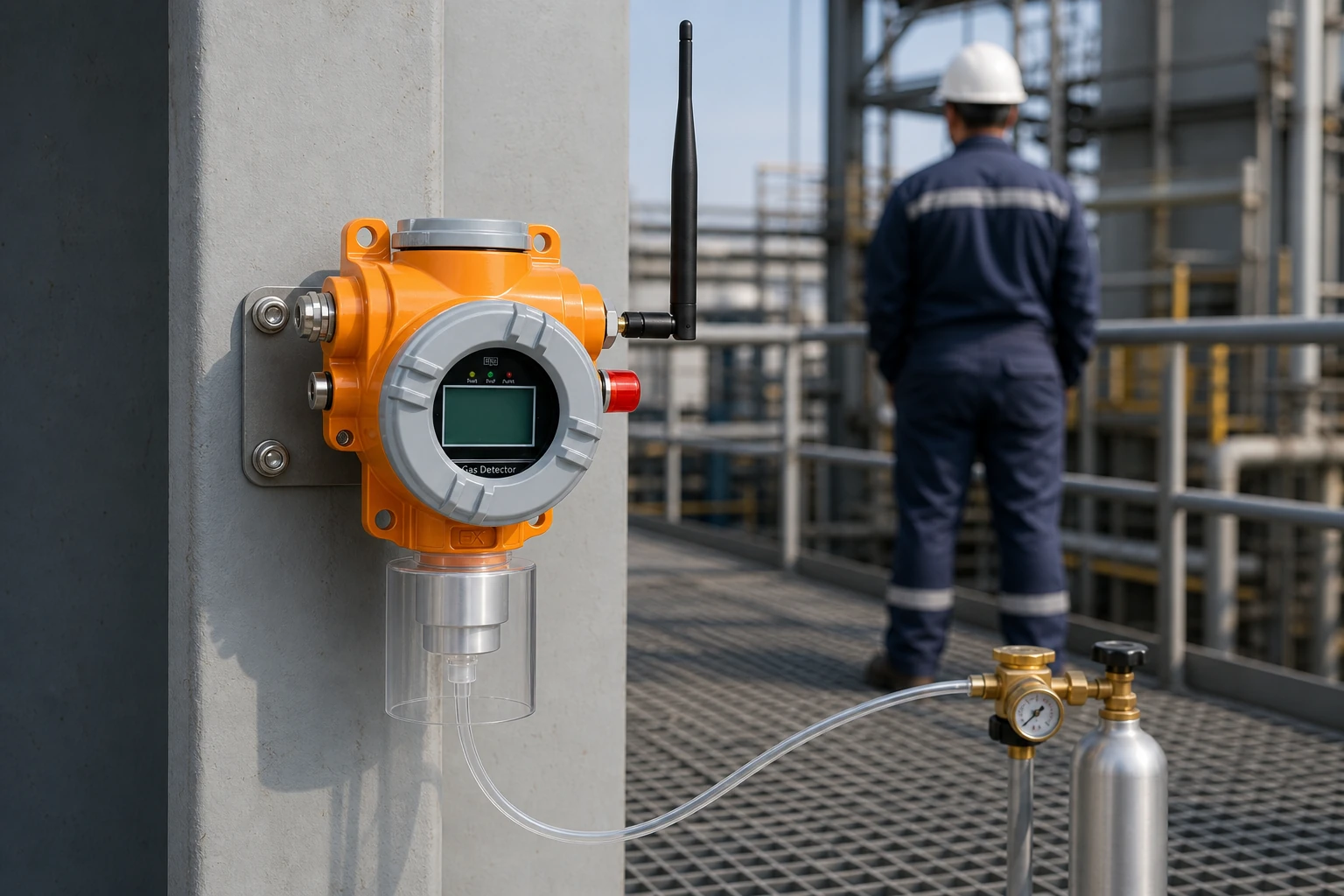
Confirm how technicians will test the sensor, apply calibration gas where required, replace consumables and record work. Radio communication does not remove sensor-maintenance requirements. A location that is difficult to reach can remain expensive to maintain even when signal cabling is avoided.
| Procurement item | Nachweise auf Anfrage | Do not accept as a substitute |
|---|---|---|
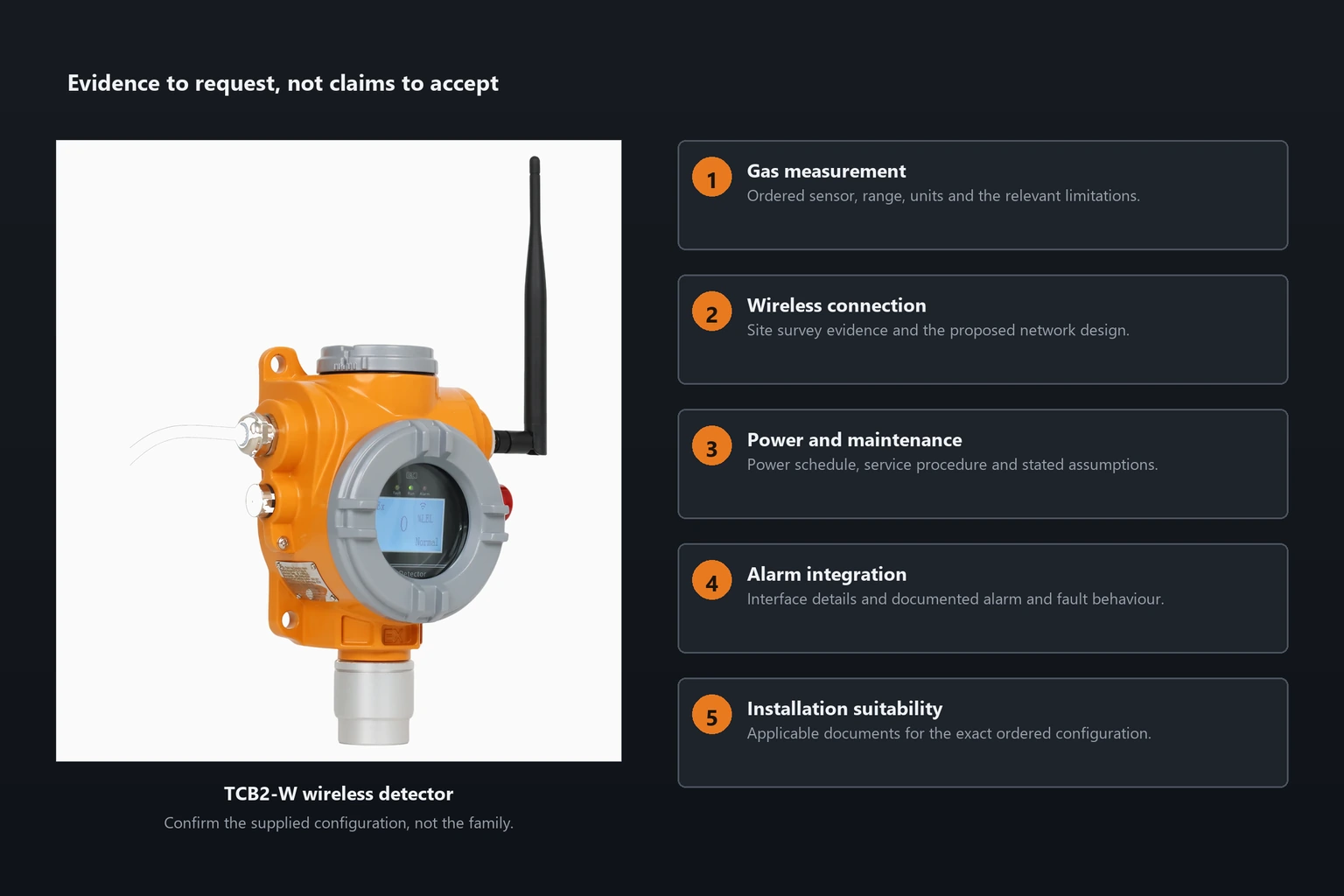
| Gas measurement | Ordered sensor, Reichweite, units and relevant limitations | A product-family gas list |
| Wireless connection | Site survey and proposed network design | Maximum range without test conditions |
| Power and maintenance | Power schedule, service procedure and stated assumptions | “Cable-free” or “maintenance-free” alone |
| Alarm integration | Interface details and documented alarm/fault behavior | A screenshot showing one live reading |
| Installation suitability | Applicable documents for the exact configuration | Unqualified certification or enclosure claims |
Discuss an Otywell Wireless Monitoring Configuration
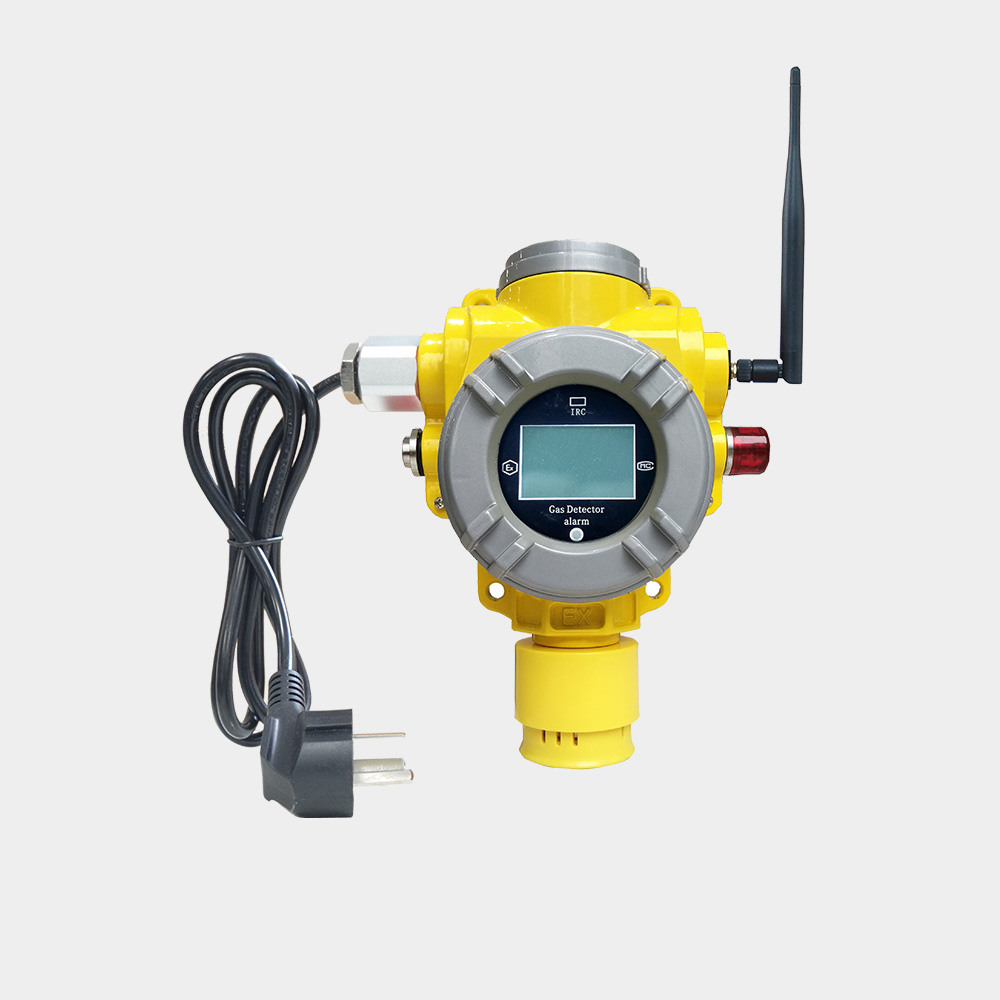
Use the TCB2-W product enquiry as a starting point for a configuration discussion. Send the target gas, site layout, available power and receiving-system requirements. Confirm the current specification and included components before selecting a unit.
Wireless monitoring enquiry
TCB2-W-WLAN-Gaserkennungsalarm
Discuss the gas configuration, Energieanordnung, kompatible Empfangsgeräte und erforderliche Alarmausgänge für Ihr Projekt.
Wenn kabelgebundene oder hybride Überwachung möglicherweise die bessere Lösung ist
Integrieren Sie eine kabelgebundene Alternative, wenn bereits eine nutzbare Infrastruktur vorhanden ist. Vergleichen Sie den Arbeitsaufwand für die Erweiterung mit der Ausrüstung und Wartung, die für eine drahtlose Erweiterung erforderlich sind. Das Entfernen eines Signalkabels ist nur ein Teil der Rechnung.
Auch eine gemischte Anordnung kann eine Prüfung wert sein: Vorhandene kabelgebundene Punkte bleiben in Betrieb, während ein geeigneter kabelloser Abschnitt eine bestimmte Installationsbeschränkung berücksichtigt. Ob diese Kombination machbar ist, hängt von den Schnittstellen und dem genehmigten Systemdesign ab, not merely on both products having a gas-detection function.
If the radio survey does not support the intended arrangement, revise the design. Do not move a detector away from its required monitoring location solely to improve reception. Resolve the measurement and communication requirements together with the project engineer.
Compare Lifecycle Costs, Not Just Detector Prices
Ask suppliers to quote the same scope. A detector-only price cannot be compared fairly with a package that includes receiving equipment, commissioning and training. Separate one-time costs from recurring work.
The initial schedule should cover transmitters, gateways, power equipment, mounting, any required network components and integration. The service schedule should identify batteries where applicable, Sensoraustausch, testing materials, calibration support and access costs. Include communication or software charges only where the proposed solution actually requires them.
Consider responsibility as well as price. Decide who owns the system records, who responds to a device fault and who supports an interface problem after handover. A clear service scope is more useful than an unsupported percentage saving.
Prepare a Useful Quotation Request
A request for “ten wireless gas detectors” leaves important choices unanswered. Send a short project brief containing:
- The target gases, required ranges and purpose of each monitoring point.
- A site drawing showing proposed locations, structures and the control room.
- Available power and the intended communication route.
- Existing controller or gateway details, including interface requirements.
- Required local indications, remote alarms and fault reporting.
- Environmental conditions and applicable hazardous-area documentation.
- Maintenance arrangements, spare-parts needs and handover requirements.
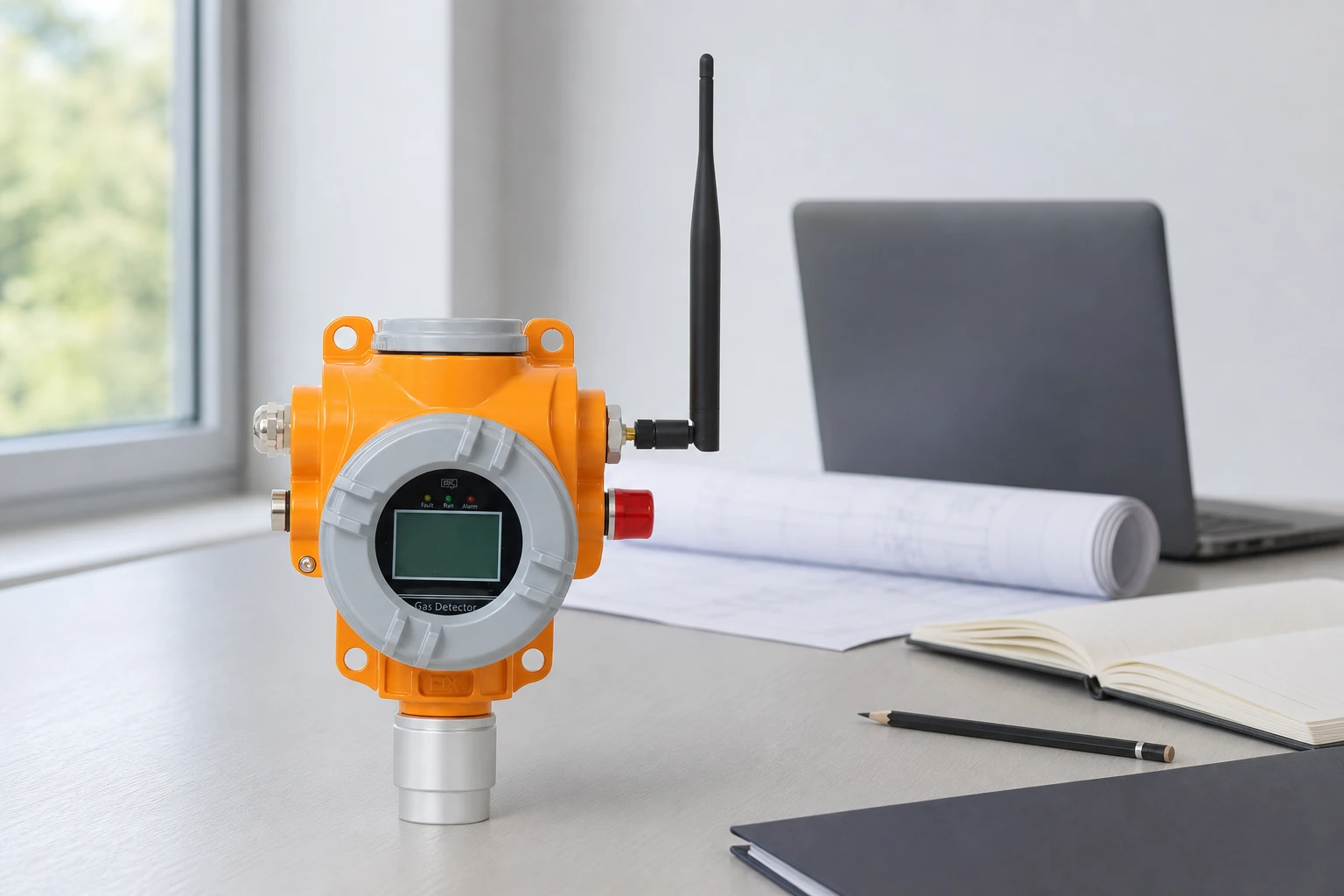
Ask for a documented configuration, not just a model number. Request a component list, system diagram, compatibility statement and commissioning scope alongside the price. Note anything that still depends on a site survey or technical review.
Häufig gestellte Fragen
Does a wireless gas detector still need power wiring?
It can. Wireless data transmission and power supply are separate specifications. Confirm whether the proposed detector uses a battery or external power, then check the gateway and alarm equipment as well.
Does it need an internet connection?
That depends on the architecture. Ask which functions run locally and which depend on an external network or cloud service. Dokumentieren Sie, was verfügbar bleibt, wenn die Verbindung unterbrochen wird, anstatt davon auszugehen, dass Remotezugriff und lokale Überwachung identisch sind.
Wie soll die Übertragungsreichweite unter Tage überprüft werden??
Durch eine Besichtigung und vereinbarte Erprobung der vorgeschlagenen Ausrüstung entlang der tatsächlichen Strecke. Ein allgemeiner Abstandsanspruch kann die Leistung in den Kurven des Geländes nicht belegen, Trennwände und andere Hindernisse.
Kann es an einen vorhandenen Gasalarm-Controller angeschlossen werden??
Erst nach Bestätigung der Kompatibilität. Identifizieren Sie die genaue Ausrüstung, Kommunikationsmöglichkeit und Schnittstelle. Überprüfen Sie die Alarm- und Fehlerbehandlung im Rahmen der Integration, nicht nur, ob ein Konzentrationswert auf dem Bildschirm erscheint.
Entfällt bei der drahtlosen Kommunikation die Kalibrierungspflicht??
NEIN. Kommunikation beschreibt, wie Daten übertragen werden. Befolgen Sie die Test- und Kalibrierungsanweisungen des Geräteherstellers und das Wartungsprogramm des Standorts für die ausgewählte Sensorkonfiguration.

Wechat
Scannen Sie den QR -Code mit WeChat