 Henan Otywell Electronic Technology Co., Ltd

A styrene gas detector should be chosen for a defined measurement, not simply for the name of the vapor on a product list. A resin shop may need a reading near a worker, a continuous alarm beside a recurring release point, or a time-based sample to evaluate exposure. Those jobs call for different instruments and records. Start with the work and the question the reading must answer.
Use a verified styrene-capable ppm configuration when the question is the concentration of styrene vapor at an inlet. Use a suitable %LEL channel when the question is flammable-atmosphere warning. A general TVOC response does not, allein, identify styrene in a mixture. A live detector reading also differs from a personal sample collected over a specified period.
Where does the styrene measurement belong?
Styrene is used in plastics, resins and reinforced materials. The IOSH Pocket Guide entry for styrene identifies the substance as a flammable liquid and vapor with both exposure and flammability information. That combination does not mean one detector setting answers every question. A buyer first needs to identify where the vapor can be released, who is present and what action an alarm should trigger.
Resin mixing and open work
Think through a normal shift rather than a room label. A container is opened, resin is transferred, a mixture is applied, and a part remains in an area while it cures. The worker may move between an open surface, a mixing station and a cleanup point. A detector at the mixing bench represents air at that bench; a unit carried by the worker follows a different path. Neither describes every location in the building.
Start with the current safety data sheets and actual formulation. Some composite processes use materials other than styrene-containing resin. If the material does not contain styrene, a dedicated styrene channel may be the wrong purchase even though the work is called “resin processing.” If other solvents are present, list them before discussing sensor response.
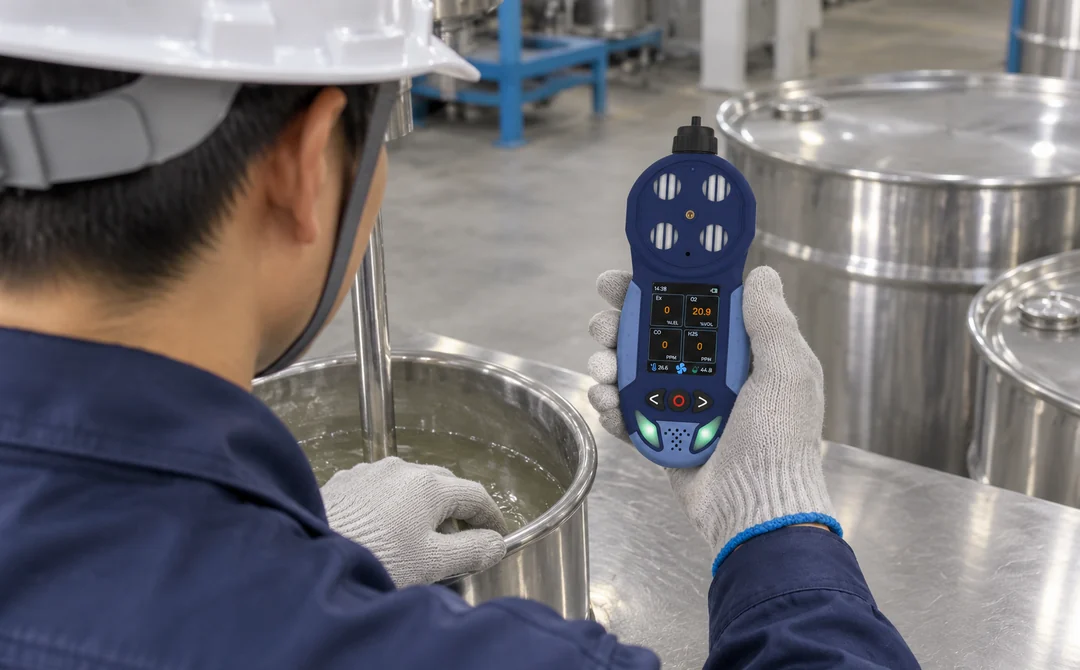
Lagerung, transfer and partly enclosed areas
A recurring connection, pump seal or storage enclosure may justify a fixed point, especially when nobody is continuously present to carry an instrument. Draw the likely release points, local ventilation, door and extraction positions, operator routes and the location where an alarm must be noticed. Sampling inlet access for testing matters as much as the initial mounting position. Vapor behavior, ventilation and room geometry together determine what air reaches a point; a simple mounting-height rule is insufficient.
Choose the reading before choosing the detector
Styrene in ppm
Parts per million describes a concentration in air. For a number displayed as styrene ppm, request evidence that the fitted sensor or measurement method is suitable for styrene at the concentrations of interest. The quotation should name its range, Auflösung, calibration approach and relevant cross sensitivities. A printed gas name on a screen is not proof that a mixed atmosphere has been separated into its chemical components.
Der NIOSH Pocket Guide listet einen empfohlenen zeitgewichteten Durchschnitt und ein kurzfristiges Limit auf, während OSHA verschiedene zulässige Expositionsgrenzwerte auflistet. Diese Werte haben unterschiedliche Autoritäten und Mittelungsperioden. Sie sind Bezugspunkte für ein Belichtungsprogramm, nicht für jeden tragbaren Alarm vorgefertigte Einstellungen. Vermeiden Sie es, die Standard-Alarmnummer eines Lieferanten ohne Angabe der Grundlage in die Bestellung zu kopieren.
%UEG für die Warnung vor brennbaren Dämpfen
Eine %UEG-Anzeige berücksichtigt die Annäherung an eine brennbare Konzentration. Der HSE-Leitfaden zur Auswahl von Detektoren für brennbare Gase unterscheidet ppm- oder mg/m³-Messungen bei niedrigen Konzentrationen von %UEG-Messungen und erklärt die unterschiedlichen Rollen von stationären und tragbaren Instrumenten. Sowohl ein Styrol-ppm-Kanal als auch ein Kanal für brennbare Stoffe können nützlich sein, but one should not be treated as a substitute unit for the other. Ask how the proposed combustible channel responds to styrene or the expected vapor mixture and how it is calibrated.
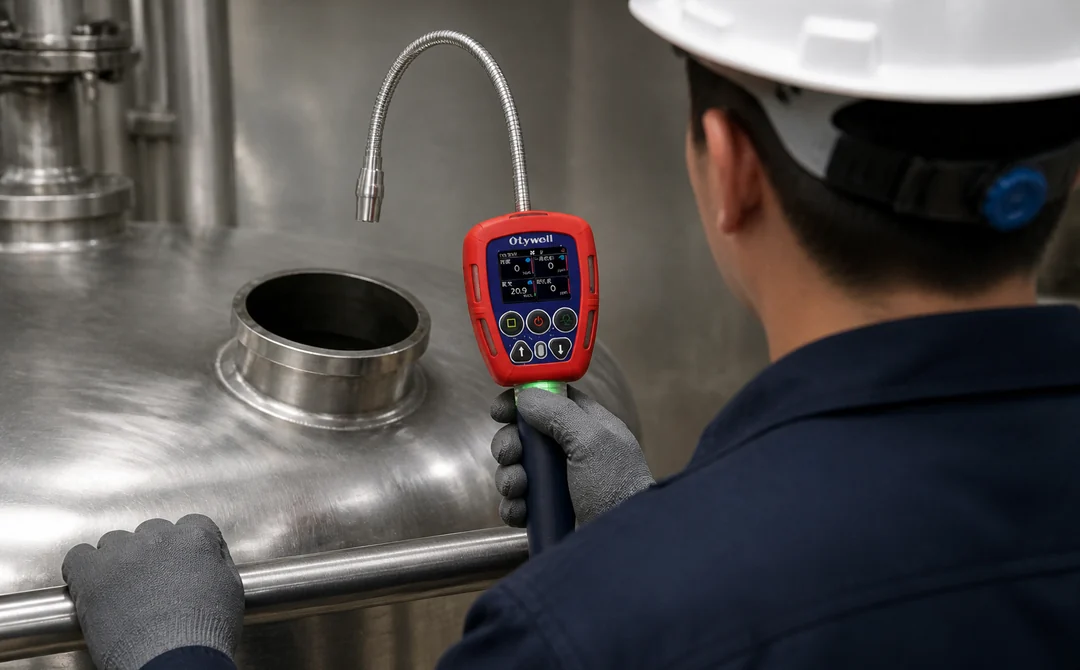
What a TVOC number can and cannot say
A broad VOC instrument may respond to styrene, but other resin solvents can contribute to the same indication. That response may help find a change or a source. It does not establish how much of a mixed reading is styrene without an appropriately validated method. A correction factor can alter a numerical estimate for a known compound; it does not identify that compound when the mixture is unknown.
| Frage am Arbeitsplatz | Ergebnis auf Anfrage | What it does not prove |
|---|---|---|
| How much styrene is reaching this inlet now? | Verified styrene ppm configuration and inlet position | A worker’s exposure across the shift |
| Is the vapor approaching a flammable condition? | Suitable %LEL channel and alarm route | Low-level styrene concentration in ppm |
| Has the organic-vapor background changed? | TVOC indication with its calibration basis | Styrene’s share of a mixed response |
| What did this person encounter over time? | Representative personal sample and sampling period | Continuous alarm between sample collections |
Match the sampling format to the job
Worker-carried diffusion monitor
A diffusion monitor measures air that reaches its inlet naturally. It can follow a person through changing tasks, provided the ordered channel, wearing position and alarm function are appropriate. A unit clipped to clothing does not sample the inside of a closed vessel or a distant pipe joint. Document where it will be worn and which actions the wearer takes when it alarms.
Pumped checks at a specific point
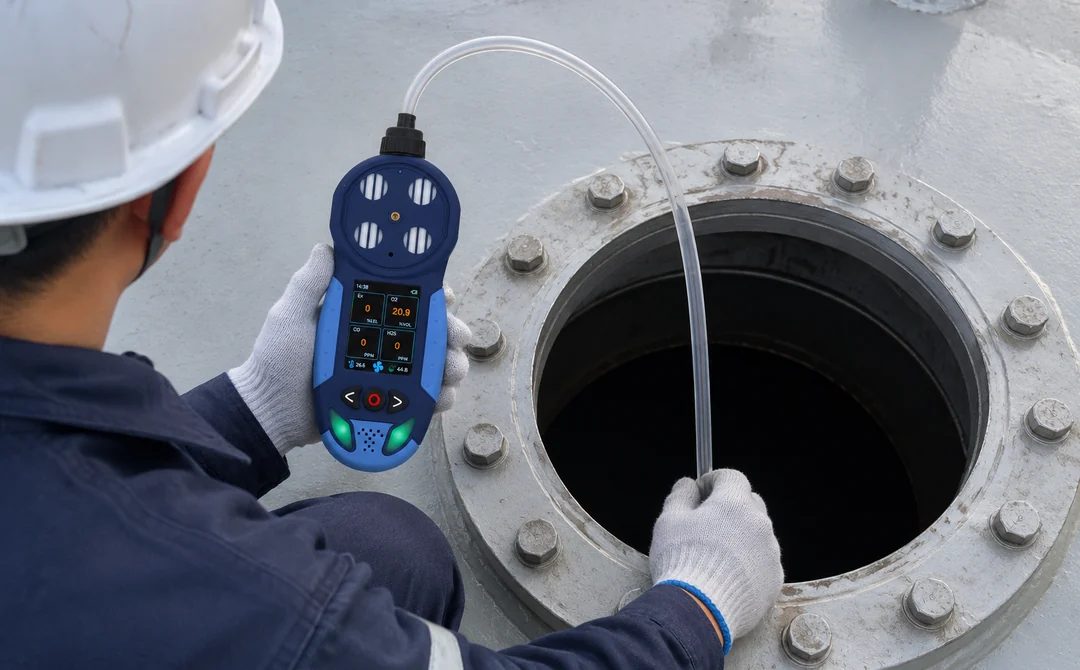
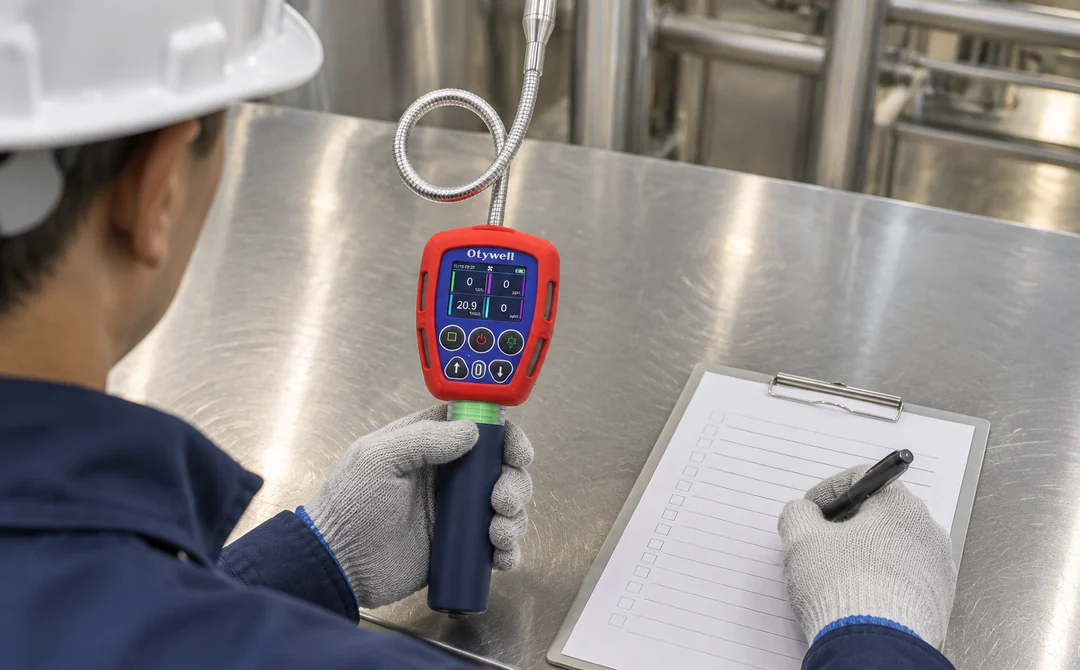
A pump and probe can bring air from a container opening, transfer connection or other point to a portable instrument while the operator remains elsewhere. State the probe-tip location, hose length, Schlauch, filter and expected wait for the entire sampling path. A display that changes immediately at the instrument may still lag the atmosphere at the probe tip. The configuration should also show how low flow or a blocked inlet is indicated.
Fixed monitoring and alarm integration
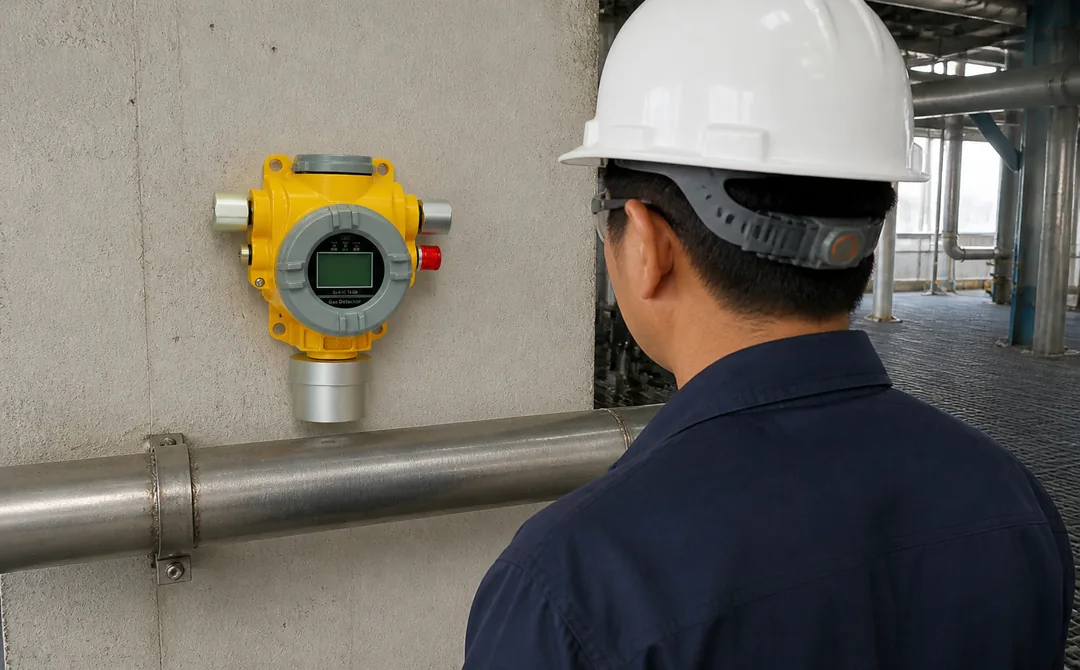
A fixed detector watches one selected location between visits. Its job may be to warn of a recurring release at a transfer station or within an enclosure. Specify the inlet, Leistung, signal output, empfangenden Controller, fault indication and alarm recipient. A fixed point near a vessel does not automatically represent the breathing zone of every worker nearby. If air is drawn from a remote inlet, the pump and line are part of the installed measurement path.
Detector tubes and time-based samples
A styrene detector tube gives a spot result for a specified sampling procedure and range. It can answer a particular question at a particular time, but it cannot watch an unattended point continuously. For a representative personal exposure result, the sample location, duration and analysis method have to be defined.OSHA Method 1014 for styrene, Zum Beispiel, describes diffusive samplers and laboratory analysis, with different recommended sampling periods for its time-based measurements. A live display and a laboratory result should retain their separate labels in the site record.
Otywell-Geräteformate zur Diskussion
Otywell equipment is configured around the target gas and monitoring task. The pages below establish available instrument formats; they do not establish a ready-to-ship styrene sensor in every pictured unit. Request the exact fitted sensor, Reichweite, sampling version and supporting documents for the quoted configuration.
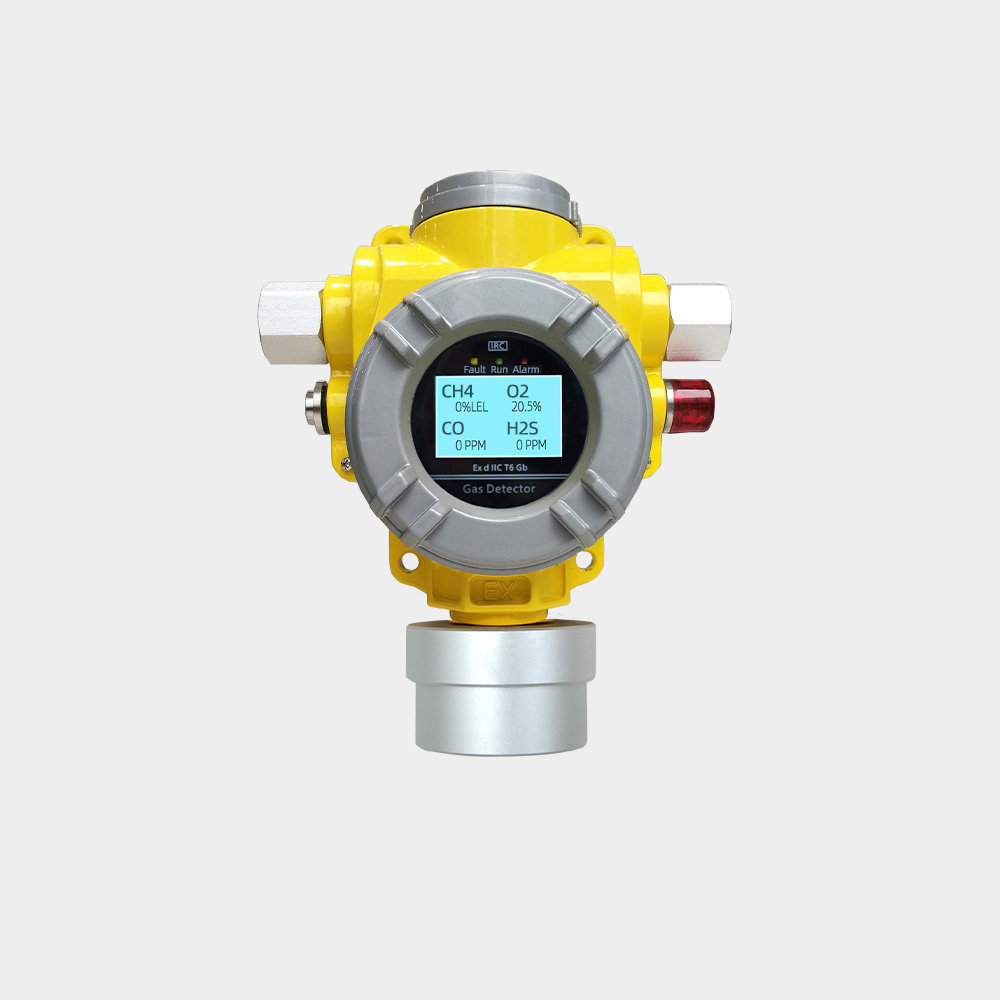
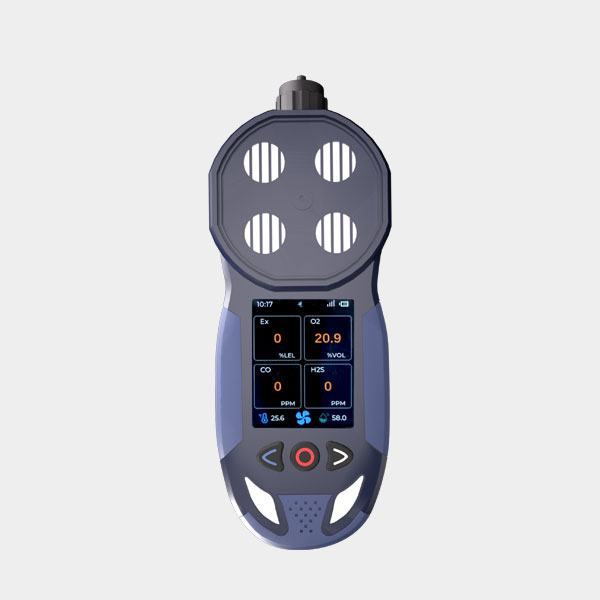
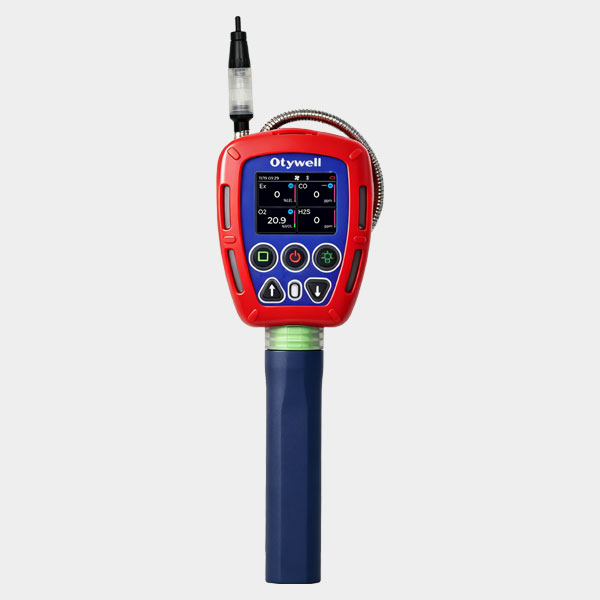
Specify the styrene-capable configuration
Send the supplier the current material information, the process step and the other solvents likely to reach the inlet. Ask for the offered styrene sensor or analytical method by name. The useful range includes both the lowest concentration at which a decision is needed and the highest credible concentration during the task. A very wide display range is not evidence of useful low-end performance.
Request written information on cross sensitivities, Kalibriergas und Verfahren, Temperatur- und Luftfeuchtigkeitsgrenzen, Ansprechzeit, overload and recovery behavior. If a surrogate calibration gas or numerical correction is proposed, ask what that number means in the actual mixture. The answer may differ for a worker-carried monitor and a fixed point beside an open resin vessel.
Für ein gepumptes Instrument, confirm the delivered probe, Schlauch, Filter, Strömungsfehlerverhalten und Gesamtsystemreaktion. Für eine feste Einheit, list the output and controller that will receive both alarm and fault information. Der Otywell gas-detection system planning guide explains why measurement points, input channels and alarm zones should be specified separately.
| RFQ line | State your requirement | Request in the supplier reply |
|---|---|---|
| Target and result | Styrene ppm, brennbare %UEG, or both as separate duties | Einbausensor, Verfahren, display units |
| Working range | Lowest useful reading and highest credible concentration | Reichweite, Auflösung, response and recovery data |
| Atmosphäre | Other solvents, Temperatur und Luftfeuchtigkeit | Interference and environmental information |
| Probenahme | Diffusion, probe or installed remote inlet | Complete accessory list and flow check |
| Alarmroute | Who acts, where and through which controller | Ausgabe, settings and functional-test procedure |
| Dokumentation | Destination market and required site documents | Handbuch, calibration basis and actual applicable certificates |
Check the delivered measurement path
Compare the delivered unit with the configuration schedule, not only with the model photograph. Record its sensor, Reichweite, Einheiten, serial number and accessories. Mark each fixed inlet on a site drawing and each portable wearing or probe position in the task procedure. A sensor that is correct on paper can still be installed where ventilation carries the vapor away from its inlet.
Complete the zero, span and functional checks using the instructions for the supplied configuration. Für ein gepumptes Setup, check the probe tip, Linie, filter and flow indication together. For a fixed setup, exercise the path from the inlet through the detector output to the expected alarm recipient. Record the result and the action taken if a sensor, pump or communication fault appears. An ingress-protection rating and an explosion-protection approval describe different properties; verify the certificate for the exact equipment supplied.
Keep exposure limits and alarm settings separate in the record. A limit applies to a defined jurisdiction and averaging period. An instrument alarm applies to a configured device and site action. The chosen values should be traceable to the site’s stated procedure and the capabilities of that instrument, rather than copied from another product page.
Request a styrene configuration
Send Otywell the material and process, the monitoring point or worker task, erwartetes Konzentrationsband, andere Lösungsmittel, erforderliche Lektüre und Einheit, portable or fixed format, alarm destination and documents needed in your market. Ask for the fitted styrene sensor and complete sampling arrangement in the quotation.
Häufig gestellte Fragen
Can a TVOC detector report styrene concentration?
A broad TVOC response can show that organic vapor has changed, but it does not identify styrene’s share of a mixed atmosphere. Request the method, calibration basis and evidence for interpreting the proposed reading as styrene ppm at your work point.
Should I choose ppm or %LEL for styrene?
Choose according to the question. A verified styrene ppm channel addresses the vapor concentration reaching an inlet. A suitable %LEL channel addresses a flammable-atmosphere warning. Wenn beide Pflichten vorhanden sind, specify both and document each channel’s calibration and alarm task.
When is a fixed detector more useful than a portable unit?
A fixed point can watch a recurring release location between visits and send an alarm to a controller. A portable unit follows a person or a probe task. The fixed inlet covers its chosen location, while the portable inlet covers the air that reaches it during use.
Can a portable detector replace personal exposure sampling?
A live display can show the concentration at its inlet at a moment in time. A representative exposure measurement uses a defined sampling position, duration and analysis method. Keep the two results separate, including their units and time basis.
Where should a styrene detector be installed?
Start with the actual release points and the air movement around them. Consider enclosures, Belüftung, worker routes, the alarm recipient and access for testing. Document the selected inlet position; vapor density alone does not determine it.
What must I confirm before ordering a styrene sensor?
Request the fitted sensor or method, styrene range and resolution, Kalibrierungsverfahren, relevant cross sensitivities, environmental limits and recovery information. Confirm the sampling accessories, alarm outputs and applicable documents for the exact configuration.
Bieten Prüfröhrchen eine kontinuierliche Überwachung??
NEIN. Ein Prüfröhrchen liefert ein Ergebnis für eine bestimmte Pumpe und einen bestimmten Probenahmevorgang zu einem bestimmten Zeitpunkt. Überprüfen Sie die Reichweite und störende Substanzen für diese Punktaufgabe. Eine andere Aufgabe erfüllt ein eingebauter oder mitgeführter elektronischer Melder, weiterhin Alarmfunktion.

Wechat
Scannen Sie den QR -Code mit WeChat