 เหอหนาน Otywell เทคโนโลยีอิเล็กทรอนิกส์ จำกัด, บจ

A portable methane detector can mean a leak-finding instrument carried along a gas line, a personal alarm worn during a shift, or a pumped unit used to collect a sample. Those instruments may all respond to methane, but a purchasing specification needs to say what the reading will be used for.
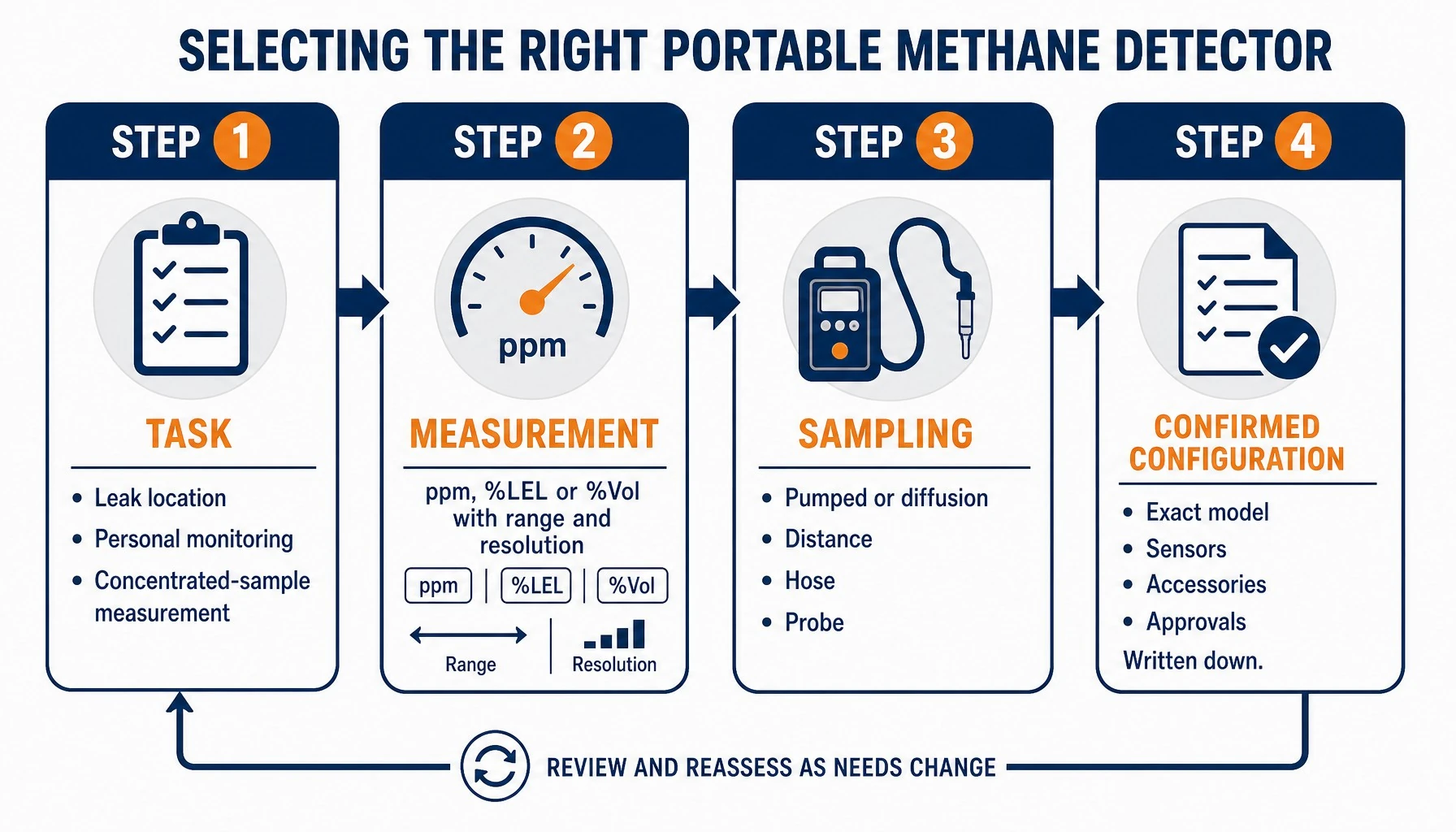
Start with the task, the required measurement range and the way gas will reach the sensor. Then compare the model, accessories and maintenance requirements. A catalogue entry that simply says “detects CH4” leaves too much unresolved.
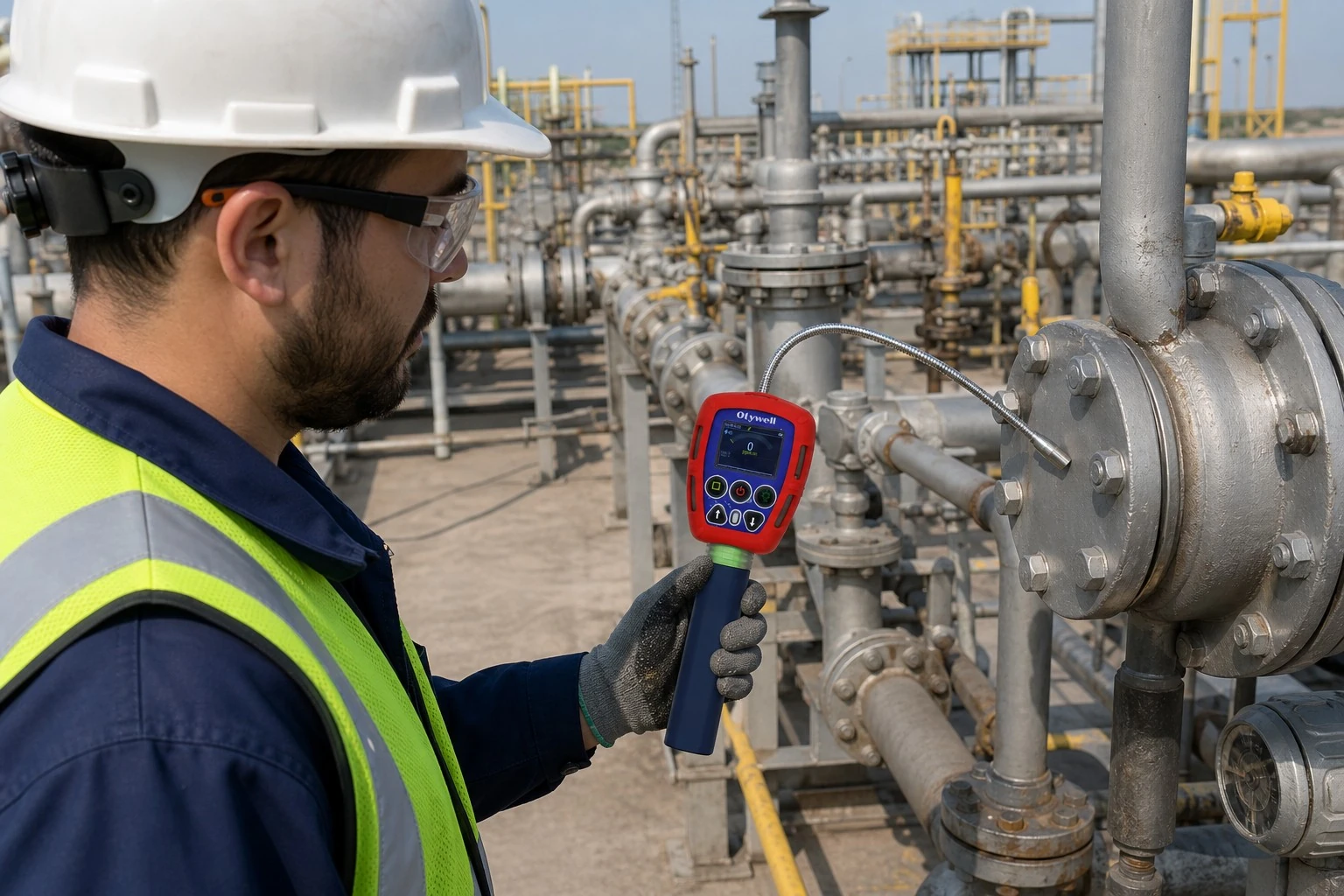
Start with the Job: Leak Finding or Personal Monitoring?
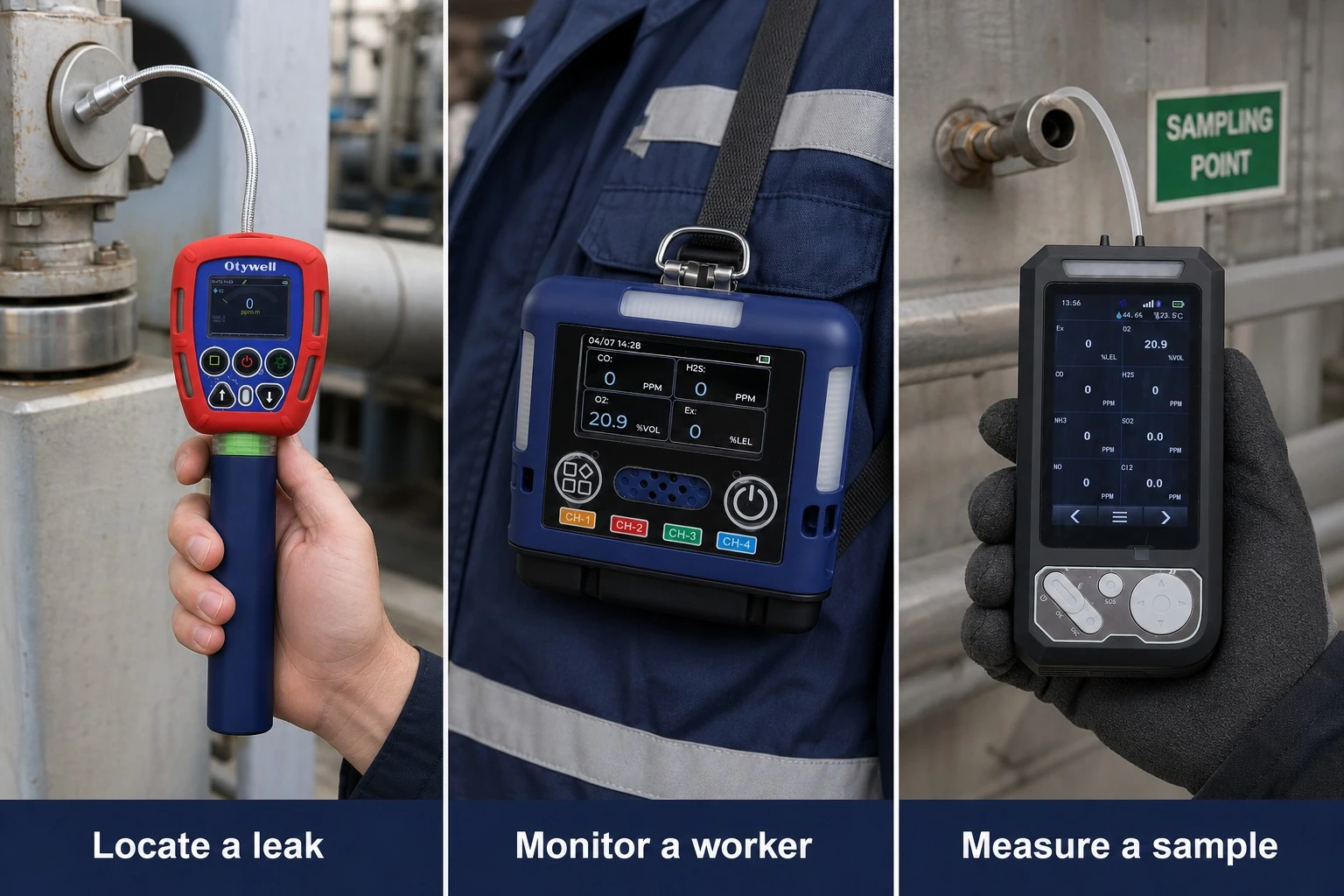
Imagine a purchase request for “ten methane detectors.” Before comparing prices, ask who will carry them and what happens after a reading appears. A technician locating a leaking connection needs different information from a worker relying on an alarm while moving through a work area.
For leak finding, describe the components being inspected, their accessibility and the concentration range of interest. Ask whether the instrument supplies a quantitative reading, a relative indication, or both. A changing indication can help a technician investigate a suspected source, but the buying specification should state the performance required for that investigation.
For personal monitoring, consider how the unit is worn, whether the inlet stays exposed and how an alarm is noticed during actual work. Include other identified hazards in the gas list. A methane-only instrument supplies no oxygen reading unless it has a separate oxygen channel.
Higher-concentration sampling deserves its own specification. If the intended sample may exceed the combustible-gas alarm range, tell the supplier before selecting the instrument. Ask how it responds to an over-range condition and what checks are required afterward.
The UK Health and Safety Executive discusses these different roles in its คำแนะนำในการเลือกและใช้เครื่องตรวจจับก๊าซไวไฟ. It also explains why detector selection and operating procedures need to be considered together. This is UK guidance; approval and workplace requirements must be checked for the location where the equipment will be used.
Choose the Measurement Range Before Comparing Models
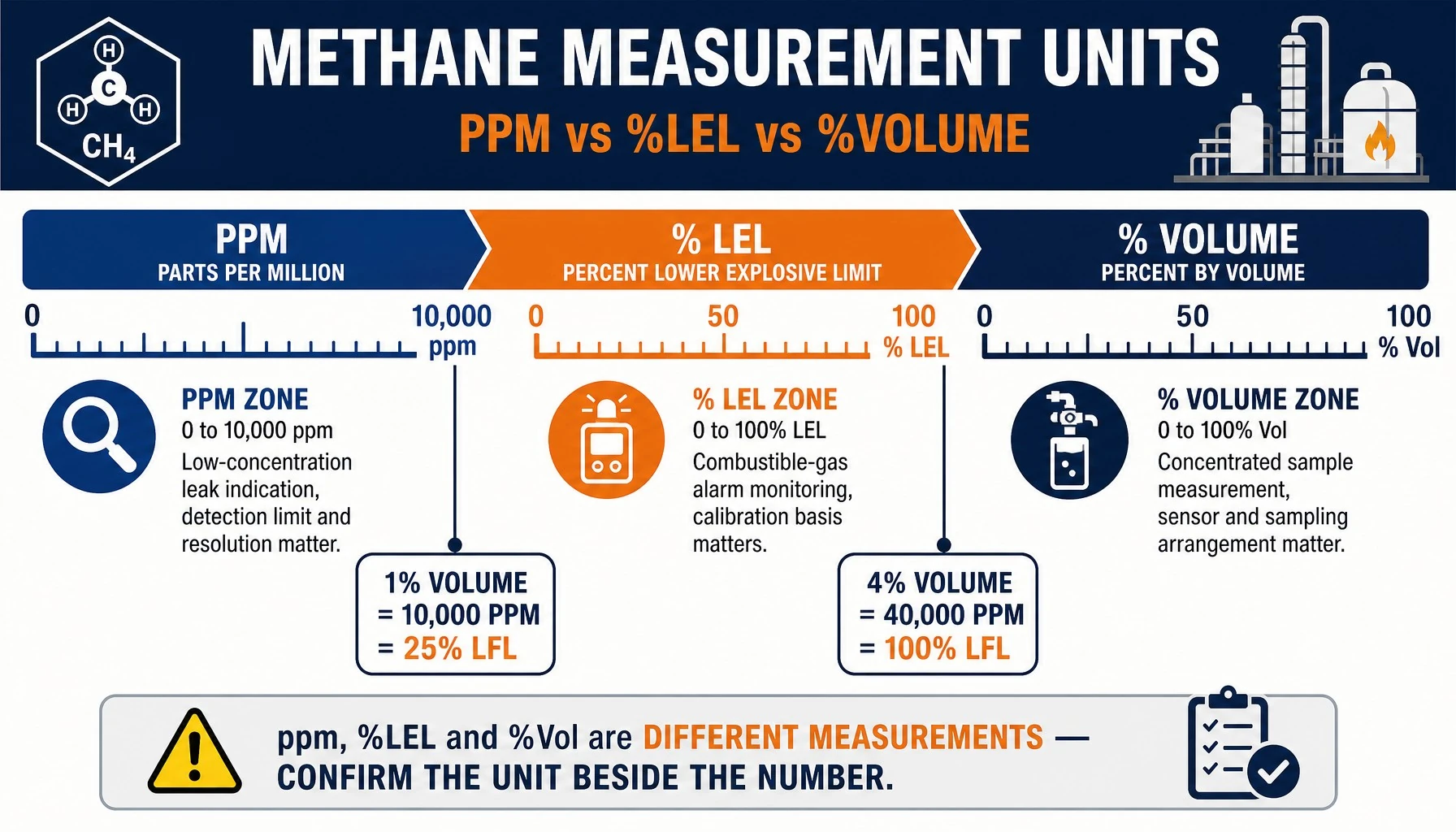
The unit beside the number matters. A purchasing comparison that puts ppm, %LEL and %Vol readings into one “sensitivity” column can hide differences in what the instruments measure and how they will be used.
| Measurement | What the unit expresses | What to confirm with the supplier |
|---|---|---|
| ppm | Parts of methane per million parts of the gas mixture. | Detection limit, ปณิธาน, accuracy and usable range for the intended leak investigation. |
| %แอลอีแอล | Concentration relative to the lower explosive limit used by the instrument. | Target gas, calibration basis, alarm configuration and over-range behavior. |
| %Vol | Methane as a percentage of the gas mixture by volume. | Sensor suitability for the expected concentration and sample conditions. |
ppm for Low-Concentration Measurements
A ppm display can be useful when the job requires concentration information at relatively low levels. Look beyond the smallest digit on the screen. A display resolution of 1 ppm does not, by itself, establish a 1 ppm detection limit or measurement accuracy.
Ask for those specifications separately, including the test conditions. If methane must be distinguished from other combustible gases, ask for the sensor’s selectivity and interference information as well.
%LEL for Combustible-Gas Monitoring
A %LEL reading expresses concentration relative to a flammability reference. It is not the same as percentage methane by volume. When comparing instruments, record the calibration gas and reference used for the methane scale. Do not carry an assumed conversion or alarm setting from one model into another without checking its documentation.
%Vol for Higher-Concentration Applications
A percent-volume range may be relevant when the purpose is to measure a concentrated sample. Request confirmation of the approved sampling arrangement, operating conditions and response above the specified range. The availability of a %Vol option elsewhere in a product family does not establish that the quoted unit includes it.
Pumped or Diffusion: Match Sampling to the Work
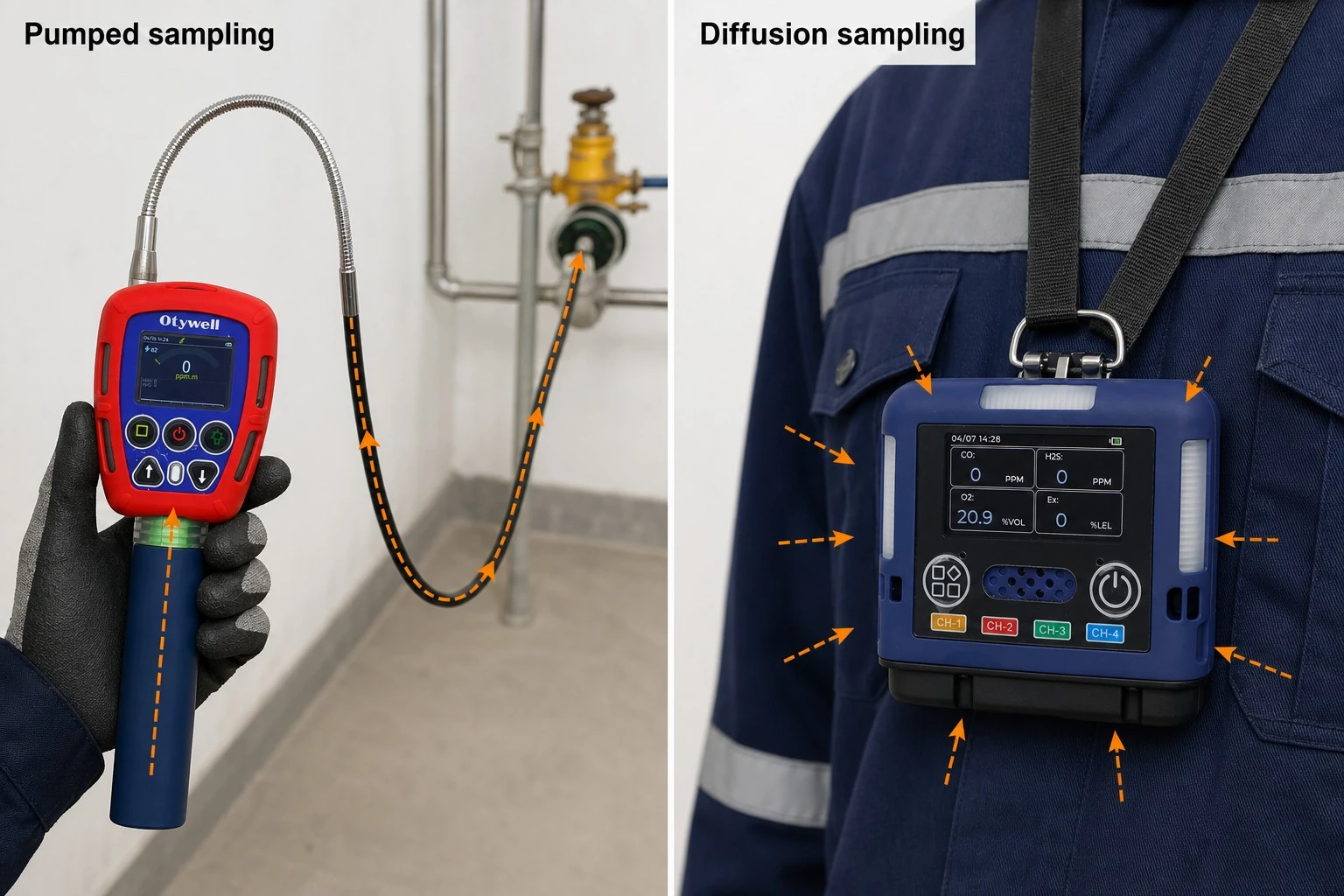
A diffusion instrument responds to gas that reaches its inlet. A pumped instrument draws gas through a sampling path. Choose between them by describing where the operator will stand and where the sample must come from.
If the job involves sampling through a probe or hose, include those accessories in the initial quotation. Ask for the permitted hose length, compatible materials, ตัวกรอง, water protection and pump-fault indication. These details affect whether the proposed kit can perform the stated task.
Also ask for the manufacturer’s sampling-time instructions. The sensor response figure on a datasheet does not necessarily include the time taken for gas to travel through the complete sampling assembly. Record the procedure for checking flow and dealing with a blocked or wet inlet.
A wearable diffusion monitor may suit ongoing personal monitoring, while a separate pumped instrument handles a specific sampling task. Decide whether one configurable instrument or separate devices fit the workflow, charging arrangements and responsibilities of the crew.
Compare Otywell Portable Gas Detection Options
Use these product pages to discuss the configuration that fits your task. The models below cover different monitoring roles.
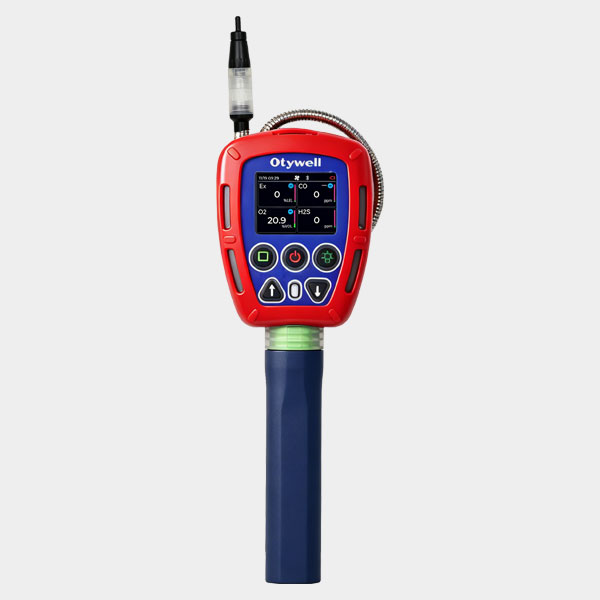
G90 Portable Gas Detector
Review the methane configuration with ppm, %LEL and %Vol ranges. Confirm the selected model and sampling kit.
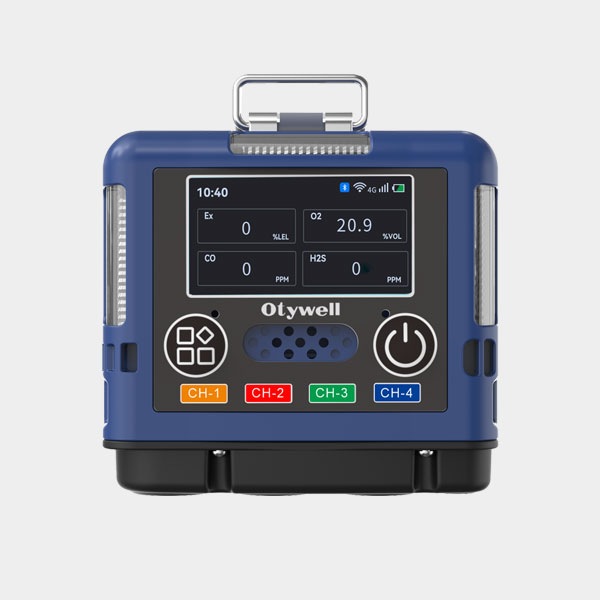
G60 เครื่องตรวจจับก๊าซหลายชนิด
Review a diffusion monitor for the standard oxygen, combustible-gas, CO and H2S combination.
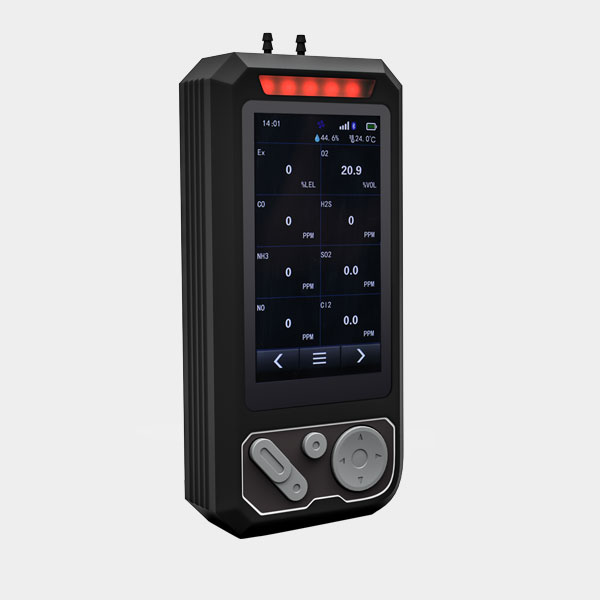
OT139 Multi-Gas Detector
Discuss a multi-gas configuration when the assessment identifies hazards beyond methane.
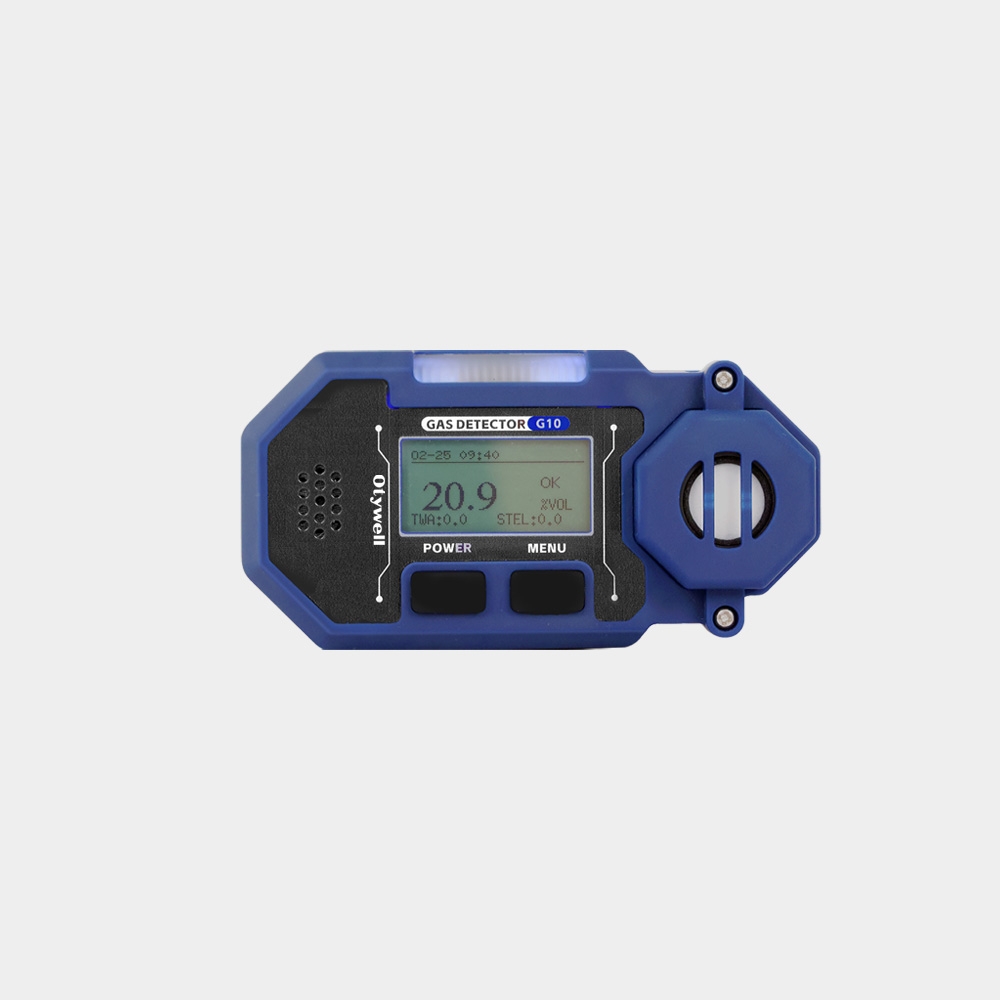
G10 Battery Model
Ask about a methane configuration, its sensor and operating life for the intended duty cycle.
Check Sensor Limits, Approvals and Field Accessories
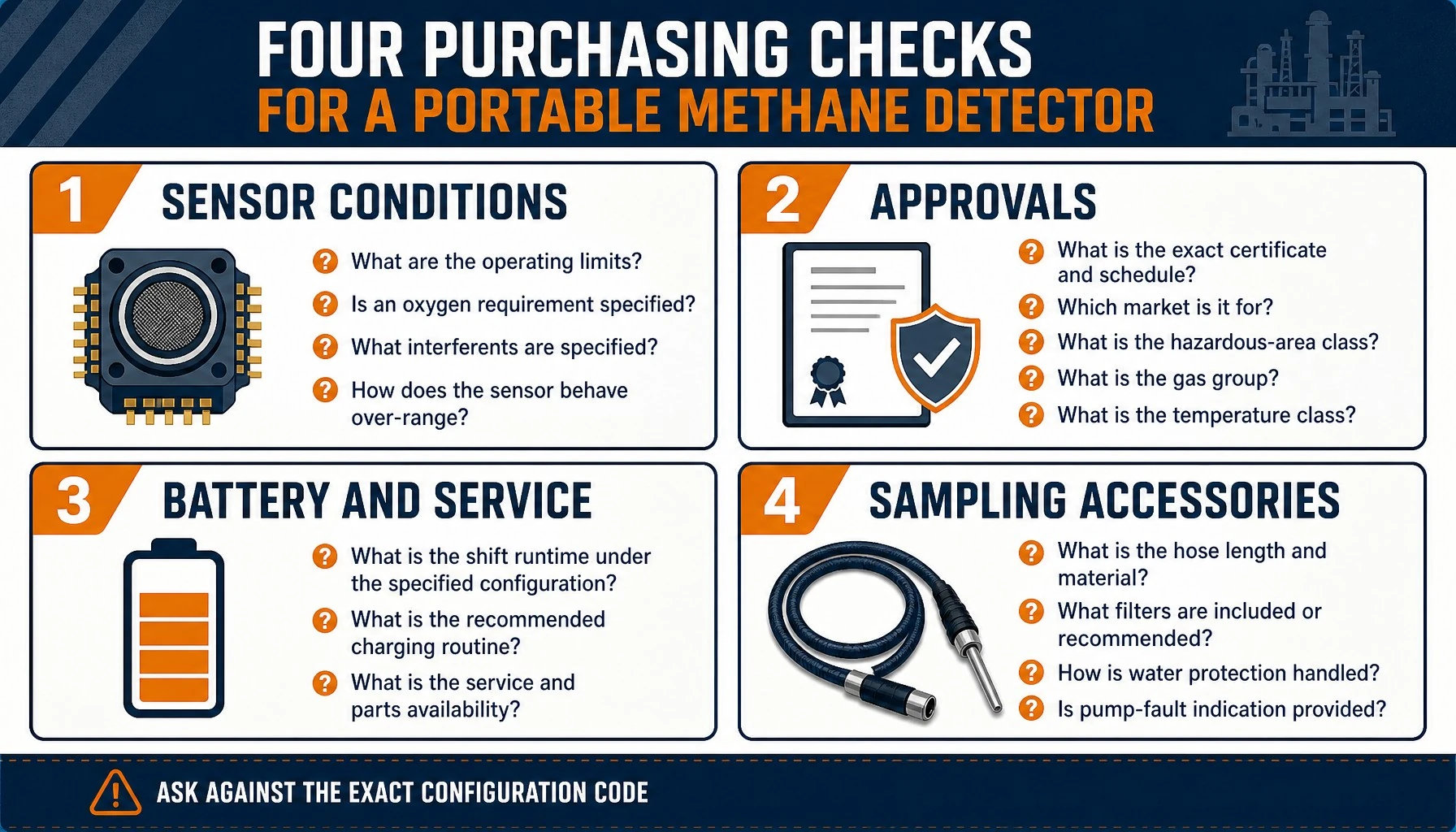
Once the task and range are clear, compare the details that could change the purchase decision. Ask the supplier to answer against the exact configuration code, rather than a shared table covering many instruments.
Sensor Conditions and Interference
Request the methane sensor’s operating limits, oxygen requirements where applicable, and known interferences. Ask what happens after exposure to a concentration above its range. For a mixed-gas sample, describe the expected components instead of simply requesting a “methane sensor.”
The HSE guidance describes oxygen dependence and poisoning as relevant considerations for catalytic sensors. Infrared and other technologies have their own operating conditions. The useful purchasing question is whether the proposed sensor has documented performance for your sample and environment.
Approvals for the Exact Instrument
Ask for the certificate and schedule covering the model being quoted. Check the destination market, hazardous-area classification, กลุ่มก๊าซ, temperature class and restrictions on accessories with the responsible person for the site.
Keep ingress protection and hazardous-area approval in separate rows of the comparison. A water and dust protection rating answers a different question from whether an instrument is approved for use in a particular hazardous atmosphere.
แบตเตอรี่, Service and Sampling Costs
State the intended shift length and whether the pump will run continuously. Request runtime under the relevant configuration and conditions, then allow for the site’s charging or replacement routine. A published standby figure may not describe the proposed duty cycle.
Price the usable kit: instrument, probe or hose, ตัวกรอง, calibration accessories, charger and any software required to retrieve records. Ask who can service it, which parts are replaceable and what support is available where the equipment will operate.
For a fleet purchase, request one completed sample record before deciding how data will be managed. Check whether it identifies the instrument, measurement units and time, and whether staff can export it using the software and computers available at the site. Put any required licence or subscription on the quotation.
A demonstration can also resolve handling questions that specifications leave open. Ask the intended users to review the display, controls, clip and sampling connections in conditions representative of their work, following the manufacturer’s instructions. Write down the acceptance criteria beforehand. This keeps the evaluation focused on a usable instrument and gives the supplier a clear list of issues to resolve before the full order.
What to Send a Supplier Before Requesting a Quote
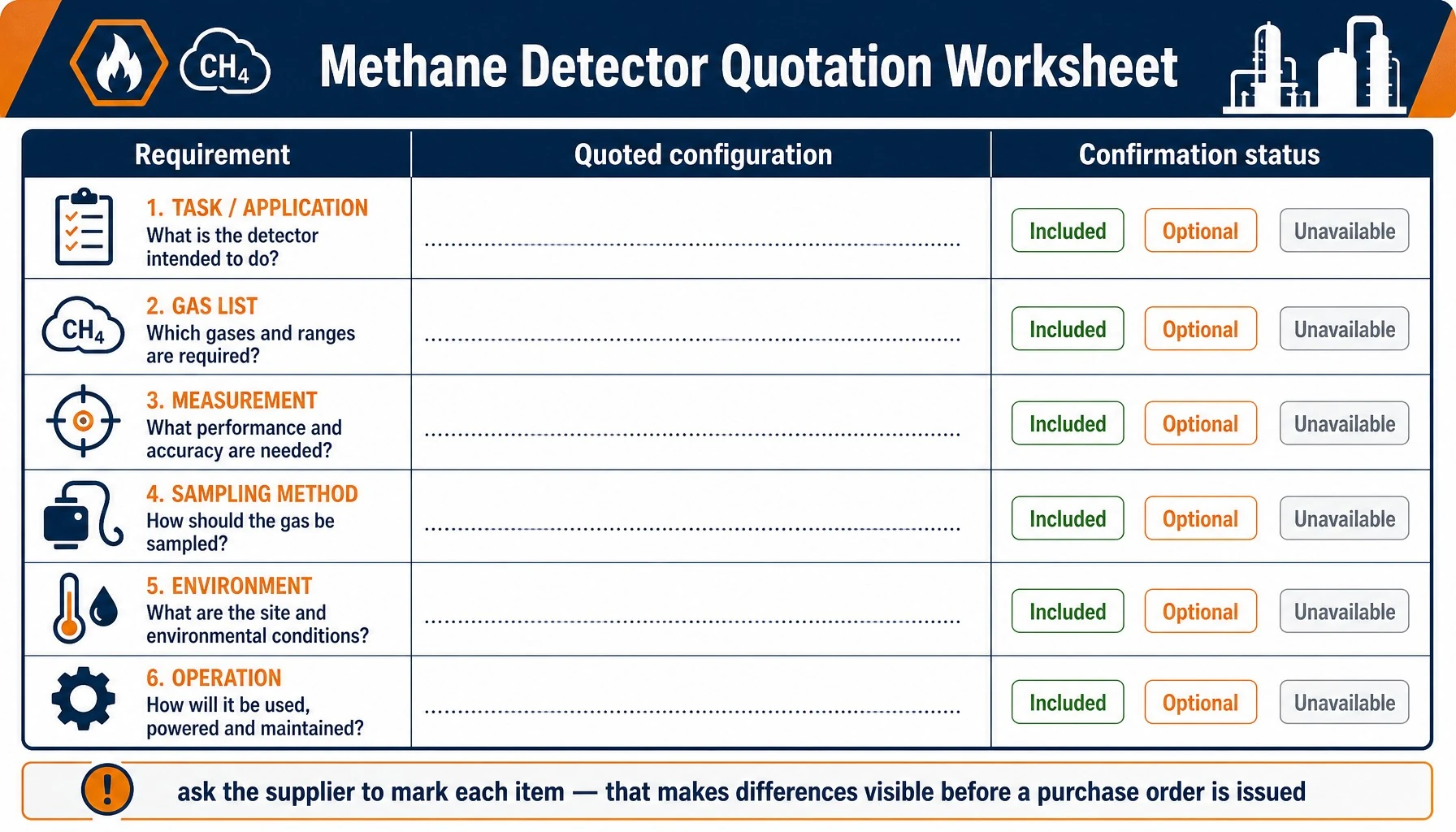
A short description of the work usually helps more than a long list of catalogue features. Include the following information in the enquiry so competing quotations can be compared on the same basis.
- Task and location: describe the inspection, personal monitoring or sampling work and the country of use.
- Target gases: identify methane and any other required channels, including oxygen where relevant.
- Measurement: state the units and expected concentration range, plus any required detection limit or accuracy.
- การสุ่มตัวอย่าง: explain the distance to the sample and the required probe, hose or wearable arrangement.
- สิ่งแวดล้อม: provide expected temperature, ความชื้น, dust and relevant hazardous-area requirements.
- Operation: give shift length, ปริมาณ, alarm and recordkeeping needs, and the maintenance arrangements.
“We need [ปริมาณ] portable methane detectors for [งาน] ใน [ประเทศ]. Required measurement is [range and units]. Sampling will use [method and distance]. Please identify the proposed sensor, exact configuration, applicable certificates, included accessories and service requirements.”
Ask the supplier to mark each requested item as included, optional or unavailable. That makes differences visible before a purchase order is issued and avoids treating a product-family option as a supplied feature.
คำถามที่พบบ่อย
Can a Four-Gas Monitor Detect มีเทน?
It can when its combustible-gas channel is suitable for methane and the instrument is configured and calibrated accordingly. Confirm the target gas and range. A four-gas monitor’s %LEL reading does not automatically give it the low-concentration performance required for a particular leak-location task.
Do I Need a Pump for Methane Detection?
A pump is useful when the task requires drawing a sample to the instrument. For personal diffusion monitoring, gas reaches the exposed inlet directly. Describe the sampling location and workflow so the supplier can specify the appropriate arrangement.
Is a Methane Leak Detector Suitable for Personal Monitoring?
Check the manufacturer’s intended use. Leak-finding performance alone does not establish suitability as a personal safety alarm. Review the monitoring range, ฟังก์ชั่นปลุก, wearing arrangement, approvals and any additional gas channels required by the site.
When Is Remote Laser Detection Worth Considering?
Consider it when access to the suspected leak point is a major part of the problem. Optical-path measurements require a different interpretation from a sampled concentration reading. ของเรา guide to remote laser methane detection covers that separate inspection approach.
Specify the Configuration Before Placing the Order
Send Otywell the task description, ก๊าซเป้าหมาย, measurement range and sampling requirements. Request a configuration-specific quotation with the relevant technical documents and accessories listed. That gives the purchasing team a clear basis for reviewing the proposed instrument with the people who will use and maintain it.

Wechat
สแกนรหัส QR ด้วย weChat