 เหอหนาน Otywell เทคโนโลยีอิเล็กทรอนิกส์ จำกัด, บจ

A fluorine gas detector is specified for the F2 that could reach a particular point, not simply for a building labelled “fluorine area.” A fixed unit can watch a gas cabinet or supply connection between visits. A portable unit can accompany the person changing a cylinder or checking a line. If the inlet must reach a point away from the instrument, the sampling path becomes part of the specification.
Confirm that the target is elemental fluorine (F2), identify the likely release point and occupied position, then choose fixed, wearable or pump-assisted monitoring. Ask for the actual F2 การกำหนดค่าเซ็นเซอร์, low-range performance, compatible sampling arrangement and alarm route. A list of gases supported by a product family does not establish what is fitted to an ordered unit.
First, identify the gas: F2 is not HF
Elemental fluorine, F2, and hydrogen fluoride, เอชเอฟ, are different substances. “Fluoride” is broader still; it does not name the gas that a detector should report. The ILO/WHO International Chemical Safety Card for fluorine identifies F2 by CAS number 7782-41-4 and describes its strong reaction with water, which can produce hydrogen fluoride. That reaction does not make an HF sensor an F2 เซ็นเซอร์.
| Term on an enquiry | What it identifies | What to clarify before ordering |
|---|---|---|
| Fluorine gas / F2 | Elemental fluorine gas | Specify an F2 channel and its ppm range. |
| Hydrogen fluoride / เอชเอฟ | A different gas that may also be relevant to the process | State separately whether HF monitoring is required. |
| Fluoride | A broad chemical term, not a detector specification | Name the substance and airborne form of concern. |
At a cylinder cabinet, the purchase request might read: “Monitor F2 near the supply connection and at the cabinet exhaust; quote any separate HF requirement as a separate channel.” For a task centred on HF rather than F2, use the hydrogen fluoride gas detector selection guide to frame that requirement. Do not ask a supplier for a single undefined “fluoride monitor.”
Fluorine is an oxidizer, not a fuel gas. A combustible-gas reading in %LEL is not an F2 concentration in ppm. A standard oxygen/LEL/CO/H2S four-gas instrument likewise does not measure F2 unless an appropriate channel has actually been specified and fitted.
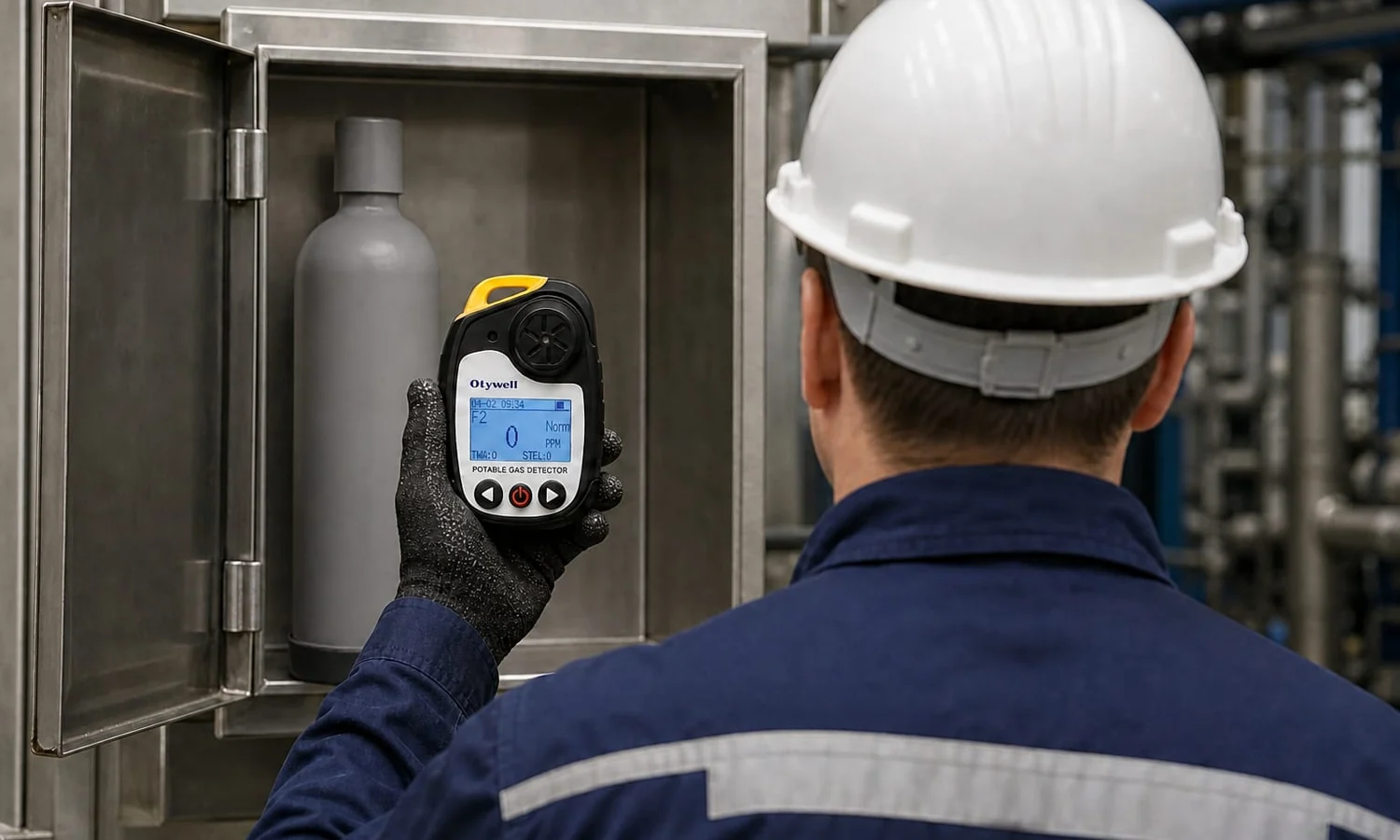
Which F2 release points need monitoring?
Start with a process drawing or an equipment walk-through: cylinder outlet, valve, manifold, transfer connection, enclosed equipment and exhaust route. Then mark where a person stands, which locations remain unattended and how air moves between them. One detector near a convenient doorway is not evidence of coverage at the connection inside a gas cabinet.
| Work situation | Release or sampling point to examine | Worker position and monitoring role | Question for the specification |
|---|---|---|---|
| Cylinder change or connection work | Outlet, regulator and frequently disturbed fittings | Person at the connection; consider fixed coverage plus a correctly configured portable unit | Can the inlet detect a release before it travels toward the operator? |
| Gas cabinet or manifold | Cabinet extraction path and high-pressure components | Fixed monitoring when the cabinet remains in service between visits | Where will an alarm be shown outside the enclosure? |
| Process supply line | Valves, joints and equipment with a credible release path | Fixed points for defined locations; portable coverage for maintenance rounds | Which fittings are accessible for inspection and testing? |
| Specialty-gas or semiconductor work area | Actual cabinet, tool or supply enclosure rather than the whole room by name | Consider occupied positions and enclosure airflow | Does the proposed point represent the air that would reach a person? |
| Exhaust or abatement connection | Selected exhaust point or enclosure outlet | Fixed indication where a release may follow the ventilation route | Is the detector exposed to the expected sample without an unsuitable path? |
ที่ European Industrial Gases Association’s compressed-fluorine guidance discusses detection near critical equipment, cylinders in use, working areas and ventilation exhausts. Those are candidate locations, not a universal mounting diagram. F2 is denser than air under the reference conditions in the safety card, but cabinet extraction, obstructions and a release jet can matter more than a simple “mount low” rule.
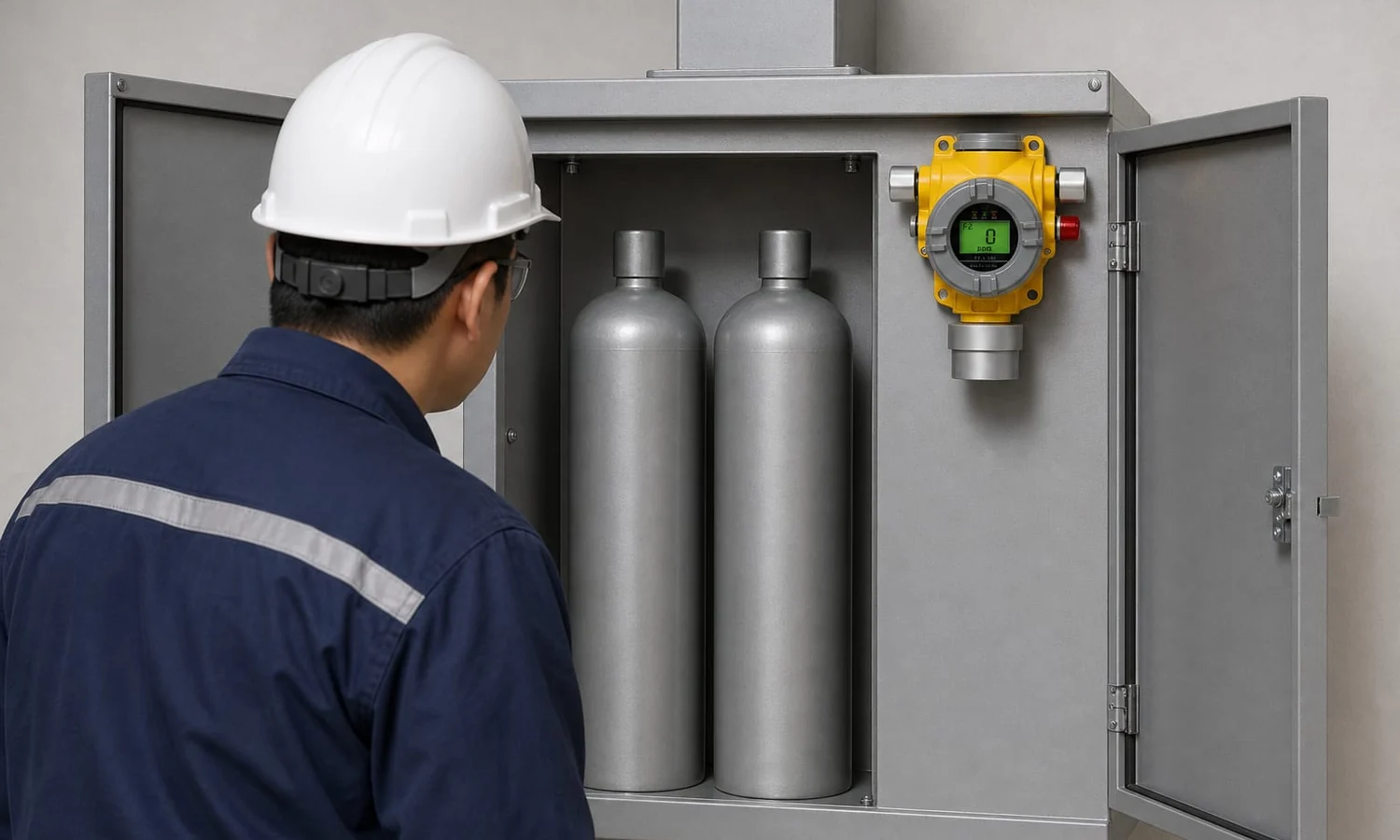
Fixed, wearable or pump-assisted: choose by the job
Fixed monitoring for a repeatable point
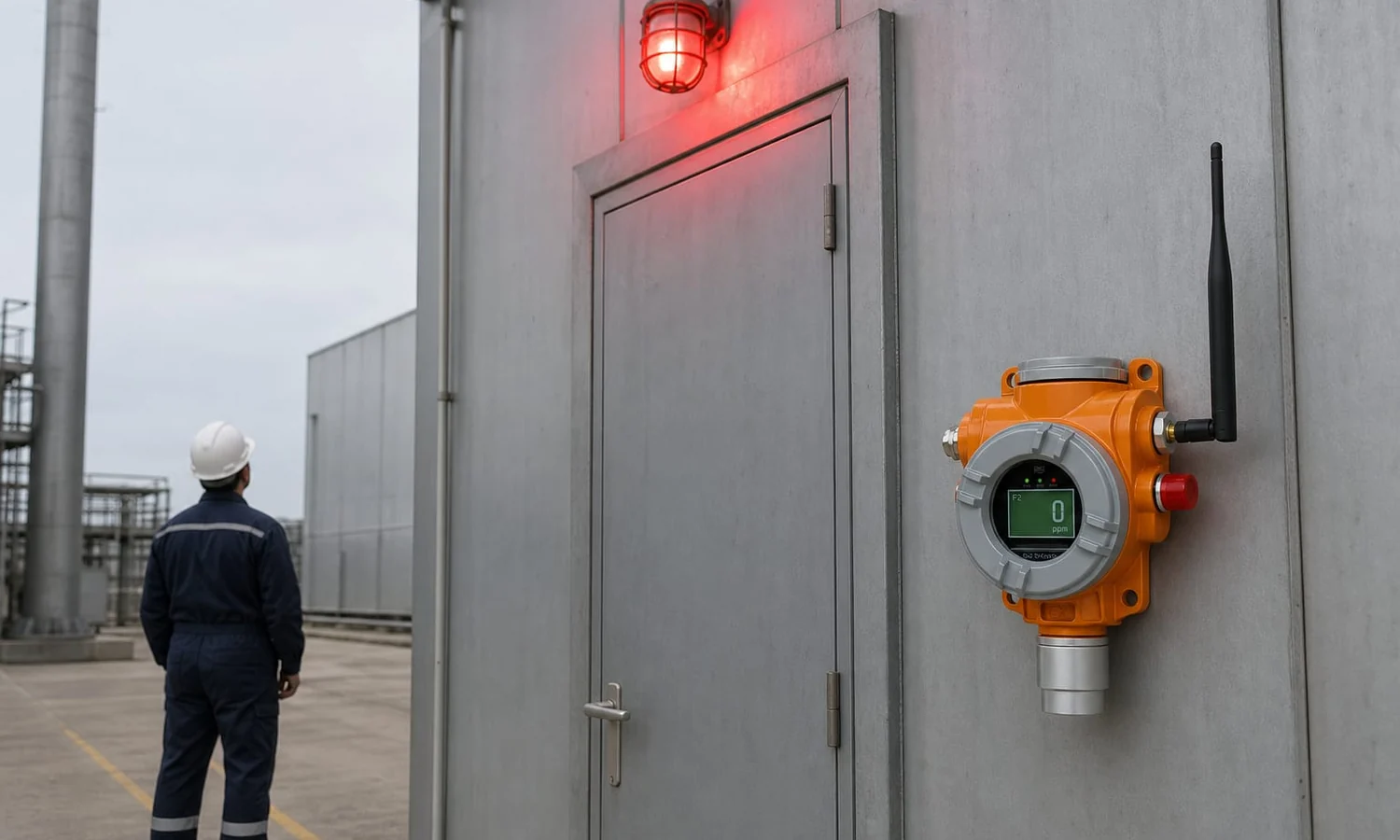
A fixed detector is useful when a defined connection or enclosure needs indication even while no one is nearby. Its value depends on placement and on the alarm reaching the right recipient. Specify the exact F2 ช่อง, พลัง, local warning and output required for that point. If a cabinet has an exhaust sampling location, record that location rather than describing the unit only as “room monitoring.”
Diffusion monitoring for a moving worker
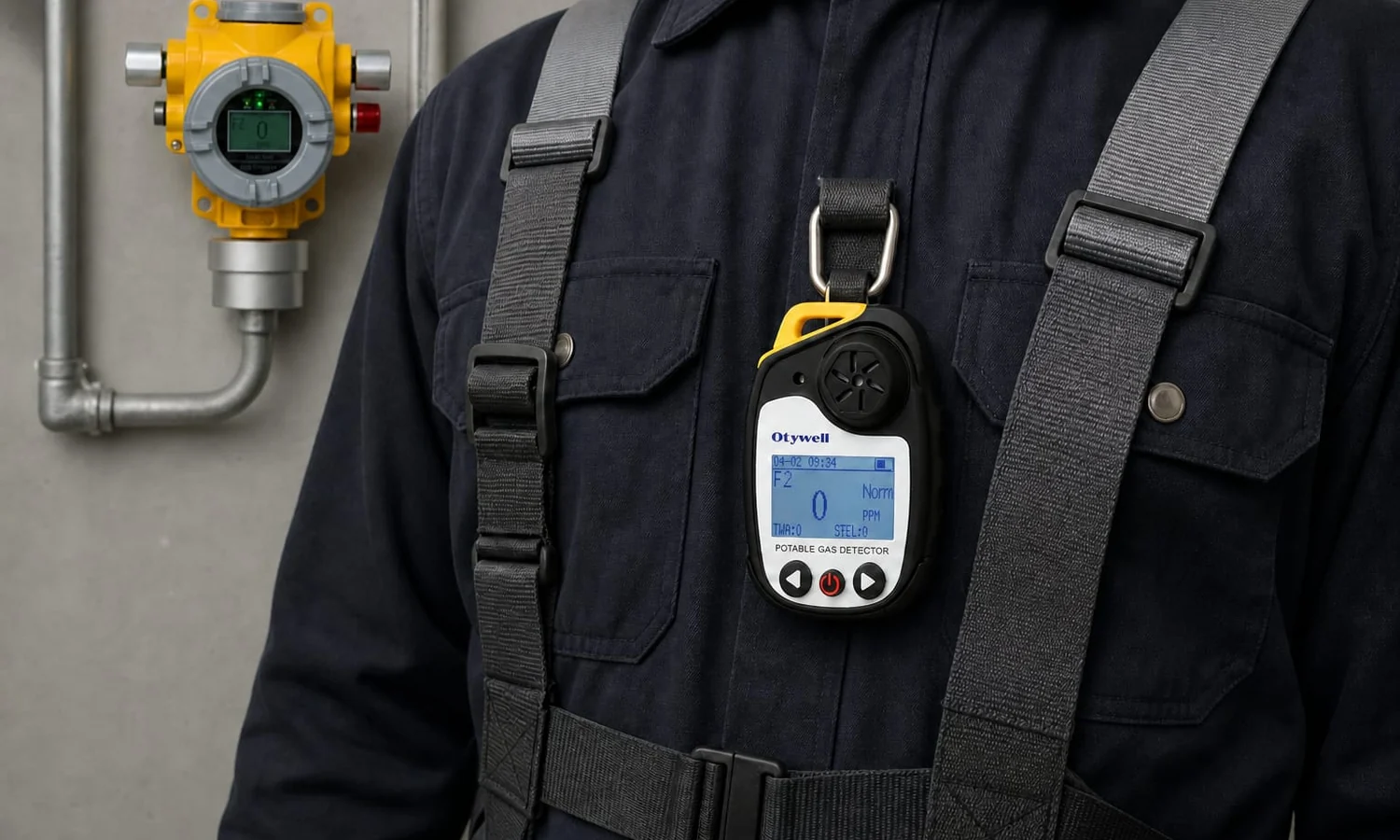
A wearable diffusion detector reads the air at its own inlet. It follows a worker from a cylinder store to a connection and then along a supply route. It does not keep watching the cabinet once the worker leaves. Where an enclosure or fitting is separated from the instrument by a door or panel, a personal diffusion reading is not a measurement inside that enclosure.
Pump-assisted checks at a defined inlet
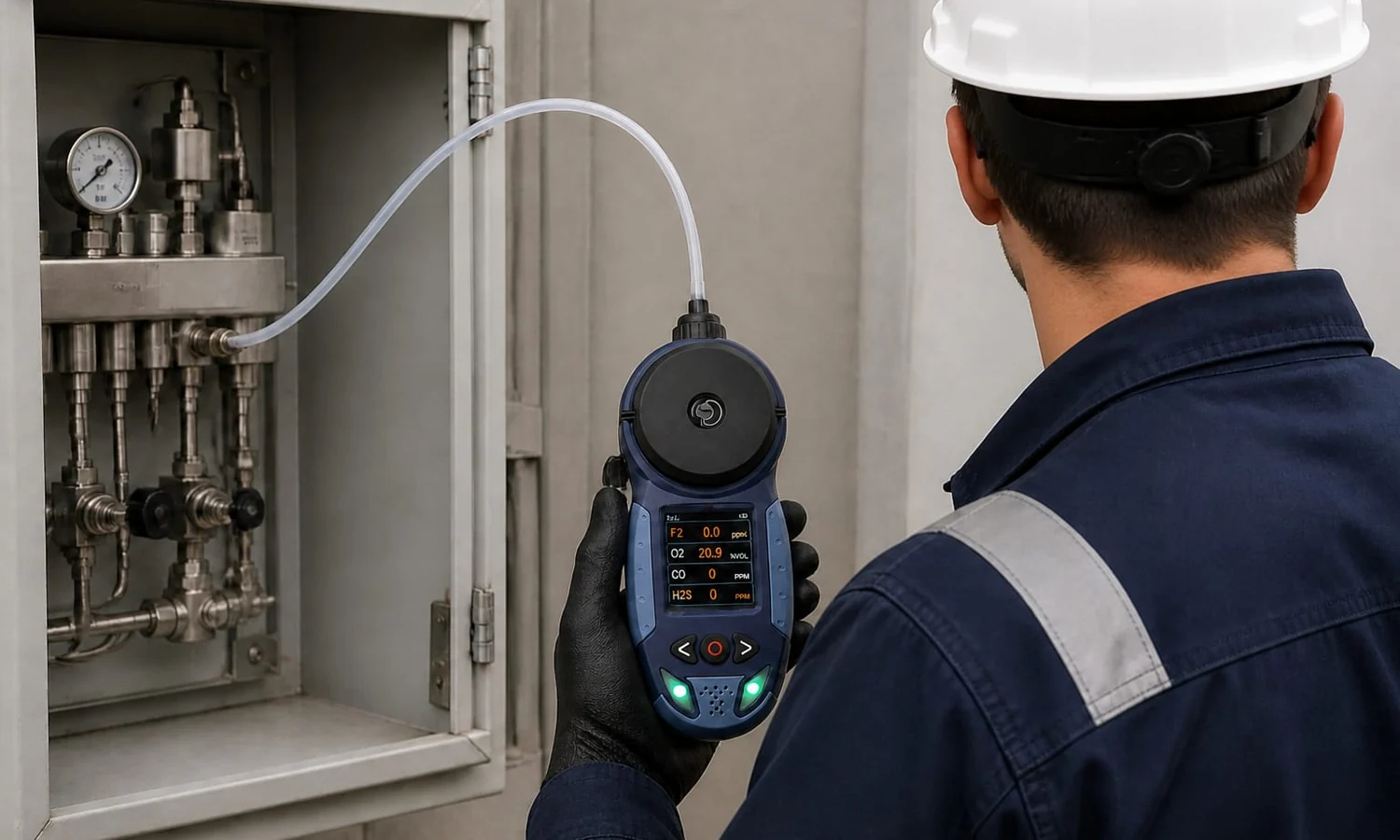
With a pumped portable instrument, the probe or tube inlet defines the point being checked. That can be useful when a fitting cannot be approached directly. The instrument reading, อย่างไรก็ตาม, depends on the whole route from inlet to sensor. ก่อนทำการสั่งซื้อ, ask whether the proposed probe, ท่อ, filter and pump arrangement are suitable for F2, and what delay the assembled path introduces. Do not attach a generic sampling hose to a reactive-gas application and assume the sensor’s published response time still describes the complete check.
Specify the F2 channel at the low end, not just the full scale
For fluorine, a catalogue range is only the beginning. The NIOSH Pocket Guide for fluorine lists a NIOSH REL and an OSHA PEL of 0.1 ppm เป็นค่าเฉลี่ยถ่วงน้ำหนักตามเวลาแปดชั่วโมง. That figure describes exposure over time; it is not an automatic instantaneous alarm setpoint for every site. Keep the exposure reference, detector display, alarm threshold and any time-based record as separate specification fields.
Ask for the performance of the exact offered F2 sensor near the concentration that matters to the task. A 0–1 ppm label does not by itself prove useful accuracy near 0.1 ppm. Nor does a 0.1 ppm display step prove 0.1 ppm measurement accuracy. Request the applicable datasheet, ปณิธาน, accuracy or uncertainty information, response conditions, known interfering gases and the proposed alarm-setting method. If the equipment is to report both F2 and HF, identify two measurements rather than assuming one reading can distinguish them. EIGA notes that many electrochemical F2 detectors show cross-sensitivity to other acid gases.
| Field to confirm | Why it changes the order |
|---|---|
| Installed target-gas channel | A family gas list is not the fitted sensor list. |
| Range and display increment | Both must suit the concentration question, but neither alone establishes low-end accuracy. |
| Low-end performance evidence | Determines whether the offered configuration can support the intended warning or measurement task. |
| Interference information | Helps distinguish an F2 indication from response to other gases in the work area. |
| Alarm logic | Defines instantaneous warnings, time-based functions and who receives each signal. |
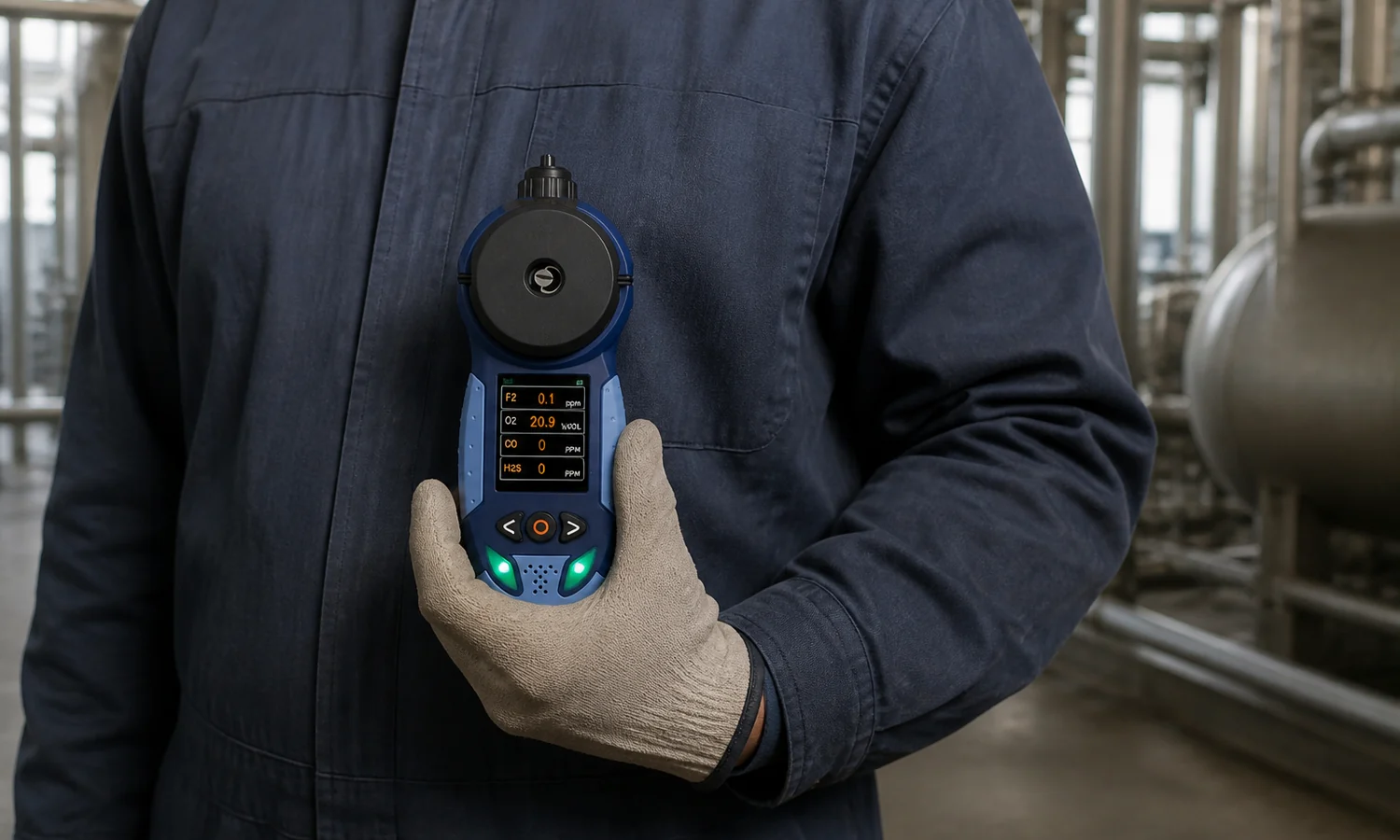
Otywell equipment to specify for an F2 project
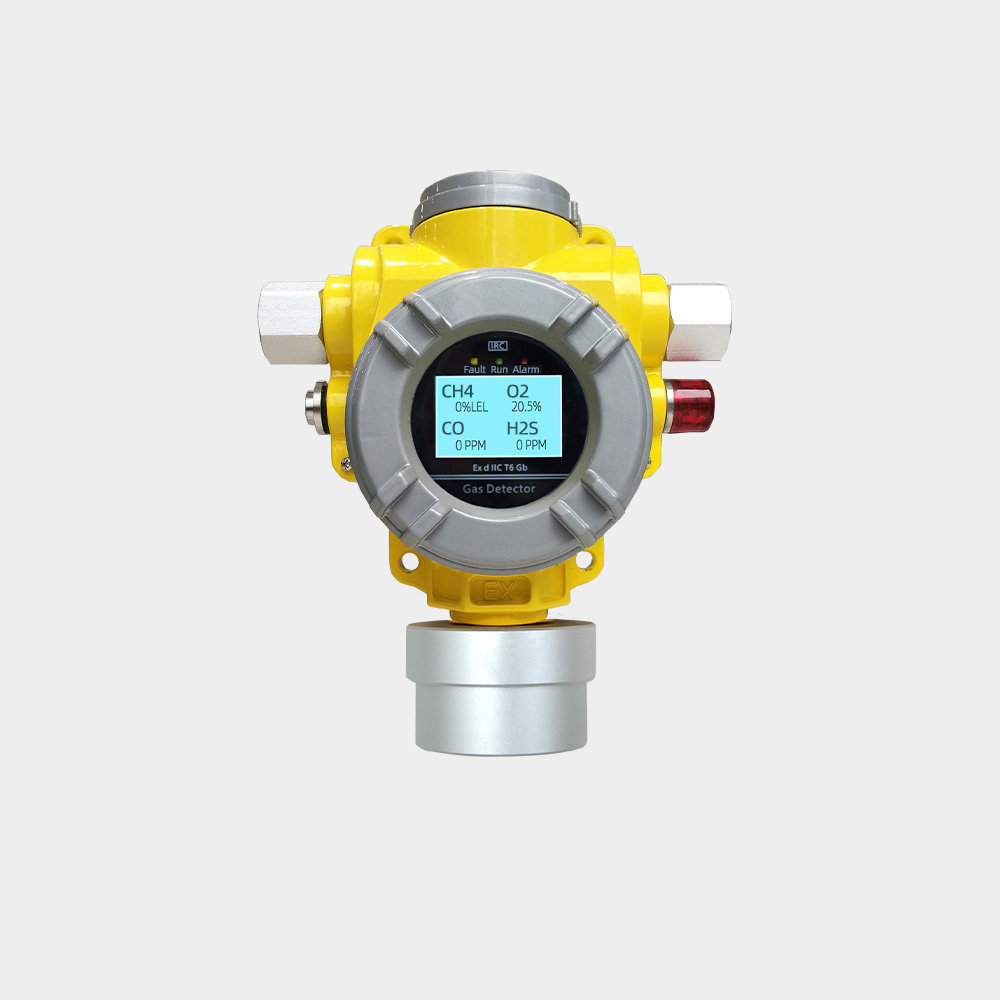
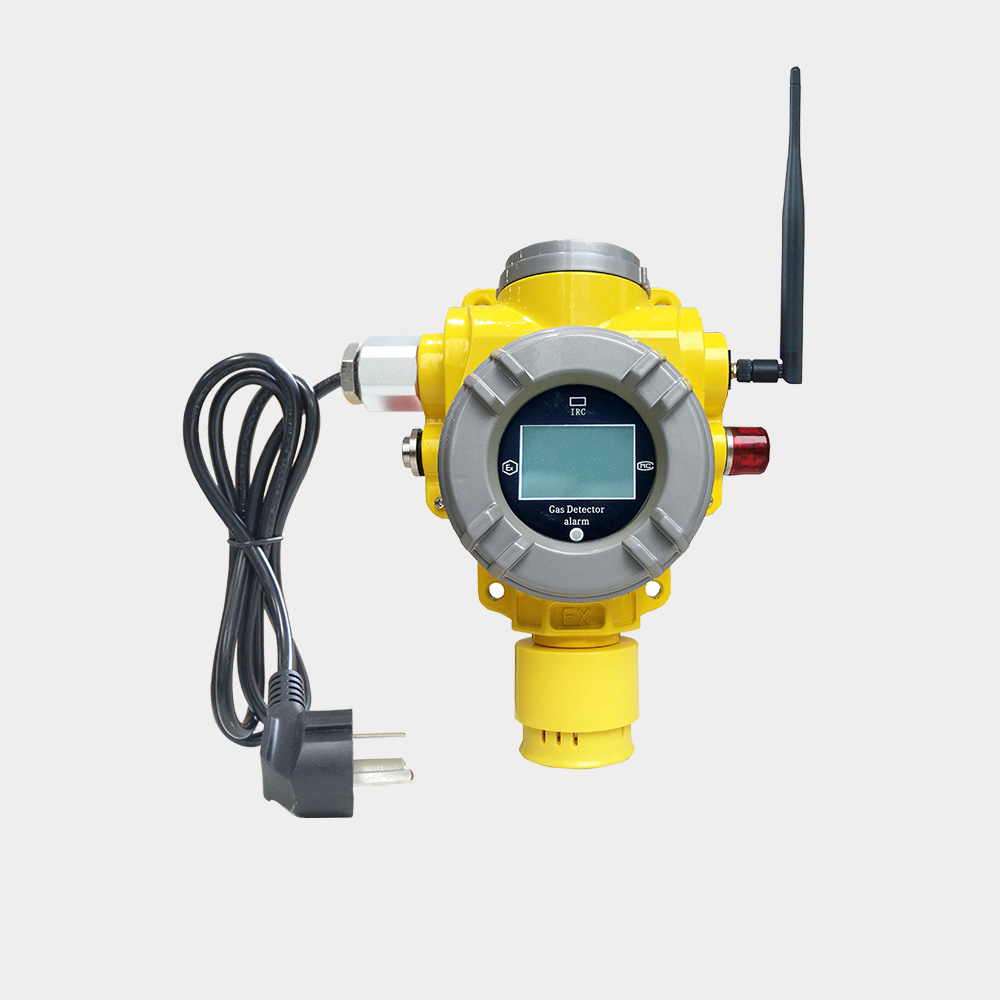
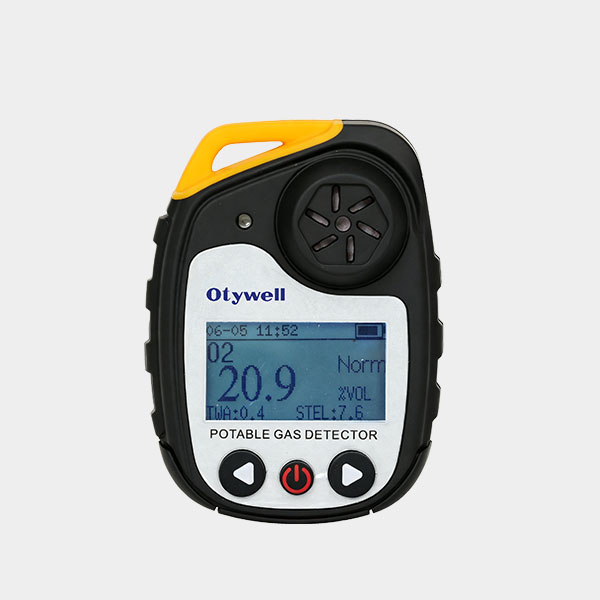
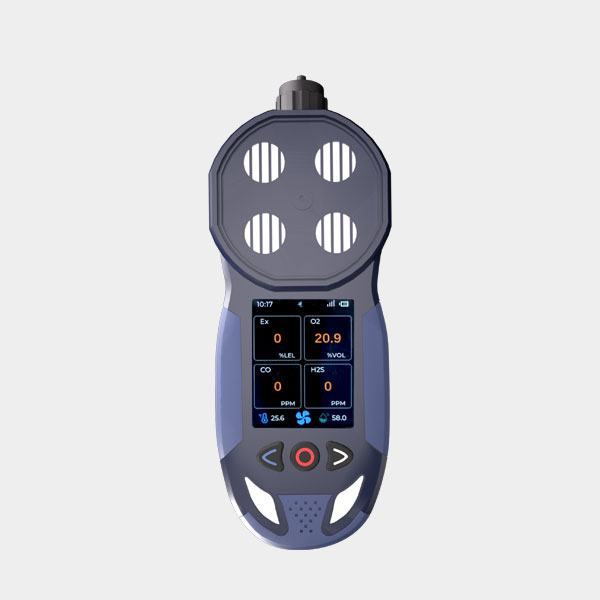
These are instrument formats, not four identical ready-configured F2 หน่วย. The product-family gas tables and customization options do not replace confirmation of the sensor, พิสัย, sampling version and signal arrangement supplied for the order.
Follow the sample to the sensor, then the alarm to a person
Check the complete sampling path
F2 reacts strongly with water and many other materials. For a pumped configuration, ask the supplier to assess the actual tube and probe materials, ความยาว, joints, กรอง, ambient moisture and pump flow. A probe that reaches the right valve but changes or delays the sample before it reaches the sensor may answer the wrong question. Record the route and the waiting time for the supplied assembly. For a fixed diffusion unit, check the inlet’s position in the cabinet or exhaust airflow and keep it accessible for inspection.
Define what happens when the detector reports a problem
Write down where an alarm appears locally, who receives a remote signal and which system handles any ventilation or shutdown action. A detector output option does not establish that a controller, siren or interlock is included in the same purchase. For a wireless proposal, confirm power, ความคุ้มครอง, receiving unit and what is indicated when communication is lost. For a wired proposal, confirm the selected output and the receiving input. Make the alarm path visible on the same drawing as the detection point.
Neither odor nor eye or airway irritation is a dependable substitute for that path. The EIGA guidance expressly warns against relying on sensory warning for toxic F2 ความเข้มข้น. If a worker must enter to see a display, the warning route deserves a second look.
Commission the selected arrangement, then send a useful RFQ
At commissioning, record the delivered sensor channel and range, detector ID, inlet location, fitted sampling accessories, alarm settings and destination of each output. Exercise the functions on which the monitoring job relies: inlet or pump flow where applicable, local indication, alarm and the connection to the receiving system. Testing only the electronics at the instrument does not establish that a remote probe and its tubing still deliver a representative sample.
Ask for the manufacturer’s test and calibration procedure for the supplied F2 การกำหนดค่า, including approved challenge materials and intervals. Do not substitute a test gas used for a different sensor simply because it is on hand. Keep a record of replacements to tubing, filters and other sampling parts; changing the path can change the measurement even when the detector body is unchanged.
| RFQ field | Information to send | Answer to request |
|---|---|---|
| การวัด | Elemental fluorine (F2), required ppm range, any separate HF requirement | Fitted sensor(ส), range and low-end performance data |
| Workplace task | Cylinder, gas cabinet, process connection or moving worker; occupied position | Recommended fixed, wearable or pumped configuration |
| การสุ่มตัวอย่าง | Inlet point, สอบสวน, tube length, humidity and filter conditions | Compatible assembled path, flow and expected delay |
| Alarm and output | Local warning, control-room recipient, requested system action | Exact unit output, receiving equipment and fault indication |
| บริการ | Access to the installed point and intended checking routine | F2-specific check and calibration instructions |
Describe the monitoring point before the model
A request such as “F2 at the cylinder-cabinet outlet, fixed alarm to the control room, plus a portable unit for changeovers” gives the supplier a job to configure. Add the target range, ventilation route, sample-line details if any, and the information needed to verify low-end performance. The quotation can then identify what is supplied rather than merely repeating a family model name.
คำถามที่พบบ่อย
Is an F2 gas detector the same as an HF detector?
เลขที่. Elemental fluorine and hydrogen fluoride are different target gases. Even though F2 can form HF when it reacts with moisture, specify each gas channel separately.
Can a standard four-gas monitor detect fluorine?
Not by default. A common four-gas arrangement measures oxygen, ก๊าซที่ติดไฟได้, carbon monoxide and hydrogen sulfide. Confirm an F2 sensor in the particular unit being ordered.
When is a fixed fluorine detector preferable to a portable one?
Examine a fixed detector for a defined cabinet, manifold or connection that needs monitoring between operator visits. A portable unit follows the worker’s changing position. Some jobs need both.
When is pump-assisted F2 sampling useful?
It can put the inlet at a fitting or enclosure away from the instrument body. The proposed probe, tubing and pump assembly must be checked for F2 compatibility and sample delay.
Does a 0–1 ppm range prove suitability near 0.1 ppm?
เลขที่. The range and display increment do not establish low-end accuracy. Request performance data for the exact sensor and configuration at the concentrations relevant to the task.
Where should a fixed F2 detector be installed?
Consider the credible release point, cabinet or room airflow, ตำแหน่งที่ถูกครอบครอง, exhaust route and access for maintenance. Gas density alone does not determine the best inlet location.
Can workers rely on the smell of fluorine instead of an alarm?
เลขที่. Odor or irritation is not a reliable warning method for toxic concentrations. Specify where the detector’s alarm is received and how the selected arrangement is checked.

Wechat
สแกนรหัส QR ด้วย weChat