 Хэнаньская компания Otywell Electronic Technology Co., ООО

A methanol gas detector should be specified for the job at the sampling point—not simply for the word “methanol” on a quotation. Decide whether the concern is low-level vapor exposure, a flammable atmosphere, или оба. Then match the measurement range, sampling method and detector location to the work.
Fixed detection watches a defined part of a methanol system when nobody is carrying an instrument there. Portable detection follows an operator or samples a temporary work point. A ppm reading and a %LEL reading answer different questions; one should not be treated as the other. Ask for the methanol-specific sensor, range and calibration arrangement for the actual device configuration.
Start with the measurement, not the detector model
Methanol is both toxic and flammable. That does not mean one alarm range covers both concerns. A low-range instrument reporting parts per million can be used to investigate vapor concentration around people and routine tasks. A combustible-gas instrument reports the concentration as a percentage of methanol’s lower explosive limit (%ЛЭЛ). Its purpose is to warn of a developing flammable atmosphere. Выбранный датчик, calibration and displayed unit have to match the question being asked.
The NIOSH Pocket Guide entry for methyl alcohol lists a recommended 8-hour time-weighted average of 200 ppm and a short-term value of 250 ppm; it also lists a lower explosive limit of 6.0% по объему. These are different reference quantities, not interchangeable detector alarm settings. A TWA is an exposure measure over time. An LEL value describes a flammable-mixture boundary. A low-range ppm monitor should not be assumed to cover a high-concentration release, and a %LEL alarm does not by itself answer a low-level exposure question.
| Мониторинговый вопрос | Useful specification | Typical decision it supports |
|---|---|---|
| What vapor concentration reaches an operator? | Methanol-specific ppm range, sensor performance, sampling position and exposure-recording need | Routine handling, inspection or a defined work task |
| Could a flammable atmosphere develop? | Methanol-calibrated combustible range in %LEL, detector location and alarm path | Release warning around plant and storage equipment |
| What is present at a point the operator cannot approach directly? | Pumped instrument, compatible probe and sample line, flow check and total response time | Remote check of a recess, vessel opening or equipment cavity |
Map methanol work points before choosing equipment
A site drawing labelled “methanol storage” is too broad for detector selection. Mark the places where liquid can escape or vapor can reach a worker, then record the task performed there. The Methanol Institute’s handling guidance discusses storage, передача, transport and the use of fixed or portable gas detection around these operations. Those activities create different monitoring questions, even within one facility.
Tank, pump and valve areas
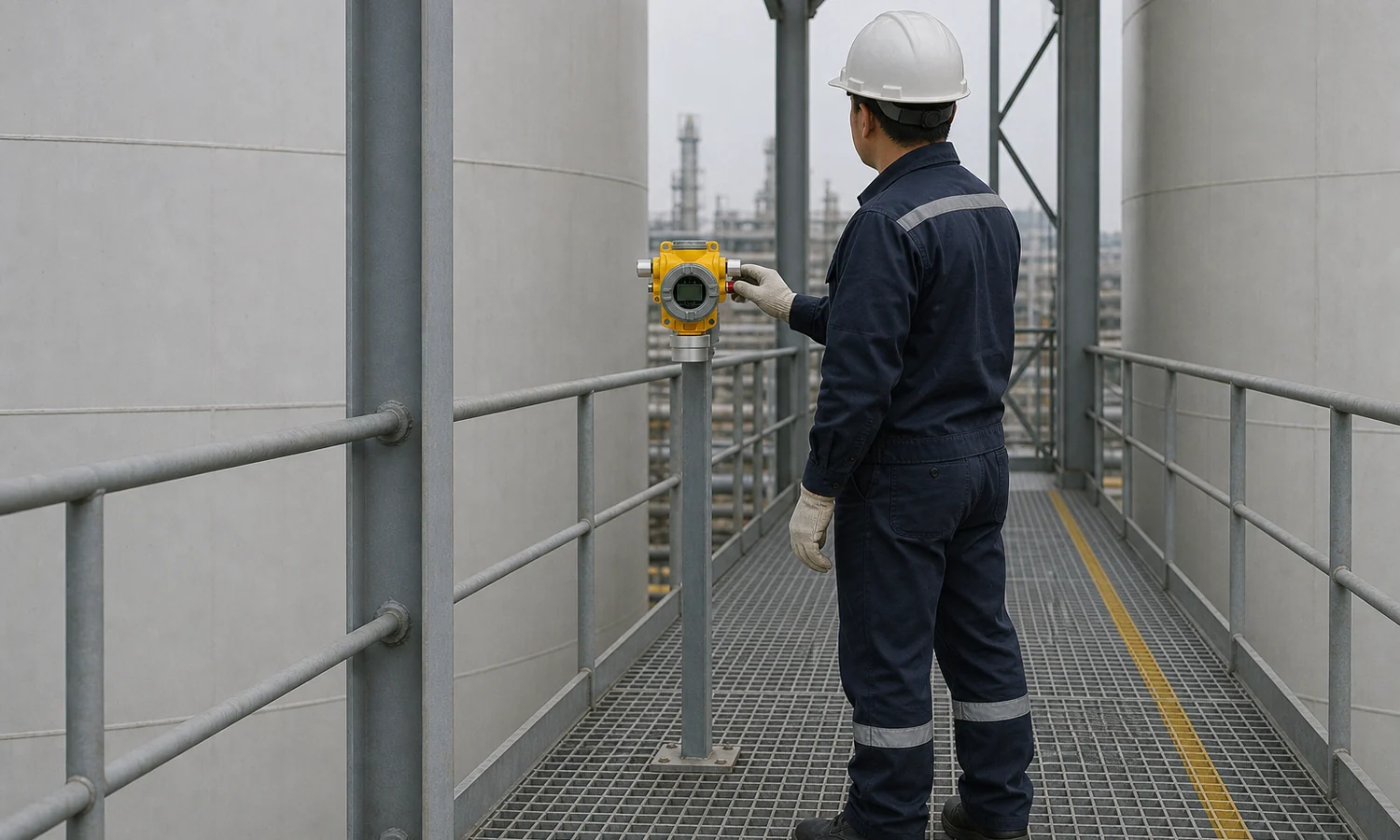
A fixed point may be useful near a pump seal, valve cluster or other defined release location that needs monitoring between operator rounds. The proposed detector should be located with the actual equipment geometry, ventilation and likely travel path of vapor in mind. An operator walking between tanks still has a different task: checking conditions along a route and at specific fittings. The fixed point does not travel with that operator.
Loading, unloading and transfer connections
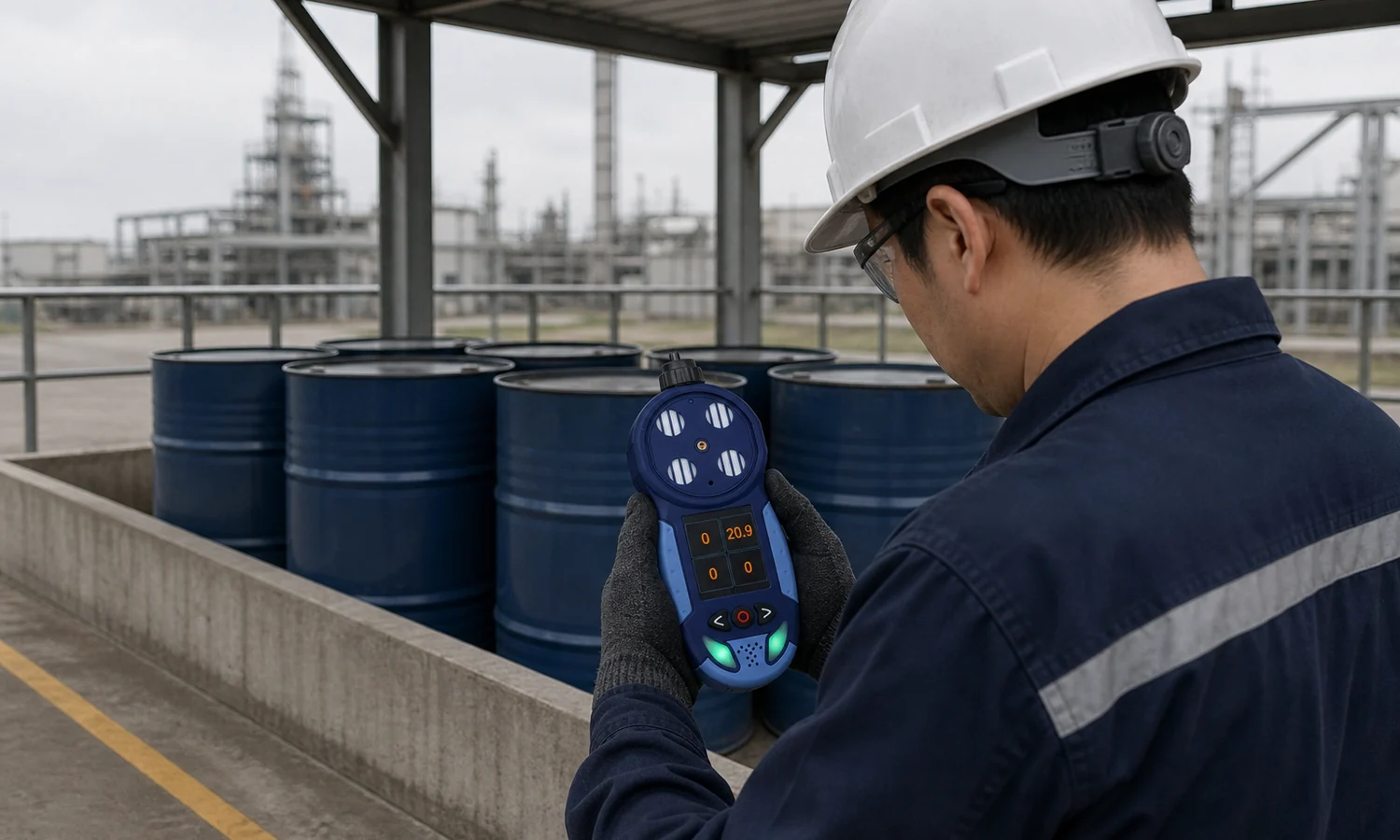
Connecting a hose, opening a valve, transferring product and disconnecting the line are separate moments in the same job. The location of the connection and the operator can change during the sequence. A portable detector or pumped probe can answer a short-term, local question at a connection or low-access point. A fixed system can watch a repeat-use transfer position when continuous area indication and a remote alarm are required. State which position is being monitored; “loading bay” alone does not tell a supplier where the sample is taken.
Chemical-process equipment
Methanol used as feedstock may pass through a storage vessel, metering skid, transfer pump and reactor connection before the worker encounters it. List the credible release points and the occupied locations separately. For a continuously operated skid, the fixed detector’s signal destination matters as much as its display. During maintenance or line opening, the sampling task moves with the crew; a portable instrument can be used to check the actual work position.
Drums, dispensing and laboratory work
A small container does not create the same monitoring pattern as a tank farm. Opening, pouring and cleaning can produce short-duration vapor at a bench or dispensing station. Start with the handling position, local airflow and frequency of the task. If the operator moves among storage shelves, dispensing equipment and waste containers, a portable reading may be more informative than a single fixed point placed for convenience. A fixed point may still be appropriate for a defined enclosure or repeatedly used dispensing location.
Зафиксированный, portable and pump-suction detectors: which job belongs to each?
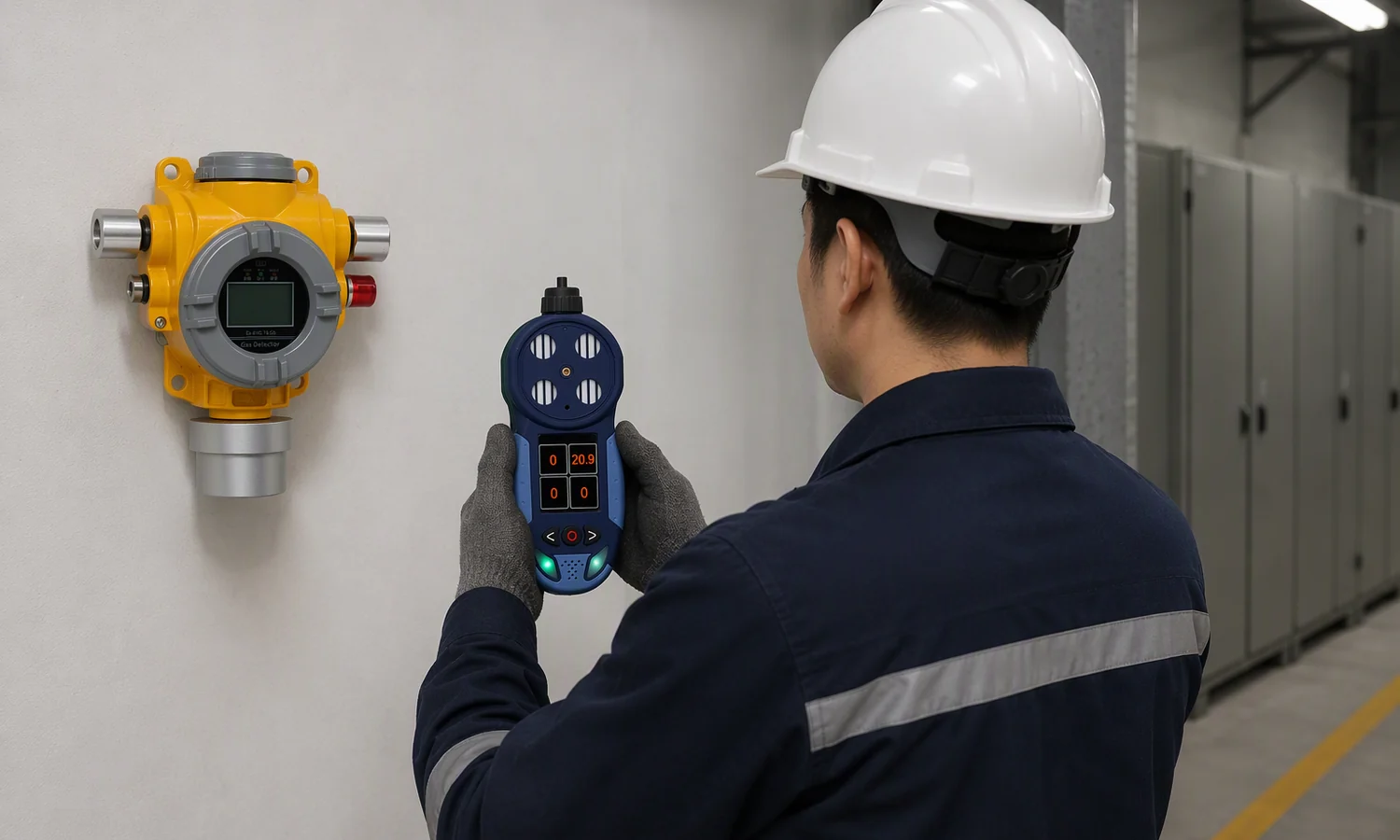
The first split is time and location. A fixed detector monitors the area represented by its installed sampling point. It can report while the area is unoccupied and can be connected to a selected signal or alarm system. A portable unit can follow the worker, but it gives no reading for an unattended location unless someone places and operates it there. The UK HSE guidance on industrial flammable-gas detectors distinguishes these roles and describes diffusion and aspirated sampling. Its placement discussion concerns flammable-gas detection; it should not be read as a complete exposure-monitoring protocol.
| Work pattern | Format to discuss | Question to settle before purchase |
|---|---|---|
| Known release point needs ongoing watch | Фиксированный детектор | Where will vapor reach the sensor, and who receives the alarm? |
| Operator walks among equipment and transfer points | Portable diffusion detector | What target gas, range and alarm need to follow the person? |
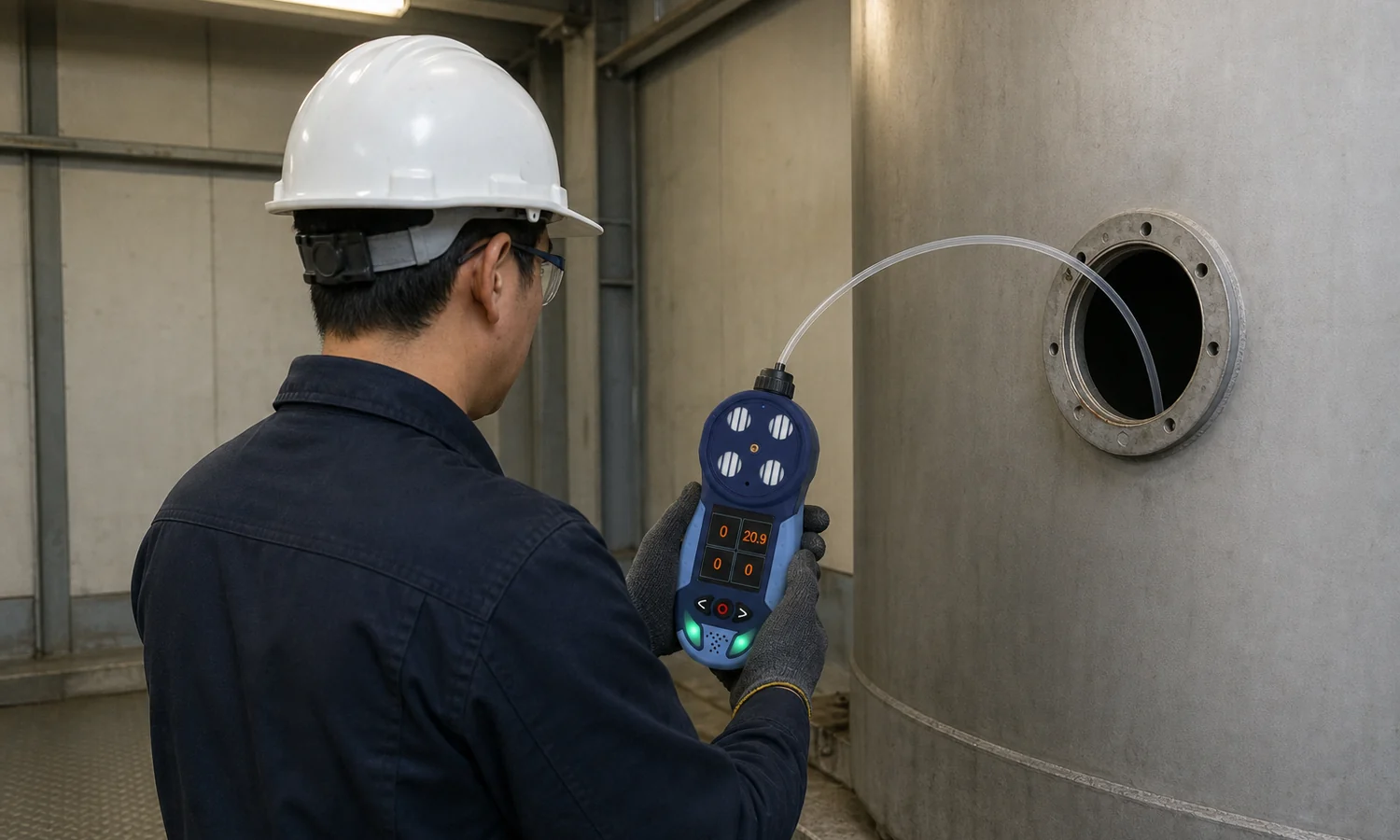
| Sample must be taken beyond the operator’s position | Pumped portable detector or engineered fixed sample draw | What are the probe position, tube route, flow and delay? |
| Both unattended release warning and worker checks are needed | Fixed and portable, with different duties | Which gap does each format cover? |
Наш fixed-versus-portable gas detector comparison covers the general equipment distinction. For methanol, the extra decision is whether each proposed instrument is configured and calibrated for methanol in the required unit and range.
Otywell equipment formats to discuss
These models differ by installation and sampling function. Their product descriptions do not establish a standard methanol channel for every unit; specify the required methanol sensor, measurement range and calibration arrangement when requesting a configuration.
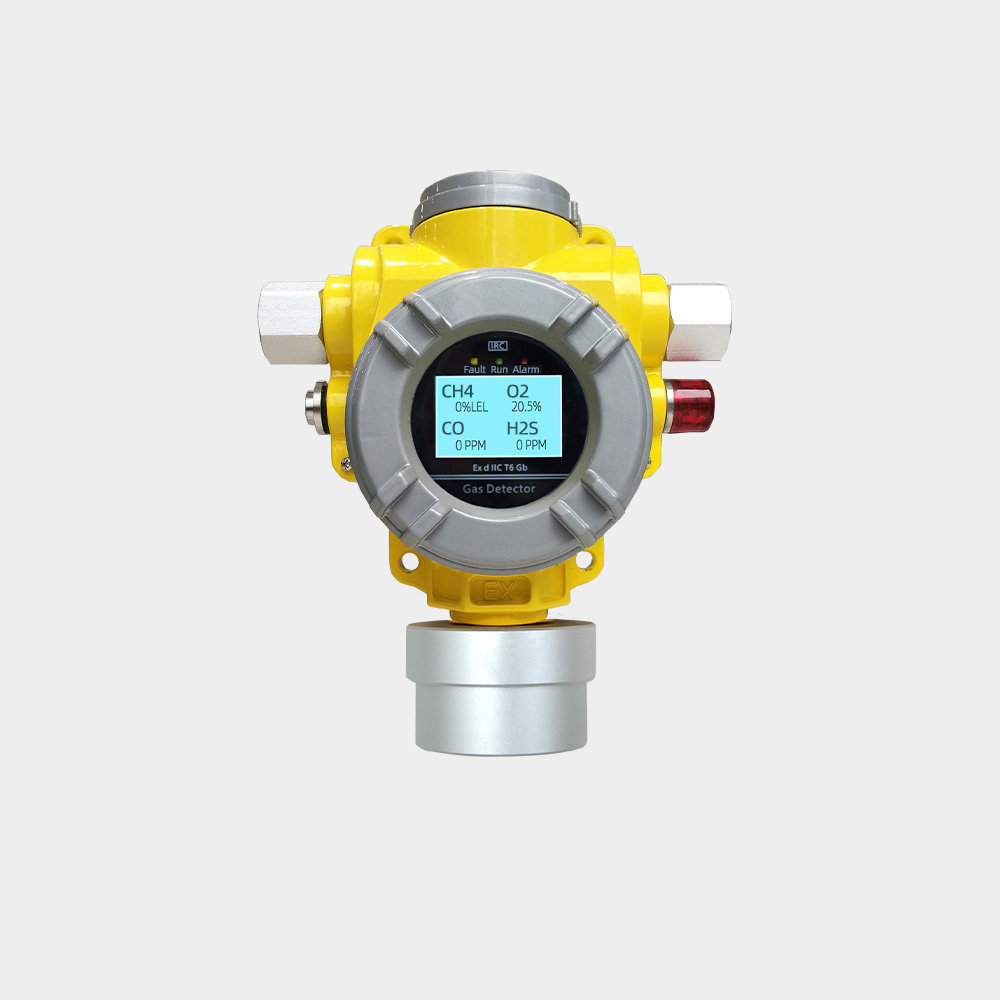
ТКБ2-Ф
Fixed gas concentration and leakage detection with natural-diffusion or pump-suction sampling and listed 4–20 mA and RS485 output options.
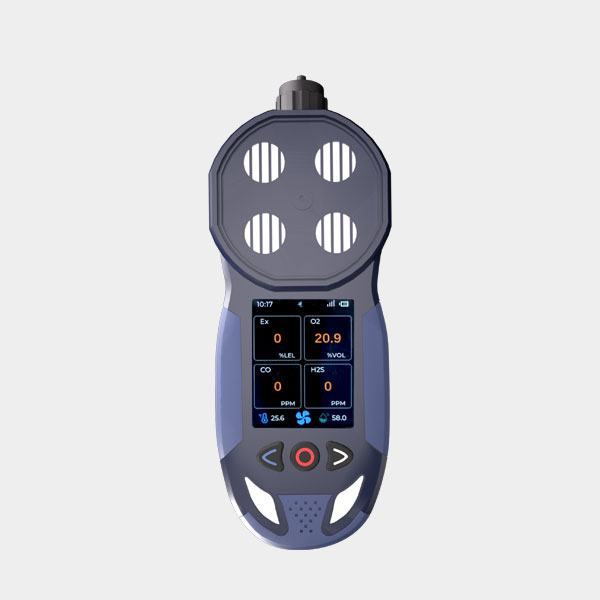
ОТ135С
Portable gas detection with built-in pump-suction or natural-diffusion methods; the sensor selection determines the gas measured.
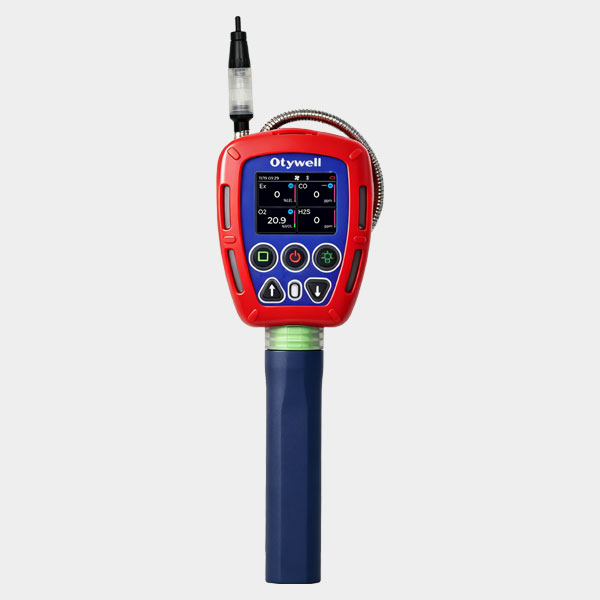
G90
Портативный диапазон с диффузионным зондом, pump-suction-probe and pump-suction multi-gas detection modes described for different configurations.
Place the sampling point where the question can be answered
For a fixed methanol gas detector, start with the release source and the expected path to an occupied area. Mark obstructions, mechanical ventilation, door openings and the points where people work. The nearest convenient wall is not automatically the best location. Nor is one universal mounting height justified by vapor density alone: airflow and the physical release can change where a vapor cloud travels. Record the reason for every proposed point on the layout.
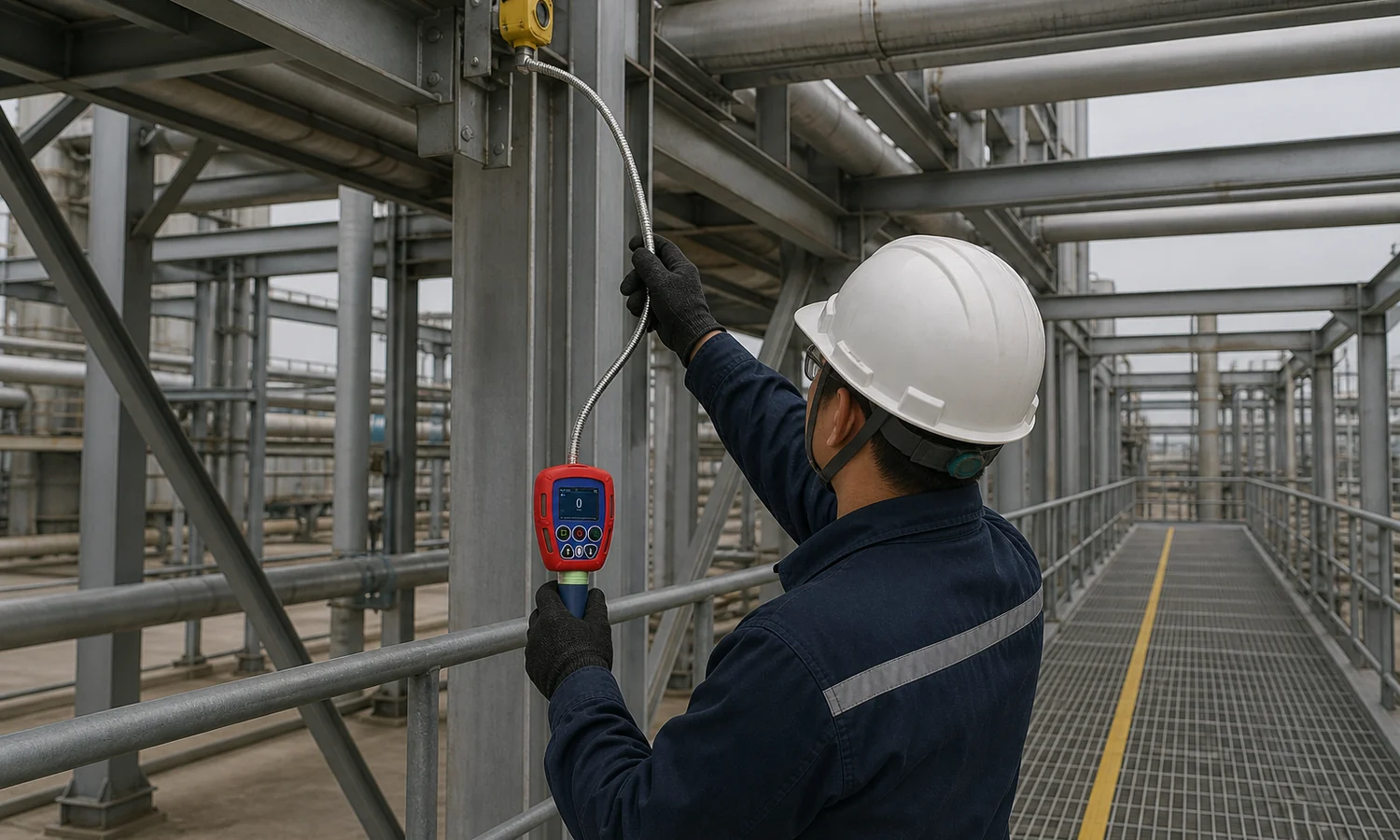
The same discipline applies to a pumped probe. Its tip is the measurement point; the instrument body is not. A long tube, a partially blocked filter or liquid in the line can alter or delay the sample. HSE notes that sampling-line travel time, contamination and blockage can affect a system’s response. Ask the supplier to check the assembled path, not just the sensing element’s quoted T90.
Leave access for inspection and calibration. A point behind a pipe rack may look well placed on a plan yet be difficult to test. If the detector sends a signal to a controller, include the receiving point, fault indication and alarm route in the point schedule. A reading that nobody receives in time does not answer the original monitoring question.
Eight details to send with a methanol detector enquiry
Give a supplier enough information to specify the instrument rather than sending only “price for methanol gas detector.” A useful enquiry contains these eight items:
- Target and purpose. State methanol vapor exposure in ppm, flammability in %LEL, or two distinct monitoring duties.
- Требуемый диапазон. Give the expected working range and the unit for each point; do not copy a range from a different gas configuration.
- Work location. Identify the equipment, likely release point, operator position and whether monitoring continues when nobody is present.
- Метод выборки. Choose diffusion or describe the probe and pump arrangement, including any tube run.
- Other vapors. List solvents and process gases that may be present so sensor selectivity and cross-response can be checked.
- Условия сайта. Обеспечить температуру, влажность, washdown or dust conditions and the installation-area classification relevant to the selected unit.
- Alarm and communication. Explain who must see an alarm and which output or receiving system is required for a fixed point.
- Testing and upkeep. Request the methanol-specific calibration method, тестовый газ, maintenance access and instructions for the ordered configuration.
The response should name the sensor and range offered for methanol. A broad list of detectable gases on a product family page is not proof that one delivered unit measures them all. Так же, a combustible-range alcohol option should not be described as a ppm exposure monitor unless the supplied configuration supports that use.
Make the quotation about the measurement point
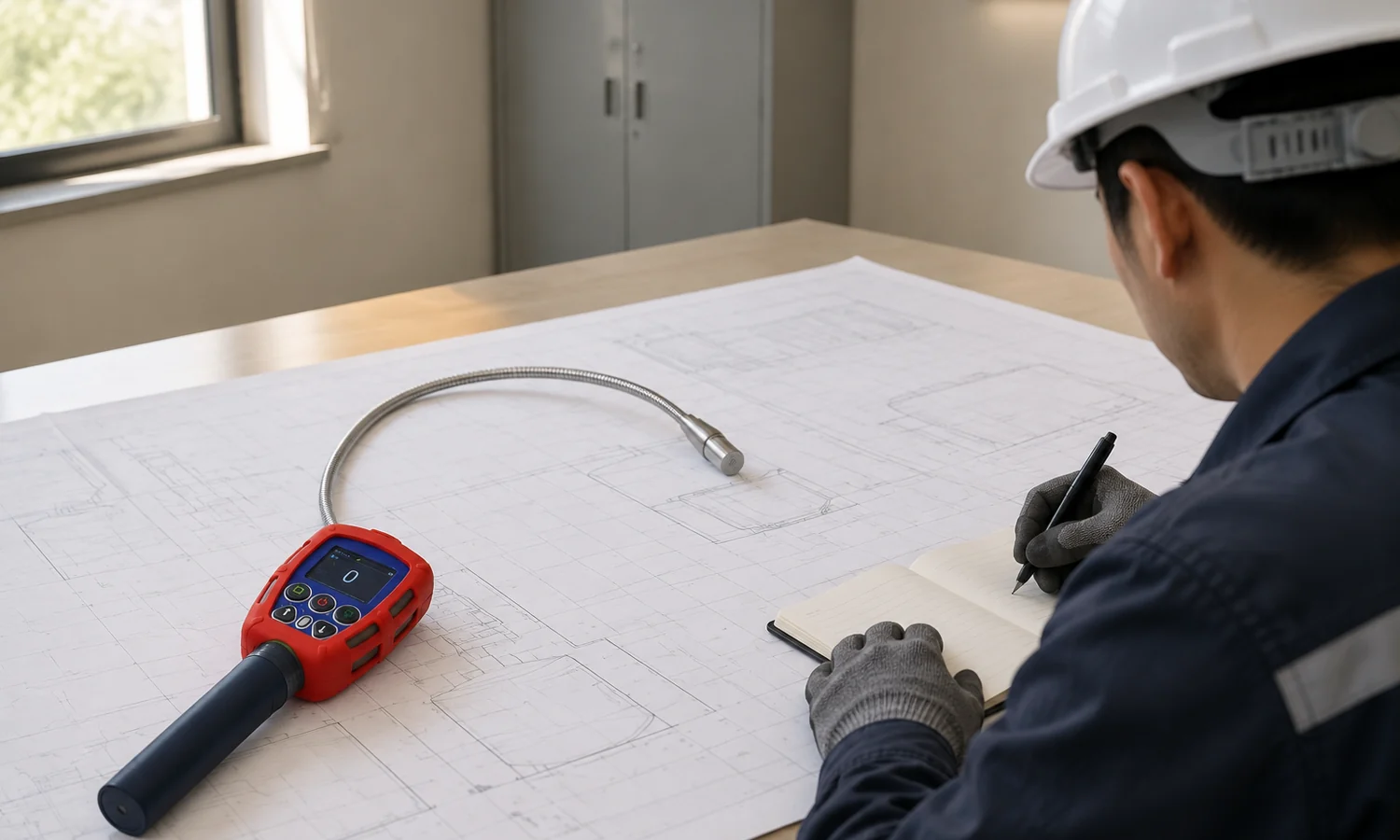
Send a simple point schedule: расположение, задача, target unit and range, метод выборки, alarm recipient and site conditions. That lets the equipment team distinguish a fixed release-warning point from a portable worker check and confirm the methanol configuration for each.
Часто задаваемые вопросы
Can a combustible gas detector also monitor low-level methanol exposure?
Not on the strength of its %LEL display alone. Low-level vapor monitoring needs an appropriate methanol-capable sensor and ppm range. Ask for the measurement purpose and configuration to be stated separately.
When is a fixed methanol detector preferable to a portable unit?
Discuss fixed detection when a defined equipment area needs continuous indication, including periods between operator visits. A portable instrument is better suited to a worker or a changing inspection position.
When should pump-suction sampling be considered?
Consider it when the sample must be drawn from a defined point away from the detector body, such as an equipment recess or a temporary inspection point. Check the probe, трубки, flow and total response time for the assembled path.
Is there one correct mounting height for every methanol detector?
No single height follows from the gas name alone. Release geometry, расход воздуха, obstructions and the position being protected affect the useful sampling point. The selected point should be recorded and reviewed against the actual layout.
Can a multi-gas detector be configured to measure methanol?
That depends on the sensor channels and ranges available for the exact instrument configuration. Ask for methanol to be identified explicitly in the offered sensor specification rather than assuming it is included with a generic combustible or multi-gas unit.
What should I provide when requesting a methanol detector quote?
Provide the monitoring purpose, ppm or %LEL range, место отбора проб, fixed or portable duty, other vapors present, условия окружающей среды, alarm connection and testing requirements. A sketch of the equipment and work positions is often more useful than a model number alone.

Вичат
Сканируйте QR-код с помощью WeChat