 Henan Otywell Electronic Technology Co., Ltd

A methyl mercaptan gas detector should be specified for the air you need to sample and the decision its reading must support. A worker carrying a monitor, a technician checking a valve with a probe and a fixed detector watching an unattended transfer point are measuring at different places. A detector tube answers a fourth question: what was present at one point during one test.
Begin with the process material, not the instrument catalog. Confirm methyl mercaptan, also called methanethiol or CH3SH, in the material or release scenario. Then define the concentration range, sampling position, alarm recipient and substances likely to reach the inlet with it. These details determine whether a proposed sensor configuration can give a useful CH3SH reading.
Confirm the gas before choosing the detector
Methyl mercaptan, methanethiol and CH3SH
These names refer to the same substance, CAS 74-93-1. Ethyl mercaptan is a different thiol; hydrogen sulfide is another sulfur-containing gas. A purchase request that simply says “mercaptan” leaves room for a sensor or calibration plan aimed at the wrong compound. Put the chemical name and CAS number on the specification, then list any other thiols or sulfides that may be present.
The NIOSH Pocket Guide entry for methyl mercaptan identifies its formula as CH3SH and describes a colorless gas with a garlic or rotten-cabbage odor. Those identifiers are more reliable for procurement than an odor description. If an operating team uses a trade name for an odorant blend, obtain its current safety data sheet and composition before naming the gas channel.
Follow the actual material route
Methyl mercaptan may be handled as a chemical intermediate, transferred from storage, or used in a specified odorant operation. The relevant points depend on the plant: a cylinder or tank connection, a dosing line, a pump seal, a sampling port, or a process enclosure. Note which operations are closed, which are opened for maintenance and which can release gas while nobody is standing nearby. This narrows both the target locations and the type of warning needed.
Do not assume that every natural-gas odorant contains methyl mercaptan. Nor should a detector be selected solely because people notice a sulfur smell. Odor perception varies and can fade with exposure. Record the named substance from the material documentation and the conditions under which it could reach the breathing zone or a fixed inlet.
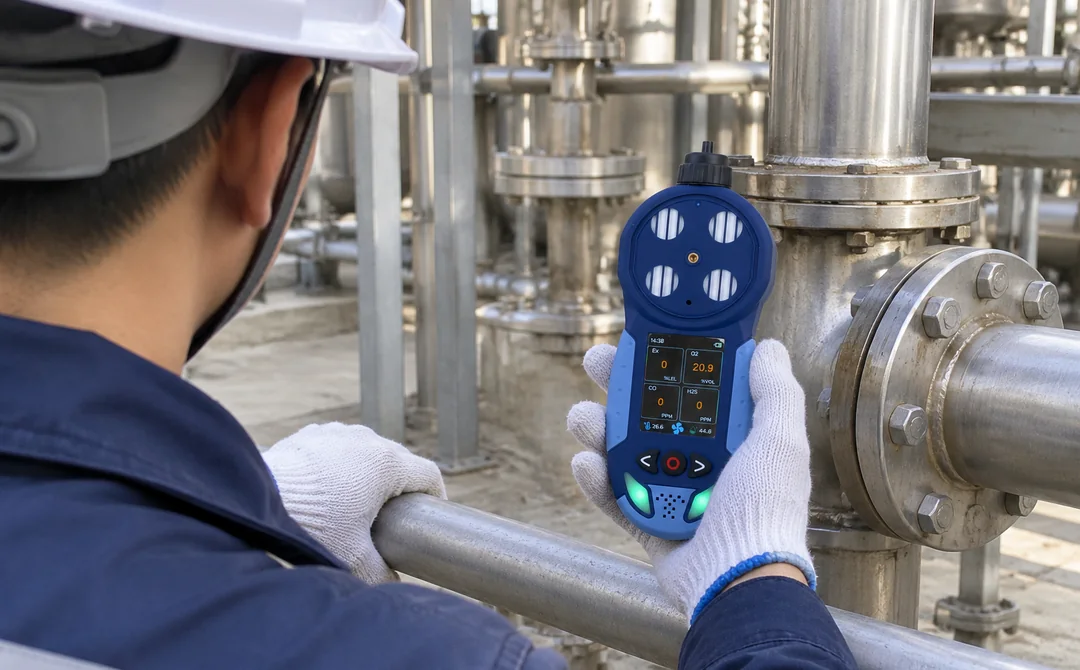
Choose the measurement task and unit
Write down the question the reading is meant to answer before selecting a range. “Can a worker continue this task?”, “Has gas reached the transfer area?”, and “What was the worker’s exposure during the stated period?” have different sampling locations and records. The table below separates those jobs.
| Post | Reading or result | Typical method | What it cannot establish alone |
|---|---|---|---|
| Avertizați un lucrător în mișcare | CH3SH ppm at the worn inlet | Portable personal monitor | Gas levels elsewhere in the plant |
| Check a valve or remote space | CH3SH ppm at the probe tip | Detector portabil pompat | An instantaneous result before the sample reaches the sensor |
| Watch a release point continuously | CH3SH ppm at a fixed inlet | Fixed detector and alarm path | Every worker’s personal exposure |
| Test one place at one time | Result within the tube’s range | Colorimetric tube and matching pump | Changes between spot tests |
| Assess exposure over a defined period | Concentration with a stated sampling time | Selected sampling and analytical method | A live leak alarm unless separately provided |
| Warn of a flammable atmosphere | %LEL with a validated gas response | Suitable combustible-gas channel | Low-ppm toxic-gas conditions |
Low-ppm CH3SH readings
A ppm display is only useful if the fitted sensor or method has a documented response to CH3SH across the required range. Ask for the lowest reliable reading, rezoluţie, precizie, response time and effect of other gases in the actual atmosphere. A broad range such as 0–100 ppm does not, de la sine, establish useful performance near the low end. De asemenea, a sensor that responds to sulfur compounds may indicate a change without separating methyl mercaptan from the rest of the mixture.
A photoionization detector may respond to methyl mercaptan under the conditions for which it is calibrated. Într-un amestec, a general VOC reading is still a combined response, not an identified CH3SH concentration. A correction factor for a known, single gas cannot identify an unknown blend. If the decision depends on the amount of this one compound, request evidence for that measurement rather than relying on a generic VOC label.
Limitele de expunere, alarms and %LEL answer different questions
Pentru Statele Unite, the NIOSH Pocket Guide lists a recommended exposure limit of 0.5 ppm as a 15-minute ceiling și o limită de expunere permisă OSHA de 10 ppm as a ceiling. It lists 150 ppm as immediately dangerous to life or health (IDLH). These are different reference values with different purposes. Neither ceiling value is an eight-hour time-weighted average, and none becomes the correct alarm setting merely by being entered into a detector.
Methyl mercaptan is also flammable. NIOSH enumeră limita sa inferioară de explozie ca 3.9% după volum. A %LEL channel addresses a much higher concentration range than a low-ppm toxic-gas channel. If the process needs both types of warning, specify each sensor’s target gas response, units and test method separately. Check the combustible sensor against the actual gas and oxygen conditions before using its reading for a methyl-mercaptan release.
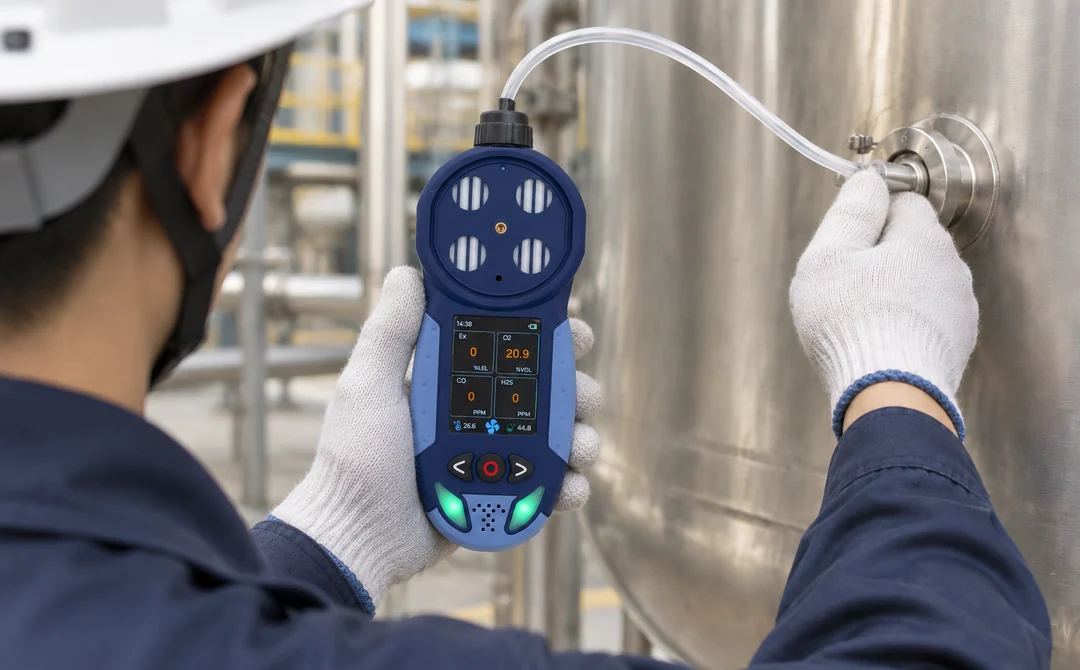
Match portable, fixed and tube methods to the work
Wearable diffusion and pumped portable checks
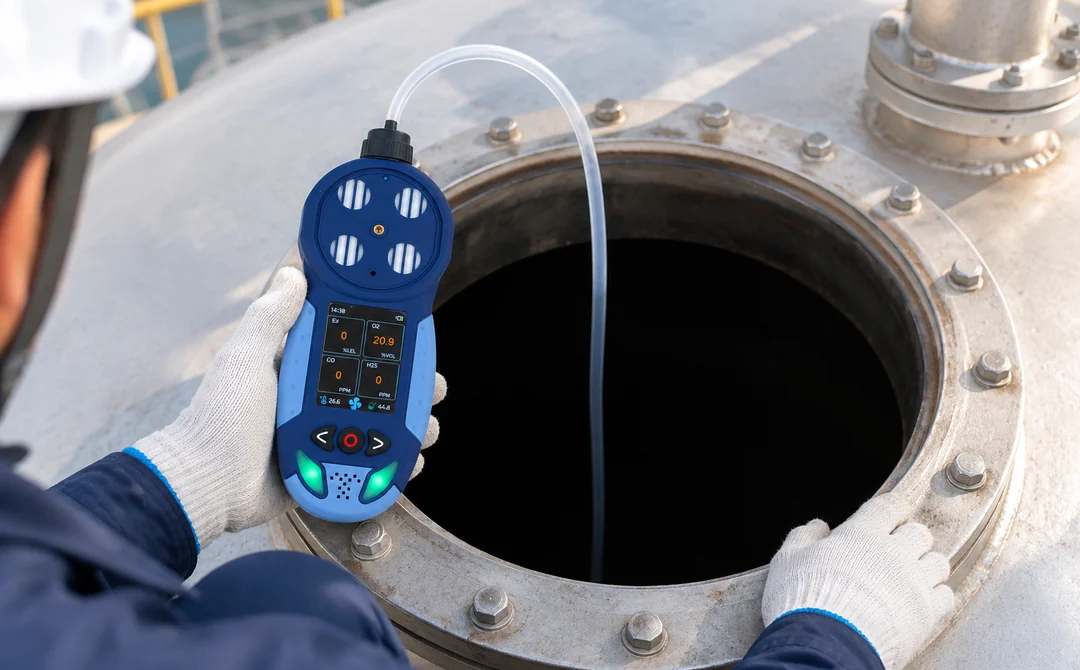
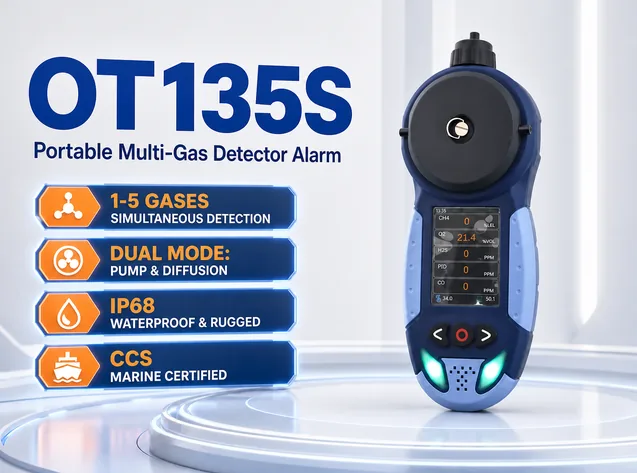
A diffusion monitor worn near the breathing zone follows the worker through routine tasks. A pumped unit draws a sample from a chosen point, such as a valve, pit edge or location that should be checked before a worker approaches it. The probe tip becomes the measurement point. State its position in the work instruction instead of treating the reading as a general value for the whole area.
Pumped sampling adds a hose, filtra, pump and travel time. A long line may delay the first valid reading; wet or contaminated tubing can affect what reaches the sensor. Ask the supplier to validate the complete sample path for CH3SH, including its materials, lungime, flow indication and blocked-line behavior. Allow the required purge and response time at each location. A number shown immediately after moving a probe may still reflect the previous location.
Fixed-point continuous monitoring
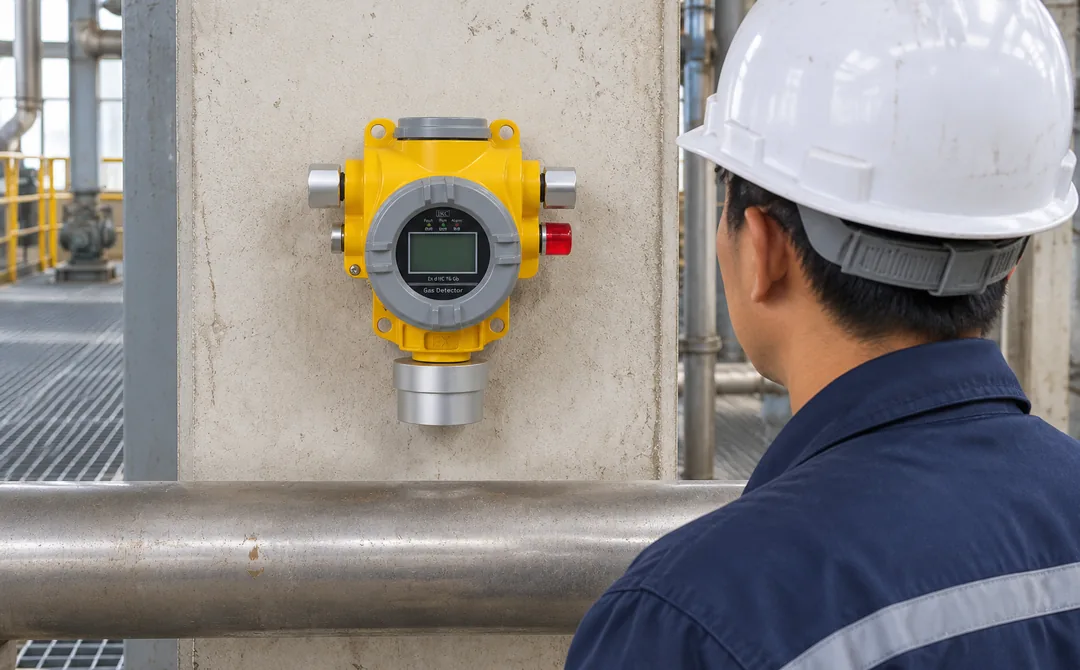
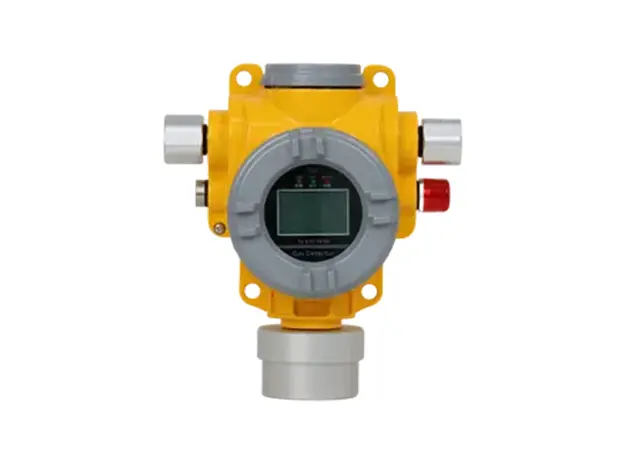
Fixed detectors make sense where a release can develop between inspection rounds or when no worker is nearby to carry an instrument. Mark the potential source, likely path, model de ventilație, occupied positions and maintenance access on the layout. Methyl mercaptan is denser than air according to NIOSH, but density alone does not choose mounting height. Release pressure, temperatură, local airflow, barriers and low-lying spaces can change where gas travels.
Specify the entire alarm route: indicatie locala, signal or relay, controlor, remote recipient and any required plant response. Include sensor fault, communication loss and pump fault when a sampled fixed system is proposed. The inlet should be accessible for functional testing without removing the detector from the location it is meant to protect. A fixed point remains a measurement at that inlet; it does not automatically describe a worker’s exposure as the worker moves.
Detector tubes and exposure samples
A methyl mercaptan detector tube is a defined spot test. Its measuring range, pump stroke count, sample time, shelf life and possible interferences belong to the particular tube and matching pump. Read the tube instructions before choosing one for a low-ppm decision; another tube with the same gas name may cover a very different range. A tube result documents the sampling moment, not the gas concentration before or after it.
When the required result covers a specified exposure period, use a sampling and analysis plan designed for that period and compound. Metoda NIOSH 2542 describes collection and laboratory analysis of methyl, ethyl and n-butyl mercaptans, including its working range and possible interferences. The OSHA sampling-method index advises checking the current chemical database for the applicable media and flow rate. A fixed or handheld instantaneous reading does not substitute for a result obtained over the chosen sampling period.
Otywell formats to review for a custom project
Otywell’s product pages describe portable and fixed detector platforms. They do not publish a confirmed methyl mercaptan range for these two models. Discuss the target CH3SH sensor, gamă, aranjamentul de eșantionare, calibration and required documents as part of the supplied configuration.
Specify a CH3SH-capable sensor configuration
Ask for the target-gas performance sheet
A useful quotation names the target compound and the fitted sensor or measurement method. Request the CH3SH range, lower reliable reading, rezoluţie, precizie, timpii de răspuns și de recuperare, operating temperature and humidity, and behavior after an over-range event. If the supplier gives a specification for a sensor family, ask which figures apply to the exact proposed channel. A display capable of showing two decimal places does not prove two-decimal measurement accuracy.
State both the lowest concentration at which a decision must be made and the highest credible concentration at the inlet. A low-range sensor may need an over-range and recovery plan; a wide-range sensor may not resolve the low-level decision. If one configuration cannot cover both, ask for separate channels or a different method. Avoid assuming that a combustible sensor calibrated for another gas will produce an accurate CH3SH %LEL value.
Check the actual gas mixture
List hydrogen sulfide, other mercaptans, solvenți, cleaning chemicals and process gases that might reach the inlet. Request the proposed sensor’s cross-sensitivity table and the conditions under which it was measured. A response to H2S is not evidence that an H2S monitor measures methyl mercaptan reliably. În egală măsură, a sensor labeled “mercaptan” may respond to several thiols without distinguishing them. Where the mixture changes, include the changing cases in the evaluation.
Calibration must follow the supplied configuration. Ask which gas, concentraţie, regulator, flow and adapter are specified; whether a substitute gas is permitted; and what documented conversion applies to that sensor. Do not carry a ratio from another manufacturer’s device into this project. Check whether the same procedure covers the hose and filter if the instrument is pumped. Keep a copy of the approved method with the detector’s serial and channel details.
| articol RFQ | Informații de furnizat | Dovezi de solicitat |
|---|---|---|
| Target and range | CH3SH, CAS 74-93-1; low and high decision concentrations | Named sensor, gamă utilă, acuratețea și datele de răspuns |
| Atmosferă | Other sulfur gases, solvenți, temperatură, humidity and dust | Cross-sensitivity and environmental limits |
| Prelevarea de probe | Poziția de purtare, probe point or fixed inlet; lungimea liniei | Accesorii compatibile, debitul și întârzierea totală a probei |
| Ruta de alarmă | Who receives each alarm and fault; controller interface | Ieșiri, settings and end-to-end test procedure |
| Calibrare | Available standard gas and maintenance capability | Gaz, concentraţie, adaptor, interval and any validated conversion |
| Market and site | Destination country, hazardous-area classification and quantities | Documents and certificates for the exact supplied version |
The Otywell OEM and sensor-customization page asks buyers to share the target gas, domeniul de măsurare, mediu, product type and required certifications. That is a practical starting brief. The quotation should then identify the proposed components and the evidence for their use with methyl mercaptan.
Build and verify the alarm chain
Before commissioning, compare every delivered channel with the approved schedule: gas name, unitati, gamă, senzor, accesorii de prelevare de probe, setări de alarmă, outputs and documentation. Mark the fixed inlets on a drawing and the portable probe or wearing position in the work instruction. Test the complete path from inlet to indication. On a pumped unit, include the probe, hose and filter; on a fixed system, include the detector output, controller display, notification and any required interlock.
Record the test gas, răspunsul observat, time to indication and action when a fault is introduced. A blocked line, failed sensor or lost connection must be recognizable as a fault rather than silently resembling clean air. Document who restores the system after a test and how a failed check is handled. The calibration schedule should follow the actual sensor and manufacturer instructions, adjusted through the site’s recorded experience with use and environmental conditions.
Păstrați referința de expunere, instrument capability and approved alarm setting distinct in the handover file. If a proposed setting falls below what the channel can measure reliably, changing the number in a menu will not solve the measurement problem. Review the sensor or method, then repeat the functional test with the supplied configuration.
Send a useful configuration request
Send Otywell the material name and SDS, CH3SH release points, expected concentration range, required time basis, accompanying gases, portable or fixed duty, distanța de eșantionare, site conditions, alarm destinations, destination market and required documents. The team can evaluate a matching sensor and platform, then specify what the offered version will measure and how it will be tested.
Întrebări frecvente
Is methanethiol the same as methyl mercaptan?
Da. Methanethiol and methyl mercaptan both refer to CH3SH, CAS 74-93-1. Ethyl mercaptan is a different substance. Use the chemical name and CAS number on the order so that the sensor and calibration specification identify the intended gas.
Can an H2S detector measure methyl mercaptan?
Some sensors may respond to more than one sulfur compound, but that response alone does not make an H2S reading a reliable CH3SH concentration. Request the proposed sensor’s cross-sensitivity and calibration information for the actual gas mixture.
Can a VOC or PID detector identify CH3SH?
A VOC or PID instrument can respond to compounds in its supported range, including methyl mercaptan under suitable conditions. In a mixed atmosphere, its general reading does not identify the contribution from CH3SH. A compound-specific decision needs a documented method and calibration for that purpose.
When is a methyl mercaptan detector tube enough?
A tube can answer a defined spot-test question when its range, pompa, sampling time and interference limits fit the job. It does not warn between tests. Use a continuous electronic alarm where changing conditions must be detected while work continues or an area is unattended.
Should I choose ppm or %LEL?
Choose a verified CH3SH ppm measurement for a low-concentration toxic-gas decision. Choose a suitable %LEL channel for a flammable-atmosphere warning. If both are needed, state both duties and check each channel against the actual gas and environment.
Where should a fixed CH3SH detector be installed?
Start with the credible release point and the route gas could take toward workers or equipment. Consider airflow, ventilare, bariere, temperatură, pressure and access for testing. Gas density is one input, not a complete mounting-height rule.
What calibration gas and alarm settings should I request?
Request the procedure for the exact supplied sensor, including the specified gas, concentraţie, curgere, adapter and any documented substitute-gas conversion. Set alarms against the required response action and the channel’s verified performance; do not copy another detector’s settings or a ceiling limit into the menu without that evaluation.

WeChat
Scanați codul QR cu WeChat