 Henan Otywell Electronic Technology Co., Ltd

Um detector de gás cloreto de hidrogênio deve ser escolhido para o local e tarefa que ele realmente monitorará. Uma unidade fixa observa um ponto definido, um detector pessoal viaja com o trabalhador, and a pumped instrument takes a sample from its inlet or probe. Before comparing models, identify whether the concern is airborne HCl gas, névoa ácida, ou ambos.
For an HCl monitoring enquiry, specify the source of a possible release, where people work, whether monitoring must continue when the area is empty, and the exact location to be sampled. Then select the HCl channel and ppm range, arranjo de amostragem, alarm route and service access. A product family may offer many gases, but the ordered instrument measures only the channels fitted to that configuration.
What should the hydrogen chloride detector measure?
Hydrogen chloride, HCl, can be present as a gas. Hydrochloric acid is hydrogen chloride dissolved in water. At an acid-handling operation, airborne material may include HCl gas and liquid droplets; the presence of one does not prove that a gas detector measures the other. The CDC/ATSDR hydrogen chloride guidance distinguishes the anhydrous gas from its aqueous solution and notes how readily HCl interacts with moisture.
This distinction matters at a pickling tank. A purchasing request that says only “hydrochloric acid monitor” leaves open whether the team needs a gas alarm, an aerosol measurement, ou ambos. Request the proposed instrument’s stated response to HCl gas and separate evidence for any acid-mist claim. Do not treat a gas-channel label as an aerosol specification.
HCl also differs from chlorine (Cl2) and hydrogen (H2). Similar letters on a gas list do not make their sensor channels interchangeable. Write the target gas as cloreto de hidrogênio (HCl) on the enquiry and order.
Where does HCl monitoring become an equipment decision?
The industry name is only a starting point. Two facilities that use hydrochloric acid can need different equipment because the open operation, occupied position and ventilation route differ. Map the task before deciding where a detector belongs.
Metal pickling and surface treatment
At a pickling line, an operator may stand beside a bath during loading, move to a dosing point and later handle a transfer hose. Those are three positions, not one generic “acid area.” A portable HCl configuration can follow moving work. If a repeatedly used connection or enclosure must be watched between rounds, examine a fixed point there as a separate requirement. Also identify whether the sampling question concerns gas, mist or both; tank activity may not produce a single uniform airborne mixture.
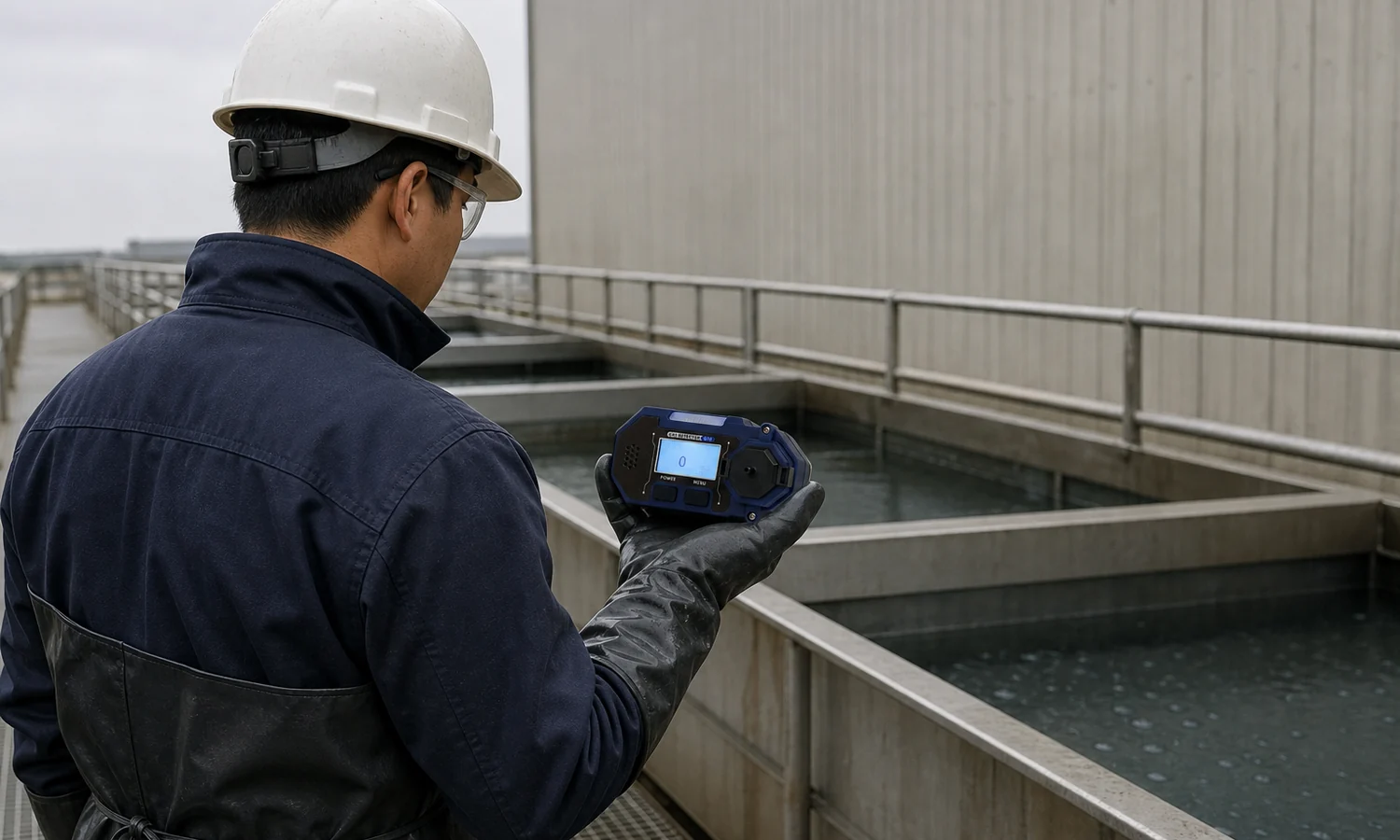
Chemical production and acid transfer
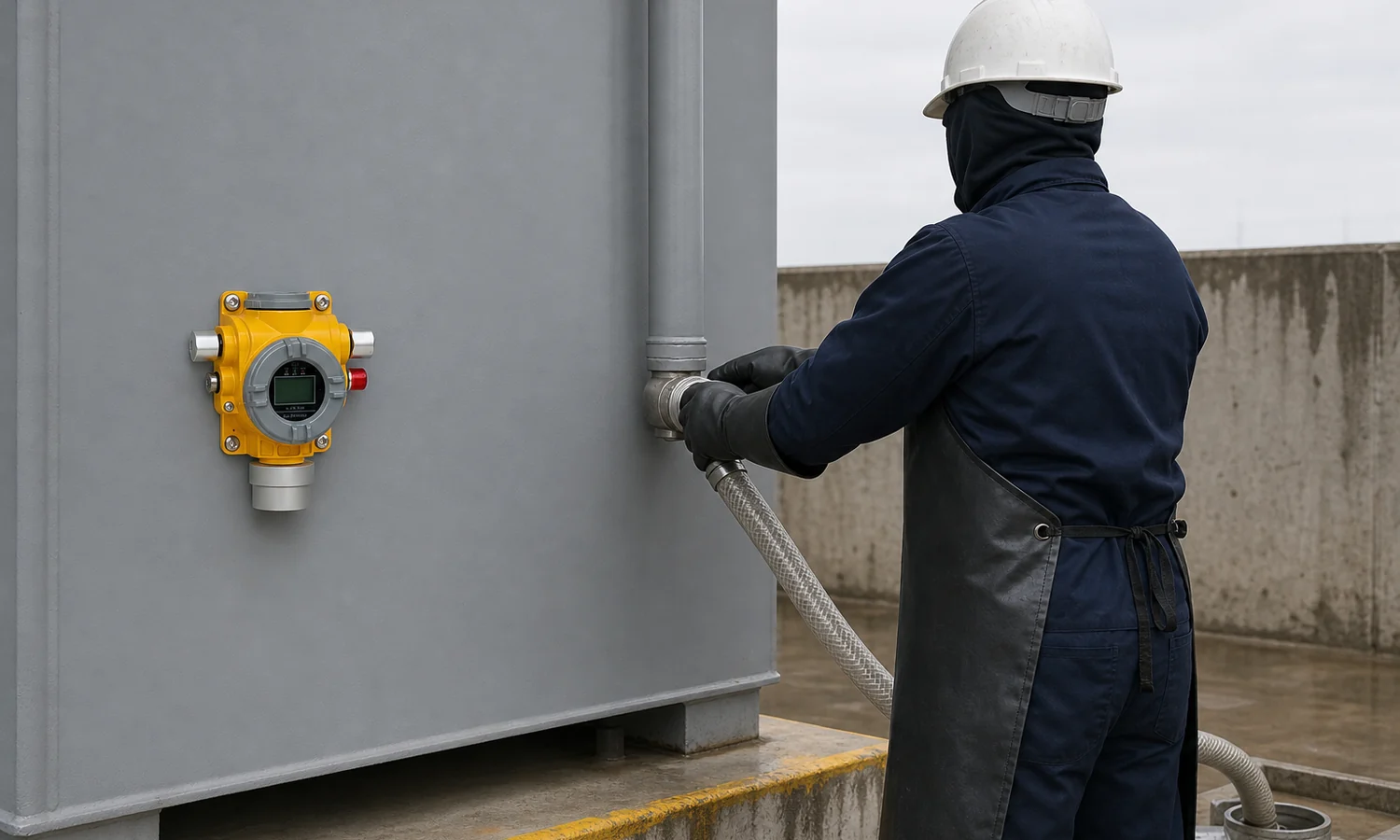
For a storage-to-process transfer, mark the valve, hose coupling and receiving point on a drawing. A fixed detector should be assessed against a credible release path and where an alarm will be received. A worker who moves between those fittings has a different monitoring task. If a fitting is awkward to reach, sampling at a probe tip may be more useful than holding a diffusion instrument at arm’s length.
HCl gas cabinets and process equipment
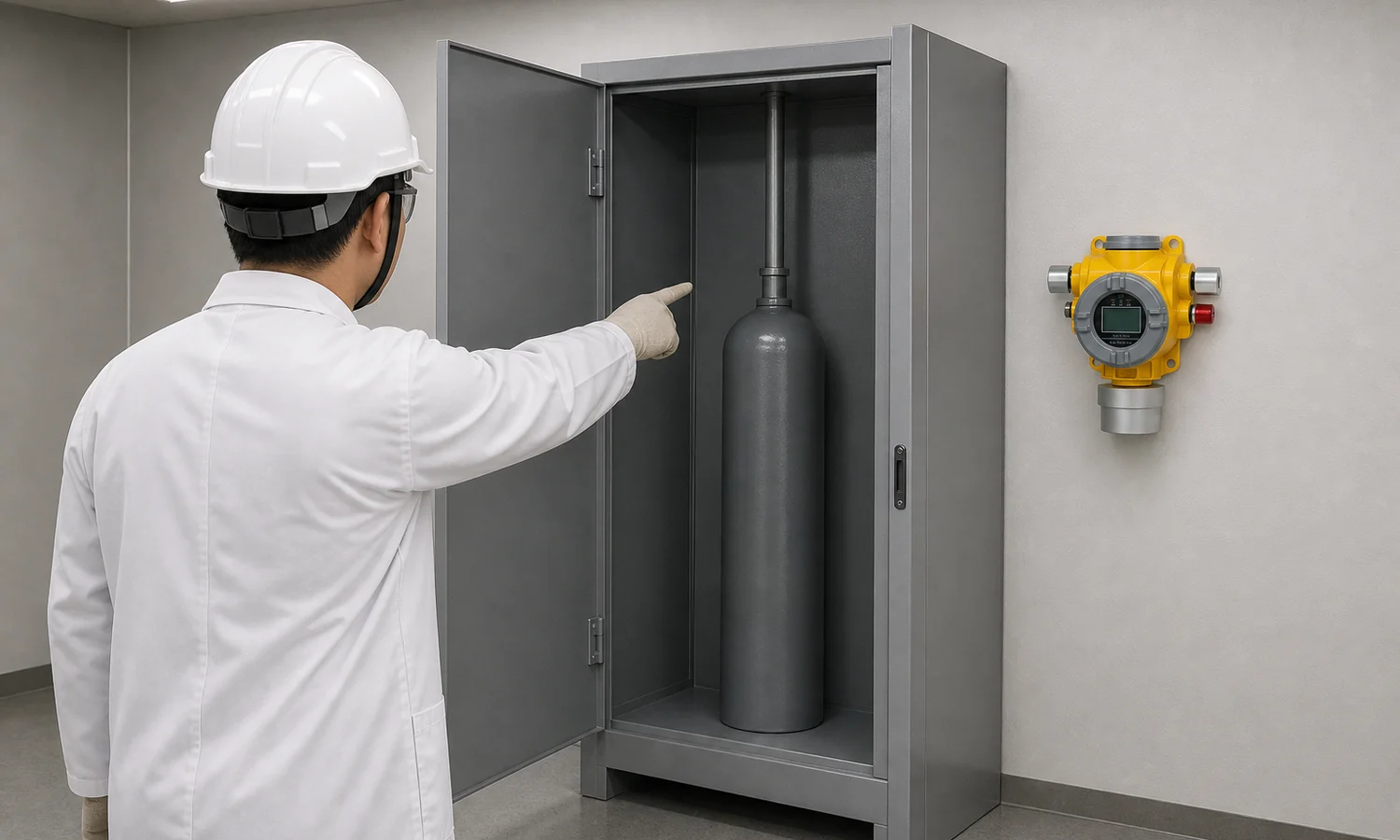
Where a process uses anhydrous HCl, define the cabinet, manifold or connection to be monitored rather than specifying one detector for an entire building. Record extraction airflow, access to the intended sensing point and whether the signal needs to reach a plant system. The detector position must make sense for the actual equipment layout, not merely for the room name.
Laboratories and small handling stations
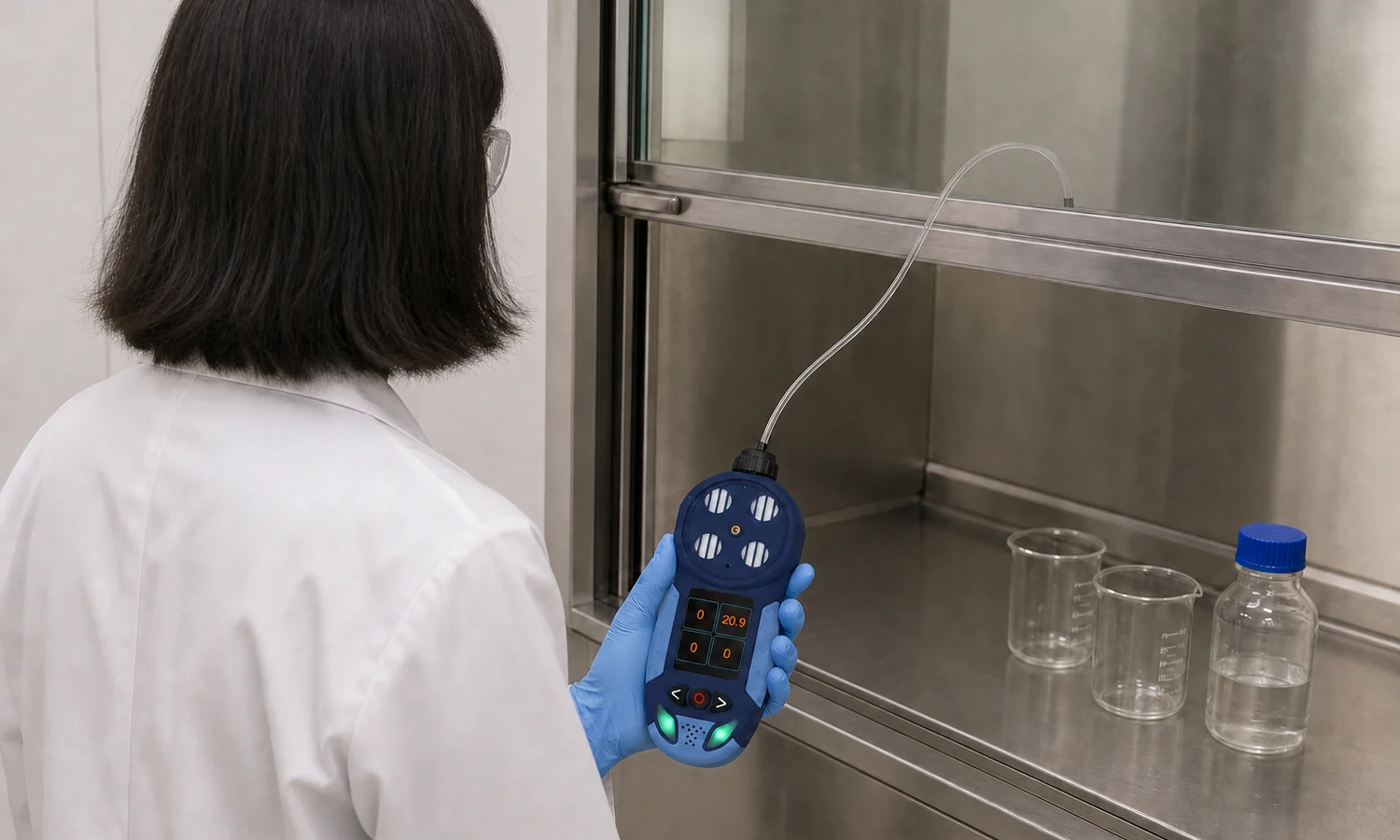
A laboratory may have one recurring dispensing location and occasional work elsewhere. Ask whether the requirement is an unattended warning at the recurring station, an instrument carried during the changing task, or a defined check before approaching a suspected release. Those answers lead to different placements and sampling methods even when the target gas is the same.
| Situação de trabalho | Pergunta para responder | Equipment role to examine | Detail to record |
|---|---|---|---|
| Repeated acid-transfer connection | Must this point be watched between operator visits? | Monitoramento fixo, with portable coverage for moving work if needed | Connection location, posições ocupadas, airflow and alarm recipient |
| Operator moving along a pickling line | What reaches the worker as the task moves? | Personal portable HCl configuration | Tasks, wearing position and whether acid mist is also a concern |
| Inaccessible valve or fitting | What is present at the fitting before close approach? | Suitable pumped instrument and specified probe or inlet | Sampling path, accessories and wait time |
| HCl gas cabinet or manifold | Which defined point needs ongoing indication? | Fixed point selected for that installation | Enclosure extraction, poder, signal path and service access |
Fixo, personal or pumped: which role fits?
Fixed monitoring for an identified point
A fixed detector remains at a chosen location and can provide continuing indication while no operator is nearby. It is useful only if the sensing point is positioned for the release being considered and its alarm can reach the intended recipient. One unit beside a convenient doorway should not be assumed to cover every valve or open vessel on the other side of the room.
Diffusion monitoring for moving work
A portable diffusion detector samples air at the instrument’s inlet. Carried by an operator, it can follow a sequence of tasks; it does not continue to monitor a transfer bay after that operator leaves. The chosen HCl sensor and range have to be part of the supplied device. A standard O2/LEL/CO/H2S four-gas arrangement does not become an HCl instrument just because the housing supports other sensors.
Pumped sampling for a defined remote location
With pump suction, the inlet or probe tip defines the point being checked. That can help when a connection is behind equipment or must be approached cautiously. The sample then has to travel through the full path to the sensor. Probe type, tubulação, filtro, flow and waiting time belong in the specification, not in an afterthought once the instrument has arrived.
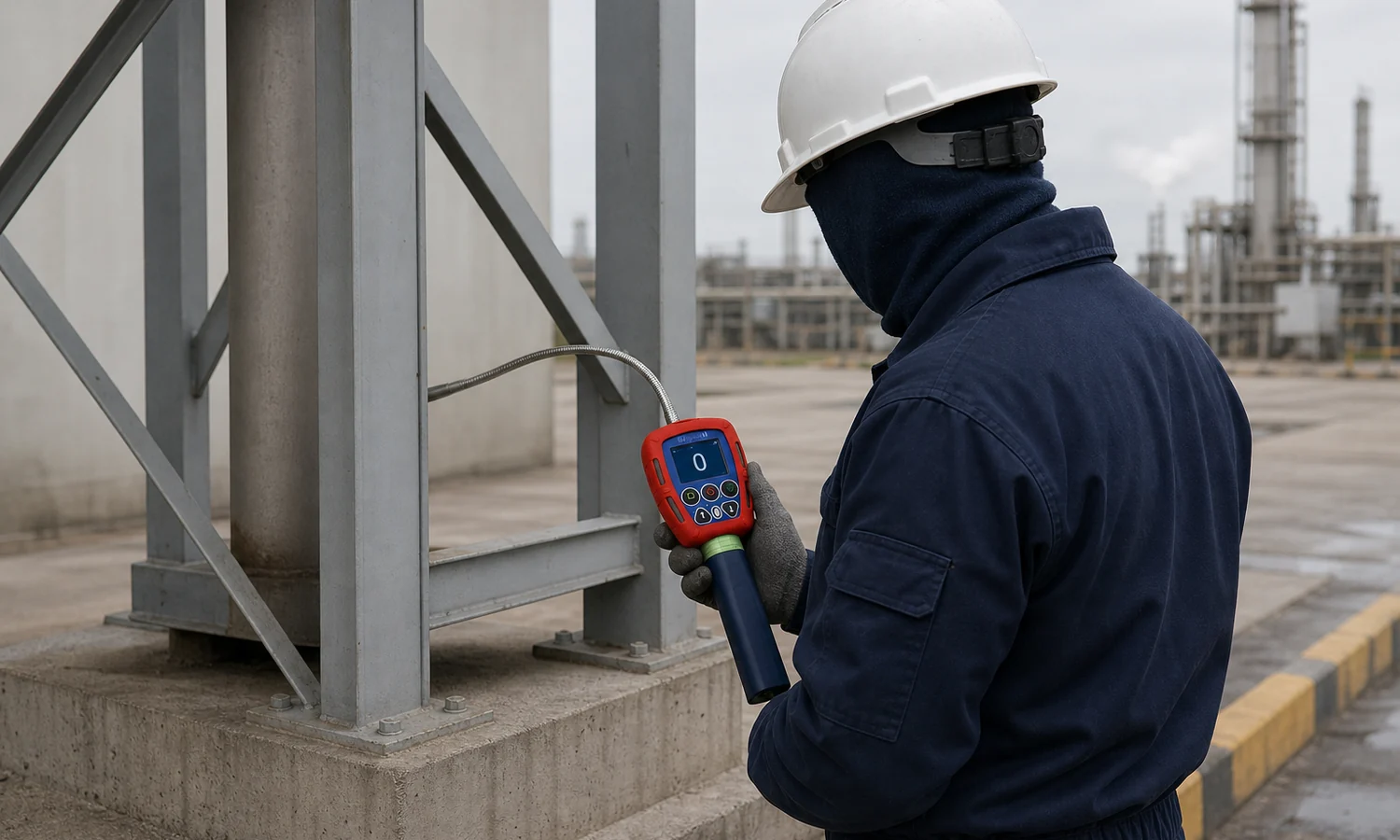
Many projects need more than one role. A fixed point can watch a repeat-use transfer connection while a portable detector accompanies the person who connects and disconnects the hose. For a broader comparison of these duties, see the fixed-versus-portable detector selection guide.
Otywell equipment to discuss for an HCl project
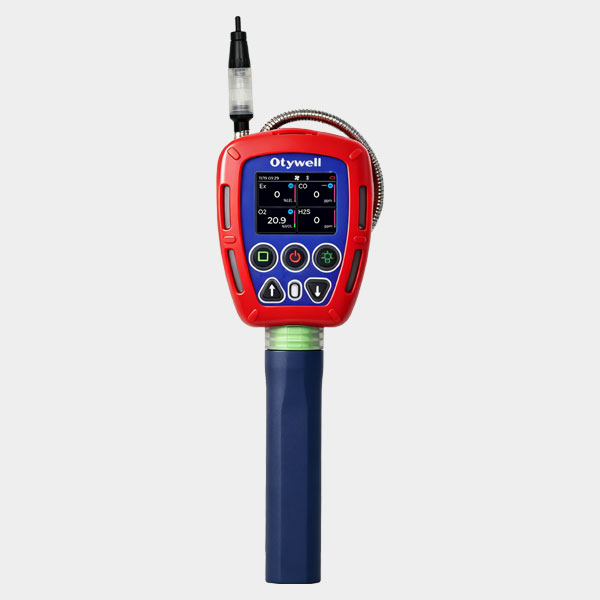
These are different instrument formats, not four identical ready-to-ship HCl units. Each product page lists HCl among configurable gas options. Specify the HCl channel, range and sampling version on the enquiry; confirm the supplied configuration before ordering.
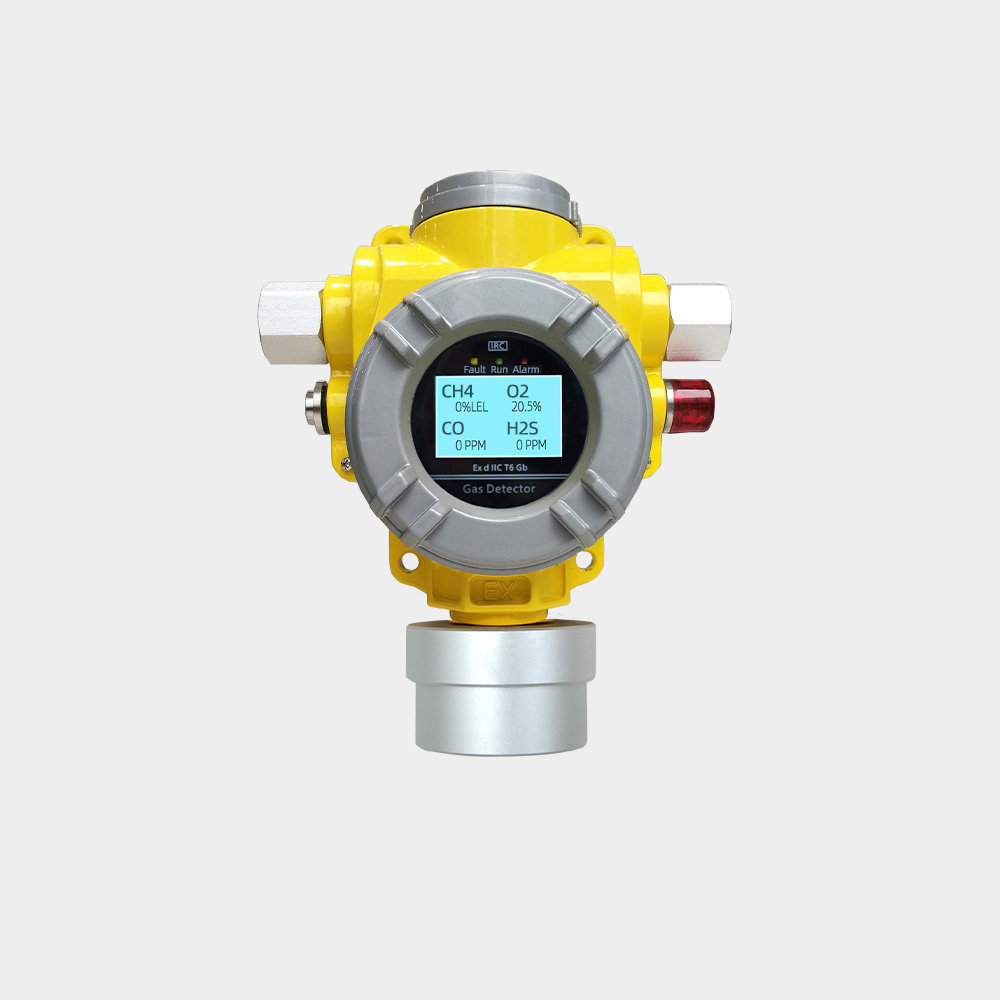
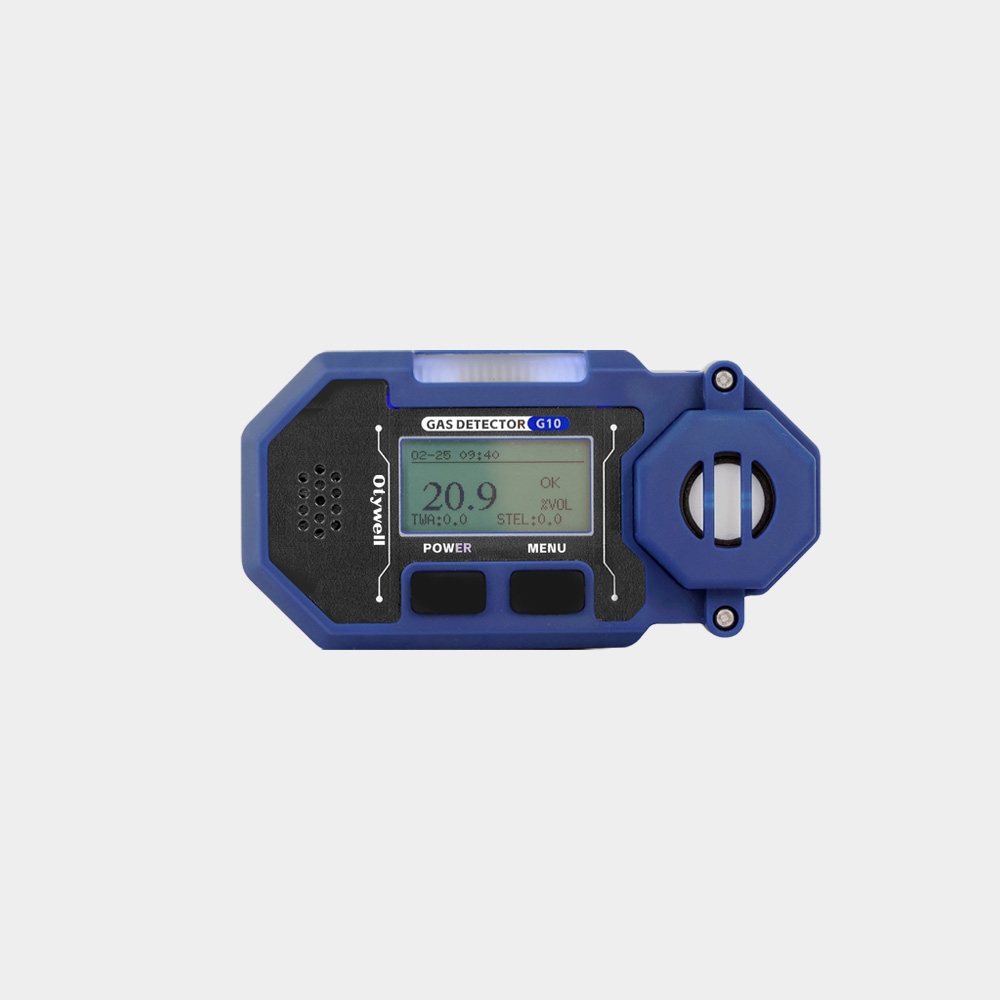
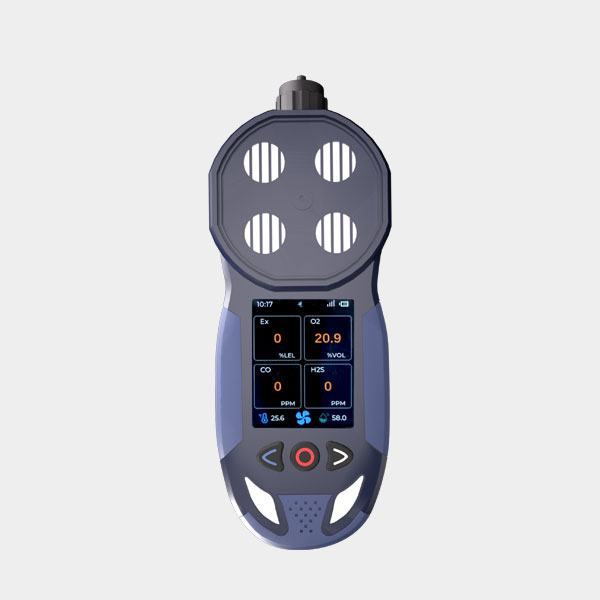
Choose the HCl range, alarm and signal path
For a hydrogen chloride gas detector, request an HCl-specific configuration stated in ppm. The Otywell pages above list a 0–20 ppm HCl range and additional listed options, but the product-family table is not proof that every range is available with every sensor, sampling accessory and output. State the intended range and ask for the exact offered version’s datasheet, resolution and interference information.
O NIOSH Pocket Guide entry for hydrogen chloride lists both the OSHA PEL and NIOSH REL as teto 5 ppm. “Ceiling” is not an eight-hour time-weighted average. Nor is 5 ppm a universal alarm setpoint to copy into every device: the alarm configuration must be specified for the applicable requirements and the purpose of that monitoring point. Keep the exposure limit, instantaneous display, warning threshold and any time-based record as separate fields in the specification.
For a fixed installation, name the recipient of the signal. If the selected TCB2-F version is to send 4–20 mA or RS485, check the receiving equipment, power and wiring against that actual option. A local display and an external alarm path are different functions. For a portable unit, specify whether the user needs local sound, light and vibration warnings, a stored reading, or a reportable record. Do not assume every optional communication feature is standard.
| Specification field | What to write on the enquiry | Common mistake to avoid |
|---|---|---|
| Gas and range | HCl, ppm, requested range and resolution | Ordering “acid detector” without defining the measured form |
| Sensor configuration | HCl channel and other gases, if any, fitted to this unit | Assuming a list of supported gases means all are installed |
| Amostragem | Diffusion or pump, inlet/probe and tubing if used | Quoting instrument response without the full sample path |
| Alarme | Who sees it, where, and which site settings are required | Using an exposure ceiling as an automatic universal setpoint |
| Output | Exact fixed-unit signal and receiving input, if applicable | Mixing optional output versions in one assumed configuration |
Place the inlet where the question can be answered
HCl is heavier than air, but density alone does not tell you where an installed inlet should go. A cabinet exhaust, open door, local extraction or obstructing vessel can change the path between a release and a person. Draw the credible release point and the occupied position first. Then check how air actually moves through that part of the installation.
For a fixed detector, record its intended mounting point and how it will be reached for inspection. In a transfer area, a unit near the far wall may be easy to wire but may not represent the hose connection. In a gas cabinet, the extraction route and the particular manifold matter more than a generic “low-level HCl” rule.
For a pumped instrument, examine the assembled sampling path. HCl’s strong interaction with moisture makes tube material, moisture and filter choice worth checking with the supplier for the proposed arrangement. Do not infer the performance of a long or damp tube from the sensor’s standalone response time. Durante o comissionamento, check the inlet, fluxo, response at the selected sampling point and time allowed for a reading to stabilize.
What should be checked before service?
Keep a record of the supplied gas channel and range, the sensor and sampling version, alarm settings and any connected output. A routine instrument check should exercise the functions the team relies on: inlet or flow where applicable, local indication, alarm and the signal path to a receiving system. Calibration instructions and test-gas compatibility need to match the specific HCl configuration rather than a different gas version of the same housing.
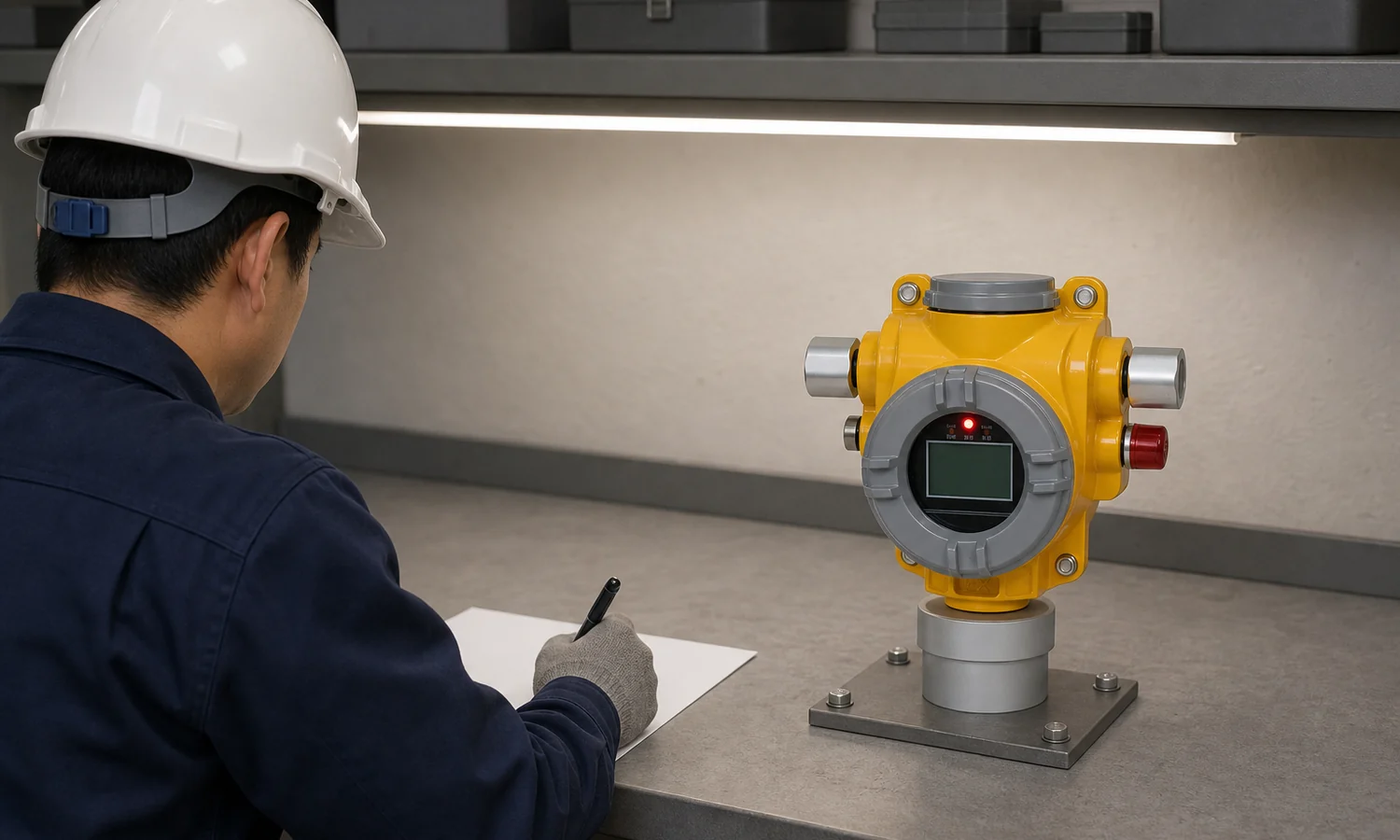
Where a pump, probe or filter is fitted, inspect those parts as well as the detector. A functioning display cannot show that an inlet is clear or that a sample line still represents the intended location. Document the actual accessories supplied so replacements do not silently change the sampling arrangement.
Send a quotation request that identifies the monitoring job
For each monitoring point or portable user group, send the work area and task, gás alvo (HCl), whether gas or acid mist is in scope, desired ppm range, serviço fixo ou portátil, difusão ou amostragem por bomba, any probe or tube arrangement, alarm recipient, required output, power conditions and installation location. Include the other gases only if they must be measured by the same ordered unit. This lets the proposed configuration be checked against a real job instead of a generic model name.
Perguntas frequentes
Does a standard four-gas detector detect HCl?
Not by default. A common four-gas set measures oxygen, gás combustível, carbon monoxide and hydrogen sulfide. HCl requires its own specified channel in a compatible device.
Is an HCl detector the same as a chlorine detector?
Não. HCl and chlorine (Cl2) are different target gases. The ordered sensor and calibration information must identify the gas the instrument is meant to report.
Can an HCl gas detector measure hydrochloric acid mist?
Não presuma isso. A detector specified for airborne HCl gas has not thereby been shown to measure suspended acid droplets. If mist is part of the task, request a separate measurement specification for it.
When should I choose a fixed detector rather than a portable one?
Examine a fixed detector when a defined source or point must remain under watch between visits. A portable unit is better suited to a person whose working position changes. Some sites need both roles.
When is pump suction useful for HCl monitoring?
It can place the sampling inlet at a defined connection or another point away from the instrument body. Specify the pump, inlet and complete sample path, then verify that this assembled arrangement is suitable for HCl.
Is 5 ppm the right alarm setting for every HCl detector?
Não. The NIOSH Pocket Guide identifies 5 ppm as a ceiling exposure limit under the cited U.S. limits, not a universal equipment setting. An alarm threshold depends on the relevant requirement and the purpose of the monitoring point.
Can workers rely on the smell of HCl?
Não. Odor is not a dependable warning method for a monitoring plan. The CDC/ATSDR guidance notes that only about half of exposed people can perceive its odor at 5 ppm.

WeChat
Digitalize o código QR com WeChat