 허난 오티웰 전자 기술 유한 회사, 주식회사

수행할 작업 주변의 하수 가스 감지 장비를 선택하십시오.. 냄새만으로는 필요한 도구에 대해 거의 알 수 없습니다.. A crew opening a manhole needs remote pre-entry sampling, while an entrant needs a personal monitor. A lift station that operates around the clock may need fixed detectors. An odor or corrosion investigation may call for an H2S data logger.
For many sewer and wastewater tasks, the basic atmospheric channels are oxygen, combustible gas expressed as percent LEL, 황화수소, 그리고 일산화탄소. That familiar four-gas combination is a useful starting point, but it does not cover every chemical used or produced at every site. 염소, 이산화황, ammonia, or other gases may need separate sensors when the process and risk assessment identify them.
안전 참고 사항: This guide explains equipment categories and purchasing questions. It does not authorize entry or set alarm values. Sewer entry, atmospheric testing, 통풍, rescue, 호흡기 보호, 비상 조치는 해당 규정을 따라야 합니다., the employer’s written program, the site hazard assessment, 그리고 탐지기 제조업체의 지침.
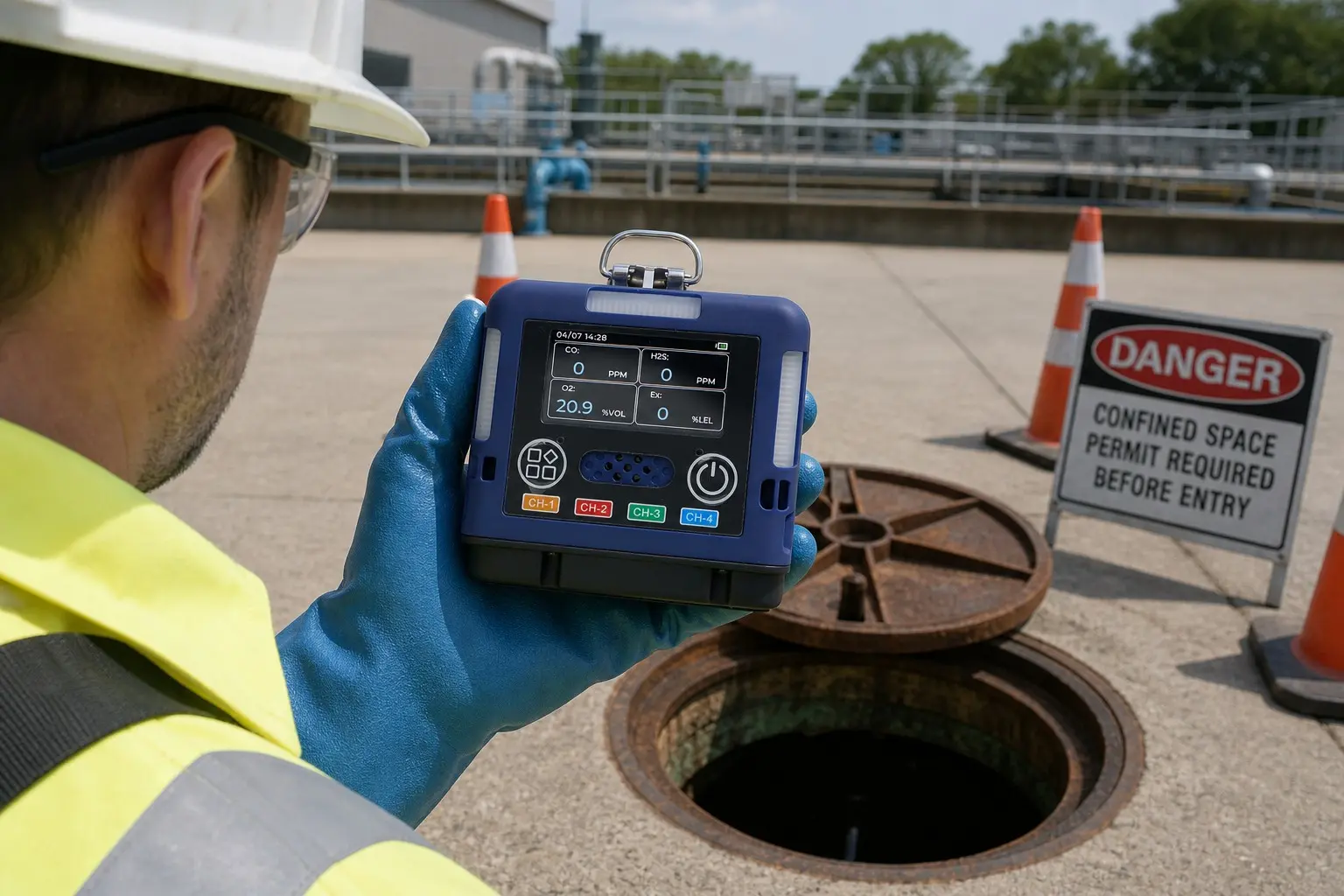
What counts as sewer gas detection equipment?
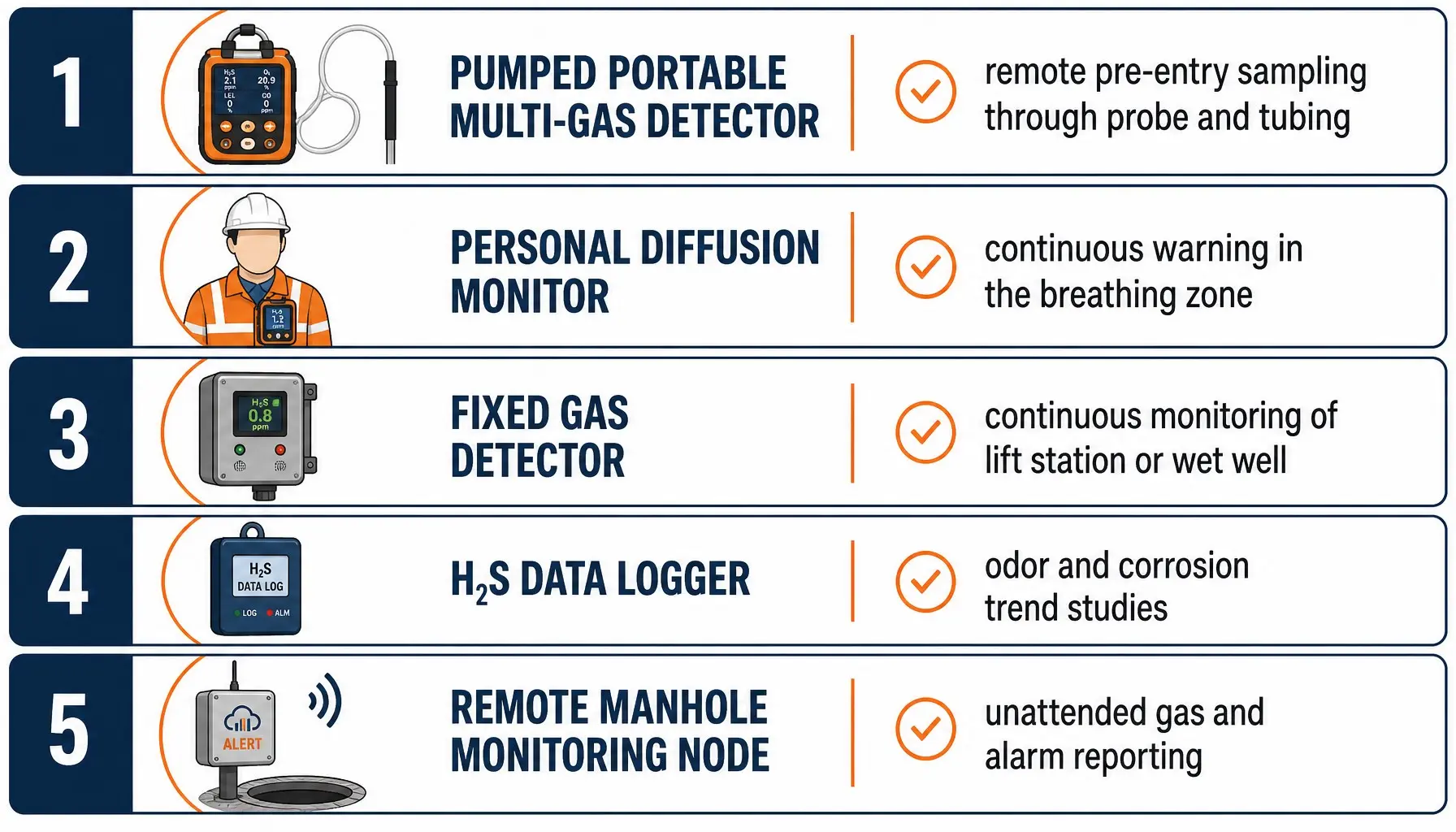
The term covers more than one type of instrument. It can include a portable pump detector used from outside a manhole, a diffusion monitor worn by an entrant, fixed transmitters installed in a lift station, an H2S logger suspended in a sewer line, or a remote node that sends readings to a control room.
These tools answer different questions. A handheld combustible gas sniffer may help locate a methane or natural-gas leak, but it does not prove that oxygen is safe or that hydrogen sulfide is absent. An H2S logger can document a concentration trend for odor control, yet it may not provide the personal alarms required for entry work. Start with the task and the hazards, then choose the equipment.
| Equipment type | Main job | 일반적인 제한 사항 |
|---|---|---|
| Pumped portable multi-gas detector | Pre-entry sampling through a probe and tubing | Sample delay, tubing condition, 필터, and pump flow must be considered |
| Personal diffusion monitor | Continuous warning in the worker’s breathing zone | It measures the atmosphere at the wearer, not a remote point deeper in the space |
| Fixed gas detector | Continuous monitoring of a selected lift station, wet well, or equipment room | Coverage depends on detector type, 수량, position, 기류, 및 유지 보수 |
| H2S data logger | Odor, 부식, and concentration-trend studies | A single-gas logger does not replace a multi-gas entry monitor |
| Remote manhole monitoring node | Unattended gas, water-level, and alarm reporting | Communications, battery life, sensor access, and service plans need engineering review |
Which gases should be measured in a sewer?
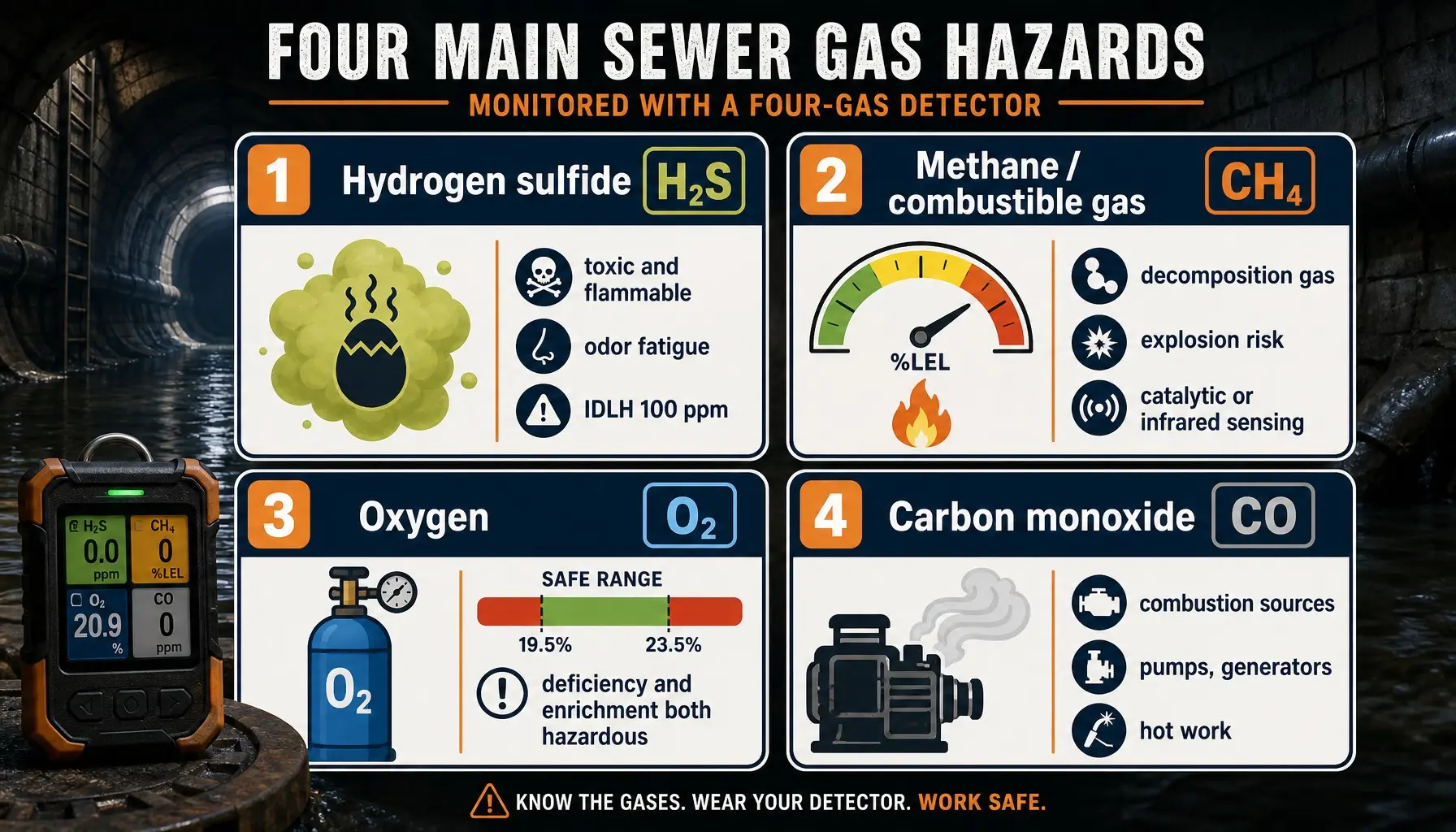
There is no universal sensor list for every collection system. Waste composition, industrial discharges, 청소용 화학물질, nearby utilities, 통풍, biological activity, and the work being performed can change the atmosphere. The standard four-gas set remains common because it covers several frequent entry hazards in one instrument.
황화수소
황화수소, 또는 H2S, is often associated with sewer gas. It is toxic and flammable. Its rotten-egg odor is not a dependable warning because the sense of smell can become rapidly fatigued. The NIOSH Pocket Guide entry for hydrogen sulfide identifies sewer gas as a trade name, lists an IDLH value of 100 ppm, and warns that odor cannot be relied on for continuous presence.
A personal or portable monitor normally measures H2S for immediate safety decisions. A dedicated H2S logger serves another purpose: recording peaks and patterns over hours, days, or longer for odor and corrosion investigations. One instrument should not be assumed to perform both jobs.
Methane and other combustible gases
Methane can form as organic material decomposes. A combustible-gas channel commonly reports the result as a percentage of the lower explosive limit. Check which gas was used to calibrate the LEL sensor, how other gases affect the reading, and whether the sensor technology suits the expected atmosphere.
Catalytic LEL sensors need oxygen to operate and can be affected by poisons or inhibitors. Infrared methane sensors avoid some of those issues but do not detect every combustible gas. Choose the sensor for the gases that could actually be present rather than relying on the broad label “sewer gas.”
산소
Low oxygen may result from displacement or biological and chemical processes. Oxygen enrichment creates a different fire risk. Oxygen must be measured directly. A normal combustible or toxic-gas reading does not confirm an acceptable oxygen concentration.
Carbon monoxide and process-specific gases
Carbon monoxide is included in many standard four-gas monitors. Its relevance can increase around engines, 슬리퍼, 발전기, hot work, traffic, and combustion sources. Wastewater facilities may also use or generate other gases. Review chemical inventories, industrial connections, cleaning operations, treatment chemicals, and previous monitoring records before fixing the sensor list.
Match the detector to the sewer task
A useful purchasing specification names the work first. “Sewer gas detector” is too broad to tell a supplier whether the crew needs a pump, personal alarms, fixed outputs, a long-term logger, or remote communications.
| 일 | Primary equipment | Features to review |
|---|---|---|
| Opening and testing a manhole | Pumped four-gas detector with approved tubing and probe | Pump test, flow indication, 튜브 길이, water trap, sample delay, and data record |
| Worker entry | Personal diffusion multi-gas monitor worn in the breathing zone | 들리는, 시각적, 및 진동 경보, battery life, ruggedness, and event logging |
| Lift station or wet well | Fixed detectors plus portable monitors for maintenance and entry | Sensor placement, controller signals, 릴레이, ventilation interface, access, and corrosion protection |
| Odor and corrosion survey | H2S logger with a suitable range and enclosure | Logging interval, battery duration, retrieval method, 응축, and sensor saturation |
| Unattended manhole or network monitoring | Battery-powered remote monitoring node | Communication coverage, alarm delivery, sensor service, enclosure rating, installation security, and lifecycle cost |
This layered approach is usually more reliable than expecting one instrument to handle every task. Fixed monitoring watches a defined location. Personal monitors follow workers. Pumped units test remote points. Loggers and telemetry systems collect data for operational decisions.
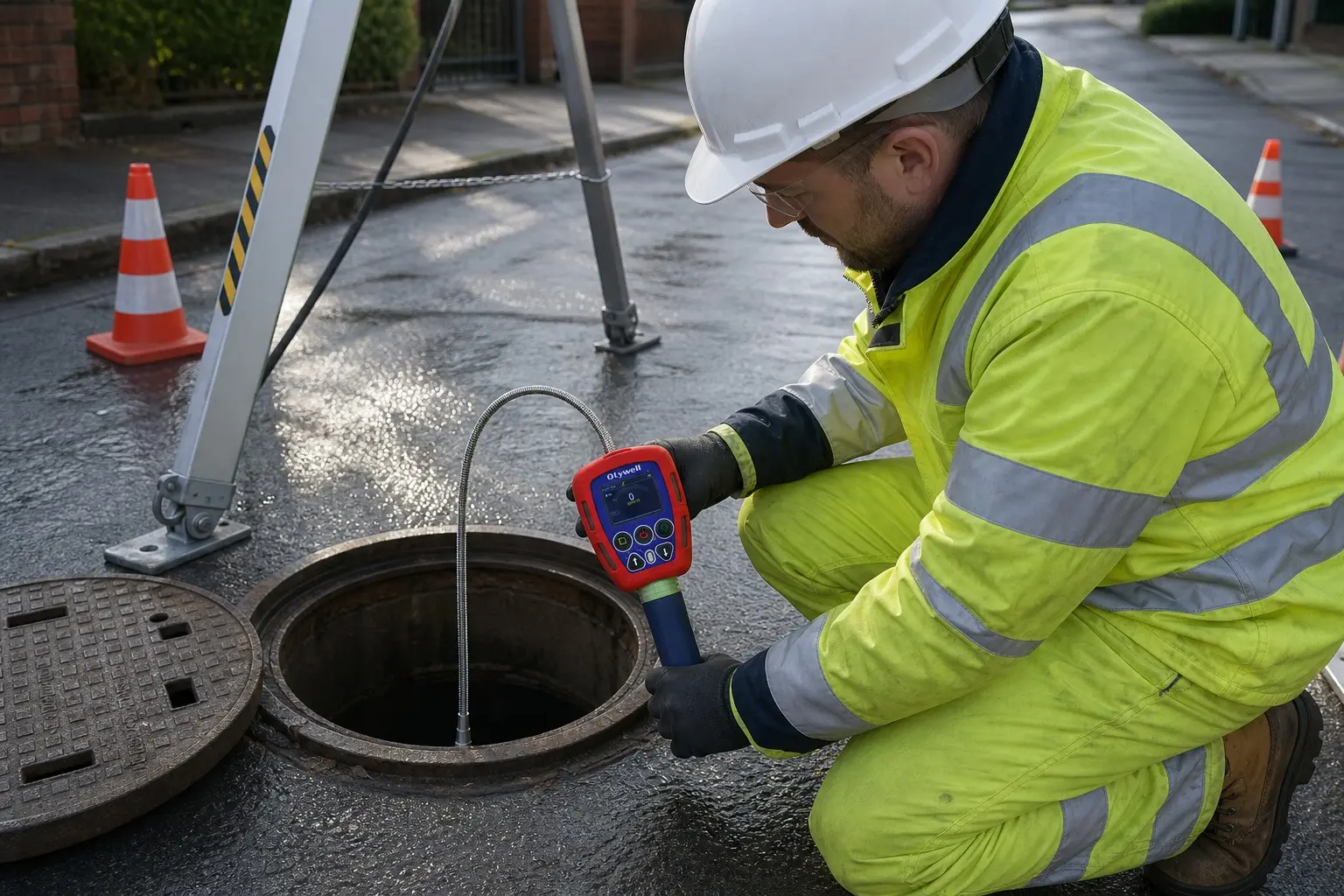
Why pumped sampling matters before entry
A diffusion detector responds to gas that reaches its sensor inlet. It cannot sample the bottom of a manhole while the operator remains at the surface. A pump draws a sample through tubing, which lets the crew test remotely before anyone enters.
OSHA 허가가 필요한 제한된 공간 표준에는 가능한 경우 진입하기 전에 대기 조건을 테스트해야 한다고 명시되어 있습니다.. 이는 특히 하수구와 같은 지속적인 시스템을 다루며 입국이 승인된 경우 승인된 참가자가 일하는 영역에서 지속적인 모니터링이 필요합니다.. 동일한 표준이 테스트 순서를 지정합니다.: 산소 먼저, 다음으로 가연성 가스 및 증기, 그 다음에는 독성 가스와 증기가 발생합니다..
샘플링은 공간의 모양과 깊이를 고려해야 합니다.. 오프닝에서 한 번만 읽어도 아래의 다른 분위기를 놓칠 수 있습니다.. 서면 입력 절차와 샘플링 수준에 대한 검출기 제조업체의 지침을 따르십시오., 튜브 길이, 샘플이 센서에 도달하는 데 필요한 시간.
판독값을 신뢰하기 전에 샘플 지연을 계산하십시오.
펌프, 튜브 직경, 튜브 길이, 필터, and flow rate affect transport time. Add the detector’s sensor response to the tubing delay. If the crew moves the probe and reads immediately, the display may still represent the previous location. Use the manufacturer’s stated method rather than a generic number.
Keep water out of the sample path
Sewer work is wet. A blocked filter, flooded line, or damaged pump can prevent gas from reaching the detector. Inspect the probe, 관 재료, water trap, and filter before use. Confirm that the instrument recognizes restricted flow and that the crew knows what the fault indication means.
Personal monitors are still needed after pre-entry testing
Passing a pre-entry test does not guarantee that the atmosphere will remain unchanged. Flow, 분해, cleaning work, upstream discharge, ventilation loss, or the work itself may introduce a new hazard. Each entrant’s monitor should stay in the breathing zone where its alarms can be seen, heard, and felt.
A standard personal monitor often includes O2, LEL, 콜로라도, 그리고 H2S. 우리의 가이드 4개 가스 모니터가 측정하는 것 explains those channels in more detail. If the sewer system can contain another toxic gas, a standard four-channel configuration may not be enough.
Review alarm audibility around pumps, blowers, traffic, and hearing protection. Vibration and bright visual alarms provide useful backup, but the response procedure still has to be trained. Workers should not remain in the space to investigate an alarm unless the written program and protective measures specifically authorize that work.
Fixed gas detection for lift stations and wet wells
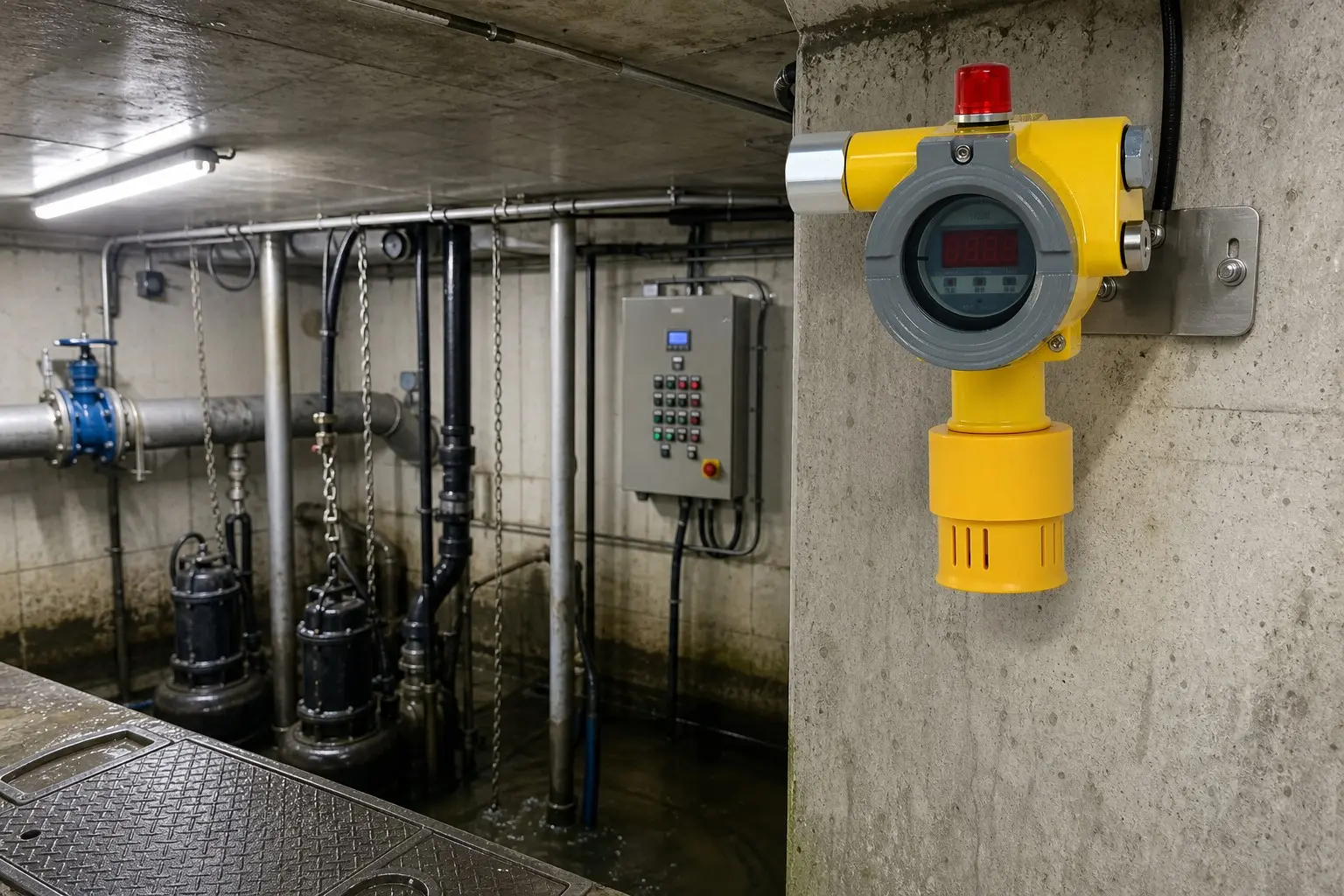
Fixed detectors can watch selected locations continuously and send signals to a controller, PLC, DCS, 뿔, 봉홧불, or ventilation system. They are commonly considered where gas can accumulate during normal operation or a foreseeable fault. A fixed installation does not remove the need for portable testing during entry and maintenance.
Detector placement needs more than a simple heavier-than-air or lighter-than-air rule. Review credible release points, normal and failed ventilation, walls and equipment that interrupt airflow, 온도, 수분, 세척, worker position, and access for calibration. H2S and methane may require different detector positions, and one sensor may not represent an entire wet well or equipment room.
The OSHA sewer-entry program example lists toxic gas, flammable gas, and oxygen deficiency among potential hazards. The figures in that example are part of a sample program, not universal factory alarm settings. A qualified person must establish alarm and action levels for the actual site and jurisdiction.
- Make the sensor accessible for gas application, 점검, and replacement.
- Keep water spray, deposits, insects, and condensation from blocking the inlet.
- Verify hazardous-location approvals and installation requirements where applicable.
- Test the entire alarm path, including controller indication, 릴레이, 통풍, and remote notification.
- Document what happens after sensor fault, signal loss, calibration overdue, or power failure.
When an H2S logger is the better tool
Short personal readings can miss a release that varies with flow, 온도, pumping cycles, or time of day. An H2S logger can show when peaks occur and how long they last. That information can support odor investigations, chemical dosing studies, ventilation review, and corrosion-control work.
Choose the range carefully. A low-range logger can provide useful detail for an odor study but may go over range during a large release. A high-range unit may not provide the resolution wanted for low-level trends. Check logging interval, memory, battery duration, 센서 수명, 범위를 벗어난 행동, data retrieval, clock accuracy, and the enclosure’s resistance to moisture and corrosion.
A logger suspended in a sewer is an operational measurement tool. It does not by itself establish safe entry conditions, protect a worker’s breathing zone, or replace the site entry procedure.
Specifications that matter when comparing equipment
Brochures often lead with the number of gases and the maximum range. Those details matter, but field use exposes other differences quickly. Include the following points in the request for quotation.
Gas configuration and sensor technology
State every required gas, 범위, 해결, and expected background. For LEL monitoring, ask whether the detector uses catalytic or infrared technology, which gas is used for calibration, and how correction factors apply. For toxic channels, obtain cross-sensitivity data for the exact sensor.
샘플링 방법
Specify diffusion, internal pump, external pump, or fixed sample draw. For a pumped unit, include expected tubing length and material, probe type, water trap, 필터, flow indication, and blocked-flow alarm. Ask how those choices affect response time.
Environmental and mechanical protection
Review operating temperature, 습기, 압력, 응축, 진입 보호, drop resistance, enclosure material, and corrosion exposure. An IP rating describes dust and water ingress. It does not replace an explosion-protection approval.
Alarms, 기록, and communications
Portable units may need audible, 시각적, 및 진동 경보, TWA and STEL functions, 이벤트 로그, 사용자 할당, and docking support. Fixed systems may need 4 에게 20 엄마, RS485, 릴레이, local display, 컨트롤러 호환성, or wireless reporting. Define who will receive each alarm and what action follows it.
Service and lifecycle cost
Compare calibration gas, 규제기관, 필터, 관 재료, 센서 교체, 배터리, docking equipment, software, 훈련, repair turnaround, and spare-unit requirements. A lower purchase price can be offset by unavailable calibration supplies or long service delays.
Otywell equipment configurations to review
Product selection should begin with the gas list and work method. The following Otywell products illustrate different equipment roles. Final configuration, 범위, 승인, 부속품, and sensor compatibility must be confirmed for the order.
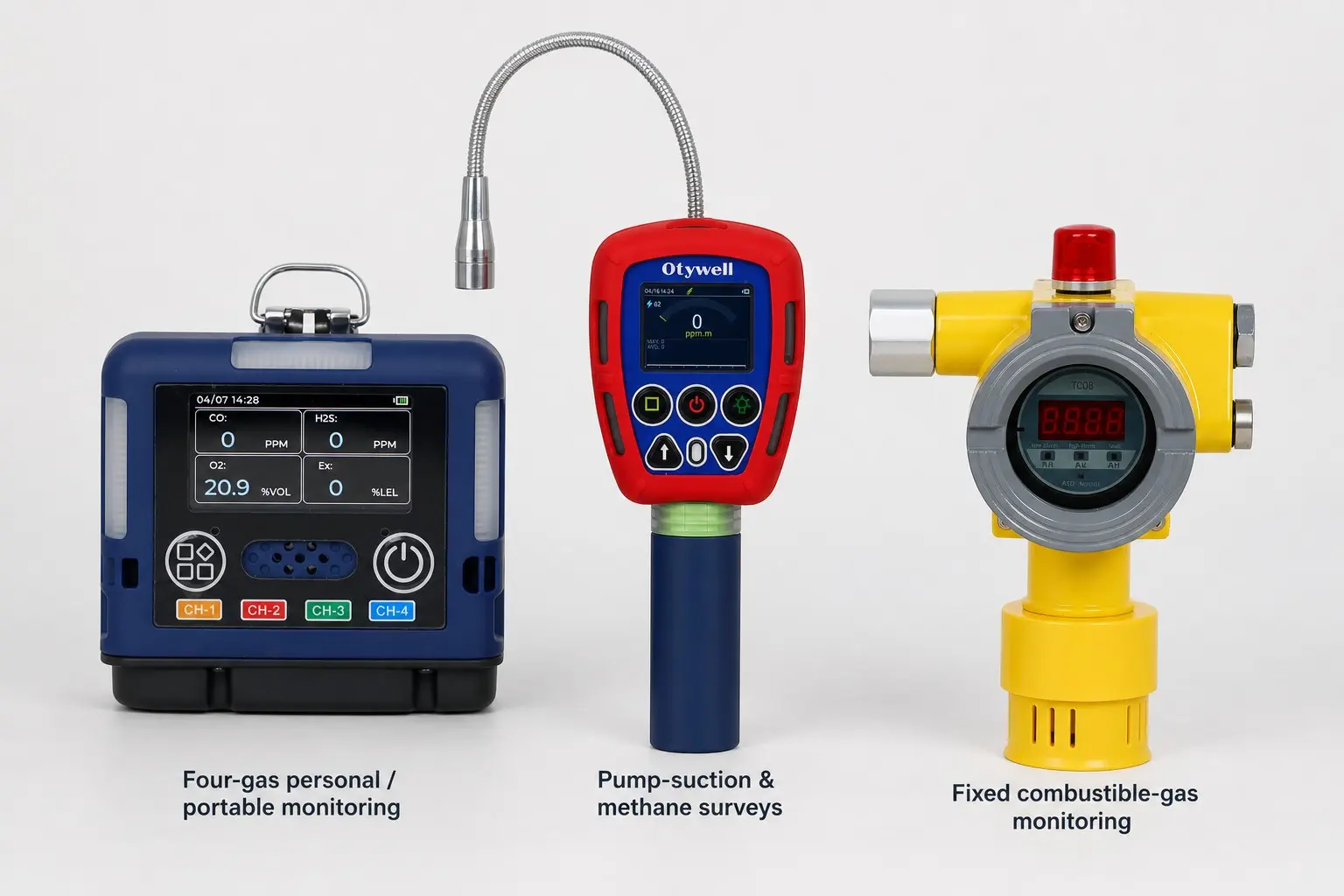
Four-gas personal and portable monitoring
그만큼 Otywell G60 four-in-one multi-gas detector is intended for the standard O2, LEL, 콜로라도, and H2S combination used in many confined-space programs. It can serve as a personal or portable monitor when its configuration, 샘플링 방법, and approvals match the job.
Pumped and methane-focused surveys
그만큼 Otywell G90 휴대용 가스 감지 경보기 includes pump-suction and methane-focused configurations. This makes it a product to review for remote sampling or jobs that need more detail about methane concentration. Confirm the selected mode and range because LEL monitoring, ppm leak work, percent-volume measurement, and remote laser detection answer different questions.
Fixed combustible-gas monitoring
그만큼 Otywell TCB3 fixed combustible gas detector provides continuous methane or combustible-gas monitoring with industrial signal outputs. A lift-station system may also need separate H2S, 산소, or other fixed channels. Detector count, 위치, controller logic, installation, and commissioning require a site-specific design.
범프 테스트, 구경 측정, and field records
A visual inspection and electronic self-check cannot prove that gas reaches the sensors. A bump test applies known test gas to verify response and alarm operation. Calibration compares the displayed value with a known concentration and adjusts the detector when the procedure requires it.
- 하우징 검사, inlets, 관 재료, 조사, 필터, water trap, 배터리, 표시하다, 그리고 결함 상태.
- Confirm the installed sensors, 범위, 단위, 경보, 날짜, and user assignment.
- For a pumped detector, run the pump and blocked-flow checks specified by the manufacturer.
- Apply the correct certified gas mixture with the approved regulator, cap, and flow.
- Record response, 경보 작동, displayed values, 회복, and any failed channel.
- 고정 시스템용, test the complete loop to the controller, 뿔, 봉홧불, 통풍, and remote alarm.
Follow the manufacturer and site program for test intervals. Increase attention after over-range exposure, failed bump tests, sensor faults, 물 유입, 수리하다, 긴 저장, or other events named in the instructions. Keep records by detector serial number so a failed unit can be removed from service and traced.
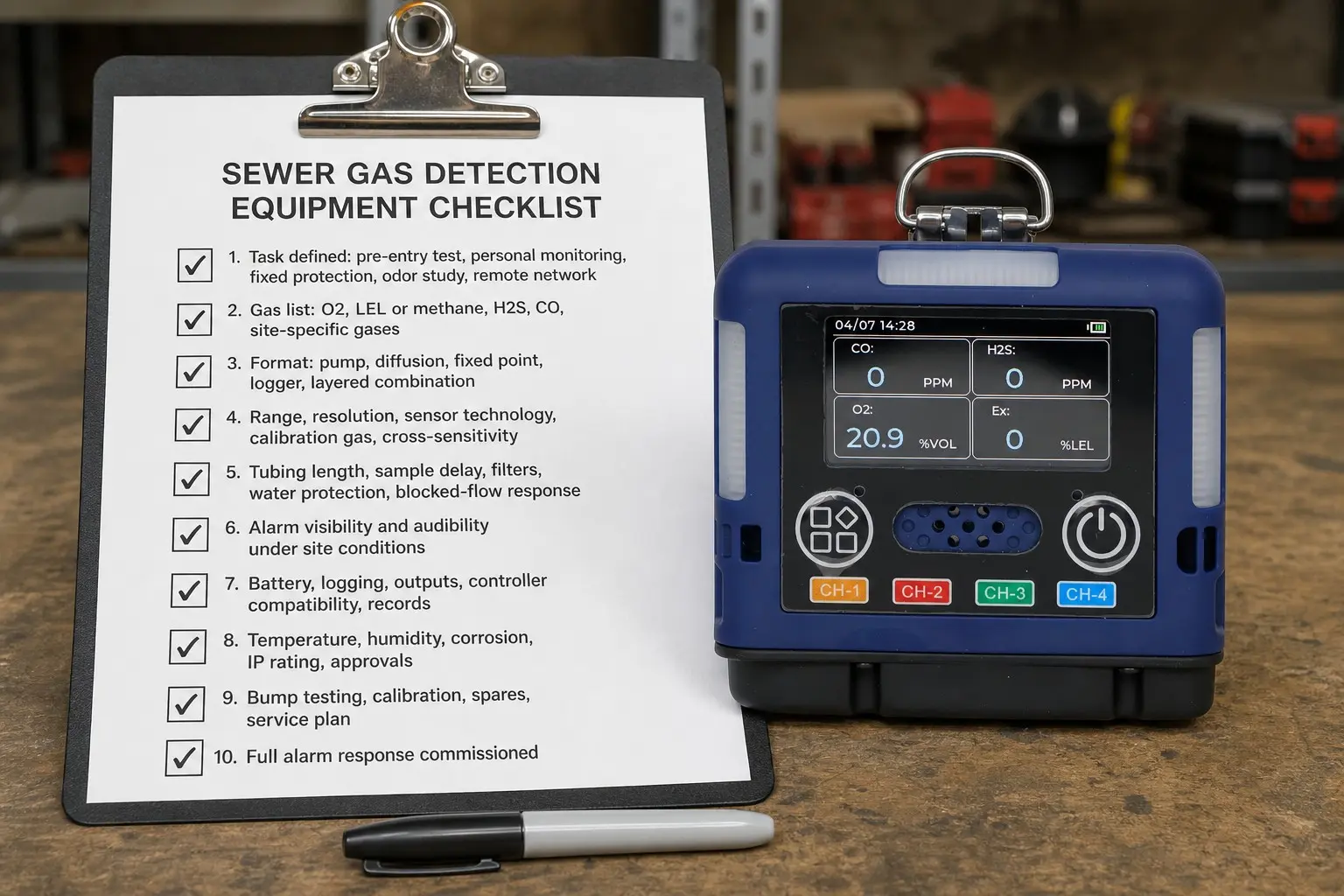
Sewer gas detection equipment checklist
- Define the exact task: pre-entry test, 개인 모니터링, fixed protection, odor study, or remote network monitoring.
- List O2, LEL or methane, H2S, 콜로라도, and every site-specific gas that may be present.
- Choose pump, diffusion, fixed point, data logger, or a layered combination.
- Specify range, 해결, sensor technology, 교정 가스, and cross-sensitivity requirements.
- Document tubing length, sample delay, 필터, water protection, and blocked-flow response.
- Check alarm visibility and audibility under actual pumps, blowers, traffic, and PPE conditions.
- Verify battery duration, 데이터 로깅, communication outputs, 컨트롤러 호환성, and record retention.
- 온도 확인, 습기, 응축, 부식, IP rating, and hazardous-location approvals.
- 범프 테스트 계획, 구경 측정, spare equipment, replacement sensors, and service turnaround.
- Commission the full equipment and alarm response before relying on the system.
자주 묻는 질문
What gases should a sewer gas detector measure?
Many sewer-entry programs start with oxygen, combustible gas or methane, 일산화탄소, 그리고 황화수소. The correct sensor list must also account for treatment chemicals, industrial discharges, 청소 제품, nearby utilities, and the work being performed.
Can a combustible gas detector detect hydrogen sulfide?
Do not assume that it can. A combustible-gas channel measures flammability response, commonly as percent LEL, while an H2S channel is designed for toxic-gas measurement. Use a detector that explicitly lists an H2S sensor and range.
Is a four-gas monitor enough for sewer entry?
It may cover the standard O2, LEL, 콜로라도, and H2S hazards, but it is enough only when the site assessment confirms that no additional gas requires measurement. Wastewater treatment chemicals and industrial connections can create other sensor requirements.
Should the atmosphere be tested before a manhole is opened?
Follow the employer’s written procedure for approaching and opening the space. Atmospheric testing should be performed before entry, 승인된 튜브가 있는 펌프를 사용하면 외부에서 원격 샘플링이 가능합니다.. 덮개를 열면 환기도 변경될 수 있습니다., 따라서 절차에 따라 모니터링을 계속해야 합니다..
하수도 작업자에게는 펌핑식 또는 확산식 감지기가 필요합니까??
종종 두 가지 기능이 모두 필요합니다.. 원격 사전 진입 샘플링을 위해 펌프가 사용됩니다.. 호흡 구역에 착용하는 확산 모니터로 출입 후 지속적인 개인 경고 제공. 일부 휴대용 기기는 내부 펌프와 웨어러블 알람을 결합합니다., 하지만 작업 절차는 여전히 각 단계에서 장치가 어떻게 사용되는지 정의해야 합니다..
고정 H2S 및 메탄 감지기를 어디에 설치해야 합니까??
신뢰할 수 있는 소스의 가스가 센서에 도달할 것으로 예상되는 곳에 배치하십시오., 환기를 고려하면서, 장애물, 온도, 수분, access, 및 작업자 위치. H2S와 메탄은 다른 위치가 필요할 수 있습니다.. 자격을 갖춘 디자이너가 수량과 최종 위치를 결정해야 합니다..
견적을 요청하기 전에 작업을 지정하세요
문구 “하수 가스 감지 장비” 여러 가지 다른 시스템을 설명할 수 있음. 유용한 요청으로 사이트를 식별합니다., 일, 대상 가스, 예상 범위, 샘플링 거리, 고정형 또는 휴대용 형식, 환경 조건, 필수 승인, 경보 조치, communication outputs, 수량.
이 정보를 통해 공급업체는 애플리케이션 이름을 추측하는 대신 실행 가능한 구성을 추천할 수 있습니다.. 또한 공백을 조기에 노출시킵니다., 원격 샘플링을 위한 펌프가 없는 4개 가스 장치 등, H2S가 주요 독성 위험인 메탄 전용 감지기, 또는 설치 후 실제로 교정할 수 있는 방법이 없는 고정 센서.

위챗
wechat으로 QR 코드를 스캔하세요