 허난 오티웰 전자 기술 유한 회사, 주식회사

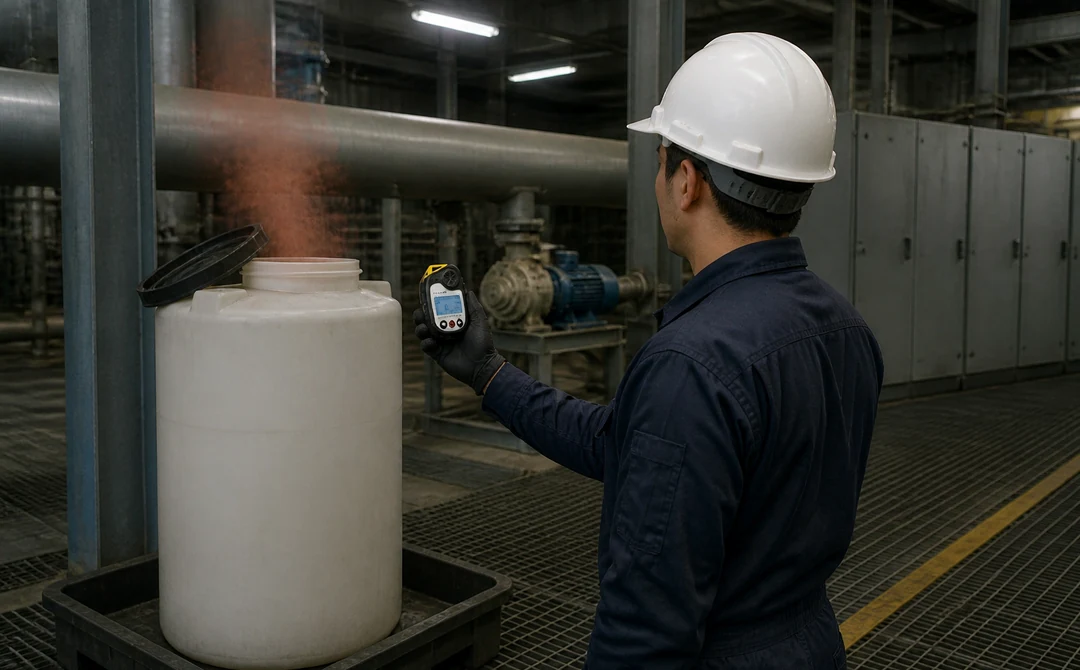
A bromine gas detector for a liquid-bromine operation measures Br2 vapor in air. The practical choice starts at a container, transfer connection or process enclosure: where could vapor leave the system, where would a person be, and must that point remain under watch after the person leaves? Those answers separate fixed monitoring from a detector carried by an operator or a pumped check at a remote inlet.
Specify airborne Br2, the sampling location and the job the instrument will do. Then request the actual Br2 센서 구성, suitable low-end performance, alarm destination and a test method for the supplied assembly. A housing that accepts many gas sensors is not, 그 자체로, a bromine detector.
What does a bromine gas detector measure?
At ordinary workplace temperatures, elemental bromine is a fuming, red-brown liquid that releases vapor. An air-monitoring request should therefore name molecular bromine, Br2, in workplace air. 그만큼 NIOSH Pocket Guide bromine entry identifies Br2 as CAS 7726-95-6. “Bromine testing” is not specific enough: it might refer to air near a transfer hose, a liquid sample, dissolved bromine in treated water or another bromine compound.
| 용어 | Measurement question | Order wording |
|---|---|---|
| Br2 증기 | What concentration is present in air at the selected inlet? | Specify an installed Br2 channel and ppm range. |
| Dissolved bromine | What is present in a liquid sample? | Specify a water-test method, not an ambient-gas alarm. |
| Hydrogen bromide or another bromide | Is a different substance involved? | Name that substance separately; do not treat it as Br2. |
In a water-treatment facility, 예를 들어, a water-quality reading and an airborne leak warning answer different questions. The presence of bromine chemistry in a process does not establish that staff handle liquid Br2. Confirm the material in the actual storage and dosing system before selecting an air detector.
Br2 also differs from chlorine, Cl2. Both are halogens, and some sensor technologies may respond to both, but an interfering response is not a calibrated measurement of the intended gas. For work centred on Cl2, 그만큼 염소 가스 검지기 선택 가이드 addresses that separate target. A standard oxygen/LEL/CO/H2S four-gas configuration does not add a Br2 reading simply because its enclosure supports other sensors.
Start at the release point, not the room name
Draw the liquid container, transfer route, ventilation and worker positions. Then give each possible detector an inlet location and a question it must answer. “One bromine monitor in the room” can hide a badly placed point behind a wall, door or enclosure. 그만큼 ILO/WHO International Chemical Safety Card describes bromine as a fuming liquid whose vapor is heavier than air. That property matters, but actual release direction, extraction and obstructions also matter when choosing an inlet.
| 일 | Possible release or sample point | Where people work | 모니터링 질문 |
|---|---|---|---|
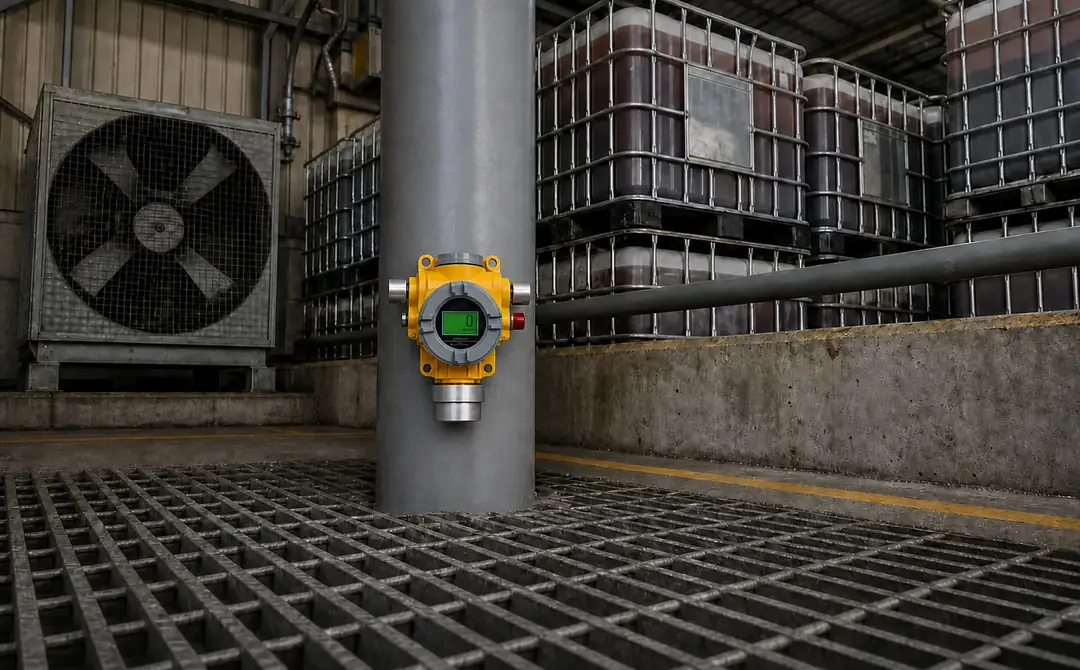
| Container storage or connection | Valve, closure or regularly disturbed fitting | At the container during connection; elsewhere between visits | Should a fixed point remain active when no one is present? |
| Liquid transfer | Hose, coupling or receiving connection | Beside the transfer route during set-up and disconnection | Which connection could release vapor toward the operator? |
| Metering or dosing | 펌프, seal or enclosed feed equipment | At the control or maintenance position | Would a detector at the enclosure outlet see a release before the worker does? |
| Exhaust or enclosure | Selected extraction path | At the access door or nearby work area | Does the proposed point represent air leaving the enclosure? |
| Inspection and maintenance | Changing valves and hard-to-reach connections | Worker moves between locations | Is a carried instrument or a remote probe inlet needed? |
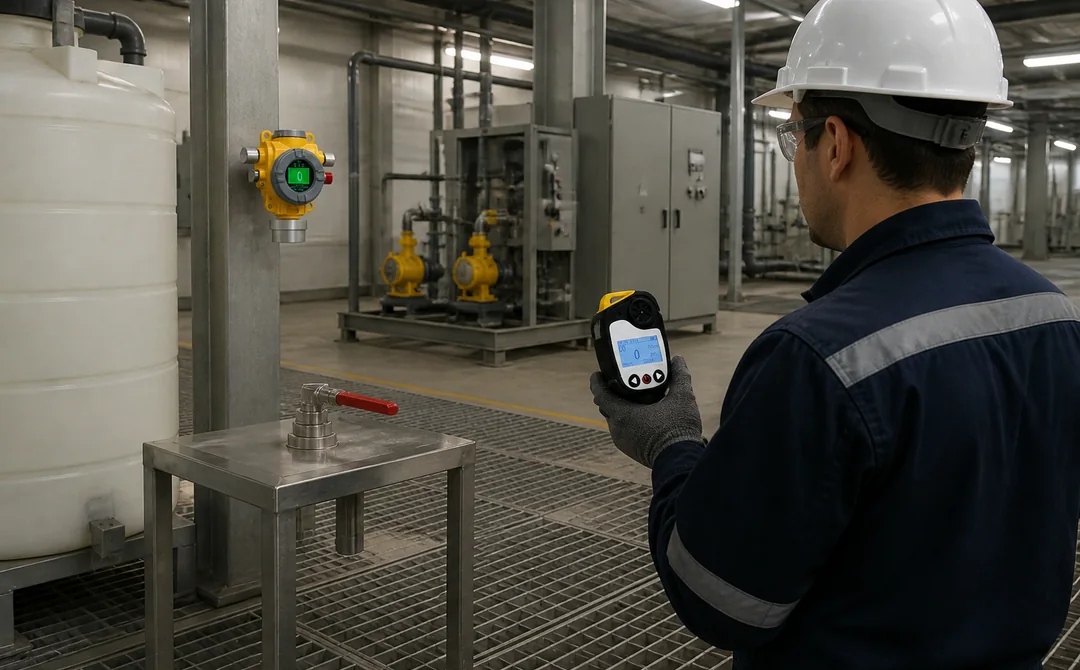
Consider the transfer connection as a concrete example. A fixed inlet near that connection can watch a recurring location while the transfer equipment is in service. A portable detector can follow the person connecting and disconnecting the hose. If a valve cannot be approached directly, a compatible pumped instrument could place its inlet at the valve while the body stays with the operator. Those are three different sampling points, not three interchangeable ways of measuring the whole room.
Fixed, wearable or pumped: match the device to the task
Fixed detection for a defined location
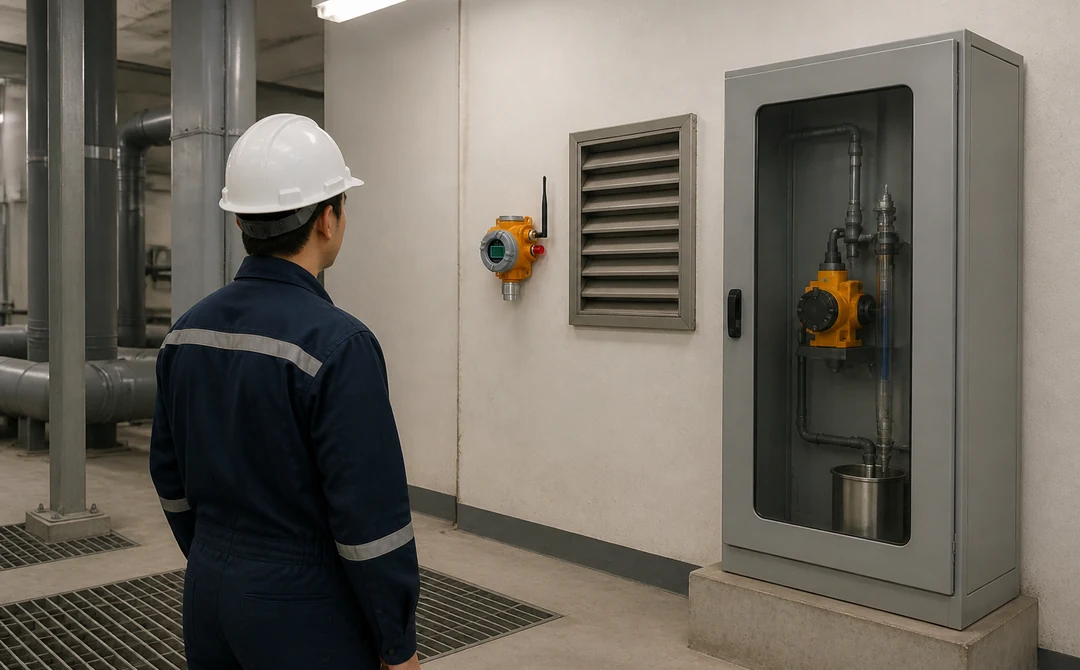
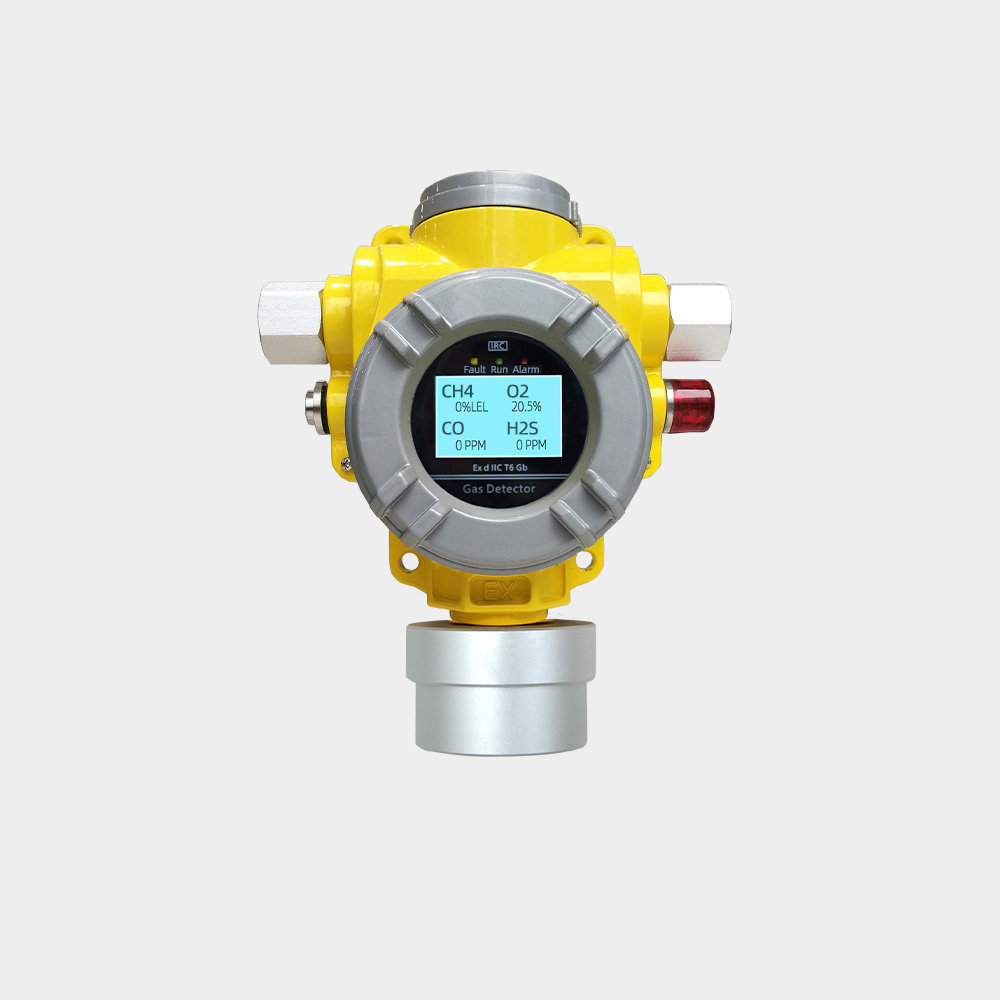
Choose a fixed point when a storage connection, dosing enclosure or exhaust location needs continued indication between rounds. Record the mounting position, how vapor reaches its inlet, power supply, receiving equipment and the person or system that receives an alarm. A display on a detector inside an enclosure is not the same thing as a warning visible outside it.
Wearable diffusion monitoring
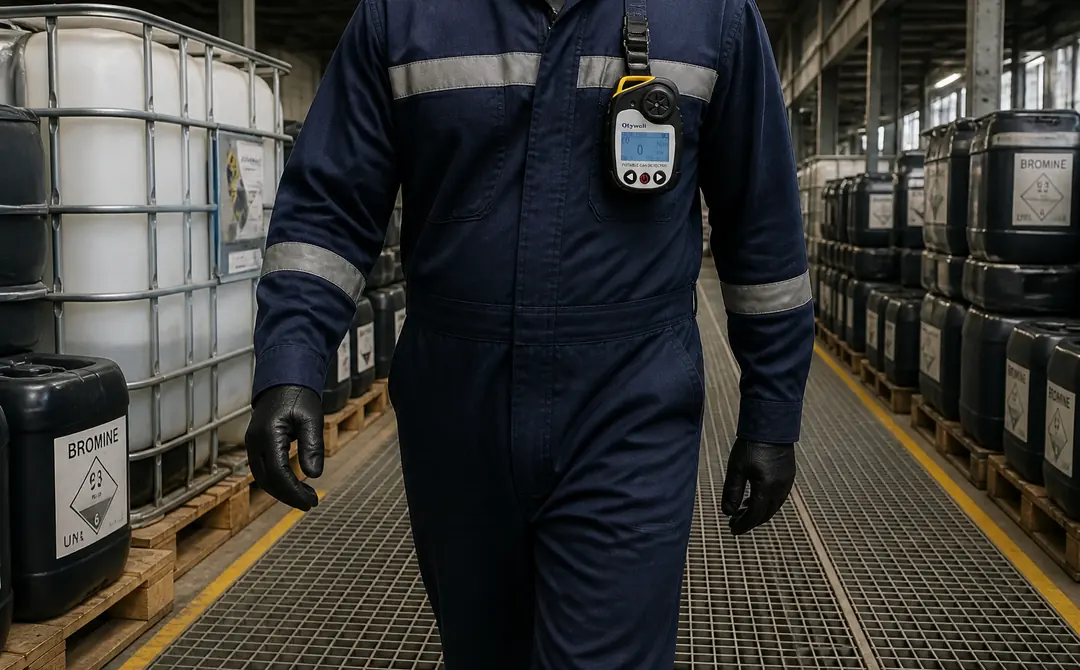
A personal diffusion instrument samples the air at its own inlet. It moves with the operator during connection work or inspection, but it stops representing a storage bay when that operator leaves. Its inlet must remain exposed rather than buried under clothing or placed behind equipment. Request a Br2 sensor fitted to the particular supplied instrument; “single-gas detector” describes the housing format, not the gas inside it.
Pumped checks at a remote inlet
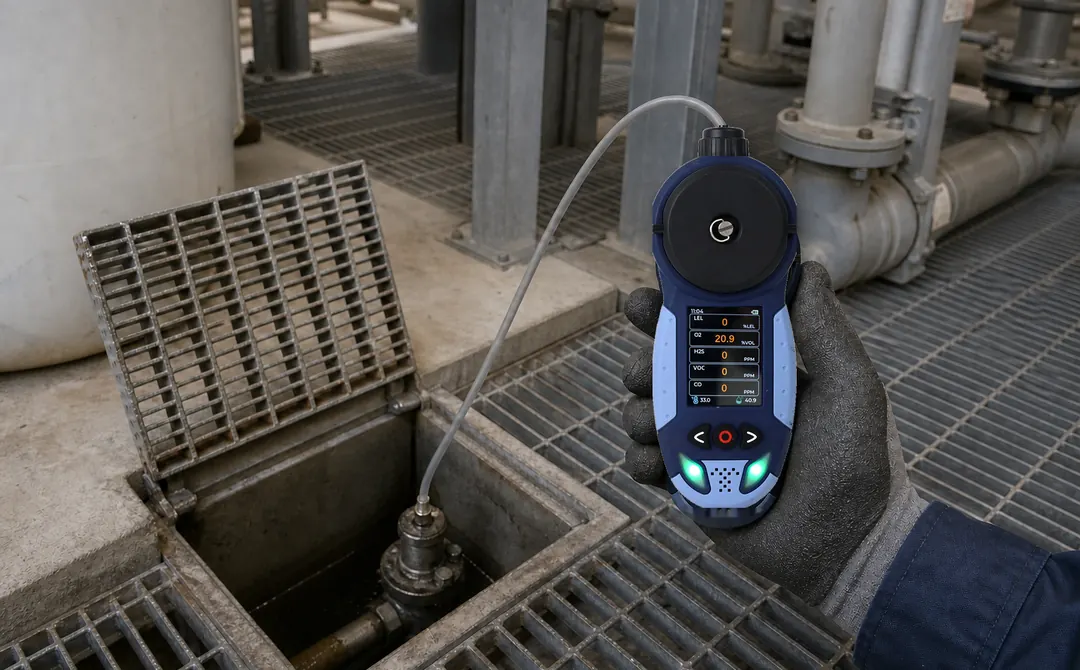
For a probe or tube, write down the exact point to be checked and the path to the sensor. Bromine vapor is reactive and corrosive. An unsuitable or damp line can change the sample or delay the response. The supplier should identify acceptable materials, 길이, 필터, flow and wait time for the assembled Br2 arrangement. The sensor’s standalone response time does not include every delay introduced by the sampling path.
Check Br2 performance near the concentration that matters
The NIOSH Pocket Guide lists a 0.1 ppm time-weighted-average recommended exposure limit and a 0.3 ppm short-term recommended limit for bromine. It also lists a U.S. OSHA PEL of 0.1 ppm TWA. A TWA, a short-term limit, a live display value and an alarm setting are different things. Do not copy any of those figures into every alarm as a universal instant threshold.
Ask for the actual Br2 sensor datasheet, not only the outer instrument brochure. State the concentration region the monitoring task must distinguish. A scale reaching down to zero says little about low-end accuracy. 에이 0.1 ppm display increment is a resolution statement; it does not prove a 0.1 ppm measurement error. Check the applicable accuracy statement, response and recovery conditions, temperature and humidity limits, and cross-sensitivity to chemicals expected at the site.
| Specification field | What to request | Reason |
|---|---|---|
| Gas identity | Installed Br2 감지기, not just a customizable housing | Prevents substitution with another halogen channel. |
| Range and resolution | Offered ppm range and display step | Shows whether the scale covers the job. |
| Low-end performance | Accuracy or uncertainty evidence at relevant concentrations | Determines whether a small reading is useful. |
| Interference | Sensor response to plausible coexisting gases | Prevents treating cross-response as a Br2 결과. |
| Alarm logic | 알람 종류, recipient and fault indication | Connects a measurement to an action. |
Otywell instrument formats to discuss
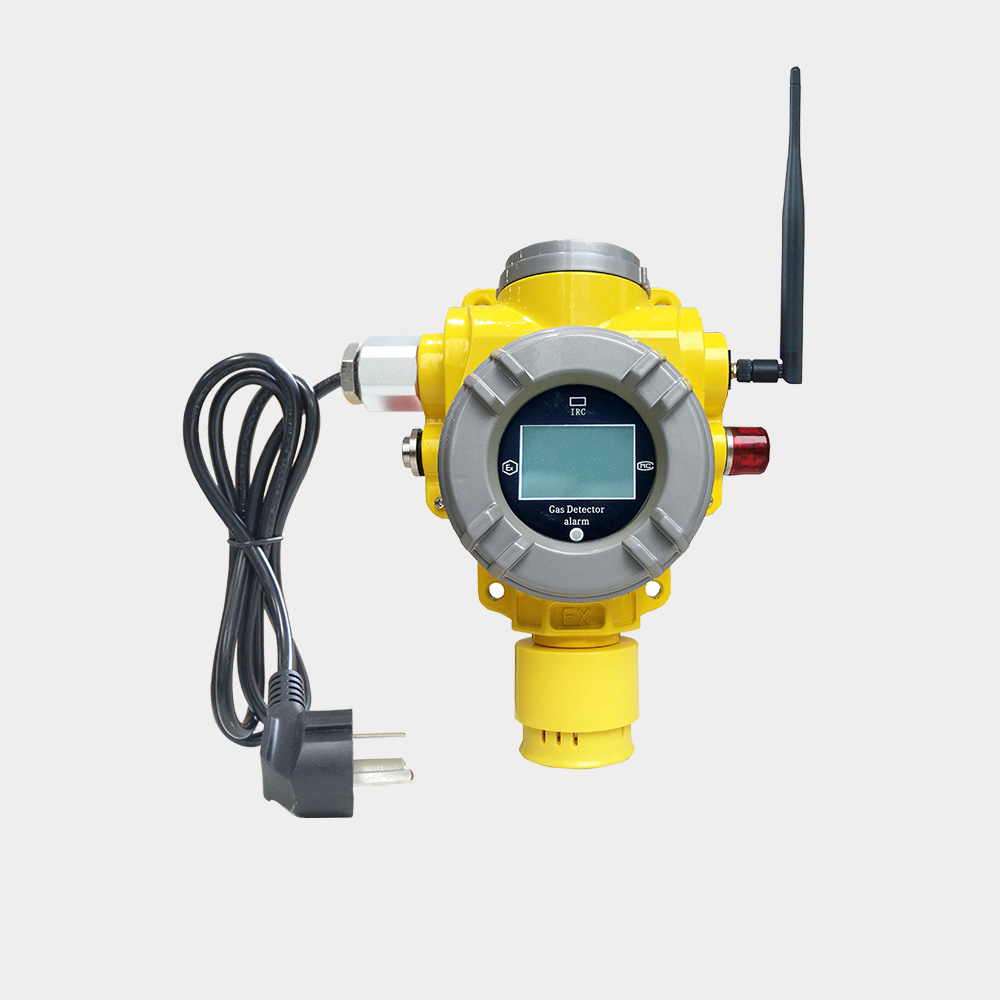
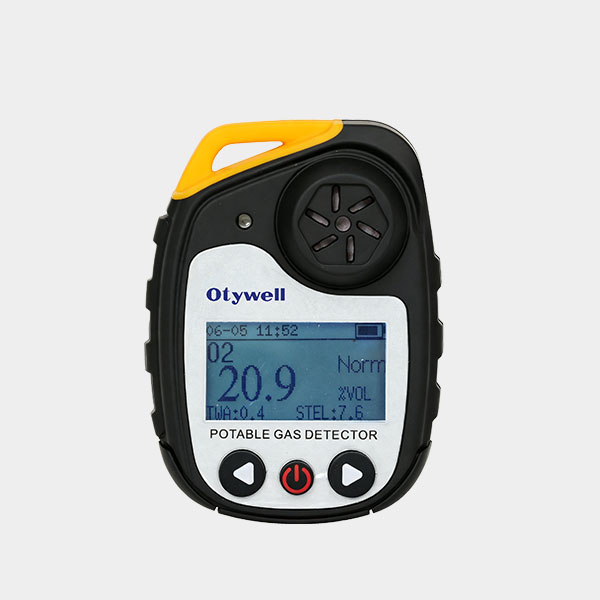
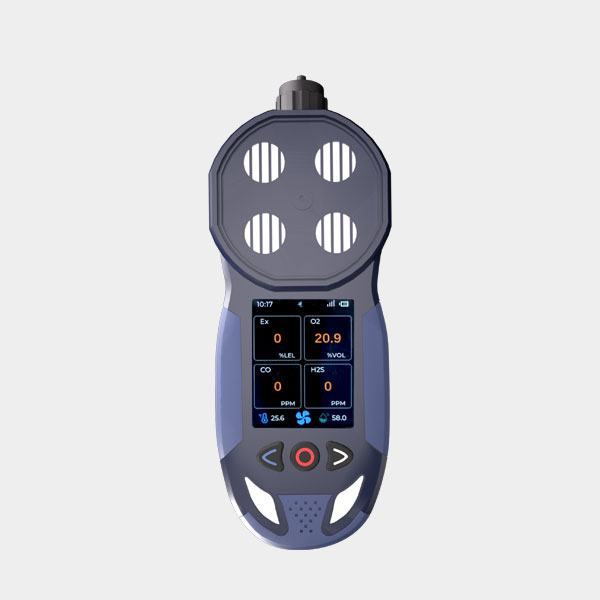
The linked product pages establish these instruments’ fixed, 확산, remote-reporting or pump-suction functions. They do ~ 아니다 currently publish a Br2 sensor-and-range configuration for these four models. Request written confirmation of the proposed Br2 version before treating any card as a bromine monitoring offer.
Test the whole sampling and alarm path
For fixed diffusion monitoring, check where the inlet sits in relation to the connection, enclosure opening or exhaust route. Leave access for routine checks. For pumped monitoring, document the probe tip, 튜브, joints, 필터, pump flow and the time gas takes to reach the sensor. Do not assume that a sampling accessory approved for another gas also suits Br2. Its compatibility and the assembled-system response have to be established for the offered configuration.
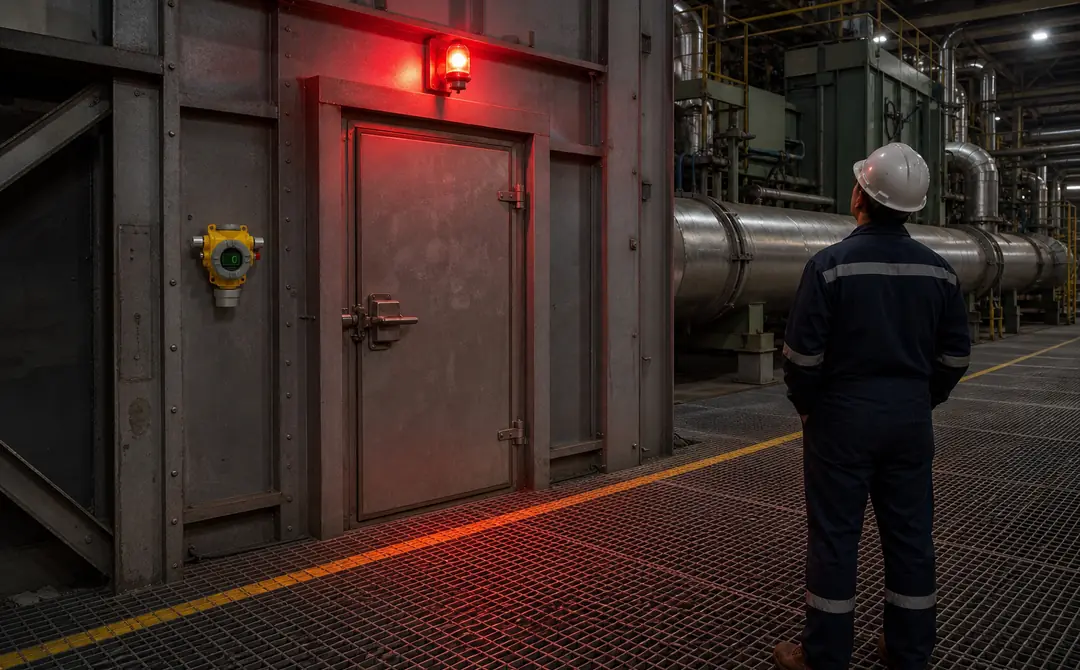
Then follow the signal beyond the detector. Where will a person see or hear the warning? Does the selected fixed unit send a signal to a controller, and does that controller have a matching input? If the project requires a fan, valve or other action, record which equipment performs it and what happens on power or communication failure. A product page listing an output option does not prove that every component of that chain is included.
The ILO/WHO safety card describes bromine’s visible fumes and pungent odor, but neither is a measurement method for confirming that a work area is safe. Visibility changes with lighting and release size; odor perception is not an alarm system. An instrument should provide a defined reading and a warning route that can be tested.
Send a quotation that defines the Br2 monitoring job
Before comparing quotations, list the monitored point, the person who works there, whether the area must remain under watch between visits, and what the alarm must do. Include the actual chemical used at the facility. A process using a bromide solution should not be quoted as though it stores and transfers liquid elemental bromine without checking the process.
| RFQ field | Information to provide | 요청할 증거 |
|---|---|---|
| Target | Br2 vapor in workplace air; separate gases if needed | Written sensor identification and offered ppm range |
| 위치 | Storage valve, transfer joint, dosing enclosure or exhaust point | Proposed inlet and access arrangement |
| 의무 | Unattended fixed point, moving worker or remote check | Exact fixed, diffusion or pumped version |
| 성능 | Concentration region relevant to the task | Low-end accuracy, 응답, recovery and interference data |
| Sample and alarm | Line length, 수분, 필터, alarm recipient and system action | Compatible accessories, output and assembled-path test method |
| 서비스 | Site’s intended testing and maintenance arrangements | Approved Br2 test/calibration procedure and replacement parts |
시운전 중, record the delivered gas channel and range, the inlet location, 알람 설정, signal recipient and actual accessories fitted. A functional check should exercise the functions the site uses, including the inlet or pump where applicable and the remote alarm path. Ask for the approved test and calibration method for the selected Br2 구성. A different gas used by another manufacturer is not an automatic substitute.
Start the enquiry with a point and a task
“Br2 vapor at the liquid-transfer coupling, fixed indication during operation, with a separate portable check during connection work” gives the equipment supplier a concrete job. Add the desired range, working conditions, alarm recipient and any probe route. Then ask for the offered sensor configuration and the evidence that it can be checked in service.
자주 묻는 질문
Is a Br2 detector the same as an HBr detector?
아니요. Molecular bromine and hydrogen bromide are different target substances. The ordered gas channel and its documentation should name the one the instrument measures.
Can a standard four-gas monitor detect bromine?
Not by default. The familiar O2/LEL/CO/H2S combination does not include Br2. Confirm a Br2 sensor in the actual ordered configuration.
When does fixed bromine monitoring make sense?
Examine it for a defined connection, enclosure or exhaust point that must remain under watch while no worker is carrying a portable instrument there.
When is a pumped instrument useful?
It can place the inlet at a fitting or another selected point away from the instrument body. The complete probe and sampling path must be suitable for Br2 and its delay understood.
Does a range that includes 0.1 ppm guarantee suitable performance?
아니요. Range and display step do not establish accuracy at the low end. Request performance evidence for the exact Br2 sensor and configuration.
Can the color or odor of bromine replace a detector?
아니요. Neither provides a controlled concentration reading or a tested alarm route. Specify how the chosen detector warns the people who need to act.
Should the alarm be set automatically to the NIOSH 0.1 ppm TWA?
아니요. That value is a time-weighted exposure reference, not a universal instantaneous alarm setting. The monitoring purpose, applicable requirements and selected instrument functions must be specified separately.

위챗
wechat으로 QR 코드를 스캔하세요