 Henan Otywell Electronic Technology Co., Ltd

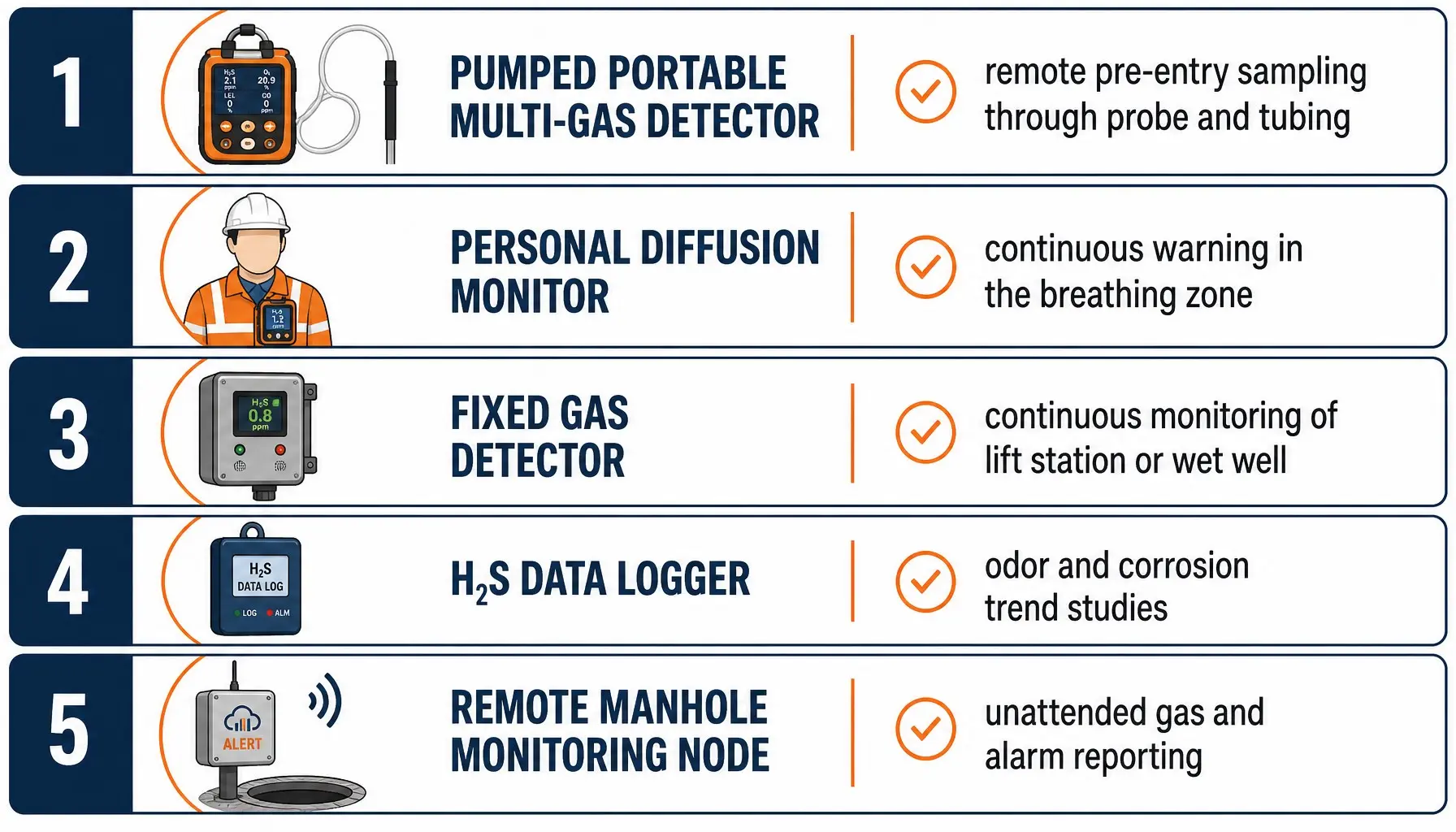
行う作業に合わせて下水道ガス検知装置を選択します. 匂いだけでは必要な器具についてはほとんどわかりません. マンホールを開ける作業員には遠隔からの進入前サンプリングが必要, 参加者には個人用モニターが必要ですが、. A lift station that operates around the clock may need fixed detectors. An odor or corrosion investigation may call for an H2S data logger.
For many sewer and wastewater tasks, the basic atmospheric channels are oxygen, combustible gas expressed as percent LEL, 硫化水素, and carbon monoxide. That familiar four-gas combination is a useful starting point, but it does not cover every chemical used or produced at every site. 塩素, 二酸化硫黄, アンモニア, or other gases may need separate sensors when the process and risk assessment identify them.
安全上の注意: This guide explains equipment categories and purchasing questions. It does not authorize entry or set alarm values. Sewer entry, atmospheric testing, 換気, rescue, 呼吸器の保護, 緊急措置は適用される規制に従わなければなりません, the employer’s written program, the site hazard assessment, および検出器メーカーの説明書.
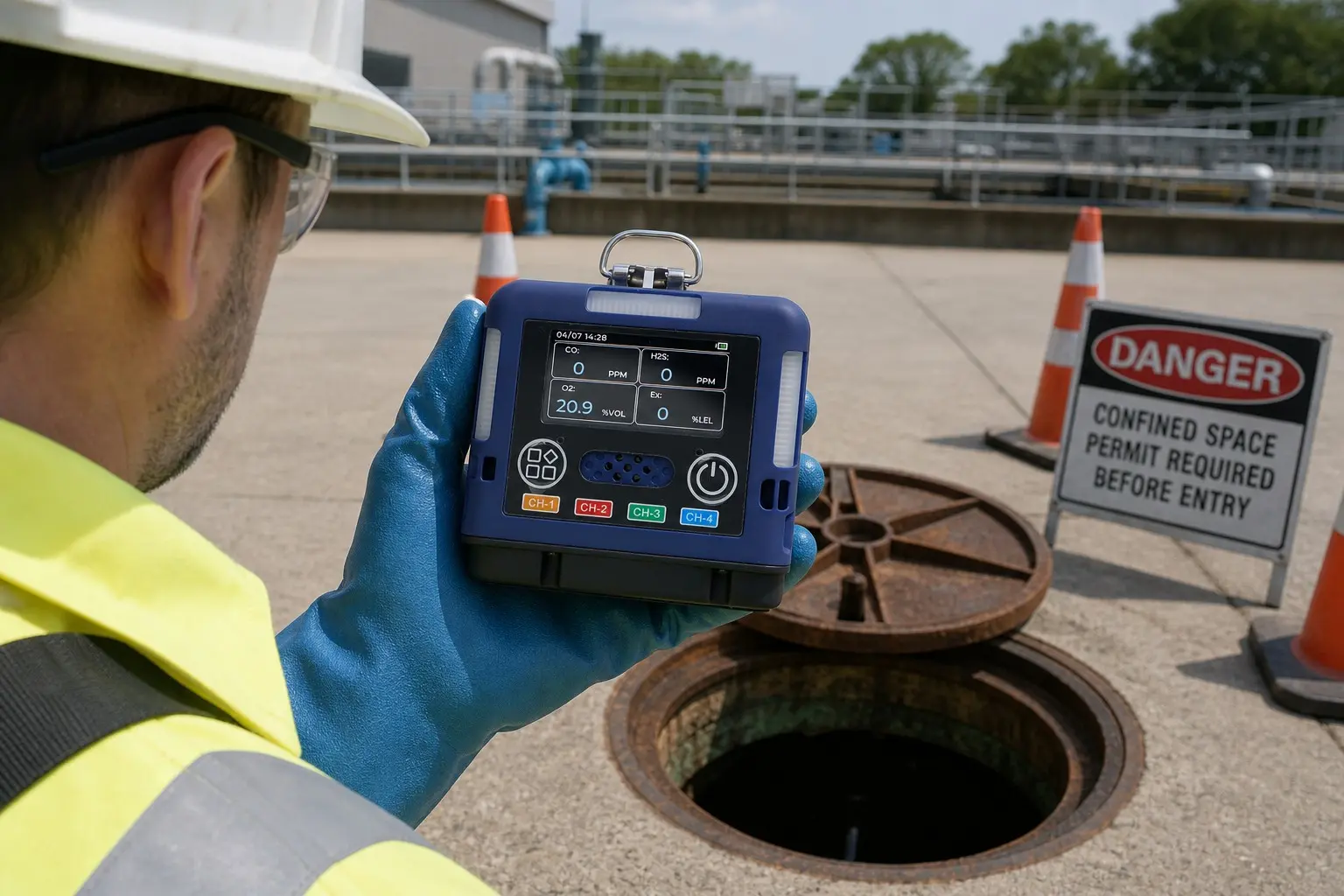
What counts as sewer gas detection equipment?
The term covers more than one type of instrument. It can include a portable pump detector used from outside a manhole, a diffusion monitor worn by an entrant, fixed transmitters installed in a lift station, an H2S logger suspended in a sewer line, or a remote node that sends readings to a control room.
These tools answer different questions. A handheld combustible gas sniffer may help locate a methane or natural-gas leak, but it does not prove that oxygen is safe or that hydrogen sulfide is absent. An H2S logger can document a concentration trend for odor control, yet it may not provide the personal alarms required for entry work. Start with the task and the hazards, then choose the equipment.
| Equipment type | Main job | 一般的な制限 |
|---|---|---|
| Pumped portable multi-gas detector | Pre-entry sampling through a probe and tubing | Sample delay, tubing condition, フィルター, and pump flow must be considered |
| Personal diffusion monitor | Continuous warning in the worker’s breathing zone | It measures the atmosphere at the wearer, not a remote point deeper in the space |
| Fixed gas detector | Continuous monitoring of a selected lift station, wet well, or equipment room | Coverage depends on detector type, 量, position, 気流, そしてメンテナンス |
| H2S data logger | Odor, 腐食, and concentration-trend studies | A single-gas logger does not replace a multi-gas entry monitor |
| Remote manhole monitoring node | Unattended gas, water-level, and alarm reporting | Communications, battery life, sensor access, and service plans need engineering review |
Which gases should be measured in a sewer?
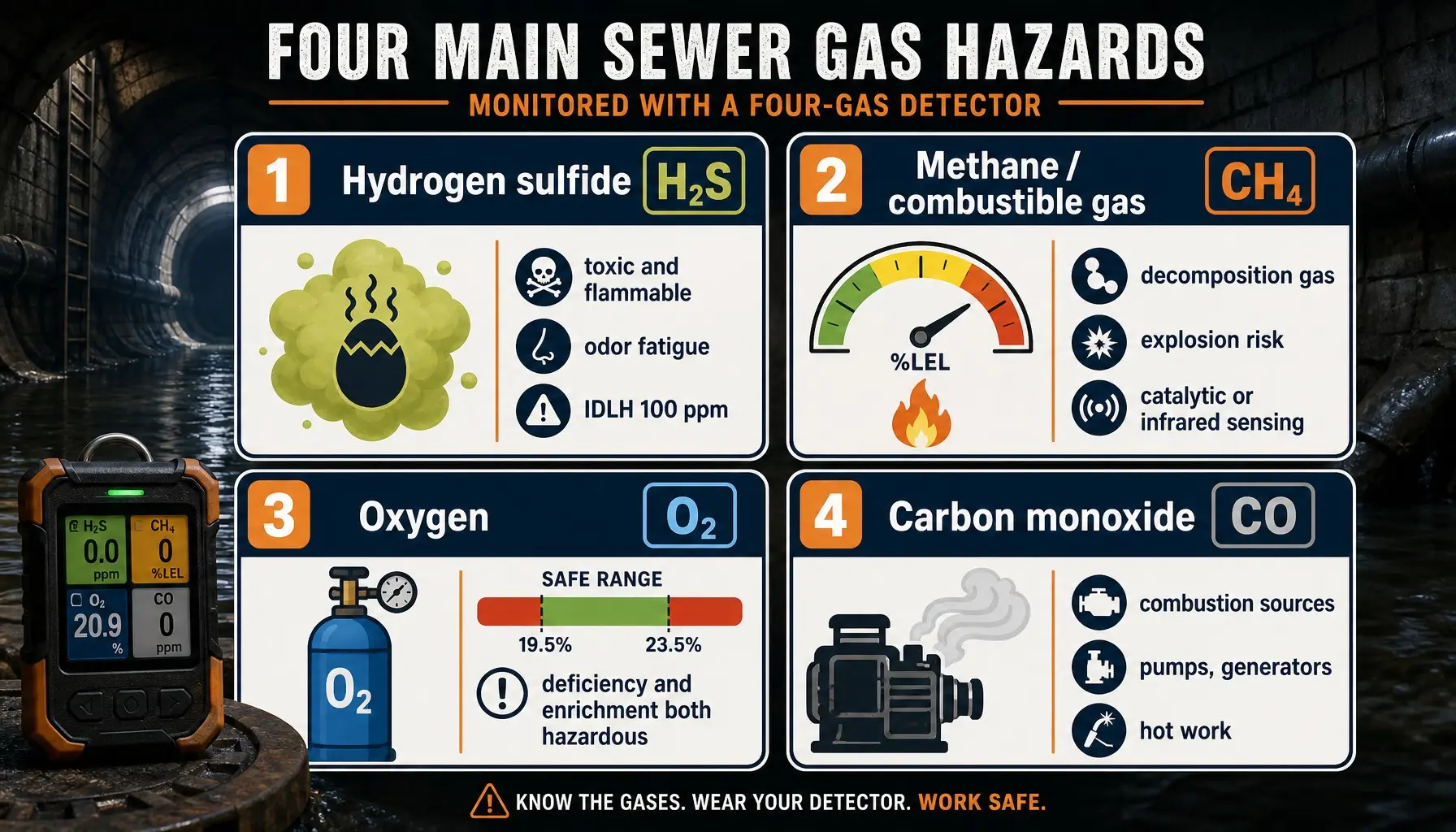
There is no universal sensor list for every collection system. Waste composition, industrial discharges, cleaning chemicals, nearby utilities, 換気, biological activity, and the work being performed can change the atmosphere. The standard four-gas set remains common because it covers several frequent entry hazards in one instrument.
硫化水素
硫化水素, またはH2S, is often associated with sewer gas. It is toxic and flammable. Its rotten-egg odor is not a dependable warning because the sense of smell can become rapidly fatigued. The NIOSH Pocket Guide entry for hydrogen sulfide identifies sewer gas as a trade name, lists an IDLH value of 100 ppm, and warns that odor cannot be relied on for continuous presence.
A personal or portable monitor normally measures H2S for immediate safety decisions. A dedicated H2S logger serves another purpose: recording peaks and patterns over hours, days, or longer for odor and corrosion investigations. One instrument should not be assumed to perform both jobs.
Methane and other combustible gases
Methane can form as organic material decomposes. A combustible-gas channel commonly reports the result as a percentage of the lower explosive limit. Check which gas was used to calibrate the LEL sensor, how other gases affect the reading, and whether the sensor technology suits the expected atmosphere.
Catalytic LEL sensors need oxygen to operate and can be affected by poisons or inhibitors. Infrared methane sensors avoid some of those issues but do not detect every combustible gas. Choose the sensor for the gases that could actually be present rather than relying on the broad label “sewer gas.”
酸素
酸素不足は、移動または生物学的および化学的プロセスによって生じる可能性があります. 酸素富化は異なる火災リスクを生み出す. 酸素は直接測定する必要があります. 通常の可燃性ガスまたは有毒ガスの測定値では、許容可能な酸素濃度が確認されません。.
一酸化炭素とプロセス特有のガス
一酸化炭素は多くの標準的な 4 ガスモニターに含まれています. エンジンに関してはその関連性が高まる可能性があります, パンプス, 発電機, 熱い仕事, 渋滞, および燃焼源. 廃水施設では他のガスが使用または生成される場合もあります. 化学物質の在庫を確認する, 産業上の接続, 清掃業務, 処理薬品, センサーリストを修正する前の以前の監視記録.
検出器を下水道タスクに適合させる
有用な購入仕様書では、最初に作業内容を指定します。. “下水道ガス検知器” 乗組員にポンプが必要かどうかをサプライヤーに伝えるには範囲が広すぎる, personal alarms, fixed outputs, a long-term logger, or remote communications.
| タスク | Primary equipment | Features to review |
|---|---|---|
| Opening and testing a manhole | Pumped four-gas detector with approved tubing and probe | Pump test, flow indication, tubing length, water trap, sample delay, and data record |
| Worker entry | Personal diffusion multi-gas monitor worn in the breathing zone | 可聴, ビジュアル, および振動アラーム, battery life, ruggedness, and event logging |
| Lift station or wet well | Fixed detectors plus portable monitors for maintenance and entry | Sensor placement, controller signals, リレー, ventilation interface, access, and corrosion protection |
| Odor and corrosion survey | H2S logger with a suitable range and enclosure | Logging interval, battery duration, retrieval method, 結露, and sensor saturation |
| Unattended manhole or network monitoring | Battery-powered remote monitoring node | Communication coverage, alarm delivery, sensor service, enclosure rating, installation security, and lifecycle cost |
This layered approach is usually more reliable than expecting one instrument to handle every task. 定義された場所を監視する固定監視. 個人モニターが従業員を追跡. 揚水ユニットのリモート ポイントのテスト. ロガーと遠隔測定システムは、運用上の決定のためのデータを収集します.
ポンプによるサンプリングが参入前に重要な理由
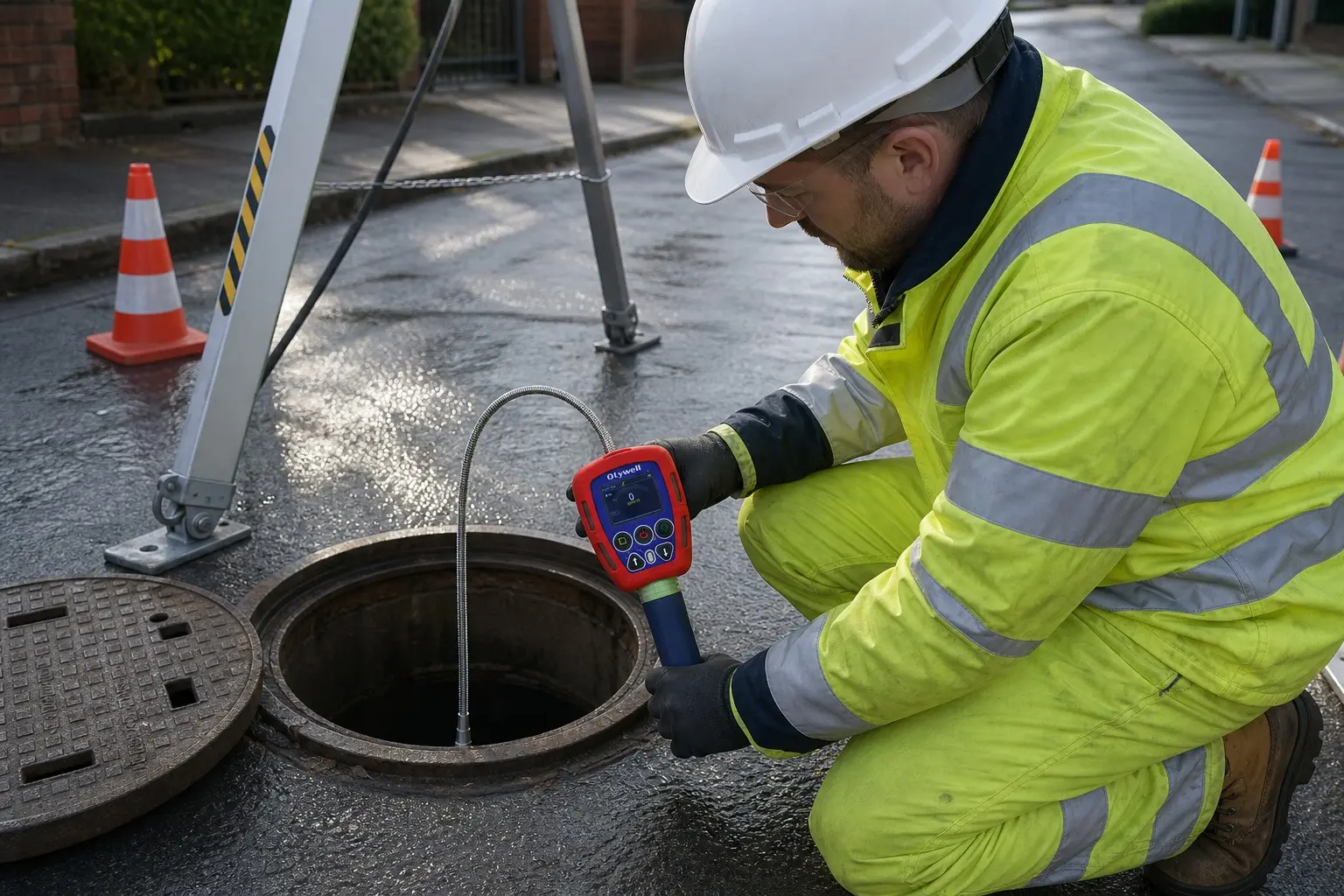
拡散検出器はセンサー入口に到達するガスに反応します. オペレーターが表面にいる間はマンホールの底をサンプリングすることはできません. ポンプがチューブを通してサンプルを吸引します, これにより、乗組員は誰かが入る前に遠隔でテストできるようになります.
OSHA の許可が必要な密閉空間の基準では、可能な場合は立ち入る前に大気の状態をテストする必要があると規定されています。. 特に下水道などの継続的なシステムに対処しており、立ち入りが許可されている場合、許可された立ち入り者が作業するエリアの継続的な監視が必要です。. 同じ規格でテスト順序が指定されています: まずは酸素, then combustible gases and vapors, followed by toxic gases and vapors.
Sampling should account for the shape and depth of the space. A single reading at the opening can miss a different atmosphere below. Follow the written entry procedure and the detector manufacturer’s instructions for sampling levels, tubing length, and the time needed for a sample to reach the sensors.
Calculate sample delay before trusting the reading
The pump, tubing diameter, tubing length, フィルター, and flow rate affect transport time. Add the detector’s sensor response to the tubing delay. If the crew moves the probe and reads immediately, the display may still represent the previous location. Use the manufacturer’s stated method rather than a generic number.
Keep water out of the sample path
Sewer work is wet. A blocked filter, flooded line, or damaged pump can prevent gas from reaching the detector. Inspect the probe, チューブ, water trap, and filter before use. Confirm that the instrument recognizes restricted flow and that the crew knows what the fault indication means.
Personal monitors are still needed after pre-entry testing
Passing a pre-entry test does not guarantee that the atmosphere will remain unchanged. Flow, 分解, cleaning work, upstream discharge, ventilation loss, or the work itself may introduce a new hazard. Each entrant’s monitor should stay in the breathing zone where its alarms can be seen, heard, and felt.
A standard personal monitor often includes O2, lel, CO, とH2S. 私たちのガイド 4ガスモニターは何を測定するのか explains those channels in more detail. If the sewer system can contain another toxic gas, a standard four-channel configuration may not be enough.
Review alarm audibility around pumps, blowers, 渋滞, and hearing protection. 振動と明るいビジュアルアラームが便利なバックアップを提供します, しかし、対応手順はまだ訓練する必要があります. 作業者は、書面によるプログラムと保護措置によってその作業が特に許可されていない限り、警報を調査するためにその空間に留まるべきではありません。.
リフトステーションとウェットウェルの固定ガス検出
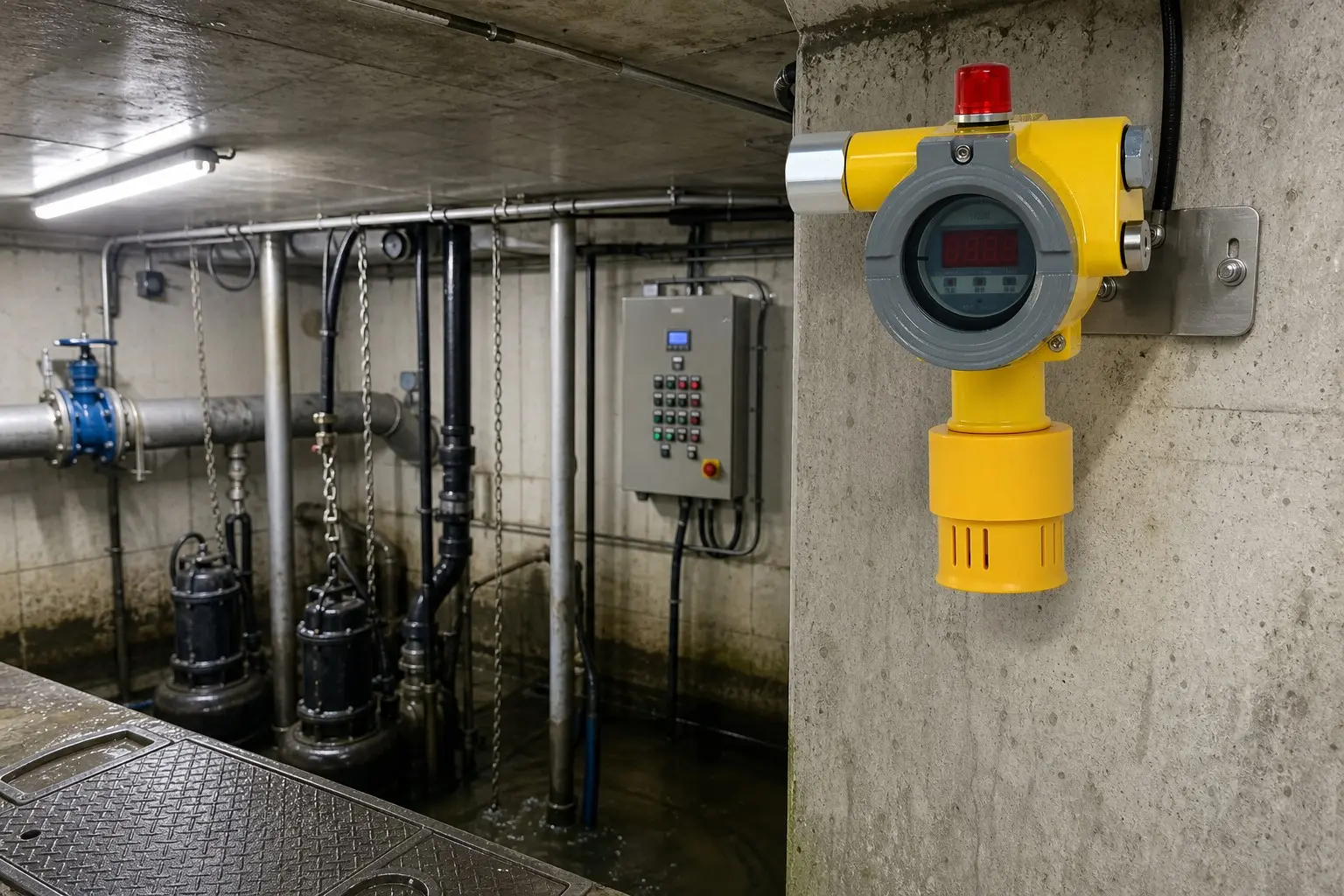
固定検出器は選択した場所を継続的に監視し、コントローラーに信号を送信できます。, PLC, DCS, ホーン, ビーコン, または換気システム. これらは通常、通常の動作中または予見可能な故障中にガスが蓄積する可能性がある場所と考えられます。. 固定設置しても、導入時やメンテナンス時のポータブルテストの必要性がなくなるわけではありません。.
検出器の配置には、単純な空気より重いか空気より軽いルール以上のものが必要です. 信頼できるリリースポイントを確認する, 正常な換気と失敗した換気, 空気の流れを遮断する壁や設備, 温度, 水分, ウォッシュダウン, worker position, and access for calibration. H2S and methane may require different detector positions, and one sensor may not represent an entire wet well or equipment room.
The OSHA sewer-entry program example lists toxic gas, flammable gas, and oxygen deficiency among potential hazards. The figures in that example are part of a sample program, not universal factory alarm settings. A qualified person must establish alarm and action levels for the actual site and jurisdiction.
- Make the sensor accessible for gas application, 検査, and replacement.
- Keep water spray, deposits, insects, and condensation from blocking the inlet.
- Verify hazardous-location approvals and installation requirements where applicable.
- Test the entire alarm path, including controller indication, リレー, 換気, and remote notification.
- Document what happens after sensor fault, signal loss, calibration overdue, or power failure.
When an H2S logger is the better tool
Short personal readings can miss a release that varies with flow, 温度, pumping cycles, or time of day. An H2S logger can show when peaks occur and how long they last. That information can support odor investigations, chemical dosing studies, ventilation review, and corrosion-control work.
Choose the range carefully. A low-range logger can provide useful detail for an odor study but may go over range during a large release. A high-range unit may not provide the resolution wanted for low-level trends. Check logging interval, memory, battery duration, センサーの寿命, 範囲を超えた動作, data retrieval, clock accuracy, and the enclosure’s resistance to moisture and corrosion.
A logger suspended in a sewer is an operational measurement tool. It does not by itself establish safe entry conditions, protect a worker’s breathing zone, or replace the site entry procedure.
Specifications that matter when comparing equipment
Brochures often lead with the number of gases and the maximum range. Those details matter, but field use exposes other differences quickly. Include the following points in the request for quotation.
Gas configuration and sensor technology
State every required gas, 範囲, 解決, and expected background. For LEL monitoring, ask whether the detector uses catalytic or infrared technology, which gas is used for calibration, and how correction factors apply. For toxic channels, obtain cross-sensitivity data for the exact sensor.
サンプリング方法
Specify diffusion, internal pump, external pump, or fixed sample draw. For a pumped unit, include expected tubing length and material, probe type, water trap, フィルター, flow indication, and blocked-flow alarm. Ask how those choices affect response time.
Environmental and mechanical protection
Review operating temperature, 湿度, プレッシャー, 結露, 侵入保護, drop resistance, enclosure material, and corrosion exposure. An IP rating describes dust and water ingress. It does not replace an explosion-protection approval.
Alarms, 記録, and communications
Portable units may need audible, ビジュアル, および振動アラーム, TWA and STEL functions, イベントログ, ユーザーの割り当て, and docking support. Fixed systems may need 4 に 20 ミリアンペア, RS485, リレー, local display, コントローラーの互換性, or wireless reporting. Define who will receive each alarm and what action follows it.
Service and lifecycle cost
Compare calibration gas, 規制当局, フィルター, チューブ, センサーの交換, batteries, docking equipment, software, トレーニング, repair turnaround, and spare-unit requirements. A lower purchase price can be offset by unavailable calibration supplies or long service delays.
Otywell equipment configurations to review
Product selection should begin with the gas list and work method. The following Otywell products illustrate different equipment roles. Final configuration, 範囲, 承認, アクセサリー, and sensor compatibility must be confirmed for the order.
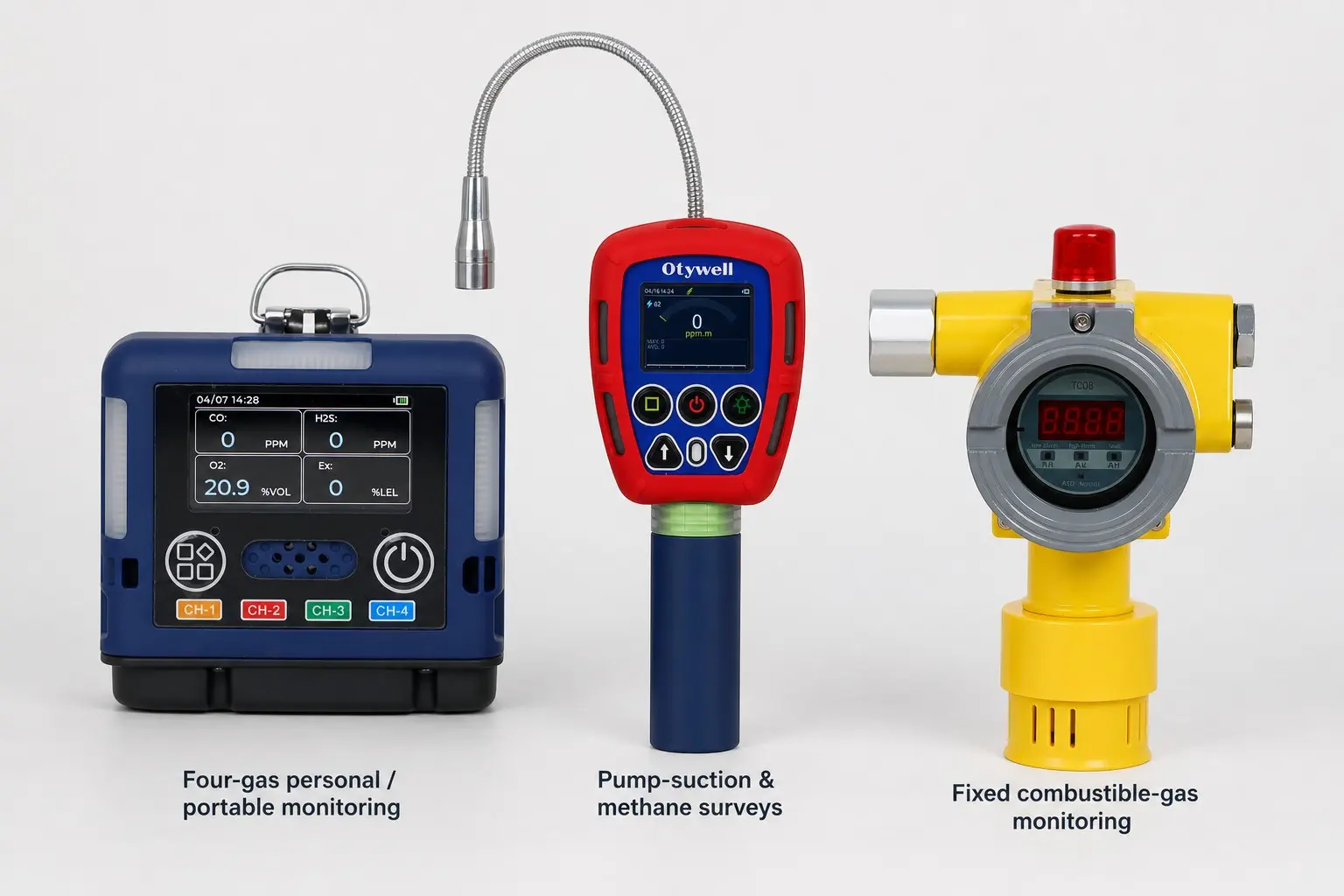
Four-gas personal and portable monitoring
の Otywell G60 four-in-one multi-gas detector is intended for the standard O2, lel, CO, and H2S combination used in many confined-space programs. It can serve as a personal or portable monitor when its configuration, サンプリング方法, and approvals match the job.
Pumped and methane-focused surveys
の Otywell G90 ポータブルガス検知警報器 includes pump-suction and methane-focused configurations. This makes it a product to review for remote sampling or jobs that need more detail about methane concentration. Confirm the selected mode and range because LEL monitoring, ppm leak work, percent-volume measurement, and remote laser detection answer different questions.
Fixed combustible-gas monitoring
の Otywell TCB3 fixed combustible gas detector provides continuous methane or combustible-gas monitoring with industrial signal outputs. A lift-station system may also need separate H2S, 酸素, or other fixed channels. Detector count, 位置, controller logic, installation, and commissioning require a site-specific design.
バンプテスト, 較正, and field records
A visual inspection and electronic self-check cannot prove that gas reaches the sensors. A bump test applies known test gas to verify response and alarm operation. Calibration compares the displayed value with a known concentration and adjusts the detector when the procedure requires it.
- ハウジングを検査する, inlets, チューブ, プローブ, フィルター, water trap, バッテリー, 画面, および障害ステータス.
- Confirm the installed sensors, 範囲, 単位, アラーム, 日付, and user assignment.
- For a pumped detector, run the pump and blocked-flow checks specified by the manufacturer.
- Apply the correct certified gas mixture with the approved regulator, cap, and flow.
- Record response, 警報動作, displayed values, 回復, and any failed channel.
- 固定システムの場合, test the complete loop to the controller, ホーン, ビーコン, 換気, and remote alarm.
Follow the manufacturer and site program for test intervals. Increase attention after over-range exposure, failed bump tests, sensor faults, water ingress, 修理, long storage, or other events named in the instructions. Keep records by detector serial number so a failed unit can be removed from service and traced.
Sewer gas detection equipment checklist
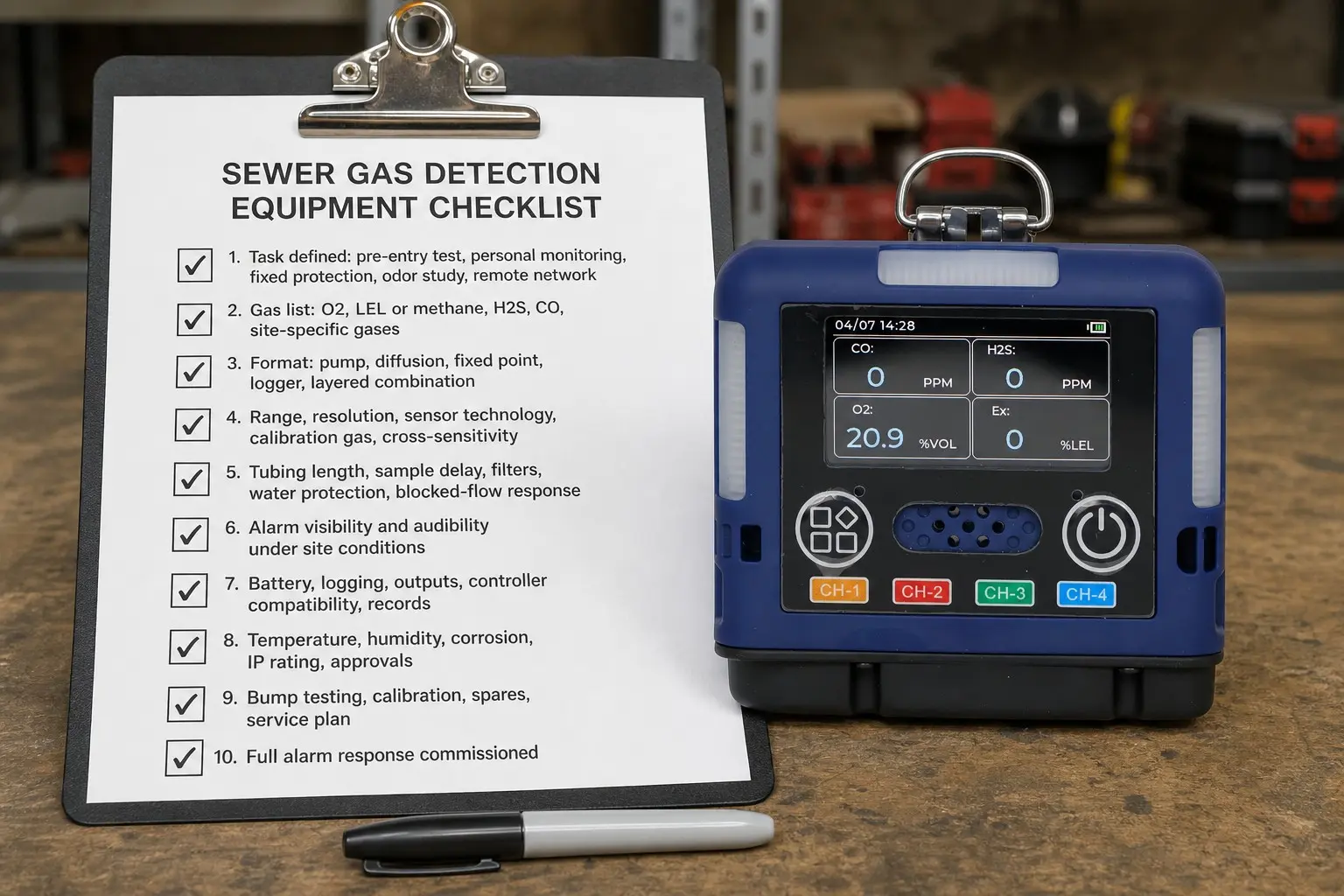
- Define the exact task: pre-entry test, 個人的な監視, fixed protection, odor study, or remote network monitoring.
- List O2, LEL or methane, H2S, CO, and every site-specific gas that may be present.
- Choose pump, 拡散, fixed point, data logger, or a layered combination.
- Specify range, 解決, sensor technology, 校正ガス, and cross-sensitivity requirements.
- Document tubing length, sample delay, フィルター, water protection, and blocked-flow response.
- Check alarm visibility and audibility under actual pumps, blowers, 渋滞, and PPE conditions.
- Verify battery duration, データロギング, communication outputs, コントローラーの互換性, and record retention.
- 温度を確認する, 湿度, 結露, 腐食, IP rating, and hazardous-location approvals.
- バンプテストを計画する, 較正, spare equipment, replacement sensors, and service turnaround.
- Commission the full equipment and alarm response before relying on the system.
よくある質問
What gases should a sewer gas detector measure?
Many sewer-entry programs start with oxygen, combustible gas or methane, 一酸化炭素, そして硫化水素. The correct sensor list must also account for treatment chemicals, industrial discharges, 掃除用品, nearby utilities, and the work being performed.
Can a combustible gas detector detect hydrogen sulfide?
Do not assume that it can. A combustible-gas channel measures flammability response, commonly as percent LEL, while an H2S channel is designed for toxic-gas measurement. Use a detector that explicitly lists an H2S sensor and range.
Is a four-gas monitor enough for sewer entry?
It may cover the standard O2, lel, CO, and H2S hazards, ただし、現場評価で追加のガスの測定が必要ないことが確認された場合にのみ十分です。. 廃水処理化学薬品と産業接続により、他のセンサー要件が発生する可能性があります.
マンホールを開ける前に雰囲気検査をすべきか?
雇用主が作成した書面による手順に従って、スペースに近づいて開ける. 入国前に大気検査を実施する必要があります, 承認されたチューブを備えたポンプにより、外部からのリモートサンプリングが可能になります. カバーを開けると通気性も変わります, したがって、手順に応じて監視を継続する必要があります.
下水道作業員には揚水検出器または拡散検出器が必要ですか??
多くの場合、両方の機能が必要になります. ポンプを使用した遠隔プレエントリーサンプリング. 呼吸ゾーンに装着された拡散モニターは、侵入後に継続的に個人に警告を提供します. Some portable instruments combine an internal pump with wearable alarms, but the work procedure still has to define how the unit is used at each stage.
Where should fixed H2S and methane detectors be installed?
Place them where gas from a credible source is expected to reach the sensor, while accounting for ventilation, 障害物, 温度, 水分, access, および作業者の場所. H2S and methane may require different positions. A qualified designer should determine the quantity and final locations.
Specify the job before requesting a quotation
The phrase “下水道ガス検知装置” can describe several different systems. A useful request identifies the site, タスク, 対象ガス, expected ranges, sampling distance, 固定またはポータブル形式, 環境条件, 必要な承認, アラームアクション, communication outputs, and quantity.
That information lets the supplier recommend a workable configuration instead of guessing from the application name. It also exposes gaps early, such as a four-gas unit without a pump for remote sampling, H2S が主な有害物質であるメタン専用の検出器, または、取り付け後に実際に校正する方法のない固定センサー.

微信
QRコードをWeChatでスキャンします