 Henan Otywell Electronic Technology Co., Ltd

A xylene gas detector should be chosen for the reading a job actually needs. At a coating line that may be a vapor reading near the operator. At a transfer connection it may be a pumped check at the joint. A store that needs warning between visits calls for a defined fixed monitoring point. Start with that task, then specify the gas channel, Einheit, sampling method and alarm route.
Write “xylene” on the enquiry, but do not stop there. State whether the material is an individual isomer or a commercial mixture, whether the reading is for vapor concentration in ppm or combustible-atmosphere warning in %LEL, and where the sample must be taken. A general VOC response, a detector-tube spot result and an unattended fixed alarm answer different questions.
What must a xylene gas detector tell you?
Xylene is a liquid under ordinary workplace conditions; the concern for an air detector is vapor released while the liquid is handled. The name can refer to o-, M- or p-xylene, or to a commercial mixture. Such mixtures may also contain ethylbenzene. Check the current safety data sheet for the material actually on site rather than assuming a pure substance from the word on the drum. The ATSDR summary of xylenes distinguishes the three isomers and commercial mixtures.
Do not use methylbenzene as another name for xylene. Methylbenzene is toluene; xylenes are dimethylbenzenes. This matters when a product-family gas table groups the names on one line. That line does not tell a buyer whether one fitted channel reads either vapor, whether two configurations are available, or whether the device can distinguish them in a mixture. Ask for the target stated on the supplied sensor and calibration documents. Where both vapors are used, Die toluene detector selection guide covers the separate toluene requirement.
ppm, %LEL and a shift-average result are different measurements
A ppm reading can be specified to investigate airborne xylene vapor at a work position or process point. A %LEL reading concerns how close a combustible atmosphere is to the lower explosive limit; it does not express low-level solvent exposure in ppm. An exposure assessment over a work shift asks a third question, about concentration and time together. A single live display reading is not an eight-hour average.
| Question at the site | Reading or method to specify | What it cannot establish on its own |
|---|---|---|
| What vapor level is present at this worker or opening? | A suitable xylene-capable ppm configuration at the stated inlet | The level at every other position or an isomer-specific result without supporting data |
| Could a flammable vapor atmosphere develop? | A suitable combustible-vapor configuration and %LEL alarm arrangement | A low-concentration xylene exposure result |
| What was the worker’s exposure across a shift? | An appropriate exposure-sampling and analytical method | A result inferred from one instantaneous detector reading |
The OSHA xylene entry lists distinct laboratory sampling methods, on-site screening techniques and exposure limits. Its U.S. 8-hour permissible exposure limit is 100 ppm; the NIOSH short-term recommendation listed there is 150 ppm. Those figures describe different exposure measures and are not universal detector alarm settings. Establish the jurisdiction, measurement purpose and alarm action before choosing setpoints.
Choose the monitoring method before the model
A device that gives a one-time answer at a valve is not the same purchase as one that warns a room when nobody is standing there. Put the location and required duration of monitoring on the enquiry first.
Spot measurement at a defined point
A color-change detector tube provides a result for the sample drawn through it, within the stated tube range and procedure. OSHA lists detector tubes as on-site screening techniques for xylene. They can help answer a bounded question, such as what was present near a container during a particular check. Once the check is finished, the tube does not continue monitoring or send an alarm. Confirm the tube’s measurement range, Pumpe, number of strokes and possible response to other solvents in the air.
Portable monitoring with the worker
A diffusion instrument measures air reaching the inlet on the instrument. If an operator moves between a mixing vessel, scale and cleaning station, the detector can move too. It does not, Jedoch, keep watching the transfer bay after the operator leaves. Check where the instrument will be worn or held during the task; a detector covered by clothing or left on a desk is sampling different air.
Pumped sampling at a probe tip
When a connection is recessed or below the operator’s position, a pumped probe can place the inlet at that connection while the instrument stays in the operator’s hand. The displayed value belongs to the air entering the probe tip. Include the probe, Schlauch, filter and proposed length in the equipment request. The sample has to travel through that path before it reaches the sensor, so a sensor response time alone does not describe the assembled system’s response. Ask which accessories are approved for the selected xylene configuration and check the full path when it is delivered.
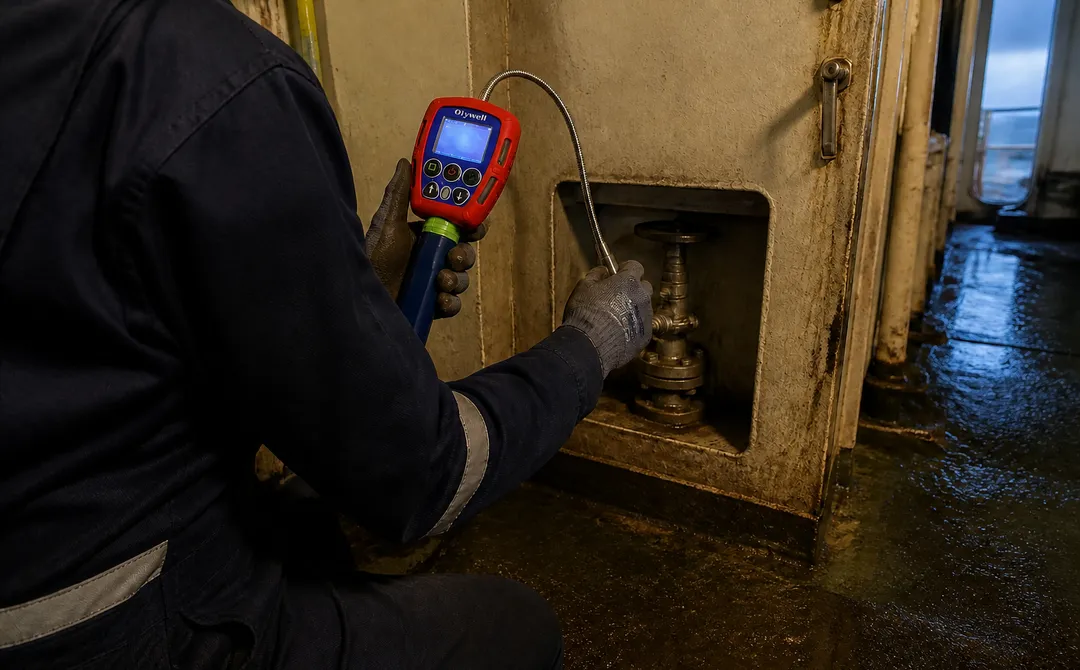
Fixed monitoring between inspections
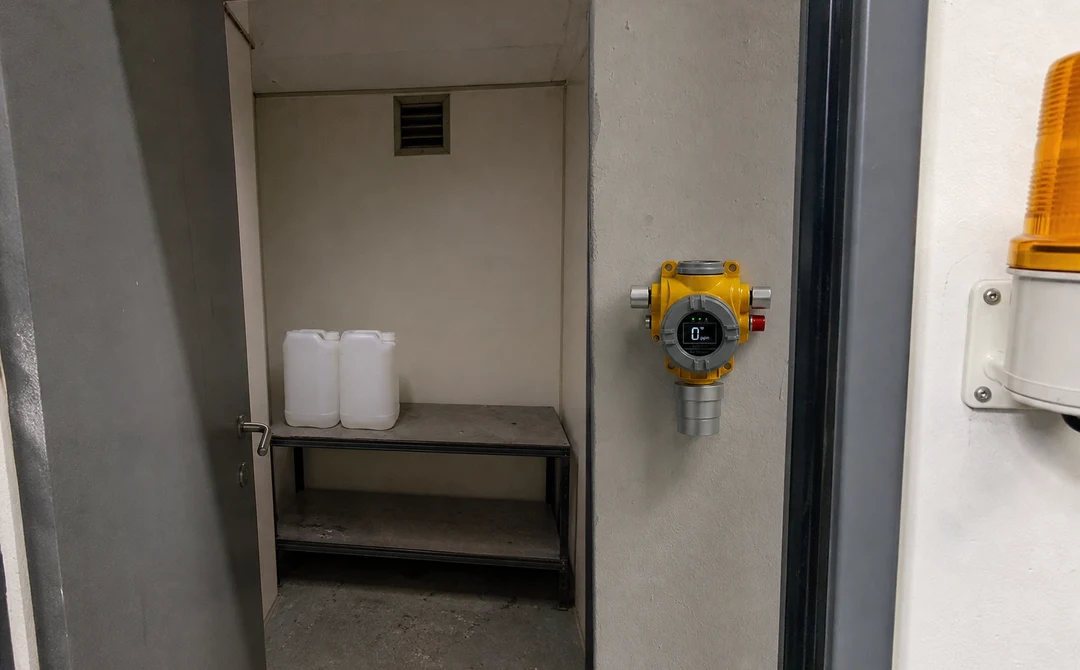
A fixed detector remains assigned to one installed point. It may suit a repeated transfer location or a solvent store that needs warning when it is unoccupied. Decide where the alarm will be seen or heard, what signal reaches the receiving system, and how a fault is reported. A reading at one wall is not automatically representative of a worker at a bench across the room. The likely release point, local exhaust, doors and obstructions all affect the usefulness of the chosen position.
| Verfahren | Air actually sampled | Best question | Limit to check |
|---|---|---|---|
| Detector tube | Point sampled during one test | What is present here now? | No continuing alarm after the test |
| Tragbare Verbreitung | At the instrument inlet | What reaches a moving worker? | Does not watch an unattended area |
| Pumped portable | At the probe tip | What is present at a difficult-to-reach point? | Line, Filter, flow and travel time |
| Fester Detektor | At its selected installed inlet | What happens at this point between visits? | Point selection and alarm routing |
Apply the choice to real xylene workpoints
“Paint shop” or “laboratory” is not a detector location. Draw the path of the liquid through the job, mark each opening or connection, then mark where people stand and where ventilation carries the air. Use those marks to decide which points need a short check and which need an unattended warning.
Coating preparation and paint mixing
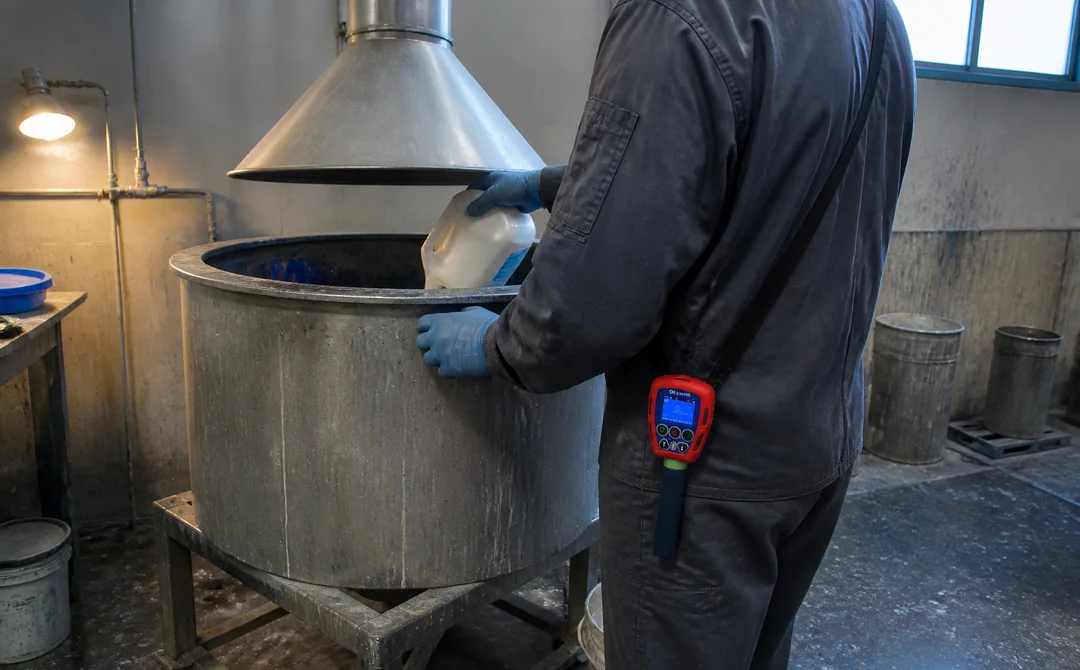
Opening a container, charging a mixing vessel and cleaning it afterward can put the operator in three positions. At the open-vessel step, note which side of the vessel the person occupies and where local exhaust draws the vapor. A portable inlet near the operator answers a different question from a fixed point beside the vessel. If mixing takes place repeatedly at the same station and an alarm is needed between tasks, specify that fixed point separately. Send the coating formulation or its relevant safety data sheet with the enquiry: other solvents may influence what a proposed channel reports.
Drucken, Farbwechsel und Druckmaschinenreinigung
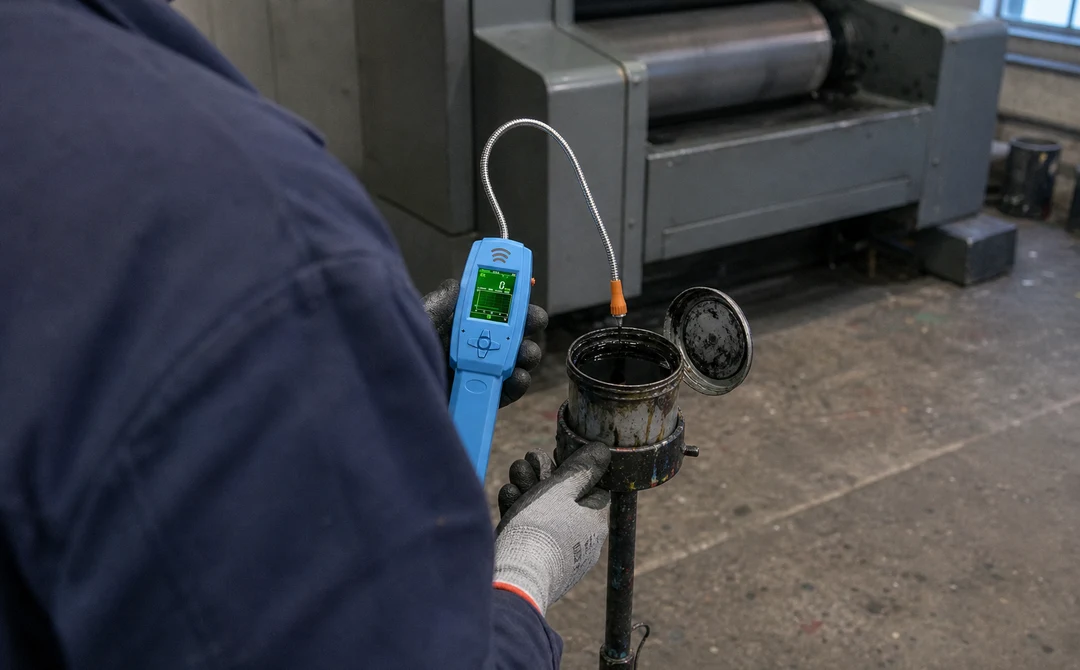
An ink change is often brief, but the operator may open a container, connect a feed and then clean a press component elsewhere. Mark those steps rather than buying one detector for “the printing room.” A carried unit can follow the short job. A fixed detector can watch a chosen position while the press area is unoccupied, provided the inlet and alarm destination are defined. If a probe is proposed for a hidden feed point, the sample must be taken there and allowed to reach the sensor before the reading is used.
Solvent transfer and storage
At a drum or tank transfer, the hose end, pump seal, valve and receiving opening are separate possible release points. A worker connecting the hose may need a local or carried check, while a routinely used transfer station may need continuous indication. Storage adds another question: what happens when a container is moved or opened, rather than merely where it sits when closed? Record the expected alarm recipient for an unattended store. Do not assign one detector to a whole room solely because xylene vapor is heavier than air; Belüftung, barriers and release conditions still determine where a sample is useful.
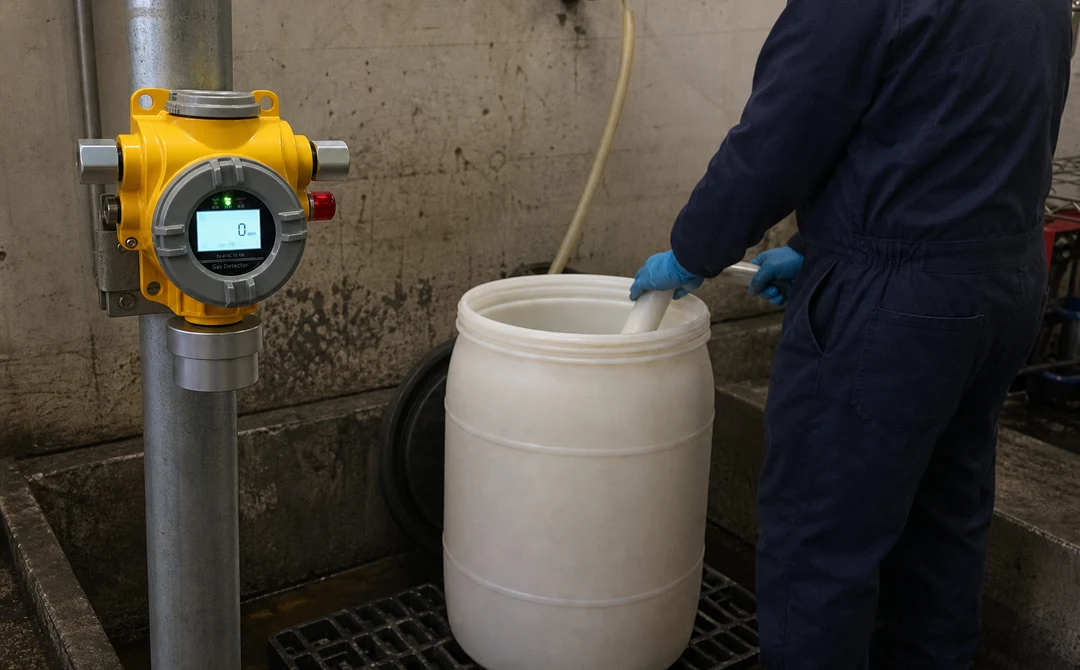
Histology and tissue-processing work
In a histology laboratory, the steps worth mapping are opening reagent containers, using xylene at the processing or staining workpoint, and handling spent solvent. One instrument on a corridor wall will not necessarily represent air at a bench or at a container opening. Ask whether the requirement is a task-specific check near an operator, an ongoing reading at a repeated workpoint, oder beides. If the laboratory uses a commercial mixture, put its composition on the enquiry instead of asking for a nominal “pure xylene” reading.
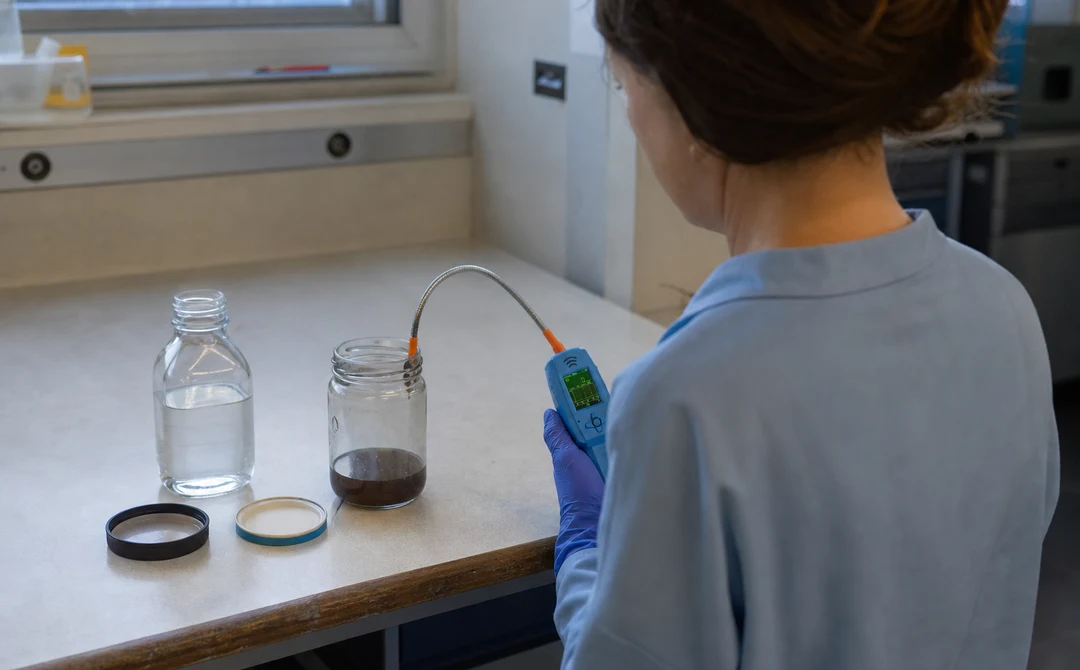
Chemical production and maintenance
A process label is still too broad to specify a detector. Identify the sample port, transfer joint or maintenance opening where vapor could enter the work area. A fixed point may watch a recurring release location; a pumped portable instrument may be appropriate for a particular joint before close work. Record the operator’s position during that step and what other vapors the process can release. Those details matter more than a generic list of industries a manufacturer says it serves.
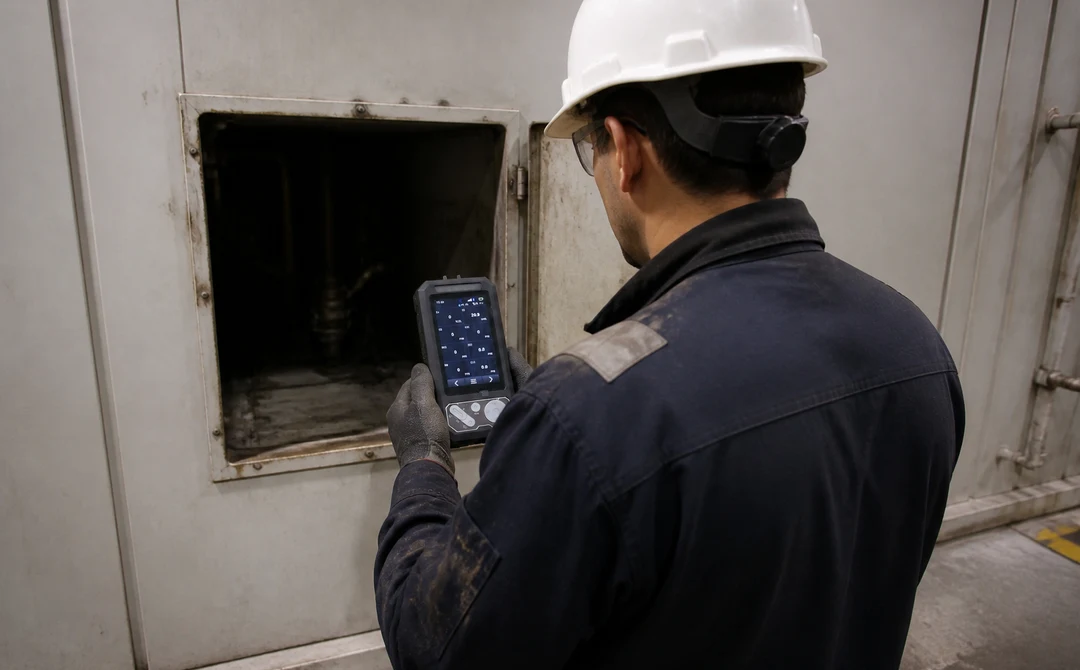
| Aufgabe | Point to map | Monitoring role to examine | Question to send with the enquiry |
|---|---|---|---|
| Farbbehälter öffnen | Operator position and vessel opening | Carried ppm reading; possibly a repeat-use fixed point | What else is in the solvent blend? |
| Ink changeover | Container, feed and cleaning positions | Portable task check | Is warning also needed after the operator leaves? |
| Verbindung übertragen | Hose, seal, valve or filling opening | Behoben, pumped or both, by duty | Can the inlet reach the actual joint? |
| Histology bench | Open reagent and spent-solvent workpoints | Task check or ongoing local indication | Is the material an isomer or a commercial mixture? |
Otywell equipment formats to review
These models offer different fixed and portable formats. Confirm the fitted xylene channel, Einheit, range and any interference information for the ordered configuration; a gas listed for a model family is not proof that every delivered unit measures it.
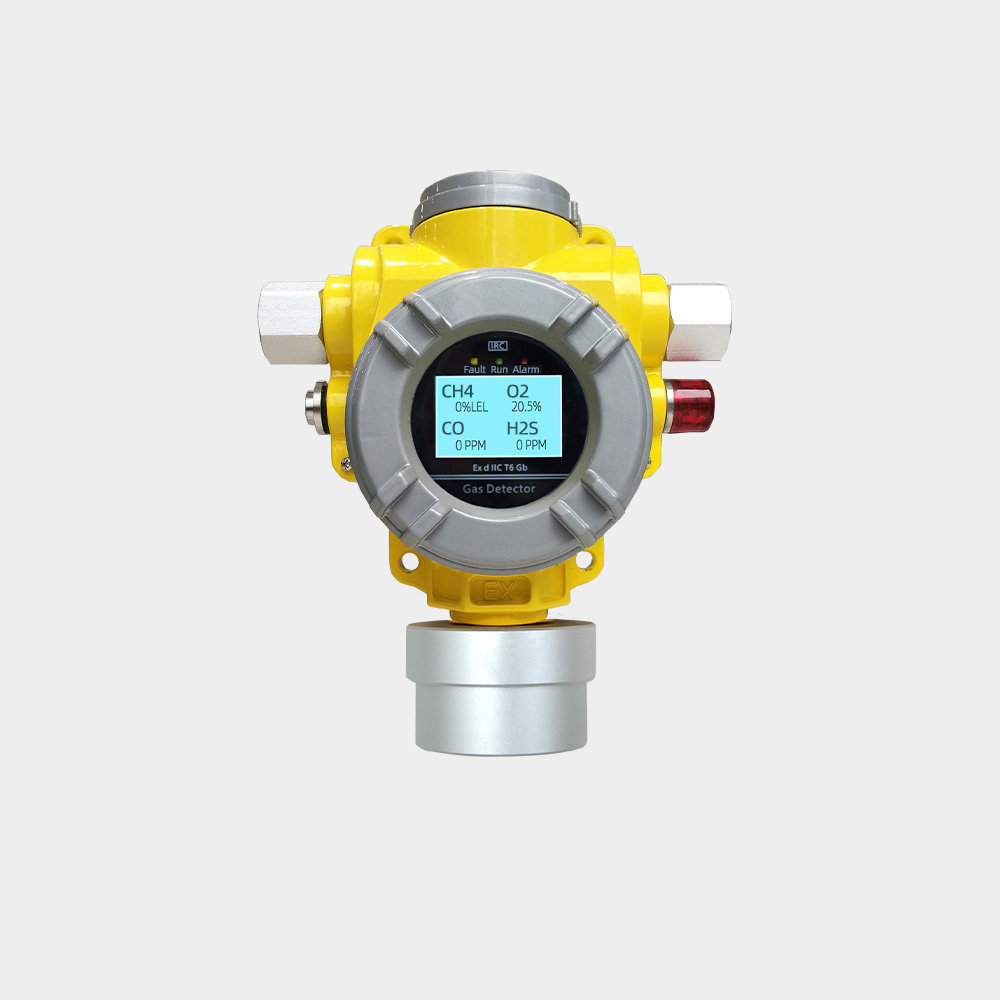

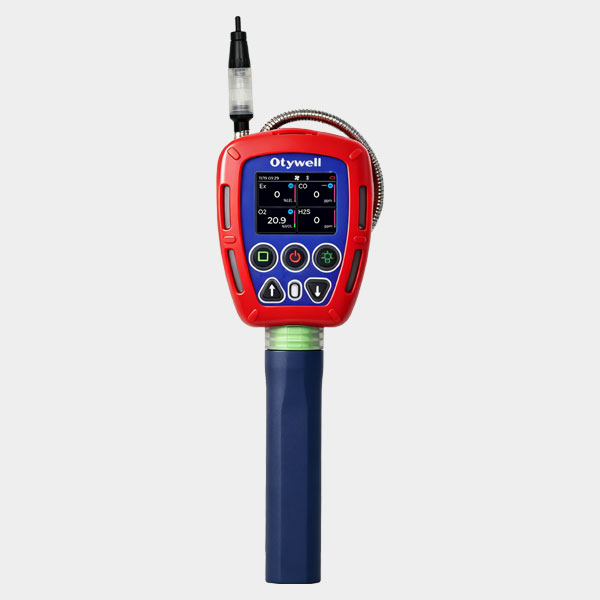

Check the configuration before requesting a quote
The supplied sensor and calibration basis matter more than the length of a model’s gas list. Put the target name, unit and expected range on the same line of the purchase request. If the site has mixed solvents, ask how the proposed reading responds to toluene, ethylbenzene and other constituents actually present. A general VOC measurement may be useful for screening, but it should not be described as an identified xylene concentration without evidence for that configuration.
Decide whether the main question concerns vapor near a person, a source connection, or combustible atmosphere warning. The same solvent-handling area may require different measurements for different purposes. Check the quoted range at the concentrations of interest, not only its upper limit. A low-end requirement needs supporting performance information at that end of the range; a wide display scale alone does not establish it.
For pumped sampling, request the exact probe, tubing and filter. Für einen Fixpunkt, request the specified output, receiving equipment, local and remote alarm behavior, and access for checking the installed inlet. Product listings may describe optional modes; the order should identify which one is being supplied. Der NIOSH Pocket Guide entry for o-xylene identifies its chemical properties and measurement methods, but a property such as vapor density is only one input to point selection. It does not establish a universal mounting height.
A practical xylene detector enquiry checklist
| Field | Information to send | What to confirm in the quotation |
|---|---|---|
| Material | Safety data sheet; xylene isomer or commercial mixture; other solvents | Named target and response to expected interferents |
| Messung | ppm vapor indication, %LEL warning or exposure-assessment question | Configured unit, range and documented method |
| Task and inlet | Worker position, open vessel, connection or fixed point | Diffusion or pump-suction version; actual inlet position |
| Sample path | Probe access, line route, length and environmental conditions | Approved probe, Rohr, filter and response procedure |
| Alarm und Ausgabe | Who must know, where, and whether monitoring continues unattended | Local indication, selected signal and fault behavior |
| Service | Access for inspection and expected operating schedule | Calibration instructions, test method and replacement parts |
Send the workpoint, not just the gas name
“Xylene-containing coating at an open mixing vessel, with a carried ppm check during charging and an unattended warning at the transfer connection” gives a supplier something to specify. Add the material sheet, a sketch of the positions, the requested reading units and who must receive each alarm. Ask for the proposed fitted configuration and supporting performance information in the reply.
Häufig gestellte Fragen
Can one detector distinguish xylene from toluene?
Gehen Sie nicht davon aus, dass es möglich ist. Ask what the fitted channel measures and how the proposed instrument responds when both vapors are present. A combined gas-list entry is not evidence of separate, selective readings.
Does a VOC reading equal a xylene concentration?
Not by itself. A VOC instrument may respond to several compounds. To report a xylene concentration, the configuration and its response to the site’s other solvents need to support that interpretation.
Should a xylene detector display ppm or %LEL?
Specify ppm when the task is to investigate airborne vapor at a defined point. Specify a suitable %LEL measurement when the task is combustible-atmosphere warning. Wenn beide Fragen wichtig sind, state both rather than treating the units as interchangeable.
Wann reicht ein Prüfröhrchen aus??
It can answer a defined, one-time sampling question within the tube’s stated procedure and range. It is not a continuing alarm for a store or a transfer point between inspections.
Where does a pumped detector take its sample?
At the probe tip. The air then travels through the tube and filter to the sensing unit. State that tip position and check the complete sample path for the supplied configuration.
Do the xylene isomers need to be named on an enquiry?
Ja, if the site knows which isomer is present. Otherwise identify the commercial mixture and send its safety data sheet. This helps the supplier assess the intended reading and other constituents.
Can one fixed detector cover a whole solvent room?
Do not infer that from the room size or the gas name alone. Mark the likely release points, occupied positions and airflow, then decide which defined locations need ongoing indication and where their alarms must be received.

Wechat
Scannen Sie den QR -Code mit WeChat