 Henan Otywell Electronic Technology Co., Ltd

A carbon disulfide gas detector is useful only when its reading matches the job. A plant may need a CS₂ concentration at a transfer connection, an alarm that follows a worker, or continuous warning at one fixed point. A separate question is whether a flammable atmosphere could develop. Specify the target, inlet position and action required before choosing the instrument housing.
Ask for a defined CS₂ result in ppm when the task is to measure that vapor. A general VOC response may show a change without identifying how much comes from CS₂ in a mixture. A combustible-gas reading in %LEL answers a different question. The quote should state the fitted sensor, range, known interferences, calibration method and complete sampling arrangement.
Decide what the CS₂ reading must tell you
Carbon disulfide, also called carbon bisulfide, is a volatile liquid that can release vapor during handling. The NIOSH Pocket Guide entry for carbon disulfide identifies CS₂ and lists both exposure and flammability information. Those concerns call for different measurements. Writing “CS₂ detector” on a purchase order does not yet say which one is required.
CS₂ concentration, VOC indication or flammable-gas warning?
A CS₂-specific ppm result must be supported by the sensor or analytical method supplied. If other vapors are present, ask how they affect the proposed channel. An instrument that responds to volatile organic compounds can be useful for locating a changing condition, but a broad VOC number does not by itself identify the CS₂ share of that response. A correction factor does not remove the need to understand the mixture.
A %LEL reading expresses a combustible-atmosphere task. It is not an alternative unit for a low-level CS₂ exposure question. Specify the combustible channel and its calibration basis separately if the work requires both functions. CS₂ is flammable, but the presence of an LEL channel on a standard multi-gas monitor does not prove that its response to CS₂ has been established for the intended use.
Instantaneous alarm or time-based exposure record?
The number on a live display represents air reaching its inlet at that moment. A worker’s exposure over a shift is a time-based result with a representative sampling position and duration. The OSHA carbon disulfide chemical data page lists different OSHA and NIOSH limits and describes an OSHA sampling method. The limit, jurisdiction and averaging period must be identified before discussing an alarm setting; a supplier’s default alarm is not automatically the applicable exposure criterion.
| Question | Specify | What one reading cannot establish |
|---|---|---|
| What is the CS₂ concentration at this point? | CS₂ channel, ppm range and inlet location | Exposure over an entire work shift |
| Has the vapor mixture changed? | VOC screening method and calibration basis | CS₂ concentration in a mixed response |
| Could a flammable atmosphere develop? | Suitable %LEL channel and alarm task | Low-level CS₂ exposure |
| What did a person encounter over time? | Representative personal sample and period | Continuous warning at an unattended point |
Map the work point before placing a detector
Opening, transfer and moving work
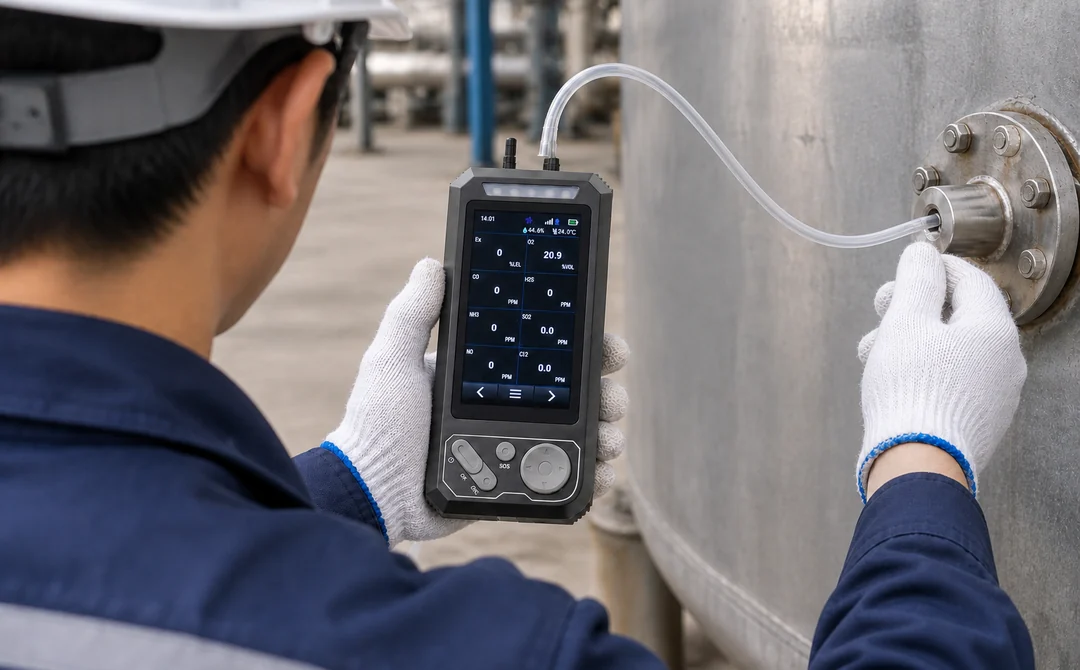
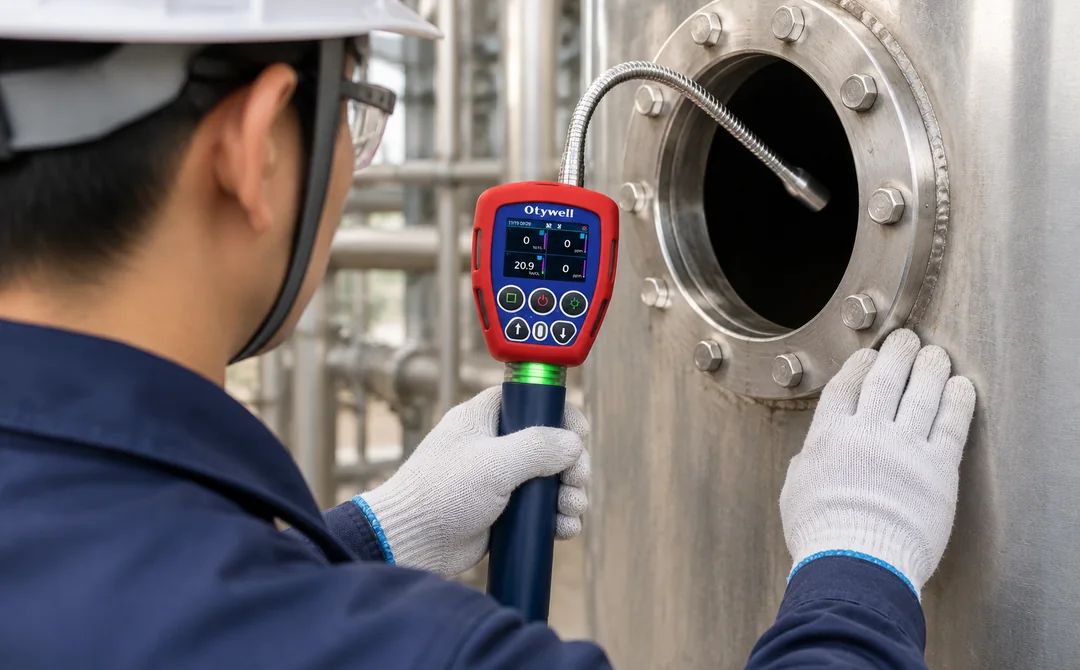
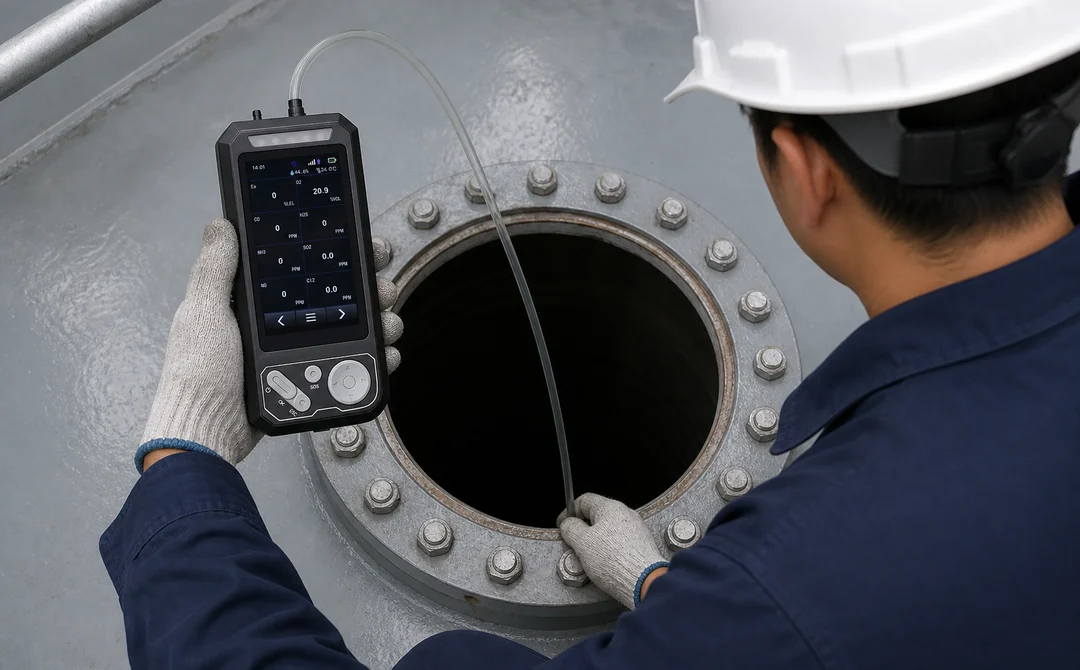
At a vessel opening, the first question may be what reaches a probe tip before personnel move closer. At a pump or hose connection, a fixed inlet may watch a recurring release point while the operator moves between fittings. Mark both the likely source and the position of the person doing the job. A detector at the source and a detector carried by the worker describe different air.
CS₂ is used in industrial processes including viscose rayon production. A process name alone is too broad for detector placement. Draw the connection, enclosure opening or maintenance position; note local ventilation and where an alarm must be seen or heard. Air movement, enclosure geometry and the task can matter more than a simple “high” or “low” mounting rule. The selected point should be written into the instrument schedule.
Continuous point or a check made on demand?
A fixed unit can watch a selected point between visits, but cannot represent every valve in a large area. A portable instrument follows the operator, but stops watching the point when that person leaves. A detector tube can answer a spot question when used with its matching pump, specified range and sampling procedure. It does not provide the continuous alarm of an electronic fixed detector. The RFQ should say whether the reading is needed once, during each task or around the clock.
| Work situation | Measurement point | Equipment role to examine |
|---|---|---|
| Vessel opening before approach | Defined probe tip at the opening | Pumped portable check or suitable spot method |
| Operator moving between connections | Instrument inlet near the person | Portable CS₂ indication and alarm |
| Recurring unattended transfer point | Chosen fixed inlet and alarm route | Fixed monitoring |
| Worker exposure over a task or shift | Representative breathing-zone position | Time-based personal sampling |
Choose the format that samples the intended air
Portable diffusion
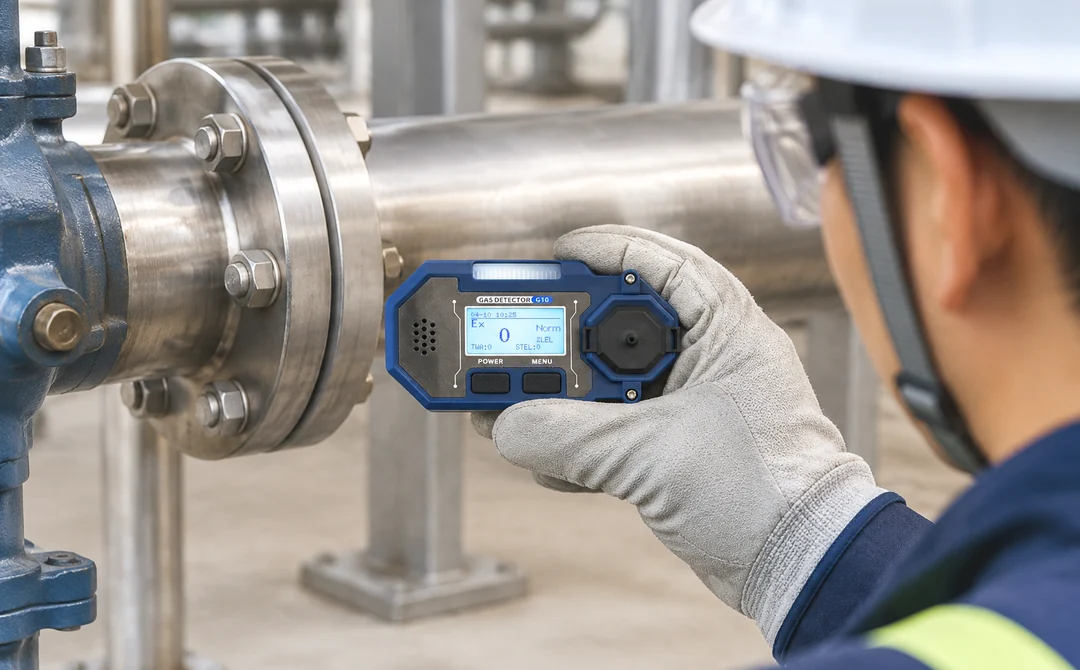
A diffusion instrument measures air that reaches its own inlet naturally. It can accompany a person through changing work positions if the ordered CS₂ channel, range and alarm functions suit the job. The location of the instrument still matters: a unit clipped to clothing does not measure inside a closed vessel or at a remote joint.
Pumped portable sampling
A pump draws a sample from a probe tip through a hose and any filters to the sensor. Identify the tip position, tubing route and distance. Ask for the response of the complete assembly, including how it signals a blocked inlet or low flow. Before treating a changing display as the concentration at the tip, the operating procedure needs a stated wait time for that sampling path.
Fixed monitoring and spot tubes
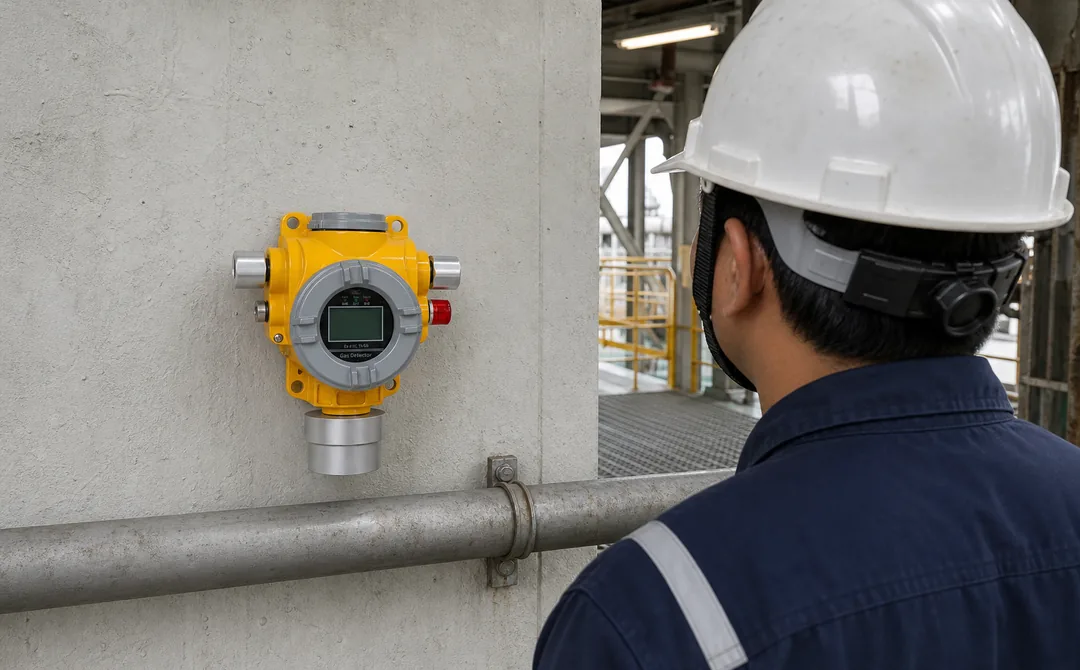
A fixed detector is selected with its point, power, output, alarm recipient and maintenance access. If sampling is remote, the pump and line become part of the installed system. A detector tube instead provides a reading from a particular pump stroke sequence at a particular time. Tube range and cross sensitivity have to fit the task; an electronic alarm and a tube test are not interchangeable purchase lines.
Otywell equipment formats to discuss
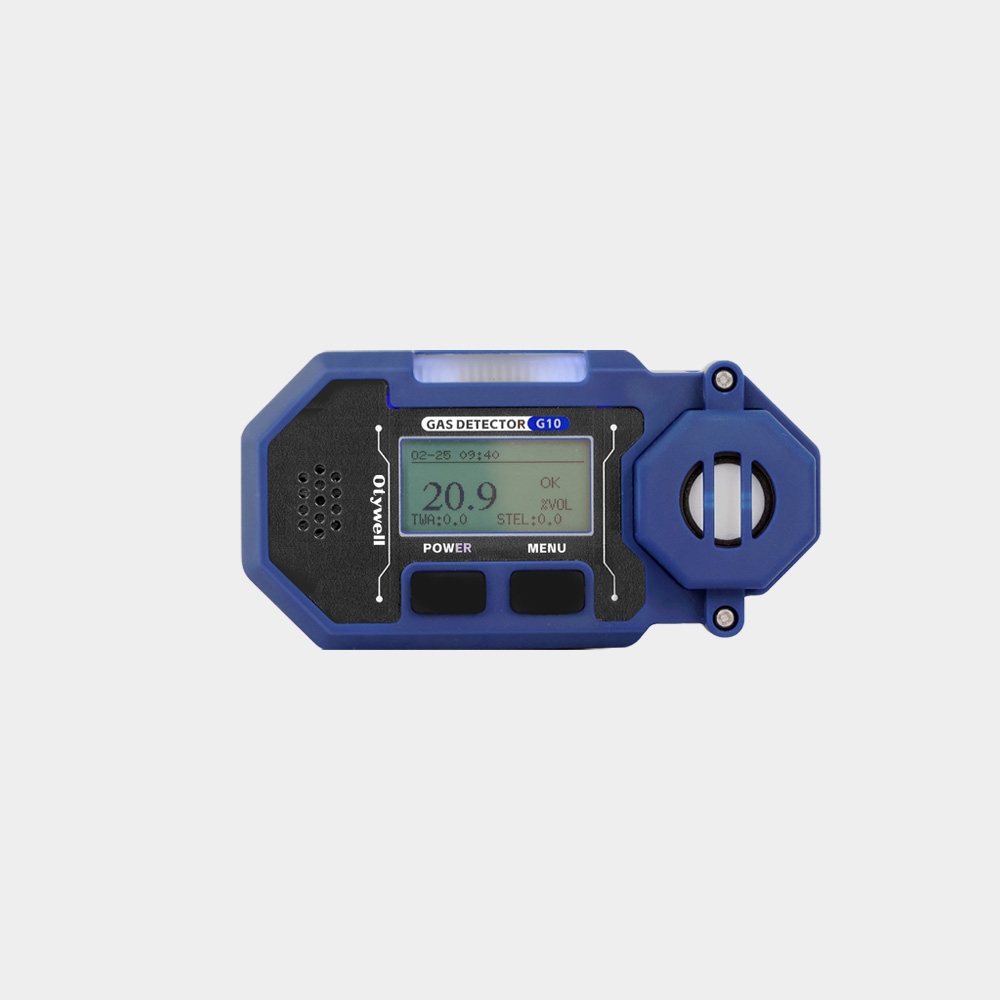
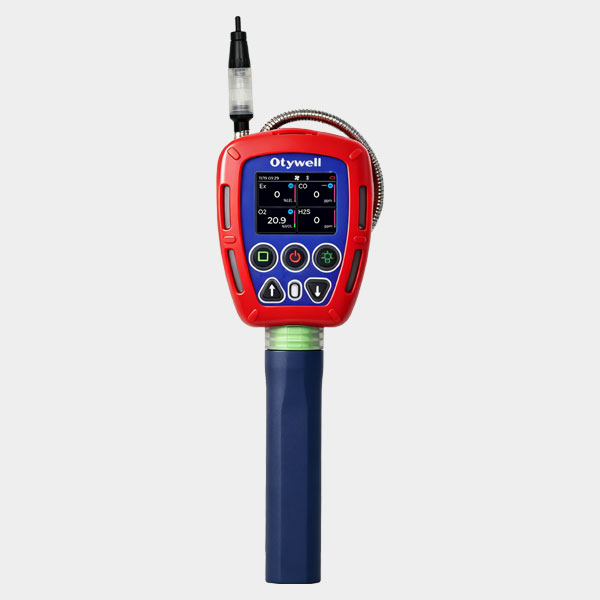
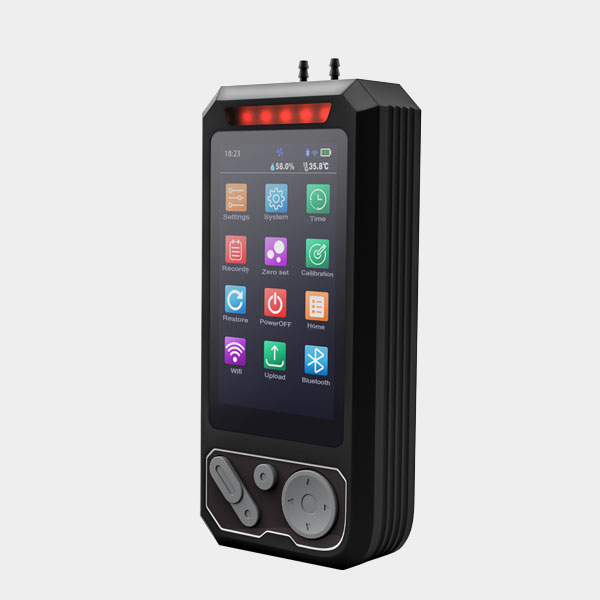
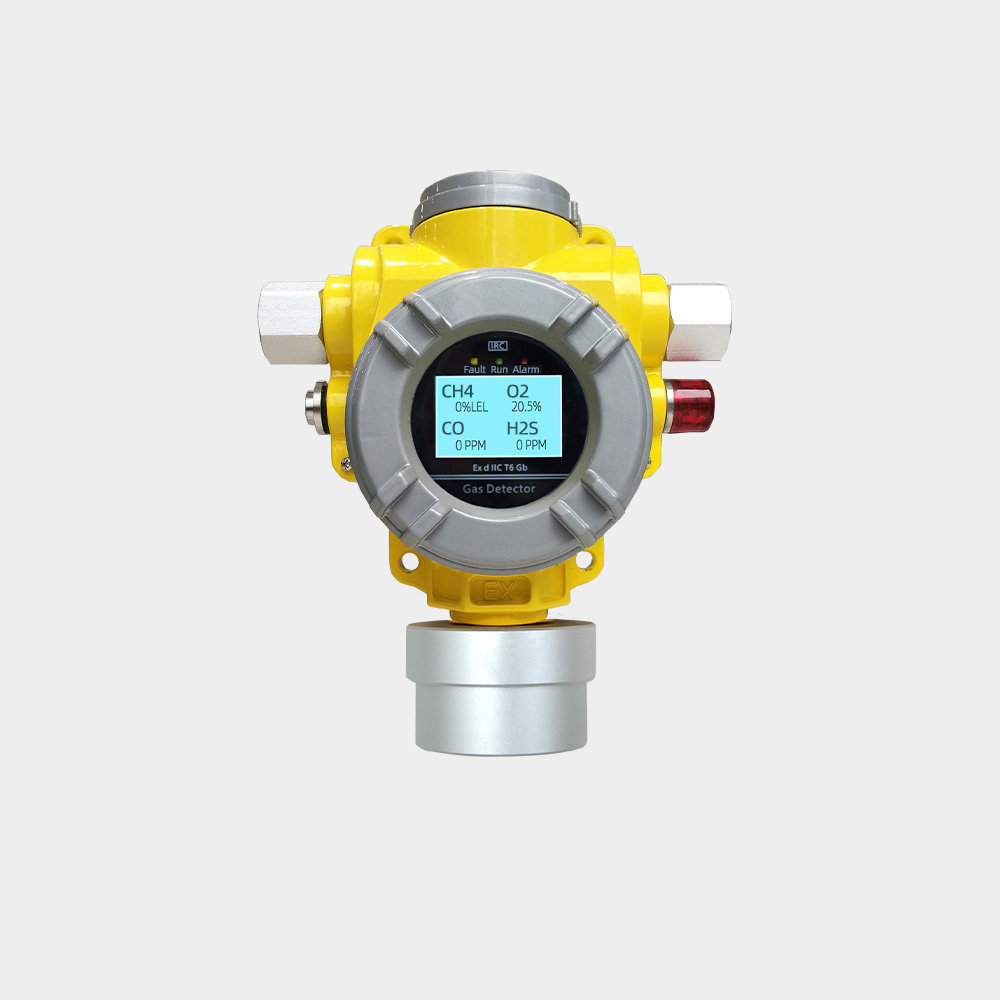
Otywell equipment is configured for the specified gas and task. These product pages establish instrument formats and options. For a CS₂ project, request the exact fitted sensor, measurement method, range, sampling version and applicable approval in the quotation. The cards do not represent four ready-to-ship CS₂ configurations.
Check the offered CS₂ channel before ordering
Range, selectivity and expected exposure
Send the current material information and name other gases or solvents that may reach the inlet. Ask for the offered CS₂ sensor or analytical method, its range, low-end resolution and cross-sensitivity information. A broad gas list or a large maximum range is not a substitute for performance at the concentrations where a decision must be made. If a general VOC sensor is proposed, request a written explanation of what its displayed number means in the actual mixture. The Otywell sensor guide explains why a general PID response does not identify an individual compound in a mixture.
Also state the highest credible concentration and whether exposure may be repeated. A low-range sensor suited to occasional checks may have a different overload or recovery limit from a sensor intended for prolonged higher concentrations. These limits depend on the exact fitted part. Ask for the sensor’s data and service instructions, then select a range that covers the task without losing useful low-end information.
Calibration and the whole alarm path
Ask which gas and procedure will be used for zero, span and functional checks of the quoted CS₂ version. If an alternative gas is proposed, the documentation should explain the conversion and its limits. The response of a sensor can also depend on temperature, humidity or interfering gases; request the relevant operating conditions and how performance was established.
For a pumped unit, confirm the probe, tubing, filter and flow behavior as delivered. For a fixed unit, identify the exact output option and receiving equipment. The alarm should be tested from the inlet through to the person or control system expected to act. An IP rating describes protection against ingress; a hazardous-area certificate must be checked for the actual instrument and accessories supplied.
| Item to verify | What to state in the enquiry | What to obtain with the quote |
|---|---|---|
| Target result | CS₂ ppm, VOC screening, %LEL or a separate time-based sample | Method, fitted channels and displayed units |
| Performance | Lowest useful reading, expected working band and maximum credible concentration | Range, resolution, low-end data, overload and recovery limits |
| Mixed atmosphere | Other vapors and gases likely at the point | Interference evidence and interpretation of the reading |
| Sampling | Diffusion, probe or fixed inlet; hose route and environment | Accessories, flow fault behavior and complete-system response |
| Alarm and output | Who must receive the warning and where | Configured settings, signal interface and test procedure |
| Service | Destination market and maintenance access | Actual certificate, calibration basis, consumables and instructions |
Send a quotation request built around the work
A workable RFQ can start with one sentence: “We need a CS₂ concentration reading in ppm from a probe at this transfer connection while the hose is connected.” Add a sketch of the point, the expected solvent mixture, required low and high concentrations, sampling distance, alarm recipient and the record to be kept. For a fixed point, include power and receiving-system details. For a mobile job, describe the person’s route and wearing position.
Request a configuration schedule rather than only a model name. It should identify the instrument, fitted sensor, range, calibration basis, sampling accessories, output and applicable approval. Compare the delivered unit with that schedule and exercise the agreed inlet, display and alarm path. If documentation describes only a broad VOC response while the RFQ calls for a CS₂-specific result, resolve that difference before using the number as CS₂ concentration.
Describe the CS₂ monitoring task
Send Otywell the process material, other expected vapors, work-point sketch, required reading and unit, concentration band, sampling method and alarm destination. Ask for the exact custom sensor configuration and supporting documents in the reply.
Frequently asked questions
Does a standard four-gas monitor measure carbon disulfide?
Do not infer that from four channels. Check the fitted sensors and the ordered gas list. A common O₂, combustible-gas, CO and H₂S configuration does not establish a CS₂-specific ppm reading.
Can a VOC reading tell me the CS₂ concentration?
Not by itself in a mixed atmosphere. Ask which compounds contribute to the response, how the unit was calibrated and what evidence supports a CS₂-specific interpretation at that work point.
When is a separate %LEL measurement needed?
Include it when the task is to warn of a developing flammable atmosphere. Specify the sensor and calibration basis for CS₂ or the relevant mixture; a ppm toxic-gas channel and an LEL alarm answer different questions.
Can a detector tube replace a continuous alarm?
No. A tube gives a result for a defined sample at a defined time. It can support a spot check when its range, pump and interference limits fit the task, but it does not watch an unattended point between checks.
When is a pumped probe useful?
Use one when the sample inlet must be placed at a connection, opening or other point away from the operator. Specify the complete path and verify flow and waiting time for the assembled setup.
Does a fixed detector describe a worker’s shift exposure?
It describes air at its installed inlet. A representative personal exposure result needs the appropriate sampling position and time period for that measurement program.
What proves that a custom Otywell unit is configured for CS₂?
The delivered configuration should identify the fitted CS₂ sensor or method, range, calibration basis and supporting performance information. Check those against the quotation, accessories and certificate for the exact unit supplied.

WeChat
Scan the QR Code with wechat